Kerry James Marshall, Exquisite Corpse at Jack Shainman

A pot of gold in this new painting by Kerry James Marshall symbolizes good fortune but rests near a skeleton’s arm, suggesting that someone’s luck has run out.  Such contrast is at the heart of the artist’s new show, Exquisite Corpse, at Jack Shainman Gallery in Chelsea. Titled after the Surrealist game invented in the 1920s, each of the exhibition’s drawings and paintings are divided into three or four rectangular zones and appear to have been completed by separate individuals who had no knowledge of what was drawn or painted by the previous game participants.  The conceit might seem humorous at first – Marshall winkingly signed his own name different ways and suggests that he’s playing a game in this series.  But operating with no knowledge of the past can have implications if the stakes are higher than a fun time with friends.  Beauty ideals, a (disappearing) house, or a pot of gold are mirage-like, unstable symbols, offering food for thought about contemporary life and perceptions.  (On view through Dec 23rd).

Kerry James Marshall, Untitled (Exquisite Corpse Pot of Gold), acrylic on PVC panel, 2021.

Fiona Rae at Miles McEnery Gallery

Typically, Fiona Rae’s ambiguous painted forms suggest real-world objects but elude identification.  Further complicating the work, both gestural and geometric abstraction appear on the same canvas, a surprising combination geared to upend our expectations.  Her latest work at Miles McEnery Gallery distills these artistic strategies into paintings featuring distinctly formed clusters of organic and geometric shapes set against a spare white background.  Titles reveal that each grouping is a word from a phrase taken from a written source, from pop music to Shakespeare.  This airy assemblage reads, ‘I’ve seen things you people wouldn’t believe,’ a line from the movie Bladerunner expounding on futuristic technological marvels.  (On view in Chelsea through Nov 26th).

Fiona Rae, I’ve seen things you people wouldn’t believe, oil and acrylic on linen, 60 x 50 inches, 2022.

Lucas Samaras in ‘Wild Strawberries’ at 125 Newbury

“I continuously shift my attention to things that bother or frighten me,” Lucas Samaras wrote in a statement from 1966.  These two angled chairs, covered in geometric patterns with yarn and resting on a bed of pins, signal discomfort and precarity despite their attractive colors.  Part of 125 Newbury’s inaugural show in Tribeca, titled ‘Wild Strawberries’ after a surreal and disturbing scene in Ingmar Bergman’s film by the same name, the chairs suggest a threat that’s unclear but palpably present.  (On view through Nov 19th).

Lucas Samaras, Two Chairs, mixed media, 19 x 16 ½ x 21 inches, c. 1970s.

Emily Mullin in ‘RGB’ at Yossi Milo Gallery

Can art compete with nature?  Emily Mullin’s ceramics at Yossi Milo Gallery, presented on wall-mounted shelves and offset by a rectangle of background color, are crowned by show-stealing floral arrangements.  Yet like the flowers, which will change as the piece is displayed, Mullin sees her hand-made ceramic pieces as unique individuals, almost characters.  Together, this quirky assemblage of sculpture, support and background challenges expectations, existing, as the artist puts it, “…between the space of representation and reality.”  (On view through August 12th in Chelsea).

Emily Mullin, xtravaganza, Lime Raku fired vessels, powder coated steel, flora, 17 x 21 ¼ x 8 inches, (flora dimensions variable), 2022.

Barbara Kruger – MoMA and David Zwirner Gallery

Have you seen this eye-grabbing new installation by Barbara Kruger in the Museum of Modern Art’s atrium?  Don’t miss the rest of the show at David Zwirner Gallery in Chelsea, where the gallery’s three adjoining spaces on 19th Street showcase work from a recent exhibition of Kruger’s work at the Art Institute of Chicago and the LA County Museum of Art.  Join me on a Chelsea gallery tour to see the show before it closes on Aug 12th.

Barbara Kruger, installation view of Thinking of You. I Mean Me. I Mean You at The Museum of Modern Art, July 2022.

Yoan Capote, Requiem (vault) at Jack Shainman Gallery

Evoking light from heaven as well as the rising sun, Cuban artist Yoan Capote’s use of gold in a show of new seascapes at Jack Shainman Gallery’s Chelsea locations offers immediate uplift. After a 2019 visit to Italy, where Capote had access to abundant medieval and early Renaissance art, the artist adopted gold backgrounds and the circular format of this painting to create images that are optimistic yet also anxious.  Connecting the migrant crisis in the Mediterranean with many Cubans’ struggle to cross the Caribbean, Capote embeds fishing hooks in recent work, picturing the sea as a barrier.  (On view through Aug 5th).

Yoan Capote, Requiem (vault), 24kt gold leaf, nails and fishhooks on panel of linen mounted over plywood, 53 (diameter) x 5 (depth) inches, 2021.

Introducing Tribeca’s new gallery scene…

Tribeca has quickly become one of the best places to see contemporary art in New York.  Over the past few years, some of the city’s most established galleries have opened locations here, joining mid-sized spaces and younger dealers to create a diverse and lively new art scene.  Check out the neighborhood in this video, and join me soon in Tribeca!

Roy Nachum at A Hug From the Art World

Five huge photorealist portraits by Israeli-New Yorker Roy Nachum dominate the creatively titled Chelsea gallery ‘A Hug from the Art World.’ The sense of immediacy that their size generates in this compact space is amplified by expressionist painting on their surfaces.  At first puzzling for the contrast between styles, an upstairs video reveals the paintings to be layered portraits, collaborations between Nachum and blind makers like Rosie Lopez, pictured here.  Once explained, the portraits become fascinating expressions of self-representation.  (On view through May 7th).

Roy Nachum, Rosie Lopez, oil on canvas, 84 x 71 inches, 2015 – 2022.

Rosa Barba at Luhring Augustine Gallery

Rosa Barba’s ‘Language Infinity Sphere,’ a form created from old letterpress blocks now on view at Luhring Augustine’s Tribeca space, speaks with its circular form to the ongoing output of these blocks over the years. Other text-related work in the show includes handwritten words on a filmstrip that rotates around a lightbox cube and a 35mm film depicting images and text from the Library of Congress’ massive campus, the largest media archive in the world.  Language appears in unexpected forms in this show, even as marks on the landscape in a film showing disposal sites for radioactive material in the western U.S.  (On view through May 21st).

Rosa Barba, Language Infinity Sphere, lead letters on steel, unique, diameter 18 1/8 inches, 2018.

David Aipperspach at Chart Gallery

The paintings in Philadelphia-based artist David Aipperspach’s current solo show at Tribeca’s Chart Gallery, ‘Prologue to a Garden Dark’ anticipate the slow end of a summer’s day by blending light and color from different times in a single scene. At the show’s entrance, a small painting tracks the path of the sun as it sinks though a grid of darkening colors, acting as a Rosetta stone for the same color shifts that appear in rectangles of stacked colors inset in the paintings.  Acting as ‘clocks,’ the rectangles break into tranquil scenes, acting as abrupt reminders of the passage of time.  (On view through April 30th in Tribeca).

David Aipperspach, 4-7pm, oil on canvas, 84 x 72 inches, 2021.

Margarita Cabrera in Group Exhibition at Jane Lombard

The artists in ‘say the dream was real and the wall imaginary,’ Jane Lombard Gallery’s excellent group exhibition organized by curator and critic Joseph R. Wolin, deftly negotiate cultural boundaries in contexts that vary from imaginary cities to remote villages.  Margarita Cabrera’s cacti are a standout; known for her ongoing collaborations with immigrants in the Southwestern U.S., Cabrera creates plants crafted from border patrol uniforms and invites Mexican migrants to embroider them with emblems that communicate personal histories.  Featuring designs including an American flag, stick figure portraits of family members, a church building and more, the sculptures communicate shared values and dreams.  (On view through April 23rd in Tribeca).

Margarita Cabrera and collaborators, Space in Between – Nopal #5, border patrol uniform fabric, copper wire, thread and terra cotta pot, 50 x 51 x 49 inches, 2016.

Andre Cadere at Ortuzar Projects

Paris-based conceptual artist Andre Cadere’s multi-colored rods seem unobtrusive now, but they caused a stir in the 70s when he brought them into other artists’ exhibitions and positioned them in public places.  Featured in an exhibition of Cadere’s work from the 60s and 70s at Ortuzar Projects, the hand carved bars were composed of wood segments with color patterns that the artist would disguise with a deliberate ‘error;’ the artist intended them as a means of merging painting and sculpture as well as a way to bring art into the public realm.  Here, a bar positioned in the corner of a NYC subway mimics the train’s poles and exudes personality.  (On view in Tribeca through May 14th).

Andre Cadere, (one from) New York City 1975, archival pigment prints (group of 30), 9 7/8 x 11 ¾ inches framed, ed 4 of 5, 1975.

Eddie Rodolfo Aparicio in The New Bend at Hauser & Wirth Gallery

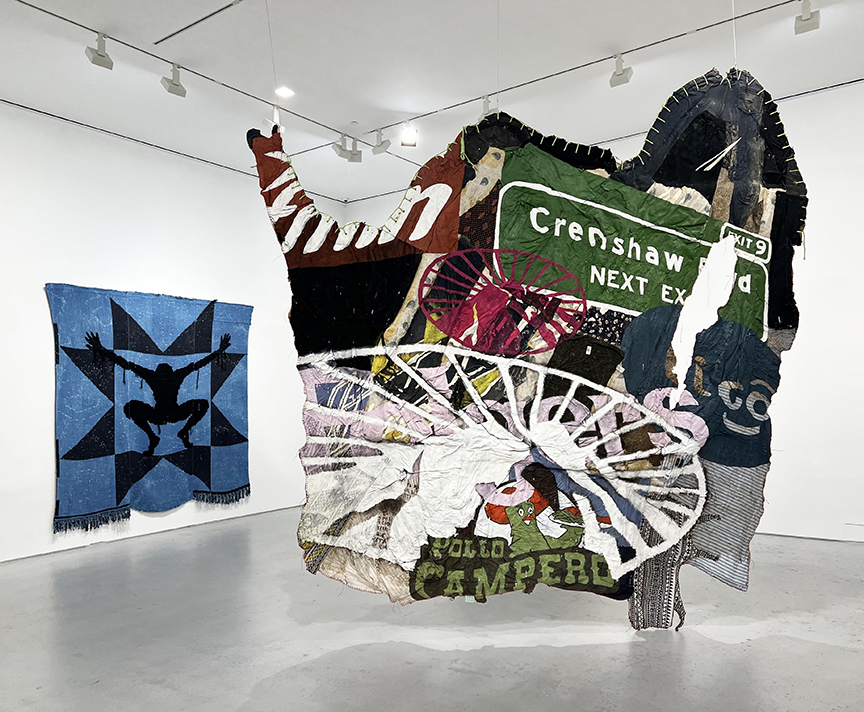
Eddie Rodolfo Aparicio’s ‘Holbein En Crenshaw,’ a rubber cast of a tree on a LA street dominates ‘The New Bend,’ a standout show of textile-related work curated by Legacy Russell at Chelsea’s Hauser & Wirth Gallery.  Layered imagery including a highway exit sign, distorted wheel-like shapes, and advertisements crowd together on one side of this hanging piece, recreating the bombardment of information pedestrians and motorists experience on city streets.  On the other side, the rough texture of the cast tree with its burls and imperfections suggests the difficulties of urban life, even for plants.  Aparicio explains that his intention is to connect beleaguered, non-native trees to the reception of migrant workers in California while also recognizing the rootedness of both in LA life.  (On view through April 2nd.)

Eddie Rodolfo Aparicio, Holbein En Crenshaw (Washington Blvd and Crenshaw Blvd., LA, CA), rubber, sulfur, tree and plant residue, wood glue, latex paint, acrylic paint, strings and found cloth quilt, 138 x 150 x 5 inches, 2018.

Roxa Smith at C24 Gallery

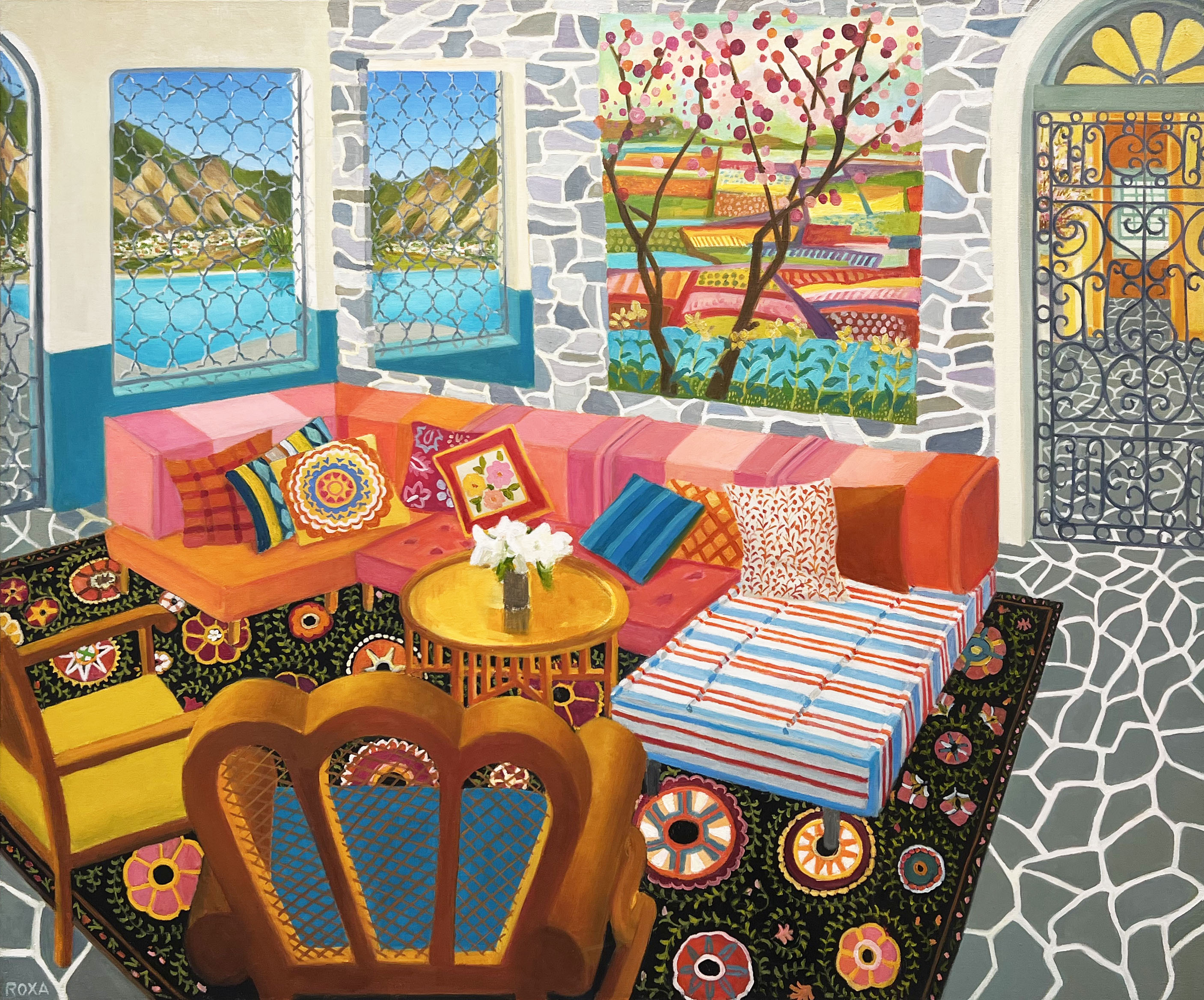
Pattern and color are the last words in Roxa Smith’s lively paintings of imaginary interiors at C24 Gallery in Chelsea.  Smith, who grew up in Venezuela and moved to New York in the 90s, explains that as a child, family trips exposed her to colonial towns and indigenous and folk art that have influenced her current aesthetic.  Already drawn to interiors, she became devoted to the subject after visiting an exhibition of Matisse’s painting at the National Gallery in Washington DC.  Uplifting, lively and engaging, Smith’s paintings offer a moment of pure pleasure.  (On view in Chelsea through March 11th.)

Roxa Smith, Gated Sanctuary, oil on canvas, 30 x 36 inches, 2016.

Francesca Galloway Presentation at Luhring Augustine

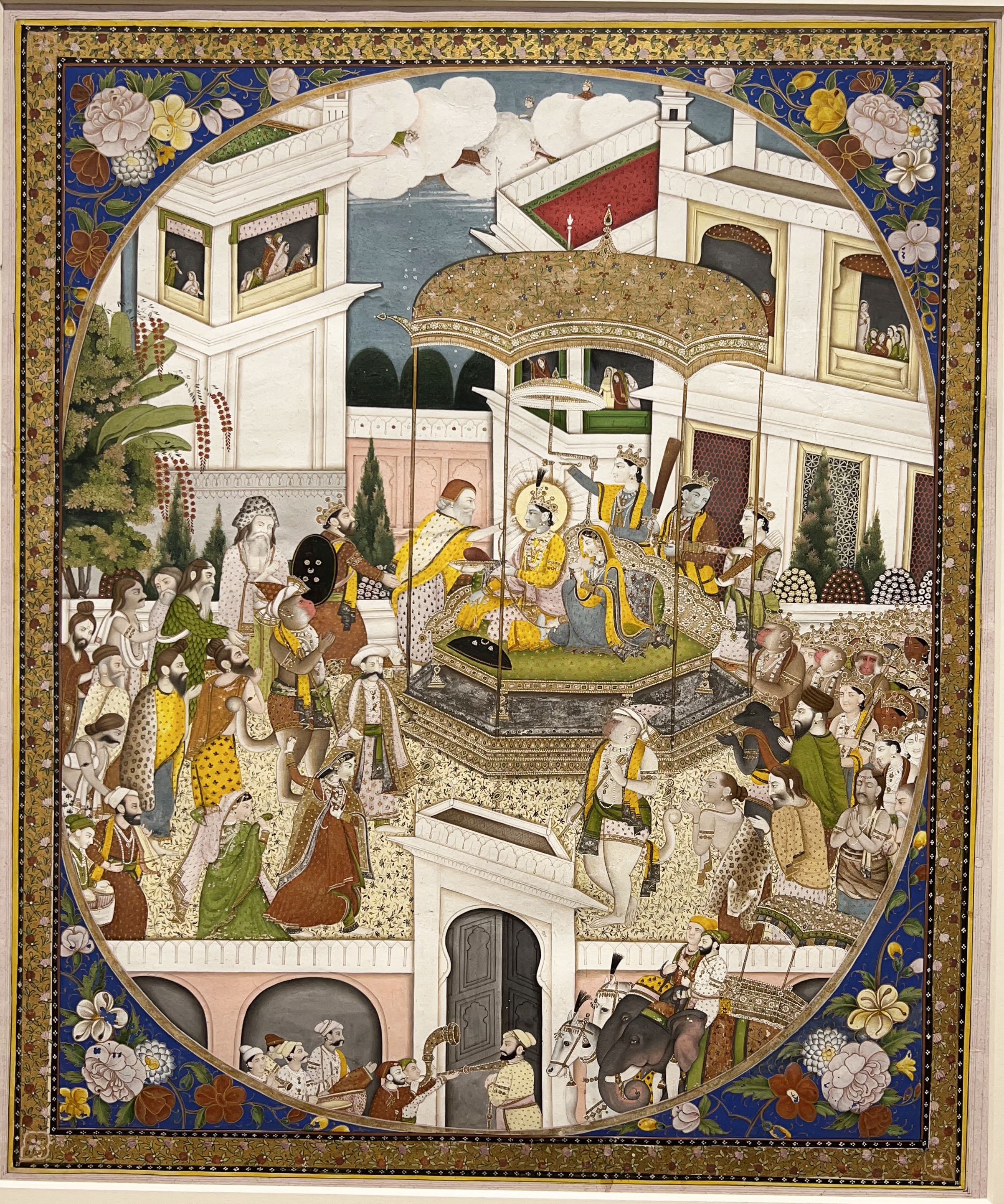
After a long, action-packed adventure described in the Sanskrit epic the Ramayana, Rama returns home to the kingdom of Ayodhya and is crowned alongside his love, Sita.  Here, in a standout painting from the exhibition ‘Court, Epic, Spirit:  Indian Art 15th – 19th Century’ presented by London dealer Francesca Galloway at Luhring Augustine Gallery, the couple literally glow as they celebrate Rama’s restoration and his triumph over evil.  Populated by dignitaries and ascetics and set among opulent furnishings and fabrics, this relatively small painting overwhelms with its intricate detail.  (On view in Tribeca through March 24th).

The Coronation of Rama based on the description in the Yuddhakanda of the Ramayana, ch 130, Mandi, opaque pigments, painting: 17 ¾ x 14 5/8 inches, c. 1840.

Mary Lum at Yancey Richardson Gallery

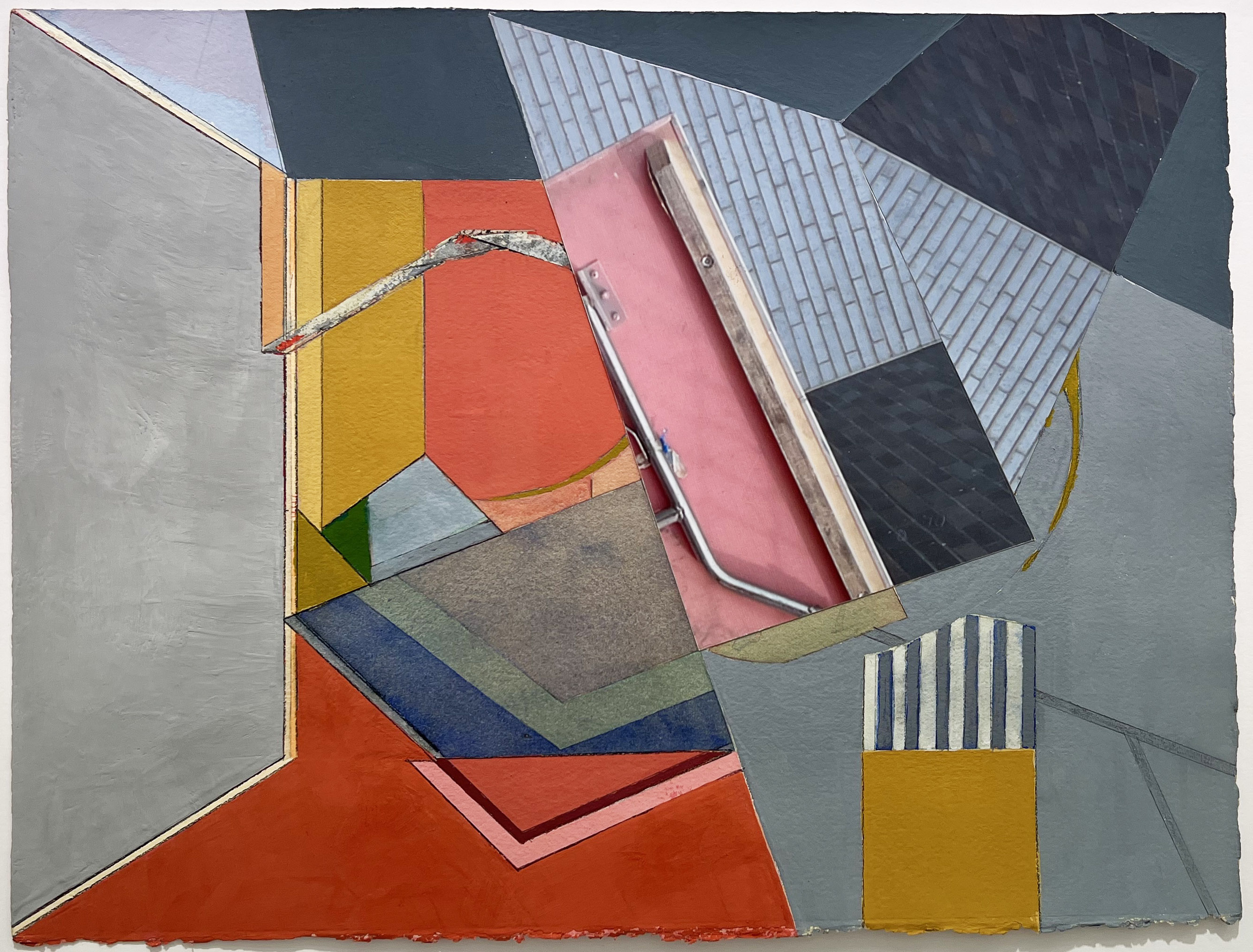
Long walks through New York, Paris and London yield source material for Mary Lum’s complex photo and paint collages, now on view at Yancey Richardson Gallery in Chelsea.  Titled 11th Avenue, this piece features slices of urban architecture and facades that dynamically multiply the grid.  At center, Lum seamlessly turns a photo of metal piping into a flattened piece of paper that in turn guides our eye up and over a grey wall – all moves that keep our sense of space shifting in an engaging way.  (On view through Feb 26th).

Mary Lum, 11th Avenue, gouache, watercolor, acrylic, colored pencil, and photo collage on paper, 11 ¼ x 14 7/8 inches, 2021.

Keith Tyson at Hauser & Wirth Gallery

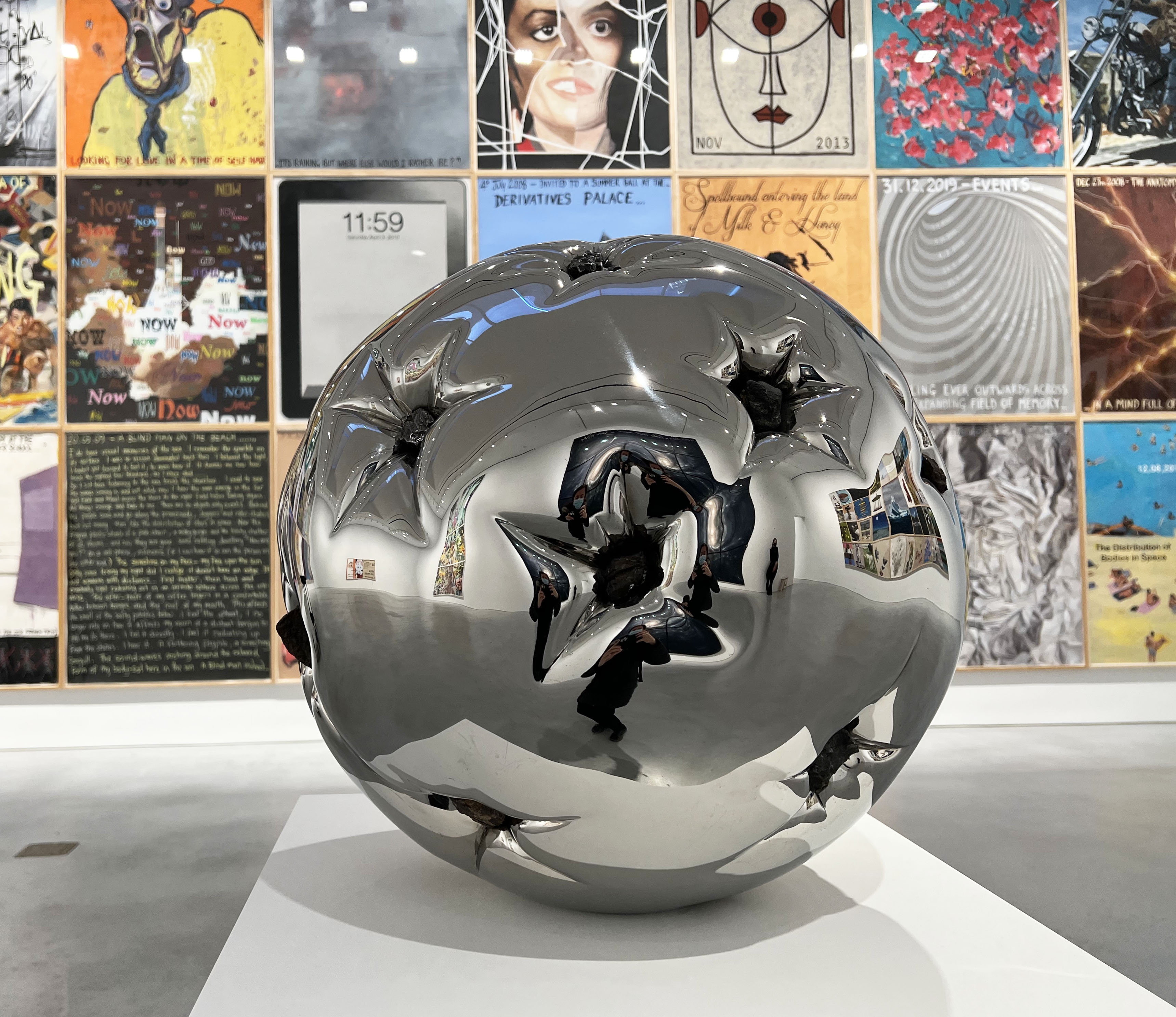
To say that British artist Keith Tyson’s art practice is expansive is something of an understatement; for decades, his painting and sculpture have aimed to show the connectedness of all things.  Drawing from thousands of paintings created over more than twenty years, grids of images now on view at Hauser & Wirth Gallery in Chelsea suggest links between neural networks, the vastness and changeability of space, mathematical concepts and much more.  Here, meteorites embedded in stainless steel prompted Tyson’s mind-boggling question in a recent catalogue essay: “What were the odds at some point in the distant past, when these chunks of matter were on their particular trajectories through outer space, that they would all end up together here in this piece of work?”  (On view in Chelsea through April 2nd).

Field of Heaven, stainless steel, meteorites, 23 5/8 x 23 5/8 x 23 5/8 inches, 2016.

Ryan Preciado at Canada Gallery

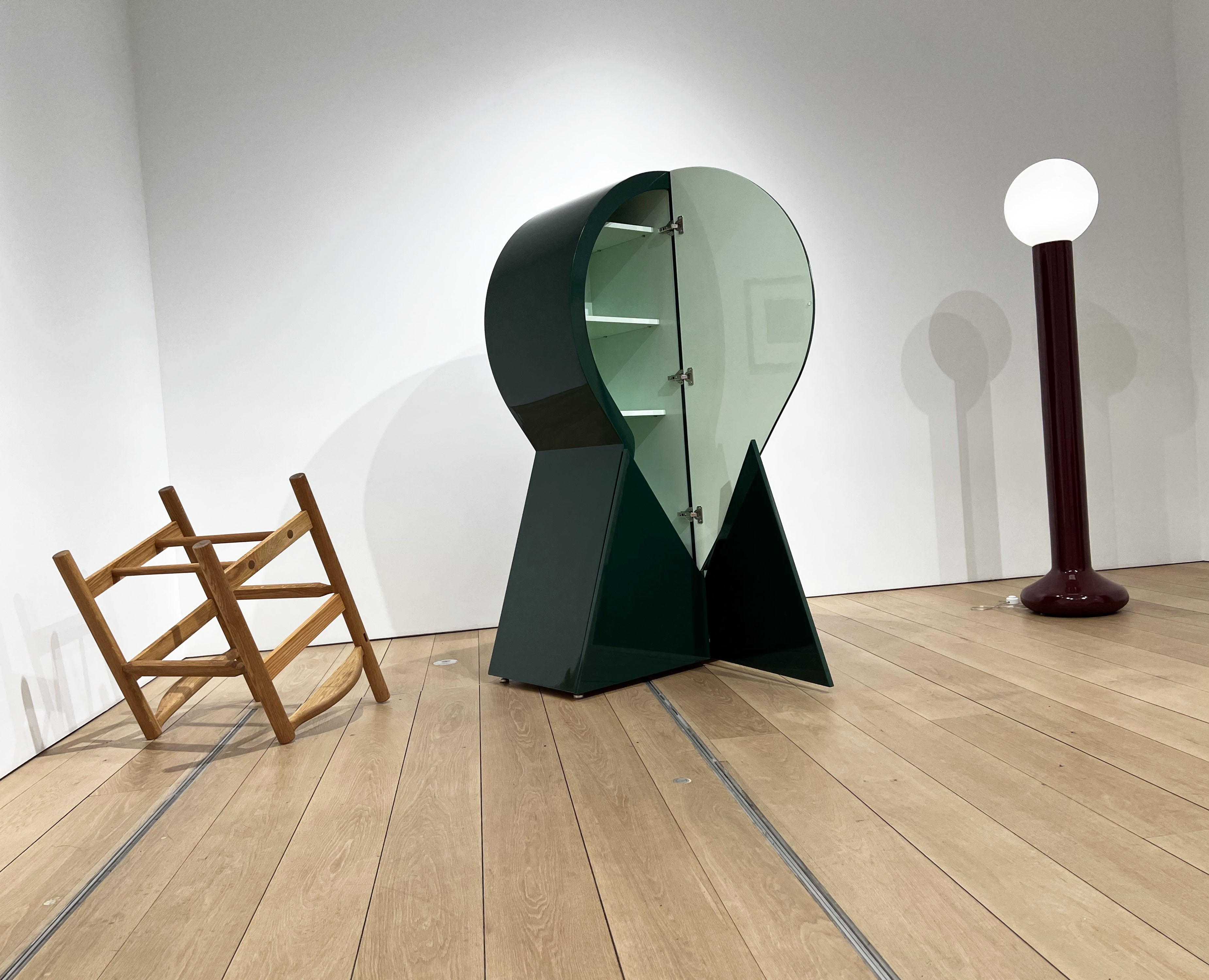
Inspired by the Pope’s mitre, Chumash tradition, California car culture and much more, young west coast designer Ryan Preciado presents furniture at Canada Gallery that conveys comfort, pleasure and sturdiness.  Like Matt Conners’ abstract paintings in the adjoining gallery, color and structure dominate our sensory experience.  Practical and welcoming, Preciado’s approach to design was impacted by watching his sister squirm to get comfortable on the family couch.  (On view in Tribeca through March 5th).

Ryan Preciado, Pope Cabinet, plywood, MDF, urethane enamel, 70 x 48 x 20 inches, 2021.

Haroon Mirza at Lisson Gallery

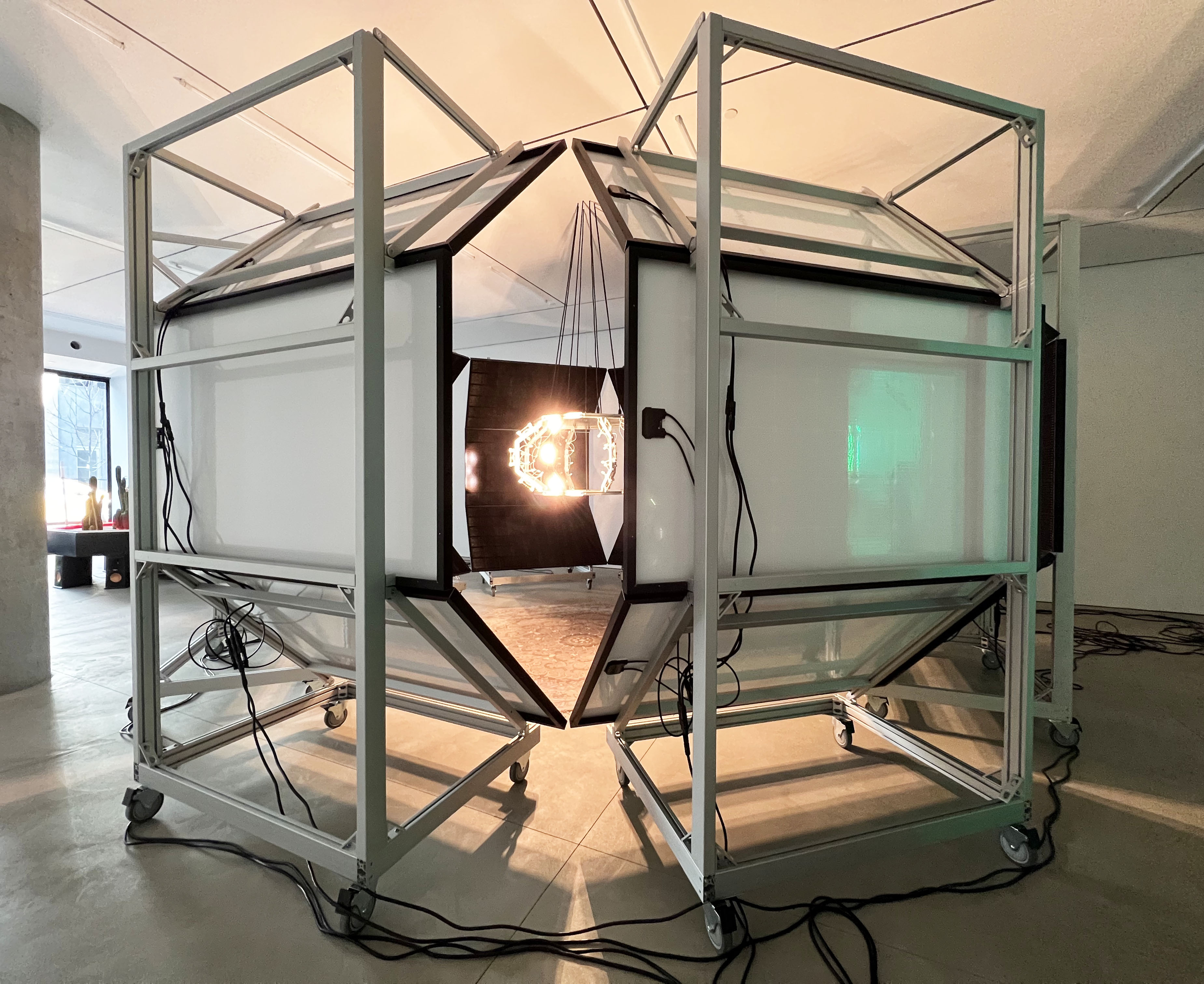
Known for artwork that favors experience over objects, Haroon Mirza was inspired by a mind-boggling proposal which he has made into the central concept behind his current exhibition at Chelsea’s Lisson Gallery.  Introduced in a British sci-fi novel from the 30s and advanced in the 60s by the physicist Freeman Dyson, the Dyson Sphere is a series of orbiting platforms erected around a star to harvest solar energy.  Mirza creates a mini version at the center of the gallery; a ring of solar panels collects energy from the halogen lights at center, providing energy to power various artworks around the gallery, including a terrarium of hallucinogenic cacti and a simple machine that plays a set of drums.  (On view in Chelsea through Feb 12th).

Haroon Mirza, installation view of ‘For A Dyson Sphere,’ Lisson Gallery, February 2022.

Mark Ryan Chariker at 1969 Gallery

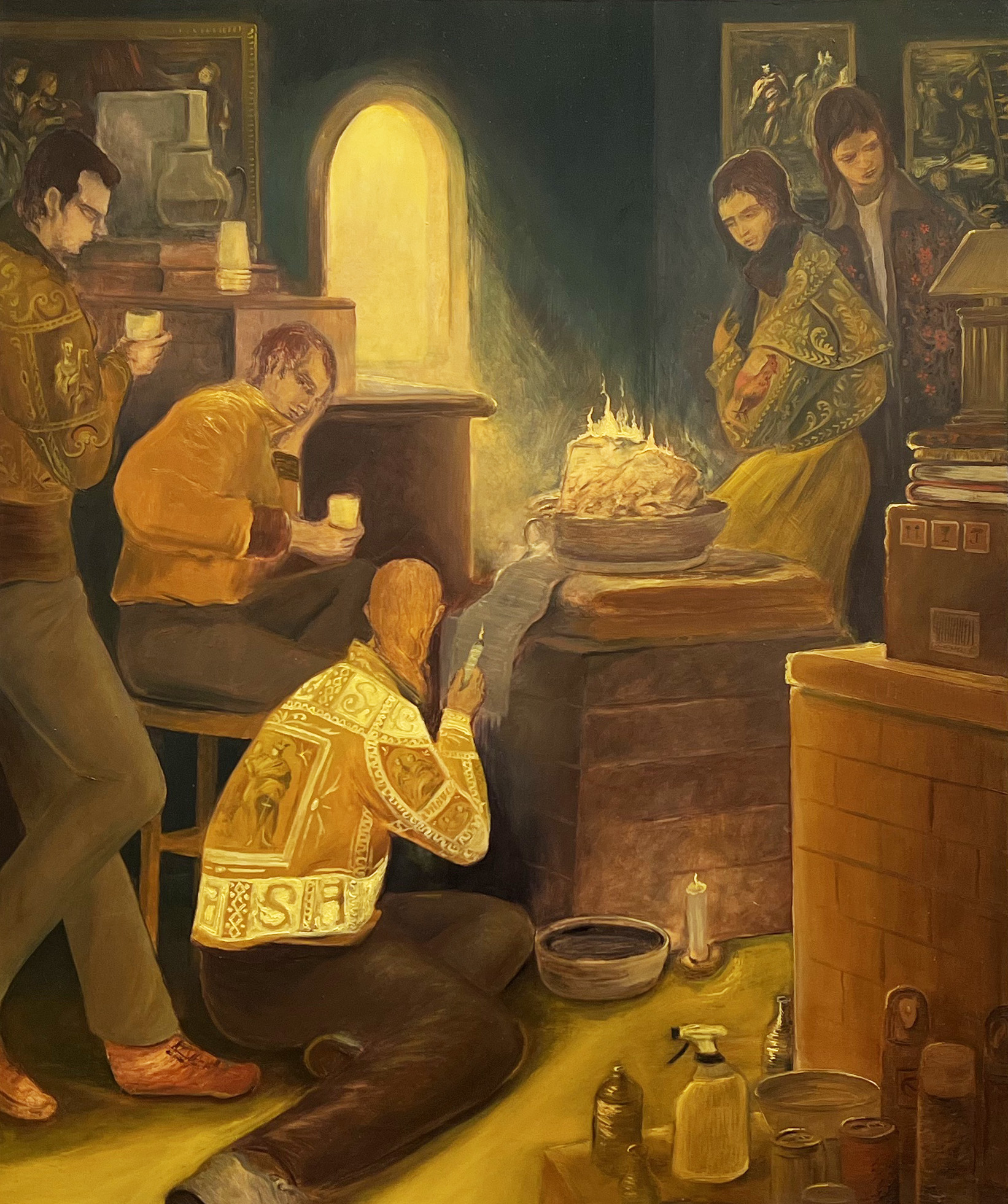
Mark Ryan Chariker’s atmospheric paintings at 1969 Gallery are an intriguing anomaly, situating contemporary characters wearing fashions inspired by European art history in historic-looking settings.  In most paintings, none of the elongated, Mannerist characters seem to be saying a word, but each appears to play a role in an understated drama or fateful moment.  Here, in a painting titled ‘Burning Ceremony,’ five figures demonstrate varying degrees of disregard for an unidentifiable flaming object in a huge dish.  Lackadaisical and lacking conviction, their ritual suggests a culture adrift. (On view through Feb 26th.  Proof of vaccination and masks are required).


Mark Ryan Chariker, Burning Ceremony, oil on linen, 24 x 20 inches, 2021.

Mary Obering at Bortolami Gallery

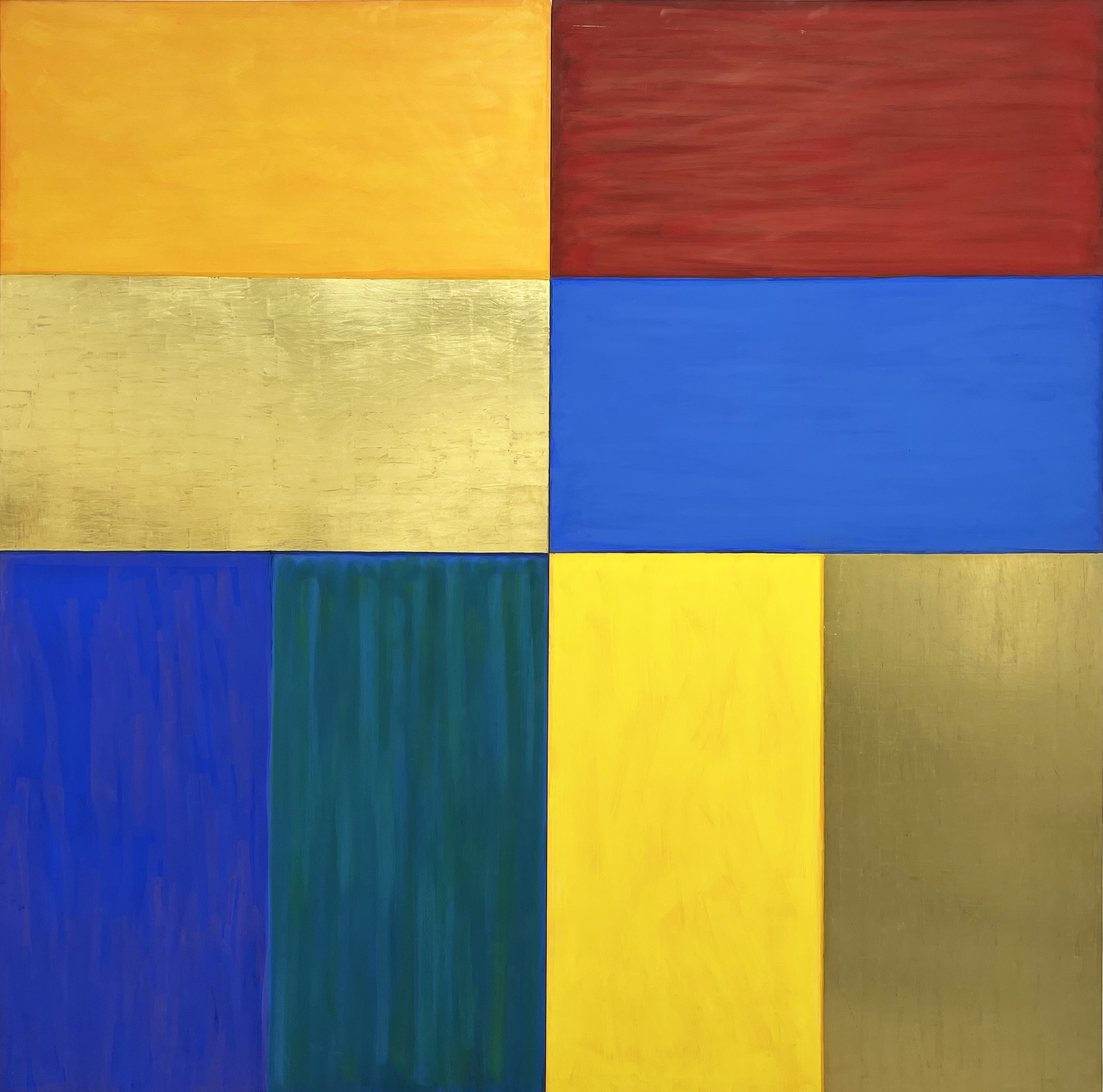
Inspired by her love of art history and travel to Italy, New York-based artist Mary Obering infuses modern, minimal style with references to early Renaissance art to create dynamic and luminous paintings.  Bortolami Gallery’s current presentation of her work from 1972 – 2003 includes this 1992 painting that balances light and dark colors in a way that moves the eye around the canvas, creating a lively circular movement enriched by glowing panels of gold leaf.  Blocks of color in egg tempera – painted to show the artist’s hand through fluctuations of color – have an extra vibrant glow, adding to the uplift and pleasure of the piece.  (On view in Tribeca through Feb 26th. Masks and social distancing are required.)

Mary Obering, A2 + Y2, egg tempera and gold leaf on gessoed panels, 2 panels, total dimensions: 84 x 84 inches, 1992.

Michelle Rawlings at Chapter NY

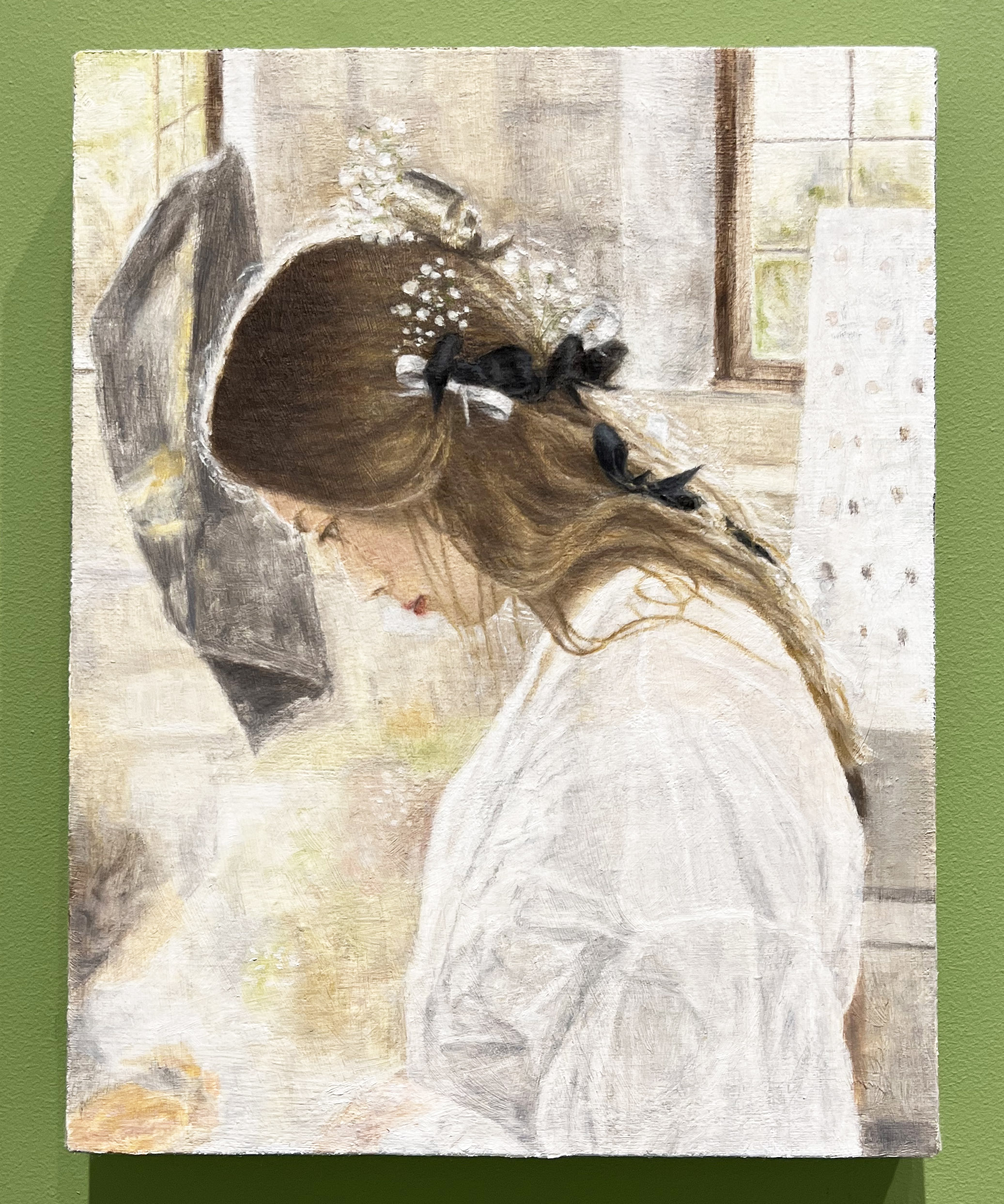
As a teen, Michelle Rawlings used to cut out and rearrange fashion spreads from magazines; her  untitled oil on linen canvases at Chapter NY in Tribeca operate on a similar scale (this painting is a mere 12 ½ inches high) and also channel the cool, distanced mood of fashion photography.  Here, she captures a different feeling of isolation as a softly sunlit young woman engages in a solitary activity.  Set against an intensely green gallery wall that emphasizes the glimpses of nature seen outside the window and accompanied by minimal collages of ribbon and ephemeral plant-related imagery, the paintings are mediations on how meaning is constructed.  (On view in Tribeca through Feb 5th. Masks and social distancing required.)

Michelle Rawlings, Untitled, oil on linen, 12 ½ x 10 x 1 ¼ inches, 2021.

Chris “Daze” Ellis at PPOW Gallery

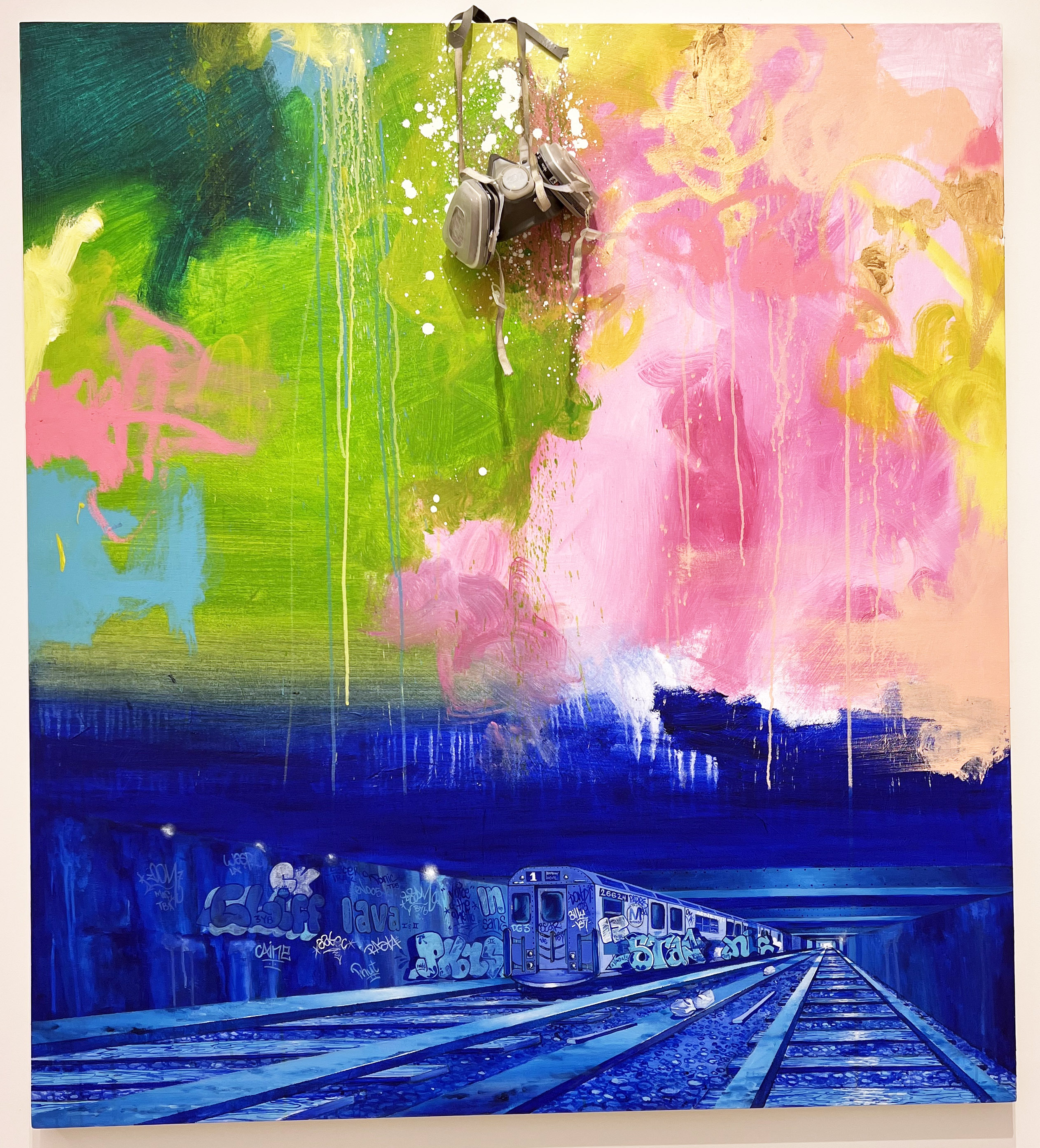
Chris “Daze” Ellis started painting train cars as a teen in the mid-70s and within a few years was showing his work indoors in shows at The Mudd Club and the renowned gallery Fashion Moda. Decades later, he reflects on contemporaries who’ve passed, including Cliff 3YB, Billy 167, Stan 153 and others in this recent painting in his current solo show at PPOW Gallery.  Above their names on the subway walls and cars, an expressionist composition of greens, pinks and yellow colors glows like a celestial phenomenon honoring the lives and memory of street art pioneers.  (On view through Feb 12th in Tribeca.  Masks and social distancing required).

Chris “Daze” Ellis, A Memorial, acrylic, oil, spray paint, respirator on canvas, 60 x 54 inches, 2020.

Raymond Saunders at Andrew Kreps Gallery

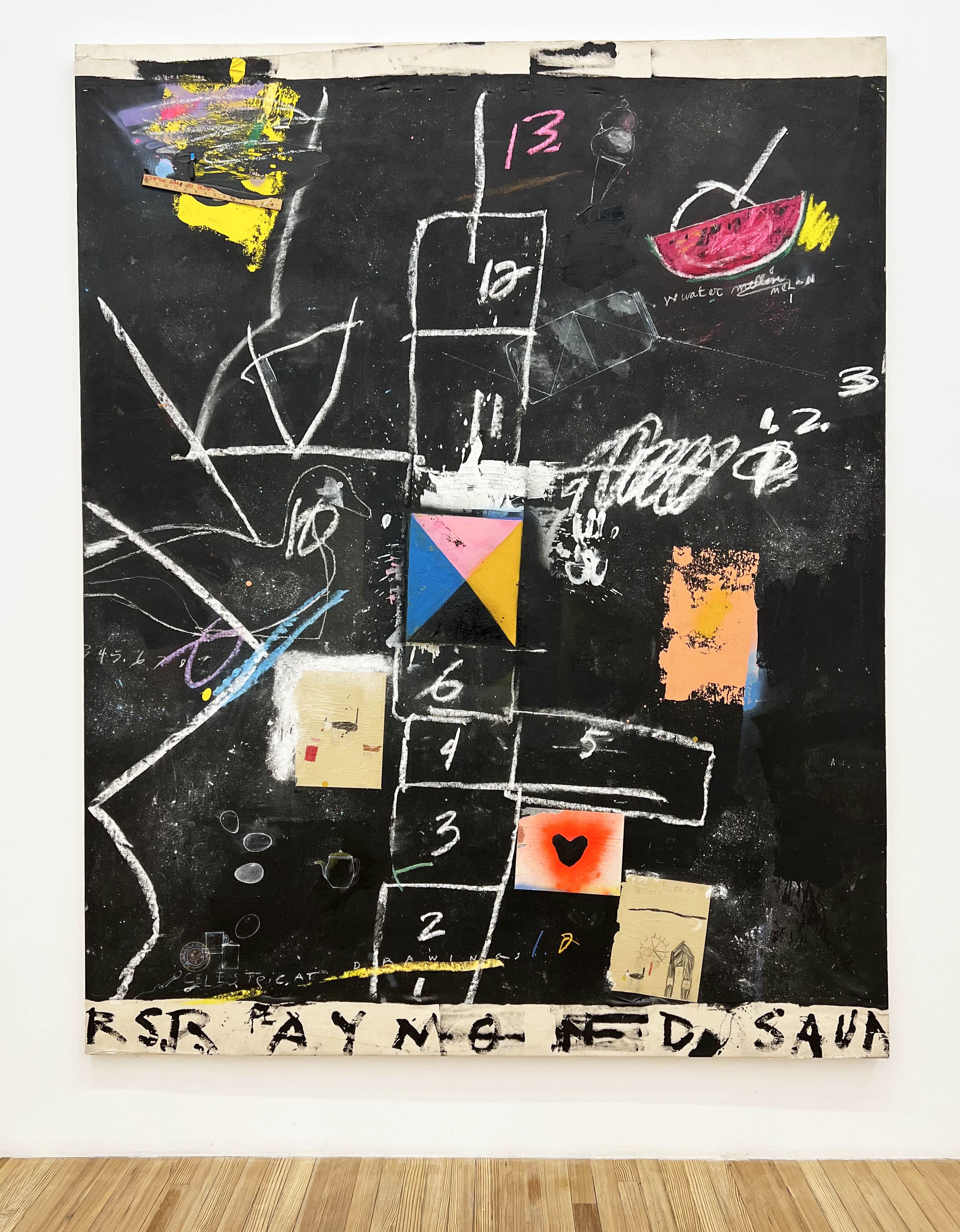
The hopscotch grid stands out in this painting by Raymond Saunders, now on view in the renowned Bay Area artist’s first New York solo show in 20 years at Andrew Kreps Gallery in Tribeca.  Evoking a childhood game drawn out on blacktop as well as marks on a chalkboard, references to growth, learning and play are reinforced by the work’s title, ‘Celeste Age 5 Invited Me To Tea.’  Two children’s drawings of a wayward cat and a reference to Carnegie Mellon alongside a watermelon (the artist attended Carnegie Institute of Technology) link to Saunders’ recurring themes relating to education and race.  (On view through Feb 12th).

Raymond Saunders, Celeste Age 5 Invited Me To Tea, mixed media on canvas, 104 x 83 1/8 inches, 1986.

Lucy Puls at Nicelle Beauchene Gallery

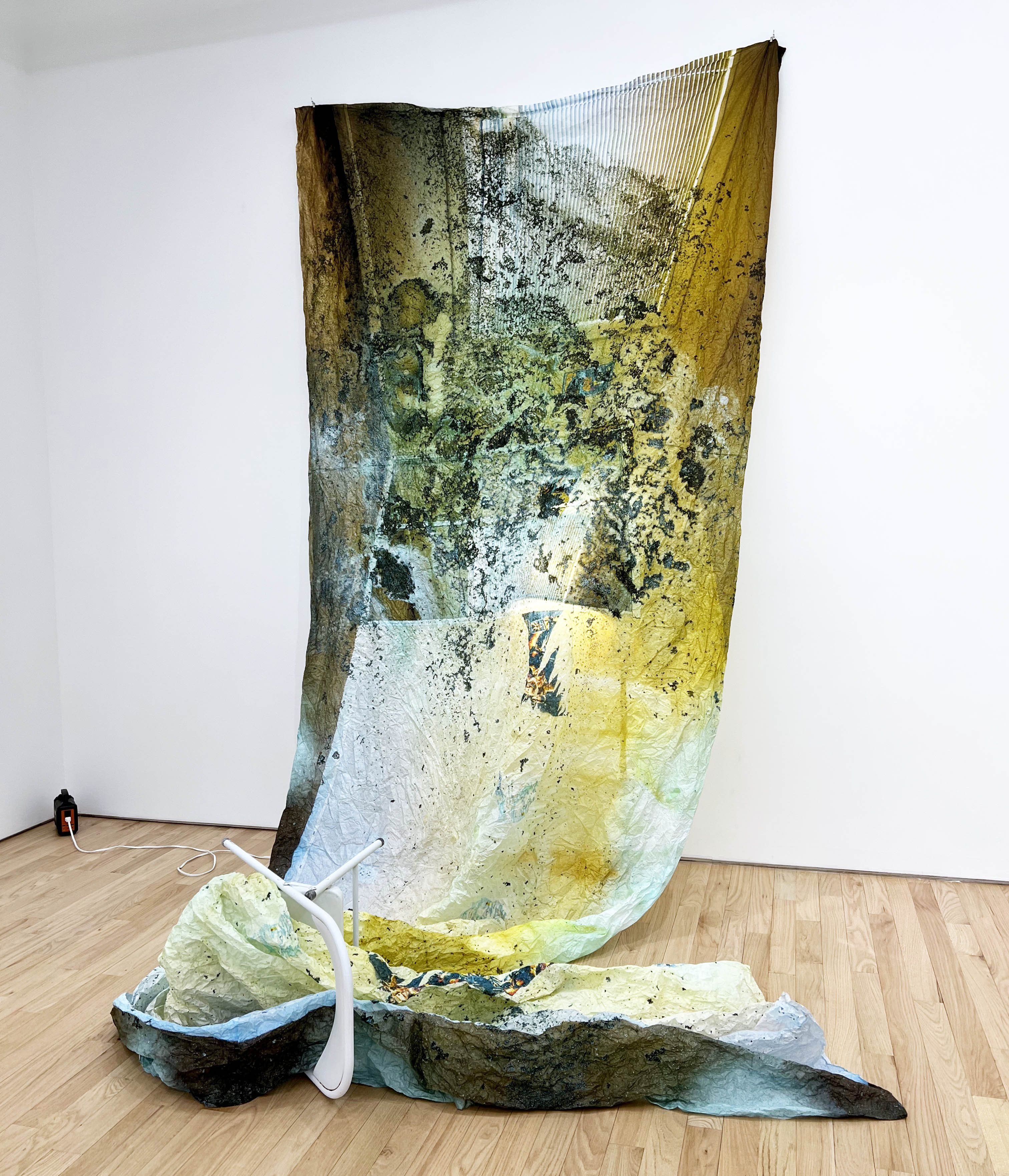
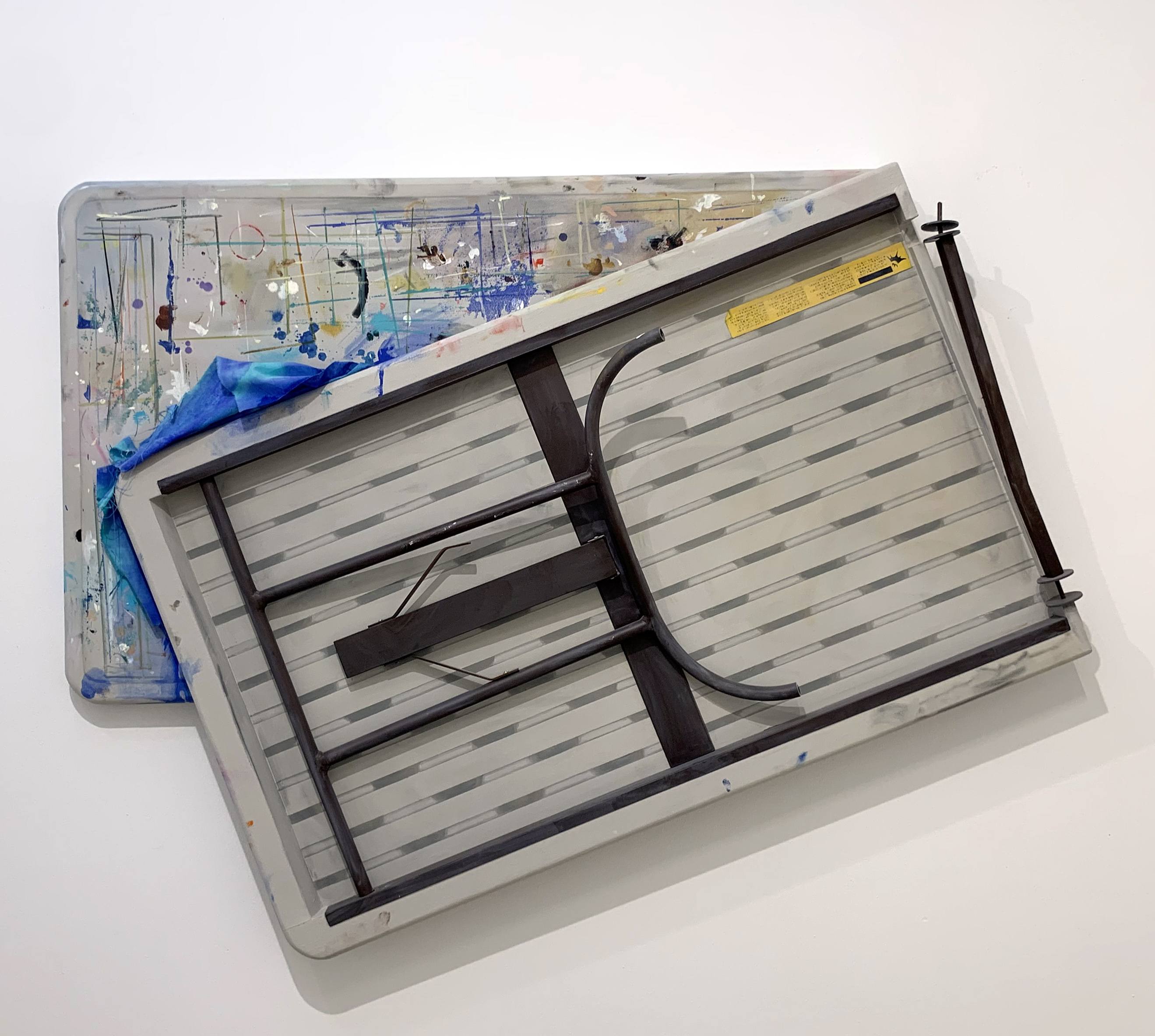
Bay Area artist Lucy Puls has returned over the course of her decades-long career to the question of what society values and what it discards.  Her photos of bank-owned homes, printed on huge sheets of fabric-like paper and hung high on the walls of Nicelle Beauchene Gallery feature images of places once personally meaningful and now neglected. Weighed down by discarded household items, in this case a metal folding chair, images and objects speak to the passing of time, to change and moving on.  (On view in Tribeca through Jan 22nd).

Lucy Puls, Delapsus (Bedroom, Mirrored Closet Door, Mini Blinds, Movie Poster), pigment ink on paper, floor standing lamp, metal folding chair, DVD movie, stickers, reflective glass beads, binder, steel hardware, 130 h x 85 w x 84 d inches, 2021.

Alexander Guy at Harper’s Gallery

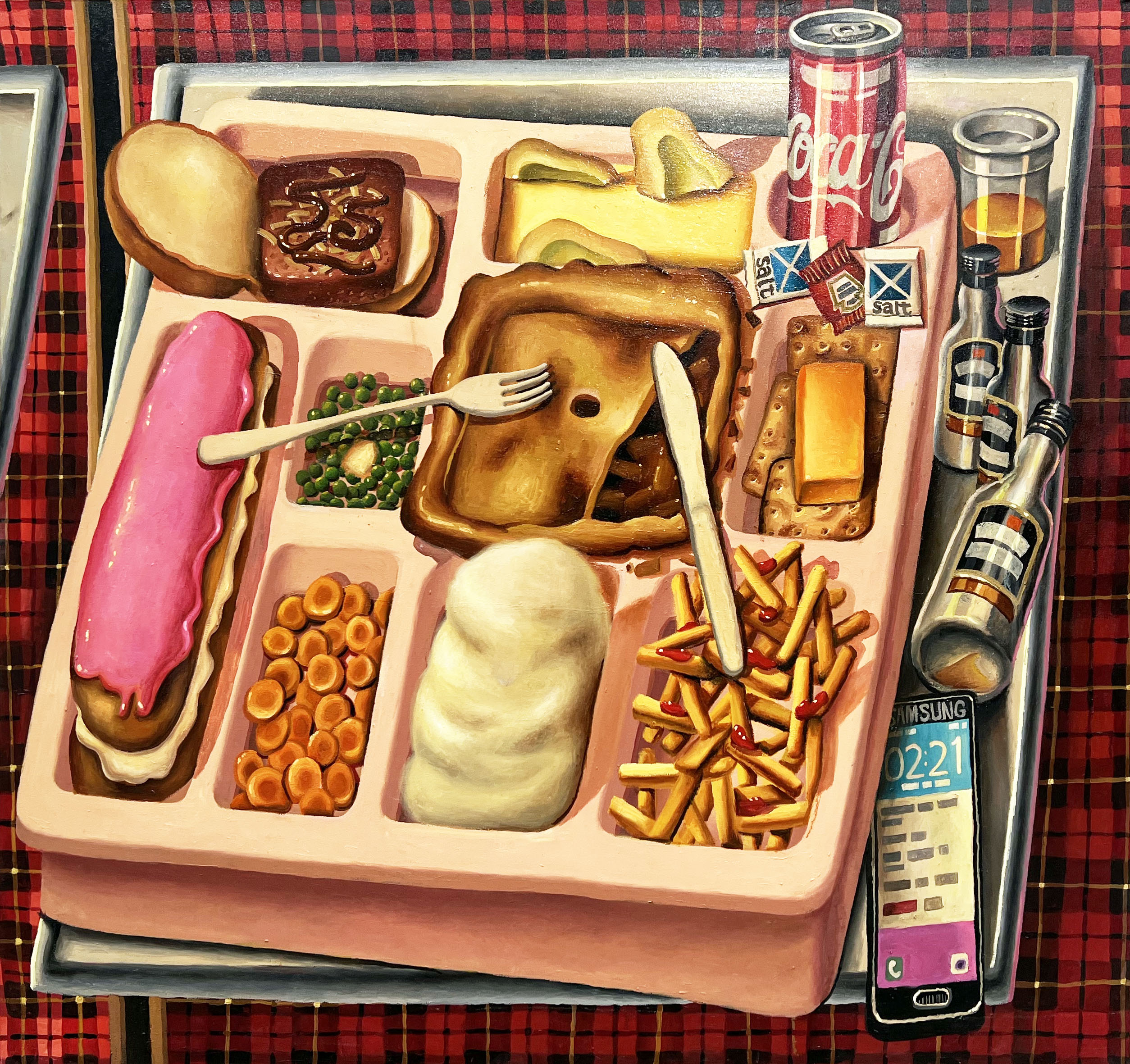
Scottish painter Alexander Guy made a hit on the ‘80s London art scene with his deadpan paintings, which ranged in subject from everyday objects to celebrity images.  In a career revival, Guy is now making his New York gallery debut at Harper’s Gallery in Chelsea with oil paintings showing an abundance of processed food, including a freezer stuffed with ice cream and pizza and a carefully arranged array of pink-colored foods from Tesco supermarket.  Here, a transatlantic in-flight meal overwhelms with its number of dishes and suggests that more is not necessarily more.  (On view through Jan 15th. Masks, social distancing and proof of vaccination required.)

Alexander Guy, GLA -> JFK (In flight meal), oil on canvas, 68h x 72.25w, 2021.

Suellen Rocca, Departure at Matthew Marks Gallery

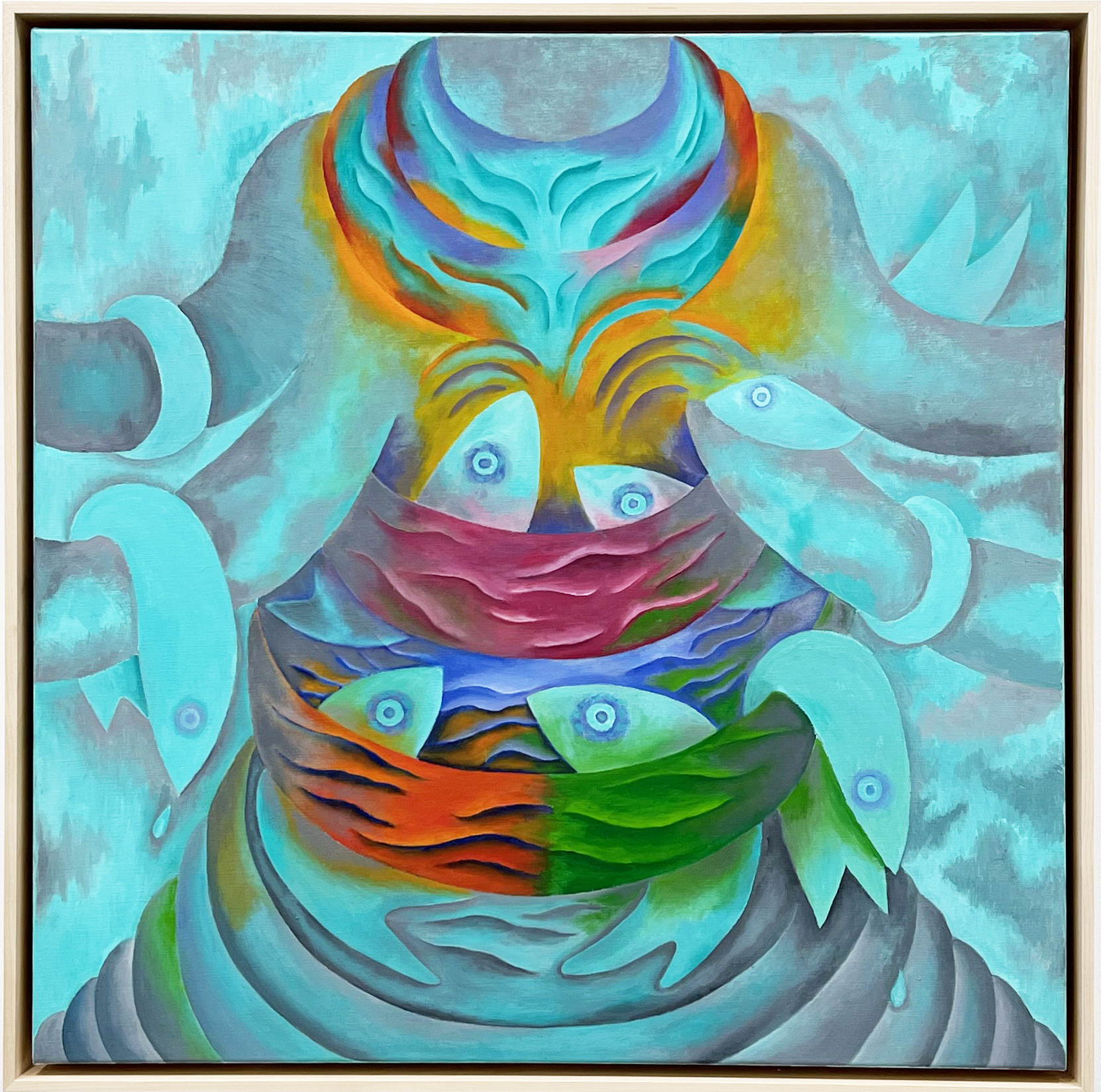
Suellen Rocca, a founding member of the short-lived but hugely influential group of Chicago artists known as ‘Hairy Who,’ adopted imagery from magazine ads, Sears Roebucks catalogues and other American pop culture sources, but her late-career work took on more personal meanings.  Several pieces in Matthew Marks Gallery’s exhibition of the late artist’s work in Chelsea include imagery relating to fish, which came to Rocca in a dream.  Fish seem to nurse like babies, breasts morph into fish and, in this painting, fish adorn the body of a deity-like multi-armed figure, picturing female power in terms of feeding, nurture and life.  (On view through Jan 29th.  Masks, social distancing and proof of vaccination required.)

Suellen Rocca, Departure, oil on canvas, 30 x 30 inches, 2012.

Cinga Samson at Flag Art Foundation

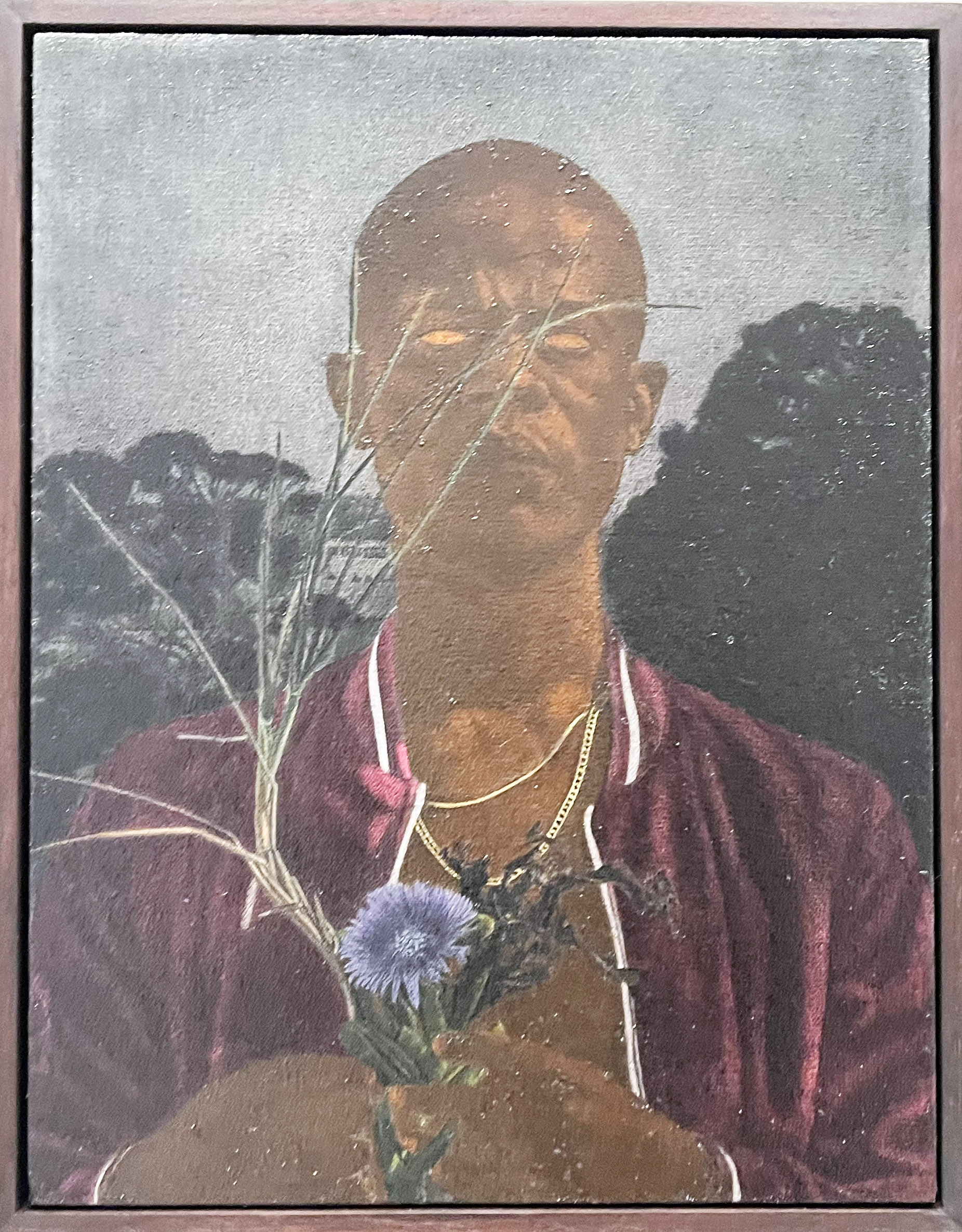
South African artist Cinga Samson complicates the act of looking in paintings that are challenging to see. The muted palettes and crepuscular lighting of his individual portraits and figure groups not only disguise his subjects, but aim to create a sense of having intruded on a private scene.  Samson’s recent body of work, on view at Flag Art Foundation in Chelsea, features young men like this figure, whose remarkable eyes disrupt easy engagement and suggest moments of looking inward.  Each painting is a meditation on mortality, the flower in this piece acting as a symbol of transience.  (On view through Jan 15th.   Masks, social distancing and proof of vaccination required).

Cinga Samson, Nontshonshi 1, oil on canvas, 18 x 13 ¾ x 1 inches, 2021.

Brie Ruais at Albertz Benda Gallery

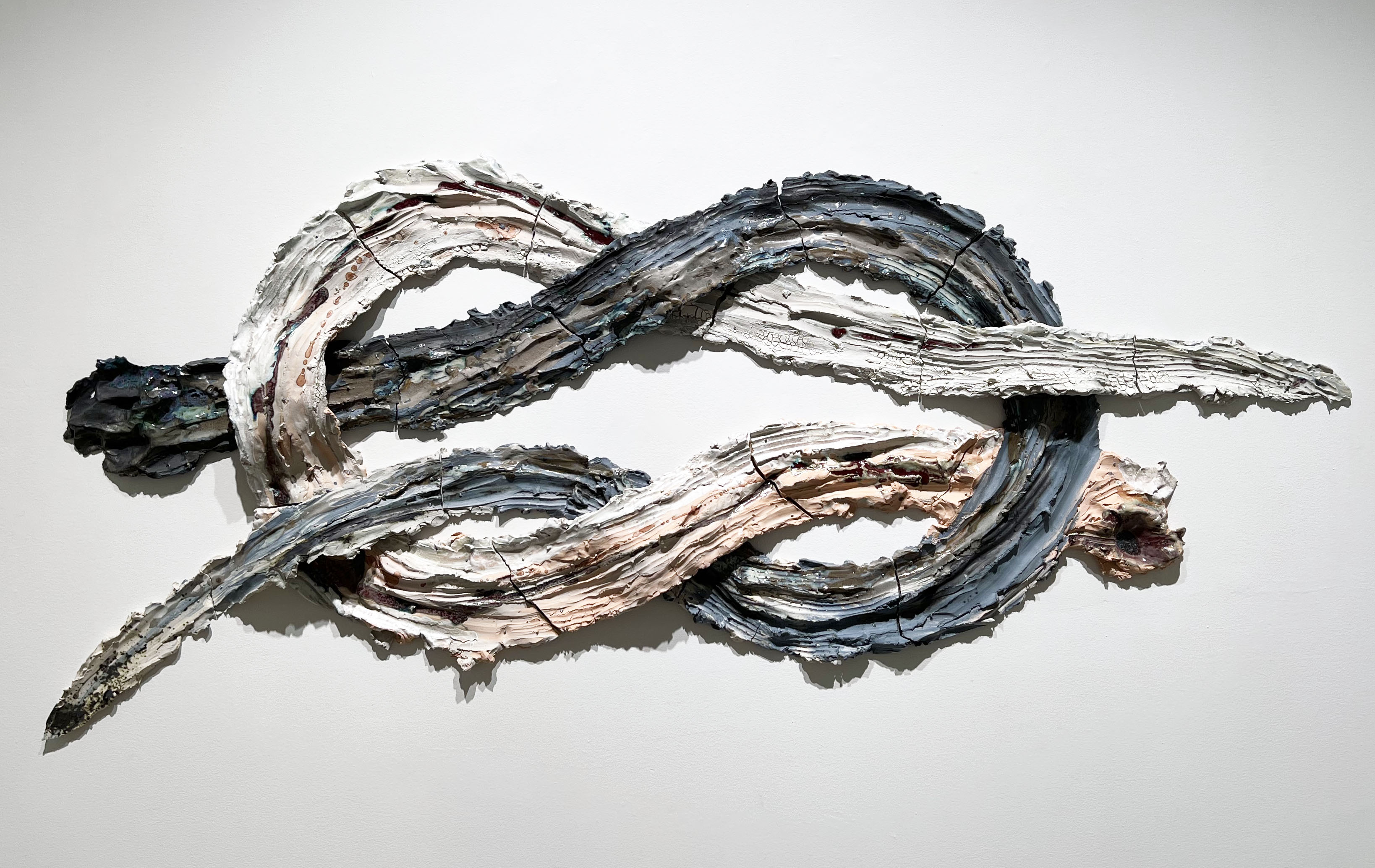
Brie Ruais’s signature approach to art involves manipulating a 130 lb pile (equivalent to the artist’s weight) of clay into flat rings of ceramic sculpture textured with finger and footprints.  Here, she varies her usual circular form with this knot-shaped piece in her current show at Albertz Benda Gallery.  The artist has called her work ‘Earth Art that takes place in the studio;’ in this sculpture, the relationship between the body and landscape speaks to interconnectedness.  (On view in Chelsea through Jan 22nd.)

Brie Ruais, Intertwining, 130lbs times two (Thief Knot), glazed and pigmented stoneware, hardware, 62 x 124 x 6 inches, 2021.

Tyler Ballon at Deitch Projects

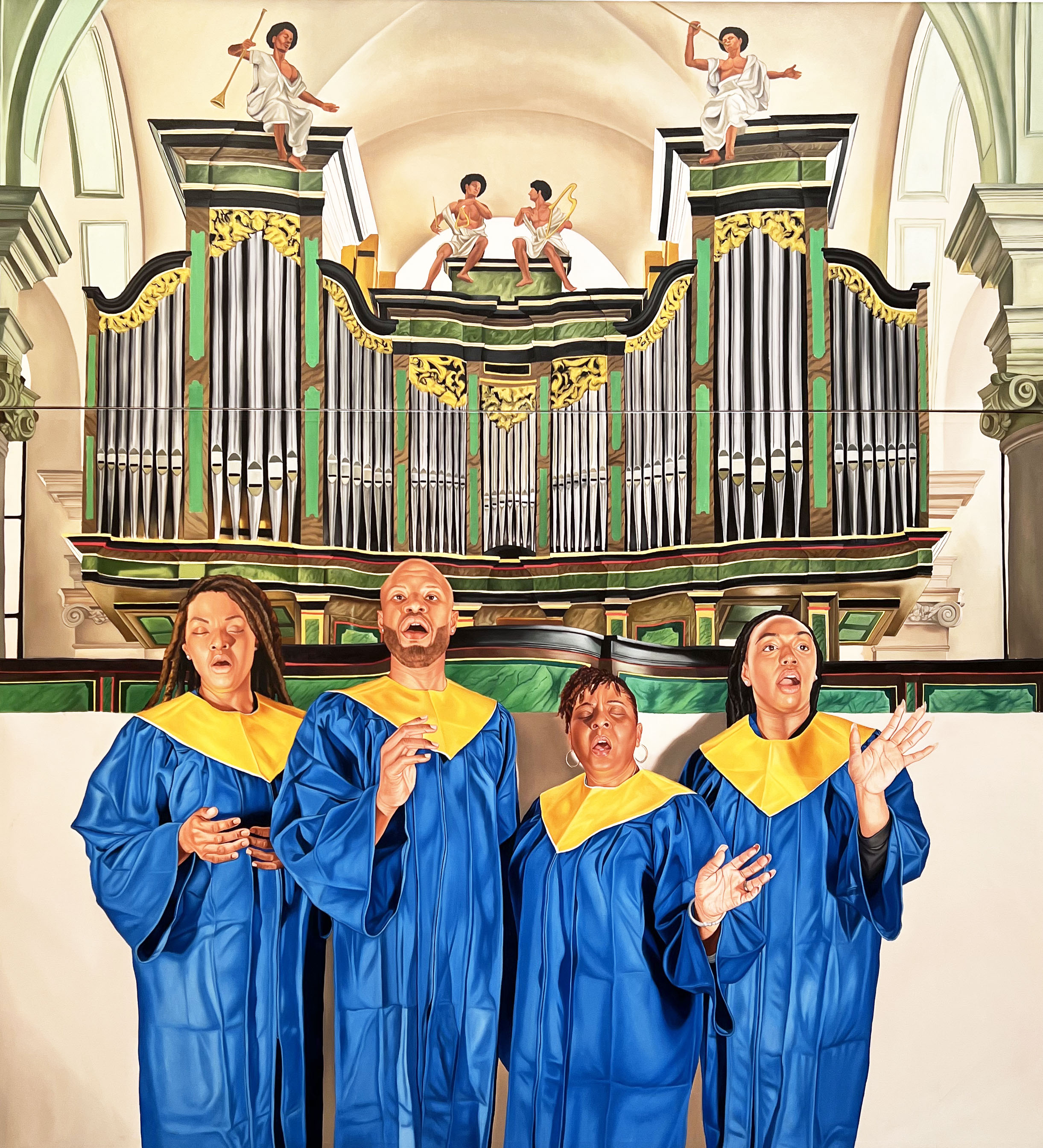
Below tiny members of a celestial choir, four earthly singers raise voices in praise in Tyler Ballon’s painting at Deitch Projects in SoHo.  Identifying ‘the Black church as a place of comfort and strength,’ Ballon also pictures scenes from the life of a pastor (a job both of his parents have filled) that honor this leadership role.  Other paintings feature loving relationships between friends and family and special moments including a graduation and a commemoration of Black lives lost.   (On view in SoHo through Jan 15th.  Note holiday hours and closures.)

Tyler Ballon, Songs Flung to Heaven, oil on canvas, 98 x 107 inches, 2021.


Gillian Wearing: Wearing Masks at the Guggenheim Museum

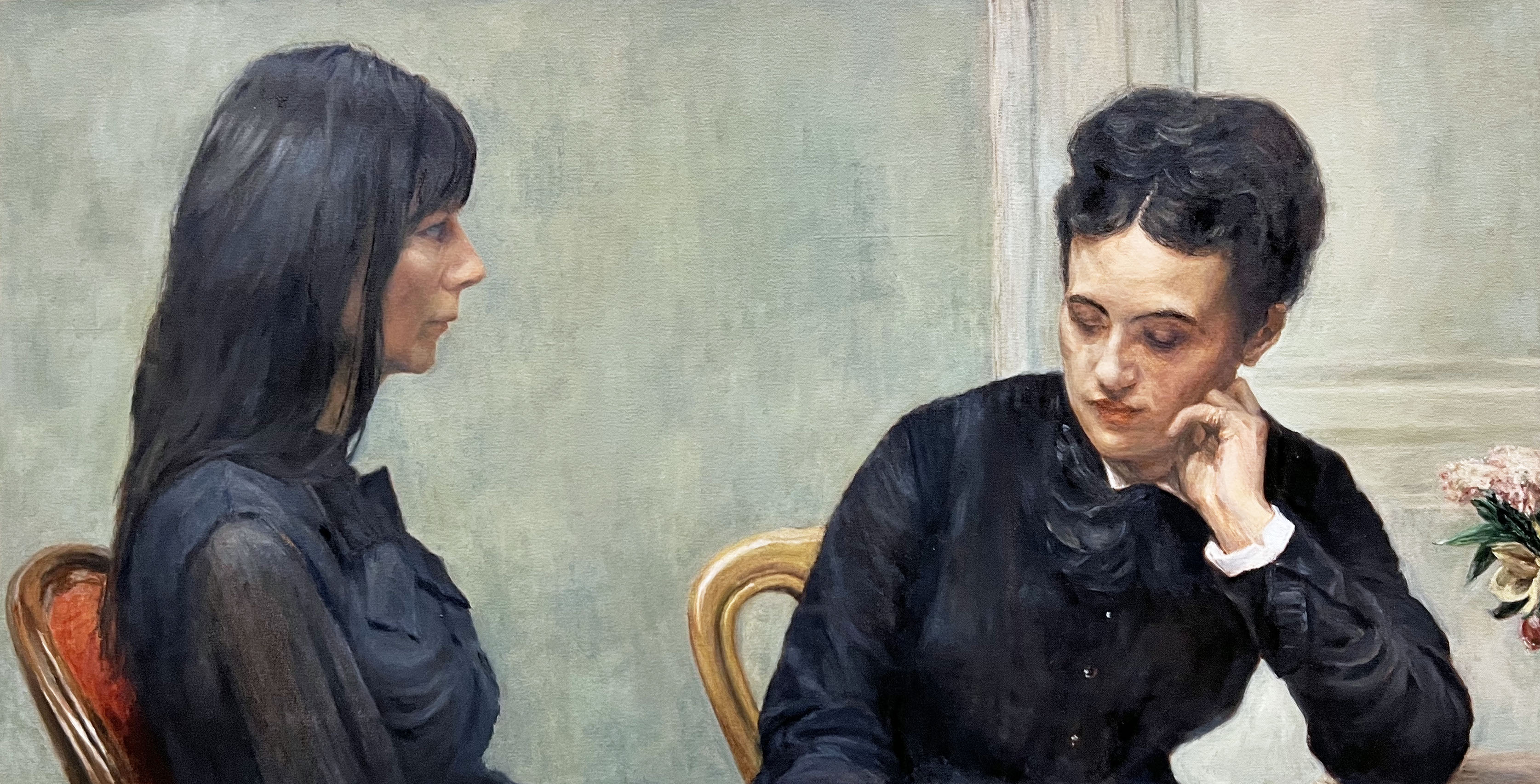
Known for bringing private lives into the public realm through projects like her iconic 1992-3 ‘Signs,’ for which strangers posed with signs sharing their personal thoughts, British conceptual artist Gillian Wearing continues to probe beyond the surface in recent work on view in her career retrospective at the Guggenheim Museum.  Based on mid-to late 19th century French artist Henri Fantin-Latour’s ‘La Lecture (The Reading),’ Wearing’s update includes herself on the left, not just listening to the reading, but gazing intently upon the reader.  Fantin-Latour’s characters famously exist in their private worlds, not always connecting with each other. Wearing, on the other hand, is absorbed by the world inhabited by her companion.  (On view on the Upper East Side through April, ’22).

Gillian Wearing, Me in History – A Conversation with the Work of Fantin-Latour, oil on canvas, 2021.

Tomas Sanchez at Marlborough Gallery

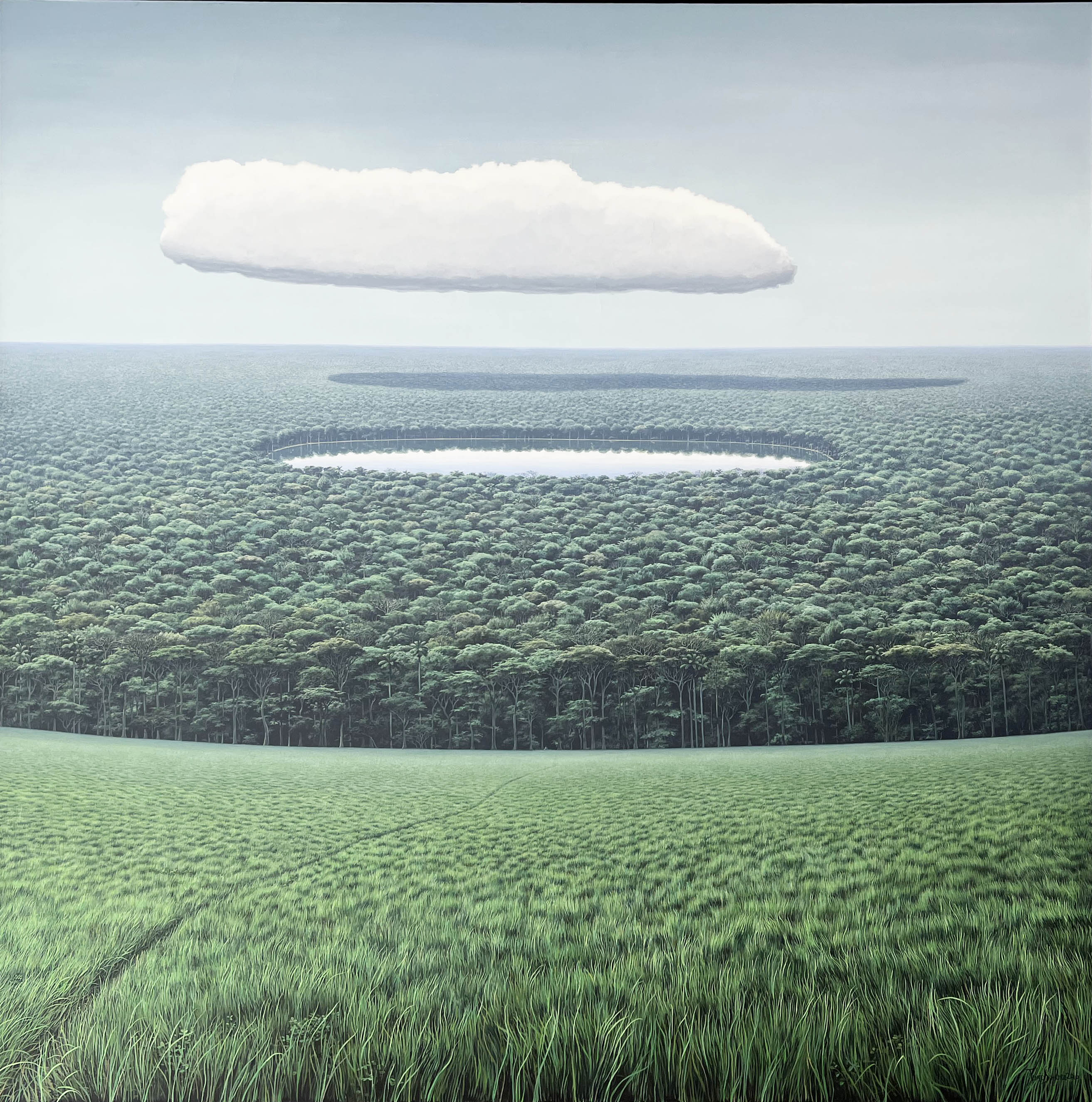
It’s no surprise that #meditation is one of the first tags Cuban painter Tomas Sanchez uses when posting images of new paintings to Instagram.  His intensely detailed, imagined landscapes are inspired by his daily meditative practice and celebrate the sublime on both a vast and tiny scale, eliciting wonder at nature’s complexity.  Sanchez’s first show at Marlborough New York in over 15 years offers a decade of work – new and loaned from collections.  It features not only verdant scenes but a selection of paintings featuring vast fields of discarded consumer items and trash, a disturbing contrast to the boundlessness of nature in the paintings. (On view through Jan 22nd. Note holiday hours and closures.)

Tomas Sanchez, Inner Lagoon…Thought-Cloud, acrylic on canvas, 78 ¾ x 78 ½ inches, 2016.

Catherine Murphy at Peter Freeman Inc

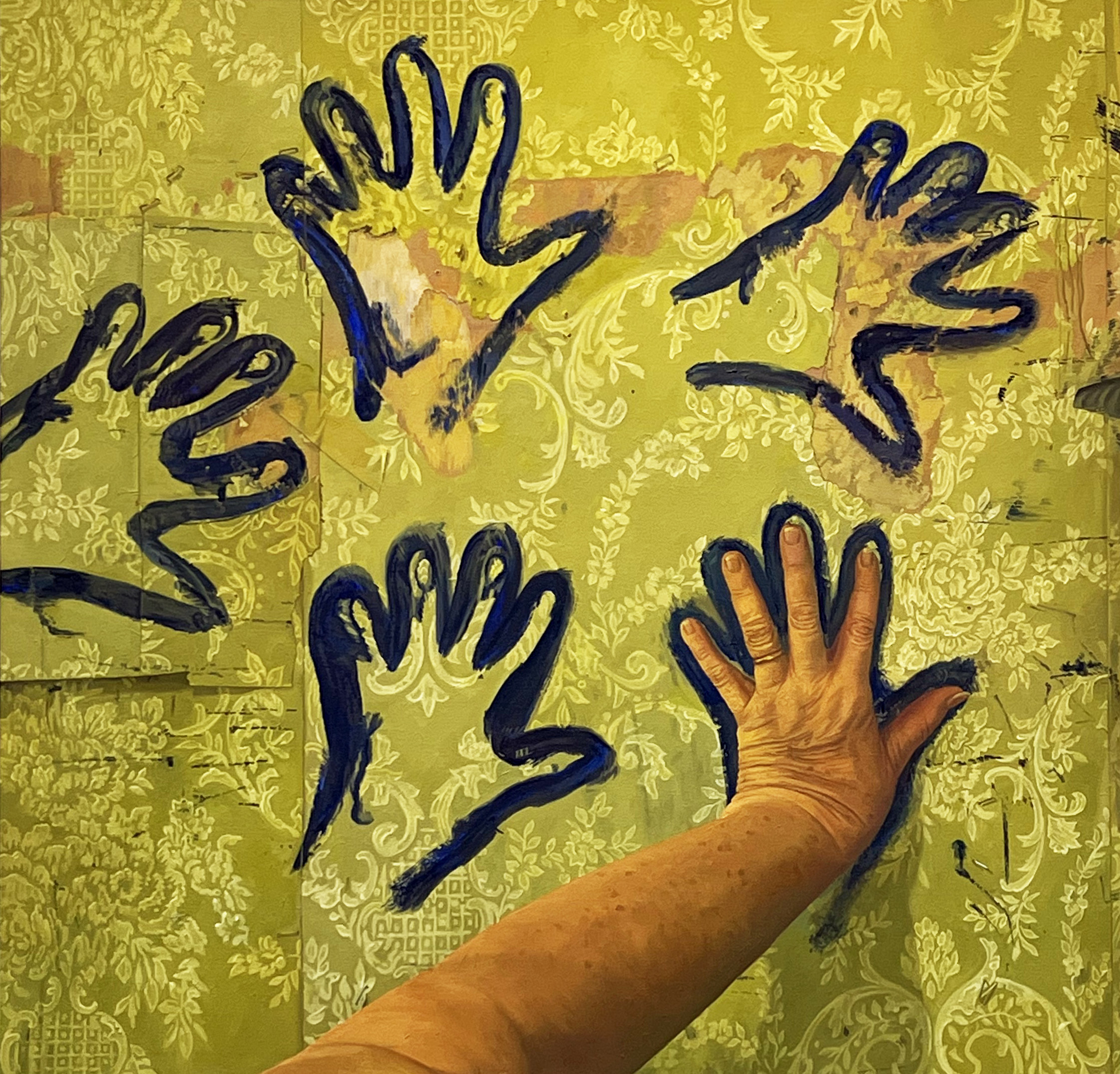
Catherine Murphy’s ‘Begin Again’ greets visitors at the entrance of Peter Freeman Inc’s SoHo gallery, questioning the foundation of the artist’s realist painting practice by juxtaposing emotive gestures with skilled rendering.  Painted black outlines resemble ancient handprints in caves or body outlines traced by children and are a stark contrast to Murphy’s naturalistic rendering of her left hand and arm.  The painting’s wallpaper-like background suggests an unstoppable creative impulse akin to kids painting on the living room walls.  Recently called ‘one of America’s greatest living realist painters’ in the New Yorker and ‘one of our great artists’ in Hyperallergic, Murphy in her mid-70s testifies to the importance of keeping her practice fresh by ‘beginning again.’ (On view in SoHo through Jan 7th. Note holiday hours and closures.)

Catherine Murphy, Begin Again, oil on canvas, 46 ½ x 48 inches, 2019.

John Pai in ‘The Unseen Professors’ at Tina Kim Gallery

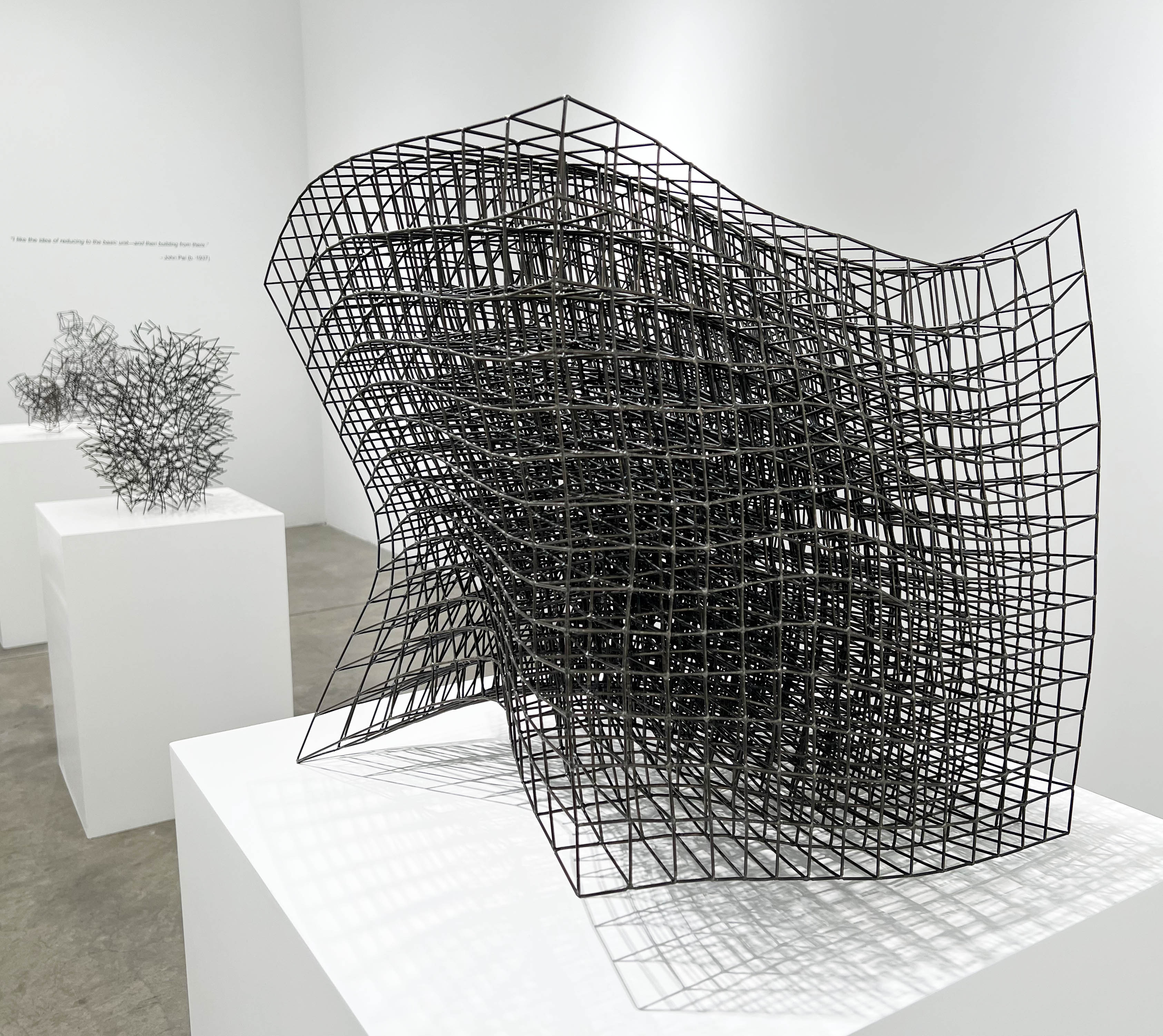
Dense and complex, this piece by octogenarian sculptor John Pai, now on view in a show of work by three 20th century Asian-American sculptors at Chelsea’s Tina Kim Gallery, evokes a scientific or mathematical model in flux.  Piece by piece, Pai welded short steel rods together in a hands-on practice he likened to drawing.  Reflecting subconscious activity and taking inspiration from music, science, architecture and more, Pai’s dynamic constructions elicit wonder at complex structures in our own thought processes and the world around us.  (On view through January 29th. Note holiday hours and closures.)

John Pai, Slice of Wave to Go, welded steel, 23.5 x 32 x 30.5 inches, 1980.

Olive Ayhens at Bookstein Projects

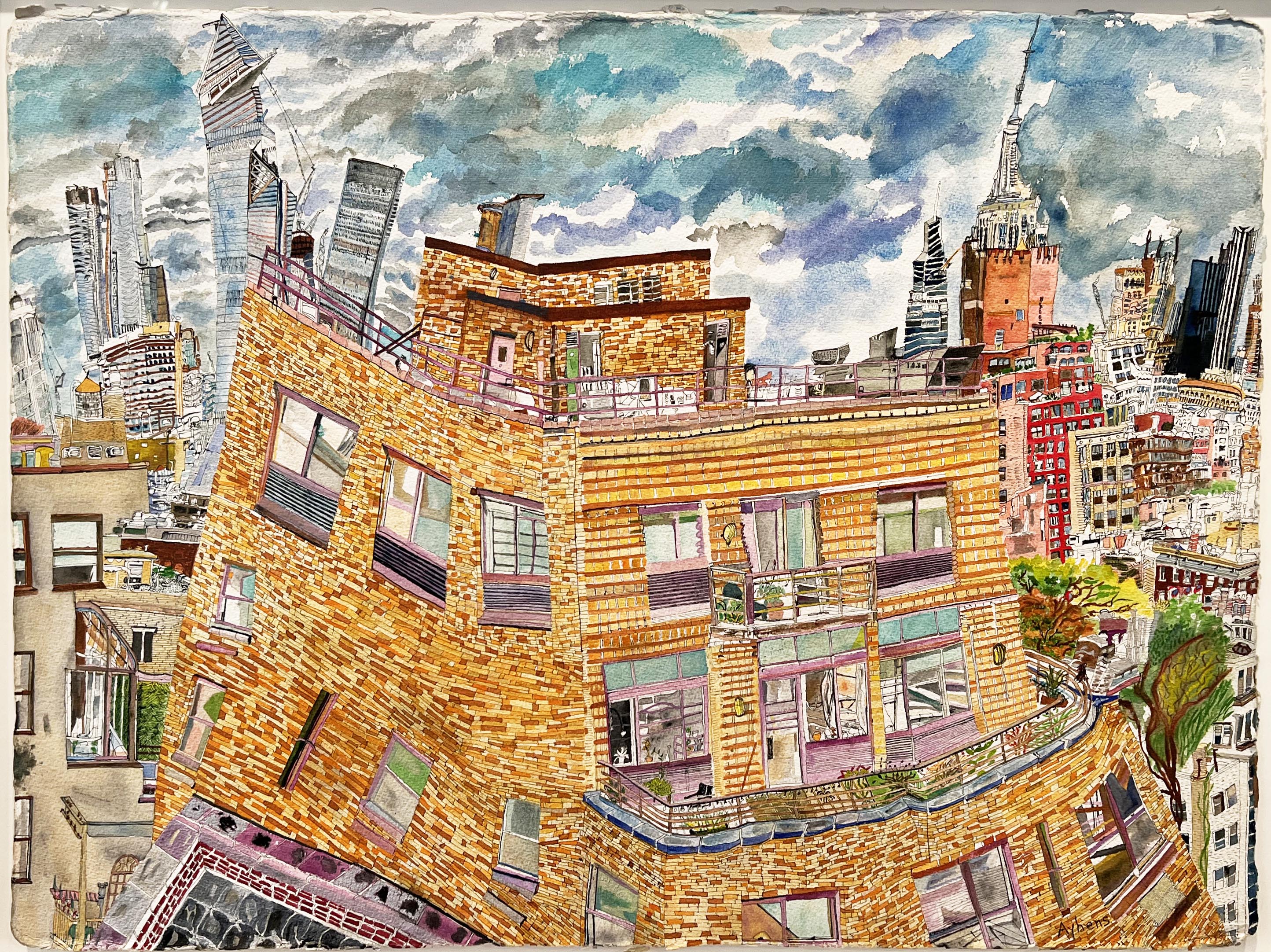
Olive Ayhens meets the abundance of people and buildings in New York with a profusion of recorded detail in her new series of ink and watercolor paintings at Bookstein Projects. Painted in a topsy turvy style combining multiple perspectives, Ayhens’ dynamic cityscapes look as if the buildings are in movement, perhaps shuffling down the sidewalk shoulder to shoulder like New York’s notably absent human residents. Painted in her new West Village neighborhood during the pandemic, Ayhens work reflects a sense of jittery nervousness via its architecture.  (On view on the Upper East Side through Jan 7th.  Note holiday hours and closures).

Olive Ayhens, Orange Luxury, watercolor and ink on paper, 23 x 30.5 inches, 2020.

Elmgreen and Dragset at Pace Gallery

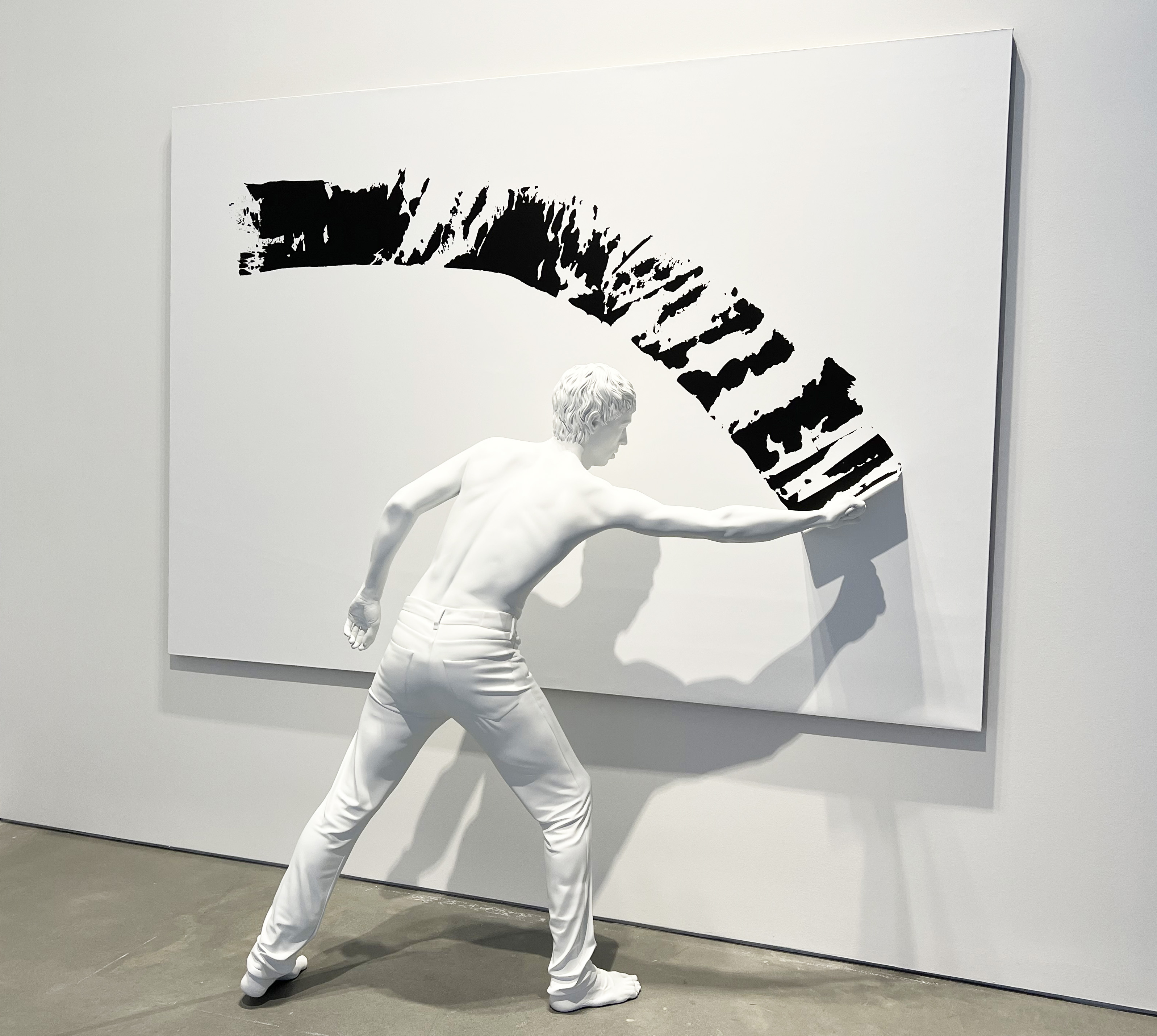
Titled ‘The Painter, Fig. 1,’ this lacquered bronze sculpture by Berlin-based duo Elmgreen and Dragset appears to be offered as an illustration of an artist in action and is prominently displayed in the window of Pace Gallery’s Chelsea building.  In the adjoining gallery, other sculptures hint at themes of regret, loneliness and the will to dominate; nearby, this artist responds.  It’s unclear if he’s laying down black paint or scraping off white paint to reveal the darkness beneath; either way, he appears to be putting a dramatic end to his monochrome existence.  (On view in Chelsea through Dec 18th).

Elmgreen and Dragset, The Painter, Fig. 1, bronze, lacquer, linen, paint, 98 7/16 x 100 3/8 x 23 5/8 inches, 2021.

Ken Price, Pluto Bowl at Matthew Marks Gallery

If images of factories, billowing smokestacks and oil-slicked water sound alien to traditional ceramic decoration, the title of Ken Price’s mid-90s series, ‘Plutoware,’ at Matthew Marks Gallery plays along.  Intended to be a pun on the word pollution, the iconic sculptor’s scenes of environmental damage set up a fundamental contrast between intimately scaled and beautifully colored plates, bowls and vessels and depictions of giant manufacturing and co-generation plants.  Though Price’s work would seem to project despair, his wife, Happy Price explains an alternative point of view, saying, ‘When you look at the Pluto Ware some people only see pollution, darkness, and grim and then other people—like myself—see a kind of strange dark beauty.’  (On view through Dec 18th in Chelsea).

Ken Price, Pluto Bowl (Green Sludge), glazed ceramic, 2 ½ x 7 ¼ x 7 ¼ inches, 1995.

Mira Dancy at Chapter NY

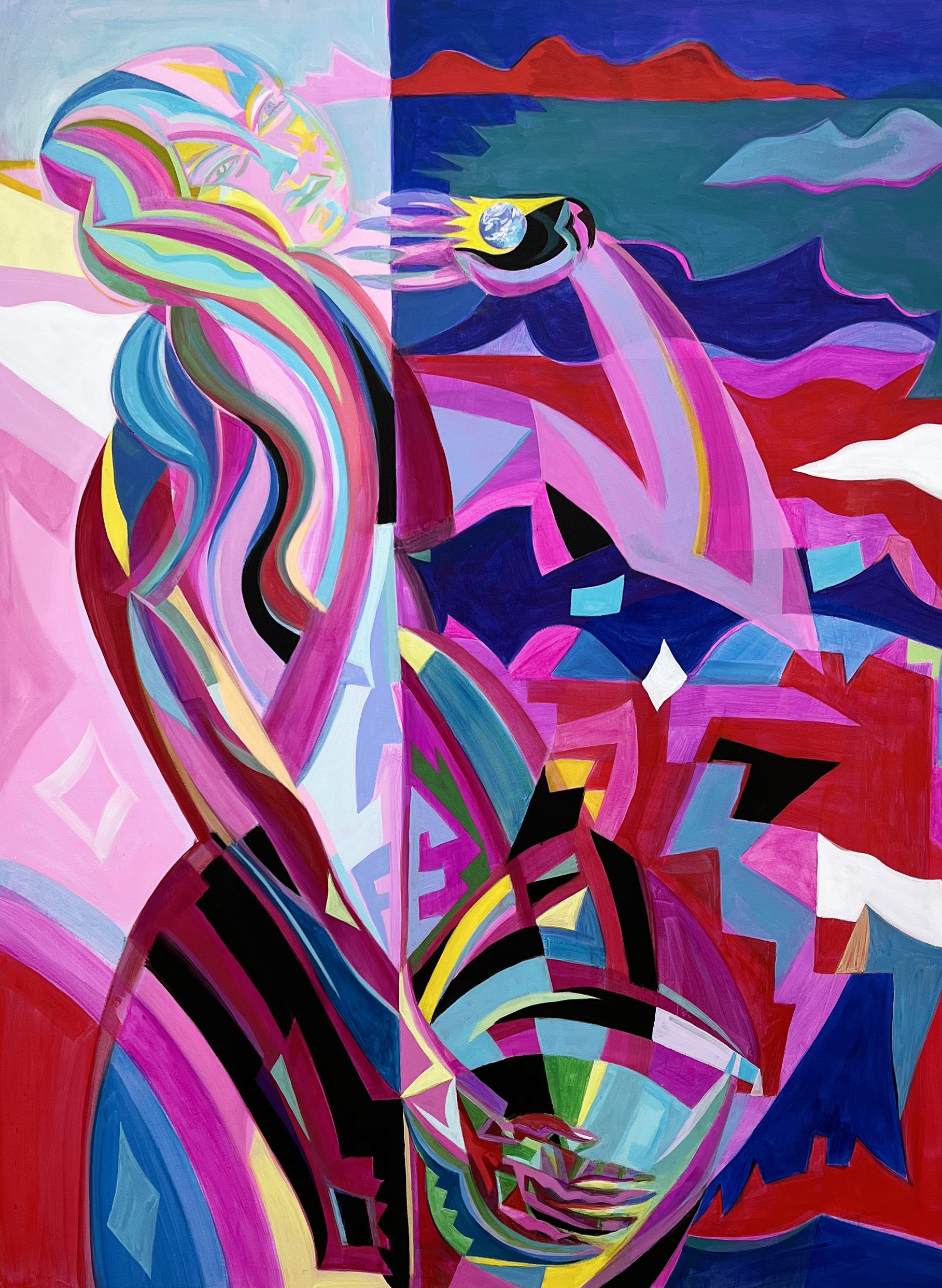
After a recent move from New York to Southern California, Mira Dancy presents new work at Chapter Gallery depicting female figures in her trademark glowing neon colors who now revel in the natural world.  This pregnant goddess holds a ball in her palm that resembles the earth, suggesting a female power on an epic scale.  (On view in Tribeca through Dec 18th).

Mira Dancy, Life Line, acrylic on canvas, 80 x 60 inches, 2021.

Arthur Simms at Martos Gallery

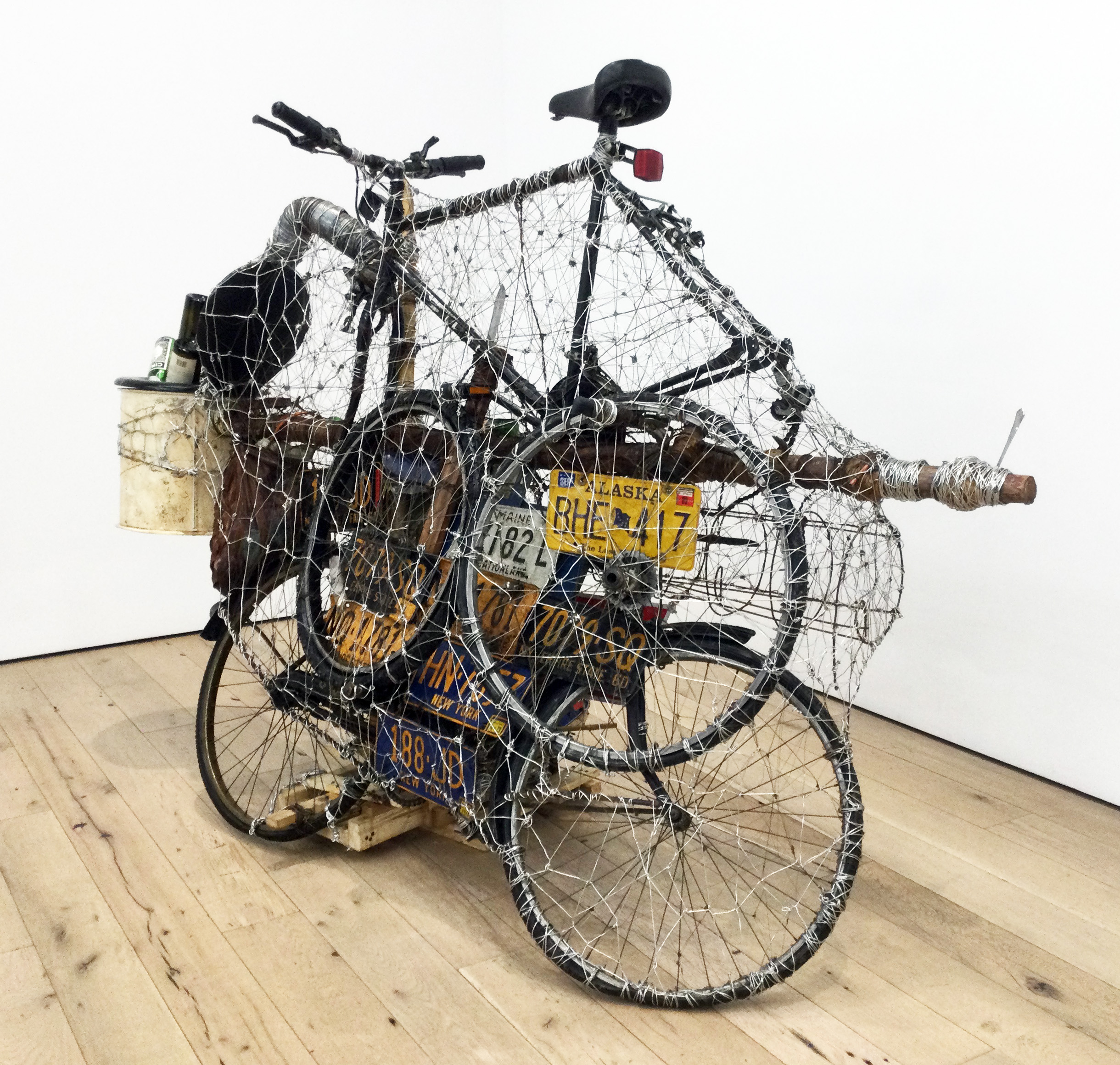
Known for sculptures made of materials wrapped in hemp rope, Arthur Simms makes a departure in this ’96 piece by encasing two bicycles in wire, allowing us to see the license plates, central structure and bucket-like portable toilet on this tricked out super vehicle.   On view in Simm’s select 30-year retrospective at Martos Gallery, this sculpture and other wrapped works were inspired by carts used by homeless New Yorkers as well as the carts used by market vendors in Simm’s home country of Jamaica.  (On view on the Lower East Side through Dec 23rd).

Arthur Simms, Bicycle, bicycles, wire, wood, bottles, plastic, metal and objects, 67 x 93 x 30 inches, 1996.

Portia Zvavahera at David Zwirner Gallery

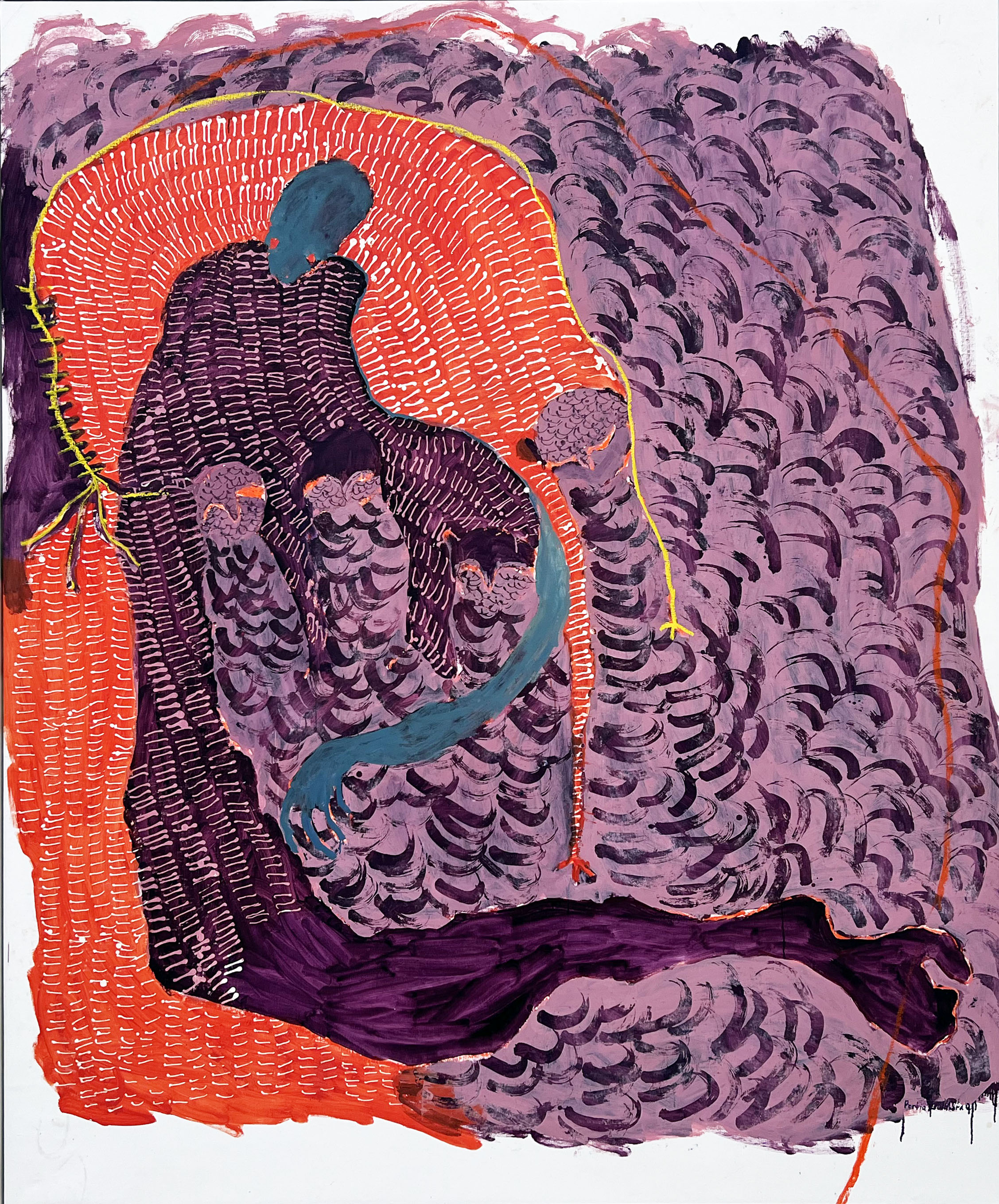
Every morning, Zimbabwe-based artist Portia Zvavahera and her grandmother would recall and share their dreams, now, the artist paints imagery from her nocturnal subconscious to promote healing and reject negative energy.  In her first New York solo show at David Zwirner Gallery, spectral forms and owl-like figures surround the characters, representing both spiritual danger and deliverance.  (On view in Chelsea through Dec 18th).

Portia Zvavahera, Woman with owls, oil based printing ink and oil bar on canvas, 82 ½ x 68 ¼ inches, 2021.

Robert Gober at Matthew Marks Gallery

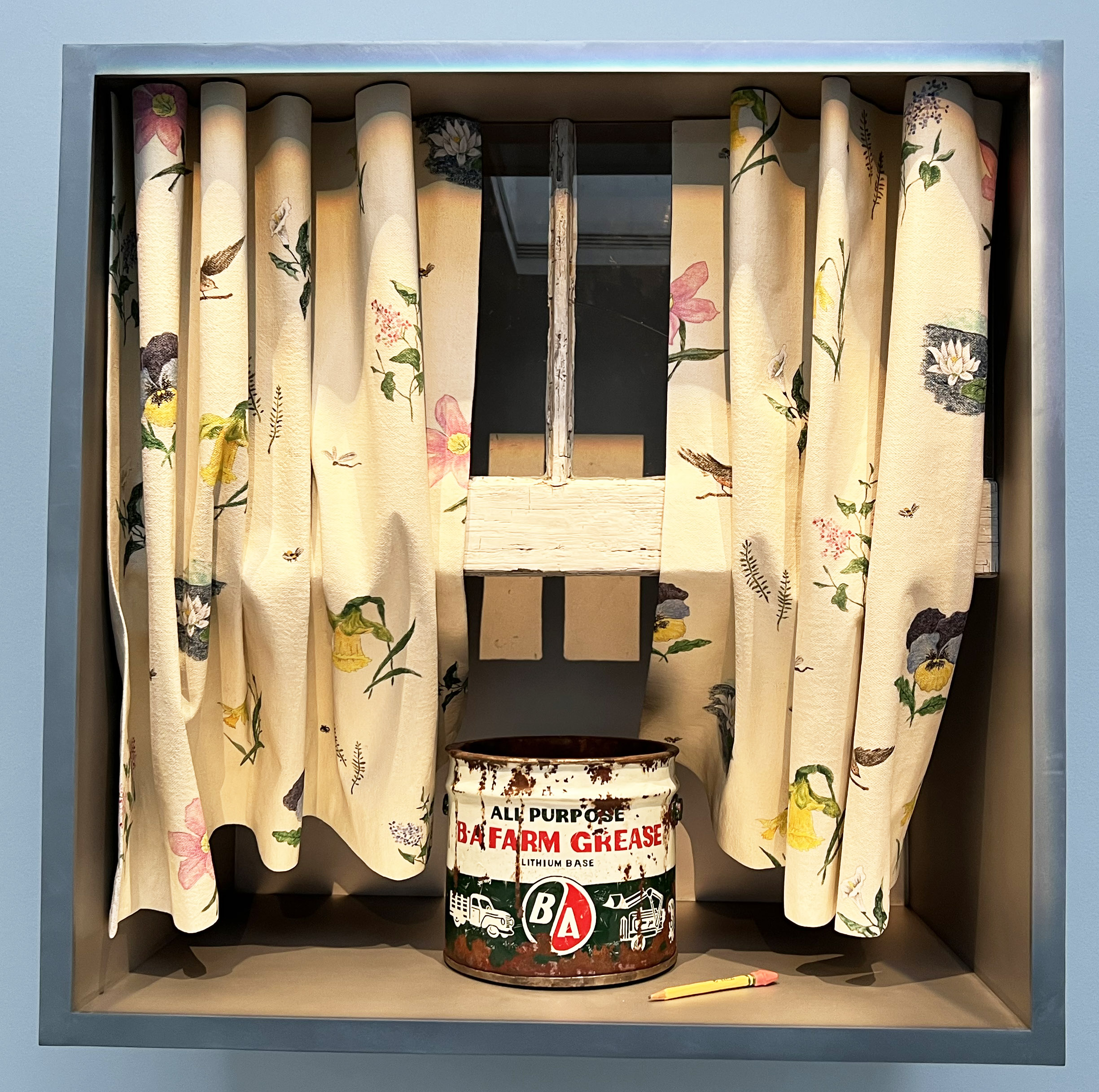
Drawings of barred windows contrast sculptural tableau depicting open windows in Robert Gober’s new work at Matthew Marks Gallery’s 22nd Street location. While the bars suggest imprisonment, a series of wooden windows offer varying degrees of access into personal space resembling – to judge by the weathered sash and can of lithium grease in this version – an aging farmhouse.  Titled ‘Help Me,’ the piece suggests urgent need as it offers objects that stand in for the house’s inhabitants and possibly allude to the body.  Despite the pretty hand-painted designs on a lively curtain that appears to catch the breeze, uncertainty, sentiment, nostalgia and even delight at Gober’s meticulously hand-crafted objects combine to leave a feeling of thought-provoking unease.  (On view through Dec 23rd).

Robert Gober, Help Me, pewter, glass, synthetic plastic polymer, epoxy putty, acrylic paint, wood, cotton, epoxy resin, 30 ¼ x 30 3/8 x 18 ¾ inches, 2018 – 2021.

Tomm El-Saieh at Luhring Augustine

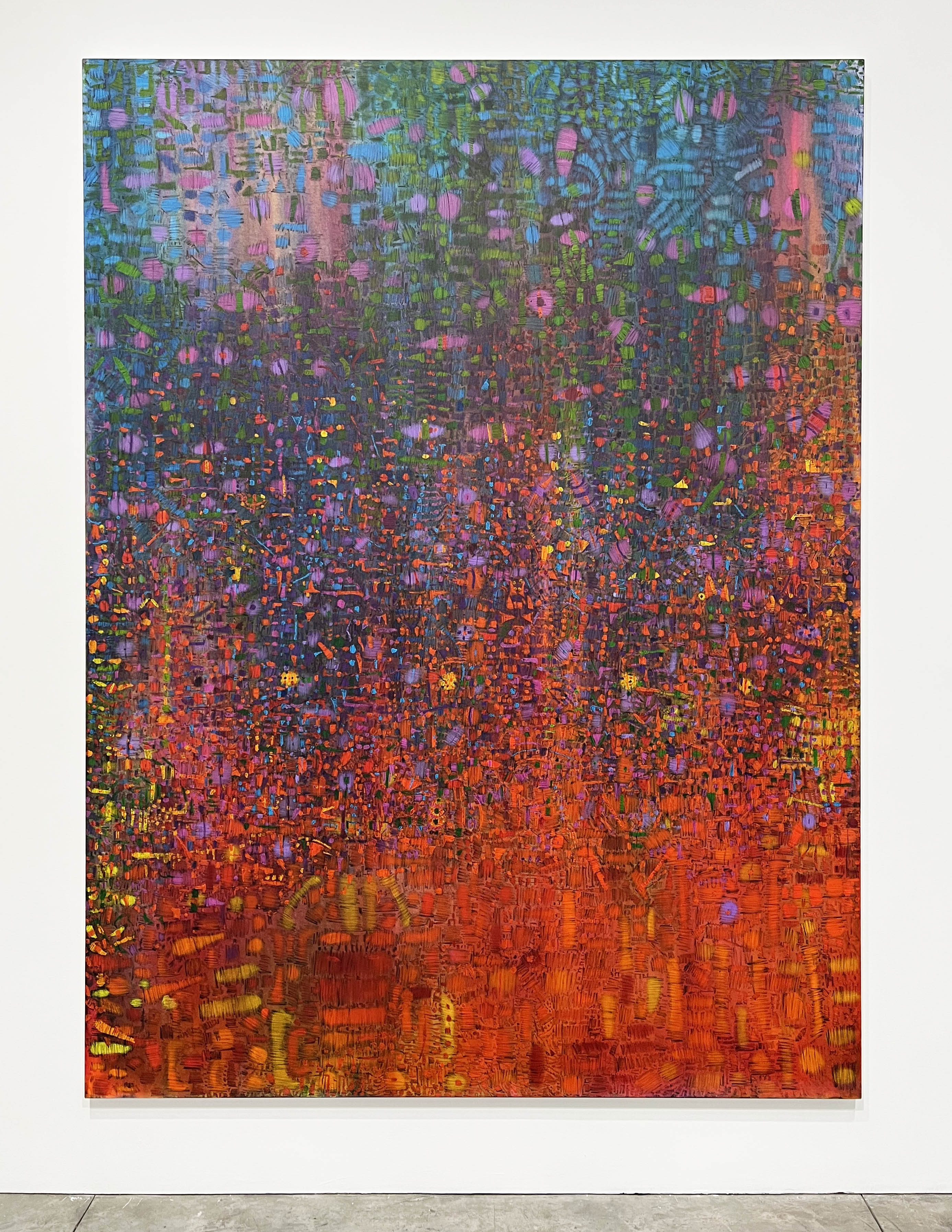
Born in Haiti and raised in Miami, Tomm El-Saieh’s relationship with the country of his birth continues to inspire his abstract paintings, now on view at Chelsea’s Luhring Augustine Gallery.  Haitian spiritual practice as well as the traditions of international abstraction inform El-Saieh’s fields of color and subtle geometric patterns that bloom over the canvases.  (On view through Dec 22nd).

Tomm El-Saieh, Boule, acrylic on canvas, 96 x 72 inches, 2021.

Olga de Amaral at Lisson Gallery

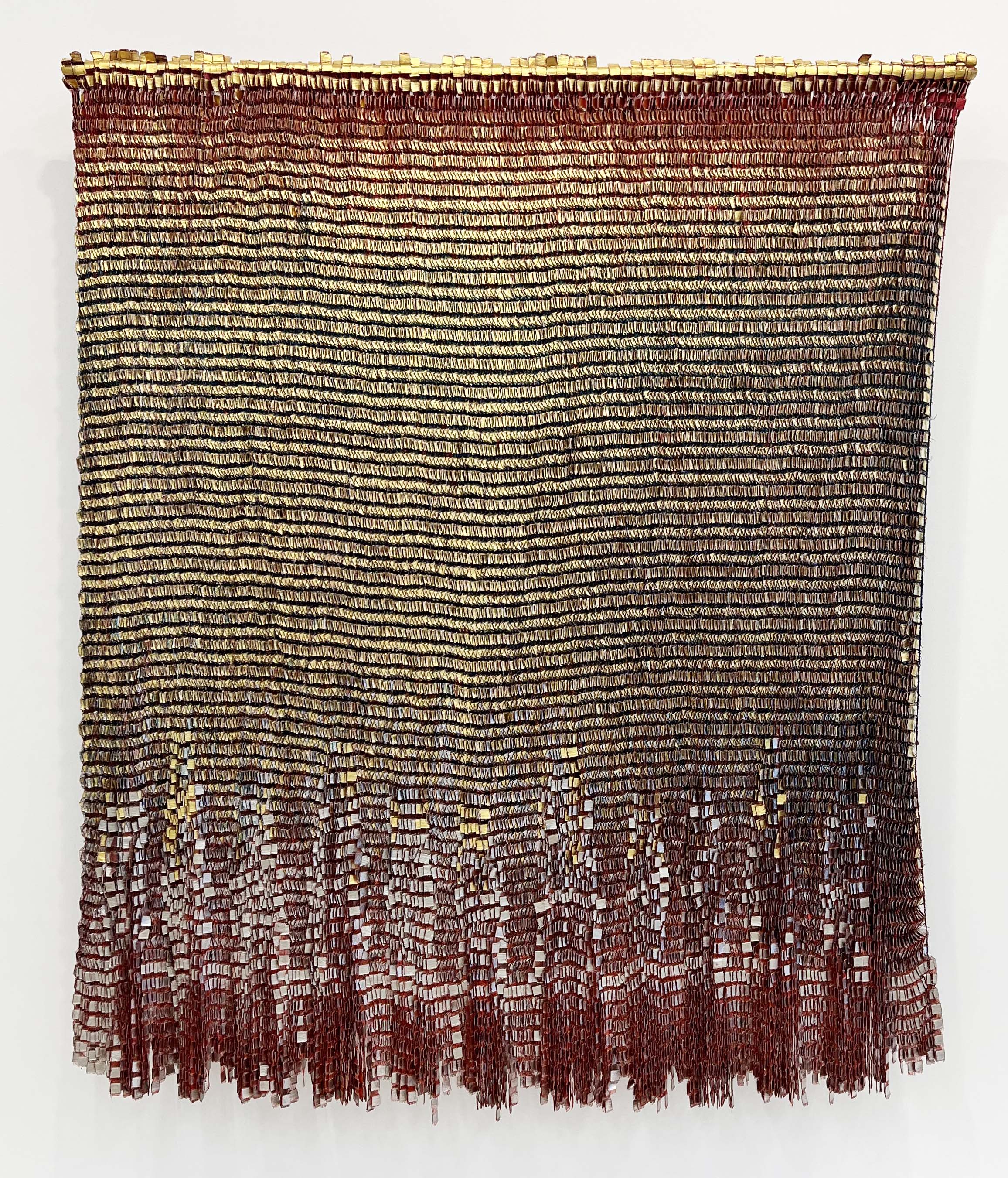
‘For me, gold is the sun,’ explains octogenarian Columbian artist Olga de Amaral as she describes the importance and stunning impact of the material in her textiles.  Hanging assemblages of gold-covered linen positioned near the door of Chelsea’s Lisson Gallery catch the natural light and resemble ancient carved stones; further in the gallery, this piece adds palladium, another metal that reflects light and adds to the luxurious quality of this labor-intensive artwork.  (On view in Chelsea through Dec 18th.  Masks and proof of vaccination required.)

Olga de Amaral, Memorias 6, linen, gesso, acrylic, gold leaf and palladium, 78 5/8 x 74 ¾ inches, 2014.


Radcliffe Bailey, Nommo at Jack Shainman

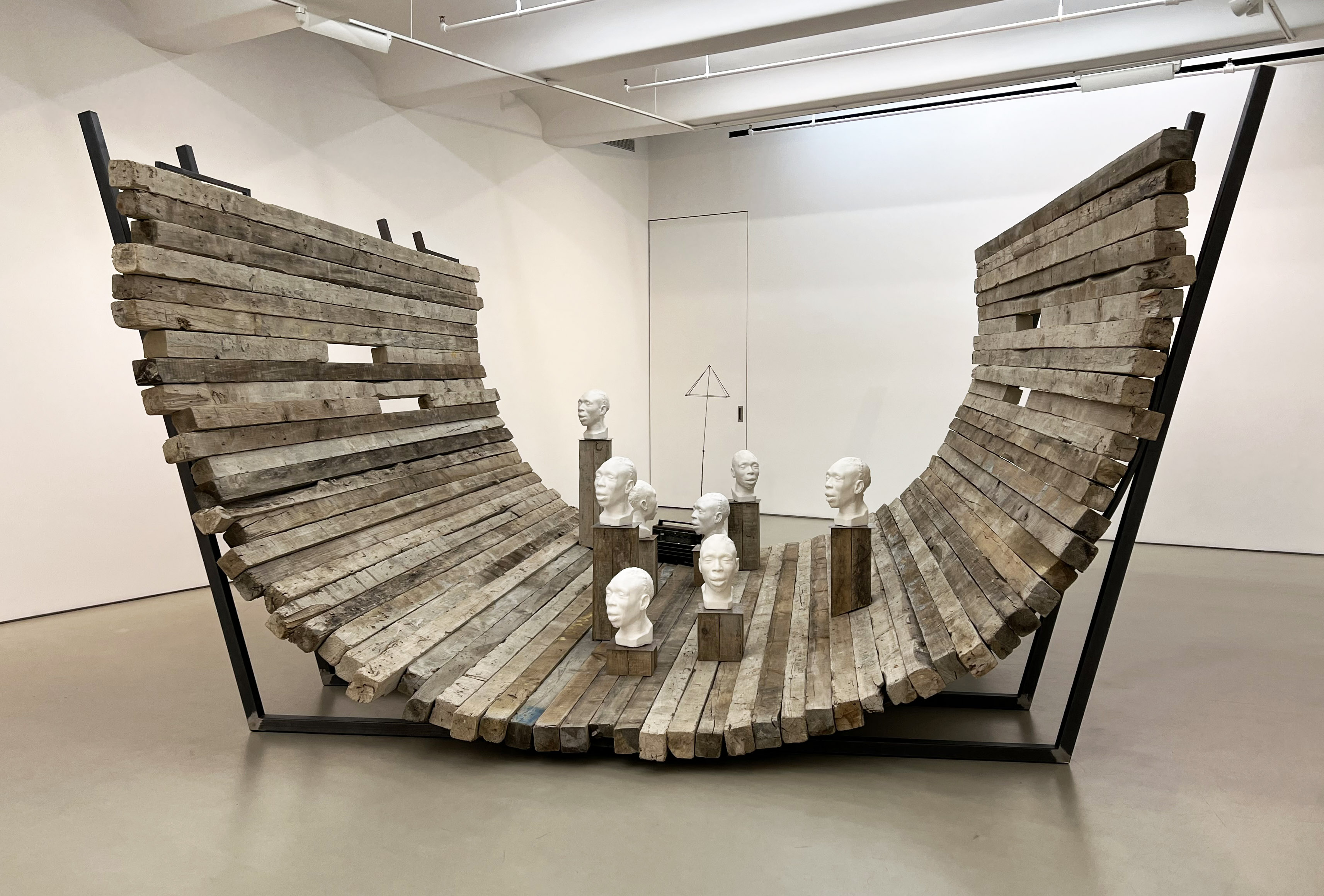
Constructed from reclaimed wooden beams from a shipyard in Istanbul, Atlanta-based artist Radcliffe Bailey’s ‘Nommo’ suggests both boat and stage.  Now on view in Bailey’s solo show at Jack Shainman Gallery, the piece was originally commissioned for the 2019 Istanbul Biennial and situated on the site of an earlier performance by Sun Ra, a musician whose real and imagined travels inspired Bailey.  For the artist, the repeated character represented in series of plaster busts represents the ‘spirituality of people and their practices.’  (On view through Dec 18th. Masks required.)

Radcliffe Bailey, Nommo, mixed media and sound installation including a radio, found wood, steel metal structure and 8 plaster busts, approx. 10H’ x 21L’ x 13D,’ 2019.


Paulina Olowska at Metro Pictures Gallery

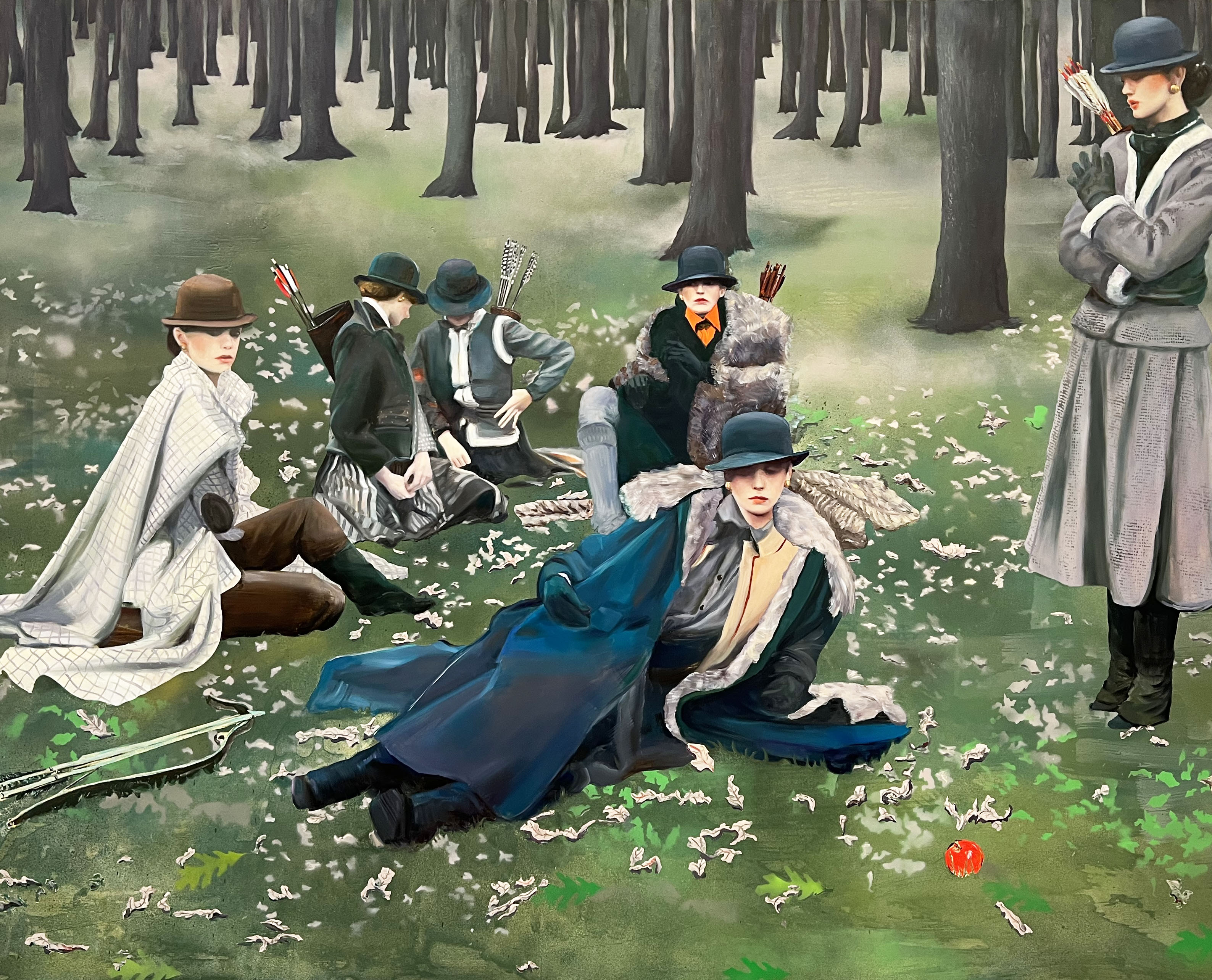
For the last exhibition of its forty-year history, Helene Winer’s and Janelle Reiring’s legendary Metro Pictures Gallery is showcasing new work by Polish artist Paulia Olowska that celebrates exhibition and educational spaces run by women.  This large painting checks in with Seurat’s 1880s scene of Paris leisure, La Grande Jatte, while having been directly inspired by a photo by fashion photographer Deborah Tuberville.  Harnessing imagery meant to encourage consumption, Olowska sells the idea of new creative communities while aiming to increase representation of women in art history.  (On view through Dec 11th in Chelsea.  Masks required).

Paulina Olowska, The School of Archery (after Deborah Tuberville), oil on canvas, 102 3/8 x 82 11/16 inches, 2021.

Matthew Brandt, Rooms at Yossi Milo Gallery

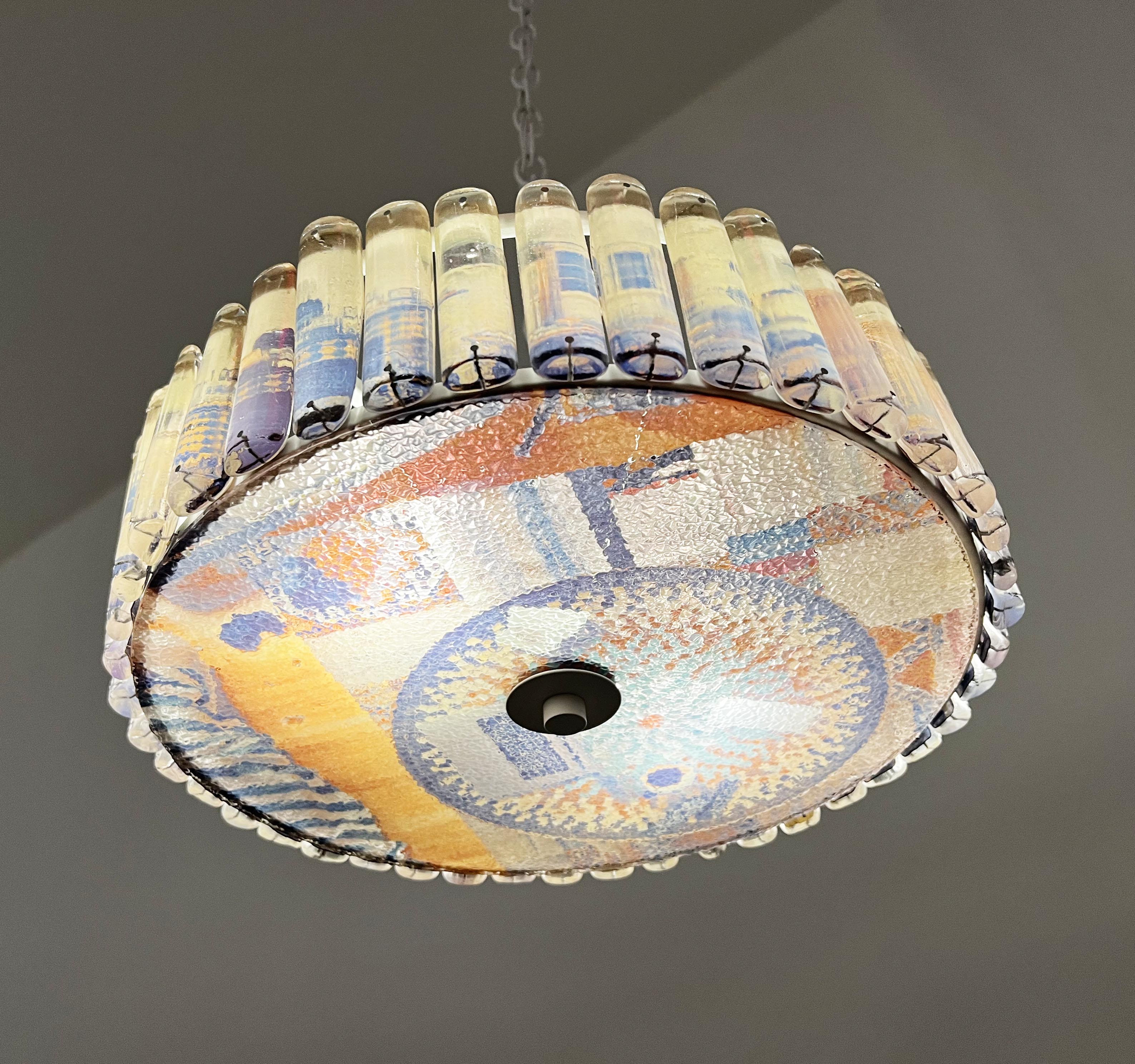
Selling off unwanted furniture and household decoration takes a new twist in one of Matthew Brandt’s latest series, ‘Rooms,’ at Yossi Milo Gallery, for which he acquired chandeliers, then hot-fused photos of the room in which the chandelier hung to the individual pieces of the chandelier.  Literally bearing witness to their past, the lights feature windows (as seen here), furnishings and other signs of life from the past owner.  In this piece, ‘May’s Living Room,’ pictures of the past environment recall a pointillist painting crossed with a geometric abstraction.  (On view in Chelsea through Dec 11th).

Matthew Brandt, from the series Rooms, May’s Living Room, photographic glass chandelier pieces with painted metal armature, 9 x 16 x 16 inches, 2021.

Jaume Plensa, LUCIA (nest) at Galerie Lelong

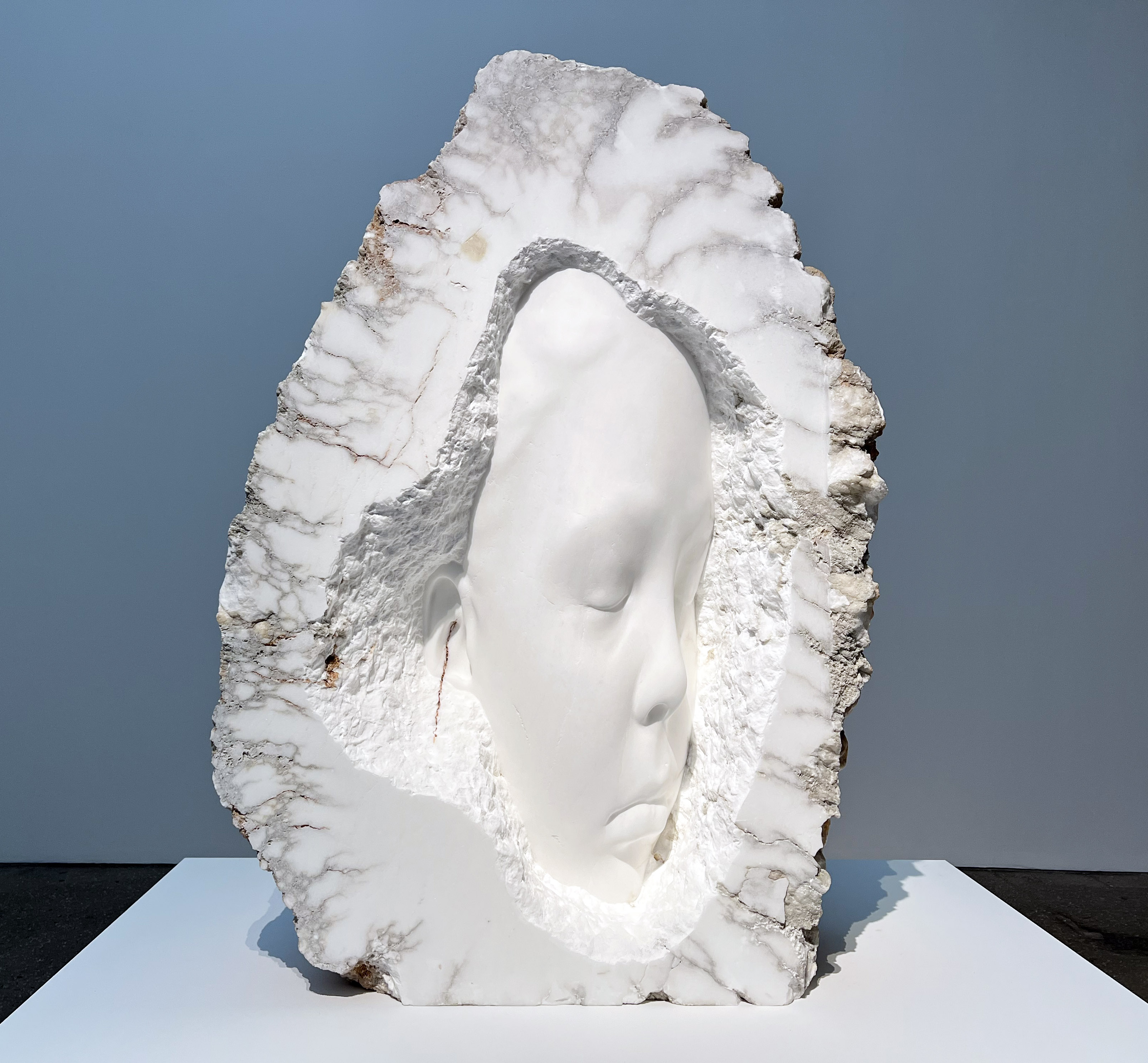
With eyes closed to suggest inner reflection and heads elongated to convey a sense of spirituality, Jaume Plensa’s contemplative sculptural figures express peace in public places worldwide.  In his latest solo show at Chelsea’s Galerie Lelong, Plensa presents heads that only partly emerge from the alabaster rock from which they are carved.  Collectively titled ‘Nest,’ the new work represents Plensa’s feeling that the brain is like a nest, where dreams are born.  (On view through Dec 23rd).
Jaume Plensa, LUCIA (nest), alabaster, 57.5 x 40.1 x 20.5 inches, 2021.

Helen Pashgian Sculptures at Lehmann Maupin

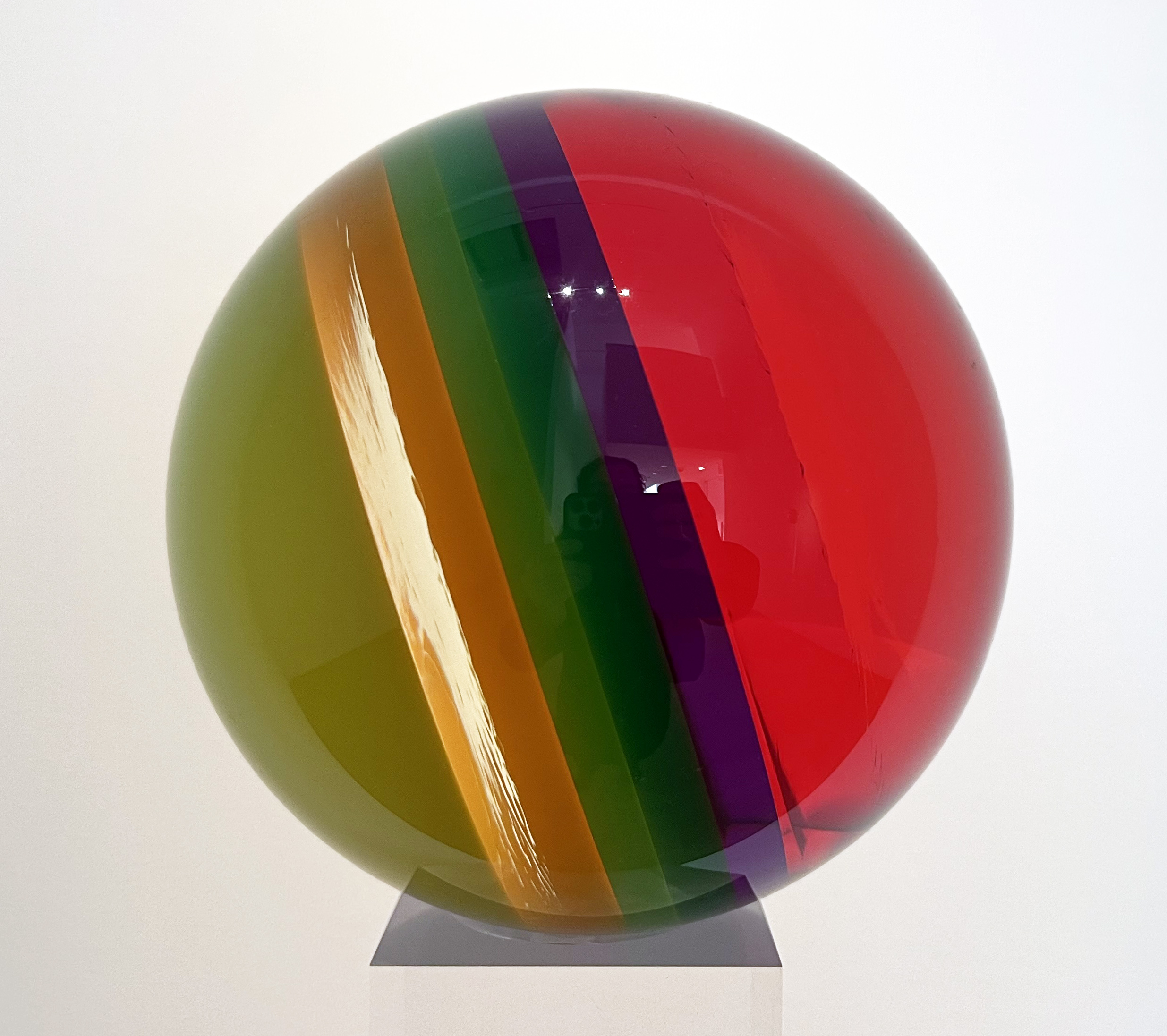
Visitors to Light and Space artist Helen Pashgian’s show of new work at Chelsea’s Lehmann Maupin Gallery are invited to sit on benches to appreciate disk-shaped sculptures that appear to hover over pedestals in the gallery, while other pieces require movement to be appreciated. The second scenario applies with this untitled cast epoxy with formed acrylic sphere, which reveals or conceals bands of color as the visitor moves before it.  Designed to reveal how perception of a single object or phenomenon can shift, Pashgian’s invites viewers to delight in the nuances of seeing.  (On view through Jan 8th).

Helen Pashgian, Untitled, cast epoxy with formed acrylic elements, 7 inches diameter, 2020.

Ella Kruglyanskaya at Bortolami Gallery

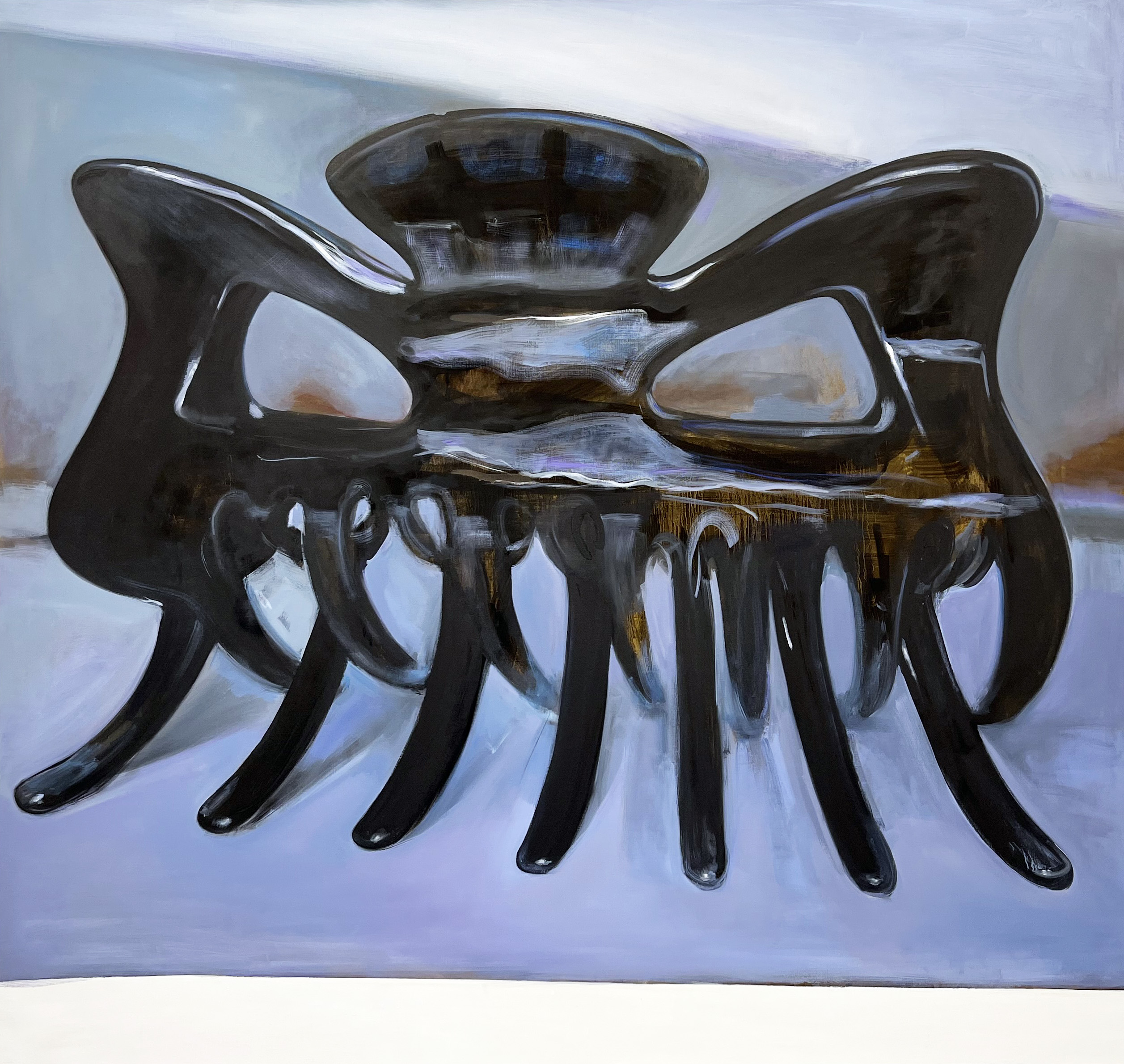
Latvian American artist Ella Kruglyanskaya’s fashion-aware female figures in her current solo show at Bortolami Gallery look as if they’ve been sketched in motion though they’re painted in oil on linen.  ‘Beyond Good and Evil,’ a monumental rendering of a hair clip, doesn’t have quite the same on-the-fly quality but it does look as if it could scramble off the canvas at any moment.  Openings resembling eyes and prongs that look like legs turn a simple accessory into something unexpectedly menacing.  (On view at Bortolami in Tribeca through Dec 18th).

Ella Kruglyanskaya, Beyond Good and Evil, oil on linen, 62 x 66 inches, 2021.

Whitfield Lovell at DC Moore Gallery

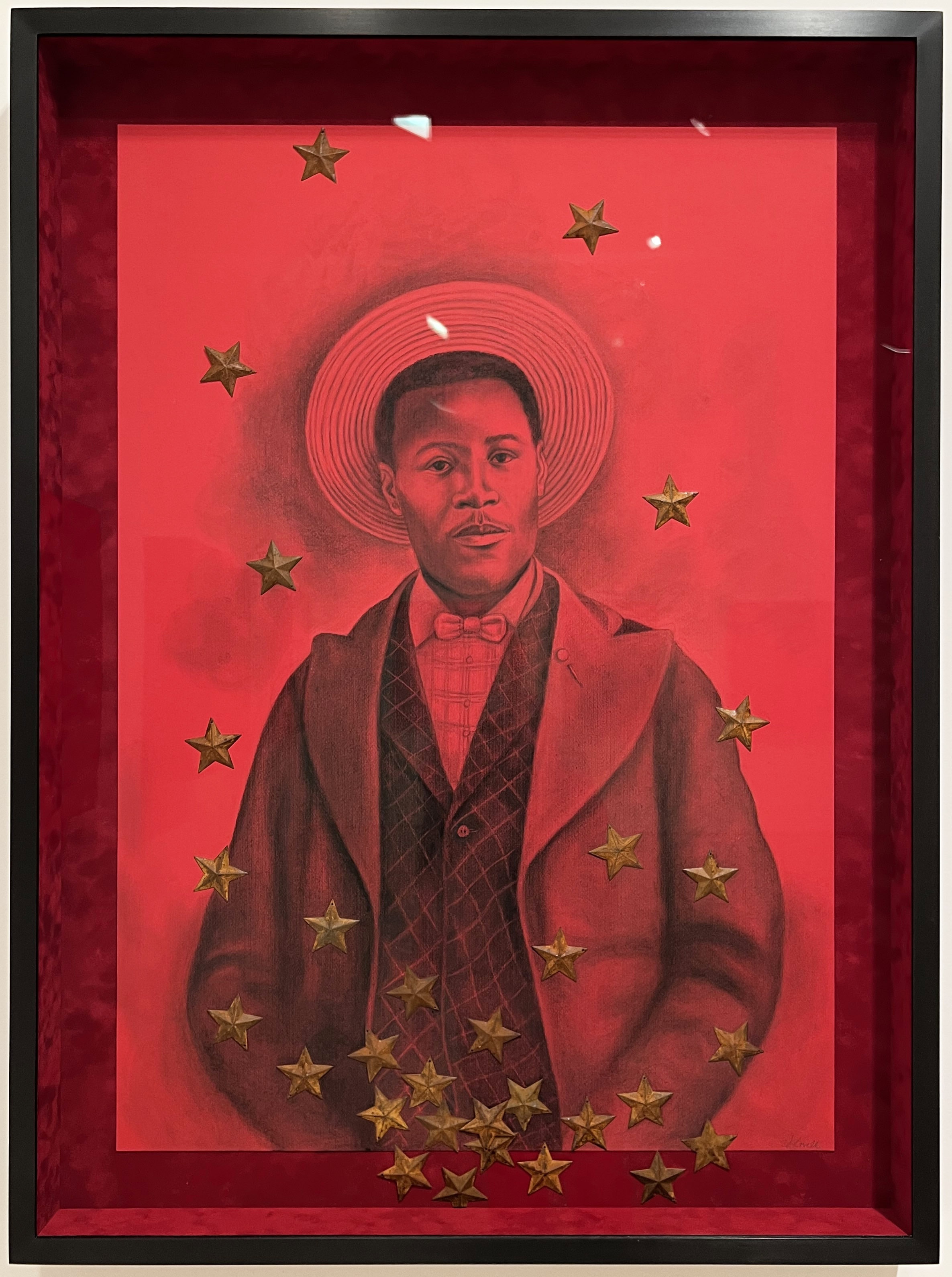
A portrait of a portly businessman paired with a model train engine, a corseted woman with theatrical tassels attached to the sides of her likeness and other drawings of men and women in 19th century dress by Whitfield Lovell at DC Moore Gallery are made more intense and vibrant by their red background. In the new series titled ‘The Reds,’ Lovell continues to pair drawings of individuals with found objects that enhance our understanding of the sitter’s identity.  Here, a young man is surrounded by a hovering halo of stars prompting viewers to question how this individual’s identity relates to country.  (On view through Dec 18th).

Whitfield Lovell, The Red XIV, conte on paper with attached found objects, 45 ¾ x 34 inches, 2021.

Emily Eveleth at Miles McEnery Gallery

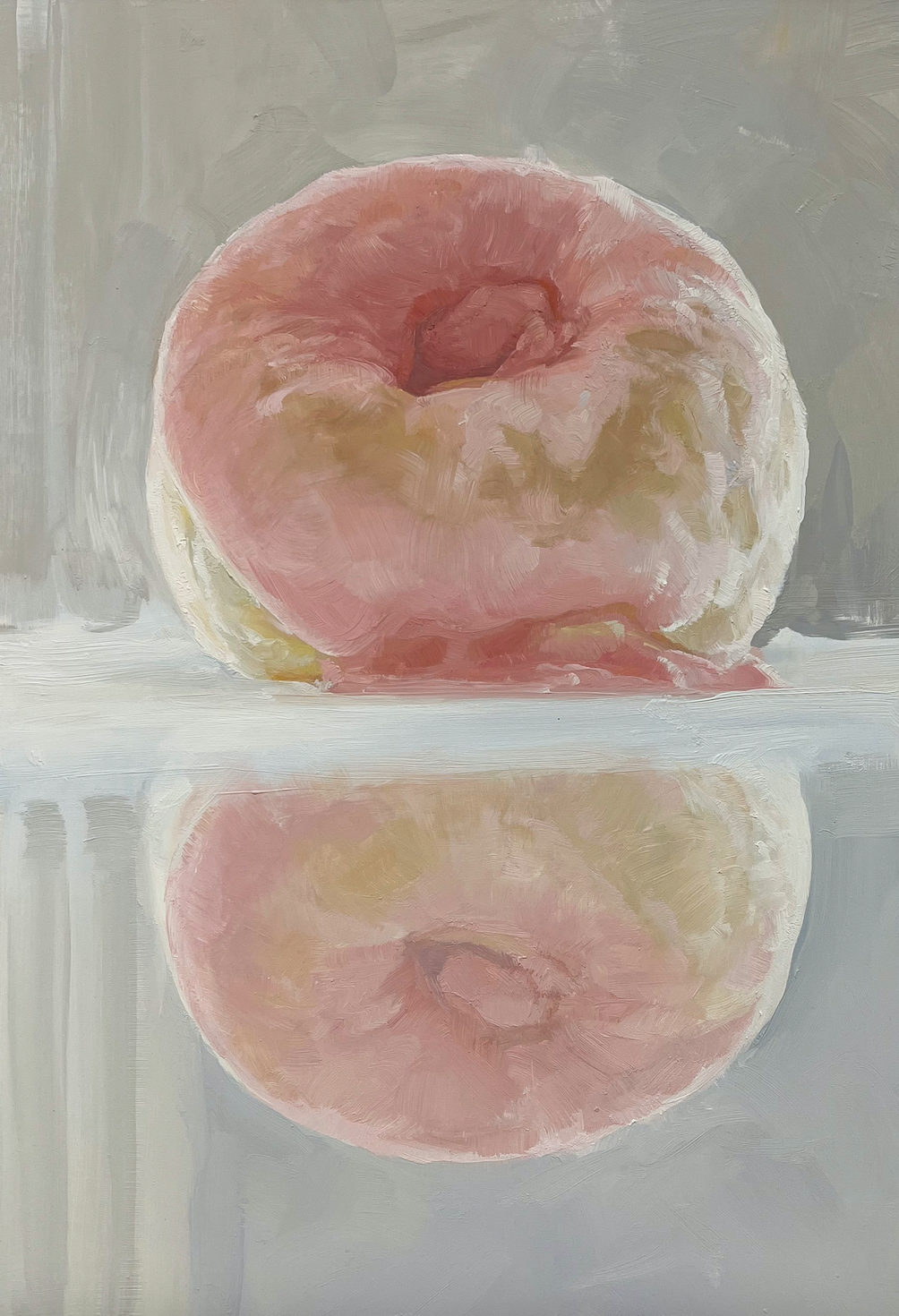
Emily Eveleth has pointed out that the object in her painting is not necessarily the subject, a consideration that continues to apply to her ongoing series of donut paintings at Miles McEnery Gallery.  Though more or less obviously desserts, Eveleth’s donuts are lit to suggest intimate bodies or ooze jam in ways that hint at trauma.  Titled after books published by the Parisian firm Olympia Press and shaped to resemble book format, each canvas speaks volumes. (On view in Chelsea through Nov 27th.)

Emily Eveleth, Boudoir, oil on panel, 26 x 18 inches, 2021.

M.C. Escher at Bruce Silverstein Gallery

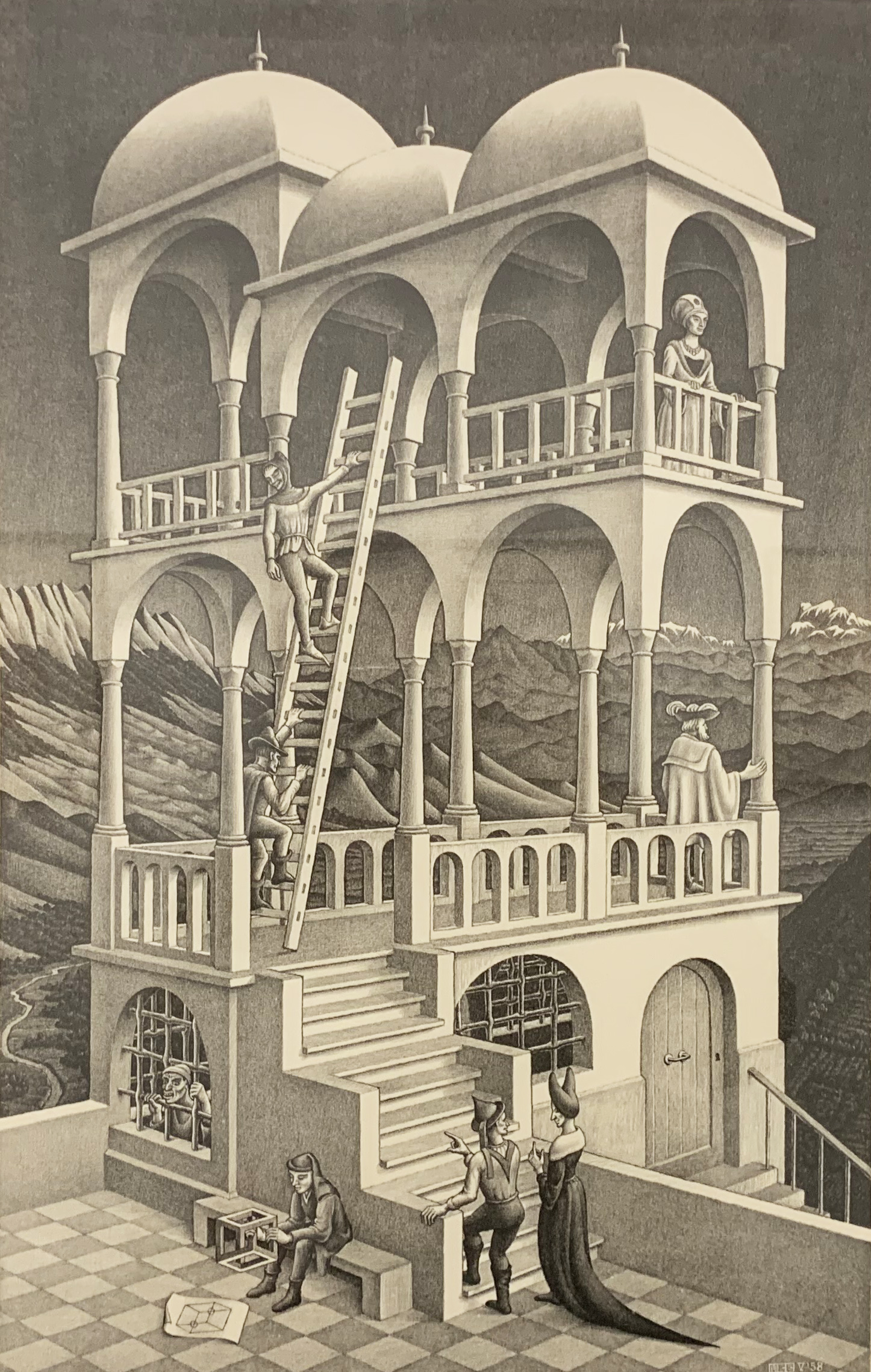
Just as a tiny shift in perspective can cause a straightforward transparent cube to morph into an impossible cube, M.C. Escher’s architecture in this 1958 print is believable on first glance, until matching up columns to arches proves otherwise.  The lithograph is one of 75 artworks on view in Bruce Silverstein Gallery’s exhibition of the Dutch printmaker’s work from the ‘30s to late career. Inspired by the impossible cube, a version of which is being held by a seated man on the lower terrace, Escher delights viewers by confounding us.  (On view in Chelsea through Nov 20th).

M.C. Escher, Belvedere, lithograph, printers proof, 18 ¼ x 11 5/8 inches, 1958.

Robin F. Williams, Speak of the Devil at PPOW

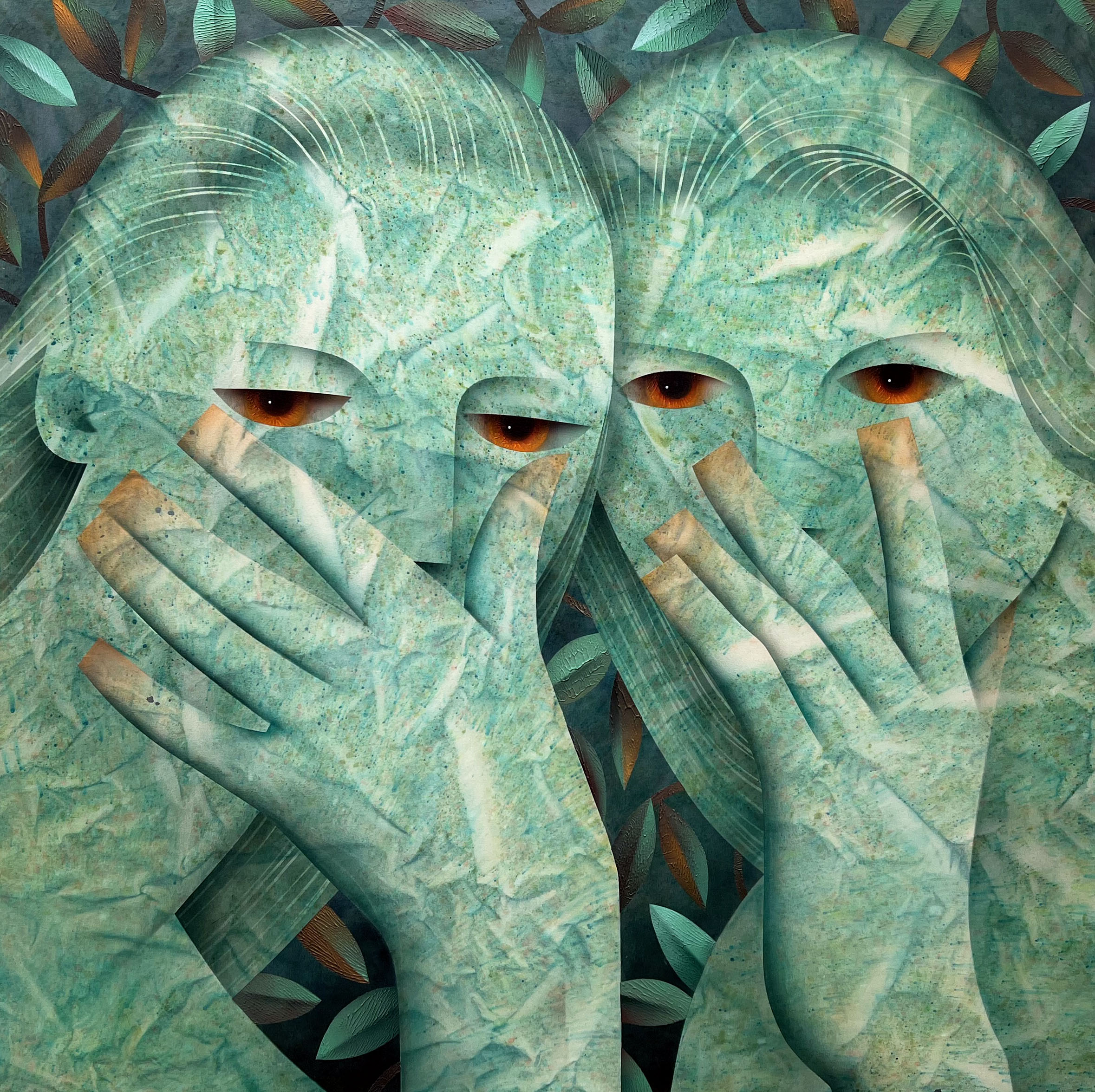
Women have been pictured as merging with the natural world throughout art history, but not quite in the subversive and sometimes sinister way that Robin F. Williams pictures the spritely athletes that populate her latest paintings at PPOW Gallery.  Using oil, airbrush, poured paint, marbling and staining, Williams creates bodies that both compliment and stand out from their environments.  Here, in a piece titled ‘Speak of the Devil,’ two characters with glowing, inhuman eyes reveal hands with flattened fingertips that match the tone of nearby leaves suggesting intriguing hybrid identities.  (On view in Tribeca through Nov 13th.  Masks required.)

Robin F. Williams, Speak of the Devil, acrylic on canvas, 57 x 57 inches, 2021.

John Chamberlain at Gagosian Gallery

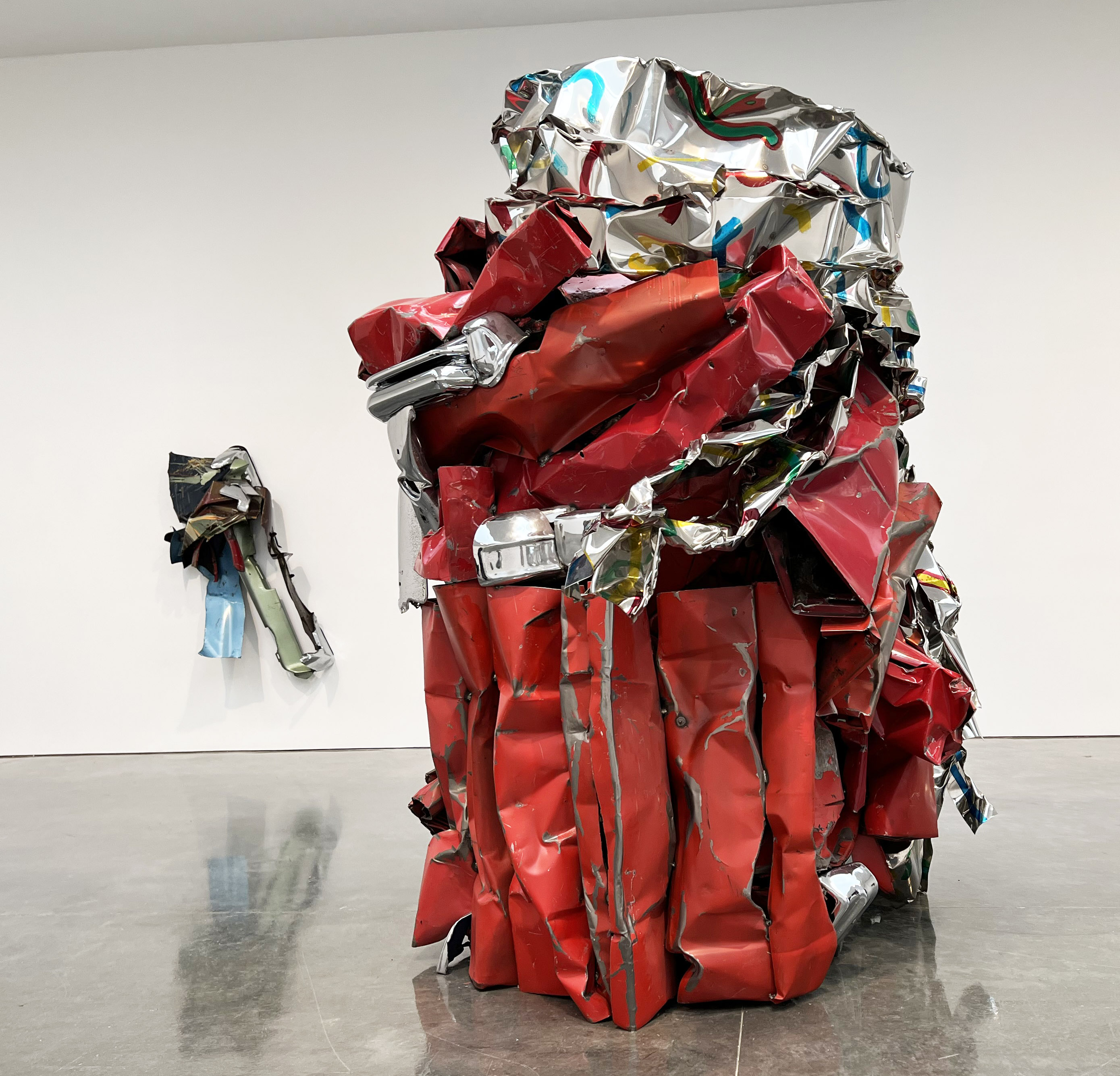
At over nine feet tall and titled TAMBOURINEFRAPPE, this 2010 sculpture by John Chamberlain at Gagosian Gallery pulses with the percussive rhythms and energy.  Vertical lengths of steel placed parallel to each other create a base like a fluted classical column or pleated dress while diagonal strips of metal raise the eye up to a crown of shiny steel decorated with colorful curving lines.  Featuring work from the ‘50s to the ‘00s, this exhibition demonstrates Chamberlain’s expressive manipulation of his material. (On view on 21st Street in Chelsea through Dec 11th.  Masks and vaccination proof required).

John Chamberlain, TAMBOURINEFRAPPE, painted and chrome-plated steel, 116 ¾ x 90 x 86 ½ inches, 2010.

Ruby Sky Stiler, Blue Bathers at Nicelle Beauchene

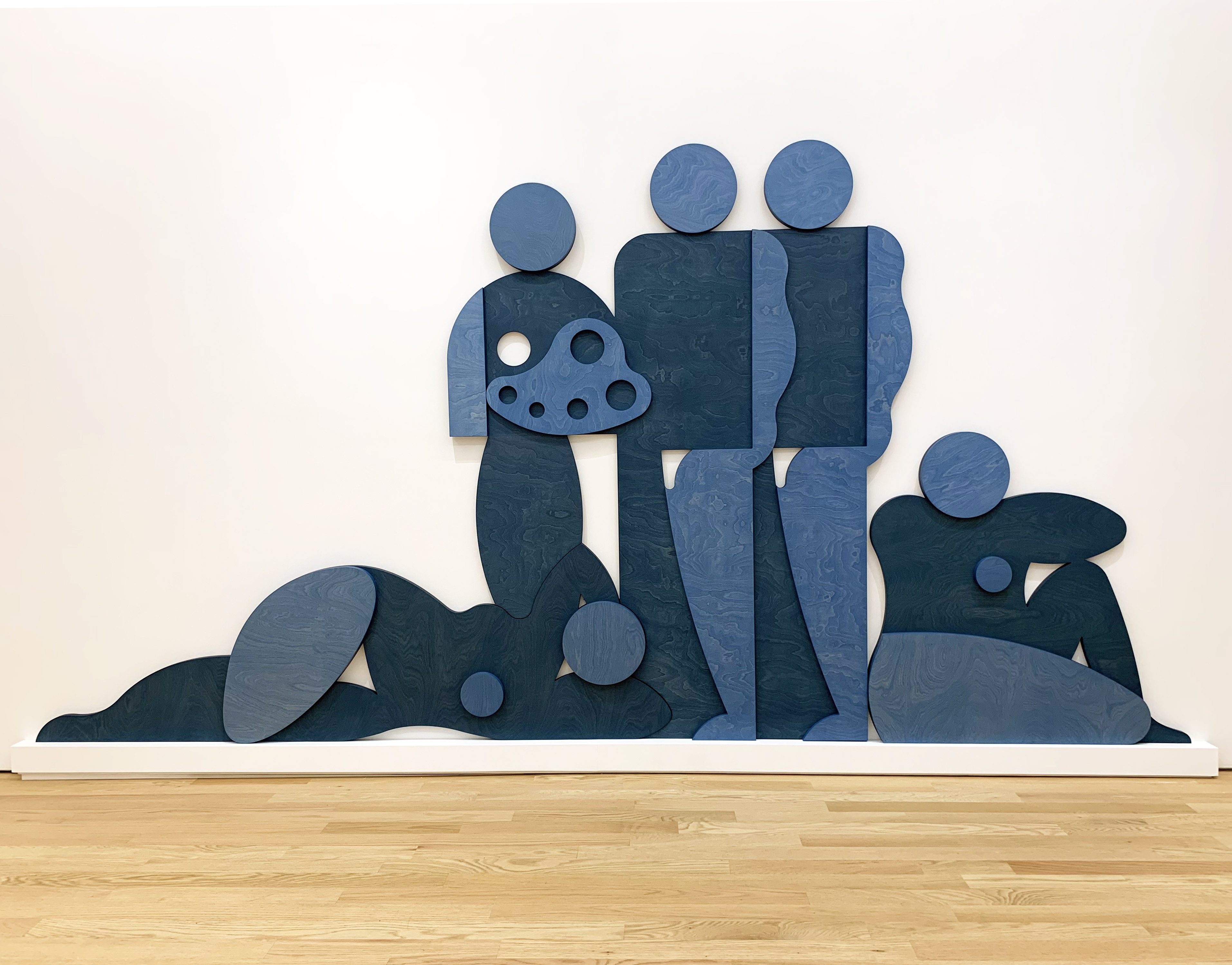
Portraiture is about decoding the identity of a sitter and the relationship between sitter and artist.  Ruby Sky Stiler’s figure group at the entrance to her current solo show at Nicelle Beauchene Gallery flummoxes familiar, easy-to-read relationships as it positions a petite, female artist as the active member of this assembly.  Pared down to silhouettes of spare geometric forms, including a single circular shape that identifies the artist as a woman, the nude figures recall yet crucially differ from Cezanne’s, Renoir’s or Matisse’s bathers and myriad scenes of male artists in their studios with nude female subjects.  (On view in Tribeca through Oct 30th.  Masks required.)

Ruby Sky Stiler, Blue Bathers, Baltic birch plywood, paint and hardware, 78 x 155 x 3 inches, 2021.

Ernie Barnes at 55 Walker

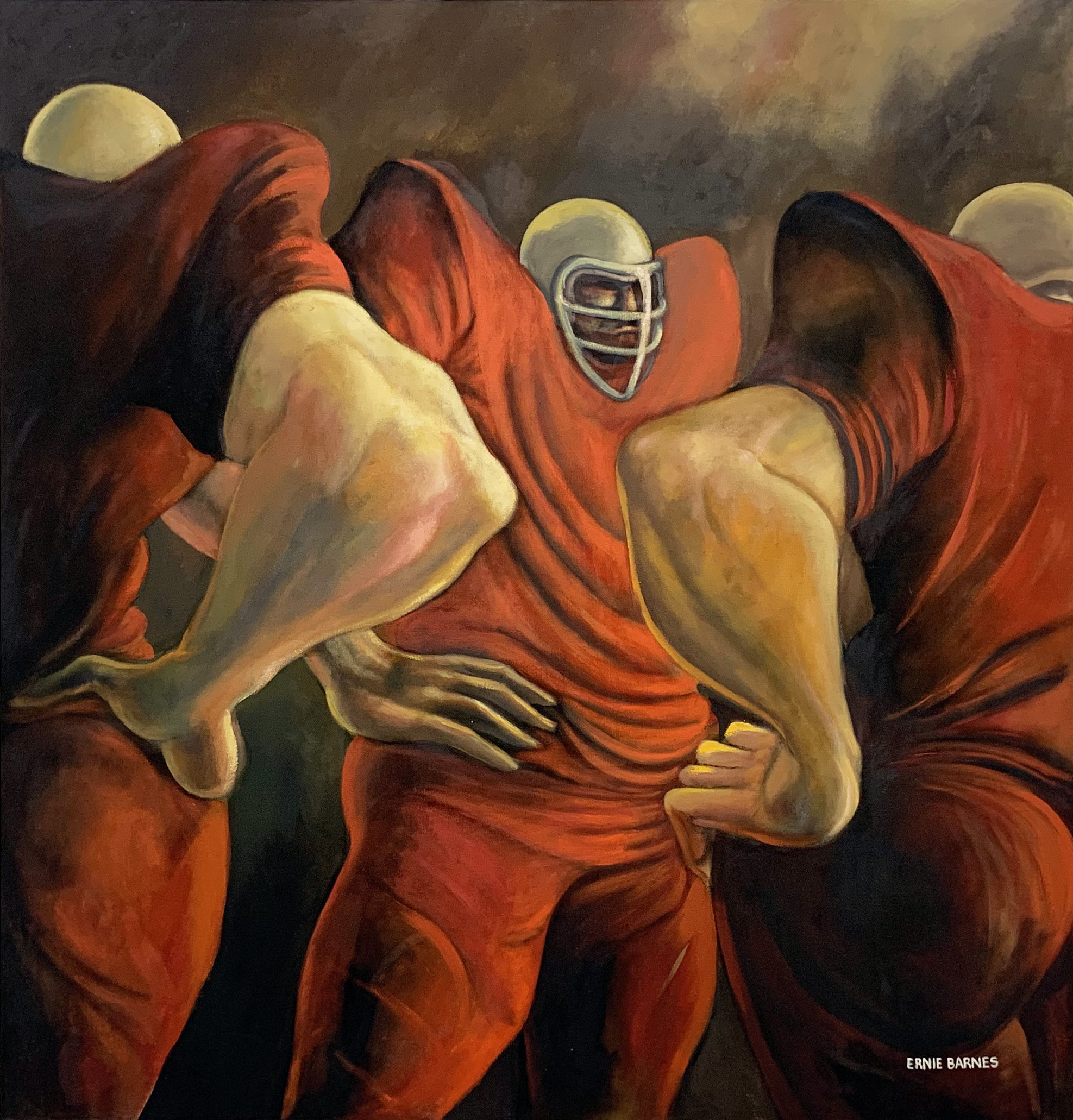
An artist from his childhood and an NFL player for five years in the early 60s, late painter Ernie Barnes merged his talents in the visual arts and sports to create the powerful paintings now on view at 55 Walker in Tribeca.  Barnes saw body language and movement on the field in visual terms, using time outs to sketch the game’s lines and shapes on paper.  Here, three towering figures are no less dynamic for standing still; crowding together with oversized elbows and hands, they convey the danger of contact sports.  (On view in Tribeca through Oct 30th.  Masks required).

Ernie Barnes, Blood Conference aka Three Red Linemen, acrylic on canvas, 1966.

Anthony Cudahy at Hales Gallery

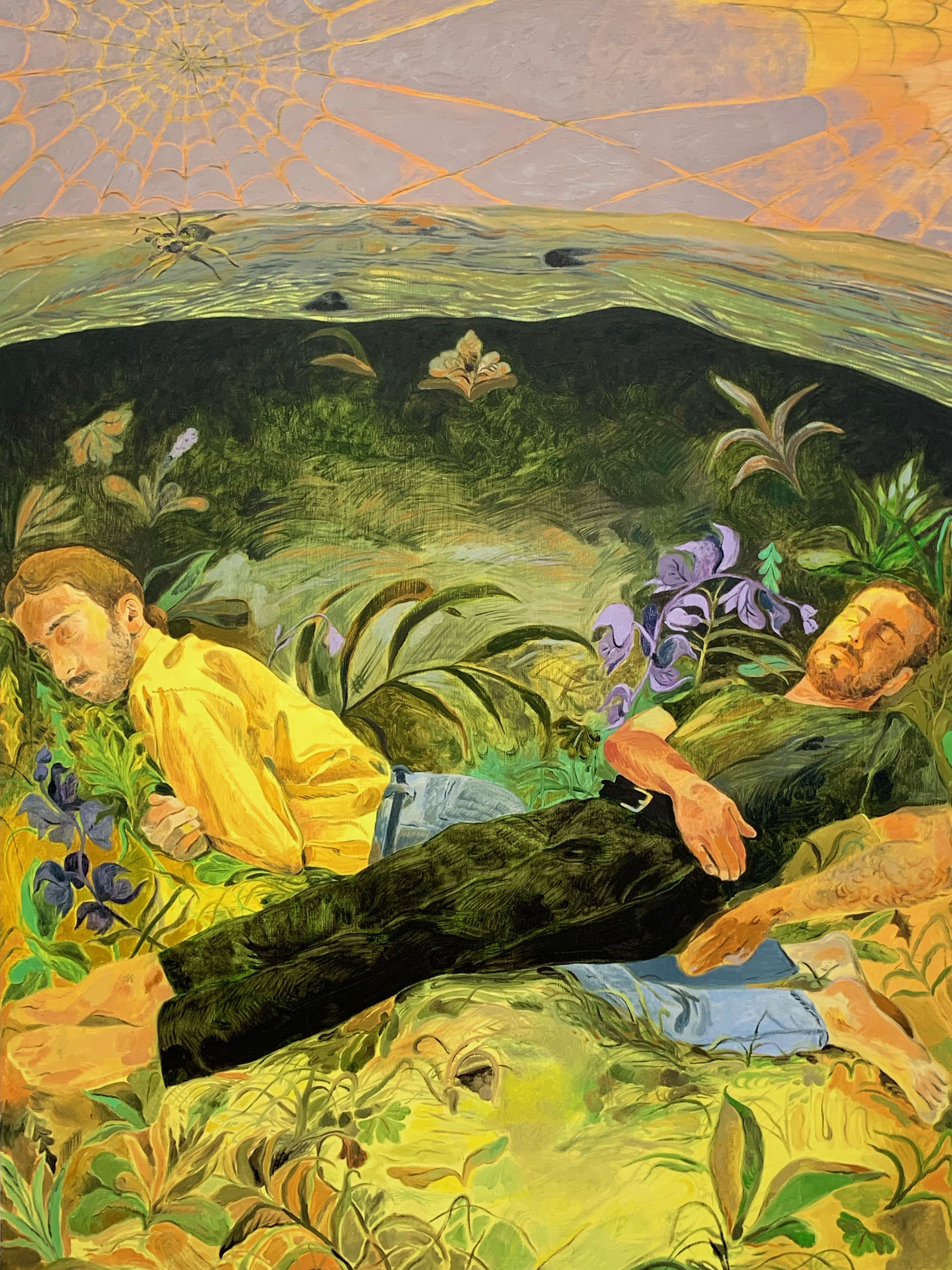
Medicinal or deadly depending on its use, Antiaris toxicaria (aka the Anti-bausor tree) is the missing presence in this painting by Brooklyn-based painter Anthony Cudahy at Hales Gallery.  Partly inspired by an antique woodcut featuring two men lying on the ground under the fruit-bearing tree, here it’s the artist and his husband who lie prone.  But while it’s uncertain if the characters in the original woodcut are alive, Cudahy and partner appear to enjoy a peaceful sleep, occupying a subconscious realm complicated by the spider and webs in the upper register.  Alluding to Kate Bush’s ‘Coral Room,’ a song featuring a web-spinning ‘spider of time,’ the references place the couple in a poetic realm of dreams and memory.  (On view through Oct 30th in Chelsea.  Masks required).

Anthony Cudahy, Anti-bausor tree (protected sleepers, wolf’s-bane and spider around), Oil on canvas, 96 x 72 in, 2021.

Gauri Gill at James Cohan Gallery

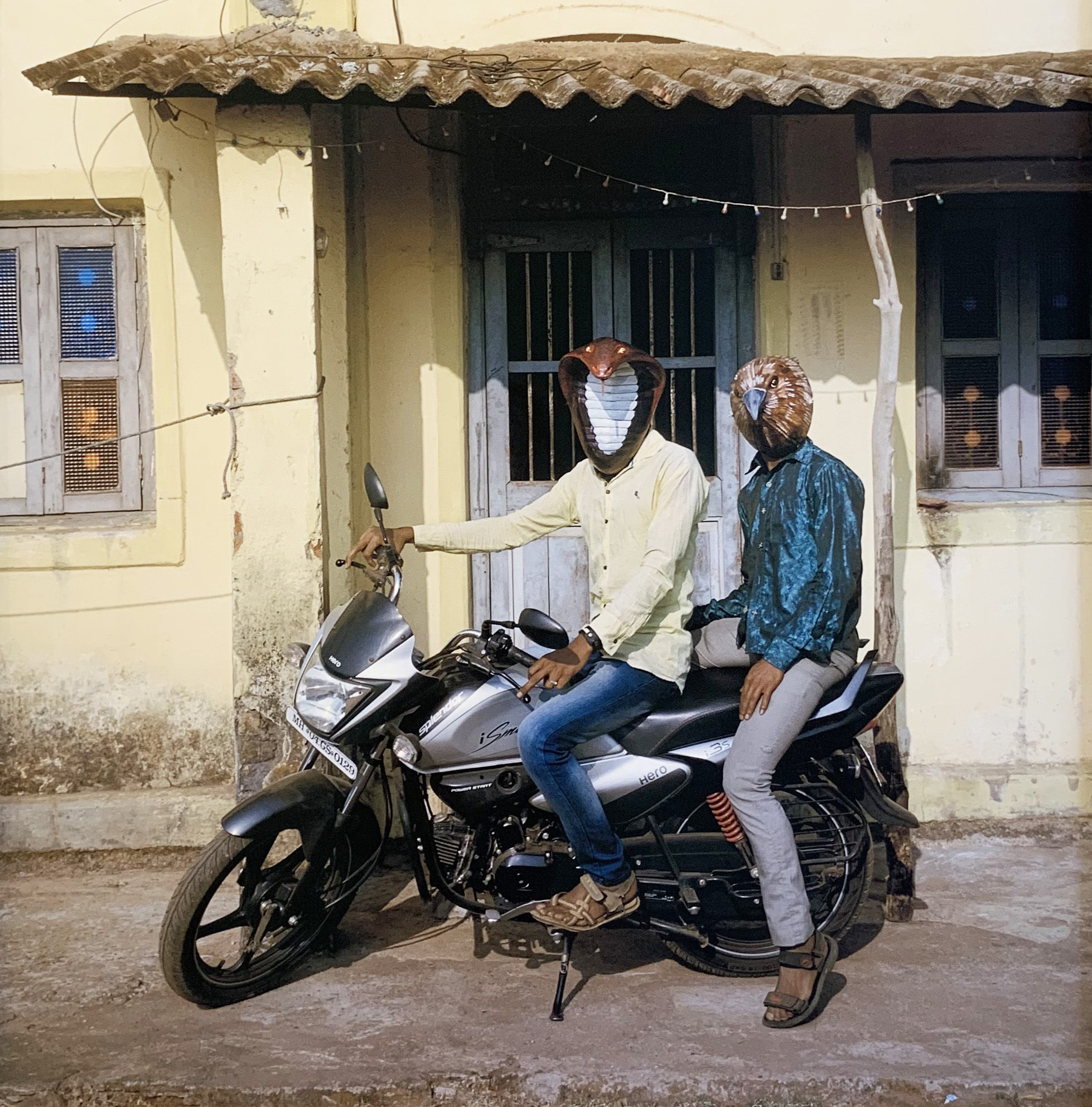
Since 2015, New Delhi-based artist Gauri Gill has worked with indigenous communities and craftsmen in the Indian state of Maharashtra to create arresting photographs of masked people in everyday situations.  In recent work at James Cohan Gallery’s new Tribeca location, Gill continues to be inspired by the masks worn in annual, entire-community performances of religious rituals but has commissioned secular versions that deviate from the normal look and use of such masks.  Collaborating with the individuals in the photos, Gill devises uncanny scenarios that momentarily bridge fictional and real worlds.   (On view at 52 Walker, 2nd floor through Nov 13th.  Masks required.)

Gauri Gill, detail of Untitled (64) from Acts of Appearance, archival pigment print, 60 x 40 inches, 2015 – ongoing.

Tyler Mitchell at Jack Shainman Gallery

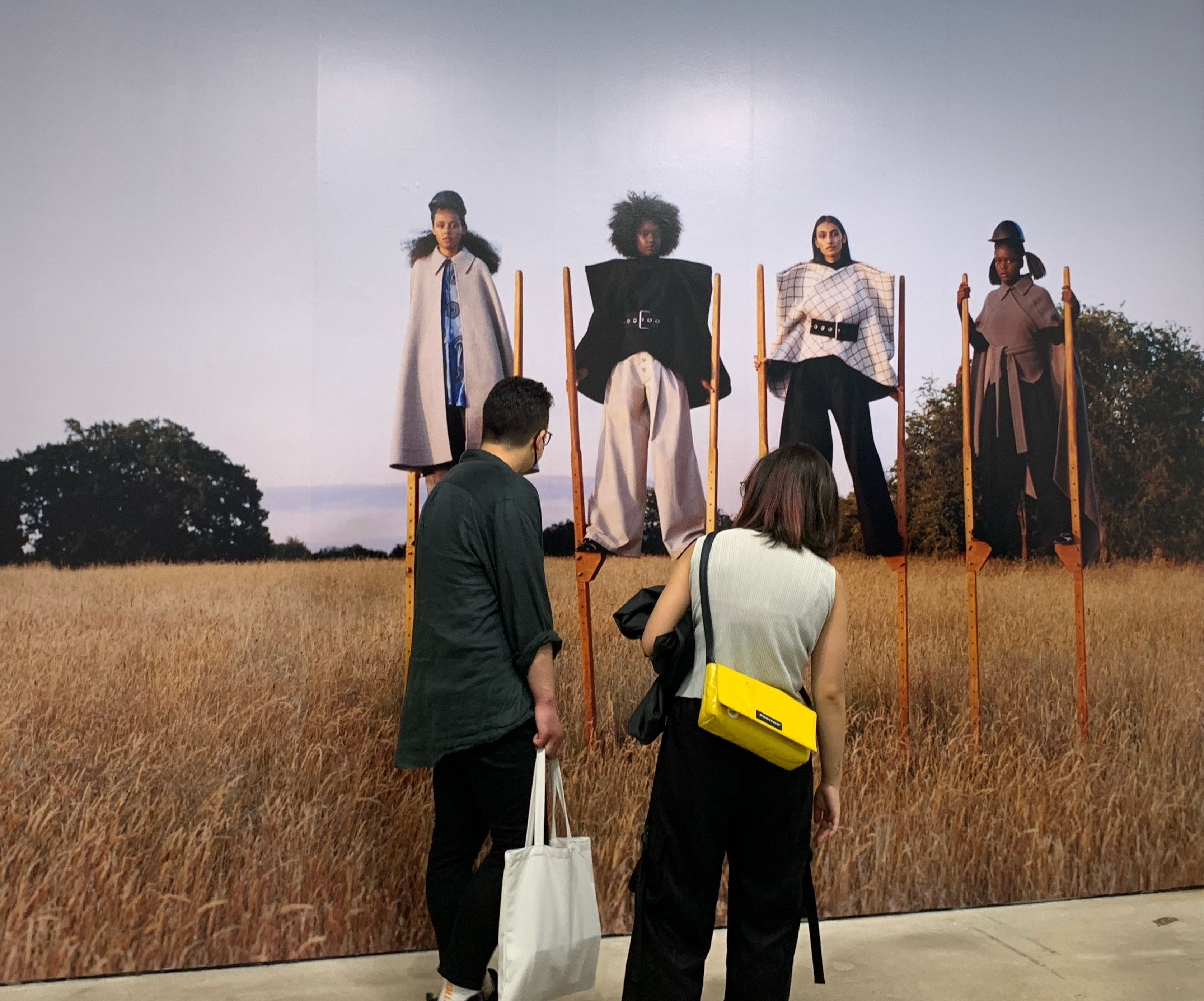
Towering over visitors to Jack Shainman Gallery, four young women in clothes from JW Anderson’s autumn/winter 2019 campaign, shot by Tyler Mitchell, look otherworldly as they almost hover above the ground in commanding fashion statements.  Referred to by the gallery as an ‘Edenic exploration of…a Black utopia in the everyday,’ Mitchell’s work complicates his subjects as he literally elevates them.  “I’m caught between wanting to let the mind imagine what that idea meant and spelling it out,” the photographer told i-D.  “I think I’ll do the former.”

Tyler Mitchell, 2021 installation view at Jack Shainman Gallery of ‘Untitled (Stilts II),’ 2,134 ¾ x 166 7/8 inches, wall vinyl, 2019.

Channing Hansen at Susan Inglett Gallery

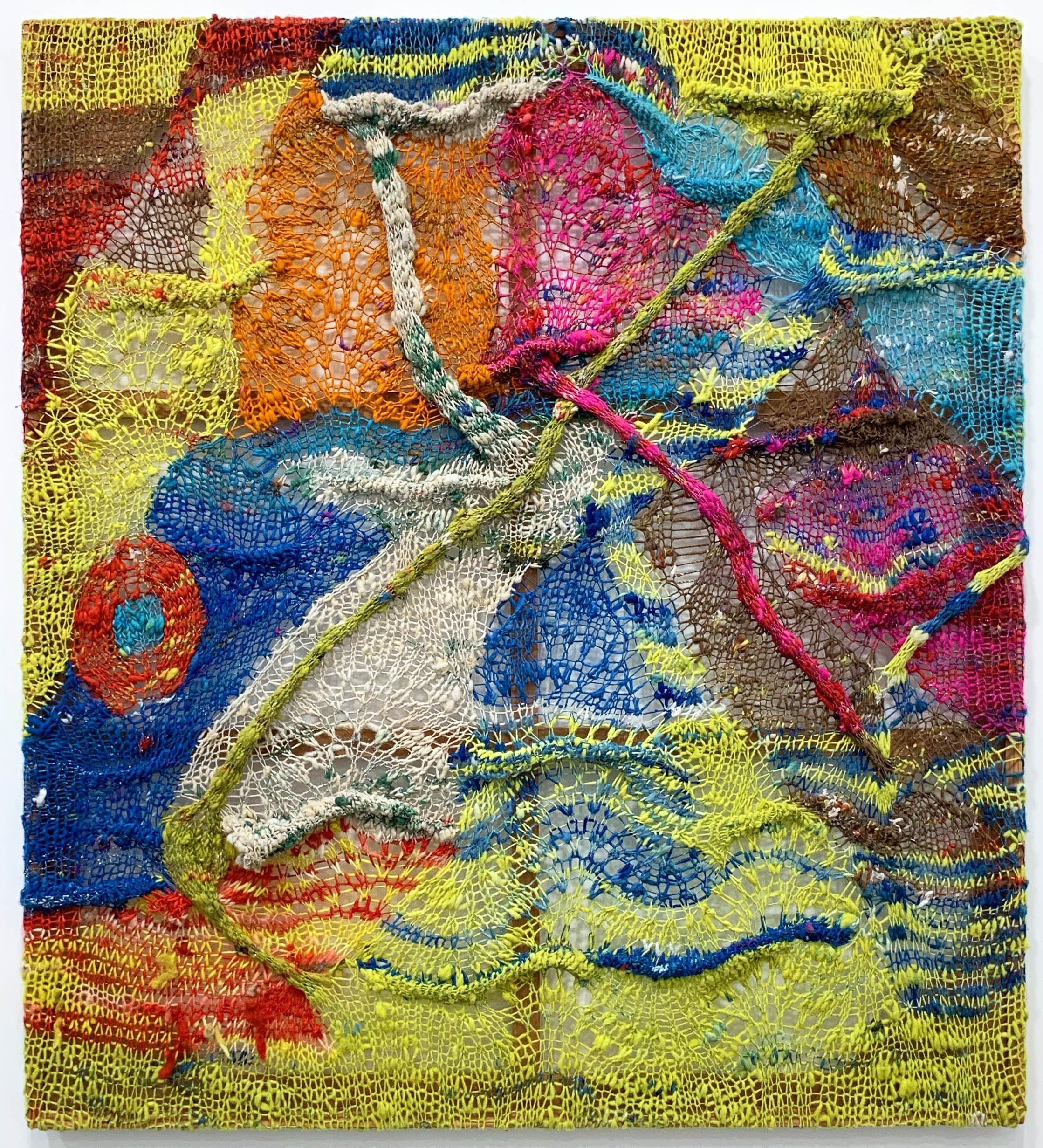
‘60s performance art gets a radical update in LA-based artist Channing Hansen’s algorithm-derived hand-knit constructions at Susan Inglett Gallery.  Conceived of as instructions or ‘scores,’ each artwork in his latest solo show is a kind of event; the 2-D pieces are shaped by an algorithm trained to produce ‘Channing Hansen artworks,’ based on the characteristics of his previous work.  (On view in Chelsea through Oct 16th. Masks required).

Channing Hansen, Tangible Engine, California Variegated Mutant (Myth), California Variegated Mutant (Rhea), California Variegated Mutant (Sriracha), California Variegated Mutant (Talia), Jersey Wooly (Miss Maple), Romeldale (January), Romeldale (Qassiopeia), Romedale (Saffron), Romedale (Shelby), and Teeswater (F2019-0339) fibers; Tussah silk, and Mulberry silk; holographic polymers, and photo-luminescent recycled polyester fibers; Ingeo corn, and pineapple fibers; Sequoioideae Redwood, 50 x 45 in., 2020.

Louise Giovanelli at GRIMM Gallery

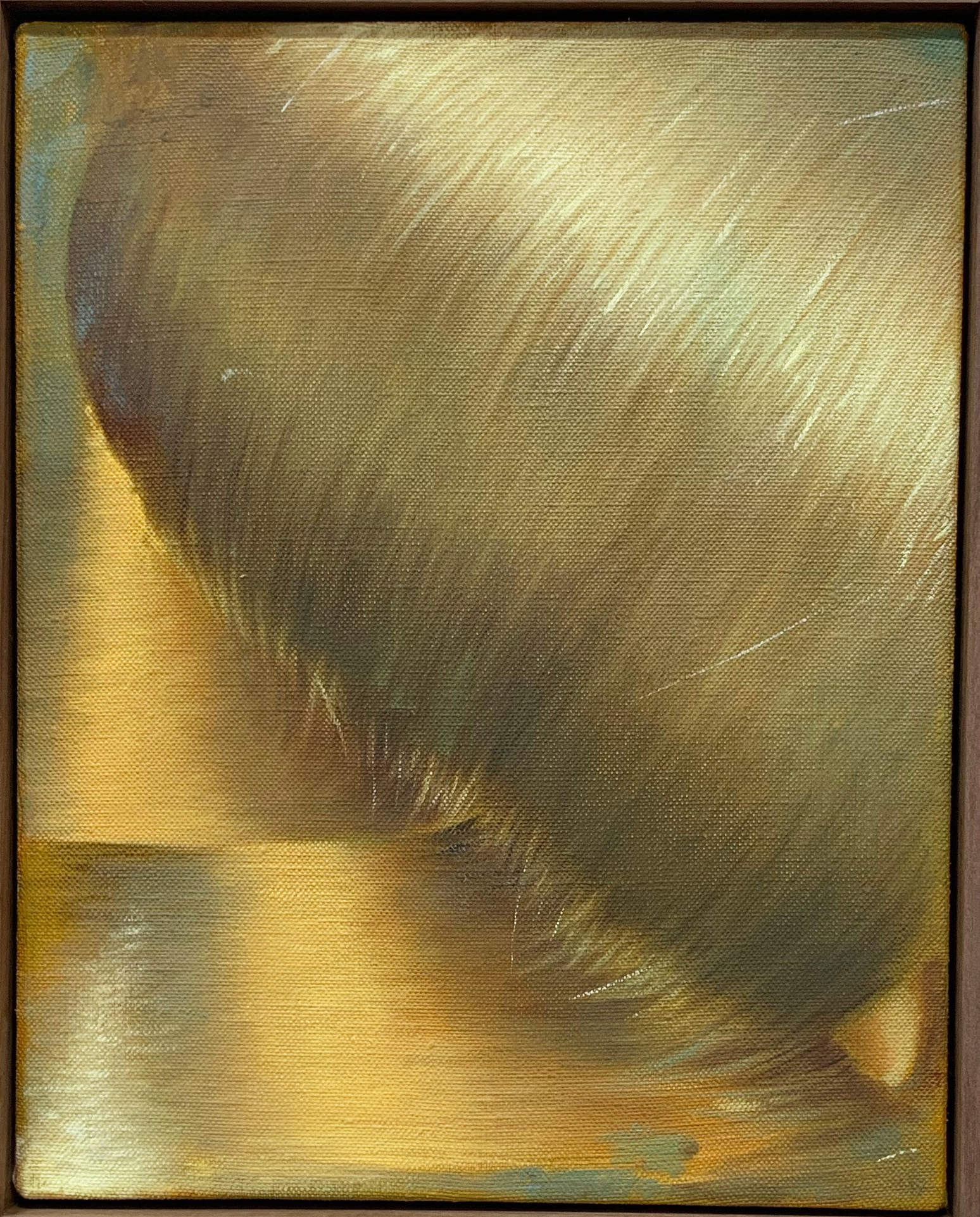
Draped curtains, sparkling suits and partial viewers of singers’ faces summon the magic of the stage in British artist Louise Giovanelli’s paintings at GRIMM Gallery’s new Tribeca space.  Here, a carefully coifed wave of blond hair creates a bold, organic geometry that suggests a force of nature while testifying to the artifice of show-biz.  (On view through Oct 23rd).
Louise Giovanelli, Plexus, oil on canvas, 10 1/8 x 8 inches, 2021.

Avery Singer at Hauser & Wirth Gallery

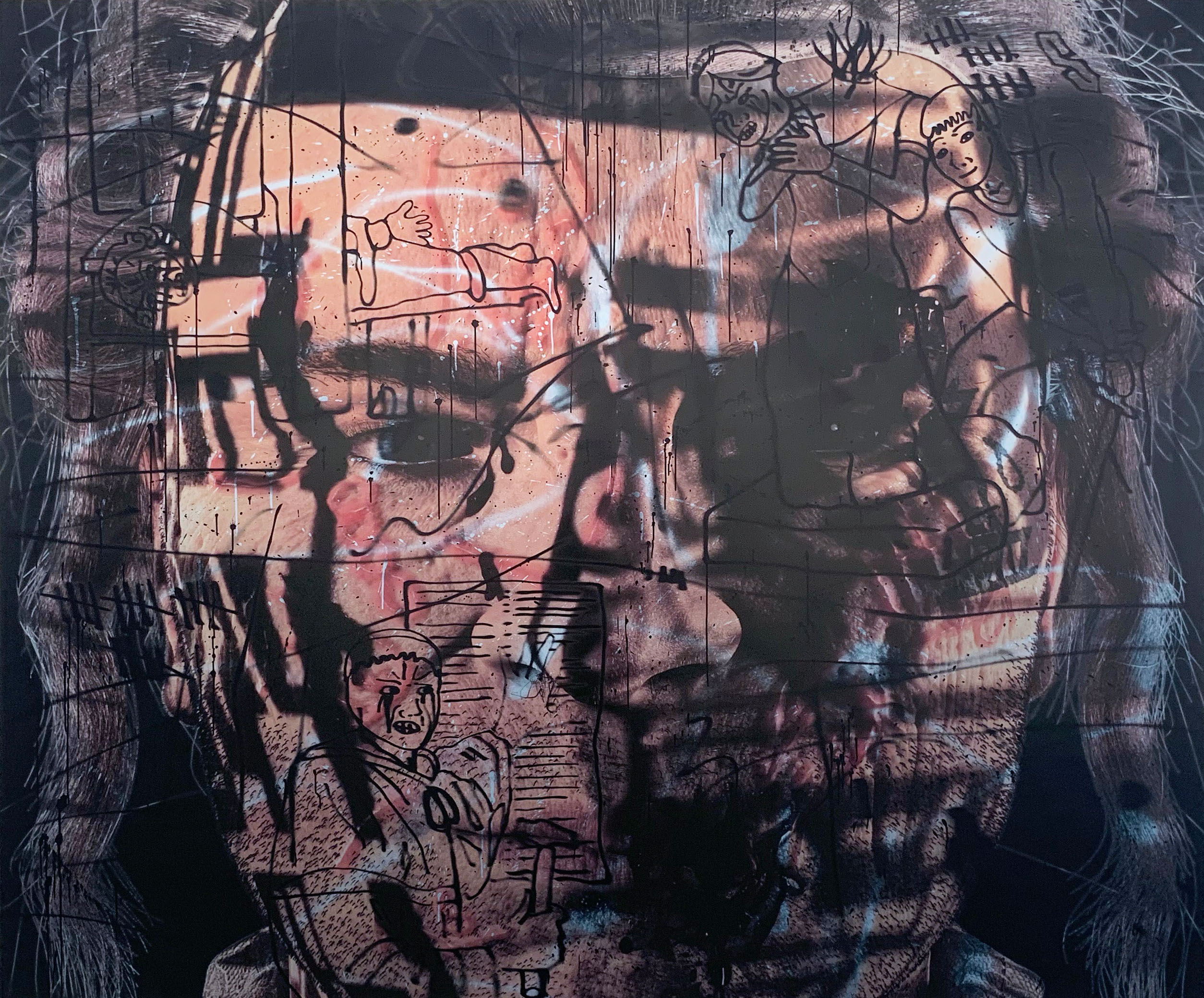
Beneath an overlay of doodles depicting the Wojak meme in various iterations including Martin Luther, an executioner and a victim of the guillotine, the hulking face of Maximilien Robespierre exudes menace in Avery Singer’s painting at Hauser & Wirth Gallery.  Reintroduced to the bloodthirsty leader of the French revolution’s ‘Reign of Terror’ via the game Assassin’s Creed, Singer blends adopts this oversized historical personage to consider modern-day digital expressions of violence. Titled ‘Edgelord,’ the piece draws parallels between the destruction wrought on-line today and by extreme characters of the past.  (On view through Oct 30th).

Avery Singer, Edgelord, acrylic on canvas stretched over wood panel, 100 ¼ x 120 ¼ x 2 1/8 inches, 2021.

Raven Halfmoon in ‘Claypop’ at Jeffrey Deitch, New York

Two towering heads are positioned back-to-back in Raven Halfmoon’s powerful monumental stoneware sculpture ‘Bah’hatteno Nut’tehtsei (Red River Girl in Caddo).’  A standout in ‘Claypop,’ Jeffrey Deitch Gallery’s new group show of contemporary ceramic artwork curated by director Alia Williams, the work’s textured surface suggests rock carved from the landscape while Halfmoon’s spray-painted face-markings and signature on the side connects the piece to contemporary urban artistic expression. (On view in SoHo through Oct 30th.)

Raven Halfmoon, Bah’hatteno Nut’tehtsei (Red River Girl in Caddo), stoneware, glaze, 2021.

Alison Elizabeth Taylor, Kiss at James Cohan

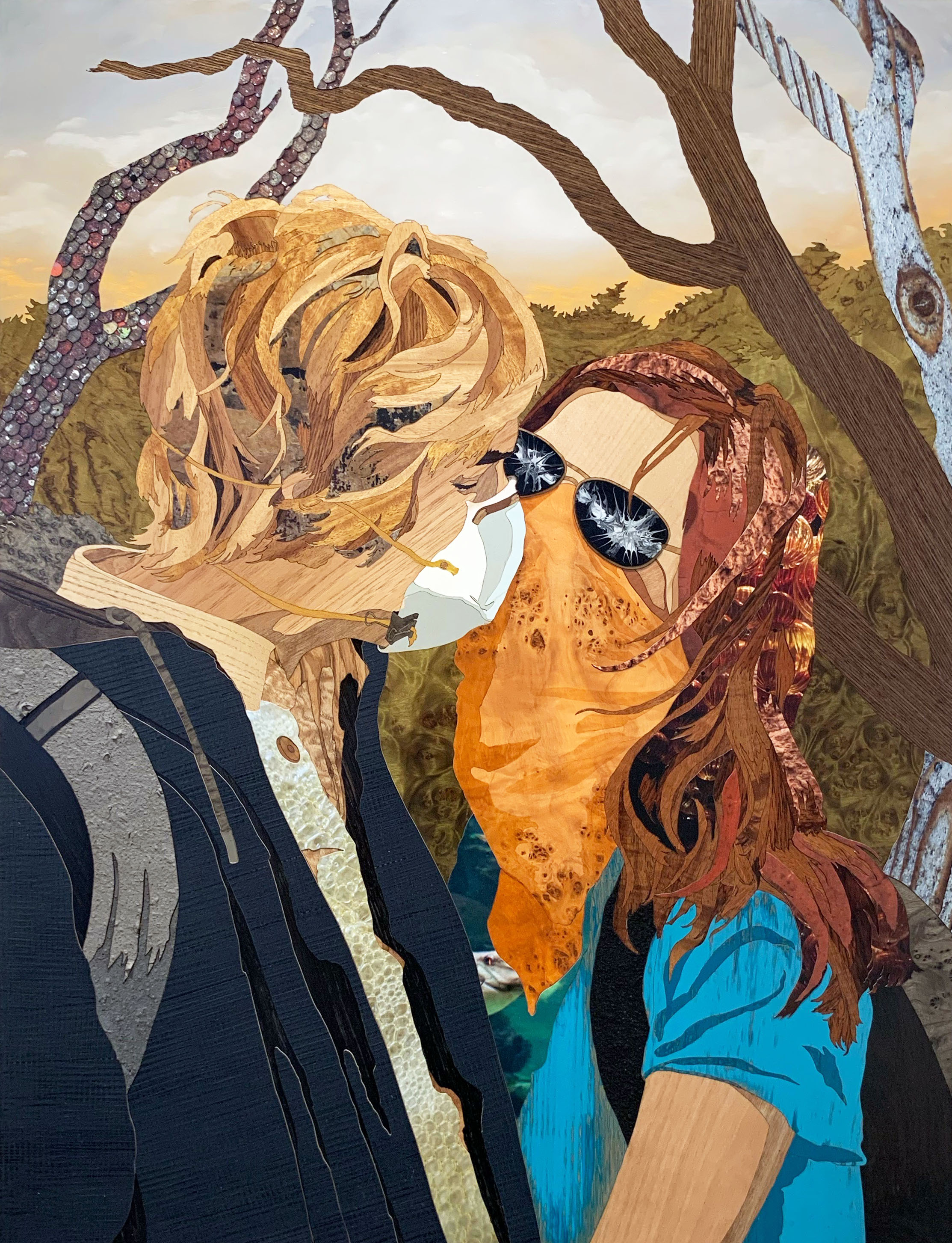
Alison Elizabeth Taylor creates new natural wonders at James Cohan Gallery with her latest solo show of 2-D artworks crafted in a blend of marquetry, paint and photographic media.  Here, an affectionate couple in the Covid era have beautifully rendered hair – composed of various types of wood veneer – and a bandana that amazingly manages to be believable as both cloth and wood grain.  (On view in Tribeca through Oct 23rd.  Masks and social distancing required.)

Alison Elizabeth Taylor, Kiss, marquetry hybrid, 31 x 24 inches, 2021.

Philip Guston at Hauser & Wirth Gallery

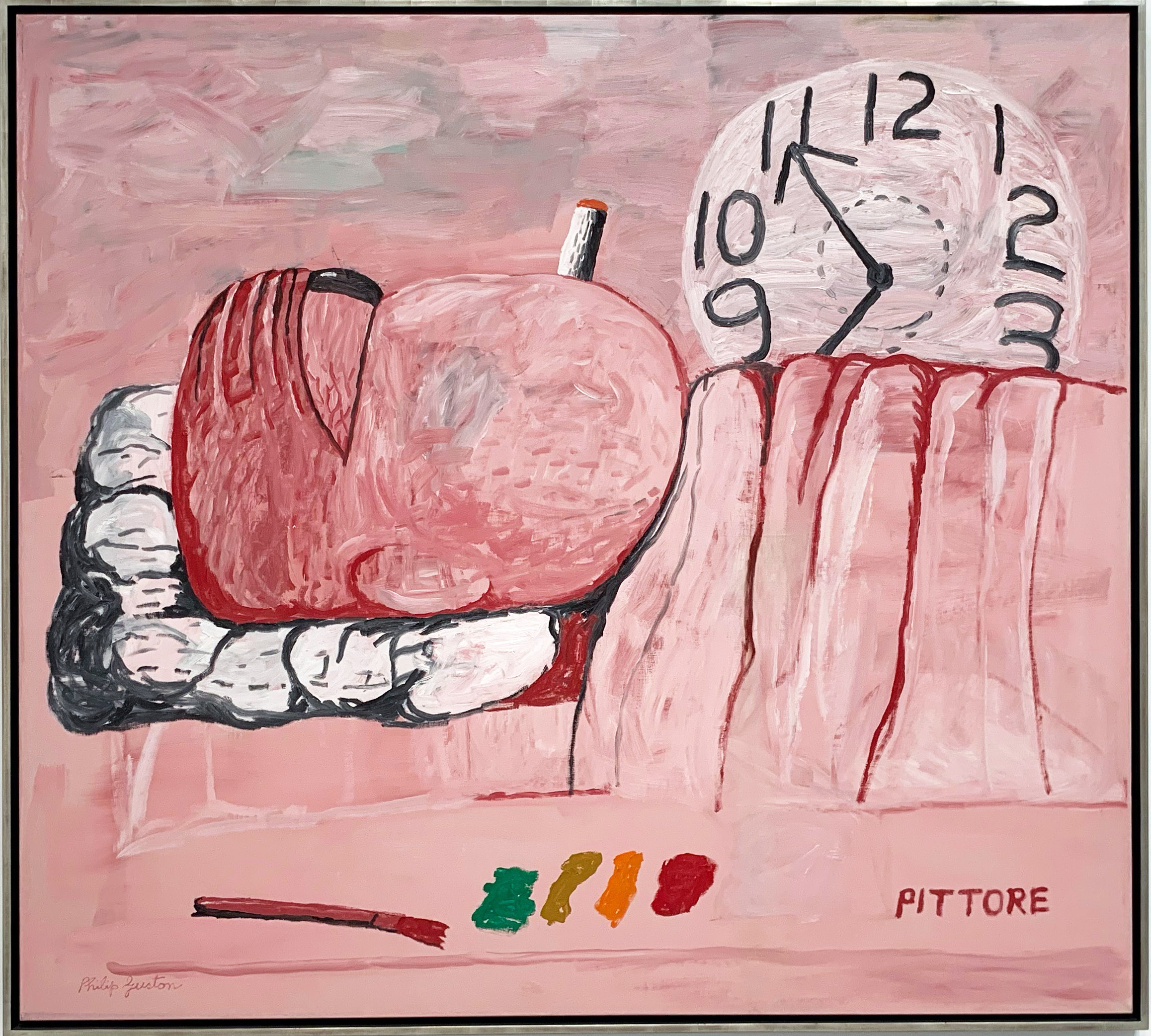
When Philip Guston stopped painting in an abstract expressionist style and adopted a new, faux-naïve look in 1970, art world response was so negative that the artist relocated to Rome for the better part of the following year.  ‘Pittore,’ part of a major show of Guston’s late work at Hauser & Wirth Gallery, expresses some of the anxiety that Guston must have felt as a painter, as well as his need to change to a representational style to engage in a more overt way with the politics of the day.  Here, the artist lies awake in bed at night, his paint and brush beside him.  Smoking, his eyes bloodshot, and with a clock rising behind him like a moon dominating a landscape, the pressure is palpable.  (On view in Chelsea.  Proof of vaccination, photo ID and masks are required).

Philip Guston, Pittore, oil on canvas, 72 ¾ x 80 ½ inches, 1973.

Alice Neel, Conversation on a Bus at David Zwirner

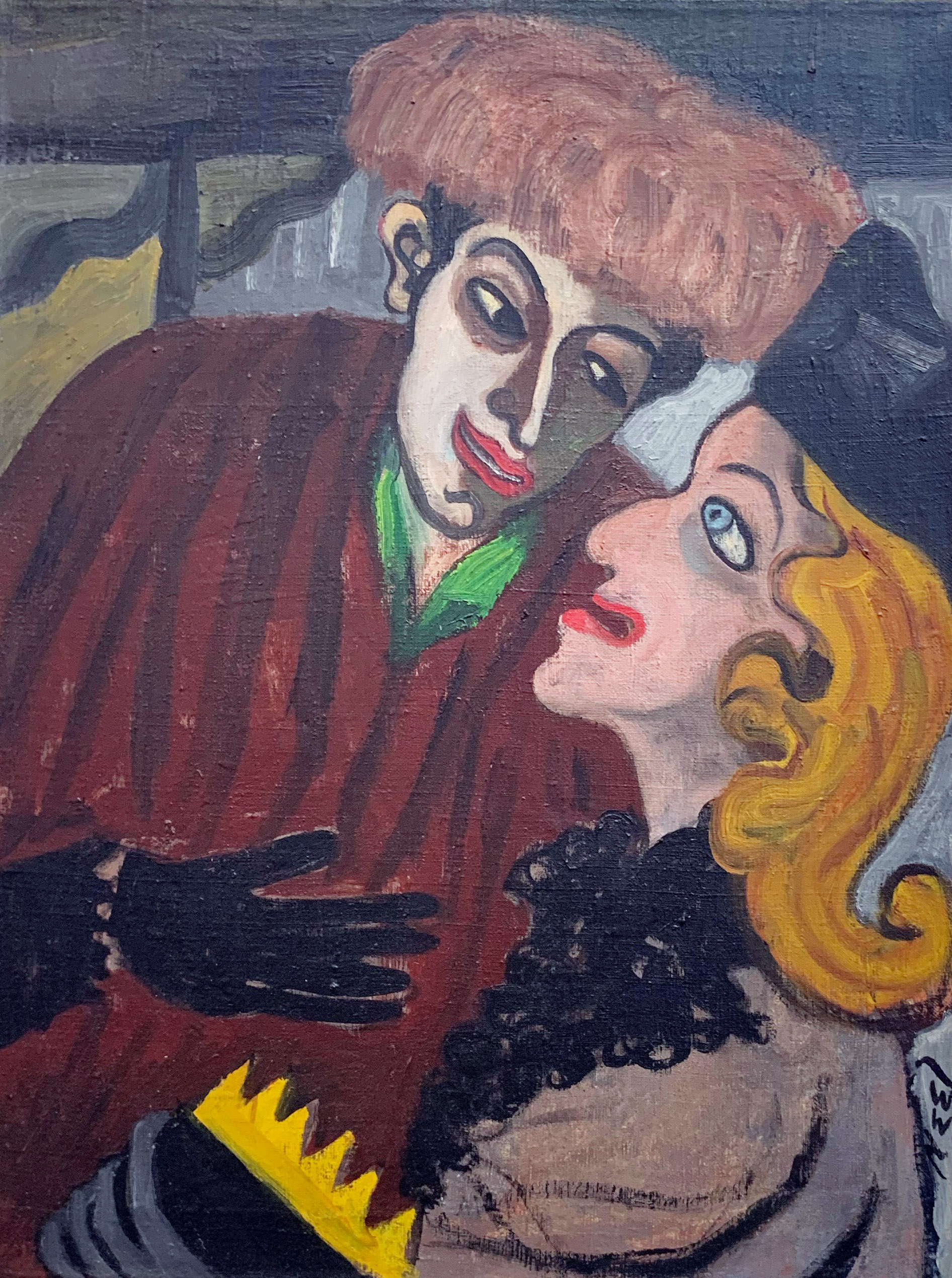
Alice Neel’s desire to ‘bear witness’ to the humanity she encountered resulted in a range of portraits, from bohemian downtown artists to her Harlem neighbors to colorful characters seen on the street.  ‘Conversation on a Bus’ from 1944 exaggerates the features of two chattering friends but at the same time lures us into their animated conversation and, in the eyes of the woman in the brown hat, hints at the pleasure of intimacy with a friend.  Despite the Met’s recent extensive survey of Neel’s work, this selection of paintings from Neel’s early decades at David Zwirner Gallery feels fresh and full of revelation.  (On view on 20th Street in Chelsea through Oct 16th.)

Alice Neel, Conversation on a Bus, oil on canvas, 29 x 22 inches, 1944.

Ghada Amer at Marianne Boesky Gallery

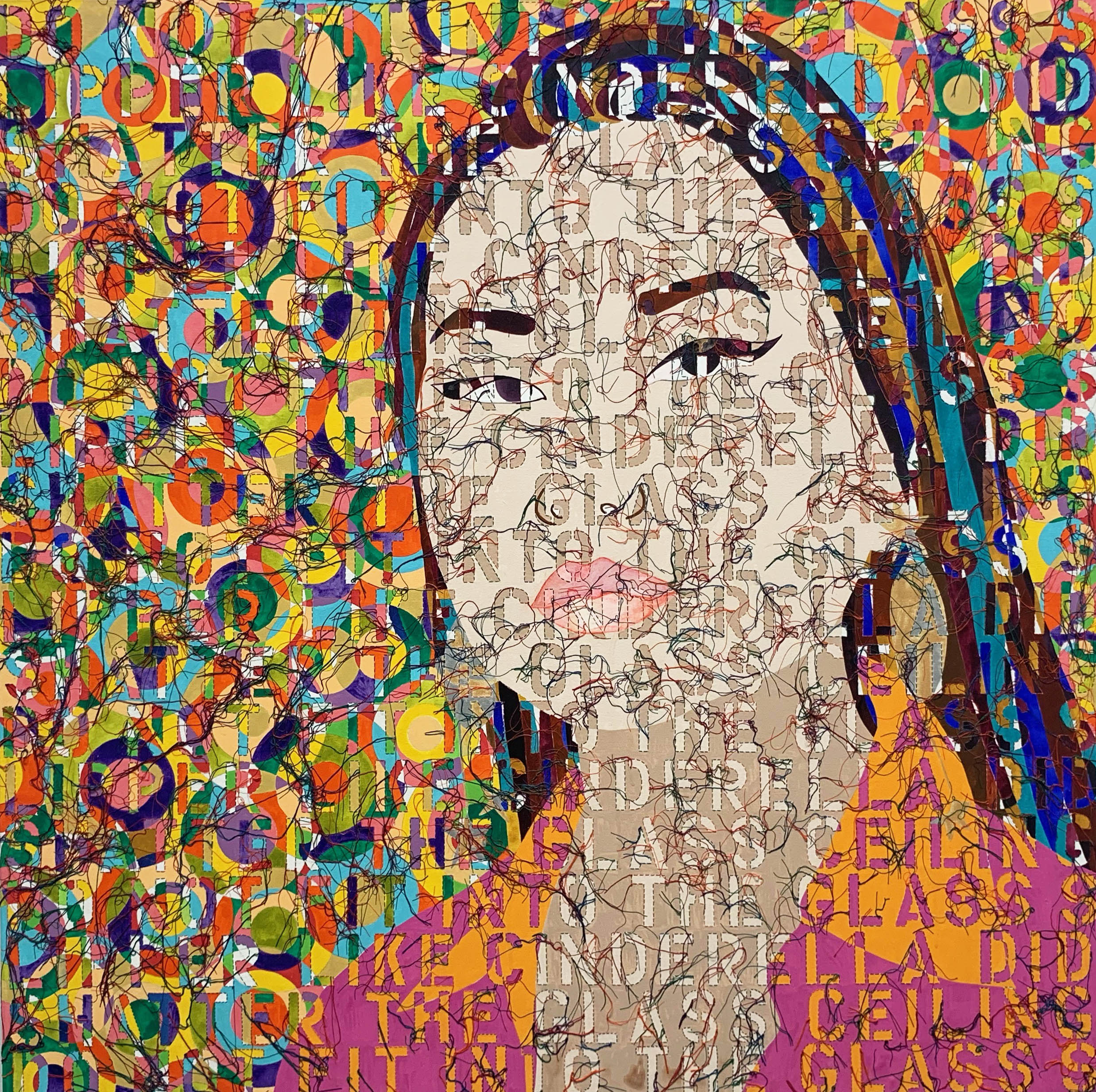
“Do not fit into the glass slipper like Cinderella did, shatter the glass ceiling,” reads the text (quoting Indian actor Priyanka Chopra?) covering Ghada Amer’s portrait of her friend, Elizabeth.  Though Amer has changed her subjects from women in erotic magazines to friends, family and collaborators, she has not altered her habit of citing truisms from a feminist perspective.  Her latest Chelsea show – her first at Marianne Boesky Gallery – features texts intended to build up women and their capabilities.  (On view through Oct 23rd).
Ghada Amer, Portrait of Elizabeth, acrylic, embroidery, and gel medium on canvas, 2021.

Beauford Delaney at Michael Rosenfeld Gallery

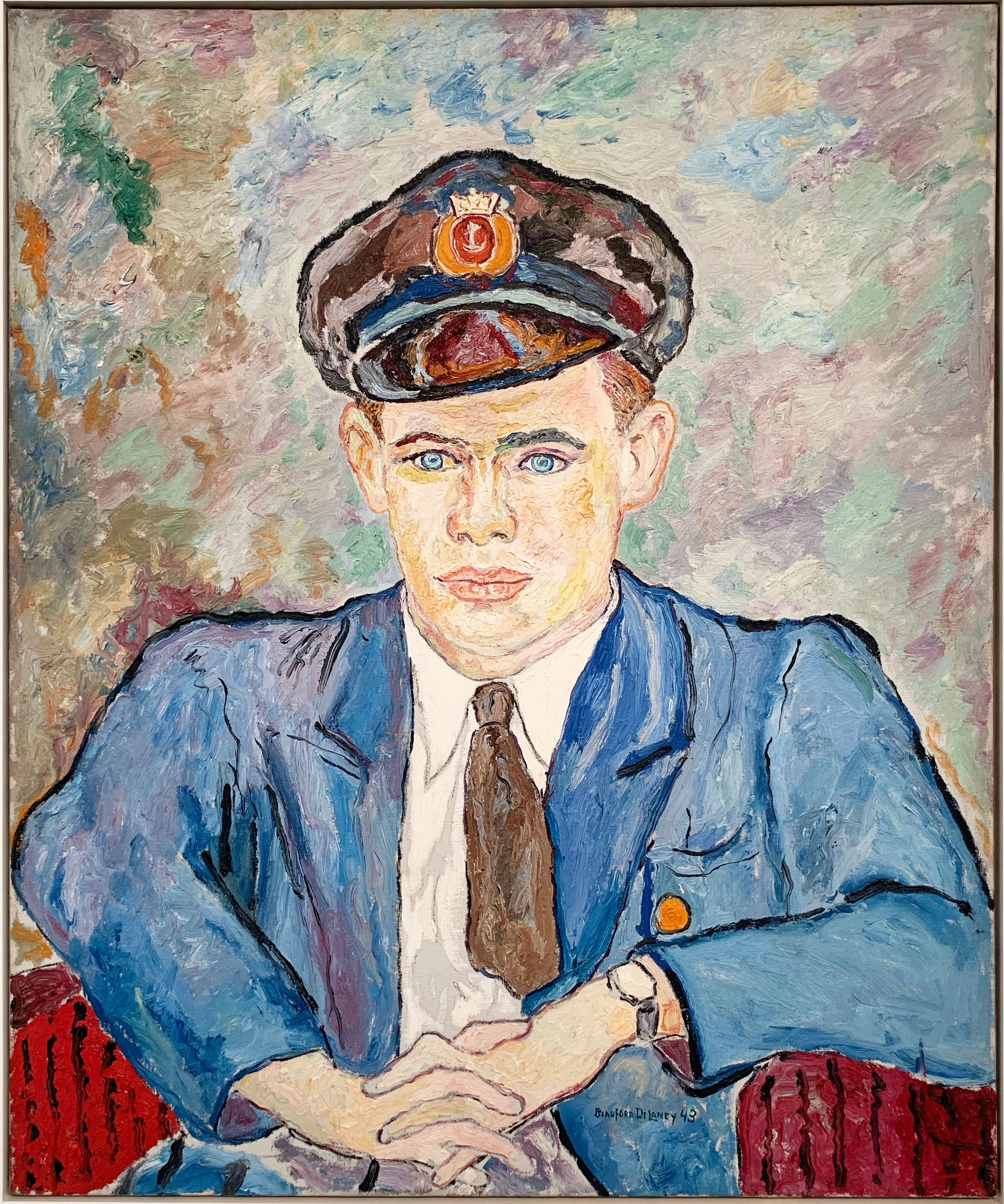
Often painted from memory and incisively capturing aspects of a sitter’s emotional life, Beauford Delaney’s portraits at Michael Rosenfeld Gallery feel strikingly immediate.  Showcasing 25 portraits and 7 abstractions from the artist’s Greenwich Village days to his decades in Paris, the exhibition’s highlights demonstrate how (as the gallery puts it in a handout), “the physical description of the sitter is secondary to their psychological essence.”  Here, in a portrait titled ‘Untitled (Young English Lieutenant),’ the tones of Delaney’s multi-colored background direct our eyes towards a vivid encounter with a young Englishman.  (On view in Chelsea through Nov 13th.  Masks and proof of vaccination are required.)

Beauford Delaney, Untitled (Young English Lieutenant), oil on canvas, 36 x 30 inches, 1943.

David Gilhooly in ‘Craft Front and Center’ at the Museum of Art and Design

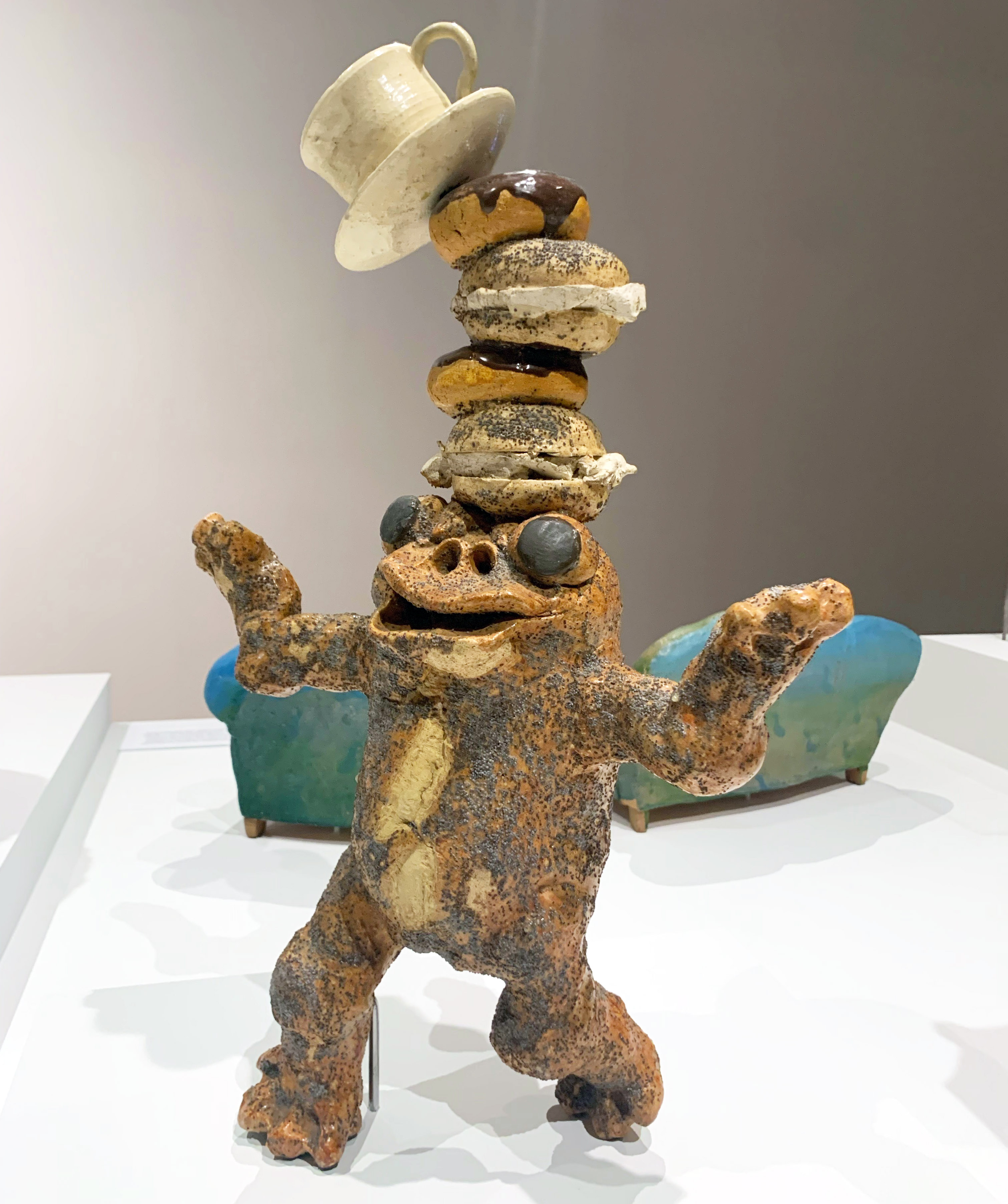
Whether they crown an ice cream Sunday or nestle between burger buns, late sculptor David Gilhooly’s recurring ceramic frogs humorously disrupt classic dishes.  A member of the California-based Funk Ceramic Movement, Gilhooly embraced the grotesque while picturing foods that should be tempting.  Here, a tower of bagels and donuts along with an about-to-topple coffee cup are delivered by a frog with skin resembling bread covered with poppy seeds. (On view in ‘Craft Front and Center’ at the Museum of Art and Design through Feb 13th.)


David Gilhooly, Bread Frog as a Coffee Break, glazed earthenware; hand wrought, 23 ½ x 15 ½ x 6 ½ inches, 1981-82.

Martine Syms at Bridget Donahue

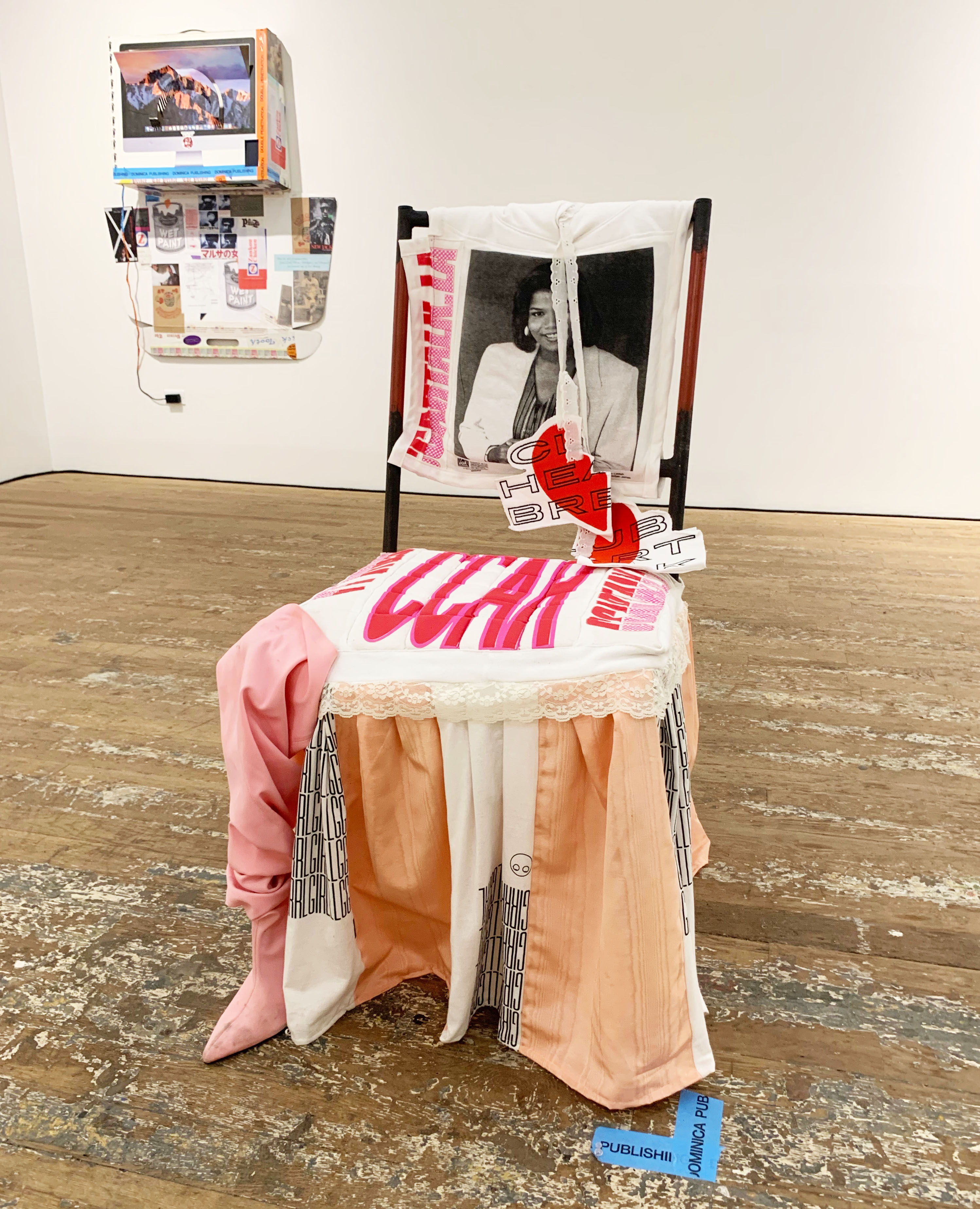
Martine Syms fans expect a stream-of-conscious outpouring of text and image (as in her recent diaristic book, ‘Shame Space’) and her latest solo at Bridget Donahue will not disappoint.  Videos housed in custom, laser-cut cardboard boxes covered in fragments of commercial imagery or even inserted into a corner of a hanging dry cleaning bag run counter to typical sleek gallery video presentations.  Positioned in front of one video wall, this chair titled ‘Bonnet Core’ sports frilly lace at the edges, abundant text and a high heeled pink boot next to one chair leg.  Accompanied by a press release written by Alissa Bennett detailing enthusiastic engagement with an auction of Janet Jackson’s belongings earlier this year, the show speaks to our deeply personal yet shared experience of pop culture.  (On view through Sept 25th on the Lower East Side).

Martine Syms, Bonnet Core, cotton, rhinestones, metal, paint, lace, polyester, thread, 39 3/8 x 18 1/8 x 25 ¾ inches, 2021.

Sugiura Yasuyoshi at the Brooklyn Museum of Art

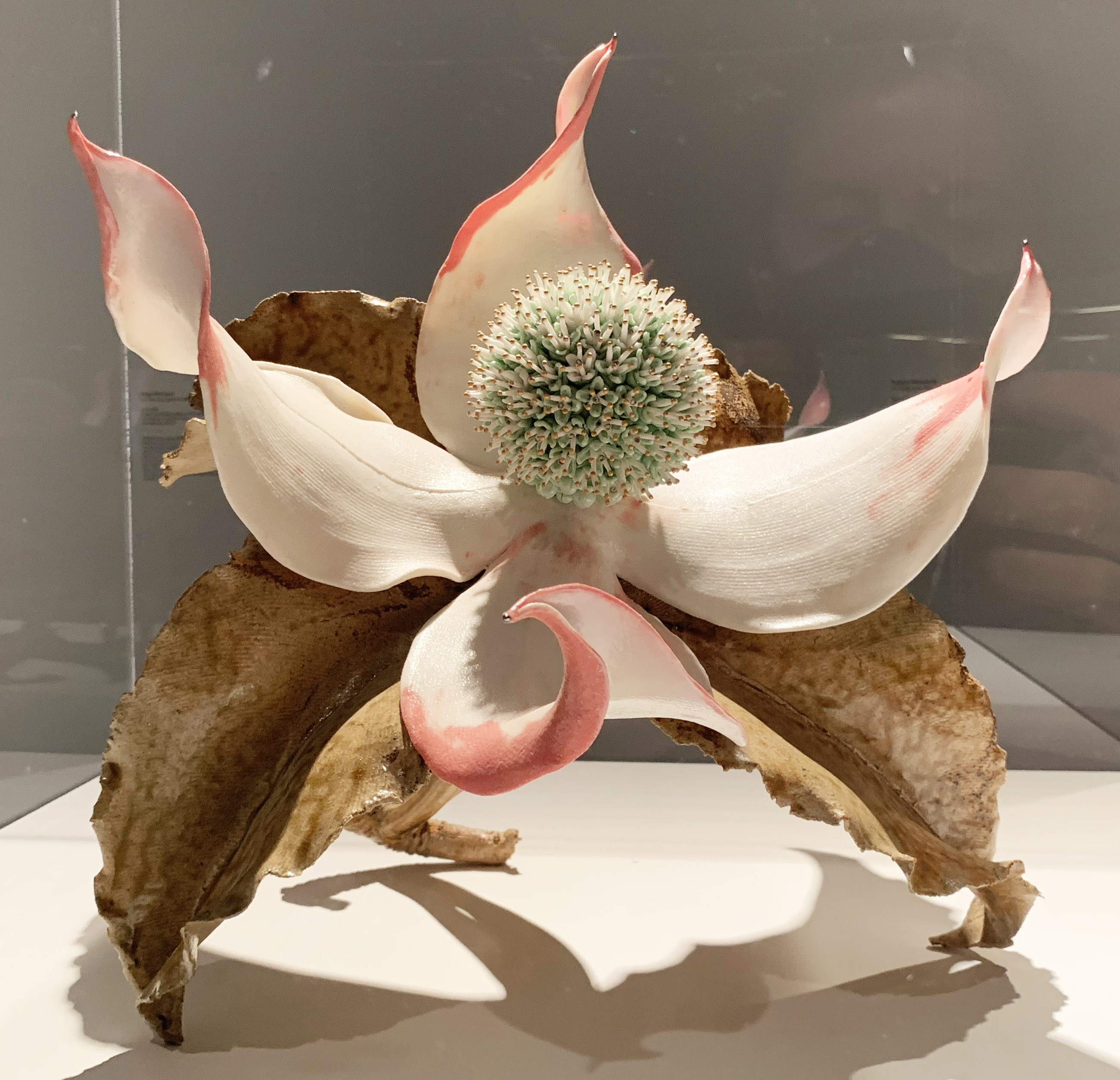
Dogwood flowers are known for their ‘delicate yet tough appearance’ the Brooklyn Museum explains; Sugiura Yasuyoshi’s sculptural version of a dogwood bloom adds another contrast by presenting transient beauty in solid stoneware.  Known for his ceramic sculptures of flowers, Yasuyoshi’s blooms may seem an unusual choice for ‘The Slipstream,’ the museum’s current show of work from the permanent collection that reflects on the turbulence of 2020.  But the flower is often associated with rebirth, making it a symbol of hope.  (On view through March 20, ’22.  Masks and vaccination proof required.)

Sugiura Yasuyoshi, Dogwood Flower, stoneware with metallic glazes, 2019.

Alice Hope in No W Here at Ricco/Maresca Gallery

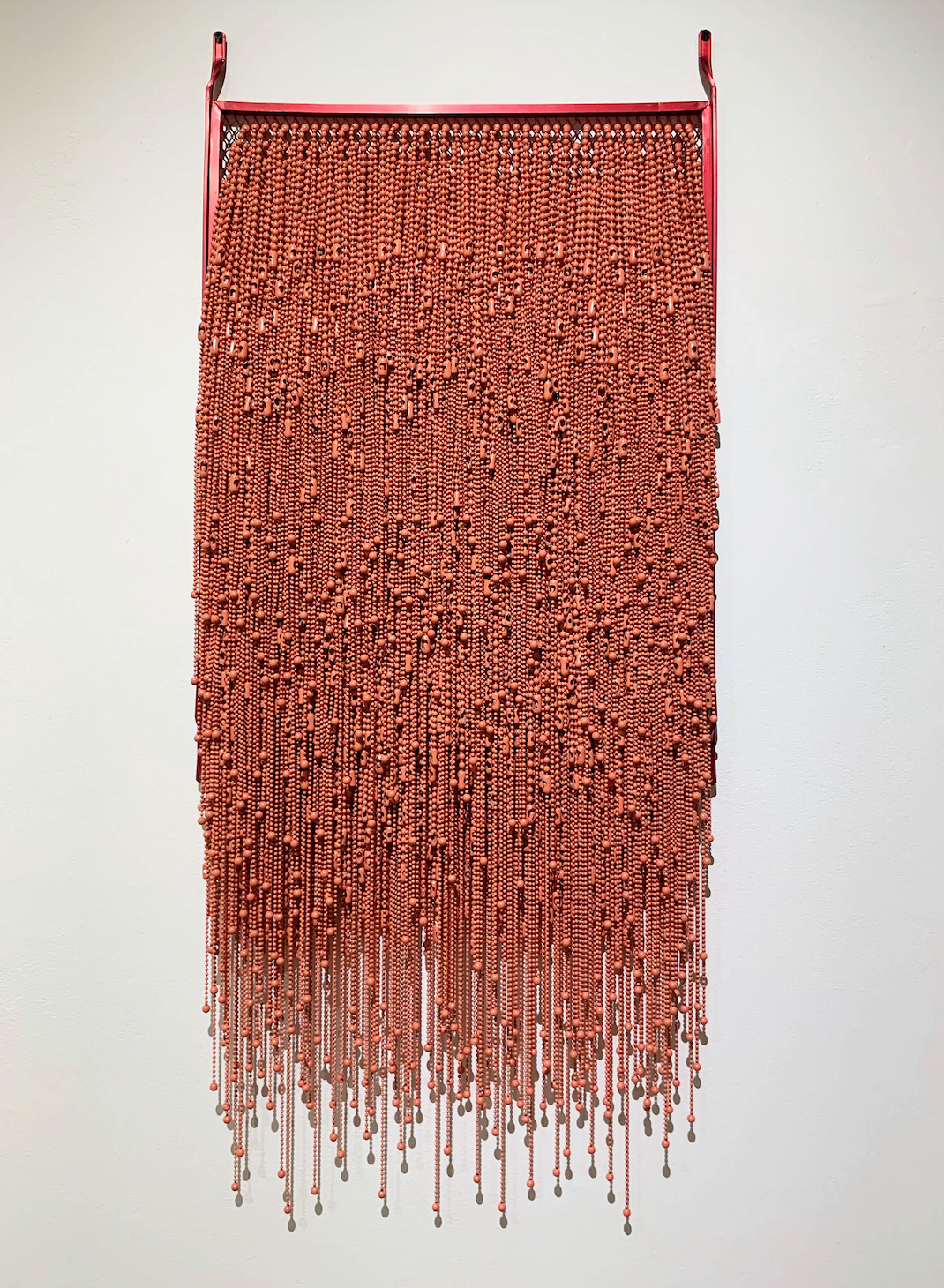
Prior to the pandemic, artists Alice Hope, Bastienne Schmidt and Toni Ross decided to make artwork in response to one object at the Met; improbably, they each focused on a navigational chart from the Marshall Islands.  Known for creating abstract sculpture and installation composed of repeated objects, Hope’s contribution to the three artists’ current joint exhibition at Ricco/Maresca Gallery includes this accumulation of ball chains.  A kind of counterpoint to navigating social space through distancing, theses crowded forms resemble natural fibers but are made from mass produced keychains.  (On view in Chelsea through Sept 11th).

Alice Hope, untitled, Ball chain, anodized door screen, 20 x 45 inches, 2020.

Melvin Edwards at City Hall Park

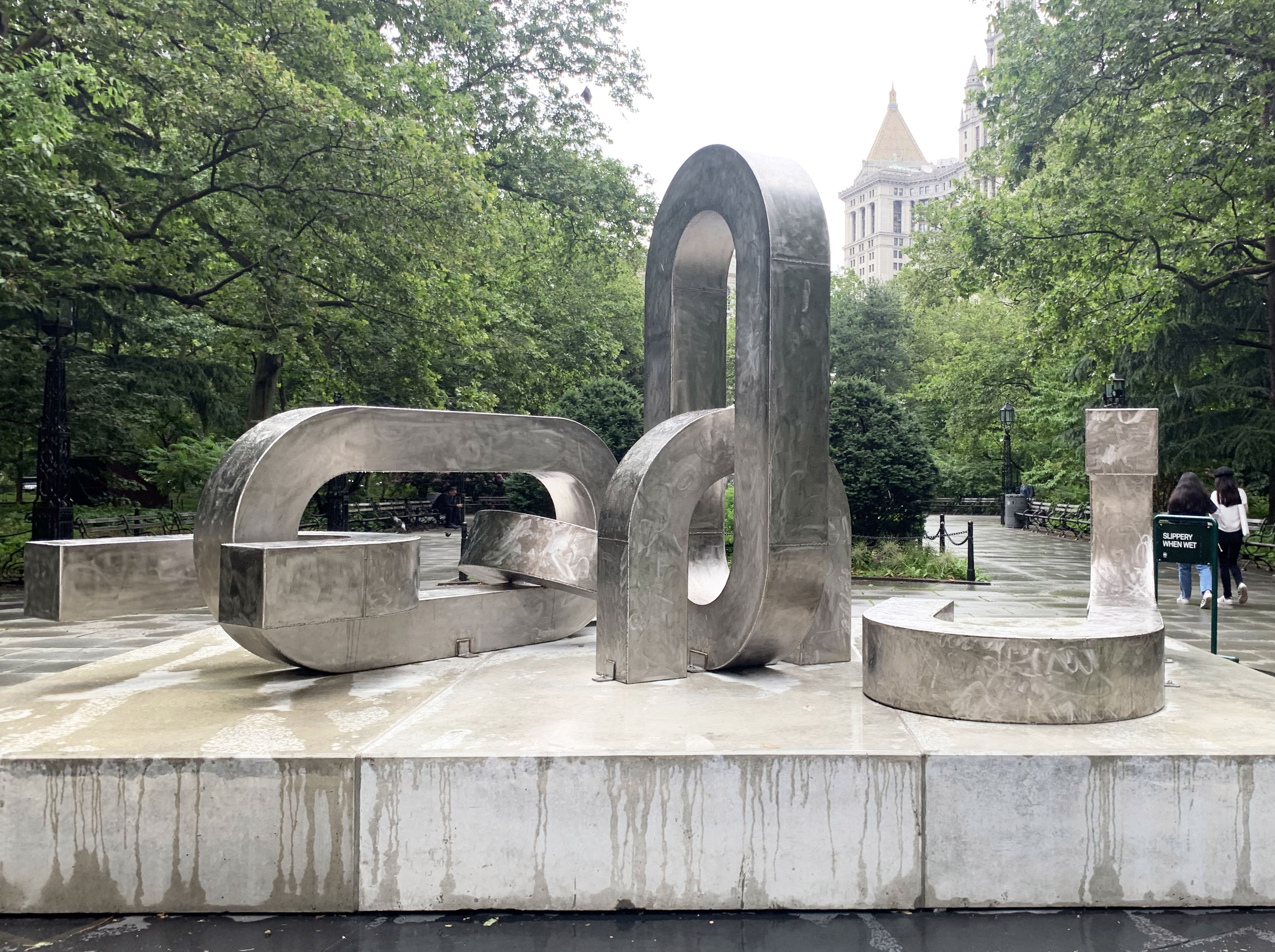
Known for semi-abstract and often small-scale sculpture including the ‘Lynch Fragments’ series recently on view at the New Museum, Melvin Edwards takes over the south entrance to City Hall Park via Public Art Fund with this large-scale sculpture depicting broken chains.  Titled ‘Brighter Days’ the exhibition’s curving minimal forms enhances the attractiveness of the message displayed – freedom from bondage.  (On view through Nov 28th).

Melvin Edwards, ‘Song of the Broken Chains’ in installation view of ‘Brighter Days’ at City Hall Park, summer 2021.

Marcia Schvartz at 55 Walker

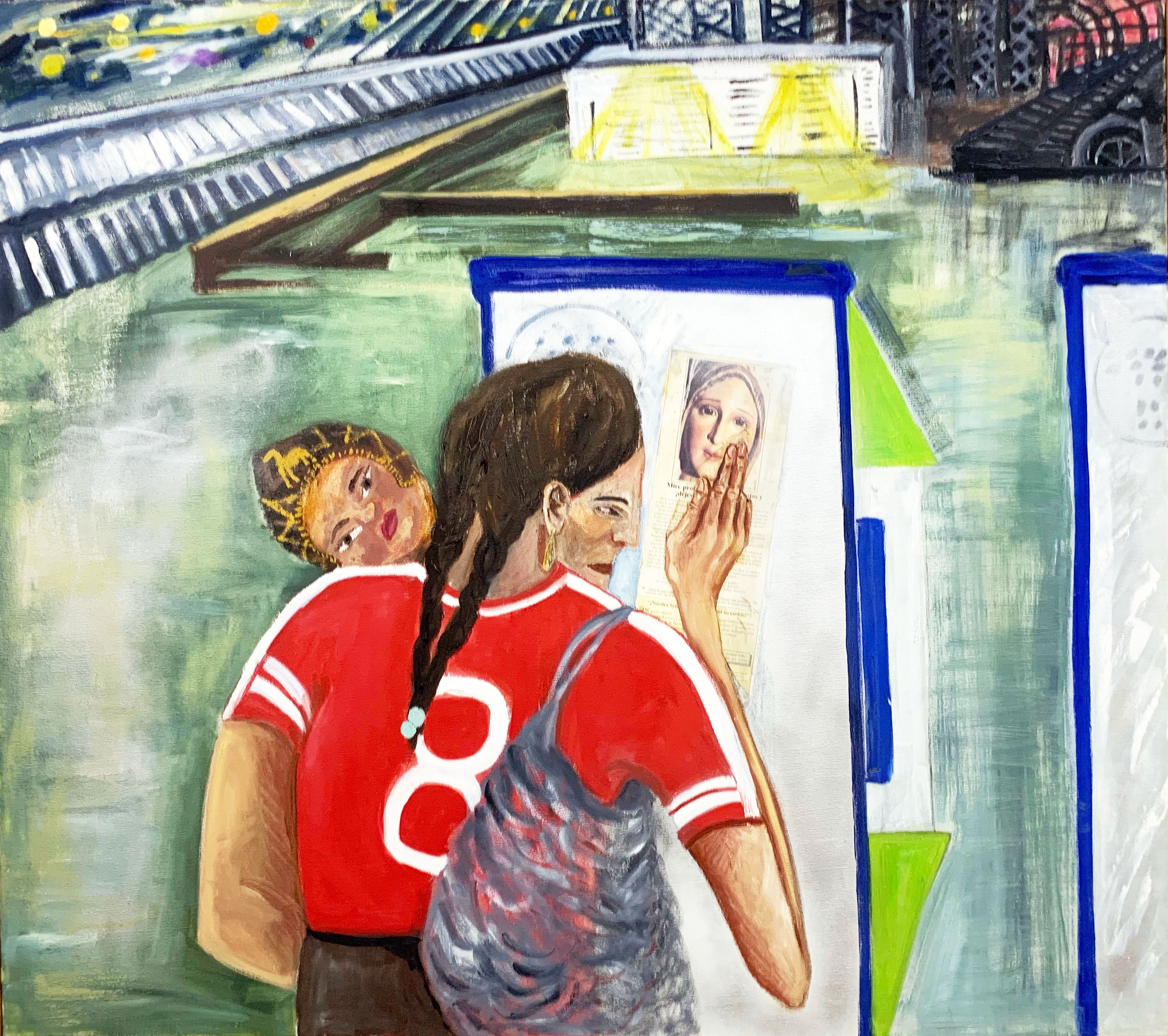
Exiled to Spain, then Brazil in the late 70s during Argentina’s military junta, Argentinian artist Marcia Schvartz returned to Buenos Aires in 1983, settling in the working class and bohemian neighborhood of San Telmo. Frank portraits of her friends and neighbors followed, along with this depiction of a mystical encounter at one of the city’s major train stations now on view in an exhibition of Schvartz’s work at Tribeca gallery 55 Walker. Downplaying the opulent and busy surroundings of the station, Schvartz concentrates on a tender encounter between a mom and an ethereal visage. (On view through Sept 7th).

Encuentro mistico constitucion (Mystical encounter at Constitution Train Station), oil on canvas and collage, 52 x 46.2 x 1 inches, 1998.


Niko Luoma in ‘Brought to Light’ at Bryce Wolkowitz Gallery

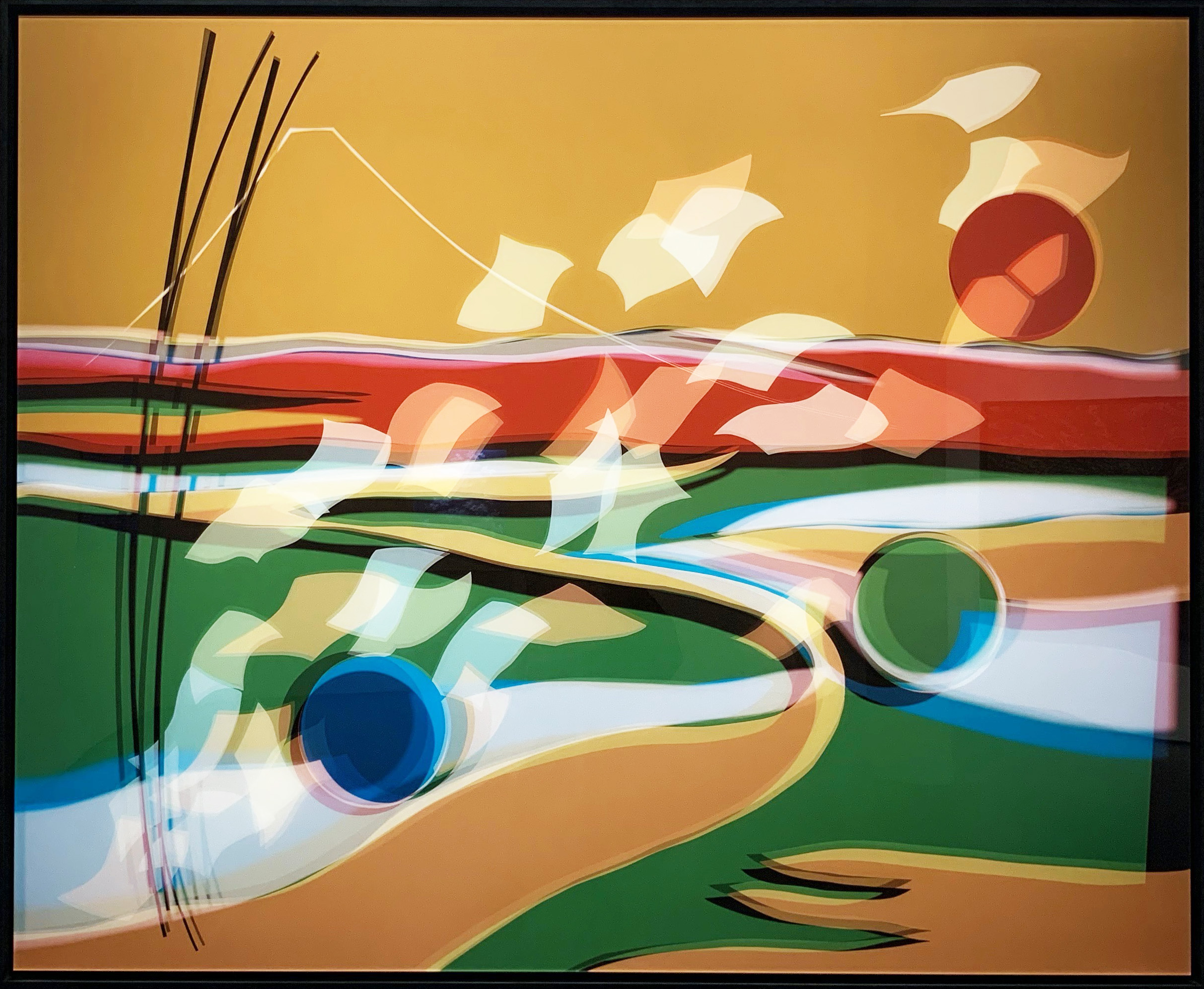
Experimental Finnish photographer Niko Luoma recreates a scene from an iconic 19th century woodblock print by Hokusai in this photographic image made from multiple exposures at Bryce Wolkowitz Gallery.  Whereas Hokusai pictures travelers battling the wind – holding on to their hats or losing a stack of paper to a strong gust – Luoma’s version abstracts the scene, creating mood with strong color and foregrounding the escaping pieces of paper as they take flight.  (On view in Chelsea through Aug 27th.

Niko Luoma, Self-titled Adaptation of Travelers Caught in a Sudden Breeze at Ejiri (1832), Archival pigment print, diasec, frame, 2019.

Alice Aycock in ‘Wild At Heart’ at Marlborough Gallery

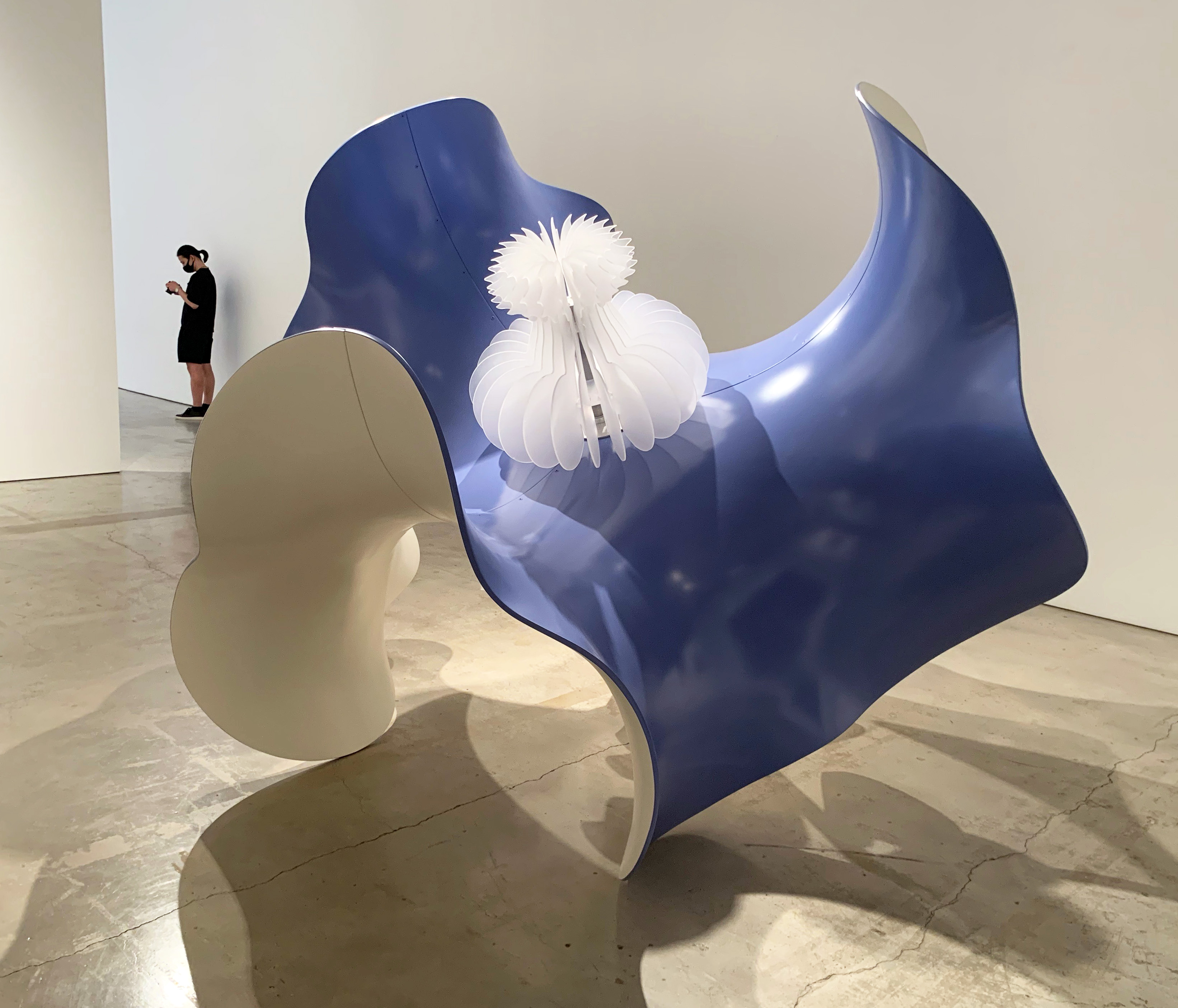
Alice Aycock’s sizeable ‘Wavy Enneper’ sculpture in Marlborough Gallery’s summer group show is tantalizingly familiar, resembling an underwater organism or a fungus. However, its enticingly curving, dynamic form was actually inspired by a diagram of a self-intersecting surface introduced by 19th century German mathematician Alfred Enneper. (On view in Chelsea through Sept 11th).

Alice Aycock, Wavy Enneper, fiberglass, aluminum and acrylic, ed of 3 + 1AP, 84 x 116 3/8 x 102 inches, 2011.

Arcmanoro Niles at Lehmann Maupin Gallery

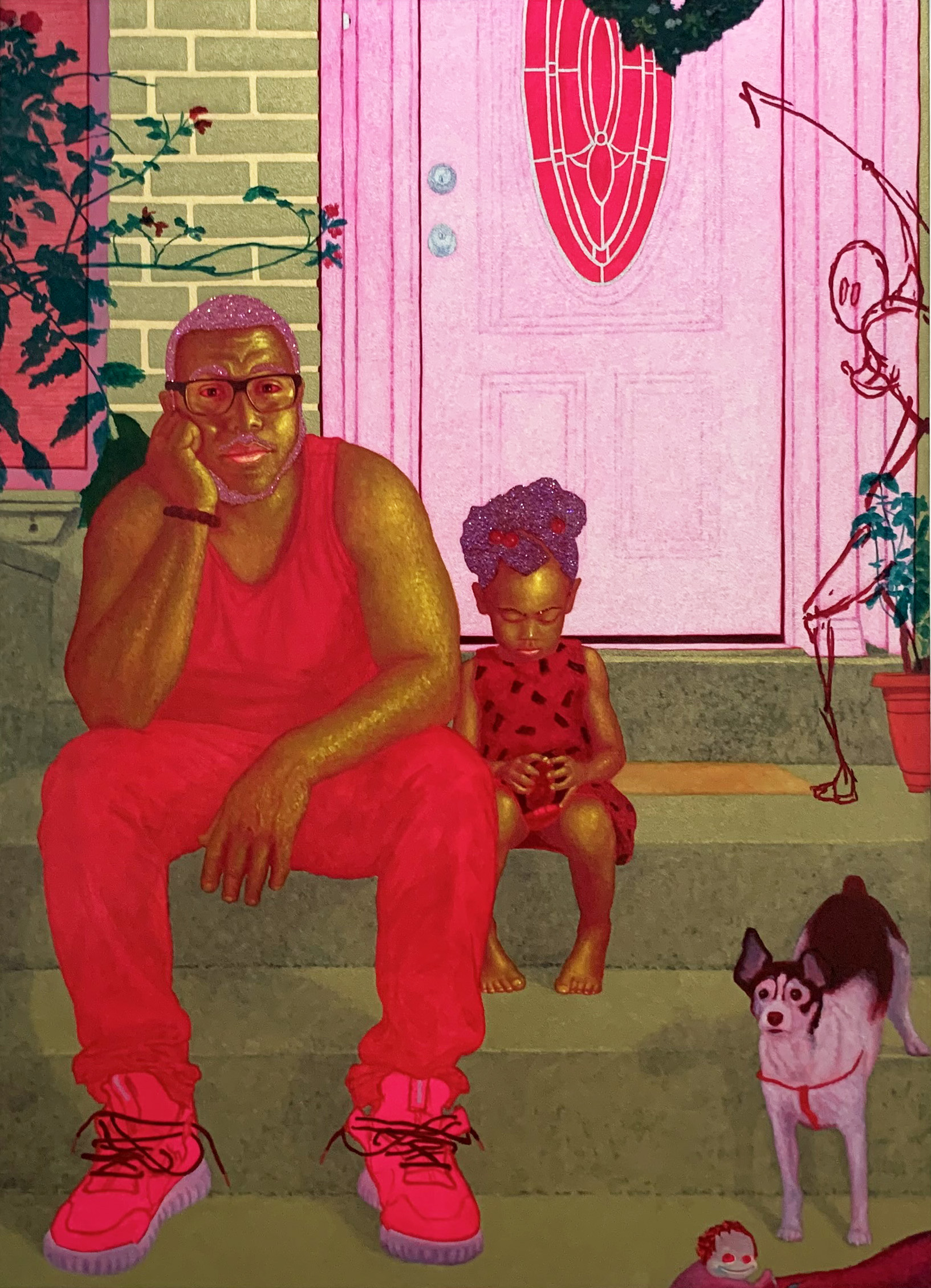
Arcmanoro Niles’ first solo show at Lehmann Maupin Gallery opens with this oil, acrylic and glitter image of a contemplative man, raising his eyebrows at the viewer or maybe at life itself. Titled ‘Hey Tomorrow, Do You Have Some Room For Me: Failure Is A Part Of Being Alive,’ the show looks hopefully to the future while acknowledging the challenges and temptations of life now. With this image, Niles takes a scene from everyday life and turns it electric with red and pink tones and glitter accents; at the bottom and right, he adds sketchily drawn figures that represent the pleasuring seeking id, begging the question of how these interlopers will effect the tranquil domestic life pictured. (On view in Chelsea through Aug 27th.)

Arcmanoro Niles, I Thought Freedom Would Set Me Free (And You Gave Me A Song), oil, acrylic and glitter on canvas, 70 x 50.5 x 2 inches, 2020.

Marepe in ‘Tales of Manhattan’ at Anton Kern Gallery

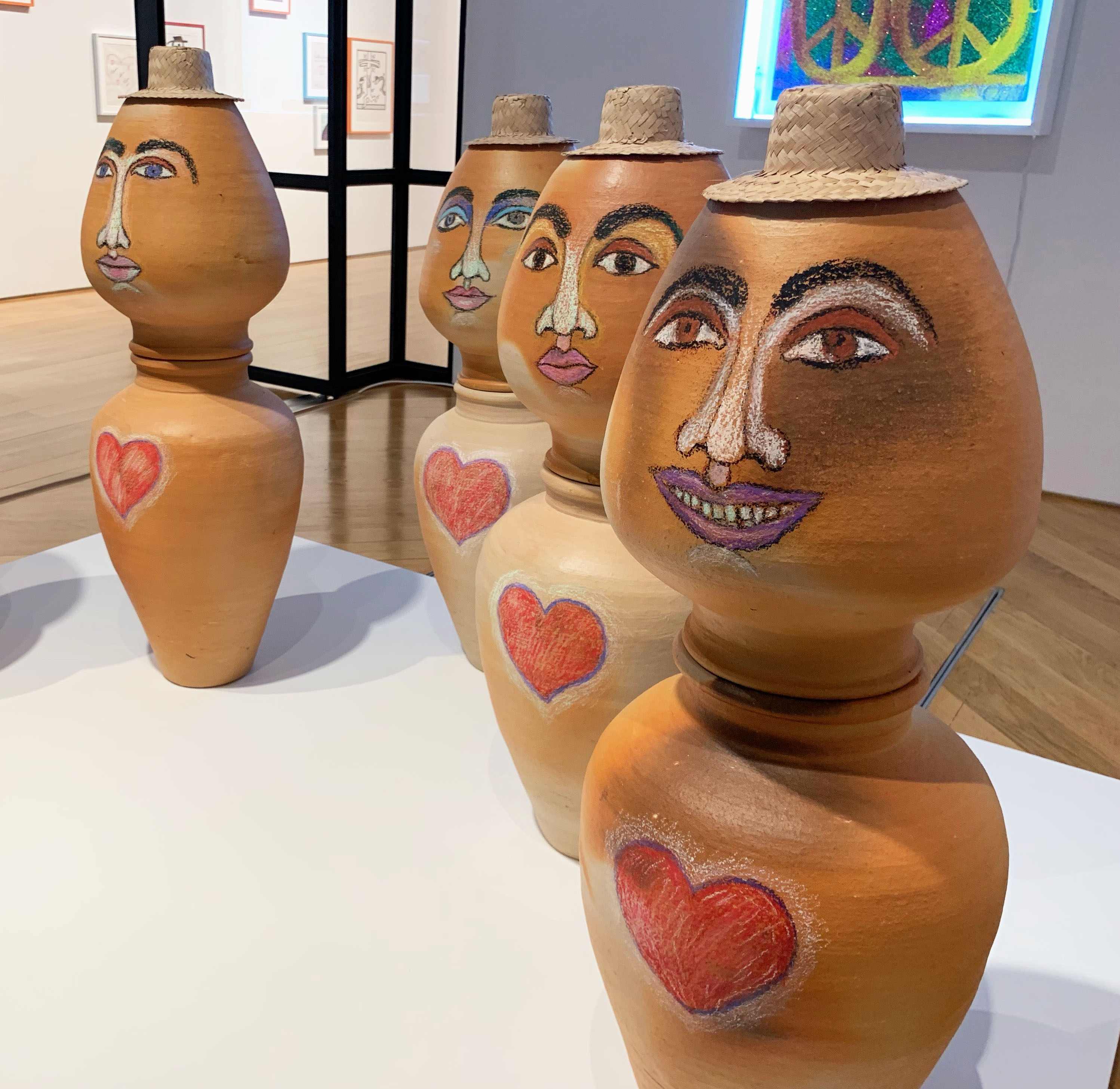
Brazilian artist Marepe’s socially conscious practice thrives on contrasts between city and country, rich and poor, etc.; each of these five assemblages in Anton Kern Gallery’s 25-year anniversary show is collectively titled ‘caipira’ or ‘bumpkins’ and features a prominent heart drawn in pastel.  Set up like pins waiting to be bowled down, these unsuspecting folk appear to be especially vulnerable.  (On view at 16 East 55th Street through Aug 20th).

Marepe, Coracao, Caipira, clay pots, pastel, straw, 32 ¼ x 41 3/8 inches (5 pieces together), 2019.

Stephanie Temma Hier in ‘North by Northeast’ at Kasmin Gallery

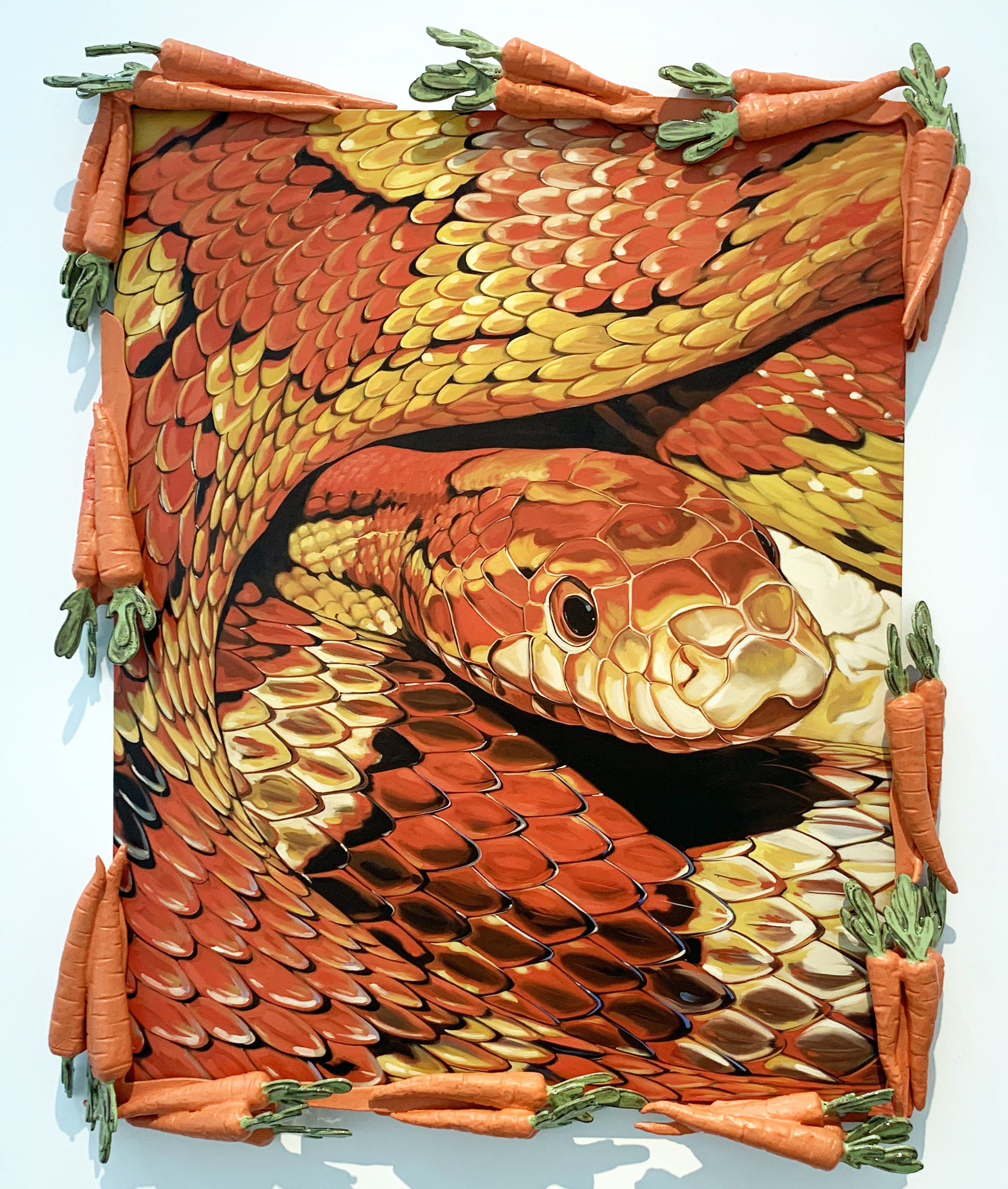
The unlikely combination of a snake and carrots and the media of painting and ceramics in Stephanie Temma Hier’s sculpture/painting at Kasmin Gallery both attracts and puzzles.  Hier’s diverse combinations of imagery have included ceramic greyhounds with painted blueberries and sculptural lips enclosing a 2-D image of tulips; generally her juxtapositions prompt consideration of how the natural world has been mediated by human consumption.  Titled ‘At the Root of the Curve,’ this painting links root vegetables to sinuous forms via algebra terminology.  (On view in Chelsea through Aug 13th).

Stephanie Temma Hier, At the Root of the Curve, oil on linen with glazed stoneware sculpture, 67 x 57 inches, 2021.

Jingze Du in ‘Density Betrays Us’ at The Hole

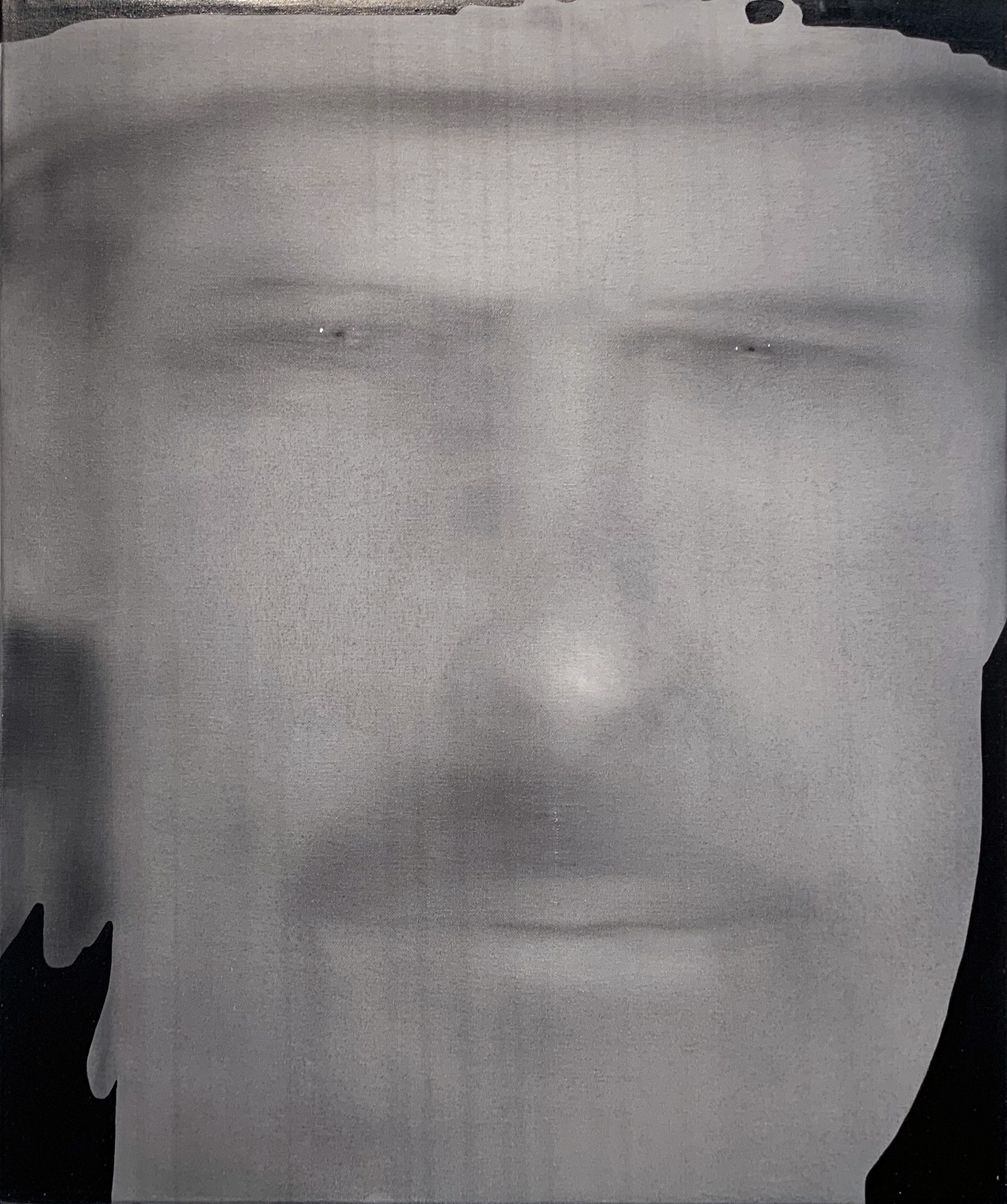
Jingze Du’s distorted figures recall staticky interference on an old black and white tv monitor, prompting viewers to consider what mediates the images we consume.  Though painting in oil on canvas, Du’s animals, famous actors and sports stars reference digital manipulation. Du cites Kayne West’s vocal distortions and the shifting skull in Hans Holbein’s famous 16th century painting ‘The Ambassadors’ as further sources of inspiration.  In this painting at The Hole’s new Tribeca location, Du does strange and captivating things with Brad Pitt’s classic squint.  (On view through Aug 8th).

Jingze Du, Brad, oil on canvas, 23.5 x 20 inches, 2021.

Jade Alexis Thacker at Fredericks & Freiser Gallery

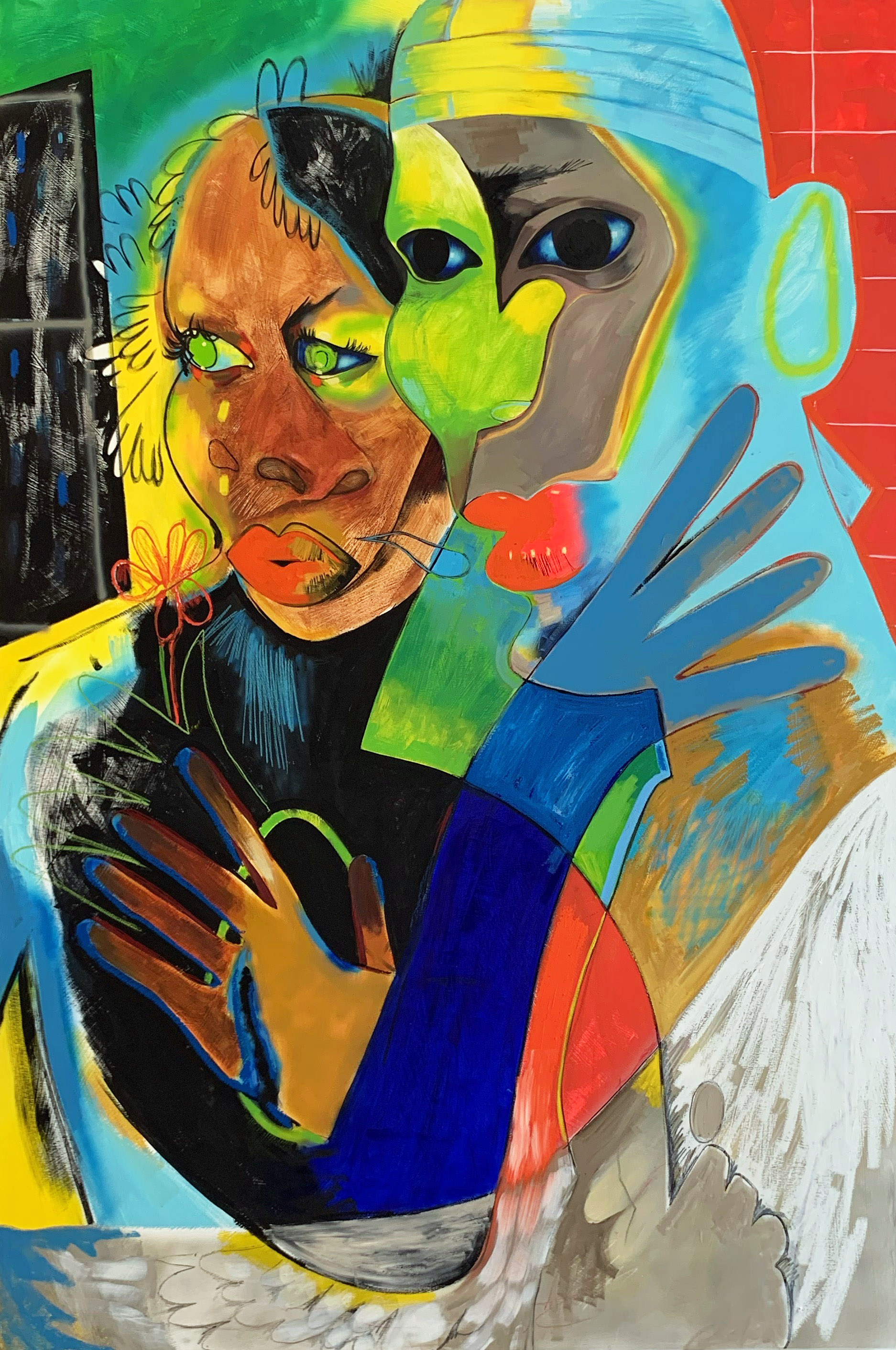
Though young Brooklyn-based painter and printmaker Jade Alexis Thacker’s watchful characters look too aware to be courting oblivion, they’re standouts in Fredericks & Freiser Gallery’s summer group show ‘Towards a More Beautiful Oblivion.’  Thacker’s paintings often include black and yellow color contrasts that convey danger and anxiety, but here, cool colors, an intimate embrace and the angelic, wing-like arm of the figure on the right also speak to comfort and strength in friendship.  (On view in Chelsea through August 6th).

Jade Alexis Thacker, familiar void, oil and acrylic on canvas, 70 x 42 inches, 2021.

Stuart Davis in Havana at Kasmin Gallery

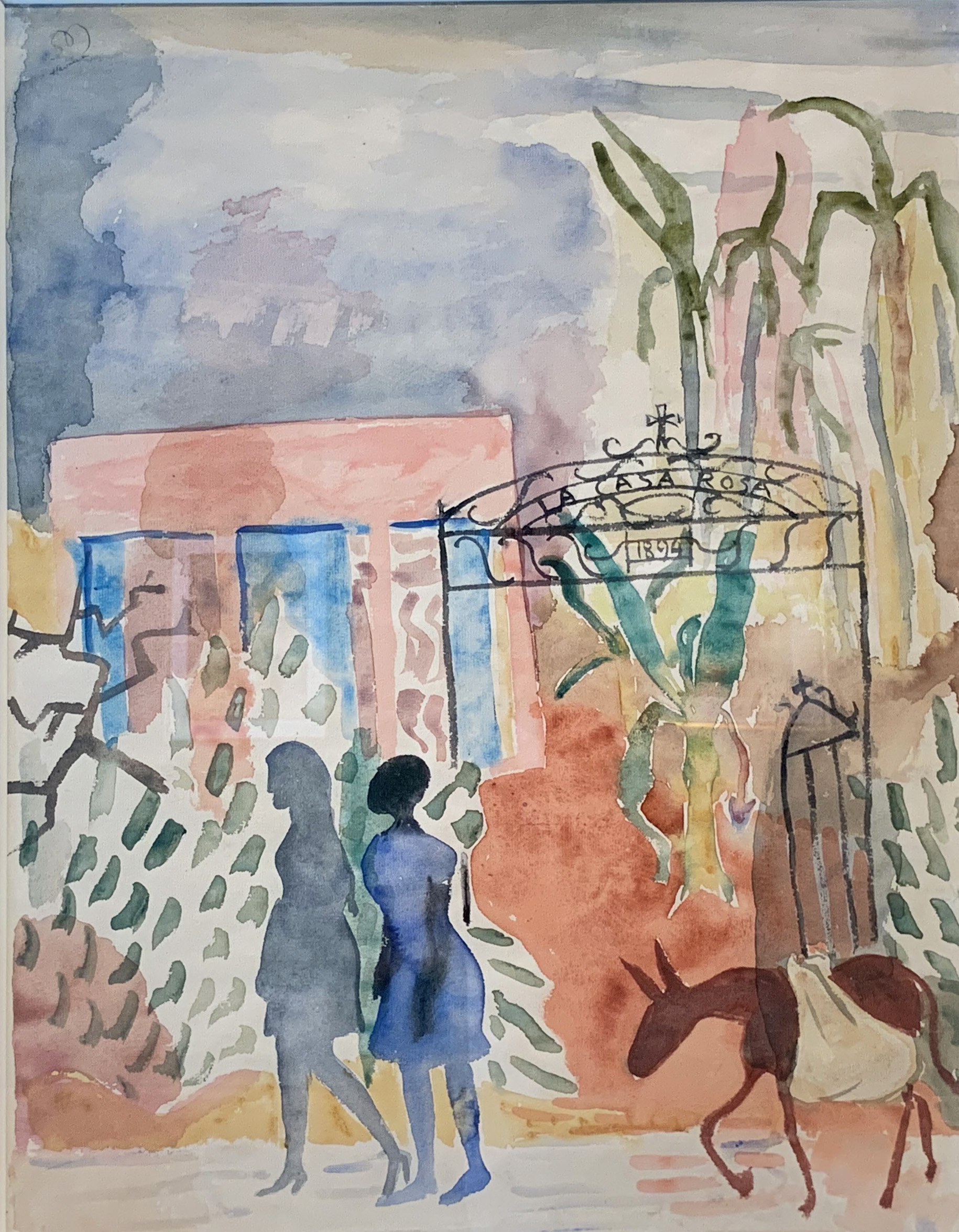
While recovering from the Spanish flu in 1920, iconic American modernist painter Stuart Davis made a short trip to Cuba, recording its people and places in a series of alluring watercolors now on view at Chelsea’s Kasmin Gallery.  Often pictured in silhouette, Davis’ figures appear to be glimpsed in passing.  Suffused with light-infused, warm tones, the paintings evidence the intrigue of an unfamiliar environment.  (On view through Aug 13th.)

Stuart Davis, La Casa Rosa, watercolor on paper, 24 7/8 x 19 inches, 1920.

Allison Katz in ‘Plus One’ at Luhring Augustine

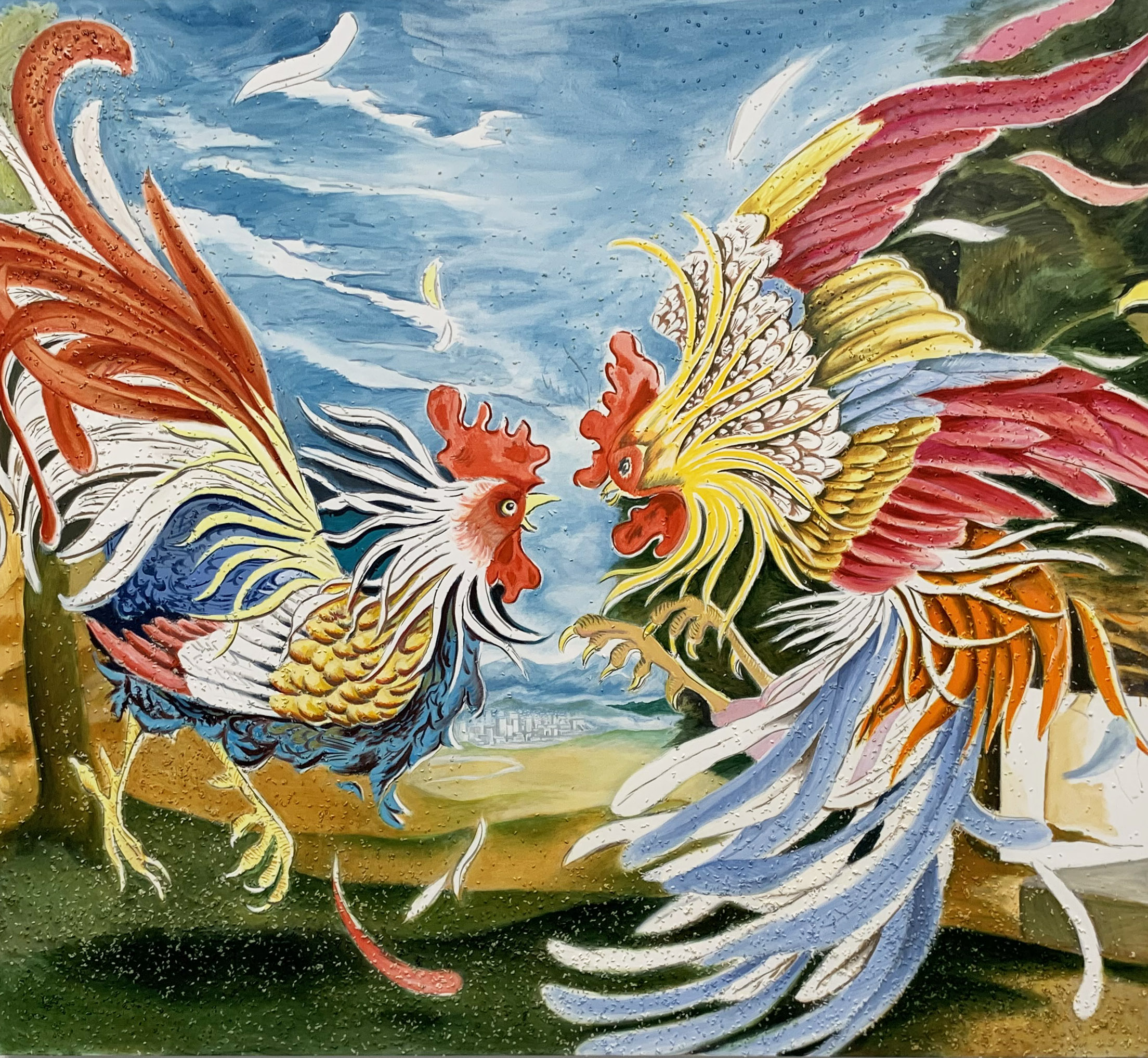
Two fabulously colored fighting cockerels by London-based painter Allison Katz dominate Luhring Augustine’s summer group show.  Titled ‘Noli Me Tangere!’ or ‘don’t touch me’ after Christ’s post-resurrection instruction to Mary Magdalene, the birds seem less about divine mystery than hysterical escalation of conflict.  Flowing feathers create dynamic patterns, echoing the clouds in the sky and lending beauty and urgency to a scene both captivating and absurd.  (On view in Chelsea through August 6th.)

Allison Katz, Noli Me Tangere!, oil, acrylic and rice on canvas, 78 ¾ x 86 5/8 inches, 2021.

David Hammons in Subliminal Horizons at Alexander Gray Associates

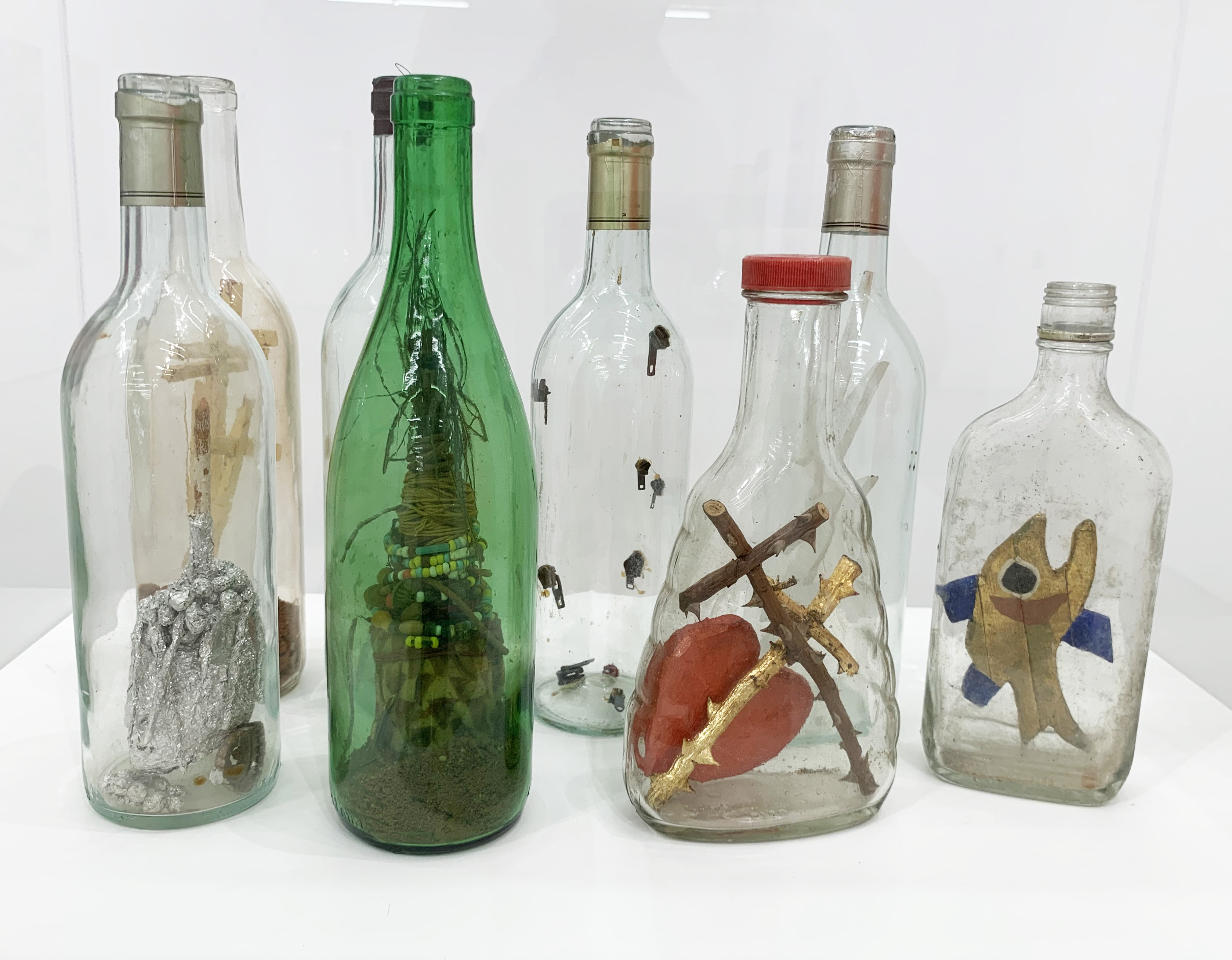
David Hammons’ untitled bottles from the mid-80s are a standout in Alexander Gray Associates’ summer group show, which features artists of color who have a relationship to the Hudson River Valley.  Evoking messages cast adrift in bottles or carefully constructed ships in bottles, each curious form invites and eludes easy interpretation.  A white lightning bolt suggests magically captured electricity, a fish somehow survives in a glass enclosure and the zippers from the flies of pants become living insects, a series of transformations that invite wonder.  (On view through Aug 14th).

David Hammons, installation view of untitled bottles from 1985, Alexander Gray Associates.

Karyn Olivier at Tanya Bonakdar Gallery

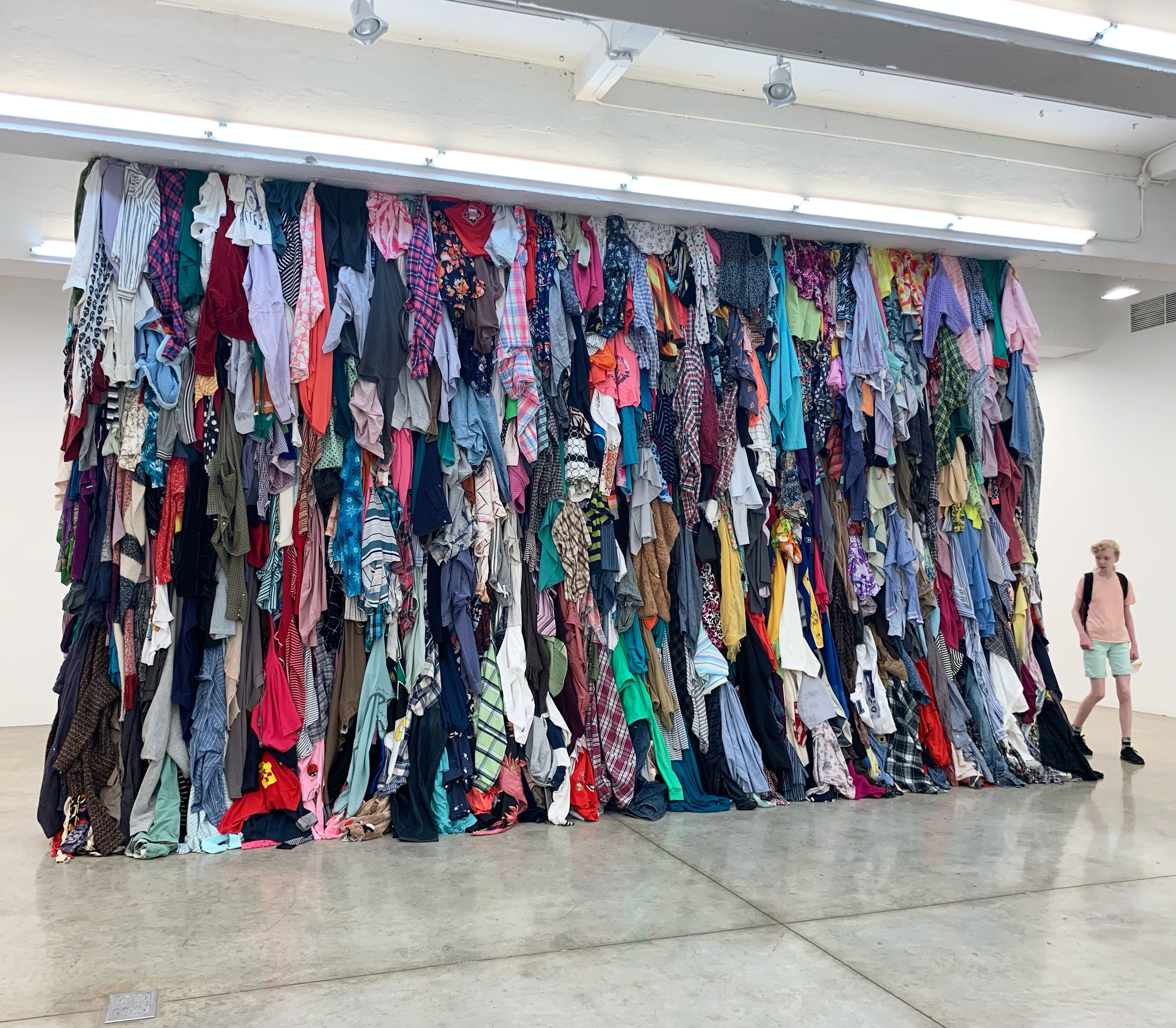
Shirt sleeves, pant legs, scarves and other clothing fragments peek out intriguingly from between layers of red brick at the entrance to Karyn Olivier’s current solo show at Chelsea’s Tanya Bonakdar Gallery.  On the reverse side of this floor to ceiling wall, the rest of each garment hangs in a mass collage of color and pattern Titled ‘Fortified,’ the piece suggests a barrier erected and made strong by the people.  (On view in Chelsea through July 30th).

Karyn Olivier, Fortified, bricks, used clothing and steel, 144 x 240 x 30 inches, 2018-2020.

William J. O’Brien in ‘A Thought Sublime’ at Marianne Boesky Gallery

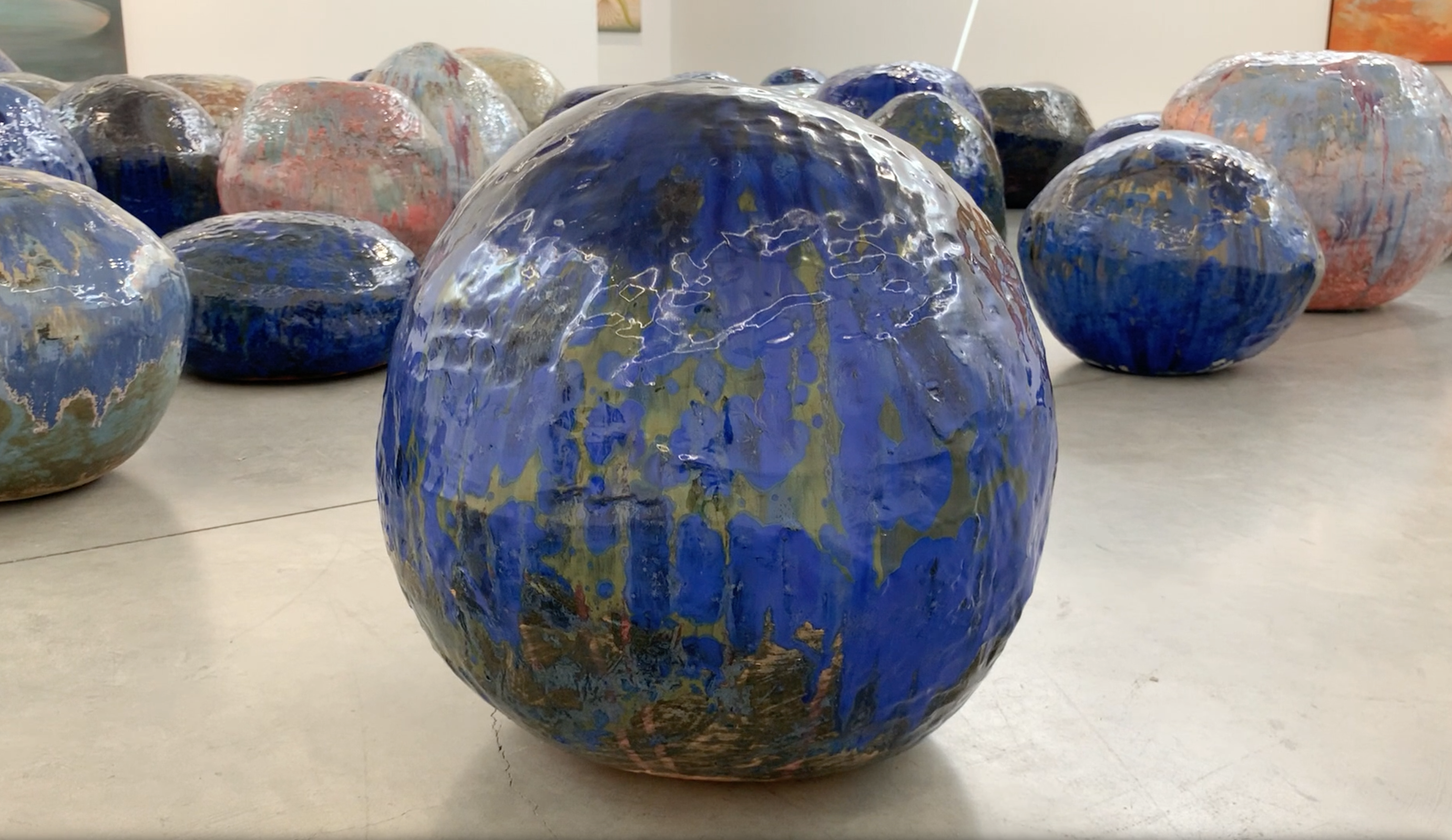
Inspired by unschooled art and experimentation, artist and School of the Art Institute of Chicago ceramics professor William J. O’Brien presents a cluster of 42 ceramic spheres celebrating nonconformity and variety in Marianne Boesky Gallery’s summer group show.  Titled ‘Earth, Water, Fire, Wind & Space, Pt. 1,’ the installation is literally grounded yet aims to take the mind beyond the everyday.  (On view in Chelsea through Aug 6th).

William J. O’Brien, Earth, Water, Fire, Wind, and Space, Pt. 1, ceramic, dimensions variable, 42 ceramics, 2021.

Chloe Chiasson in ‘Fragmented Bodies II: Fluidity in Form’ at Albertz Benda

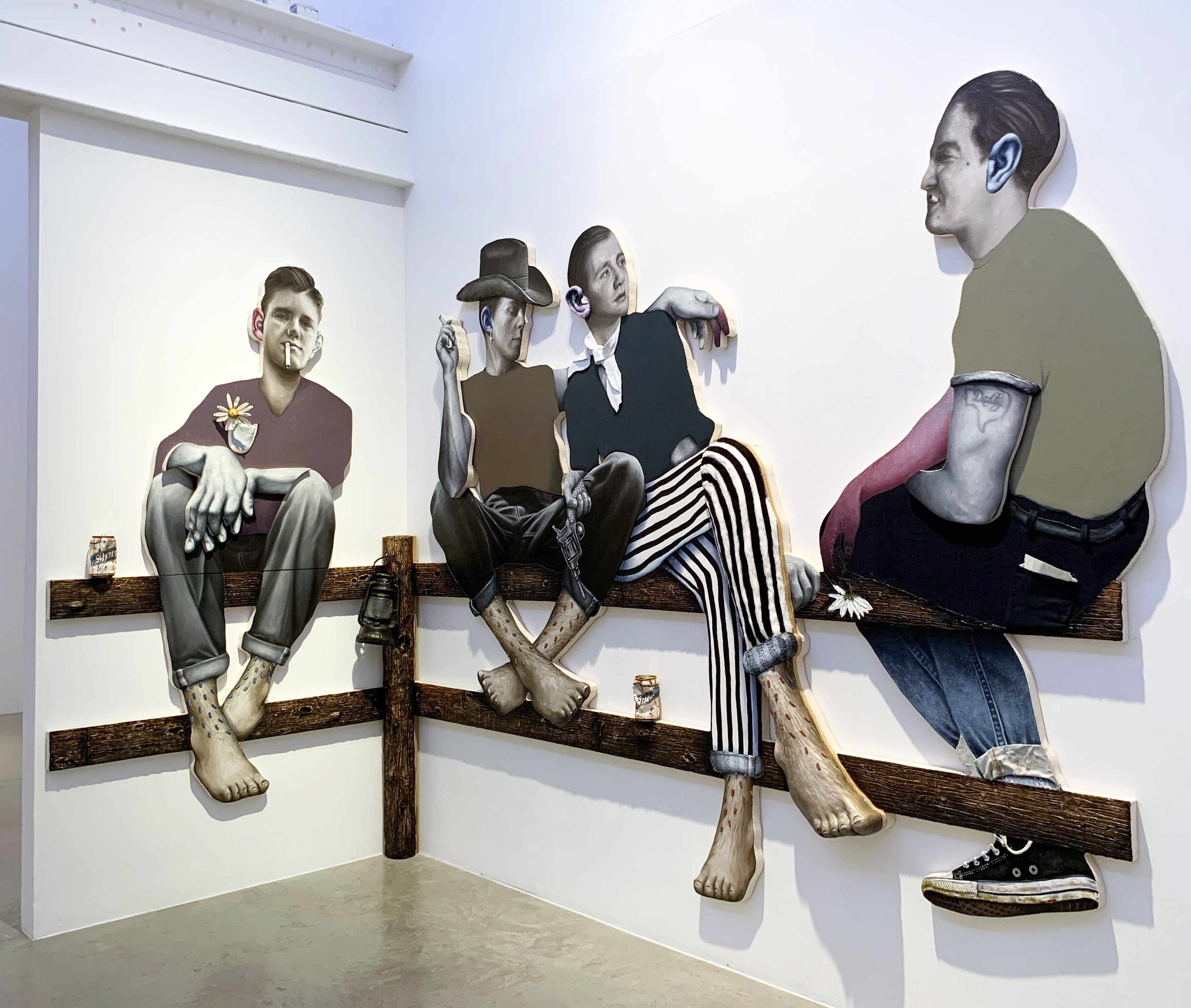
In Albertz Benda’s summer group exhibition, ‘Fragmented Bodies II:  Fluidity in Form,’ fluidity defines identity.  Chloe Chiasson’s Target Practice, a shaped painting that is part of the wall and leaps off of it, features a group of young men who defy stereotypes of masculine rural behavior.  Perched on a wooden fence with beer cans used for target practice, one man’s ‘Daddy’ tattoo, another’s earring and scattered daisies upend expectations.  (On view in Chelsea through July 31st).

Chloe Chiasson, Target Practice, oil, acrylic, resin, wool, denim, aluminum, lantern, wood, nails, hot glue, graphite, glitter, neopixels, cigarette butts, matches, bobby pin, sticky note, page from book, washers, ink on shaped canvas, 104 x 130 x 60 inches, 2021.

Ricardo Brey in ‘Re: Bicycling’ at Susan Inglett Gallery

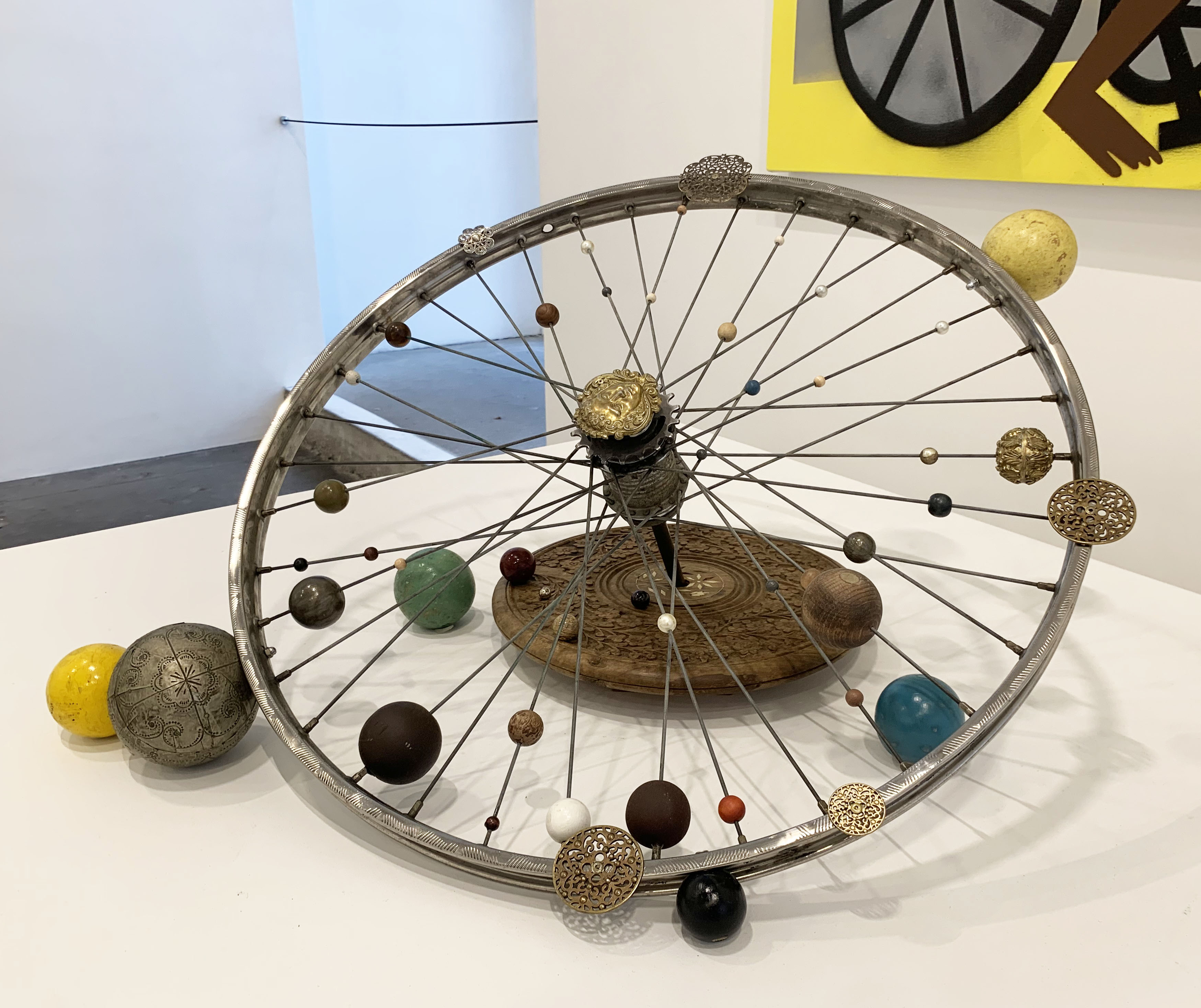
Susan Inglett Gallery’s excellent summer group exhibition, co-curated by David Platzker of Specific Object and Alex Ostroy of the cycling apparel brand Ostroy, celebrates the bike as revolutionary object.  From a late 19th century French poster depicting a woman in long dress enjoying the freedom of the road to Rodney Graham’s bike-powered, rotating psychedelic collage, the exhibition extols the power of the bike to take people in new directions.  Here, Ricardo Brey’s standout mixed media sculpture ‘Joy,’ connects bikes to heavenly paths and celestial orbits.  (On view through July 23rd).
celestial orbits. (On view through July 23rd).
Ricardo Brey, Joy, mixed media, 14 3/16 x 25 ¼ x 31 ½ inches, 2018.

Ann Agee Installation at PPOW Gallery

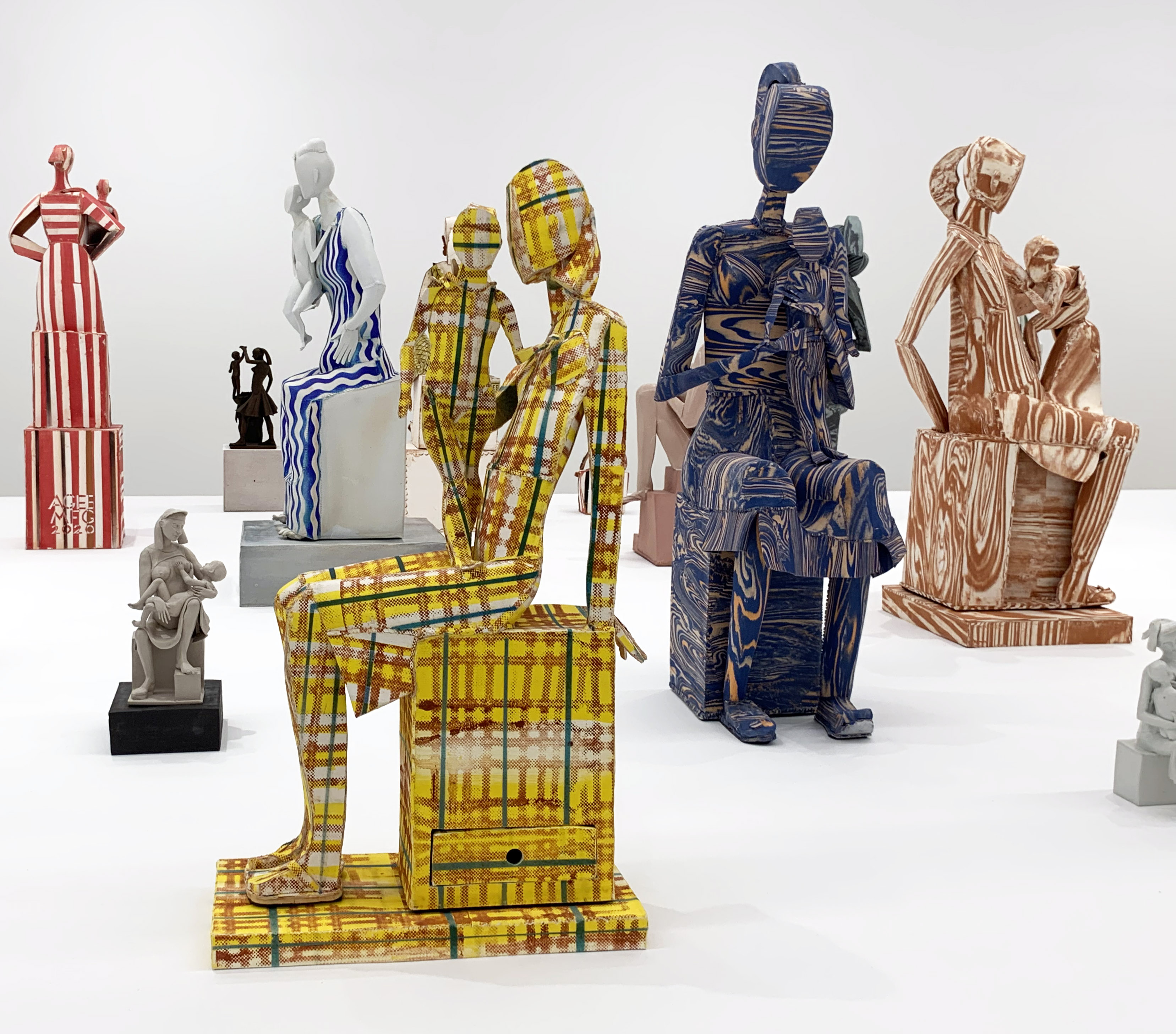
Inspired by Florentine salt cellars depicting religious imagery, Ann Agee’s contemporary Madonna and child sculptures rethink traditional devotional objects.  After an online taster exhibition featuring mother and child sculpture in summer ‘20, Agee rewards an in-person visit to PPOW Gallery with dozens of sculptures in wonderfully bold patterns and styles that range from detailed to abstract.  Occupying one huge pedestal at the center of the gallery, Agee’s homage to mothers and – in this case female – children is a celebration of variety and invention. (On view in Tribeca through July 23rd.)

Ann Agee, installation view of ‘Madonnas and Handwarmers,’ July 2021.

Hugh Hayden at Lisson Gallery

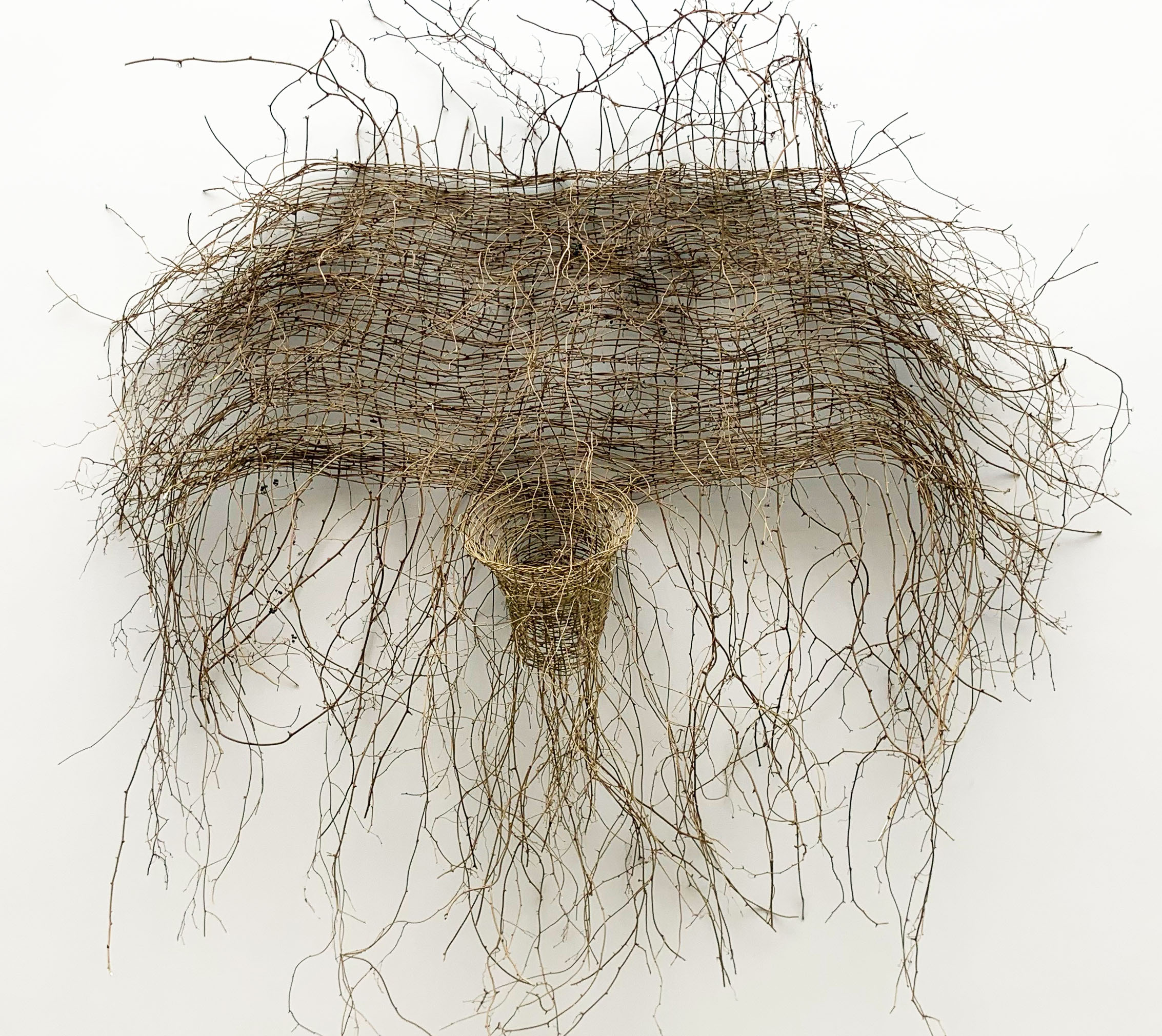
The delicacy of hand-crafted materials crashes together with the fast-paced, action-packed nature of basketball in new sculpture by Hugh Hayden at Chelsea’s Lisson Gallery.  Fee-fi-fo-fum (pictured here) and other basketball hoops and backboards fashioned from thorny vines, rattan or synthetic hair are titled after fairy tales, alluding to the tantalizing dream of success via sports.  (On view through August 13th).

Hugh Hayden, Fee-fi-fo-fum, smilax rotundifolia (common greenbier), 118 x 108 x 28 ½ inches, 2021.

Marlene McCarty at Sikkema Jenkins & Co

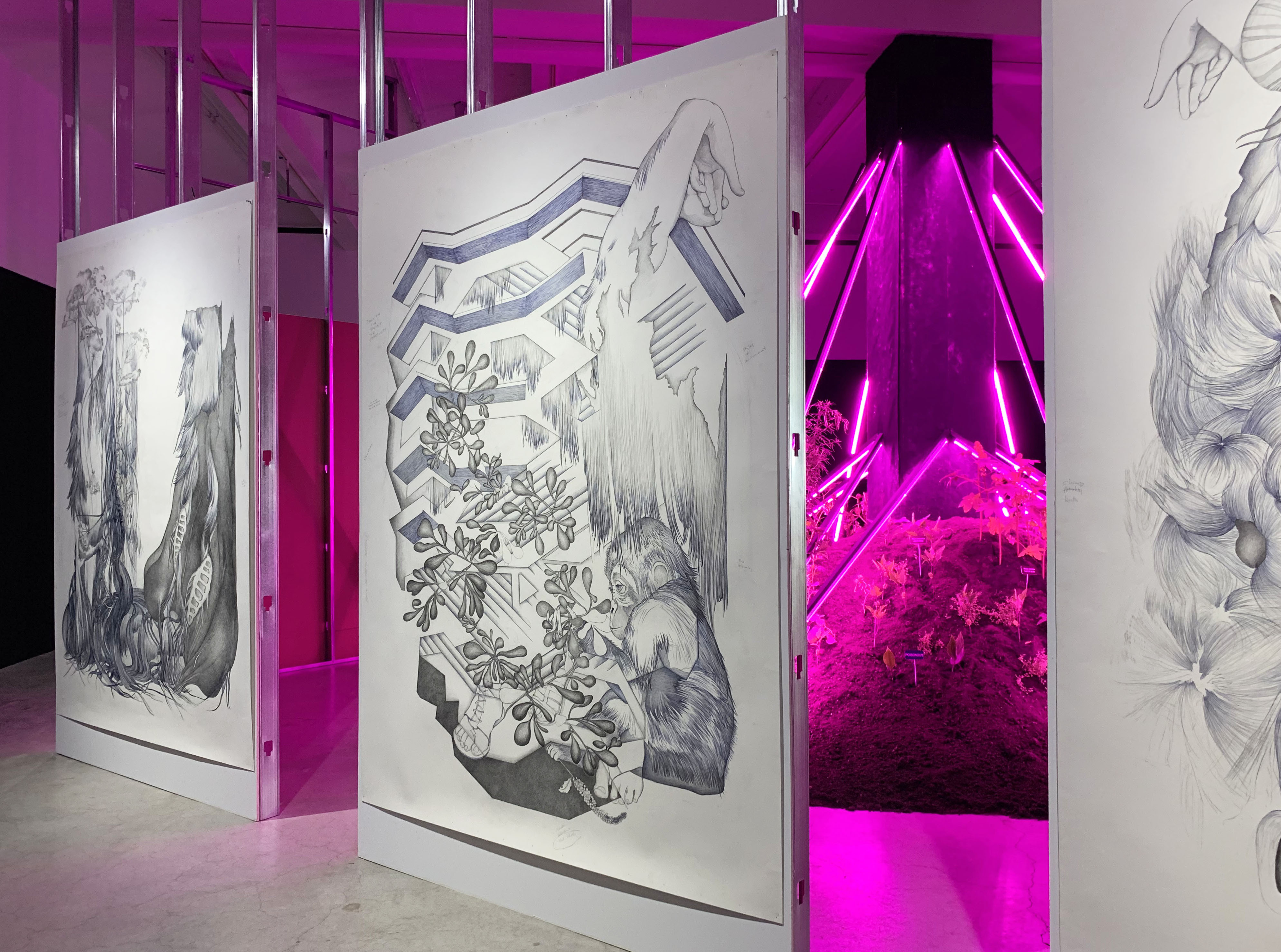
Rue is a herb that can be used as a contraceptive and in high doses can kill; it’s one of the plants in Marlene McCarty’s installation ‘Into the Weeds: Sex and Death’ at Sikkema Jenkins & Co which presents plants with medicinal and/or lethal properties in a dumpster outside the gallery and a pile of dirt lit by grow lights inside.  Rue also features in one of the McCarty’s large drawings, positioned in front of The Vessel at Hudson Yards (a symbol of developer’s power and more recently, death by suicide), two Roman sandals and more.  Explained in detail through histories of each plant posted to the gallery website, McCarty’s point is to highlight flora’s power to undermine established order.  (On view through July 30th.  Masks and social distancing required).
Marlene McCarty, installation view of ‘Into the Weeds: Sex and Death’ at Sikkema Jenkins & Co, June, 2021.

Jean Dubuffet in ‘Dubuffet/Chamberlain’ at Timothy Taylor Gallery

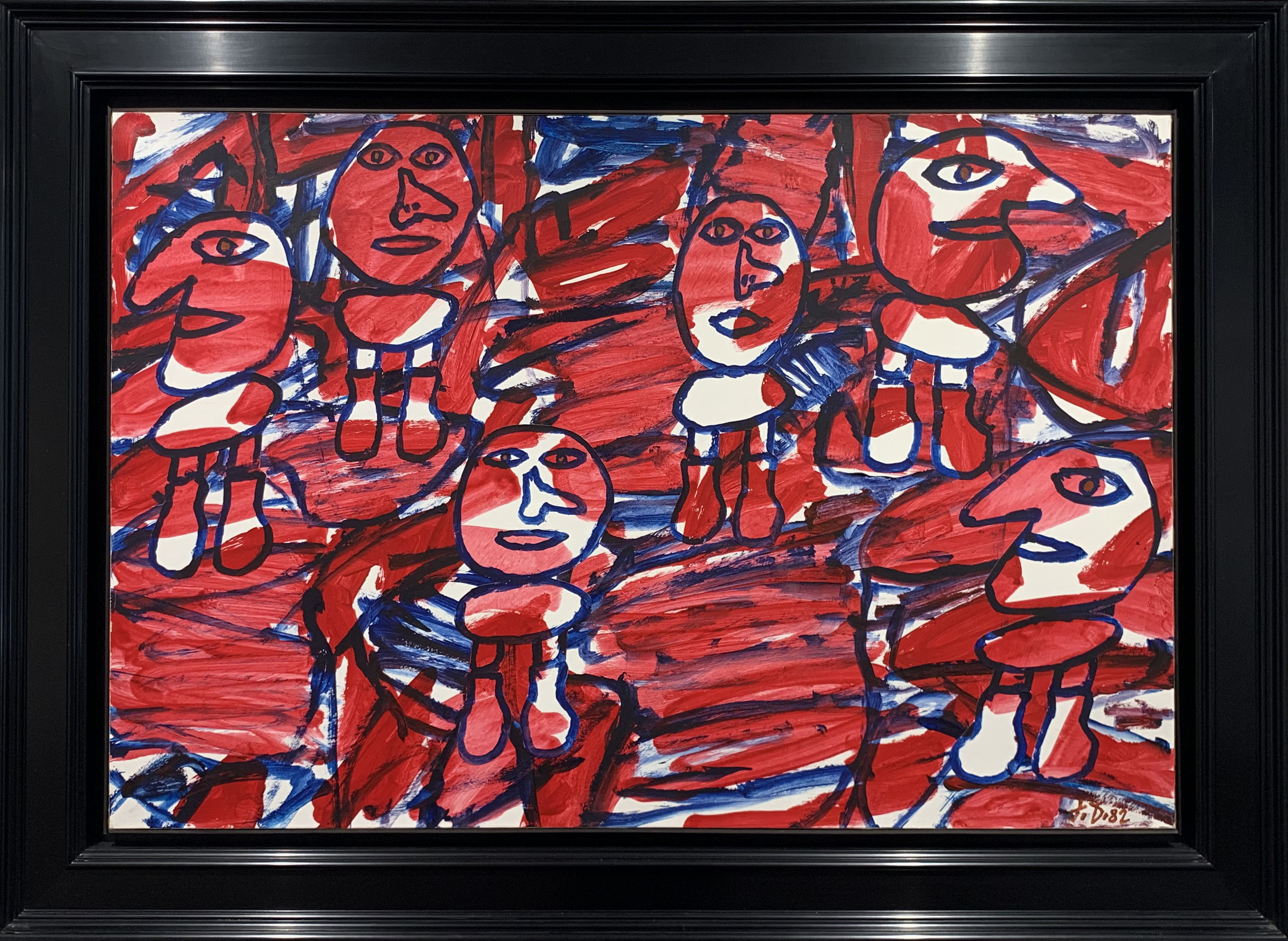
Using a restricted palette dominated by primary colors, champion of non-academic art Jean Dubuffet expressed the whirl of urban life in this 1982 work on paper now on view at Timothy Taylor Gallery.  Six anonymous figures are wide-eyed and grinning but their abstract context resists interpretation, conveying only that they’re navigating their immediate surroundings in the moment.  (On view in Chelsea through July 30th.  Masks and social distancing required.)

Jean Dubuffet, Site Aleatoire avec 6 personnages, acrylic and paper collage on paper laid down on canvas, 26 3/8 x 39 3/8 inches, 1982.

Nick Cave in ‘Anti/Body’ at Jack Shainman Gallery

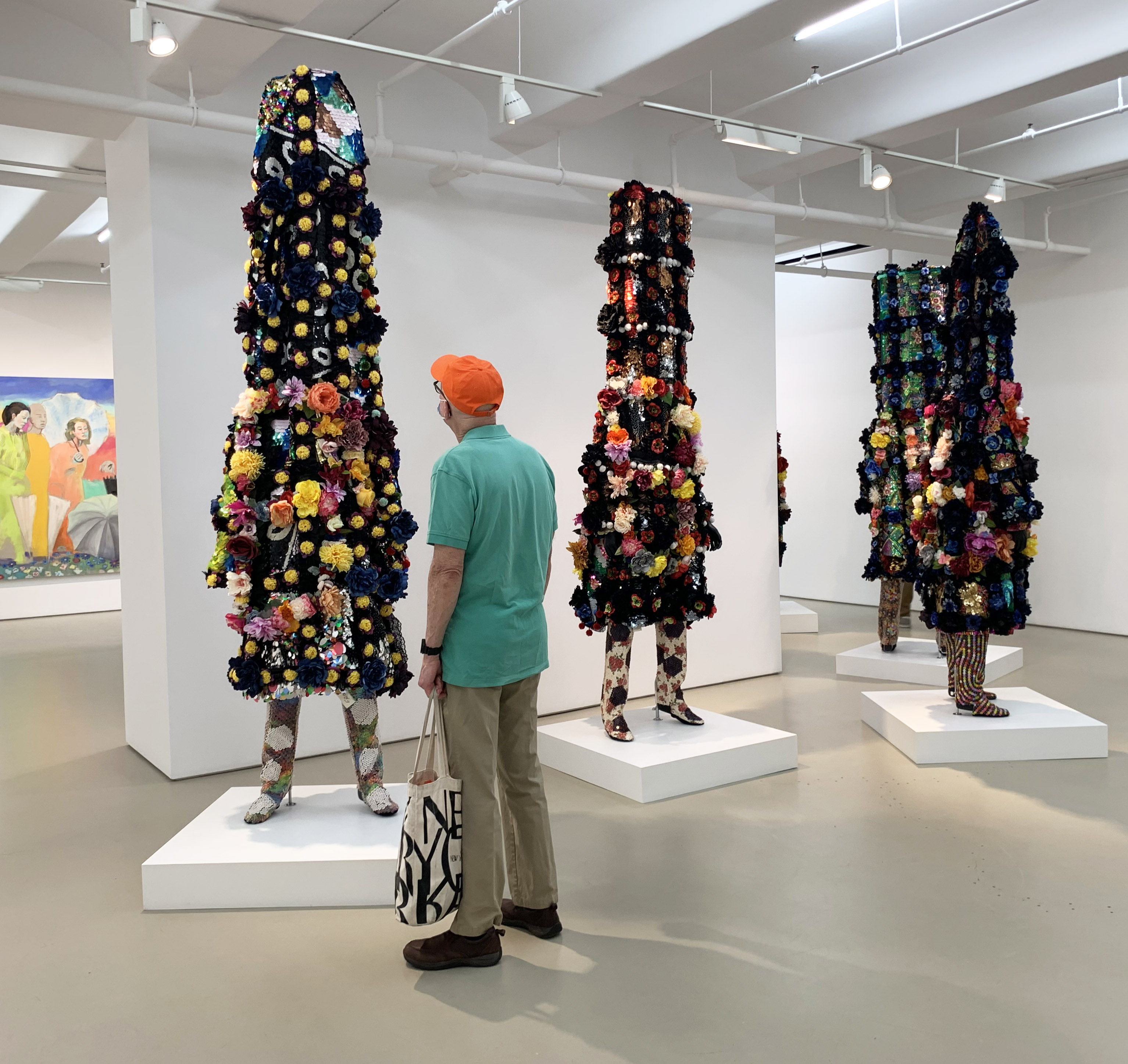
Nick Cave’s original Soundsuit, a costume made from hundreds of small twigs that rustled when the suit was worn, was a protective gesture prompted by Rodney King’s violent treatment at the hands of LA police in 1991.  His latest series of suits, now on view in Jack Shainman Gallery’s group exhibition ‘Anti/Body,’ are collectively titled 8:46, referring to the amount of time (recently understood to be longer) that Derek Chauvin took to kill George Floyd.  Larger than life and composed of bright floral and patterned textiles as well as synthetic flowers, each suit celebrates and mourns a lost life.  (On view in Chelsea through July 2nd.  Masks and social distancing required).
Nick Cave, installation view of Soundsuits titled 8:46 in Anti/Body at Jack Shainman Gallery, June, 2021.
Brendan Lee Satish Tang in ‘Earthen Delights’ at C24 Gallery

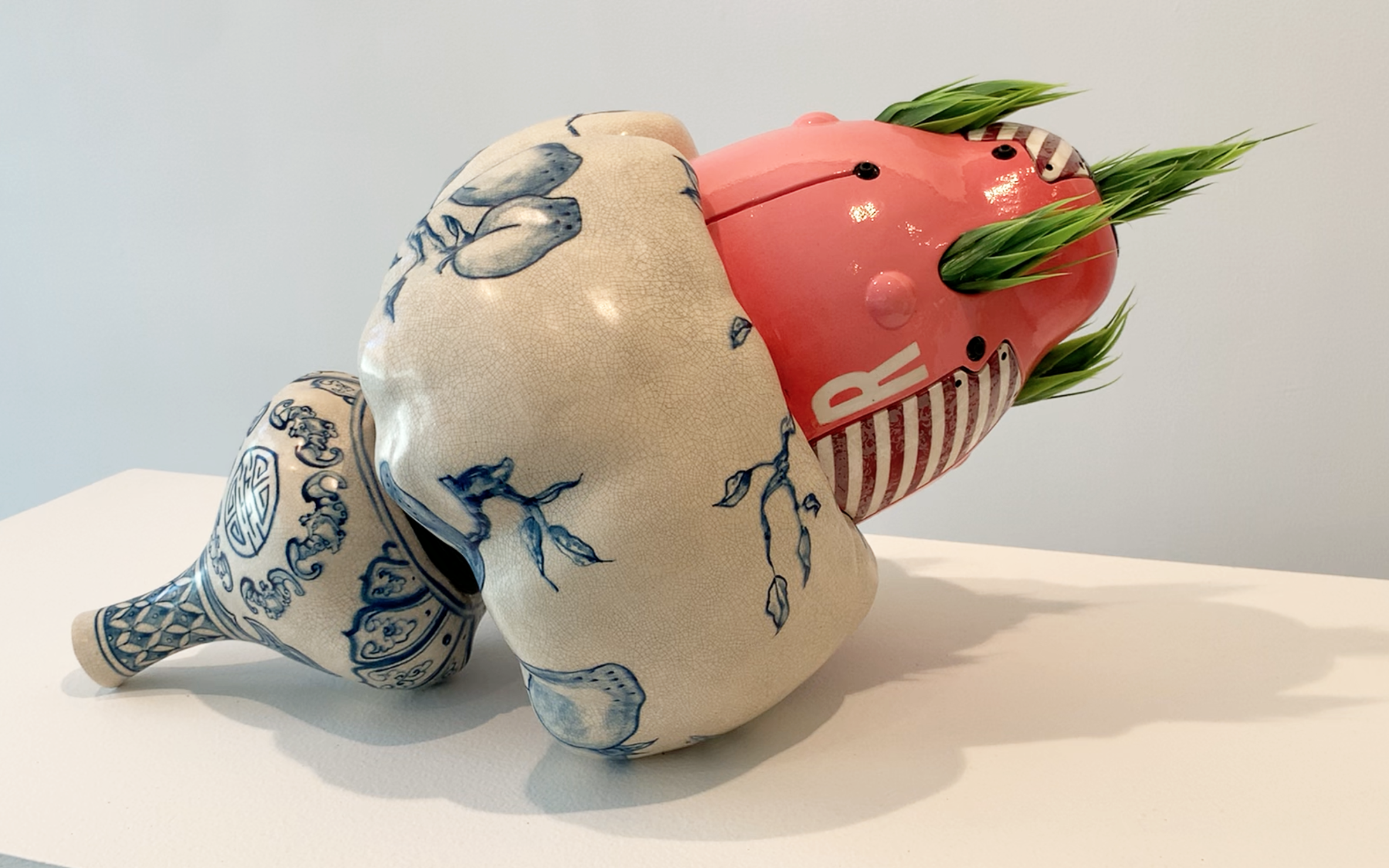
Canadian artist Brendan Lee Satish Tang’s blend of traditional-looking ceramics and robot-like forms at C24 are unlike anything in the Chelsea galleries now. Inspired by both ormolu, a technique popular in 18th century France that involved adding decorative elements to existing art objects, as well as manga/anime culture, Tang grafts ceramic elements onto bases that look like engines, rockets or robots.  His curious hybrids crash together different times and histories to humorous and intriguing effect.  (On view through July 17th.  Masks and social distancing required).
Brendan Lee Satish Tang, Manga Ormolu 4.0r, ceramic and mixed media, 16 x 20 x 13 inches, 2013.

Yayoi Kusama in ‘Alternative Worlds’ at Michael Rosenfeld Gallery

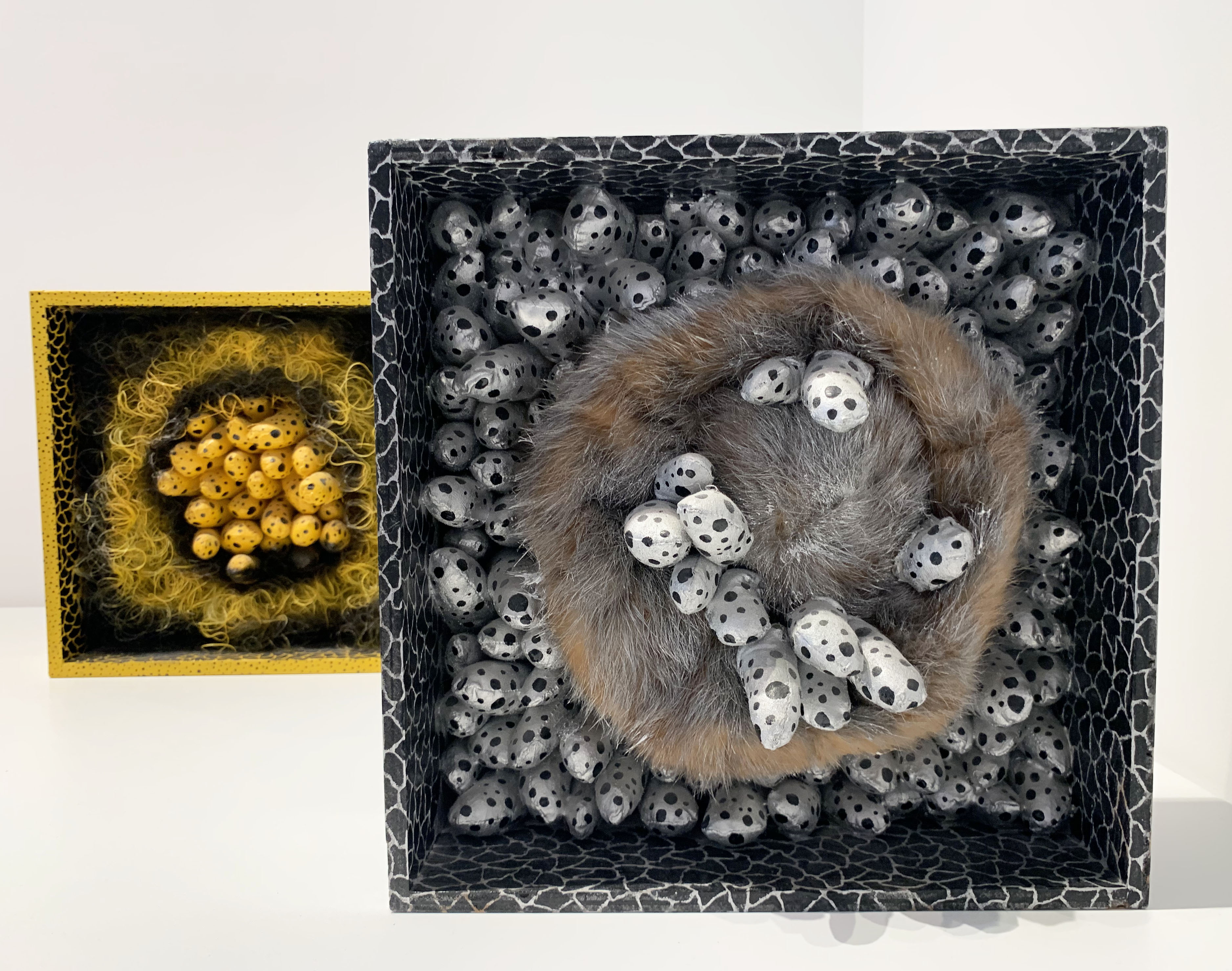
Mirrors, lights and long lines of visitors usually accompany Yayoi Kusama’s Chelsea exhibitions; Michael Rosenfeld Gallery’s selection of the artist’s smaller scale 2-D and 3-D work from the 50s and 80s is a quieter affair but a gem for Kusama fans.  Here, two box-shaped sculptures feature the artist’s signature nets, polka dots and phallic forms, bringing together pattern and texture in abundance.  Despite this work’s title, ‘Ruins (Haikyo),’ clustered protrusions resembling eggs in a nest appear to embody life and movement.  (On view through July 30th.  Masks and social distancing required.)

Yayoi Kusama, Ruins (Haikyo), mixed media box assemblage with sewn and painted fabric, faux fur and paint, 11 ¾ x 11 ¾ x 4 inches, 1984.

Stephen Hannock at Marlborough Gallery

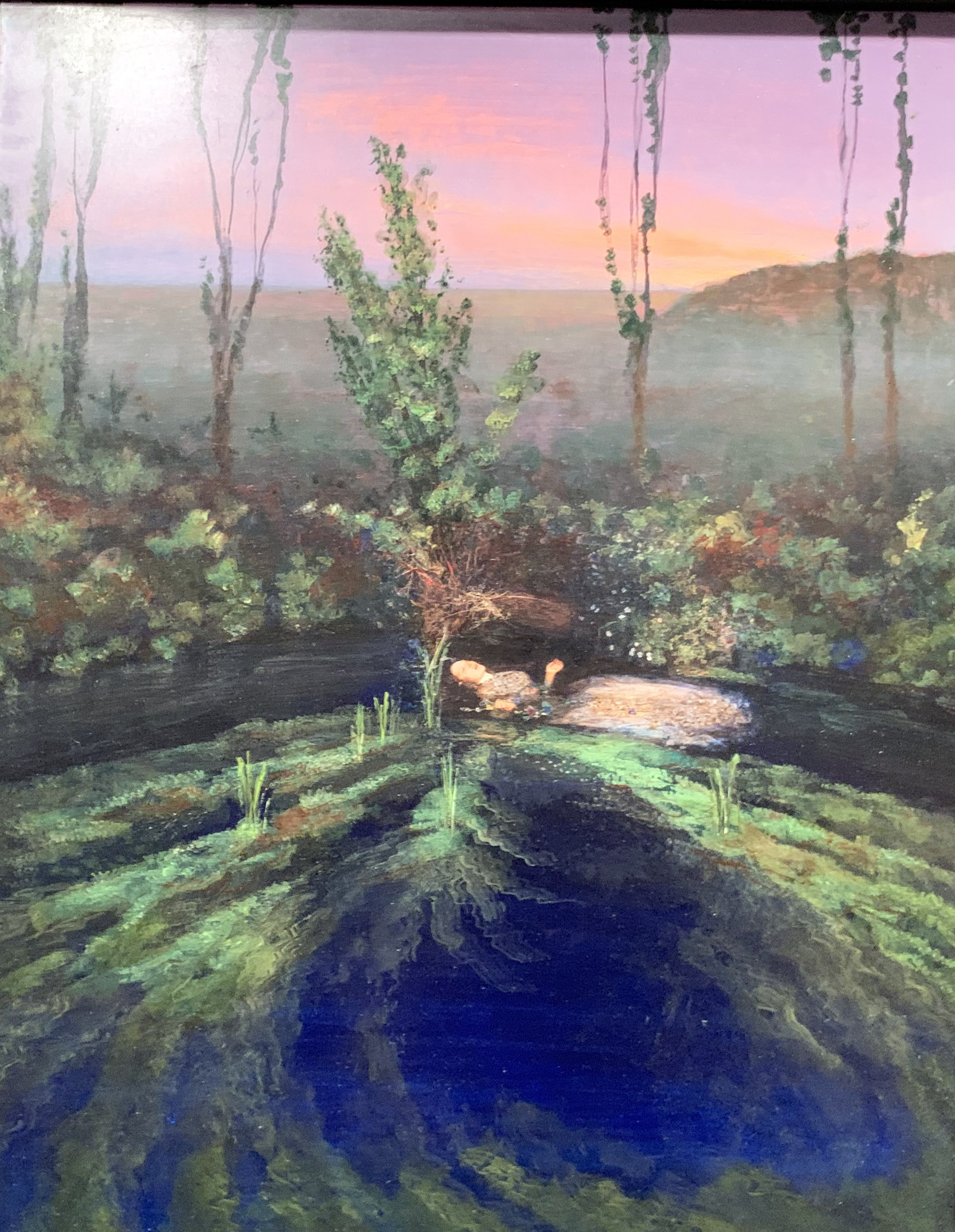
Ophelia, who lost her life by drowning in Shakespeare’s Hamlet, is transported to a North American landscape in recent work by Stephen Hannock at Marlborough Gallery.  An homage to the artist’s late wife whose ill health took away her freedom, Hannock’s Ophelia series draws on John Everett Millais’ famous painting of Ophelia and Thomas Cole’s renowned 1836 depiction of the Connecticut River’s oxbow.  Together, tragic individual experience merges with the sublime and healing possibility of nature.  (On view through July 2nd.  Masks and social distancing required).
Blue Water with Ophelia Rising (Mass MoCA #328), polished mixed media on canvas, 23 x 18 ½ inches, 2021.
Leslie Wayne Solo Show at Jack Shainman Gallery

Leslie Wayne’s paintings give pleasure through deception; her signature technique is to use paint as a sculptural medium, fooling the eye with dried paint crafted in three dimensions.  Wayne’s latest solo show at Jack Shainman Gallery presents paintings that appear to be objects in her studio or windows that do or do not offer a view.  On closer inspection, each is carefully crafted to resemble a well-used tool, now worse for wear.  Constructed over the past year, each artwork speaks to brokenness close to home.  (On view in Chelsea through July 2nd.)

Leslie Wayne, Broken, Busted, Fractured, Fragmented, Shattered, Smashed, Kaput, oil, enamel, and acrylic on wood, aluminum and cotton cloth, 44 x 48 x 9 inches, 2020.

Jose-Carlos Martinat at Marc Straus Gallery

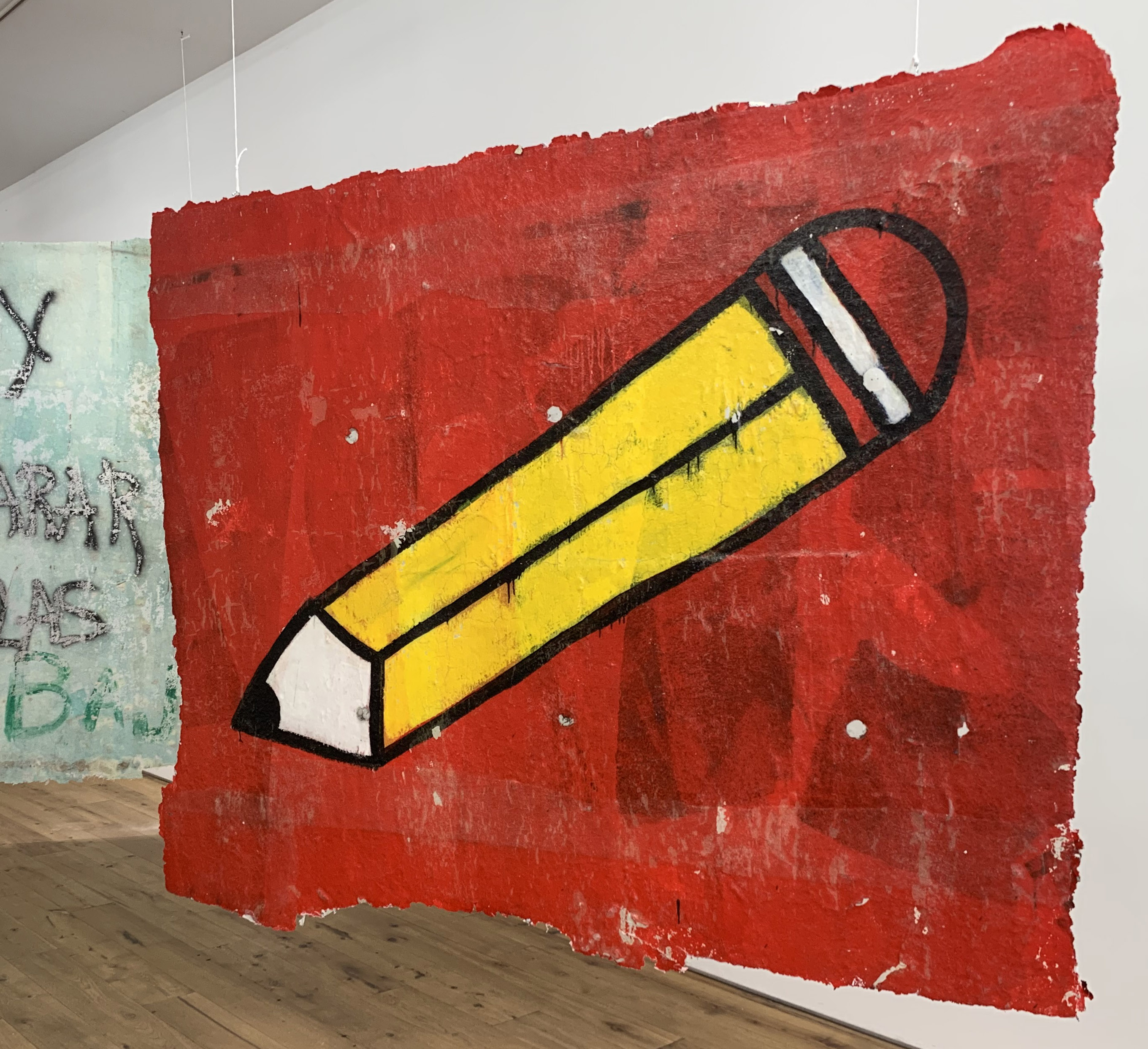
Peruvian artist Jose-Carlos Martinat transplants bold graphics from the streets of Lima into Marc Straus Gallery’s Lower East Side space in an impactful show that coincides with his country’s contentious election. Working in his signature technique, Martinat applies resin and fiberglass to outdoor walls that have been painted with political symbols and slogans, peeling away the paint in sheets that hang from the gallery ceiling or on the walls.  Here, a giant pencil originated as a message of support for former school teacher Pedro Castillo, the apparent winner of this month’s runoff.  (On view through June 30th.  Masks and social distancing required.)

Jose-Carlos Martinat, installation view at Marc Straus Gallery, June 2021.

Lynda Benglis at Pace Gallery

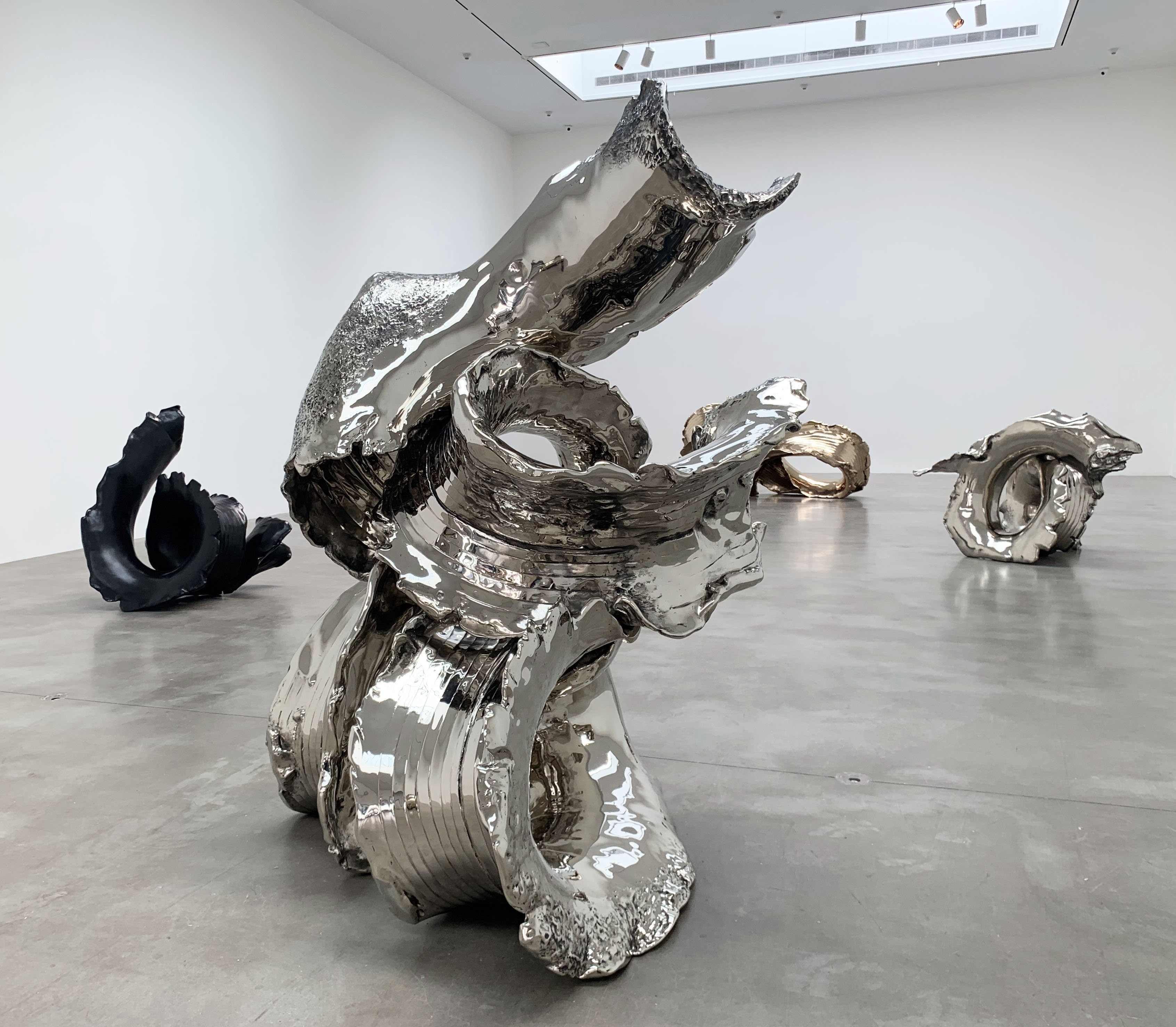
Freestanding and stretching energetically out into the gallery, Lynda Benglis’ new cast-bronze sculptures at Pace Gallery pulse with life.  Inspired by knotted forms that connect to time spent crocheting with her grandmother, but with evocative titles like ‘Black Widow’ or ‘Striking Cobra,’ the sculptures invite viewers close while impressing with their power.  (On view in Chelsea through July 2nd.  Masks and social distancing required).

Lynda Benglis, Power Tower, white tombasil bronze, 89 x 64 x 72 inches, 2019.

Zoey Frank at Sugarlift

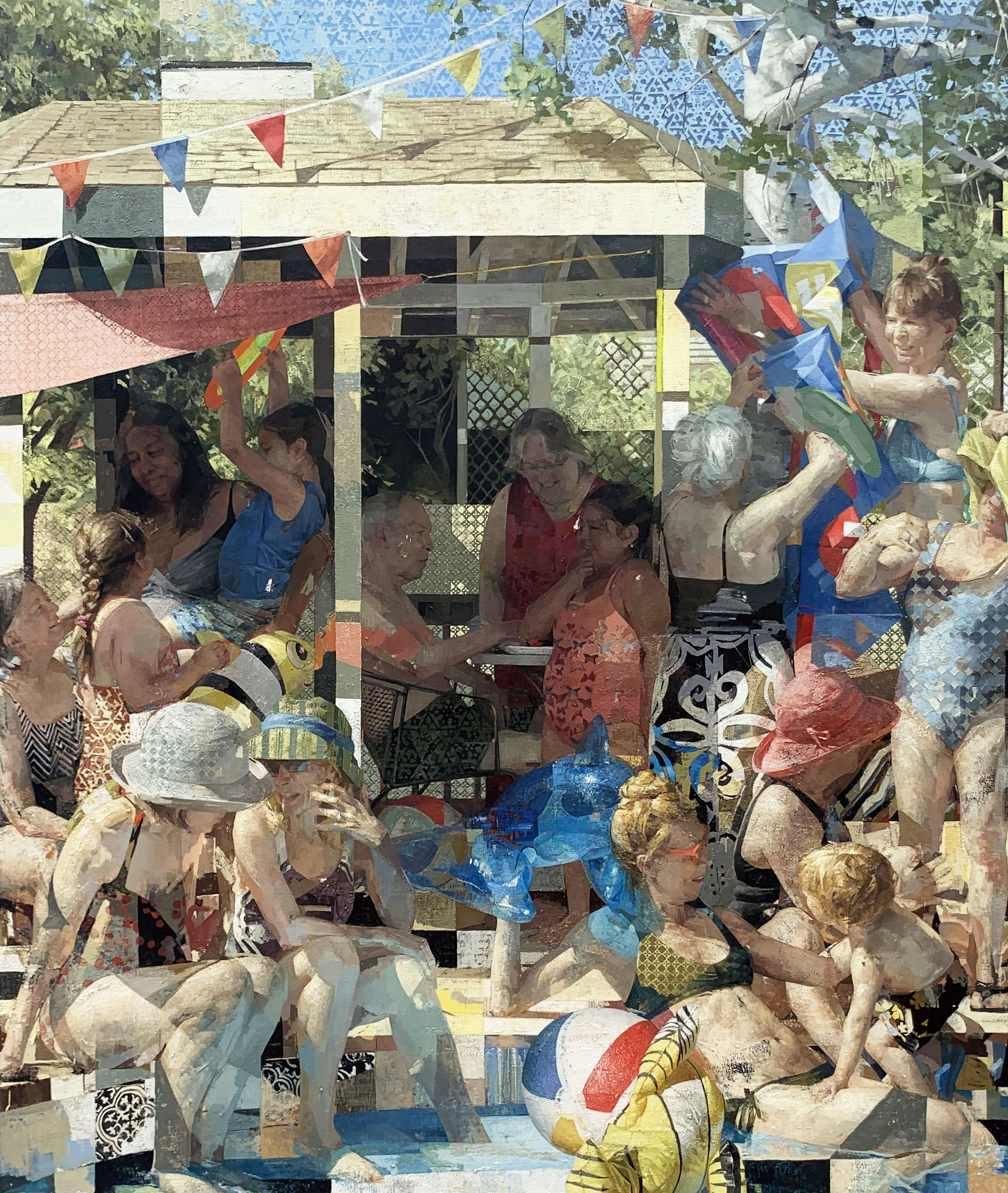
Social distancing is over in Zoey Frank’s 2021 painting ‘Pool Party,’ a standout in her current show at Chelsea’s Sugarlift Gallery.  More than nine feet tall, the canvas crowds in fifteen mostly female figures in a celebration of human interaction, from a gossipy interlude at bottom left to seniors enjoying a child at center.  (On view through June 26th.  Masks and social distancing required.)

Zoey Frank, Pool Party, oil on canvas, 114 x 96 inches, 2021.