Though iconic German artist Gerhard Richter painted from photographs from the 1960s onward, his dry-brush painting technique abstracted images from family albums, books or magazines into intentional ambiguity. Focusing on landscapes, David Zwirner Gallery’s current show of Richter’s work from the ‘60s to the ‘00s displays both abstract and representational work side by side and, in some works, in the same painting. Here, Lichtung (Clearing) seems to proffer an idyllic glade in the near distance. In the immediate foreground, however, Richter imposes a permeable barrier between viewers and the scenic break in the forest by applying green-toned abstract passages of paint on the painting’s surface. Our inclination to mentally venture into the meadow beyond is arrested as the focus shifts to the surface of the canvas, changing the painting from a nature scene into an experience of light, color and tone. (On view in Chelsea through July 10th).
Gerhard Richter, Lichtung (Clearing), oil on canvas, 28 ½ x 40 1/8 inch, 1987.
Perfectly timed to contrast New York’s drab winter landscape, David Zwirner Gallery’s show of iconic light artist Dan Flavin’s fluorescent ‘Grids’ series offers a hugely enjoyable immersion in color. Installed in the gallery as they were in Leo Castelli’s space in 1987, the show starts with three grids on loan from the Guggenheim, Princeton University Art Museum and the San Francisco Museum of Modern Art placed end to end across a corner. Casting and blending their colors, this work from 1977 and the show’s other pieces transform the space of the gallery, engaging with architecture by bathing it in light. (On view in Chelsea through Feb 21st.)
Dan Flavin, untitled (for you, Leo, in long respect and affection) 2, blue, yellow, pink and green fluorescent light, 8 ft square across a corner, edition 3 of 3, 1977.
After iconic Abstract Expressionist Joan Mitchell moved from New York to Paris in the late ‘50s, she began flinging, pouring and brushing paint onto her canvases, centering masses of pigment in compositions alive with movement. David Zwirner Gallery’s current show of Mitchell’s paintings from 1960-1965 zeros in on this period of stylistic innovation while celebrating the centenary of her birth with a selection of work gathered from private collections, the Joan Mitchell Foundation and museums including the Met. In the early 1960s, Mitchell aimed to paint not the particulars of a landscape or space but the feeling of it. Here, the rocky coast and trees of southern France, seen from the sailboat on which she lived for several weeks each summer, inspired her energetic forms and lush palette. (On view through Dec 13th).
Joan Mitchell, Untitled, oil on canvas, 97 ¼ x 79 inches, c. 1965.
Michael Armitage’s solo show at David Zwirner Gallery’s elegant new Chelsea space pictures the fates of migrants who have lost their freedom and in some cases their lives in attempting to escape unlivable situations. Bronze sculpture in the gallery’s first room picture suffering bodies and includes an abstracted cruciform figure titled ‘Eli Eli Sabachthani,’ or ‘My God, my God, why have you forsaken me?’ A second space includes paintings of a woman selling lethal home brewed alcohol and a man scavenging for food. Finally, in the gallery’s largest space, Armitage pictures a sinking raft of migrants and images of extreme hardship. Two profoundly moving paintings of a mother and child and here, a man and baby, suggest the tragic end of a parent and child who are lost at sea yet appear to be passing into another realm. (On view in Chelsea through June 27th).
Michael Armitage, Untitled, oil on Lubugo bark cloth, 79 x 59 ¼ inches, 2024.
Tomma Abts’ small abstract paintings at David Zwirner Gallery defy language, their dynamic forms and rich colors existing to provide stimulation to the eye. Recurring spiraling shapes evoke wheels with uneven spokes or a curving staircase. Other canvases feature angular forms emanating from a central point. All suggest centrifugal force, including the less geometric composition ‘Saske,’ pictured here. A profusion of soft feathery forms in yellow, turquoise and pink tones recall Edgar Degas’ paintings of 19th century stage performers and provocatively contrast the hard, light-catching metallic surface of a cast-bronze segment to the left. (On view in Chelsea through June 14th).
Tomma Abts, Saske, acrylic on canvas and cast bronze in two (2) parts, 18 7/8 x 15 inches, 2024.
Driven by the poetic idea of bridging the 7,7 nautical mile wide Straight of Gibraltar, Francis Alys’ solo show at David Zwirner Gallery pictures fanciful connections between Moroccan and Spanish territory in the form of installation, video, painting and more. One painting anthropomorphizes sea cliffs into human forms, while elsewhere a giant child stands in the Straight with two people-packed boats under her arms. In the back gallery, beyond a lightbox displaying news articles about migration across the Mediterranean, a video features a row of kids from Morrocco and a similar line of Spanish youth at the beach, heading into the water carrying toy boats made from shoes (seen here in sculptural form elsewhere in the show). Resembling both personal items lost in migration and suggesting resourceful toymaking, the boats are somber and lighthearted at the same time, expressing continued hope despite harsh realities. (On view through Dec 18th).
Francis Alys, installation view of ‘Francis Alys: The Gibraltar Projects,’ Nov 2024.
Diamond Stingily’s ‘Entryway’ sculptures, two of which are on view in her current solo show at 52 Walker, feature a well-worn front door, held upright in the gallery space and supporting a baseball bat. Inspired by her grandmother’s practice of keeping a bat against the door for protection, Stingily rejects narratives of victimization in favor of female agency. In other work, the artist sets closets into the gallery wall, their familiar louvered doors signaling the intimate space of the bedroom. Open to reveal a collection of bats, a stack of bricks or a row of identical white shirts, the objects inside and accompanying articles from the newspaper-lined closet walls touch on a variety of topics, several to do with the exploitation or protection of female bodies. (On view through Sept 14th in Tribeca).
Diamond Stingily, Entryway (City), door, bat and hardware, overall dimensions variable – as installed: 82 x 33 ½ x 83 inches, 2024.
Though the skies directly ahead are dark in this small painting by Brazilian painter Lucas Arruda at David Zwirner Gallery, light shines out from behind the clouds, ready to transform the scene. Light conditions and colors vary greatly in Arruda’s signature seascapes and jungle-scenes in response to time of day and atmospheric conditions yet each painting draws viewers in to appreciate the particular, fleeting circumstances presented. Titled ‘Assum Preto’ after a Brazilian bird whose song alters in response to light, this show’s sensitivity to time and place is so subtle and calming as to be therapeutic. (On view through June 15th in Chelsea).
Lucas Arruda, Untitled (from the Deserto-Modelo series), oil on canvas, 9 5/8 x 11 ¾ inches, 2022.
Lucas Arruda’s meditative paintings at David Zwirner Gallery fall into the rough categories of seascapes, jungle landscapes and monochromes with hovering rectangles of color. Though ostensibly representational, landscapes like this untitled painting from the artist’s ongoing Deserto-Modelo series feature fields of hazy form that can bring to mind clouds, mist, fog, or other atmospheric conditions. This canvas reverses the color arrangement in several of the show’s other paintings, positioning light colors toward the bottom of the composition, as if we’re glimpsing bright skies ahead whilst still under the dark of night or storm. Peaceful and contemplative, Arruda’s paintings are a tonic for over-stimulated eyes. (On view through June 15th).
Lucas Arruda, Untitled (from the Deserto-Modelo series), oil on canvas, 9 5/8 x 11 ¾ inches, 2022.
At one end of David Zwirner Gallery’s vast white cube space hangs a detailed painting of tangled, leafless branches by Toba Khedoori; across the room is the artist’s painting of a grid of variously hued blue rectangles. In the juxtaposition of natural forms vs those that echo the built environment, Khedoori presents dichotomies of art practice: expressive freedom or impersonal rigidity. While most imagery in Khedoor’s show is centered at the middle of large sheets of wax-coated paper, one painting of tall grasses offers linear forms arranged to depict wildness, bridging the dynamic and measured in one small canvas. (On view in Chelsea through Oct 21st).
Toba Khedoori, Untitled, oil and graphite on canvas, 27 ½ x 24 ½ inches, 2023.
‘Fold Me,’ German photographer Wolfgang Tillmans first solo show at David Zwirner Gallery in New York since his blockbuster MoMA retrospective last year, embraces the concept of the fold – the antithesis of linearity. In the curves of a river shot from overhead or the crumpled forms of a dropped item of clothing, the artist subtly positions the viewer to question defined boundaries and the distinctions between inside and out. In this piece, ‘Lennartz Factory Washroom,’ Tillmans pictures orderly rows of sinks in the washroom of a tool manufacturer in his hometown of Remsheid. With this subject matter, Tillmans himself cycles back to a place he once lived in, disrupting the idea of an artist leaving never to return. Though the room’s design is an exercise in repetition – like factory labor itself – with recurring sets of sinks, arrangement of windows, rows of pipes and lighting fixtures on the ceiling and a grid of floor tiles, the picture comes alive with towels that break the uniformity. (On view in Chelsea through Oct 14th).
Wolfgang Tillmans, Lennartz Factory Washroom, inkjet print on paper mounted on Dibond aluminum in artist’s frame, 2023.
In an oasis of plants and a richly colored and patterned domestic environment, LA-based artist Njideka Akunyili Crosby poses with her baby on lap, looking out to meet the viewer’s eye in a standout piece in her current solo show at David Zwirner Gallery. As a self-portrait as artist and mother, Akunyili Crosby projects poise and confidence amid a superabundance of imagery from Nigerian media sources, a signature element in her work. Using transfers on paper (in addition to acrylic, colored pencil and collage) Akunyili Crosby assembles photos from the worlds of Nigerian music, fashion, sports, culture and more into collages. Taking the form of plants, architecture and more, the artist fashions influence into images that speak to her identity as both a Nigerian and an American. (On view in Chelsea through Oct 28th).
Njideka Akunyili Crosby, Still You Bloom in This Land of No Gardens, acrylic, colored pencil, collage, and transfers on paper, 2021.
Giant steel flowers, undulating yellow and black polka dot pumpkins and a selection of over thirty vibrantly patterned paintings by Yayoi Kusama at David Zwirner Gallery deliver the delight and pleasure expected of the iconic Japanese artist’s work. The daughter of plant nursery owners, nature has always played a role in Kusama’s over 60-year career; via flowers and plants, Kusama’s latest New York show presents a message of love for life, even as select painting titles allude to dark times and the difficulties of family life. Three steel sculptures titled ‘I Spend Each Day Embracing Flowers’ is a natural background for selfies, enlisting gallery-goers in spreading Kusama’s upbeat message. (On view in Chelsea through July 21st).
Yayoi Kusama, I Spend Each Day Embracing Flowers (foreground), stainless steel and urethane paint, 98 x 111 x 106 inches, 2023.
Though they were finished over five years ago, 91 year old German artist Gerhard Richter’s ‘final paintings’ from 2016-17 at David Zwirner Gallery feel current; together with smaller-scale work on paper, the paintings have been a ‘must-see’ since opening in mid-March. Richter’s muscular painting process involved scraping layers of paint from the surface of his paintings with a large self-designed squeegee. Never sure of what his technique would yield, Richter surrendered at least part of a painting’s outcome to chance; the resulting images embody movement, resisting the static quality of a finished piece. (On view in Chelsea through April 29th).
Gerhard Richter, Abstraktes Bild (Abstract Painting), oil on canvas, 78 ¾ x 98 3/8 inches, 2016.
David Zwirner Gallery’s current exhibition of work from museum and private collections by Joan Mitchell celebrates the late second generation abstract expressionist painter’s ability to suggest emotive landscapes through unique consideration of figure-ground relationships and bold color choices. ‘Before, Again I’ from 1985 includes both orange tones that dominated her paintings in the early 80s and the cooler colors that evolved as a result of health challenges later in the decade. Both palettes point to the inspiration she found in her gardens in Vetheuil, a town once home to Impressionist painter Claude Monet. (On view through Dec 17th).
Joan Mitchell, Before, Again I, oil on canvas, 109 ½ x 78 inches, 1985.
Barbara Kruger’s iconic 1987 ‘I shop therefore I am’ image takes on new and damning forms in her powerful solo show at David Zwirner Gallery in Chelsea, where she updates the piece as a single channel video. The graphic materializes as if composed of puzzle pieces which break apart and reassemble every 57 seconds with new, provocative texts, including, “I am therefore I hate” and “I sext therefore I am.” Surrounded by wallpaper featuring hands holding imagery and messaging culled from the Internet, Kruger questions the values evidenced in contemporary culture and on-line discourse. (On view in Chelsea through Aug 12th).
Barbara Kruger, Untitled (I shop therefore I am), single-channel video on LED panel, sound, 57 sec, 137 7/8 x 138 ¼ inches, 1987/2019.
‘Follow me you coward,’ reads an arresting command on the wall of Nora Turato’s current show at 52 Walker, along with the cliched, ‘a lifetime of action and adventure with no clock to punch,’ and tantalizing ‘all is forgiven.’ The show’s title, ‘Govern Me Harder,’ a puzzlingly submissive, perhaps masochistic demand was inspired by a sticker she saw in an Amsterdam dog park; other expressions were gathered from news, ads, online sources and, says the artist, her own thoughts. In this enamel on steel panel, the last word of the sentence, ‘I sold it for million bells,’ derails expectations of a million dollar sale, leaving us in a thought-provoking lurch. (On view in Tribeca through July 1st.)
Nora Turato, i sold it for million bells, vitreous enamel on steel in four (4) parts, overall: 94 ½ x 75 5/8 inches, 2022.
Arranged on a narrow runway of shiny copper plates, new ceramics by Shio Kusaka at David Zwirner Gallery enchant visitors with their color, pattern and subtle sense of humor. Led plate by plate into the gallery, visitors explore relationships between pairs of vessels or clusters of related forms. Further down the line, Kusaka injects a simplified anime aesthetic into ancient cylindrical Haniwa sculptural forms and elsewhere, riffs on neolithic Jomon period patterns. (On view through April 30th.)
Shio Kusaka, installation view of ‘one light year’ at David Zwirner Gallery, April 2022.
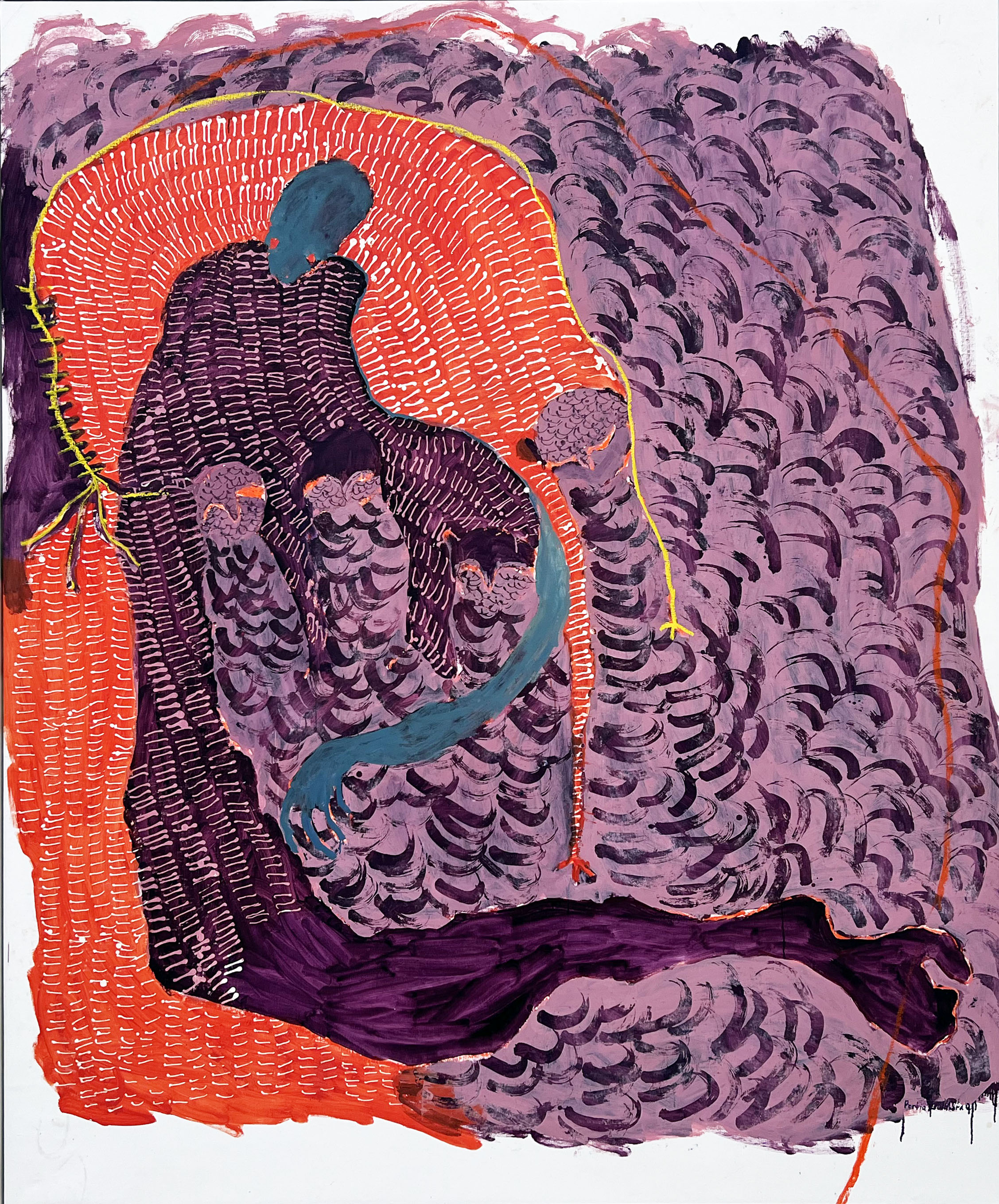
Every morning, Zimbabwe-based artist Portia Zvavahera and her grandmother would recall and share their dreams, now, the artist paints imagery from her nocturnal subconscious to promote healing and reject negative energy. In her first New York solo show at David Zwirner Gallery, spectral forms and owl-like figures surround the characters, representing both spiritual danger and deliverance. (On view in Chelsea through Dec 18th).
Portia Zvavahera, Woman with owls, oil based printing ink and oil bar on canvas, 82 ½ x 68 ¼ inches, 2021.
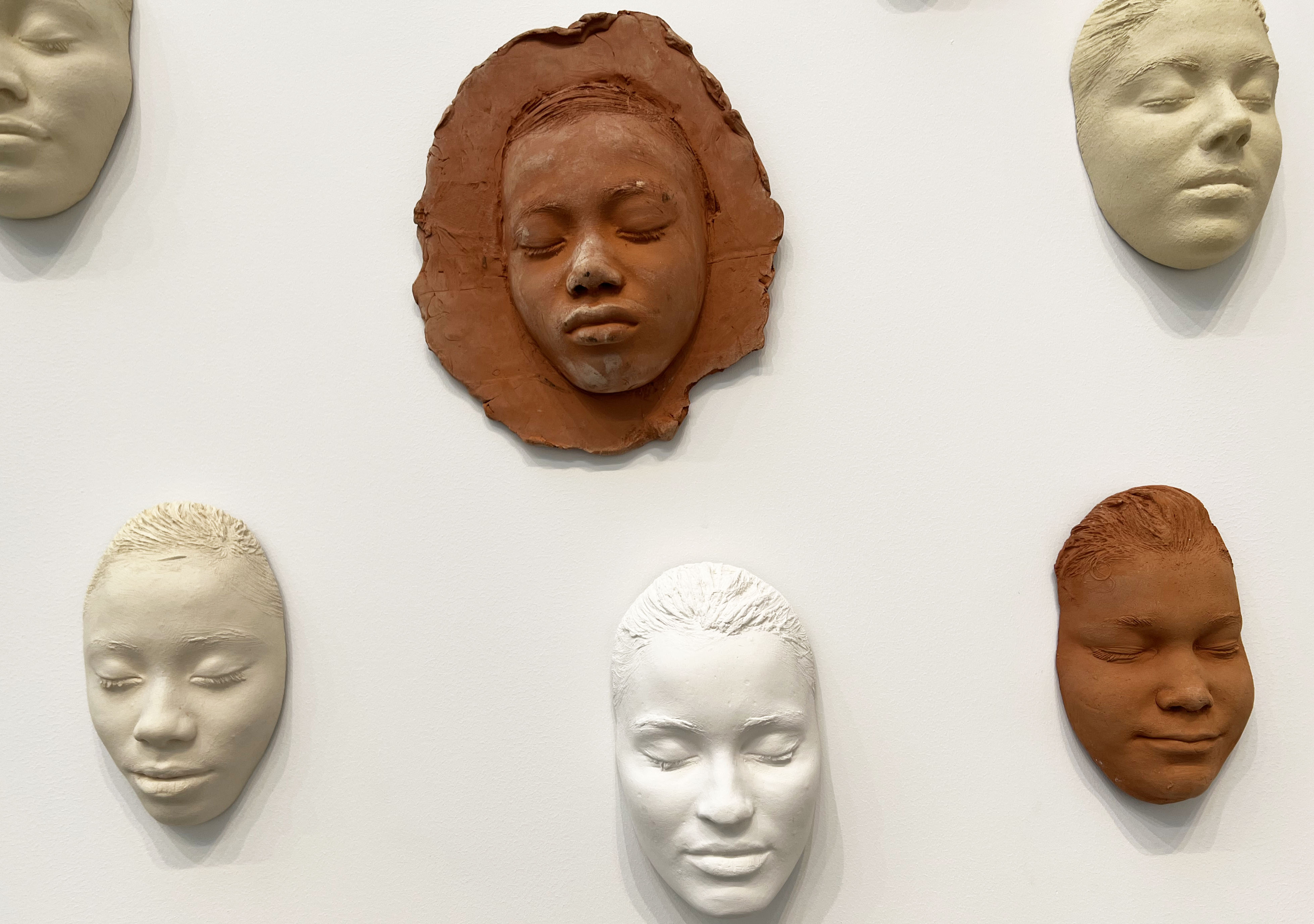
From pattern drawings based on wicker chairs to meticulous renderings of blossoming plants, Ruth Asawa’s artistic practice focused on remarkable elements of everyday life in addition to the hanging wire sculptures for which she is best known. David Zwirner Gallery’s current exhibition of the late artist’s drawings and sculpture, which includes these ceramic casts of friends and visitors to her home, aims to reveal her integration of art and life inspired by her avant-garde background, busy household and active community. (On view through Dec 18th on 20th Street in Chelsea).
Ruth Asawa, detail installation view of Untitled (LC.014, Collection of Bisque-Fired life Masks from Ruth Asawa’s Home), ceramic, bisque-fired clay, approx. each 7 ½ x 4 ½ x 2 ½ inches, c. 1967-1995.
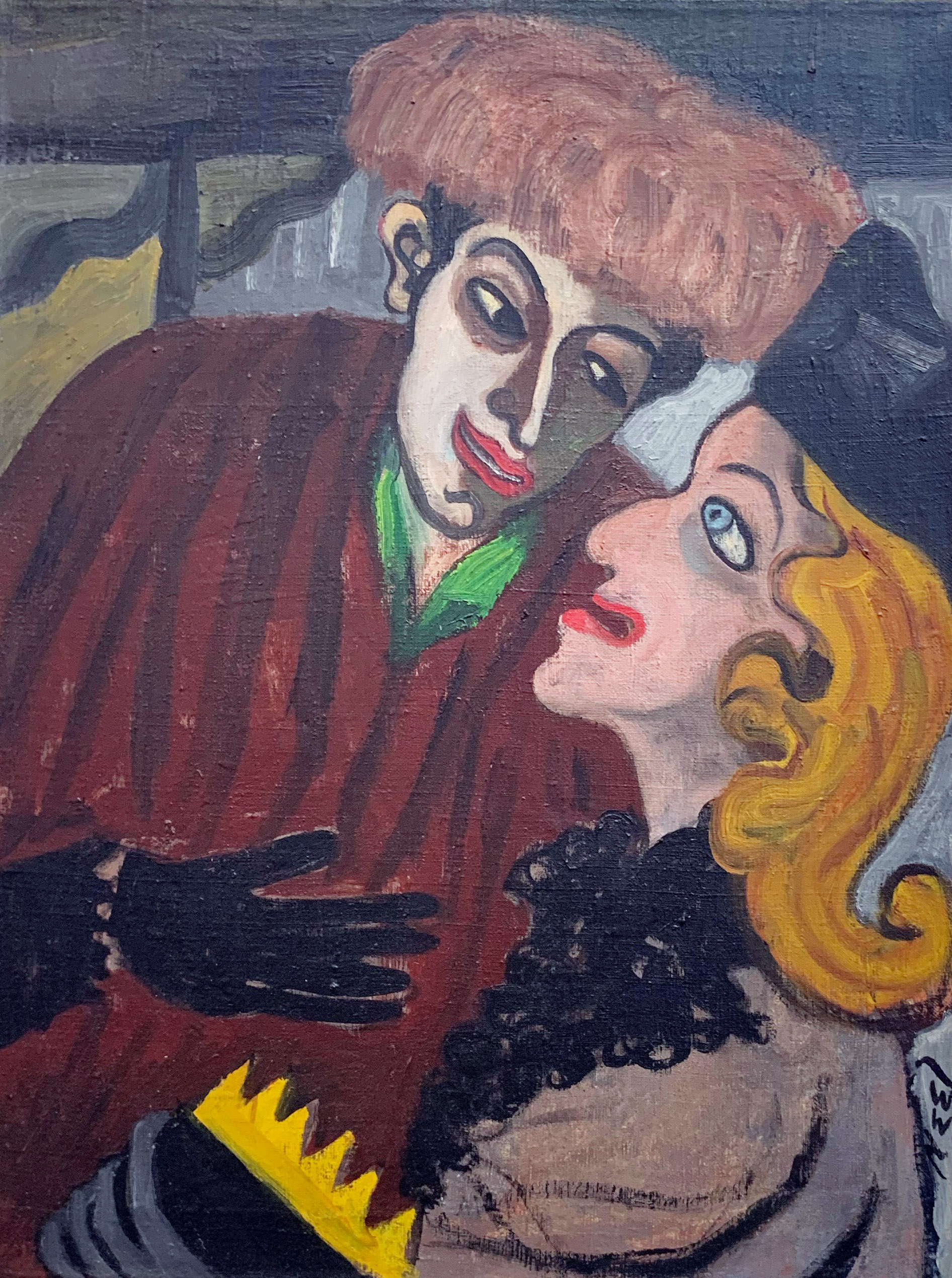
Alice Neel’s desire to ‘bear witness’ to the humanity she encountered resulted in a range of portraits, from bohemian downtown artists to her Harlem neighbors to colorful characters seen on the street. ‘Conversation on a Bus’ from 1944 exaggerates the features of two chattering friends but at the same time lures us into their animated conversation and, in the eyes of the woman in the brown hat, hints at the pleasure of intimacy with a friend. Despite the Met’s recent extensive survey of Neel’s work, this selection of paintings from Neel’s early decades at David Zwirner Gallery feels fresh and full of revelation. (On view on 20th Street in Chelsea through Oct 16th.)
Alice Neel, Conversation on a Bus, oil on canvas, 29 x 22 inches, 1944.
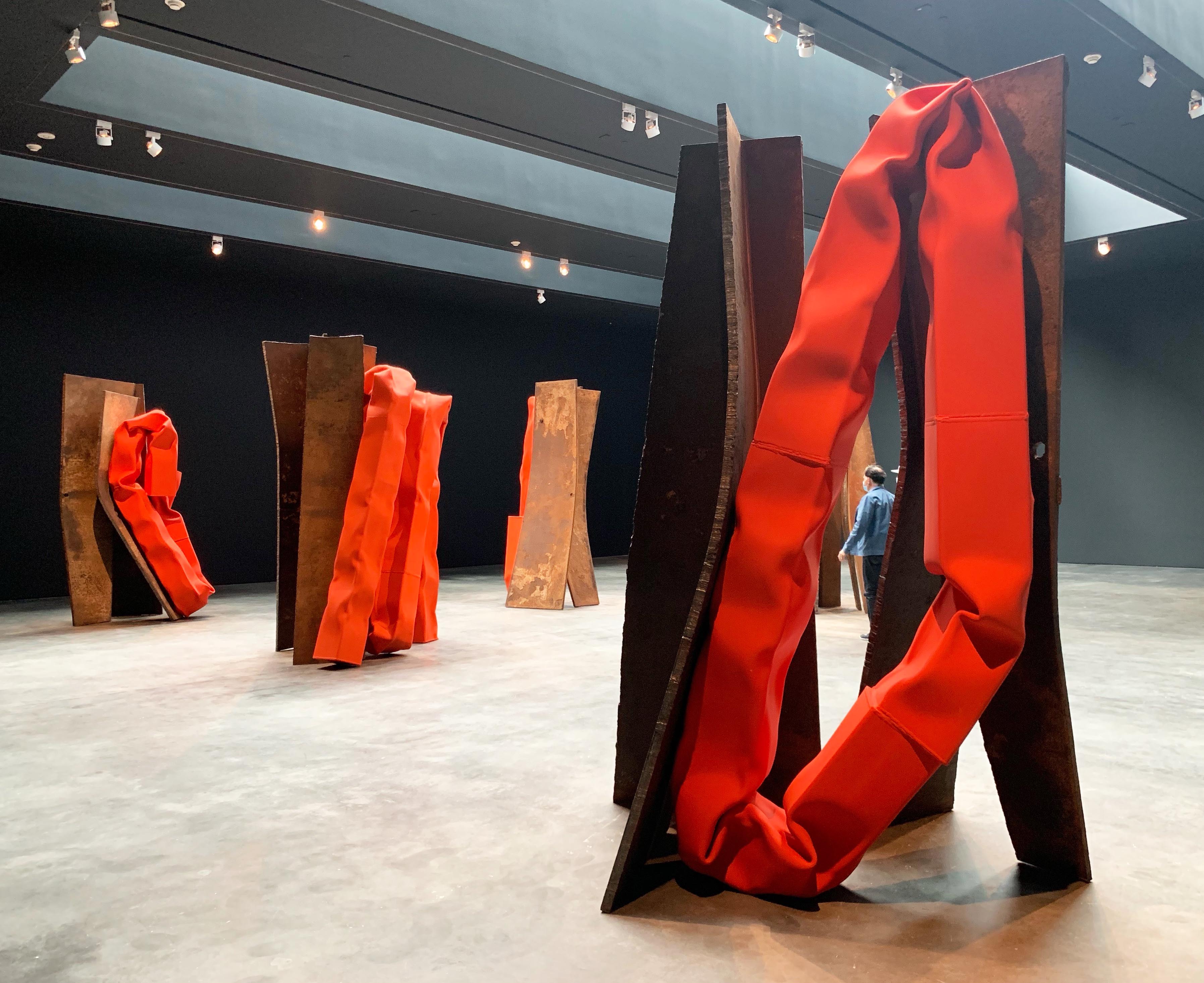
Crushed tubular steel in an electric orange color provocatively juxtaposes and compliments salvaged sheets of rolled steel in Carol Bove’s dramatic sculptural installation at David Zwirner Gallery. Titled ‘Chimes at Midnight’ after a 1965 Orson Wells film in which two characters speak of mortality, the sculptures’ industrial materials summons the past while soft, malleable-looking orange segments speak to a future in formation. In its reckoning between past and present, the sculptures continue Bove’s engagement with history in her current sculptural commission on the façade of the Metropolitan Museum of Art. (On view at David Zwirner Gallery).
Carol Bove, installation view of Chimes at Midnight at David Zwirner Gallery
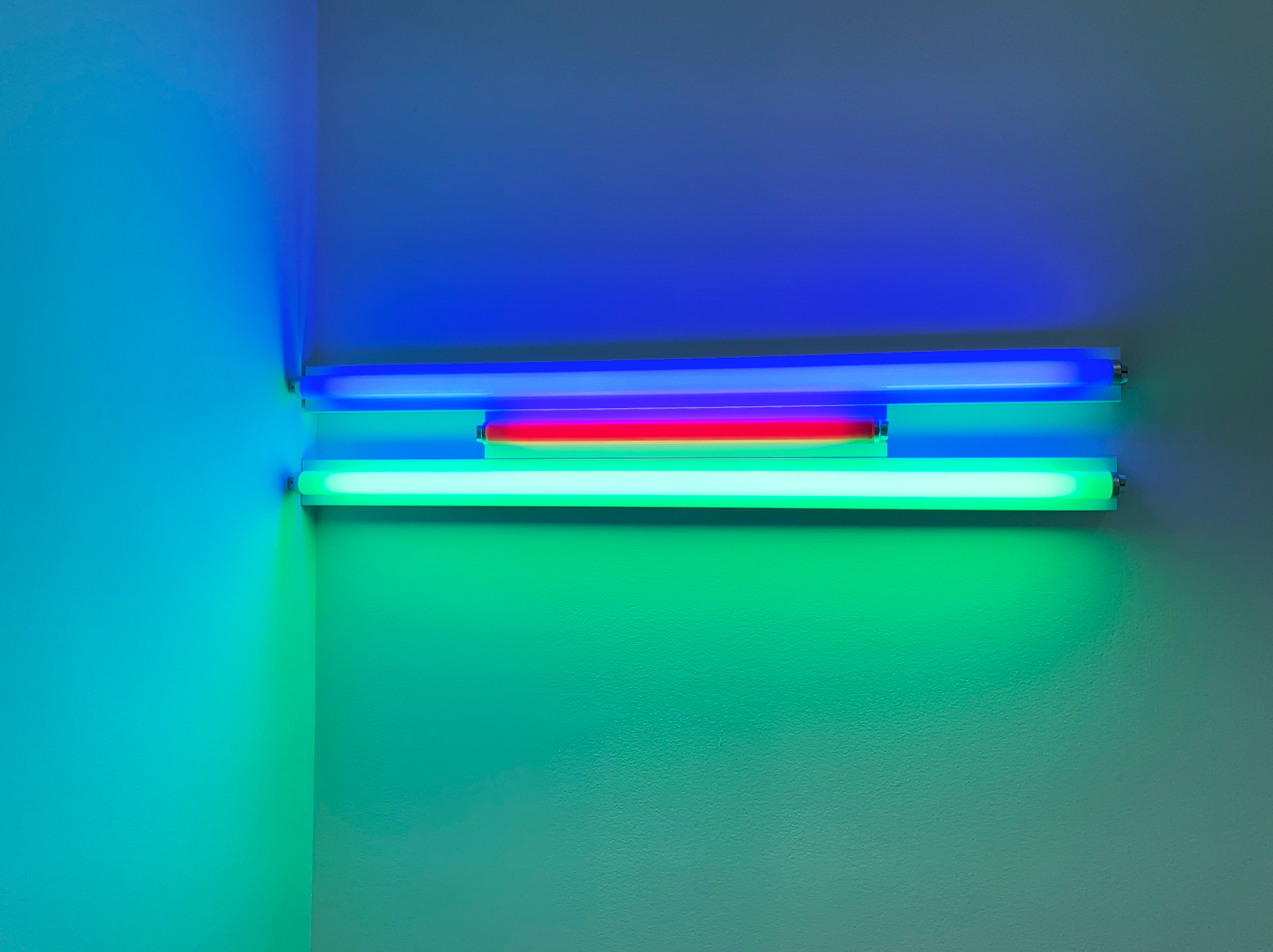
Twelve untitled light sculptures from 1995 by Dan Flavin transform the white cube into a bath of color at David Zwirner Gallery’s 19th Street Chelsea location. Spaced along two walls, the color configurations change with each sculpture, inviting visitors who walk from piece to piece to reconcile cool and soothing blues and greens with intense reds and yellows. (On view through Feb 20th. Masks and social distancing are required.)
Dan Flavin, untitled, blue, red and green fluorescent light, 4 ft wide, edition of 5, 1995.
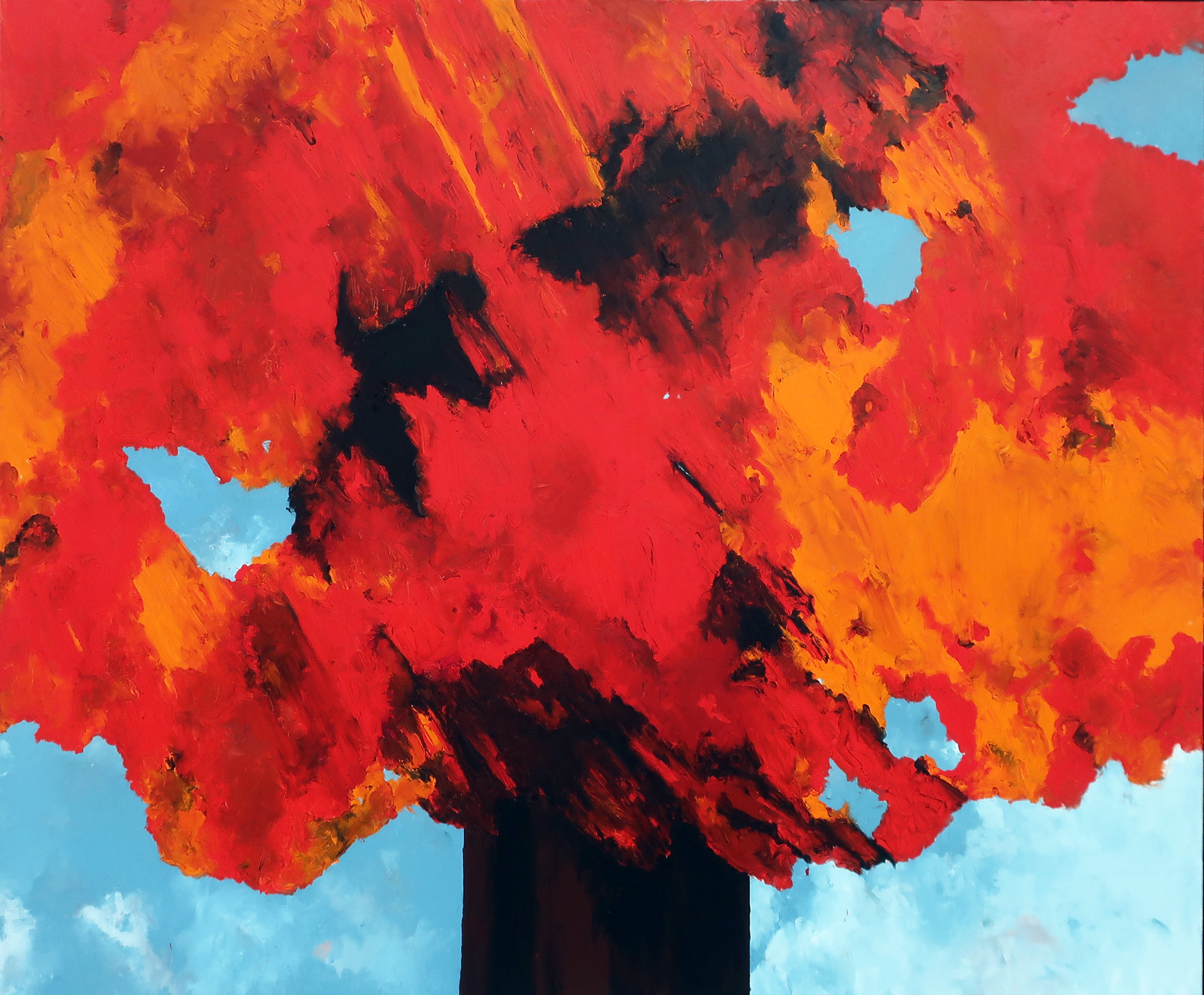
Inspired by the sunlight flashing through the trees on a road trip in France, New York based Belgian painter Harold Ancart embarked on a series of paintings now attracting attention at David Zwirner Gallery in Chelsea. This fiery abstracted mass brings to mind not just autumn foliage but a giant flaming match or burning bush. Tranquil blue sky behind the tree sets off the intense energy of this living organism. (On view through Oct 17th. Masks and social distancing required and appointments recommended).
Harold Ancart, Untitled, oil stick and graphite on canvas in artist’s frame, 80 1/8 x 96 1/8 inches, 2020.
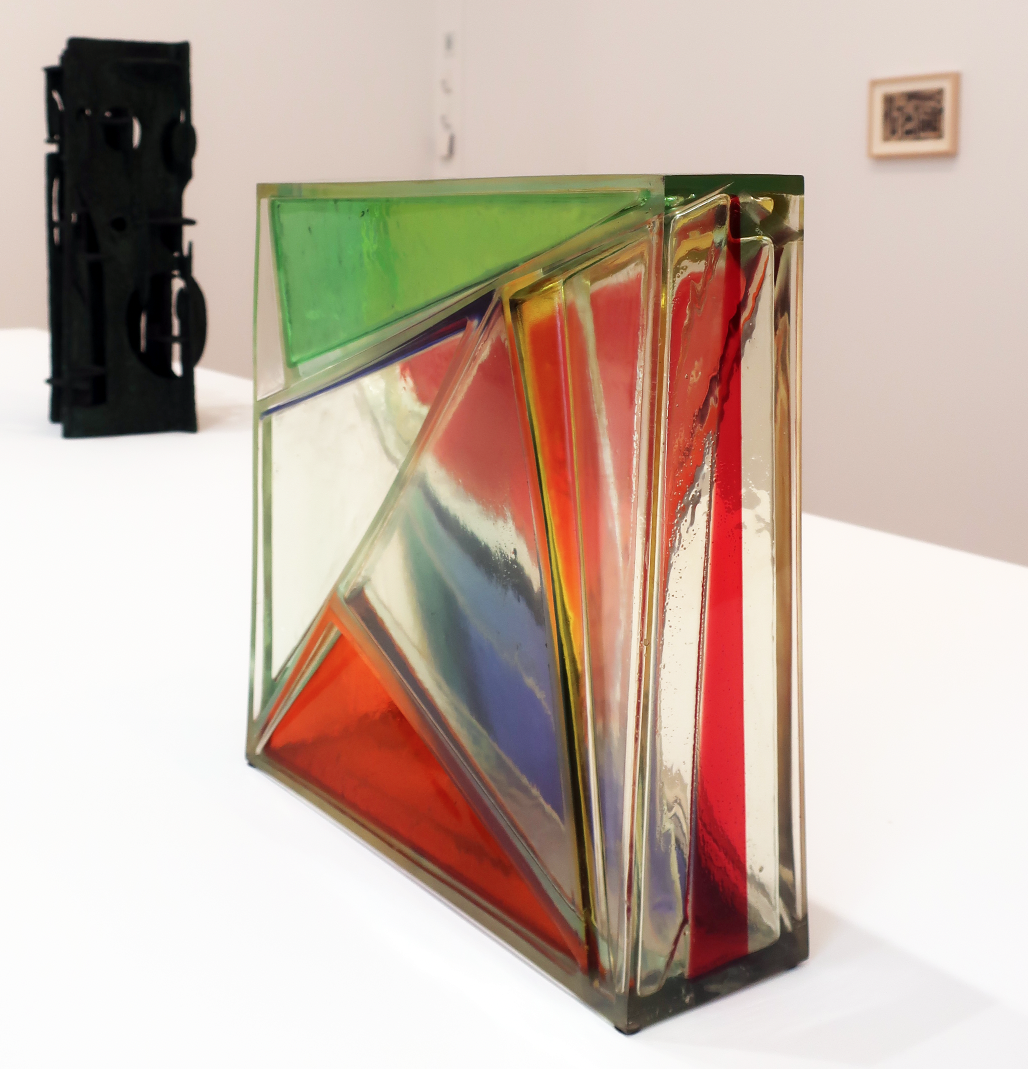
Underappreciated despite showing at the Met and MoMA, the career of late 20th century cast resin pioneer and direct carving innovator Leo Amino is attracting new attention thanks to a handsome show at David Zwirner Gallery. Fascinating as translucent objects, alluring for their bold colors, Amino’s block-like resin sculptures are a draw, along with a bird-like form crafted in wood and encased in resin and totemic carved wood forms. (On view on 20th Street in Chelsea by appointment).
Leo Amino, Refractional #85, polyester resin, 13 x 13 x 13 inches, 1972.
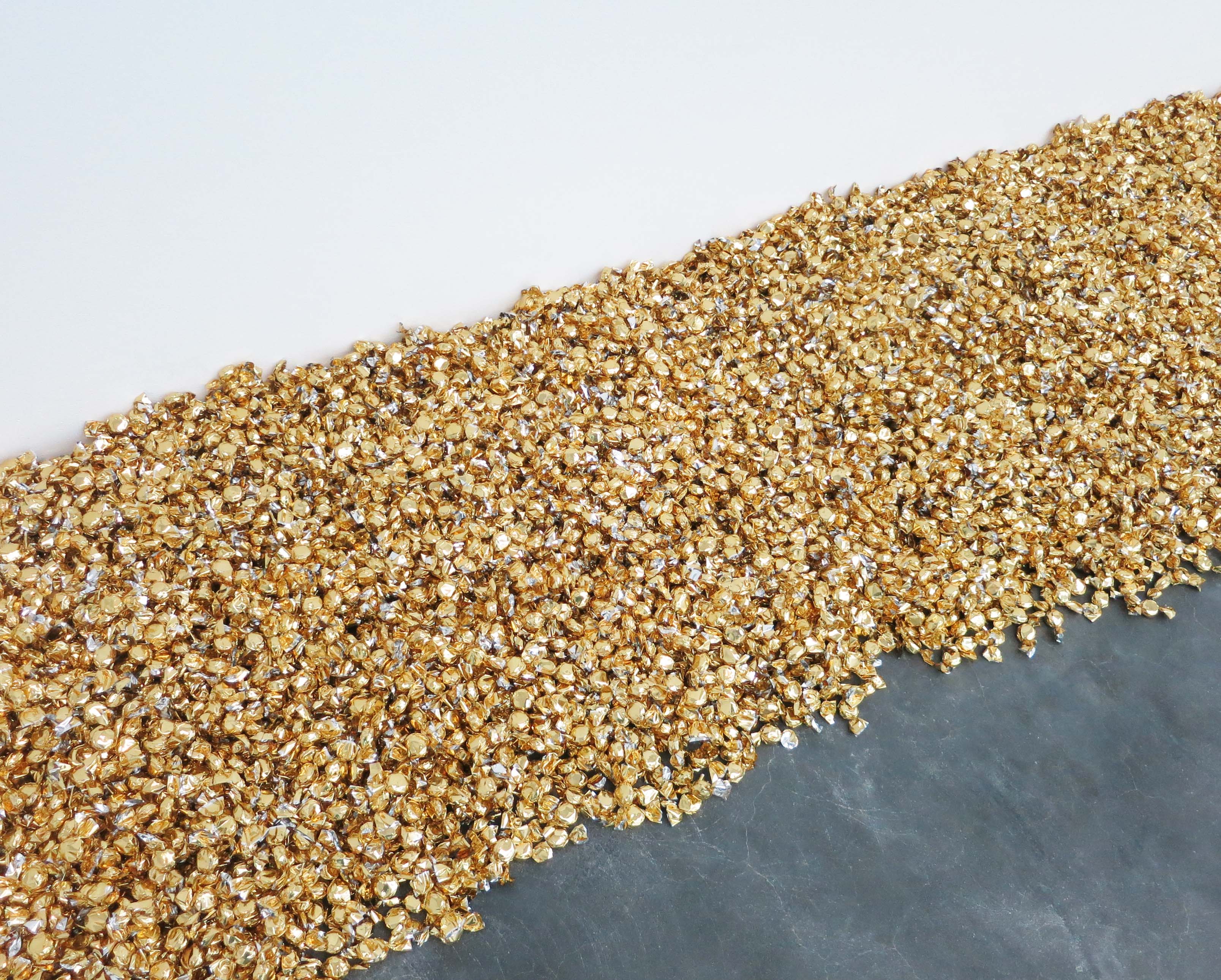
This pile of foil-wrapped candy by late artist Felix Gonzalez-Torres pays homage to a sheet of gold – an artwork by Roni Horn that gave Gonzalez-Torres and his dying partner hope. Intended to be taken by individual visitors, Gonzalez-Torres’ free sweets are a gesture of generosity and an expression both of pleasure and of loss as the pile of candies gradually dwindles. Similarly, his ‘Untitled’ (Fortune Cookie Corner) from 1990 offers participants a positive message in the form of a fortune cookie, piles of which are currently installed from Buenos Aires to Beijing in hundreds of places, from parks to public kitchens, outside of museums and stores and in private homes. Initiated by Andrea Rosen Gallery & David Zwirner Gallery, the New York Times suggests that the project “addresses the grief of today’s pandemic – just as it did the AIDS crisis.” (On view through July 5th.)
Felix Gonzalez-Torres, installation view of “Untitled” (Placebo-Landscape – for Roni), candies individually wrapped in gold cellophane, endless supply, overall dimensions vary with installation, ideal weight: 1,200 lbs, Sammlung Hoffmann, Berlin, 1993.
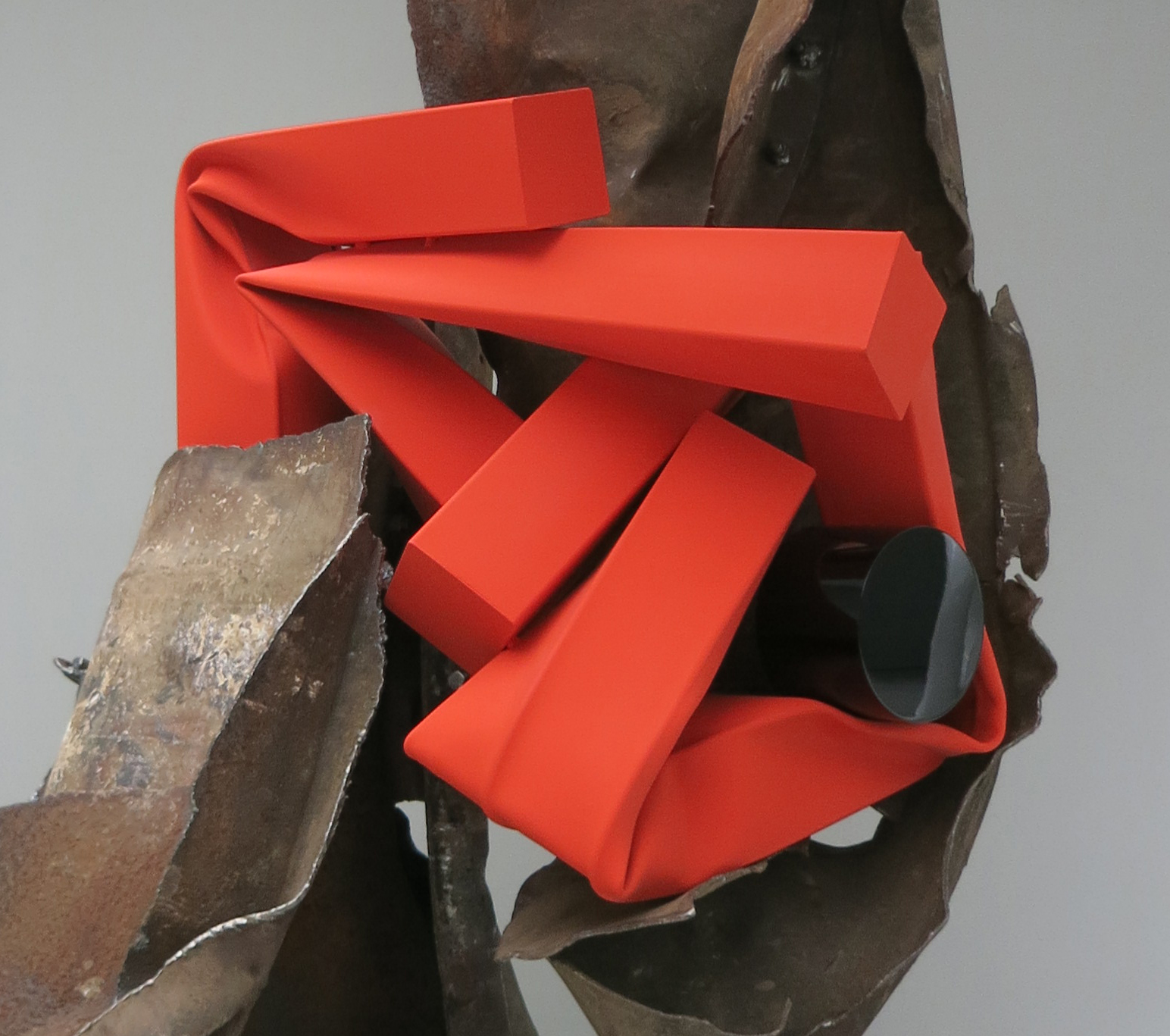
Fashion, art history and the relationship between works in an exhibition drive the color choices that make Carol Bove’s hybrid sculptures stand out. Sharp contrasts between aged, found steel and the smooth geometries of urethane-covered forms give pause to consider the relationships between two familiar yet seemingly mismatched materials. This piece (seen in detail) from the artist’s last major Chelsea solo show at David Zwirner Gallery in ‘16 juxtaposes found steel with urethane-covered steel to create a wonderfully misleading suggestion of pliability. When a sculpture’s color can make it appear to have a digital effect, Bove’s at her happiest. She explains this and more on davidzwirner.com where a new on-line exhibition showcases select new works.
Carol Bove, (detail of) Daphne and Apollo, found steel, stainless steel, and urethane paint, 98 x 72 x 61 inches, 2016.
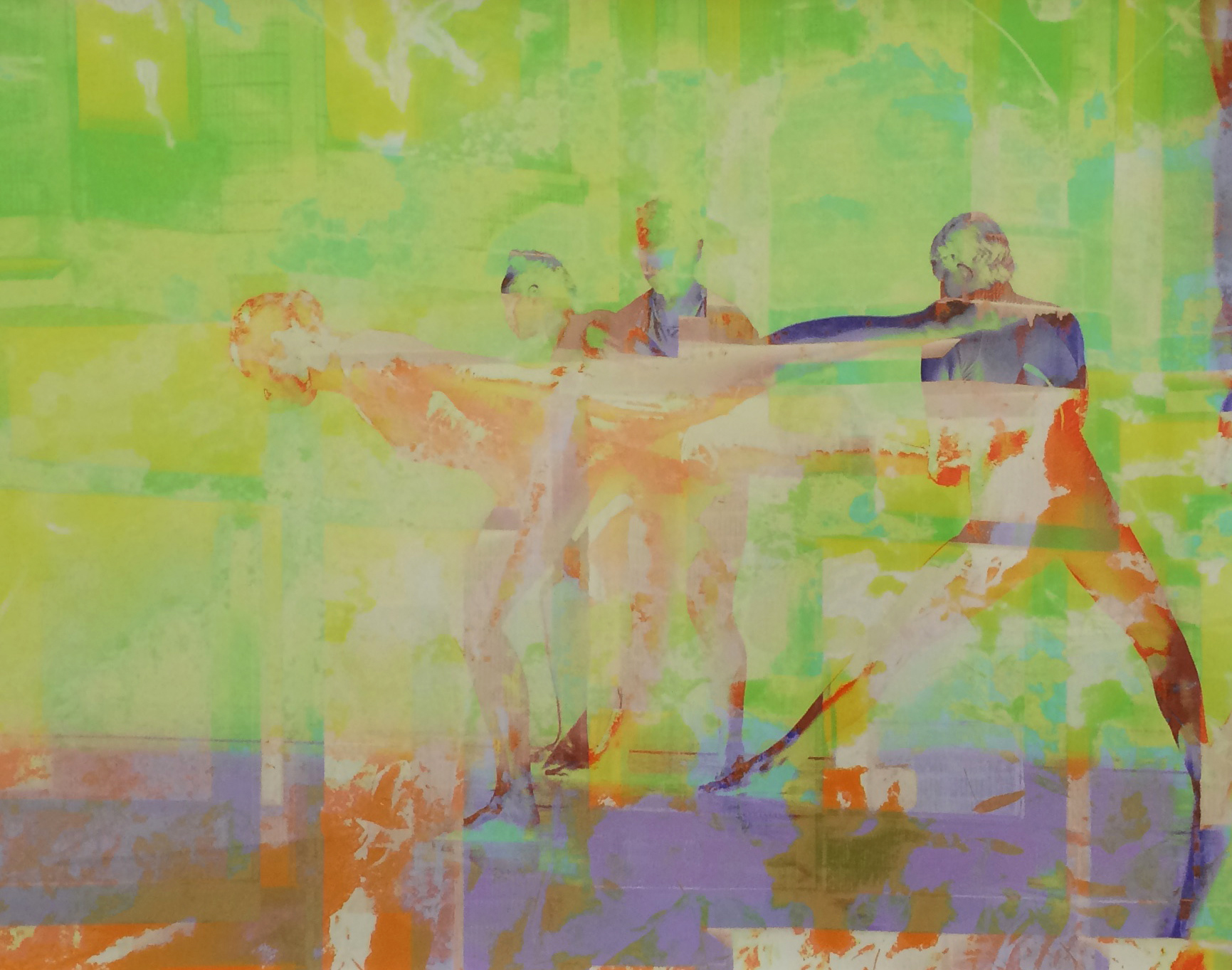
Titled ‘Pathological Color,’ James Welling’s on-line exhibition of photography at David Zwirner Gallery assaults the senses with intense color contrasts generated by the artist’s experimental practice in Photoshop. This detail of a photo by Welling from New York Art Tours’ archives features images of dancers layered with modernist buildings and landscapes, each suggesting performance on a different kind of stage. Aiming to explore our perception of color, Welling draws on ‘pathologies’ described by Goethe, who considered the impact of particular colors on the senses. For more images, including early examples of his technique, visit David Zwirner Gallery’s on-line Viewing Room.
James Welling, detail of 7809, inkjet print, 42 x 63 inches, 2015.
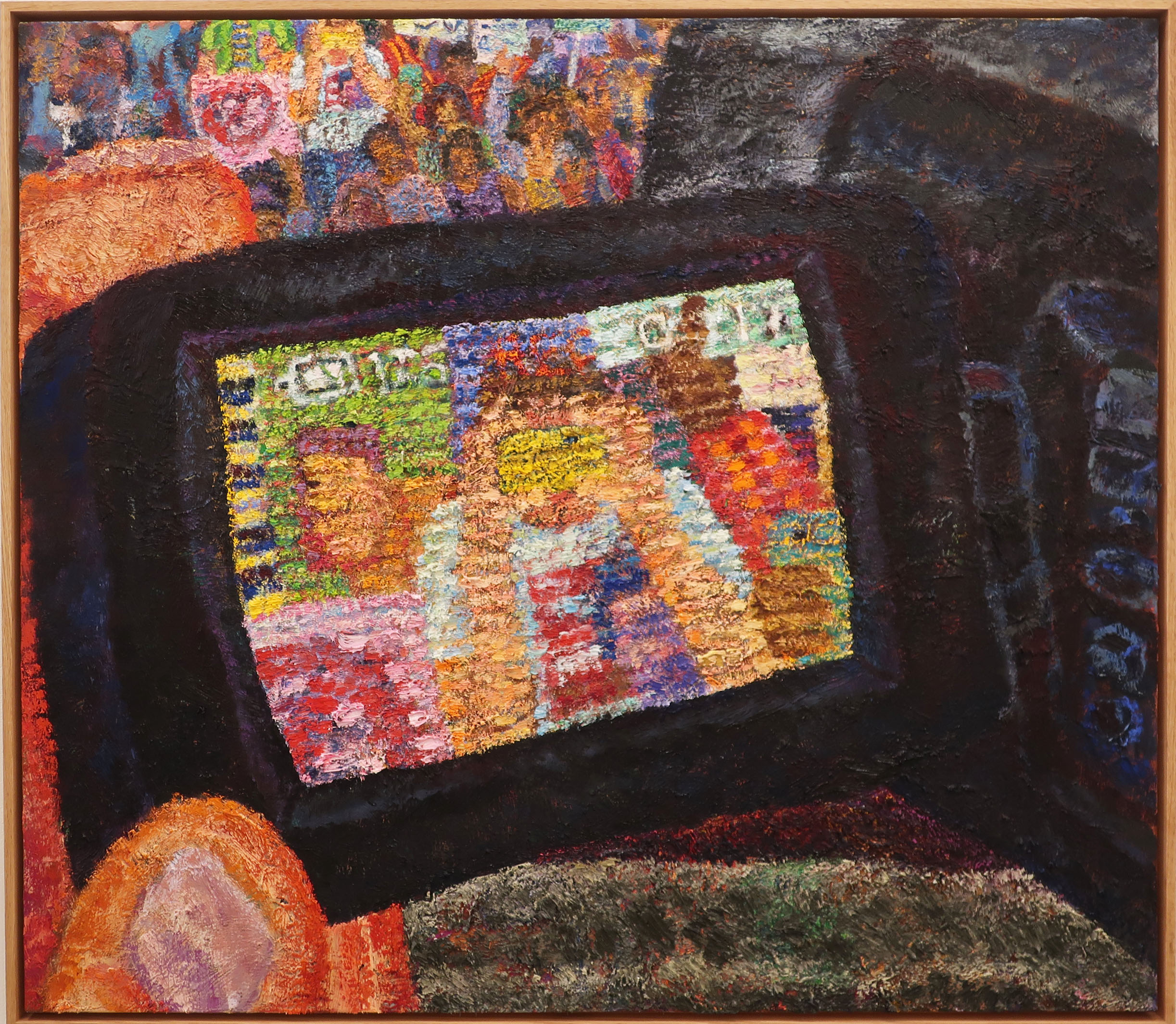
Virtual exhibitions have replaced in-person shows at many New York galleries, but David Zwirner Gallery’s new ‘Platform’ offers something different by showcasing work by individual artists represented by twelve established, smaller New York galleries. The initiative highlights painting and sculpture, conceptual and digital art by groundbreaking artists and includes Keegan Monaghan’s impasto oil paintings. Monaghan’s ‘The Screen’ – pictured here from New York Art Tour’s photo archive from Jan ’18 at James Fuentes Gallery – perfectly illustrates how pictures can ‘serve alternatively as barriers and entry points’ as we look at someone looking at someone looking.
Keegan Monaghan, The Screen, oil on canvas, red oak frame, 50 x 56 ¾ inches framed, 2016-2017.
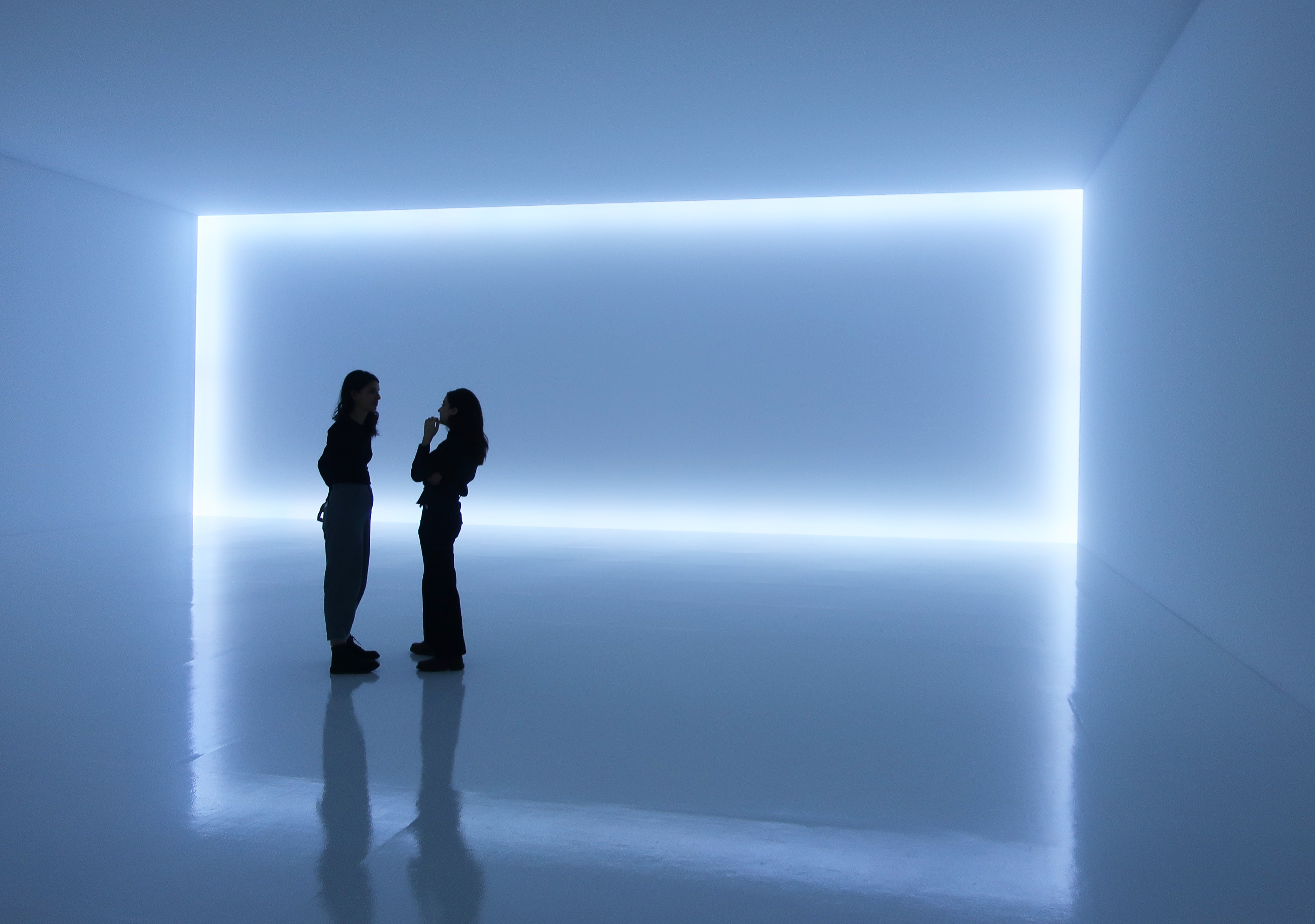
Light and space artist Doug Wheeler’s installation at David Zwirner Gallery makes light a transformative medium, turning the white cube into a glowing and changeable environment to challenge the senses. Light disperses before our eyes as it fades from the bright glow of neon tubes installed in a recessed space to the darker areas of the wall, floor and ceiling at the end of the long rectangular gallery. (On view in Chelsea through March 21st).
Doug Wheeler, 49 Nord 6 Est 68 Ven 12 FL, installation view at David Zwirner Gallery, Jan 2020.
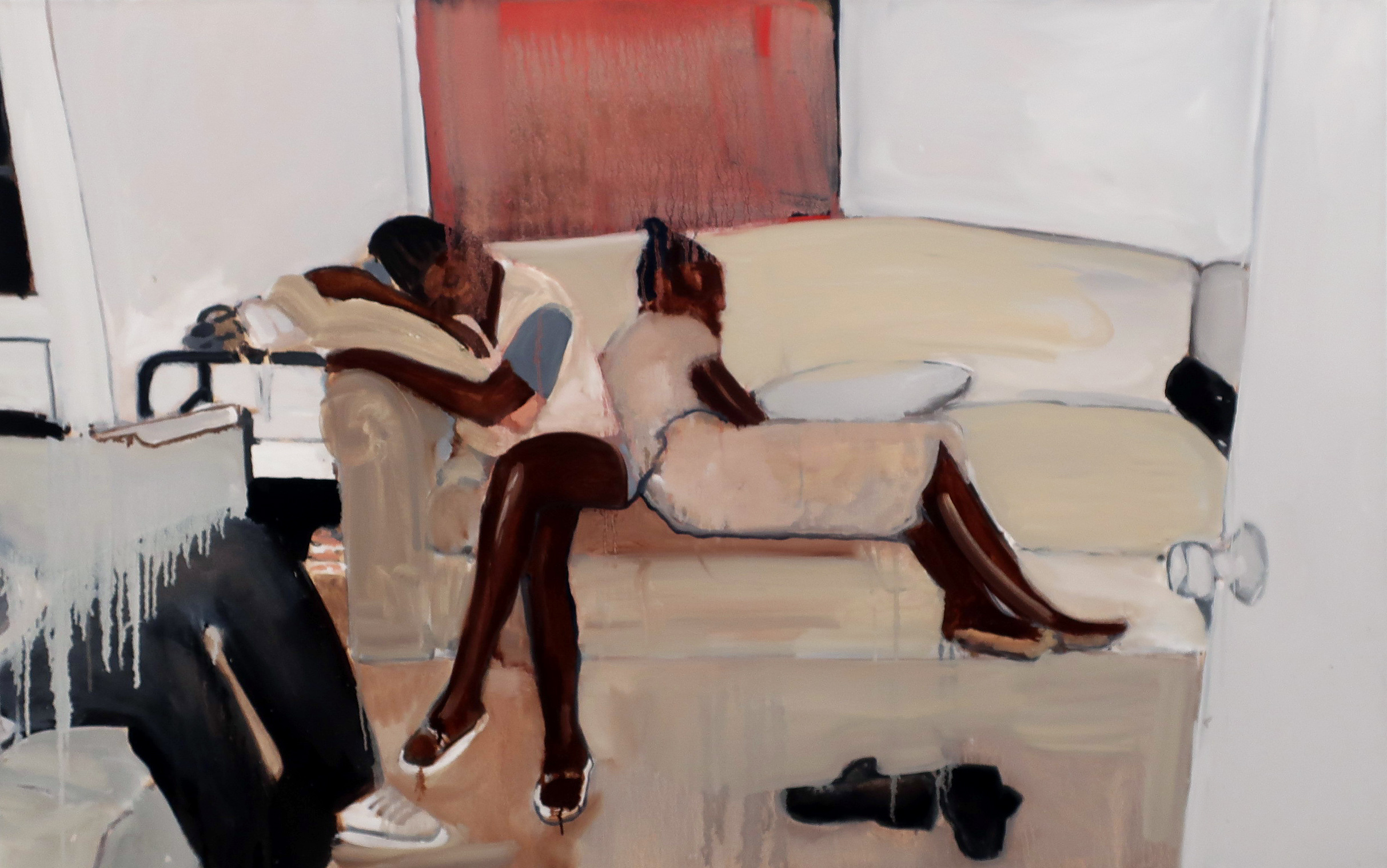
Young LA painter Noah Davis died from cancer in 2015, but the hundreds of artworks he left behind are currently impacting the New York art scene thanks to a double-gallery exhibition at David Zwirner Gallery. Davis’ style can shift from washy to realistic in the same canvas, creating surprising effects as representation dissolves into uncertainty. Here, two napping figures on a couch evoke a languorous afternoon, made intriguing by the almost melting space above the lap of a third figure. (On view in Chelsea through Feb 22nd).
Noah Davis, Untitled, oil on canvas, 32 x 50 inches, 2015.
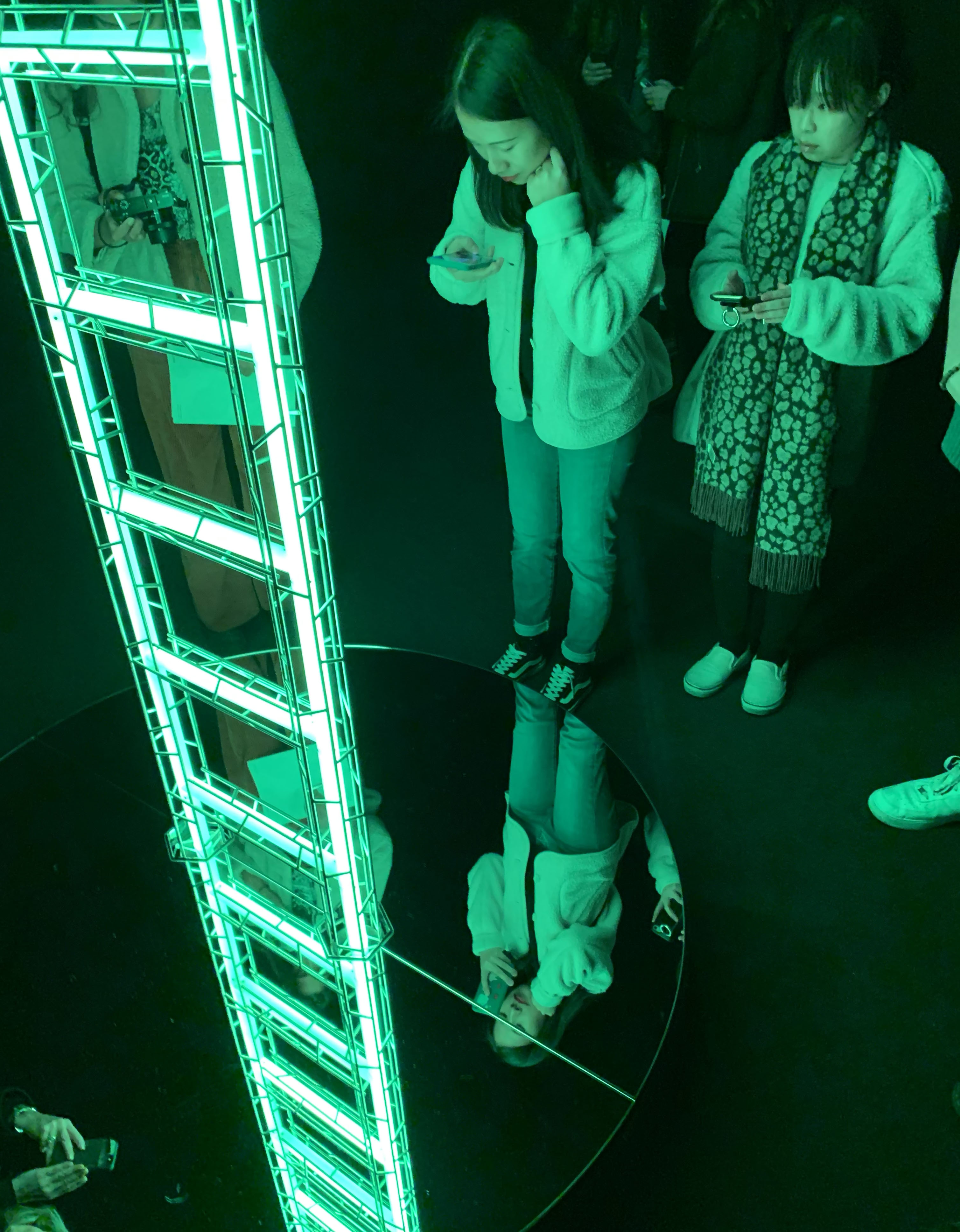
The line to enter Yayoi Kusama’s latest mirror-lined infinity room at David Zwirner Gallery stretches around the block, but you can walk right up to her infinity mirror, ‘Ladder to Heaven.’ Look up and visitors are presented with an endless (theoretical) climb or, conversely, a bottomless descent, suggesting that our fate is in our own hands. (On view in Chelsea through Dec 14th).
Yayoi Kusama, Ladder to Heaven, steel, LED lights, mirrored glass, honeycomb aluminum, and plastic, 154 xx 59 inches, 2019.
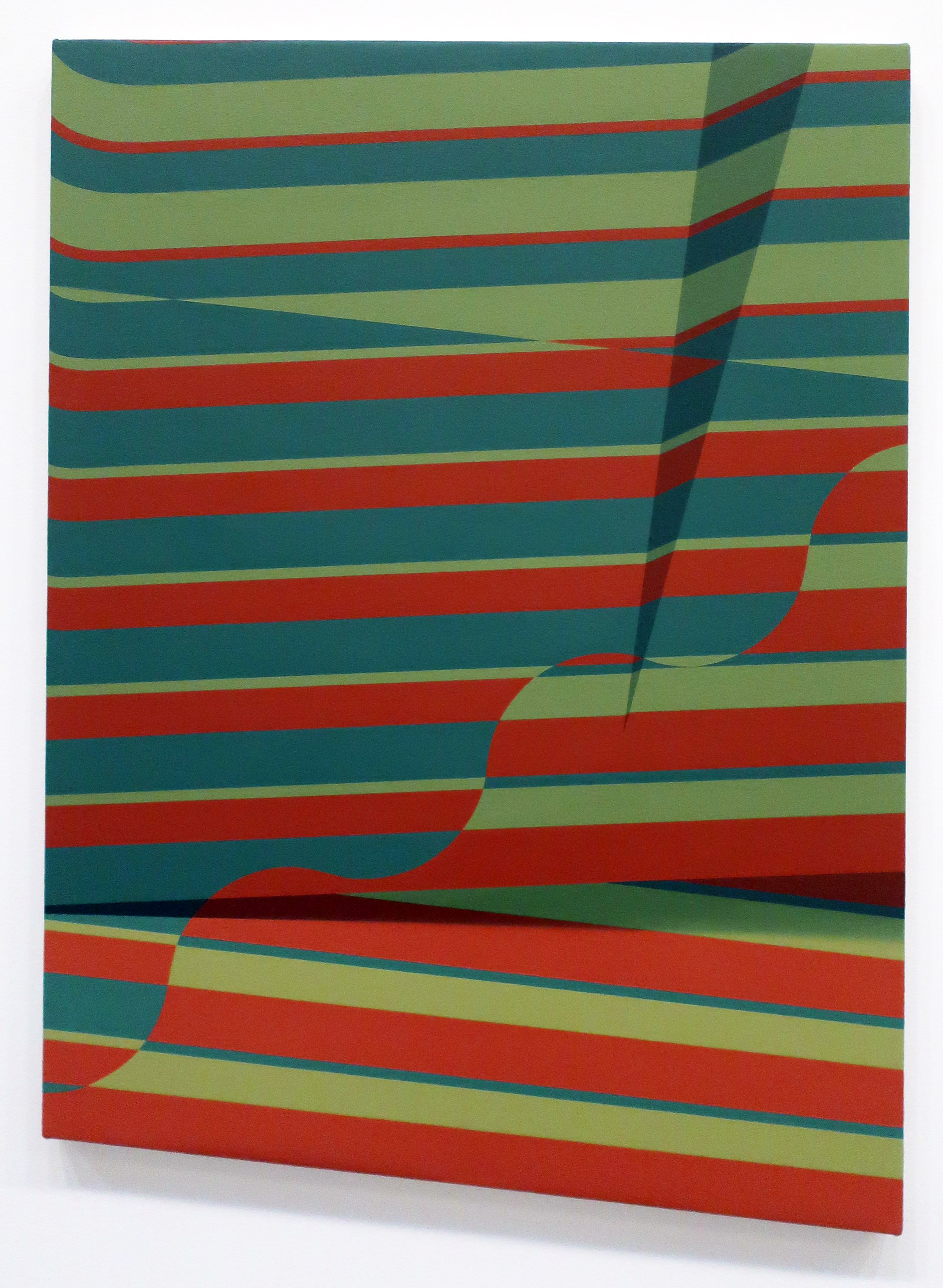
Known since the 90s for exploring the myriad possibilities of geometric abstraction, Tomma Abts continues to innovate while adopting slightly larger, shaped canvases that showcase more boldly shape-shifting patterning. Here, the bottom quarter of the painting appears to sheer away from the bent, folded and upward tilting bands above. With a curving wave breaking the entire composition into new color sequences, Abts appears to embrace visual complexity for its own sake, offering viewers a pleasurably engaging visual experience. (On view at David Zwirner Gallery in Chelsea through Dec 14th).
Tomma Abts, IV, oil on canvas, 34 ¾ x 25 1/8 inches, 2019.
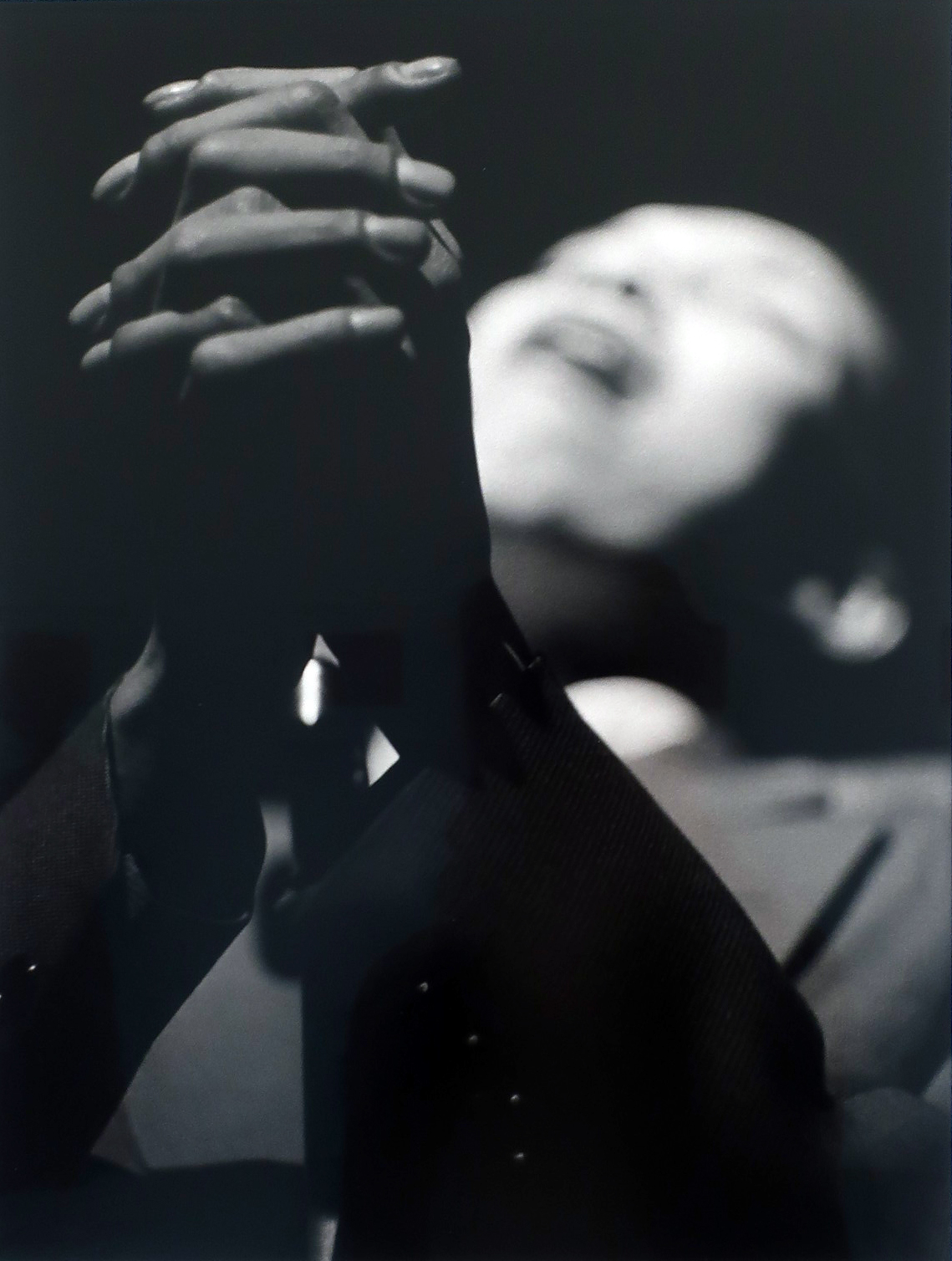
Roy DeCarava’s velvety toned black and white photographs aimed for expression, not documentation, seeking to capture scenes of African-American life in Harlem and beyond with ‘penetrating insight and understanding’. Over one hundred silver gelatin photos now on view at David Zwirner Gallery in Chelsea celebrate the centennial of DeCarava’s birth while showcasing the artist’s ability to sensitively portray a variety of subjects, from the everyday life of families to thrilling portraits of jazz musicians like Jimmy Scott. (On view through Oct 26th).
Roy DeCarava, Jimmy Scott singing, silver gelatin print, 14 x 11 inches, 1956.
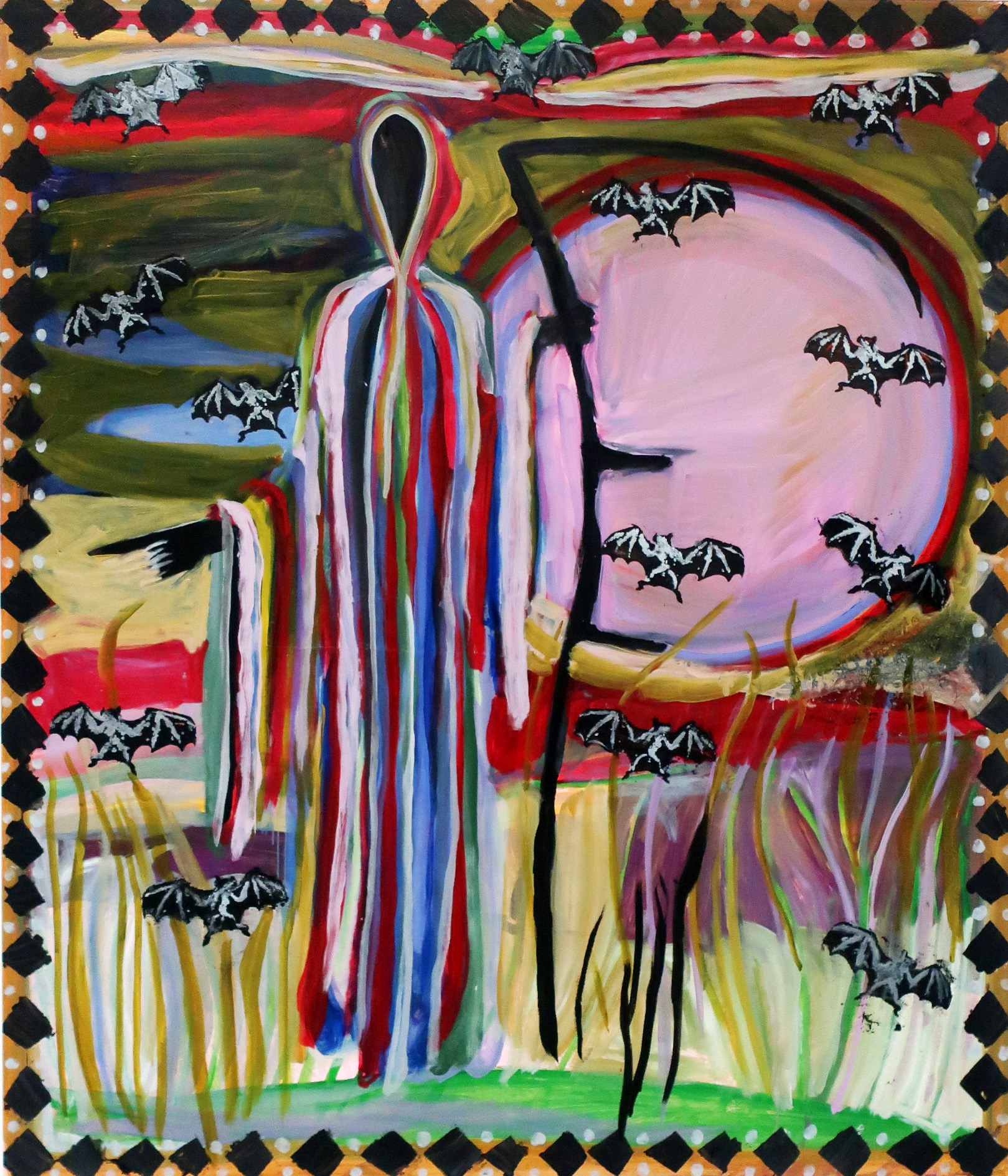
‘Holiday,’ Josh Smith’s painting of the Grim Reaper, may represent a vacation in Edvard Munch’s world, but otherwise has more to do with livening up a typically drab comic convention. A super-abundance of cute bats, Death’s multi-colored robe and a huge moon that’s more pretty-in-pink than bloody liven up a scene that should be darker than it is. While this representation might not exactly make death look good, the makeover is worth thinking about. (On view at David Zwirner Gallery in Chelsea through July 19th).
Josh Smith, Holiday, oil on linen, 84 x 72 inches, 2019.
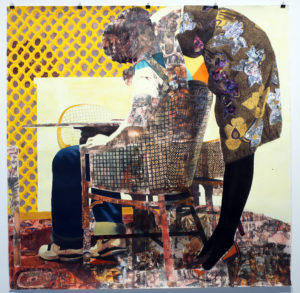
James Baldwin’s intellectual legacy and his powerful impact on contemporary culture is the subject of David Zwirner Gallery’s current group exhibition, or ‘collective portrait,’ of the late writer and thinker. By displaying the work of other artists alongside documents and ephemera related to Baldwin, curator Hilton Als considers how the writer may have continued to make art had his career developed differently after the seminal ‘The Fire Next Time.’ In one of the show’s highlights, Njideka Akunyili Crosby’s collaged photo draws on images from Nigerian and U.S. West Coast cultures, creating a provocative hybridity. (On view in Chelsea on 19th Street through Feb 16th).
Njideka Akunyili Crosby, Nyado: The Thing Around Her Neck, acrylic, photographic transfers, color pencil, charcoal and collage on paper, 81 ½ x 81 ¾ inches, 2011.
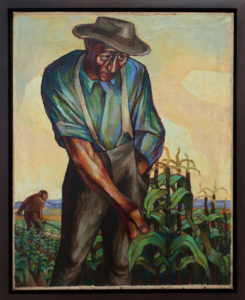
Charles White called painting his weapon in fighting racism and poverty in the United States. His painting of a sharecropper from 1947-48 demonstrates the difficulty of that life and the resilience of the farmers. Part of an exhibition highlighting White’s last mural – a celebration of the achievements of educator and activist Mary McLeod Bethune – the work exhibits White’s commitment to representational art (when abstraction was becoming the new norm) in service of social change. (On view at David Zwirner Gallery through Feb 16th).
Charles White, Sharecropper, oil on canvas, 30 x 24 inches, 1947-1948.
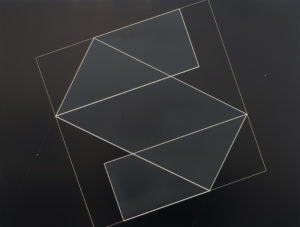
Just months before color theorist, abstract art pioneer and teacher Josef Albers passed away, a book titled ‘Sonic Design’ paid homage to his mid-century abstractions that could be discussed in musical terms. In particular, his series of shapes outlined against a dark background appeared simple but, like music, shift over time in how they might be read, with planes receding at one moment and coming forward the next. The book delighted Albers and inspired David Zwirner Gallery’s current show, which brings together select pieces of glass work from Albers’ time at the Bauhaus in Germany, paintings from his iconic ‘Homage to the Square’ series and more, to consider how color, shape and sound might relate. (On view through Feb 16th).
Josef Albers, Structural Constellation, machine-engraved plastic laminate mounted on wood, 17 x 22 ½ x 7/8 inches, c. 1950.
A faintly reflected man in a white shirt and tie looks on while a hand fondles jewels in the window of a looted shop in photographer Stan Douglas’ careful staging of a hypothetical New York City blackout. Strangely calm, the scene suggests looting as leisure activity and – given the man’s gaze – as potential romantic encounter. (On view at David Zwirner Gallery’s 525 West 19th Street location through April 7th).
Stan Douglas, Jewels, digital chromogenic print mounted on Dibond aluminum, 36 x 36 inches, 2017.
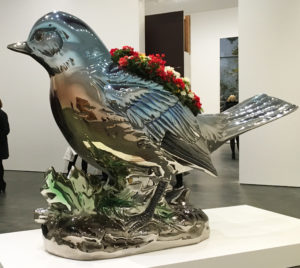
Featuring live flowering plants, Jeff Koons’ huge mirror-polished stainless steel bluebird not only represents nature but brings it into the gallery. It’s part of David Zwirner Gallery’s 25-year anniversary exhibition, which includes work by many of the world’s best-known western contemporary artists and makes clear the scale of the gallery’s art world involvement. (On view at 537 West 20th Street and all Zwirner locations in Chelsea through Feb 17th.)
Jeff Koons, Bluebird Planter, mirror-polished stainless steel with transparent color coating and live flowering plants, 82 ½ x 115 x 41 ½ inches, 2010-2016.
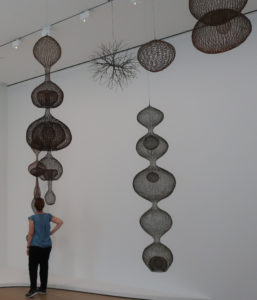
Transparency, an interest in organic forms and a desire to push her materials drove late artist Ruth Asawa’s to create the undulating, hanging wire sculptures, currently on view at David Zwirner Gallery’s 537 West 20th Street location. (On view through Oct 21st).
Ruth Asawa, installation view of ‘Ruth Asawa’ at David Zwirner Gallery’s 537 West 20th Street location, Sept 2017.
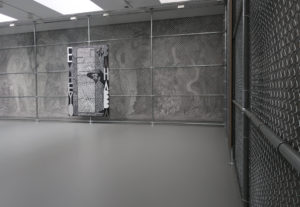
Four paintings hang against chain link fencing at David Zwirner Gallery in Chelsea, inaccessible to the public except by a narrow corridor between the fence and the wall, which has been painted with towering figures of sinuous dancers, themselves depicted behind a painted fence. The show is titled ‘Paradise Lost’ and follows Ofili’s ‘The Caged Bird’s Song’ at London’s National Gallery, for which the artist alluded to the practice in his adopted home, Trinidad, of raising caged songbirds. Here, aggressive fencing suggests that it is not the song of the caged bird that is sweeter. (On view through Oct 21st).
Chris Ofili, installation view of ‘Paradise Lost’ at David Zwirner Gallery’s 533 West 19th Street space, Sept 2017.
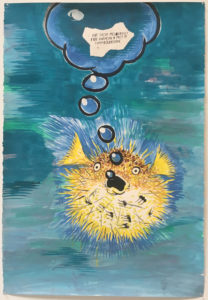
This comically alarmed puffer fish is apparently startled by the empathy of an unnamed individual; in a thought bubble, the fish remarks that ‘his great melancholy eyes swim in a mist of commiseration.’ As comment on warming seas and endangered wildlife, the painting pits emotion vs action. (At David Zwirner Gallery’s 519 West 19th Street location).
Raymond Pettibon, No Title (His great melancholy…), 44 x 30 ¼ inches, 2017.
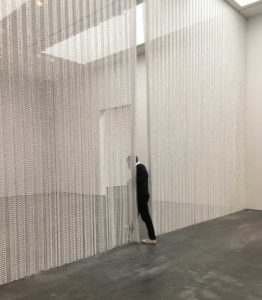
Long strands of clear and white plastic beads by late artist Felix Gonzalez-Torres are an austere version of the usually colorful plastic beading hung in homes. Here in the huge, Spartan spaces of David Zwirner Gallery (which marks joint representation of the artist with Andrea Rosen Gallery with this show), the curtain has the sobering effect intended, heightening our awareness of passing from one state to another. (On 20th Street in Chelsea through June 24th).
Felix Gonzalez-Torres, “Untitled” (Chemo), strands of beads and hanging device, dimensions vary with installation, 1991. Glenstone Museum, Potomac, Maryland.
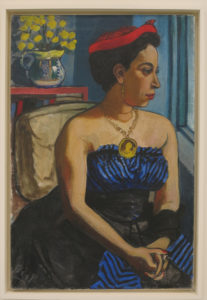
Alice Neel’s striking 1950 portrait of African-American playwright and actress Alice Childress portrays the writer as alert witness gazing from an uptown apartment window on life below. A red hat, blue dress and yellow flowers pack a visual punch, turning this otherwise sedate interior scene into a testimony to Childress’ lively powers of observation. (At David Zwirner Gallery’s 19th Street location through April 22nd).
Alice Neel, Alice Childress, oil on canvas, 30 1/8 x 20 1/8 inches, 1950.
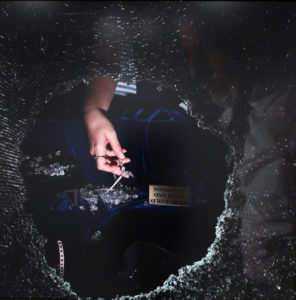
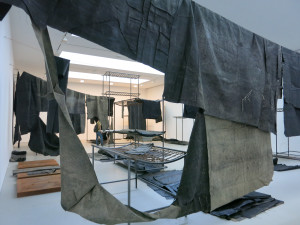
Black canvases, some formerly used as studio rags, hang from wires in David Zwirner Gallery’s Chelsea space in Oscar Murillo’s new installation, dividing the gallery into sections like a make-shift field hospital. Even more ominous are sculptures inspired by morgue tables and a huge torn canvas featuring a bank note. Both are a far cry from the artist’s last show – for which he created a chocolate factory in the gallery. (Through Oct 22nd).
Oscar Murillo, installation view of ‘a futile mercantile disposition,’ oil and oil stick on canvas and linen, stainless steel, vinyl, latex, copper, PVC tubing, self-hardening clay with ground corn, and a single-channel video, dimensions vary, 2016.
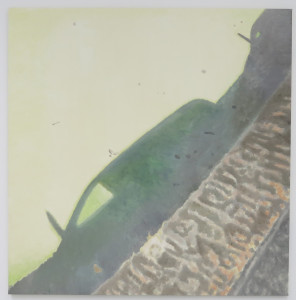
Belgian artist Luc Tuymans is known for paintings that evoke memories. Here, cars reflected in the canals of the Dutch town of Ridderkerk are based on Polaroids taken by the artist. A solid stone bridge meets the evocative green-tinged murk of the canal, recalling moments of leisure spent pondering the water from the land. (At David Zwirner Gallery in Chelsea through June 25th).
Luc Tuymans, Murky Water III, oil on canvas, 92 ¾ x 91 5/8 x 1 5/8 inches, 2015.
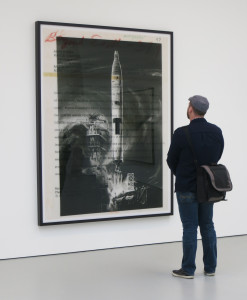
Gunships approach, bombers fly overhead and the Gemini spacecraft blasts off in old press photos and artist renderings gathered by German photographer Thomas Ruff, now on view in Chelsea at David Zwirner Gallery. Ruff scanned both sides of each photo – all of which relate to the U.S. aeronautics and space program in the 20th century – then merged them to merge private notes and public image. (Through April 30th).
Thomas Ruff, press++ 01.65, chromogenic print, 91 ½ x 72 ½ x 2 ¾ inches, 2015.
Isa Genzken’s exuberant accumulations of glitzy and everyday materials (where a pedestal wrapped in a sheet of shiny Mylar might meet plastic chairs or a bouquet of flowers) have sobered up considerably with her latest exhibition at David Zwirner Gallery. Here, mannequins are the basic building block for her abstractions; some appear to converse freely with each other, others appear to be in disguise or are tied and bound. Several in police vests and safety gear near the front door set a tense tone. (At David Zwirner Gallery through Oct 31st).
Isa Genzken, installation view at David Zwirner Gallery, October 2015.
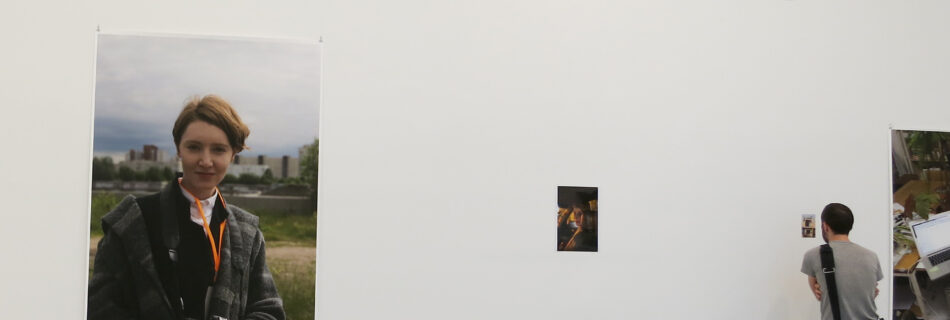
Digital technology allows us to picture everything in amazing detail, so how do you choose your subject matter as a professional photographer? Wolfgang Tillmans answers this question by continuing to zero in on the exceptional and mundane, picturing his day-to-day world (portraits of friends, laundry piles) and international travels in prints both tiny and monumental in a characteristic salon-style hanging which seems to evoke the randomness of life. (At David Zwirner Gallery through Oct 24th).
Wolfgang Tillmans, installation view of ‘New York Installation PCR’ at David Zwirner Gallery, September, 2015.
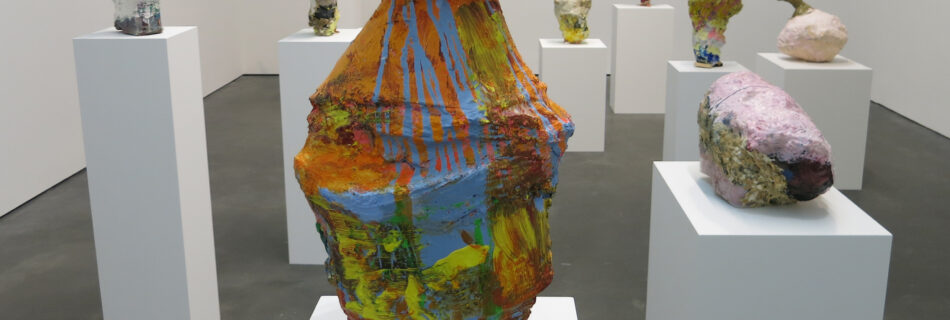
Resting on their stately pedestals like exhibits at the Met, late Viennese sculptor Franz West’s candy-colored abstract sculptures may strike a serious pose but still exude nose-thumbing absurdity. (At David Zwirner Gallery’s 20th Street location through Dec 13th).
Franz West, Untitled (10 Sculptures), papier-mache, plaster, polyester, gauze, paint, plastic, metal and wood in eleven parts, dimensions variable, 1990-1997.
Known for immersive environments including four conjoined Airstream trailers in his last solo show at 303 Gallery, British artist Mike Nelson has explained that his work is ‘ritualistic and votive.’ This minimalist, totemic character suggests the ease with which he transforms the ordinary into the extraordinary. (At David Zwirner Gallery’s 525 W. 19th Street location through Aug 9th).
Mike Nelson, Amnezi Skalk Kask, wood, plastic helmet and bones, 2012.
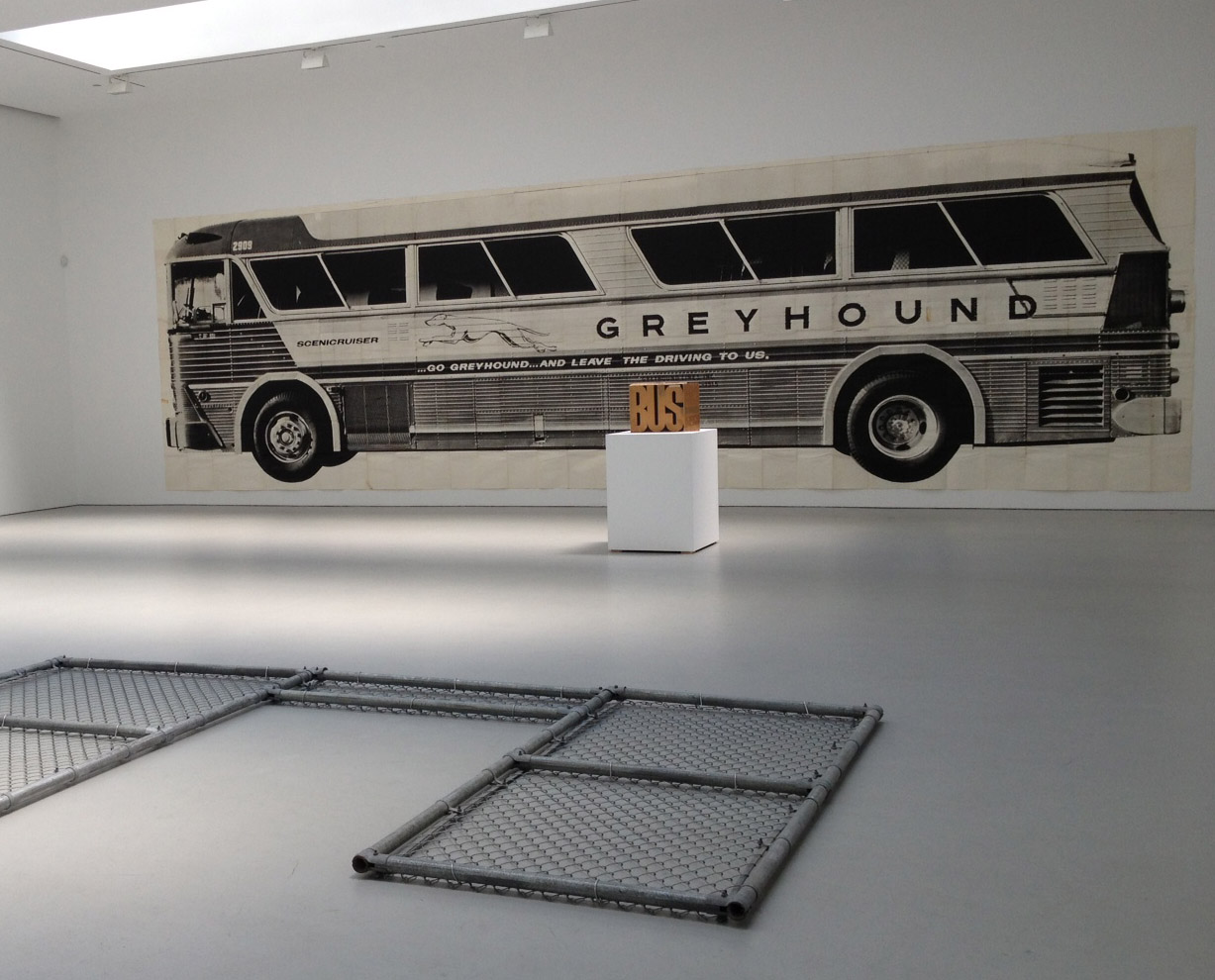
Mason Williams, Bus Book, 1967, silkscreen on paper.
‘Stand still like the hummingbird’ at David Zwirner is a group show as full of contradictions as it sounds, from Rodney Graham’s upside down oak tree photos to Robert Gober’s bronze slab painted to look exactly like a block of dirty Styrofoam. Musician and comedy writer Mason William’s 1967 life-size silkscreen of a Greyhound bus is a standout for its size alone, but the warning on the side of its box (displayed on a pedestal in front of the print) to avoid opening the artwork in the wind creates an amusing mental image with even more impact. (Through August 3rd).
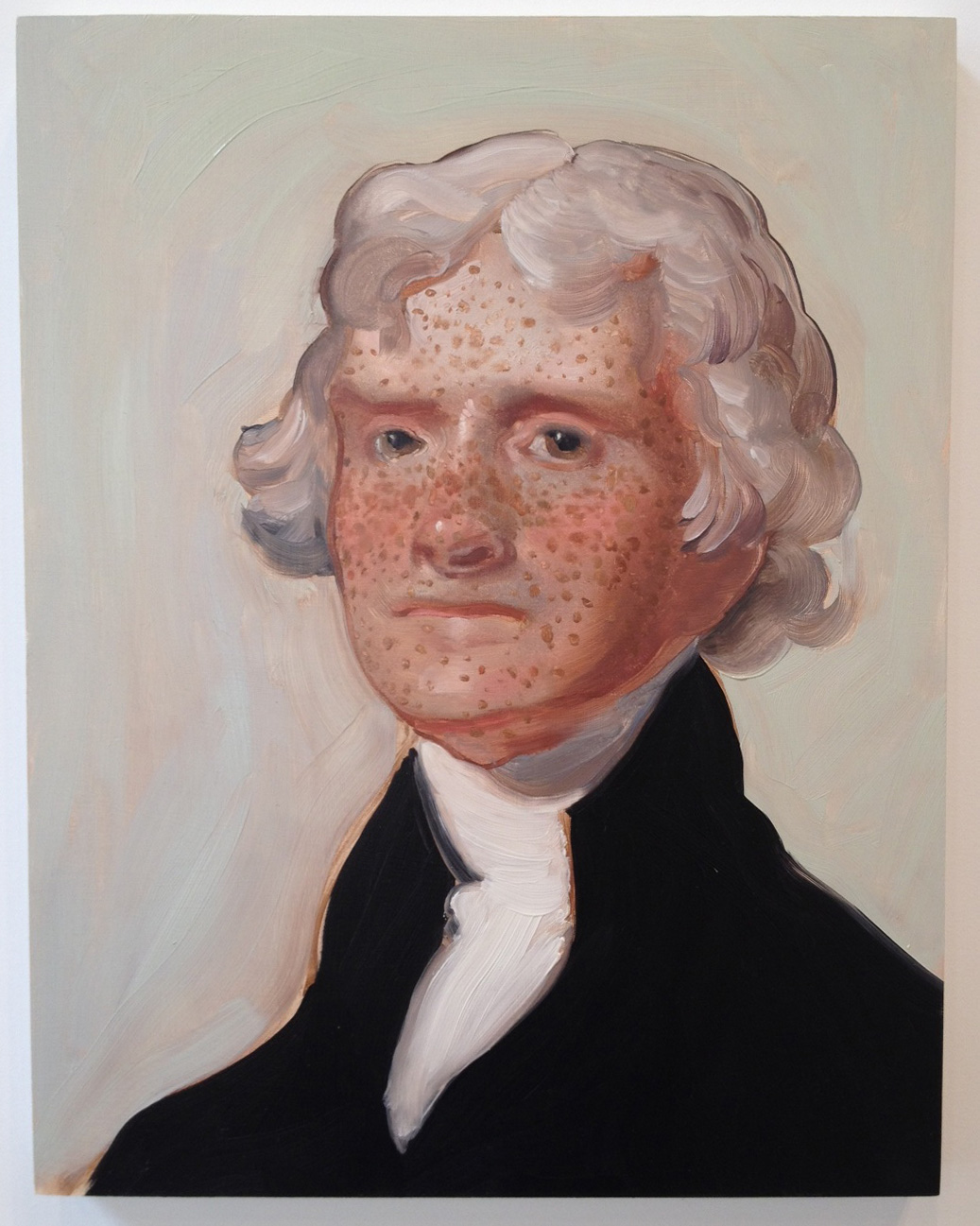
In January, David Zwirner’s 519 W. 19th St location housed one of the most expensive to install and popular site-specific artworks ever shown there. Just seven months later, this prime real estate has been turned over to gallery employees (who happen to also be artists) for the group show, ‘People Who Work Here.’ A few participants might want to keep their day jobs, but among the standouts is this oil on wood portrait of Thomas Jefferson by David Ording titled, ‘Melanin.’ Based on a freckle-free 1805 original, the painting repatriates Jefferson’s pigmentation…perhaps at the expense of his dignity? (Through Aug 10th).
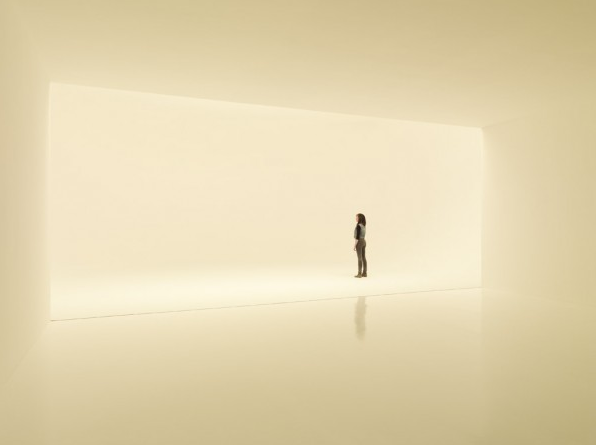
Doug Wheeler, SA MI 75 DZ NY 12, 2012, photo courtesy of David Zwirner Gallery.
Relational aesthetics took a beating last fall as critics decried participatory artworks like Carsten Holler’s three story slide at the New Museum and MoMA’s installation of Rirkrit Tiravanija’s free lunch. The visitor’s physical experience is also key to Doug Wheeler’s installation which opened today at David Zwirner Gallery and recreates a 1975 piece made in Milan by the influential So Cal ‘Light and Space’ artist. But the hushed environment, limited to ten people at a time and entered after donning white booties so as to keep the floor pristine, is all about aesthetics, and less about interrelating with your fellow gallery goers.
The lighting in the installation changes in intensity and color as it simulates the transitions from dawn to day to dusk, slowly revealing where the boundaries of the flat floored, egg-shaped room are. But even in the strongest light, it’s a strain to make out where gallery wall ends and floor begins; only the toes can tell as you feel the floor’s upward slope. The impulse is to find the spot where your senses are most confused.
Visitors who stayed in the gallery the longest this morning inched their way to the front and center of the installation and stood looking into an optical illusion – a space that appeared to extend to infinity. The sensation was like peering into a deep fog or a snowstorm (under comfortable conditions) as my perception of space kept shifting to make sense of what I was seeing.
Wheeler’s installation recalls James Turrell’s installations, in which visitors approach a shape on the wall only to realize that it’s a rectangle of recessed light. Here, the experience is more intimate – like entering into the space occupied by light rather than gazing in from the outside. Uta Barth’s photographs of light come to mind, as do Yayoi Kusama’s Infinity Nets but both treat light and infinity as more concrete subjects than Wheeler does with what he calls his ‘molecular mist.’ The scale and ambition of Wheeler’s project won’t be matched again soon in New York; catch it while you can and arrive early to avoid lines.
For more background, read Randy Kennedy’s Jan 15thNYT article.