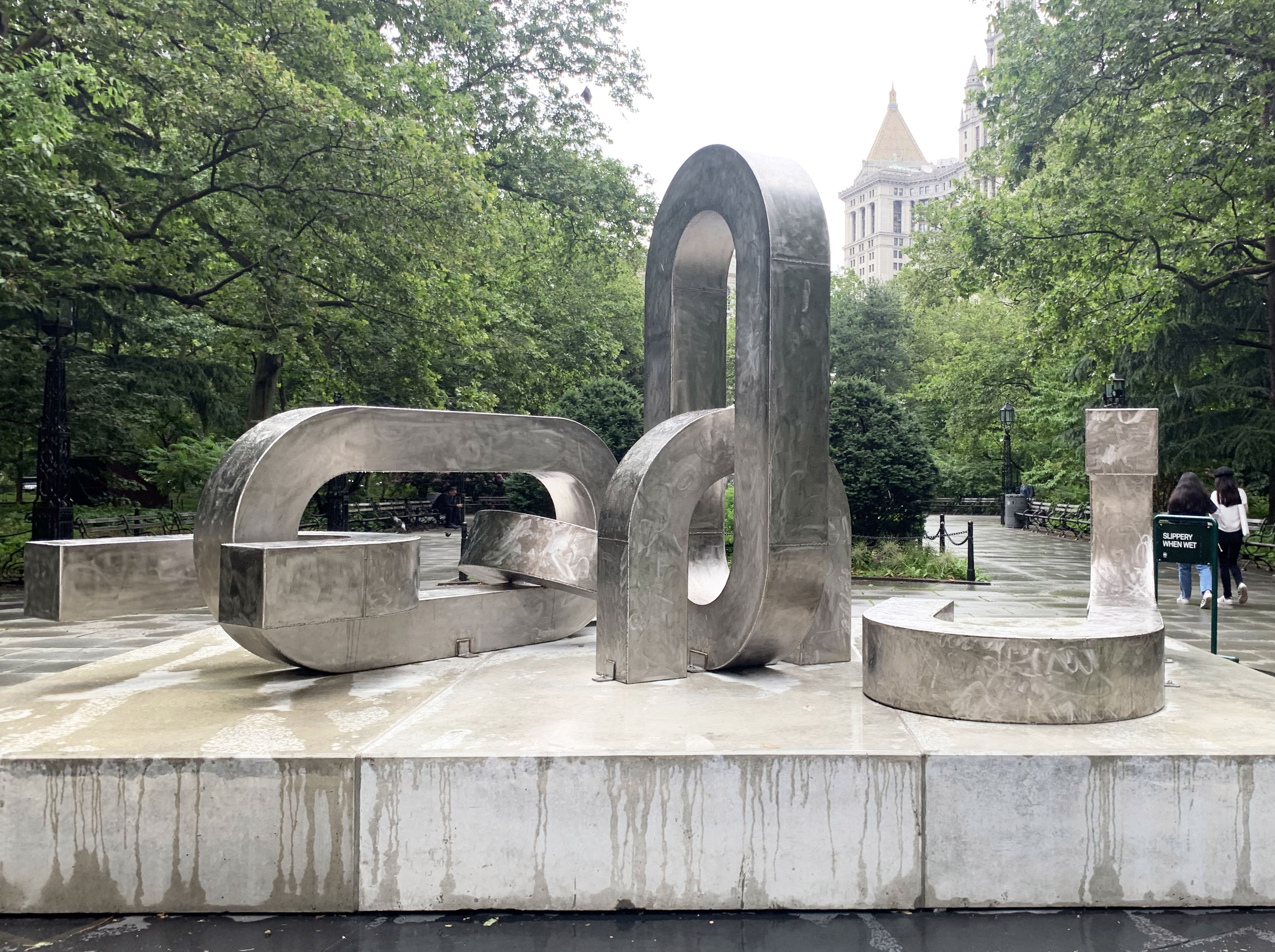
Known for semi-abstract and often small-scale sculpture including the ‘Lynch Fragments’ series recently on view at the New Museum, Melvin Edwards takes over the south entrance to City Hall Park via Public Art Fund with this large-scale sculpture depicting broken chains. Titled ‘Brighter Days’ the exhibition’s curving minimal forms enhances the attractiveness of the message displayed – freedom from bondage. (On view through Nov 28th).
Melvin Edwards, ‘Song of the Broken Chains’ in installation view of ‘Brighter Days’ at City Hall Park, summer 2021.
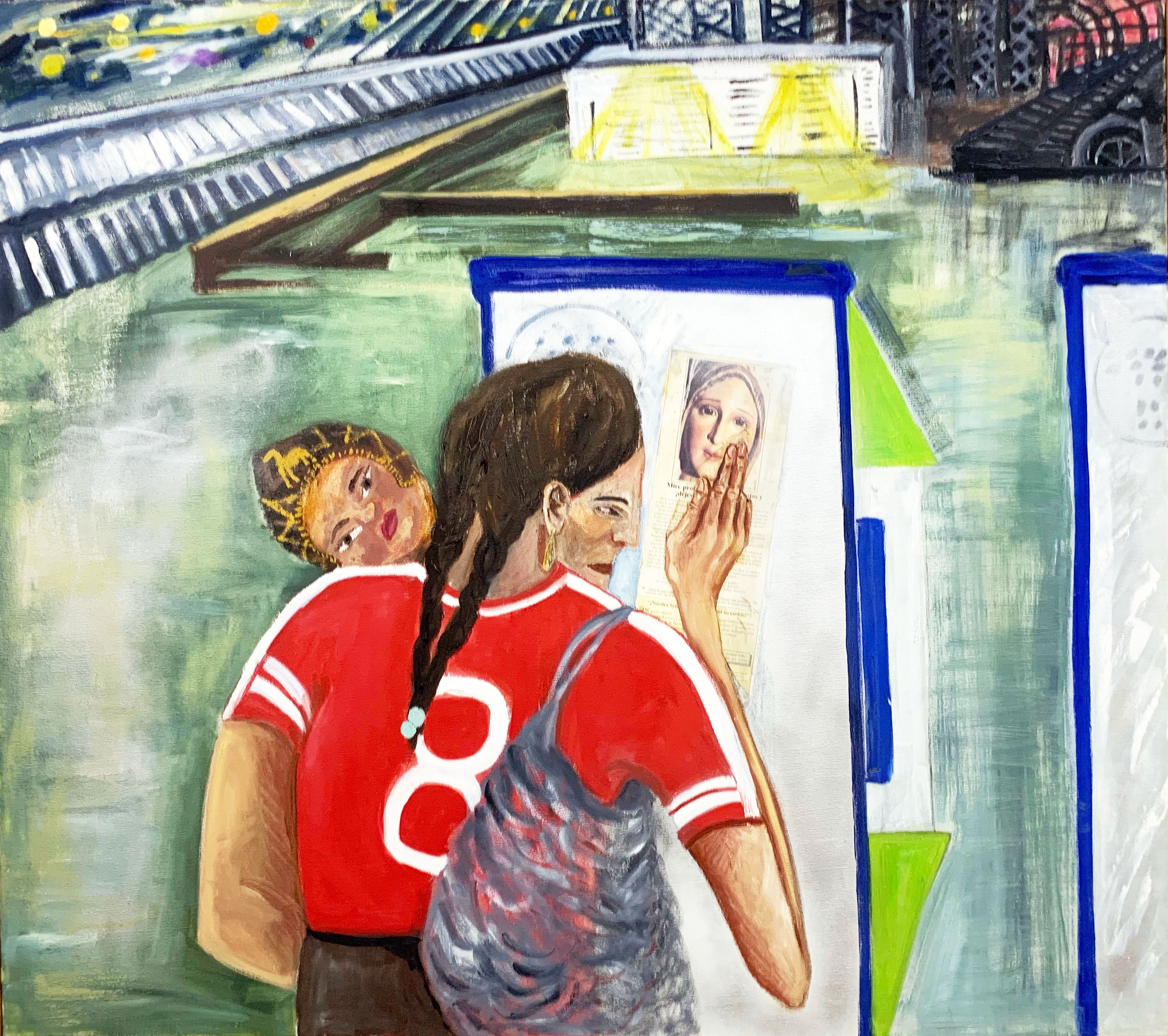
Exiled to Spain, then Brazil in the late 70s during Argentina’s military junta, Argentinian artist Marcia Schvartz returned to Buenos Aires in 1983, settling in the working class and bohemian neighborhood of San Telmo. Frank portraits of her friends and neighbors followed, along with this depiction of a mystical encounter at one of the city’s major train stations now on view in an exhibition of Schvartz’s work at Tribeca gallery 55 Walker. Downplaying the opulent and busy surroundings of the station, Schvartz concentrates on a tender encounter between a mom and an ethereal visage. (On view through Sept 7th).
Encuentro mistico constitucion (Mystical encounter at Constitution Train Station), oil on canvas and collage, 52 x 46.2 x 1 inches, 1998.
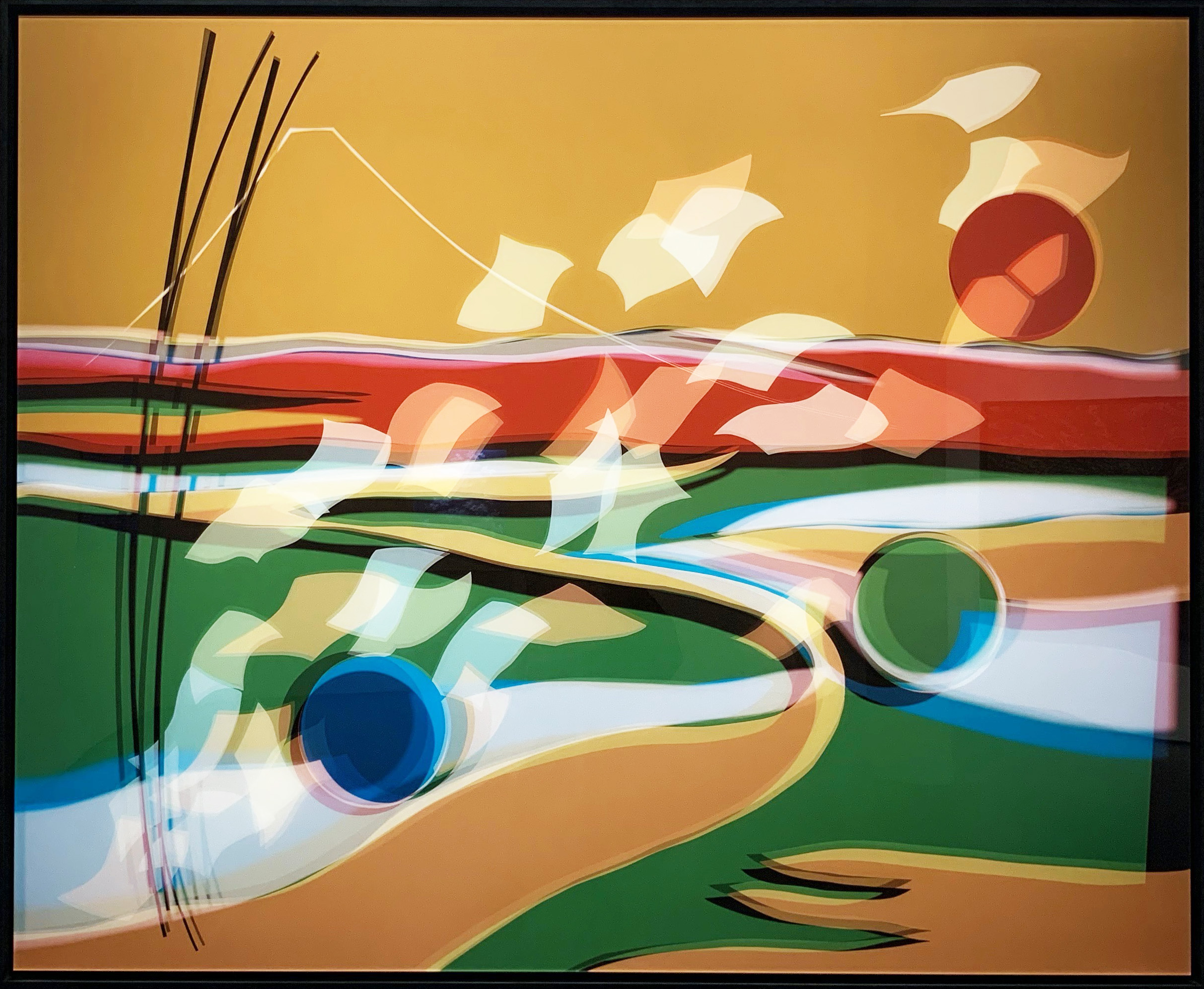
Experimental Finnish photographer Niko Luoma recreates a scene from an iconic 19th century woodblock print by Hokusai in this photographic image made from multiple exposures at Bryce Wolkowitz Gallery. Whereas Hokusai pictures travelers battling the wind – holding on to their hats or losing a stack of paper to a strong gust – Luoma’s version abstracts the scene, creating mood with strong color and foregrounding the escaping pieces of paper as they take flight. (On view in Chelsea through Aug 27th.
Niko Luoma, Self-titled Adaptation of Travelers Caught in a Sudden Breeze at Ejiri (1832), Archival pigment print, diasec, frame, 2019.
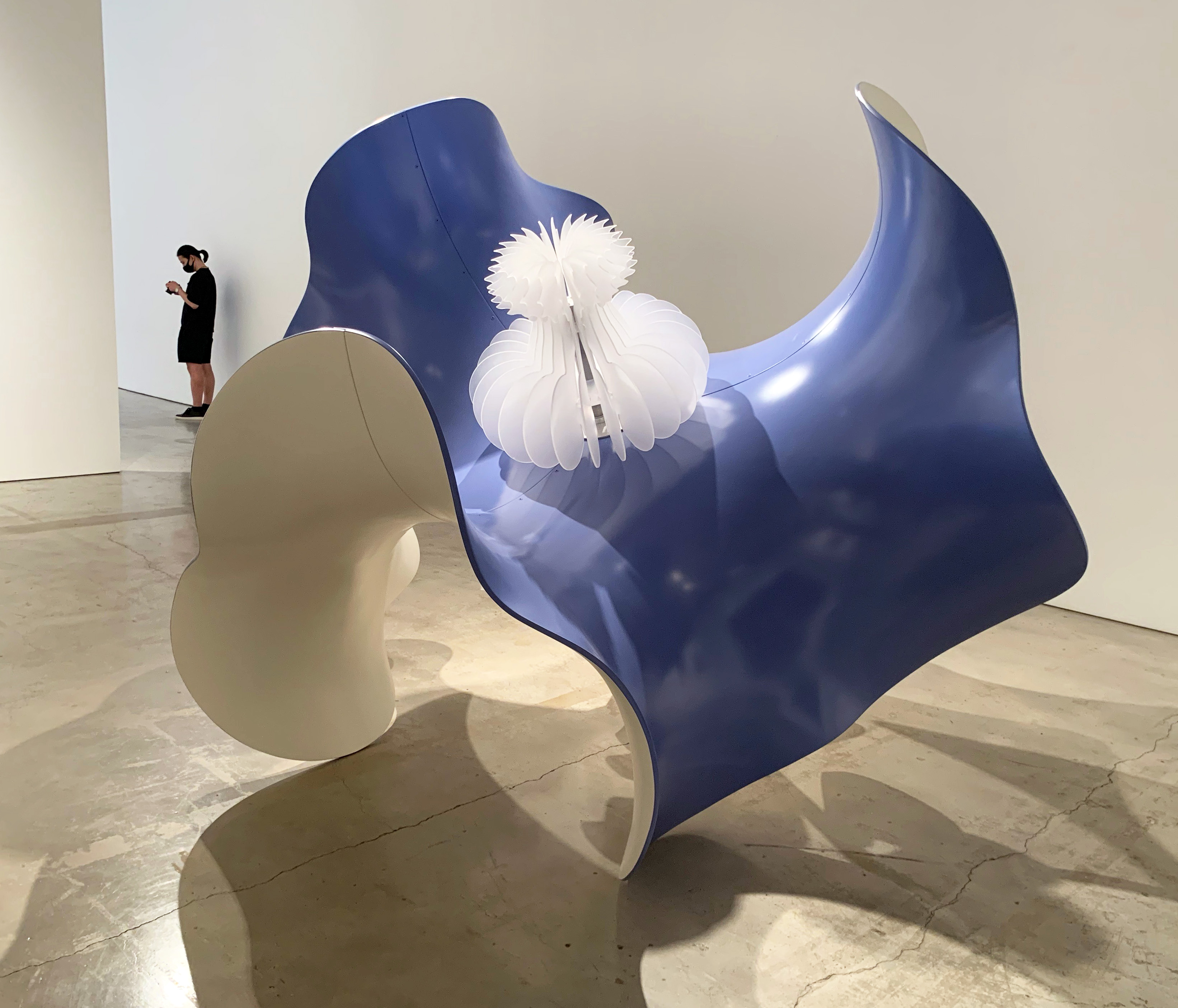
Alice Aycock’s sizeable ‘Wavy Enneper’ sculpture in Marlborough Gallery’s summer group show is tantalizingly familiar, resembling an underwater organism or a fungus. However, its enticingly curving, dynamic form was actually inspired by a diagram of a self-intersecting surface introduced by 19th century German mathematician Alfred Enneper. (On view in Chelsea through Sept 11th).
Alice Aycock, Wavy Enneper, fiberglass, aluminum and acrylic, ed of 3 + 1AP, 84 x 116 3/8 x 102 inches, 2011.
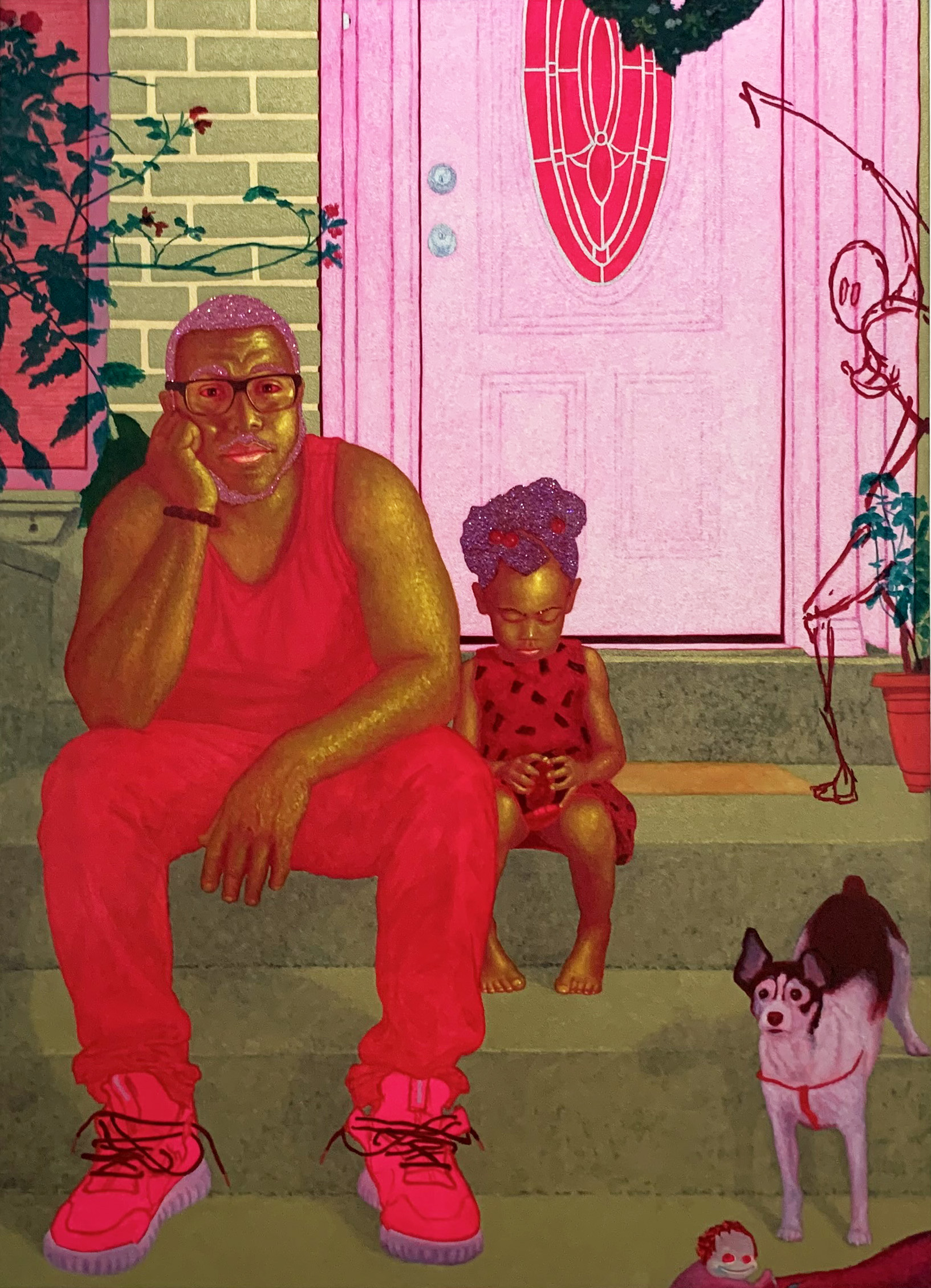
Arcmanoro Niles’ first solo show at Lehmann Maupin Gallery opens with this oil, acrylic and glitter image of a contemplative man, raising his eyebrows at the viewer or maybe at life itself. Titled ‘Hey Tomorrow, Do You Have Some Room For Me: Failure Is A Part Of Being Alive,’ the show looks hopefully to the future while acknowledging the challenges and temptations of life now. With this image, Niles takes a scene from everyday life and turns it electric with red and pink tones and glitter accents; at the bottom and right, he adds sketchily drawn figures that represent the pleasuring seeking id, begging the question of how these interlopers will effect the tranquil domestic life pictured. (On view in Chelsea through Aug 27th.)
Arcmanoro Niles, I Thought Freedom Would Set Me Free (And You Gave Me A Song), oil, acrylic and glitter on canvas, 70 x 50.5 x 2 inches, 2020.
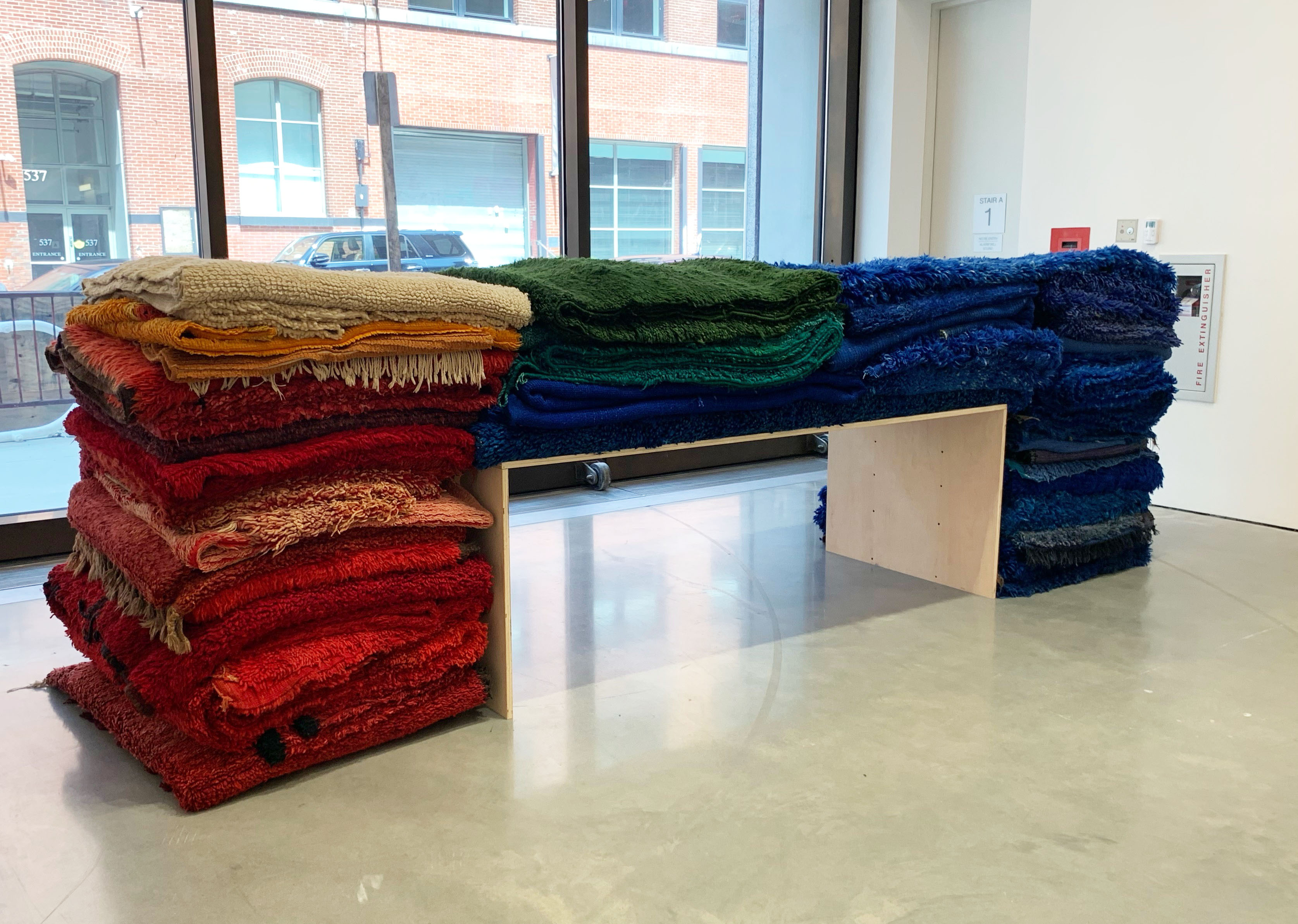
Is abstraction less political than representational art? ‘Hiding in Plain Sight,’ Pace Gallery’s summer group exhibition, argues for abstract art’s capacity to embody resistance. Yto Barrada’s ‘Geological Time Scale,’ a selection of monochrome Moroccan rugs arranged around a custom-built table, recalls how an early 20th century French general’s catalogue of traditional rugs excluded single-color pieces, his bias impacting his audience’s understanding of Moroccan textile production. (On view in Chelsea through Aug 20th).
Yto Barrada, Geological Time Scale (assembled group of primarily monochrome Beni Mguild, Marmoucha, and Ait Sgougou pile rugs from Western Central, Middle Atlas, Morocco), Mid-20th Century, mixed media, dimensions variable, 2015.
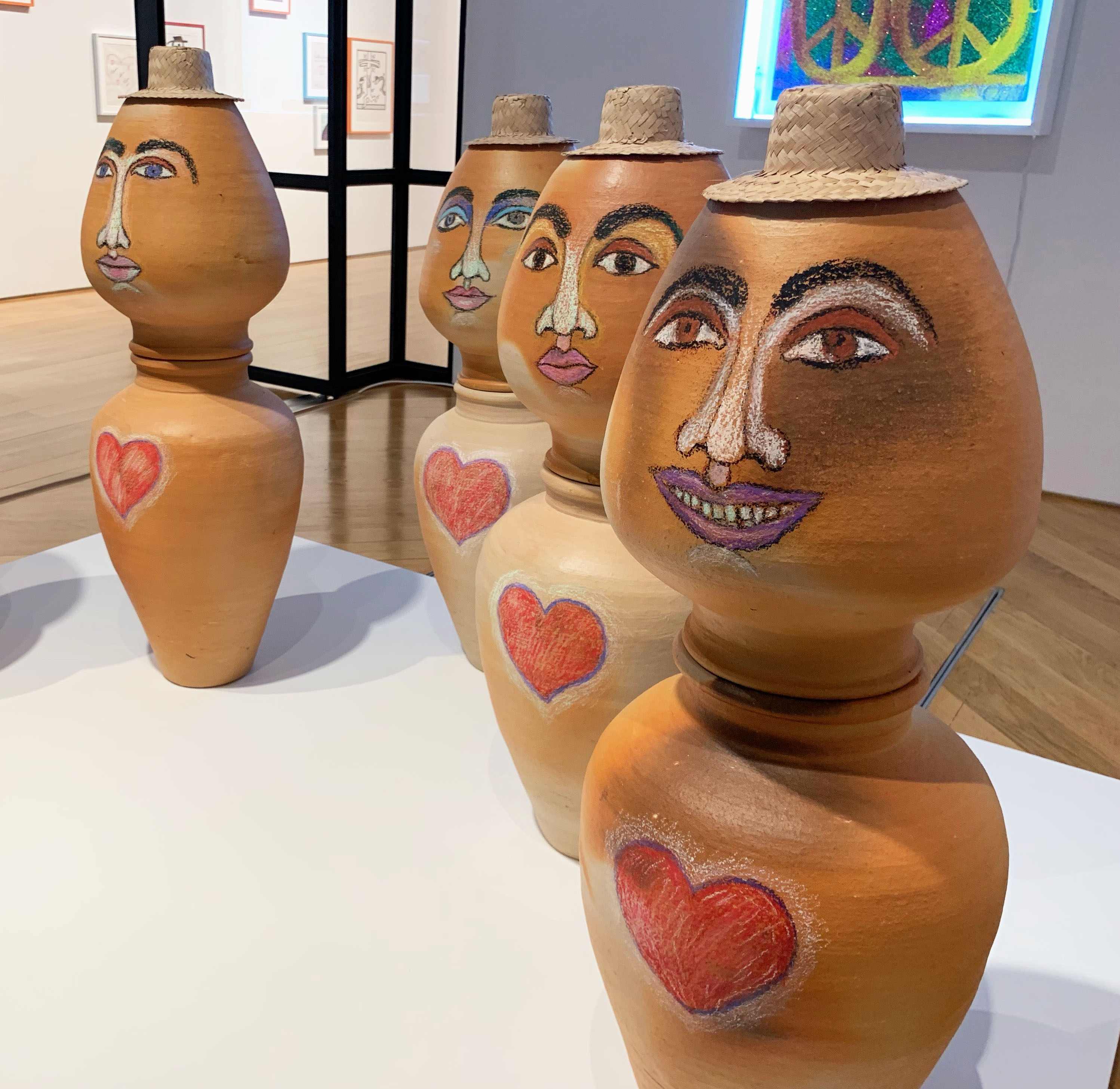
Brazilian artist Marepe’s socially conscious practice thrives on contrasts between city and country, rich and poor, etc.; each of these five assemblages in Anton Kern Gallery’s 25-year anniversary show is collectively titled ‘caipira’ or ‘bumpkins’ and features a prominent heart drawn in pastel. Set up like pins waiting to be bowled down, these unsuspecting folk appear to be especially vulnerable. (On view at 16 East 55th Street through Aug 20th).
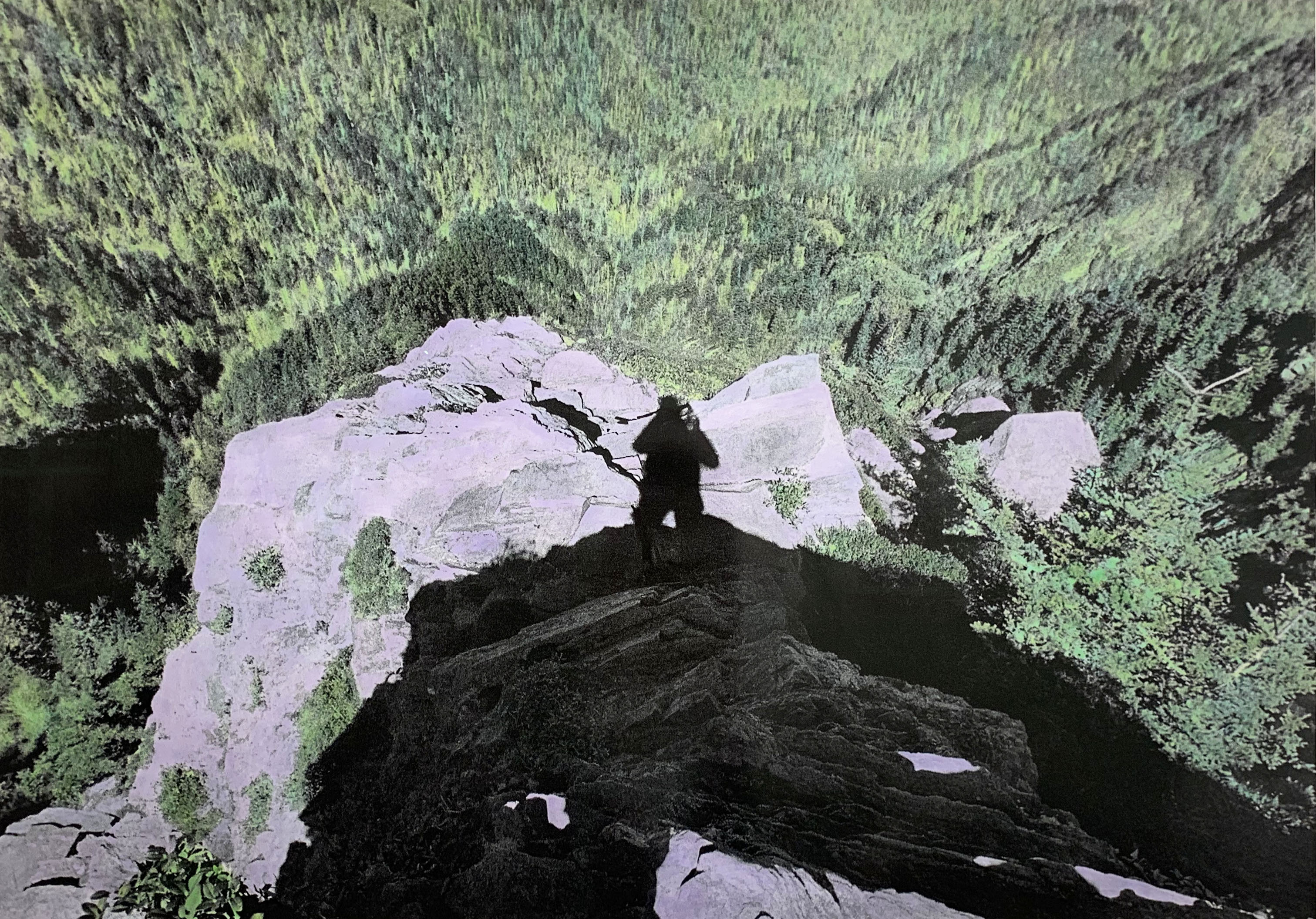
Photography came of age in the 19th century western landscape and, more recently, the western U.S. has been transformed by the effects of climate change says artist Brea Souders, whose new series ‘Vistas’ at Bruce Silverstein Gallery explores representations of the region created using Google Photo Sphere. Each found photo features a distorted shadow, Google’s algorithm having removed images of people. As individual agency meets global dissemination of images taken in remote locations, the scale and experience of nature shifts dramatically. (On view in Chelsea through Aug 20th).
Brea Souders, Untitled #22 (from Vistas), unique archival pigment print with watercolor, 40 x 56 inches, 2020.
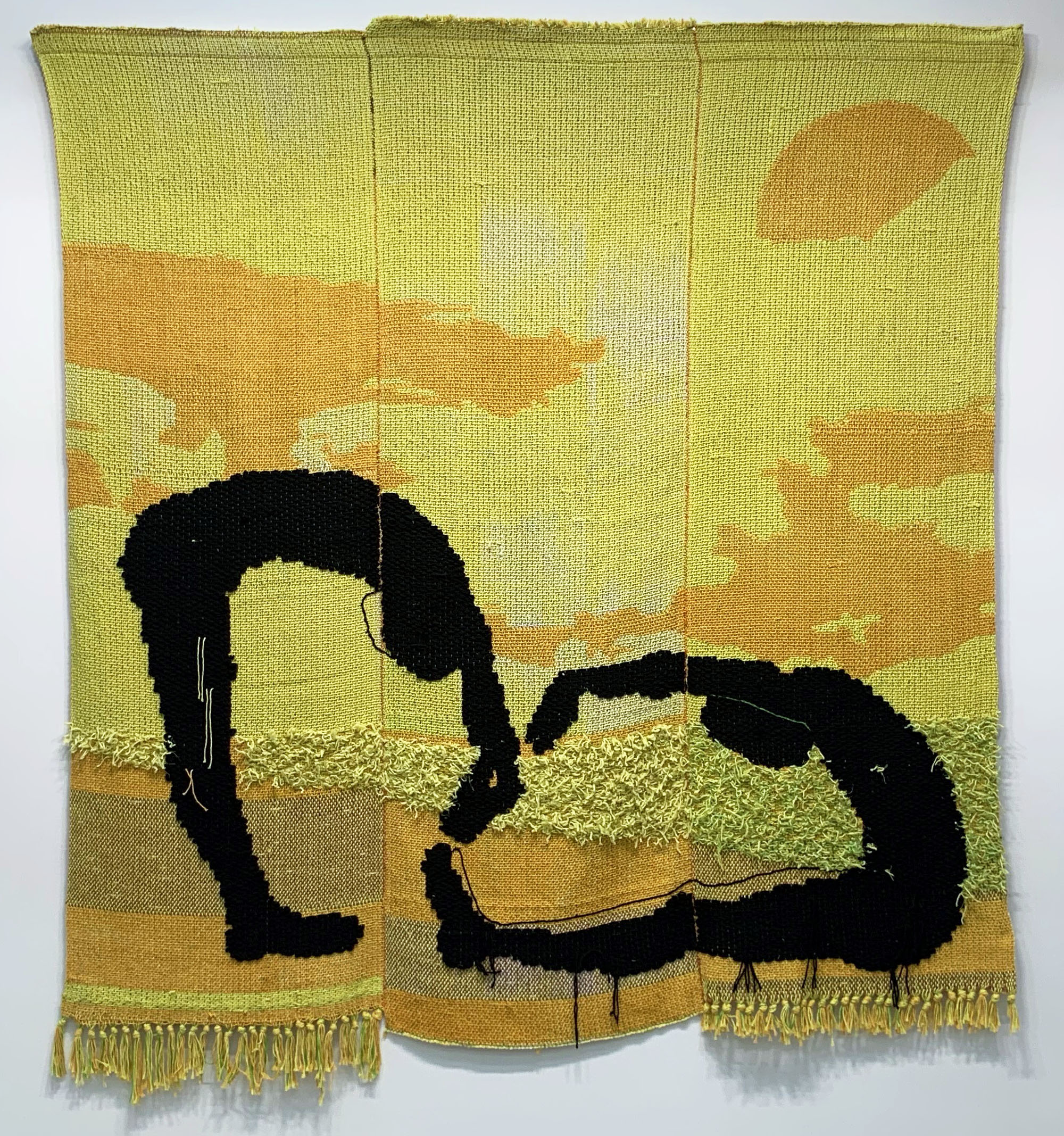
Queer community in natural settings inspired Diedrick Brackens latest show of vibrant weavings at Jack Shainman Gallery’s 20th Street location. Here, two figures connect to each other via the closeness of their echoing silhouettes as they create organic shapes in harmony with the landscape around them. (On view through August 20th).
Diedrick Brackens, Summer Syllables, woven cotton and acrylic yarn, 86 x 80 inches, 2021.
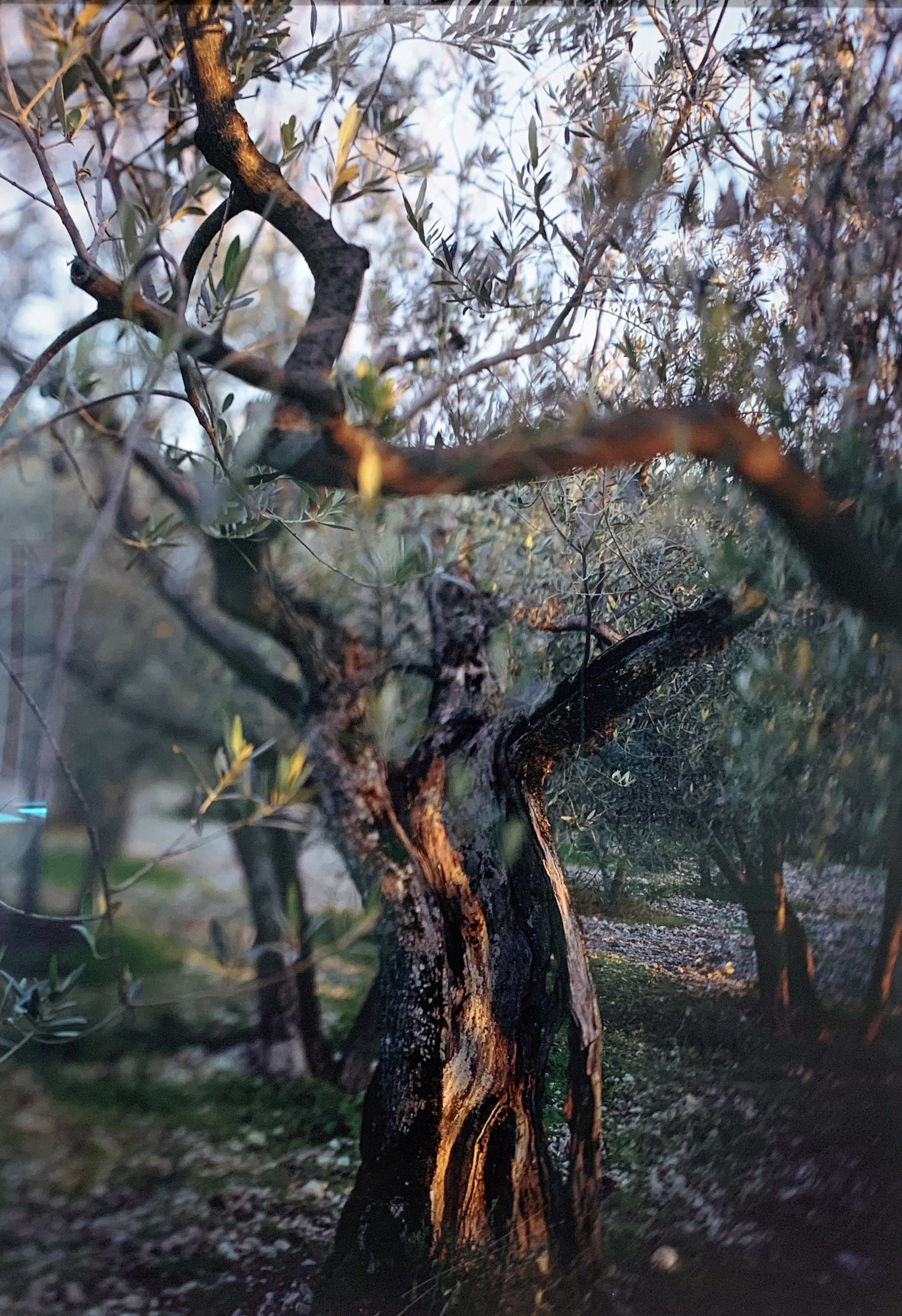
JoAnn Verburg’s recent photos at Pace Gallery of olive groves were taken in California, Israel and Italy, but it’s not always easy to guess which location is which. Calling the images a ‘contemplative respite’ from the demands of everyday city life, Verburg steps outside of the specifics of place and time to present a meditation on time and beauty in nature. (On view in Chelsea through Aug 20th).
JoAnn Verburg, BETWEEN, pigment print mounted to Dibond, 57 1/8 x 40 1/8,” 2021.
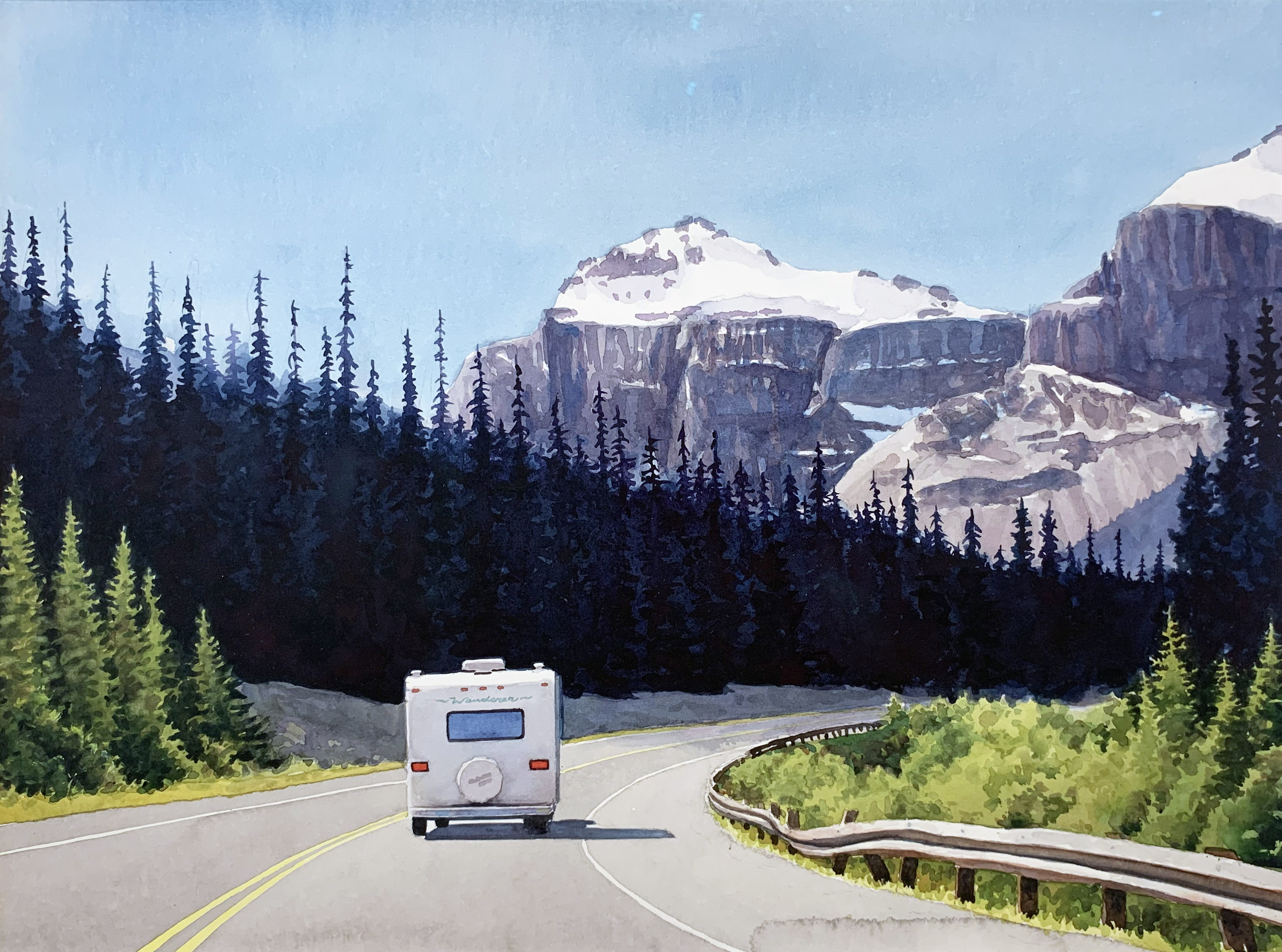
‘Great Divide,’ the title of this watercolor by Tim Gardner at 303 Gallery, could refer to U.S. politics or the Rockies; chiefly, it taps into mythologies of the lone wanderer. German Romantic painter Caspar David Friedrich’s iconic solitary figure on a cliff’s edge comes to mind, now behind the wheel of a gas guzzler and protected by guardrails. The restorative qualities of nature, experienced particularly during the pandemic, no doubt inspired Gardner. At the same time, the complexities of contemporary relationships to nature make the image enticing and uncomfortable. (On view in Chelsea through Aug 13th).
Tim Gardner, Great Divide, watercolor on paper, 15 x 19 7/8 inches, 2021.
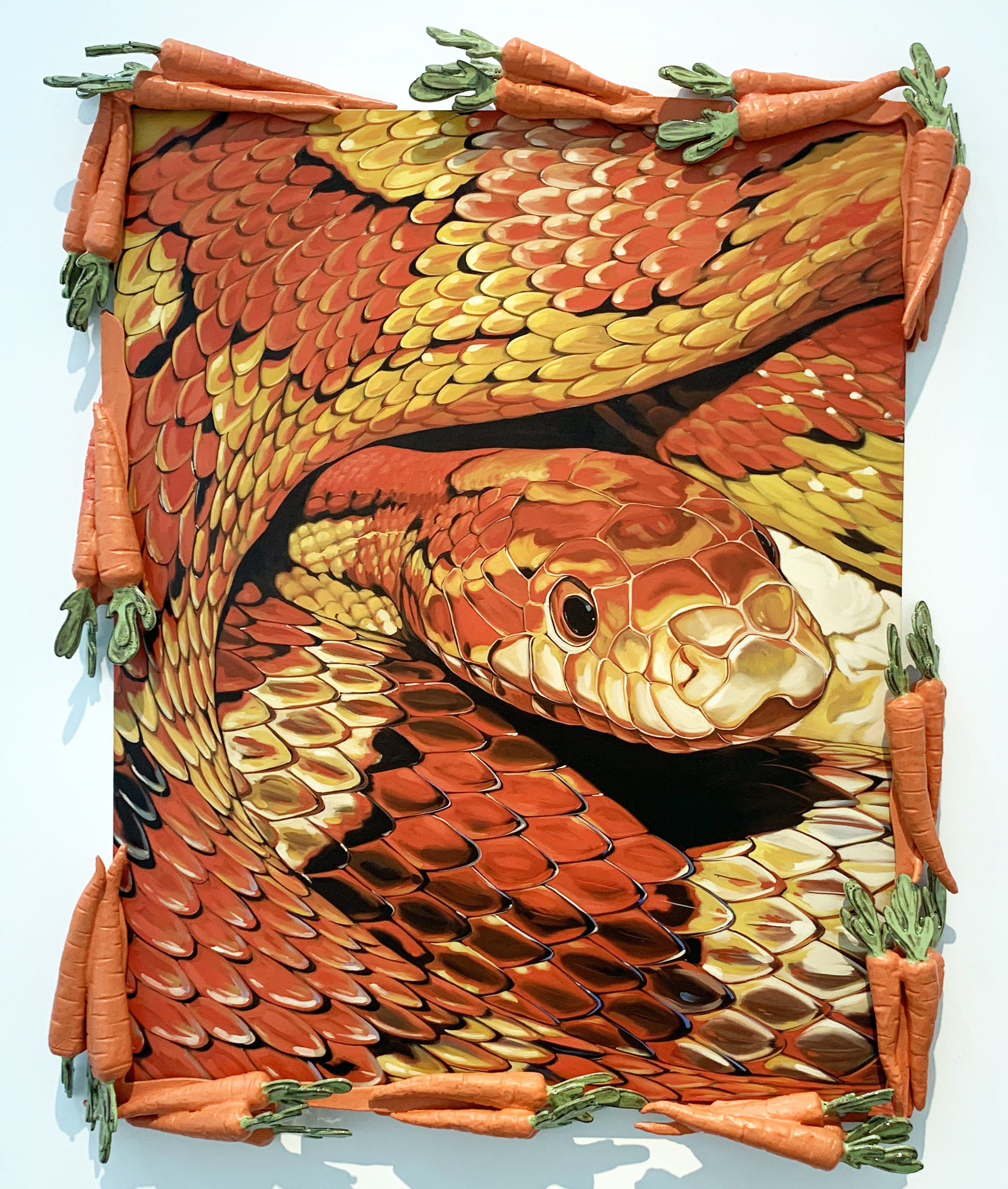
The unlikely combination of a snake and carrots and the media of painting and ceramics in Stephanie Temma Hier’s sculpture/painting at Kasmin Gallery both attracts and puzzles. Hier’s diverse combinations of imagery have included ceramic greyhounds with painted blueberries and sculptural lips enclosing a 2-D image of tulips; generally her juxtapositions prompt consideration of how the natural world has been mediated by human consumption. Titled ‘At the Root of the Curve,’ this painting links root vegetables to sinuous forms via algebra terminology. (On view in Chelsea through Aug 13th).
Stephanie Temma Hier, At the Root of the Curve, oil on linen with glazed stoneware sculpture, 67 x 57 inches, 2021.
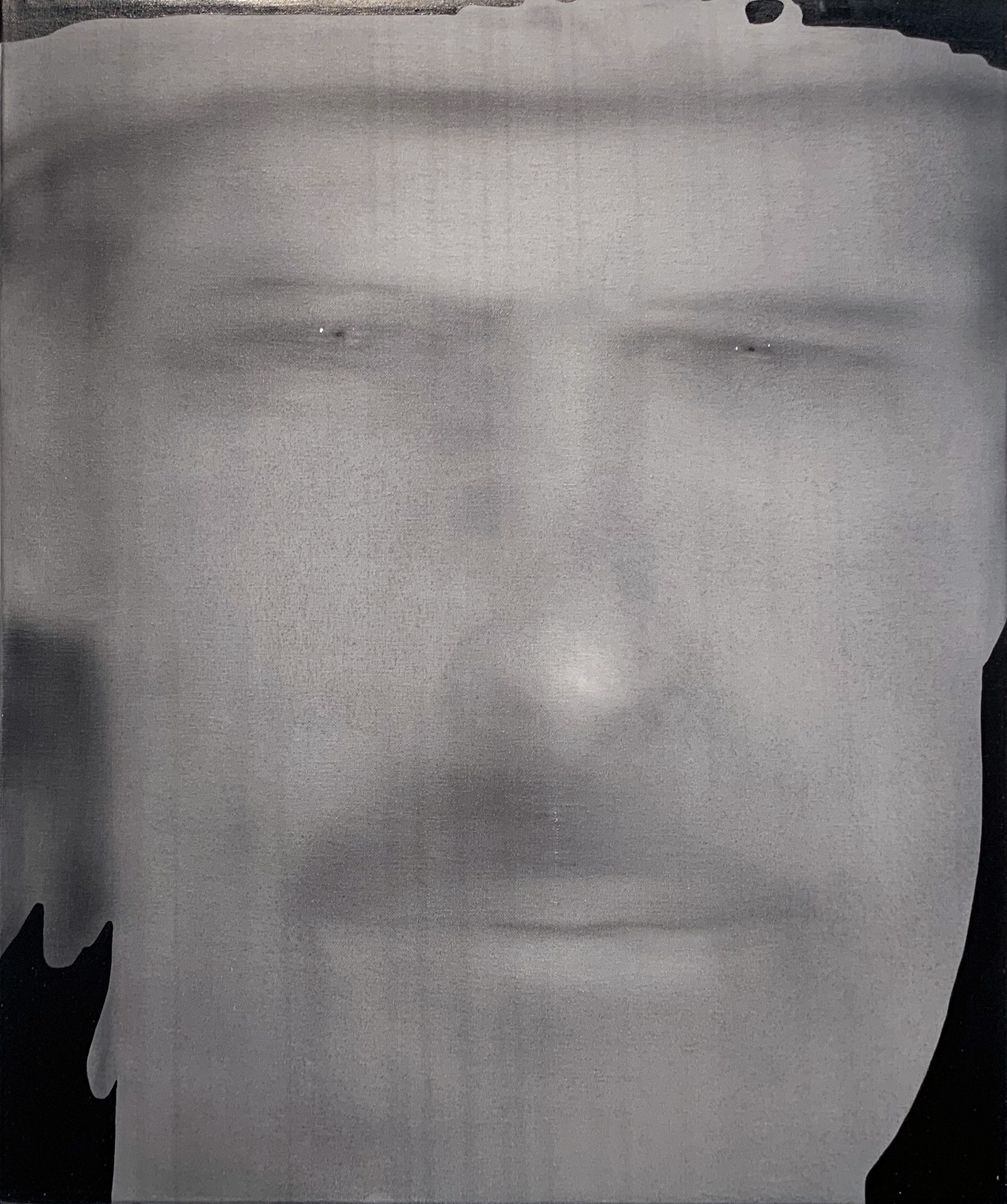
Jingze Du’s distorted figures recall staticky interference on an old black and white tv monitor, prompting viewers to consider what mediates the images we consume. Though painting in oil on canvas, Du’s animals, famous actors and sports stars reference digital manipulation. Du cites Kayne West’s vocal distortions and the shifting skull in Hans Holbein’s famous 16th century painting ‘The Ambassadors’ as further sources of inspiration. In this painting at The Hole’s new Tribeca location, Du does strange and captivating things with Brad Pitt’s classic squint. (On view through Aug 8th).
Jingze Du, Brad, oil on canvas, 23.5 x 20 inches, 2021.