Gareth Cadwallader in Group Show at the Flag Art Foundation

Inspired by moments of tenderness, Flag Art Foundation’s 35 artist summer group show explores a variety of expressions of affection, from a child asleep in a parent’s arms to a beautifully hand-stitched scene of self-care.  British artist Gareth Cadwallader’s Orange Juice, a small oil painting with a lot of detail, suggests we pause to appreciate the pleasures of the natural world, from the orange that produces juice to the jumble of plant life to the left, topped by two bird-of-paradise. (On view in Chelsea through Aug 13th.  Masks and social distancing required).
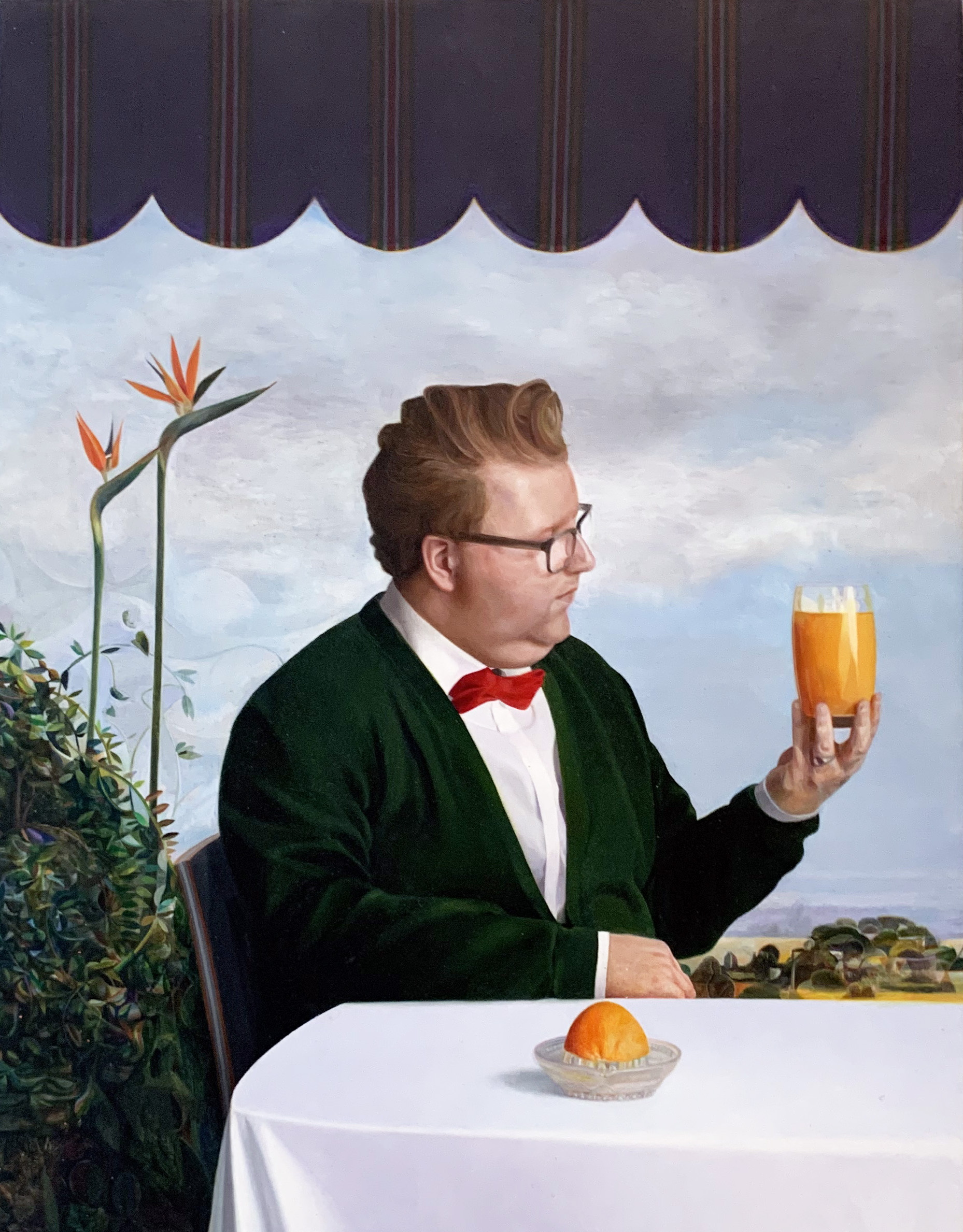
Gareth Cadwallader, Orange Juice, oil on canvas, 32 x 24.8cm, 2015.

Adriana Varejao at Gagosian Gallery

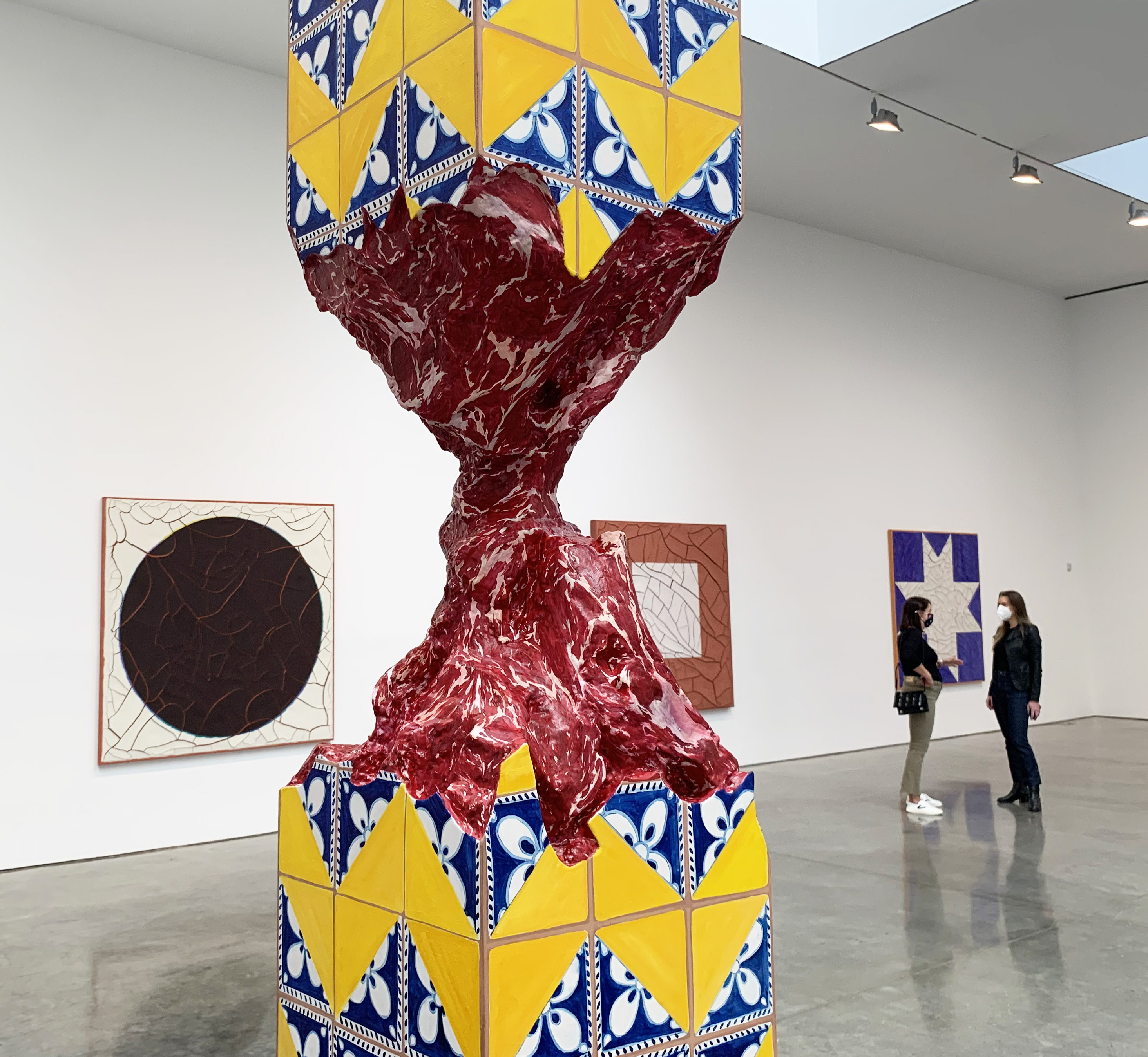
Tiles influenced by Moorish design and imported from Portugal to Brazil have long inspired Brazilian artist Adriana Varejao’s meditations on cultural and ethnic hybridity.  Now focusing on Mexican Talavera tiles, Varejao’s new work at Chelsea’s Gagosian Gallery considers how the tiles relate to indigenous, Hispanic, Italian and Chinese ceramic production.  At the center of the gallery, columns covered in tile are revealed to have meat-like cores that recall the white veined, red marble columns of Baroque architecture.  For Varejao, Baroque culture – and the ‘chaotic pulsing matter’ of the columns – is predicated on accepting difference and embracing multiple identities.  (On view in Chelsea through June 26th. Masks and social distancing required.)

Adriana Varejao, Talavera Meat Ruin I, oil on aluminum and polyurethane, 145 11/16 x 15 ¾ x 15 ¾ inches, 2021.

Pedro Reyes, Tlali at Lisson Gallery

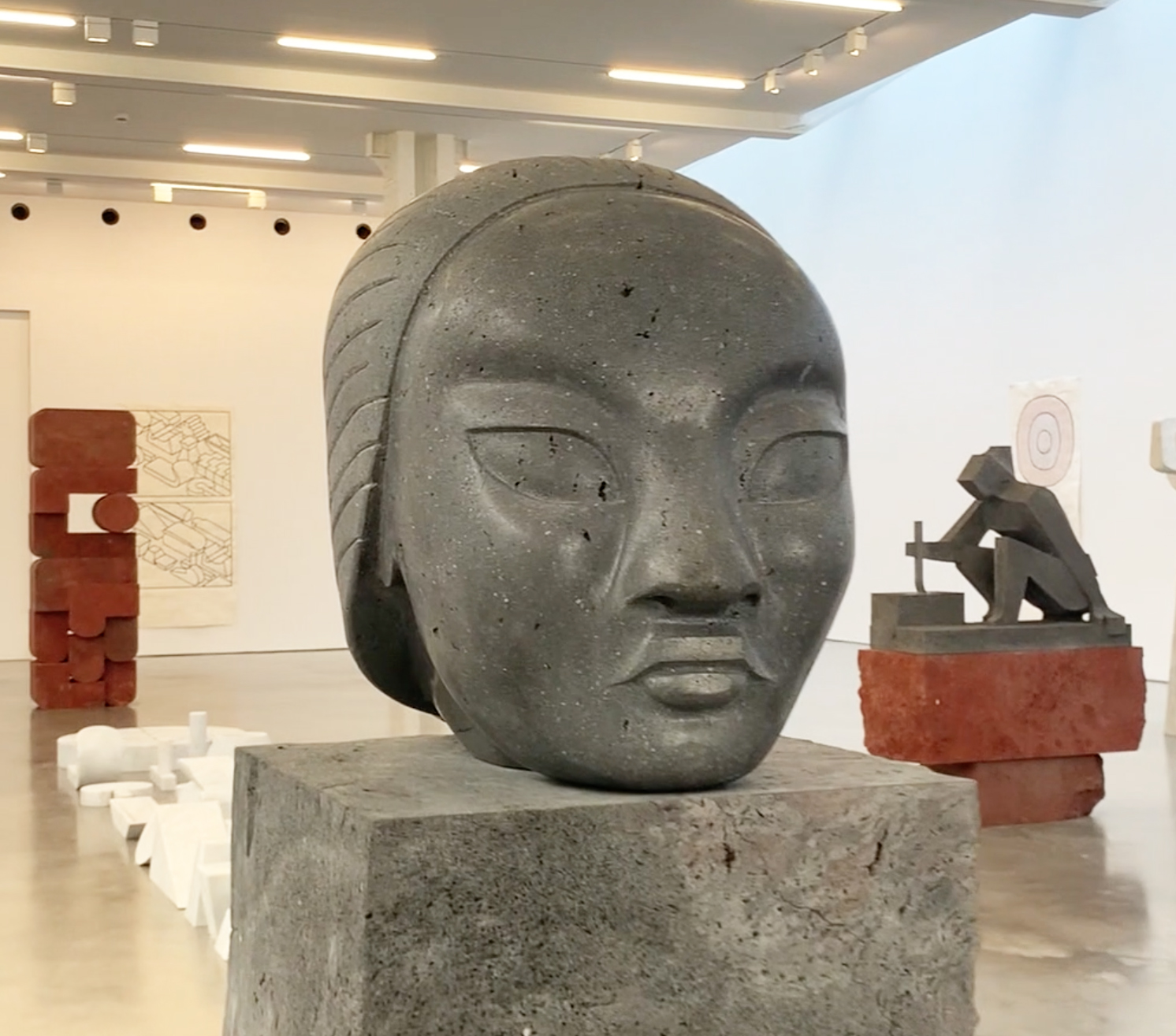
Striking in her streamlined beauty, ‘Tlali’ greets visitors to Chelsea’s Lisson Gallery, where Mexico City based artist Pedro Reyes’ latest solo show draws inspiration from pre-Columbian aesthetics.  Translated as ‘earth,’ Tlali has been created in volcanic stone, a material that Reyes links not just to the land but to sustenance (as it is used to create mortar and pestles).  In this photo, behind Tlali, a scribe represents the preservation of knowledge while an abstract tower of reddish tezontle stone was inspired by temple supports resembling Toltec warriors. (On view through June 18th.  Masks and social distancing required.)

Pedro Reyes, Tlali, volcanic stone, 32 ¼ x 26 ¾ x 39 ¼ inches, 2020.

Natalie Frank at Salon94

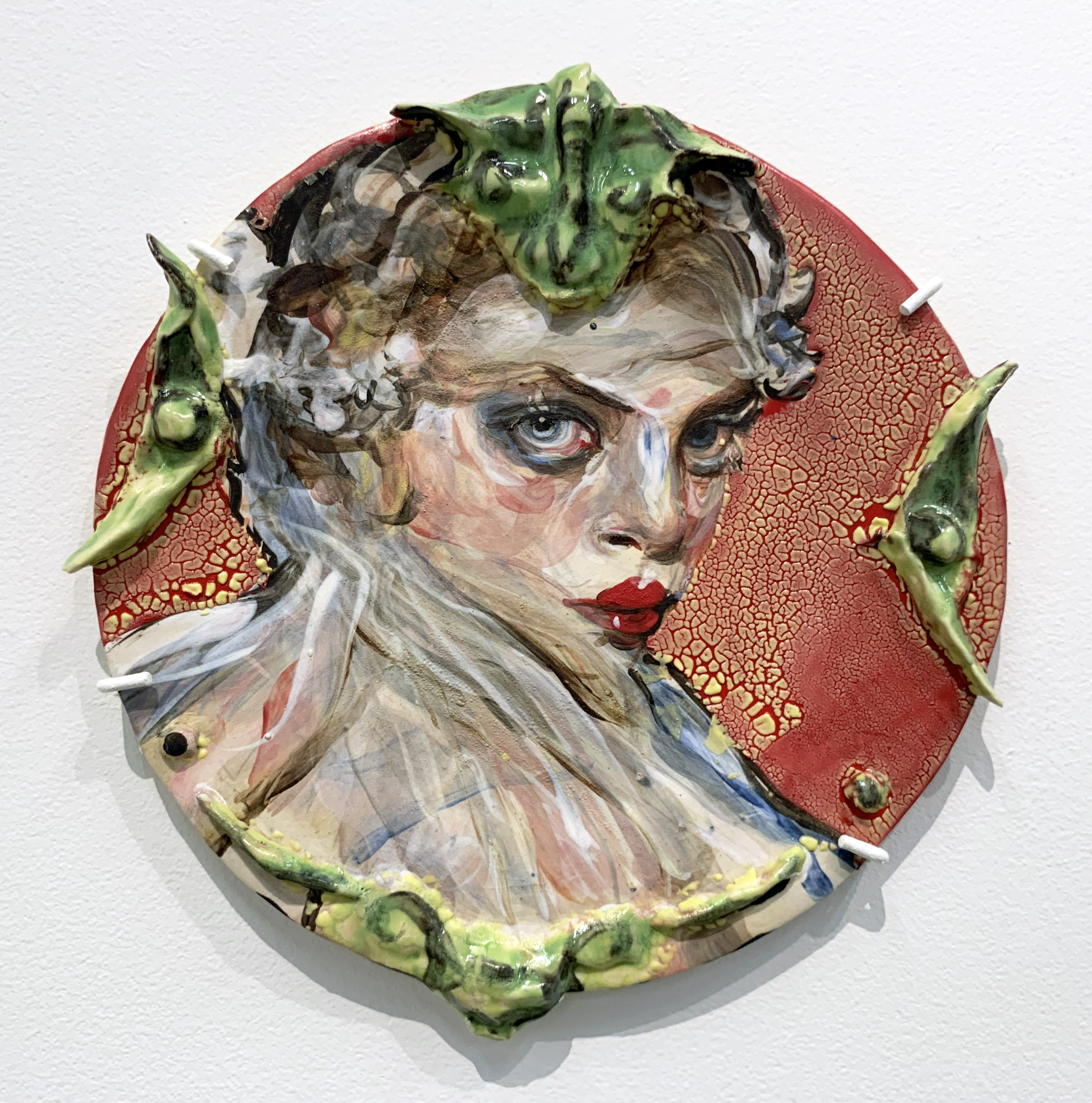
Tiny at just 8 x 8 inches, this underpainted and glazed ceramic sculpture has a powerful presence in Natalie Frank’s solo exhibition at Salon94’s Lower East Side location.  ‘Woman, Bride,’ is one of many female figures depicted in paper pulp paintings or ceramic sculpture who appears to know her own mind and is prepared to use it.  Whether Frank is partnering with Ballet Austin on a performance, illustrating books with her expressive paintings, or crafting sculpture, the dynamism and daring of her imagined characters stands out.  (On view on the Lower East Side through May 22nd.)

Natalie Frank, Woman, Bride, glazed ceramic, 8 x 8 x 1 inches, 2021.

Ugo Rondinone at Gladstone Gallery

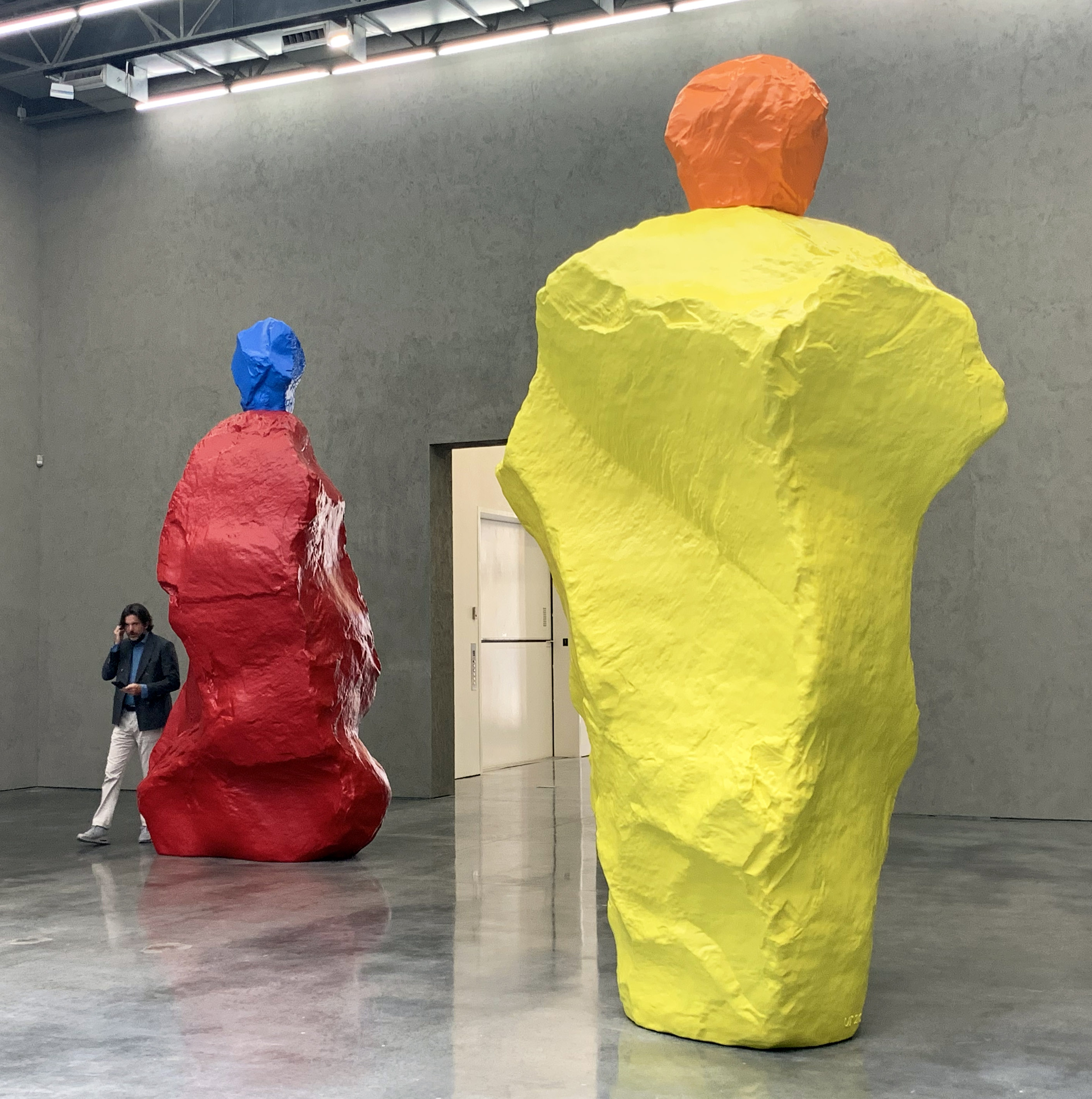
Like his colossal humanoids made of rough-hewn blocks of stone at Rockefeller Center in 2013 or his colorful rock stacks located outside of Las Vegas, Ugo Rondinone’s towering sculptures at Gladstone Gallery offer a transformative experience.  Titled ‘nuns + monks,’ the three figures are scaled up bronze versions of stones broken in ways that resemble figures in voluminous ecclesiastical garments.  Rondinone explains that nuns and monks exist as ‘vessel and beacon, human body and mystical source,’ and therefore represent the possibility of new metaphorical interpretation. (On view in Chelsea through June 18th.  Masks and social distancing are required.)

Ugo Rondinone, Installation view of ‘nuns + monks’ at Gladstone Gallery, May 2021.

Wangechi Mutu at Gladstone Gallery

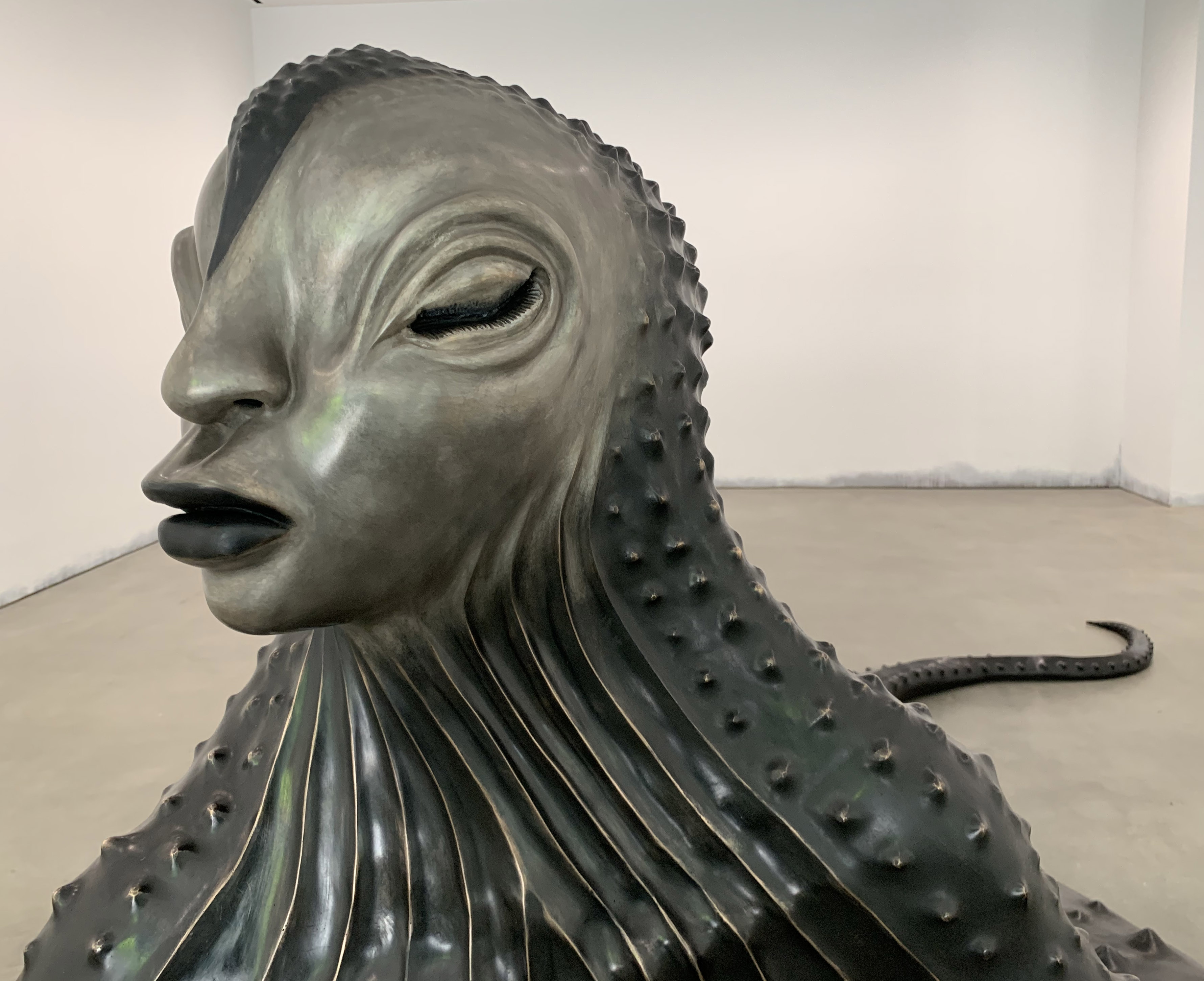
Twelve feet in diameter and commanding Gladstone Gallery’s entire front room, Wangechi Mutu’s bronze ‘Mama Ray’ is a force to be reckoned with.  Rising up on her wing-like fins to meet visitors, this regal aquatic creature is only head-high but radiates power.  Mutu’s bronze sculptures, which include four created for the Met Museum’s prestigious façade commission in 2019, introduce new mythologies devised, the artist explains, to picture new heroes, courage, beauty and love. (On view through June 19th. Masks and social distancing are required.)

Wangechi Mutu, detail of Mama Ray, bronze, 65 x 192 x 144 inches, 2020.

Josiah McElheny at James Cohan Gallery

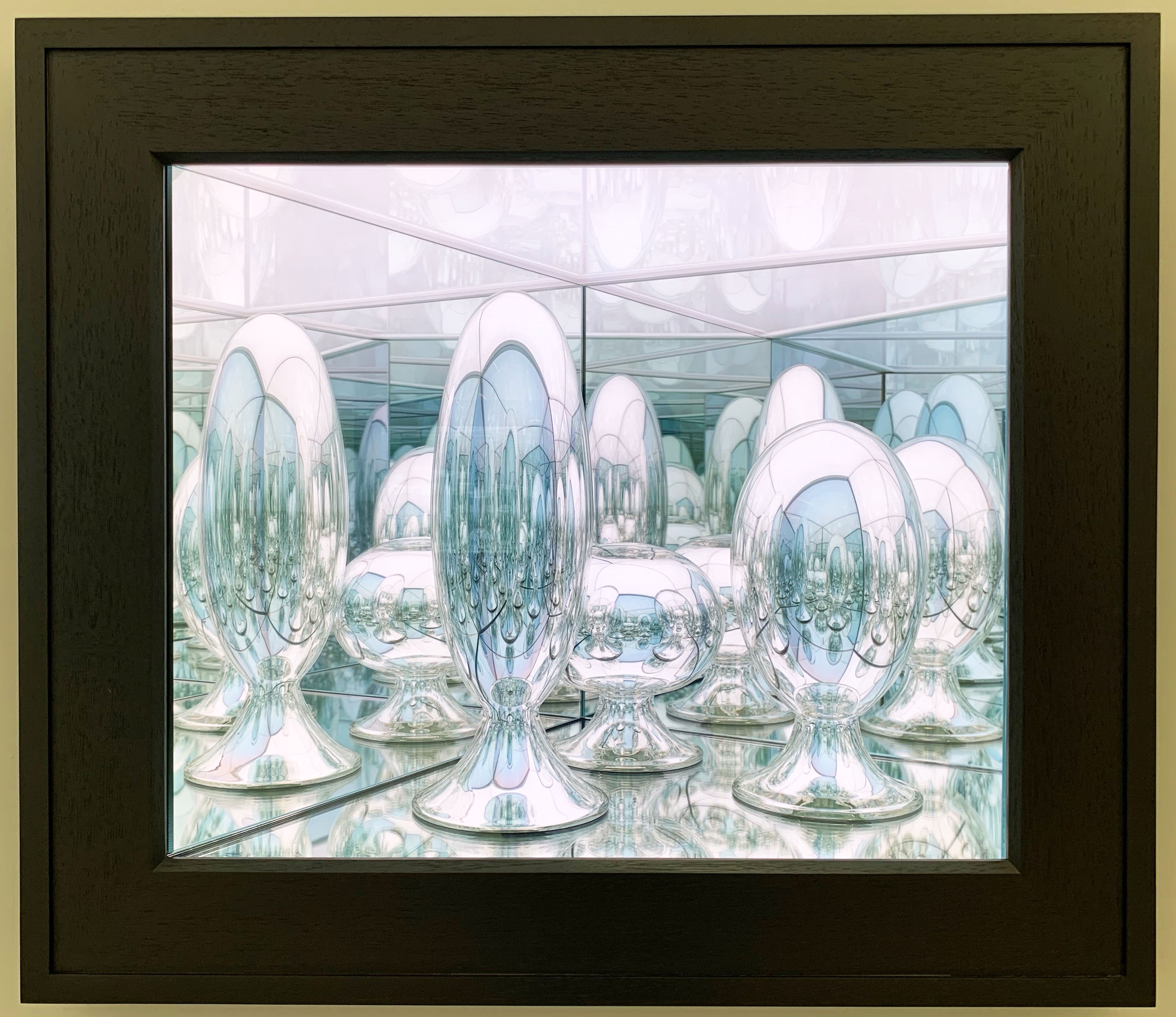
Josiah McElheny’s current show of blown glass sculpture at James Cohan Gallery’s Lower East Side location was inspired by a set of references as complex as his mirrored environments but dazzles even without the background info.  Prompted by a library imagined by Argentinian writer Jorge Luis Borges, McElheny creates vessels intended to house various forms of knowledge.  In this sculpture, McElheny explains that oblong shapes embody the idea of atoms in motion and the planet on its elliptical orbit.  Though we don’t literally see a library of knowledge relating to elliptical motion, each sculpture inspires wonder at the possibilities of what we may have not yet considered.  (On view on the Lower East Side through June 12th. Masks and social distancing are required).

Josiah McElheny, From the Library of Elliptical Motion, Hand-blown, cut, polished, and mirrored glass; low-iron mirror and two-way mirror; electric light; walnut frame, 24 1/4 x 28 x 20 1/2 in, 2021.

Shirazeh Houshiary, Feel at Lehmann Maupin

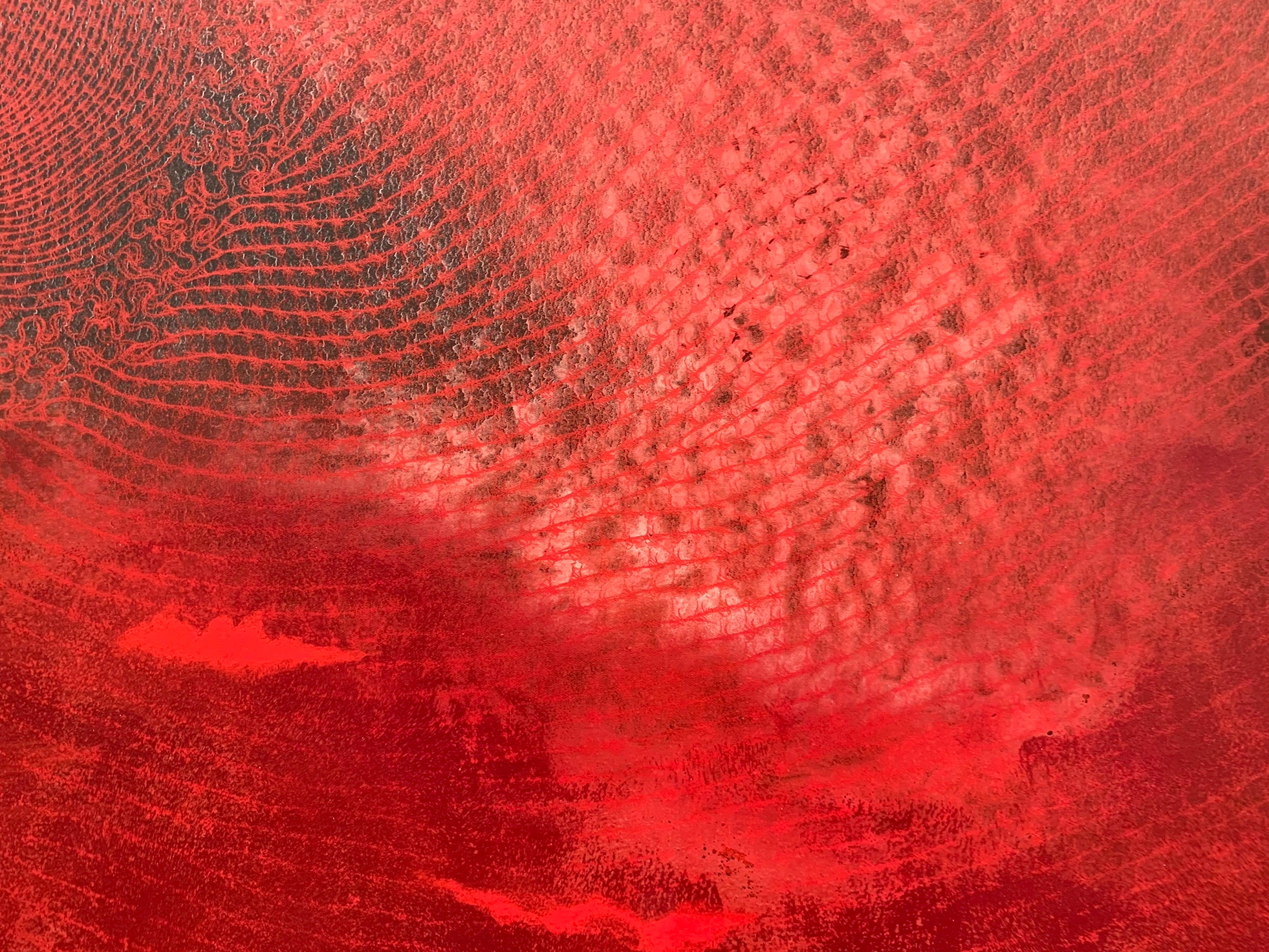
Painting from a self-described ‘birds eye view,’ London-based artist Shirazeh Houshiary applies layers of water and pigment along with colored pencil lines to her canvas in a labor-intensive process that lends a sublime effect to her monumental abstractions.  In this detail image from the over 17 feet long ‘Feel,’ now on view at Lehmann Maupin Gallery, vivid contrasts of red and black are a portent for unknown events of obvious consequence.  (On view through May 28th.  Masks and social distancing are required).

Shirazeh Houshiary, Feel, Pigment, pencil, and black aquacryl on canvas and aluminum, 74.8 x 212.6 inches, 2019.

Jonathan Monaghan at Bitforms Gallery

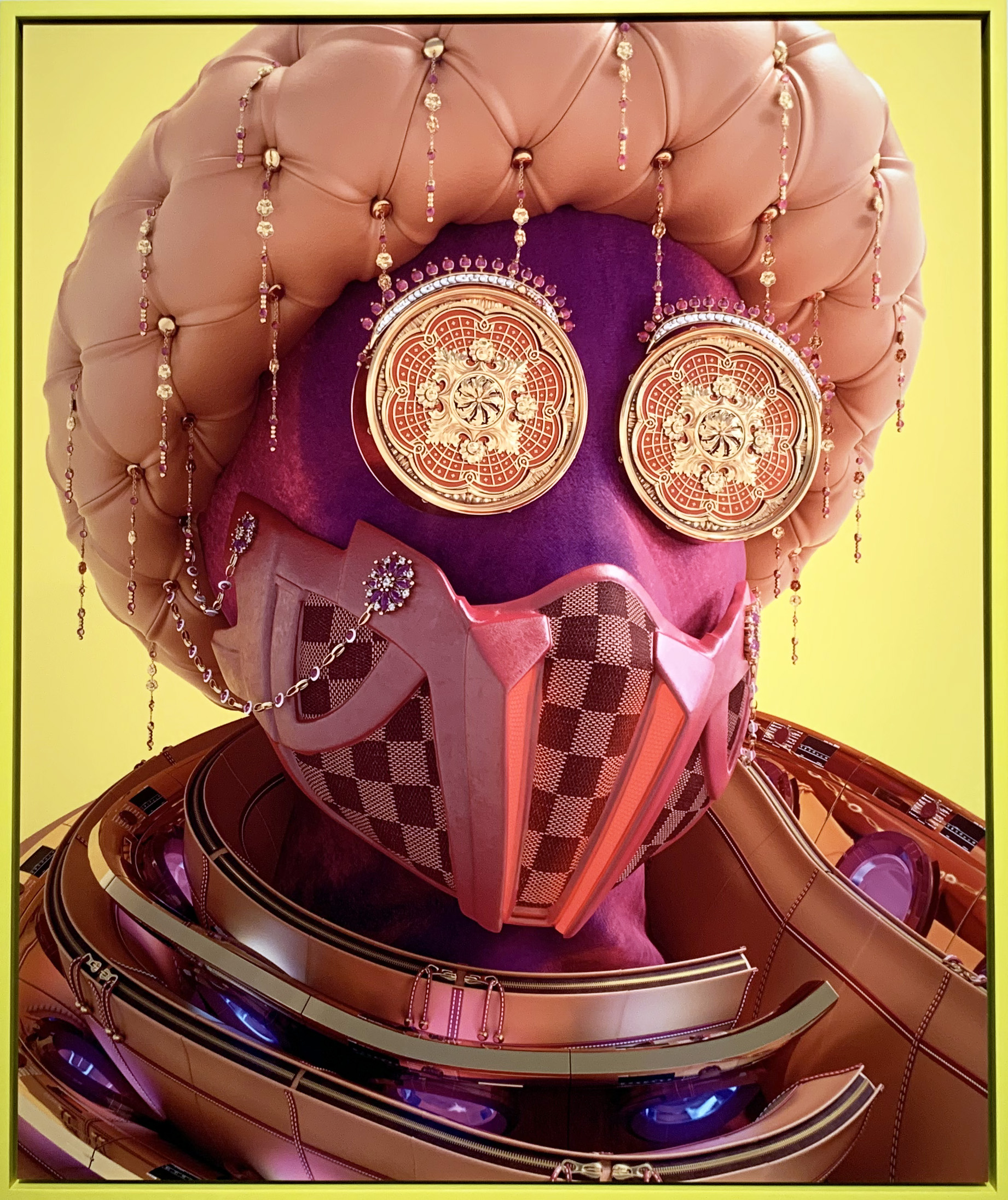
Luxury, power, and technology provocatively merge in Jonathan Monaghan’s mesmerizing digital images and new animation ‘Den of Wolves’ at Bitforms Gallery.  Traditional symbols of monarchal authority – an ermine robe, a scepter – show up in the aisles of an otherwise empty big box outlet or a pristine, unpopulated Apple store, conflating old and new symbols of cultural clout.  Still images titled ‘Sentry’ or ‘Soft Power’ picture the places and beings – composed of luxurious upholstery and architectural details – populating Monaghan’s eerie, too-perfect dystopia. (On view on the Lower East Side through June 12th.  Masks and social distancing are required).

Jonathan Monaghan, Soft Power II, dye-sublimation on aluminum, painted maple frame, 27 x 22.5 inches, 2020.

Carol Bove, Chimes at Midnight at David Zwirner

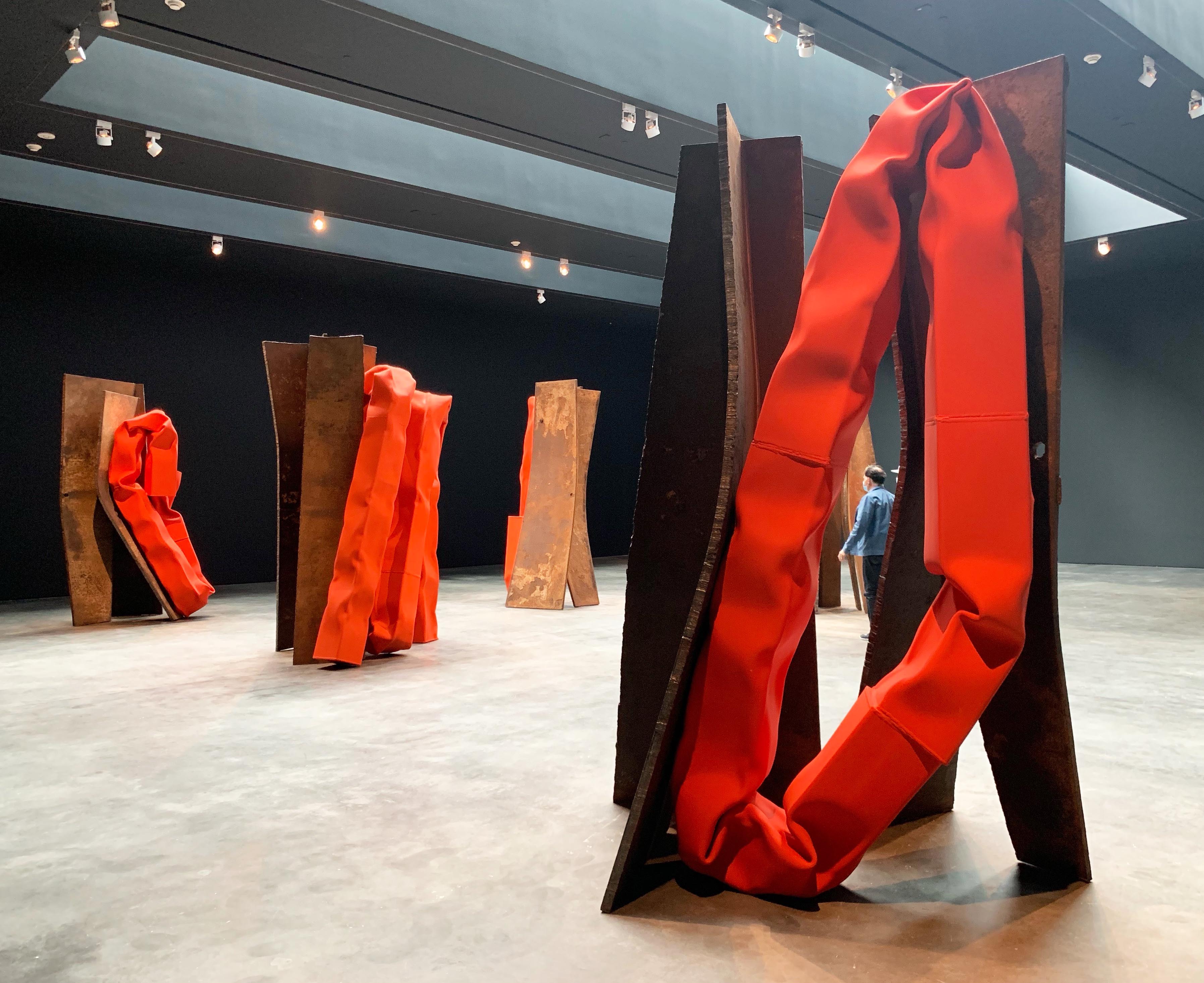
Crushed tubular steel in an electric orange color provocatively juxtaposes and compliments salvaged sheets of rolled steel in Carol Bove’s dramatic sculptural installation at David Zwirner Gallery.  Titled ‘Chimes at Midnight’ after a 1965 Orson Wells film in which two characters speak of mortality, the sculptures’ industrial materials summons the past while soft, malleable-looking orange segments speak to a future in formation.  In its reckoning between past and present, the sculptures continue Bove’s engagement with history in her current sculptural commission on the façade of the Metropolitan Museum of Art.  (On view at David Zwirner Gallery).

Carol Bove, installation view of Chimes at Midnight at David Zwirner Gallery

Gerhard Richter at Gagosian Gallery

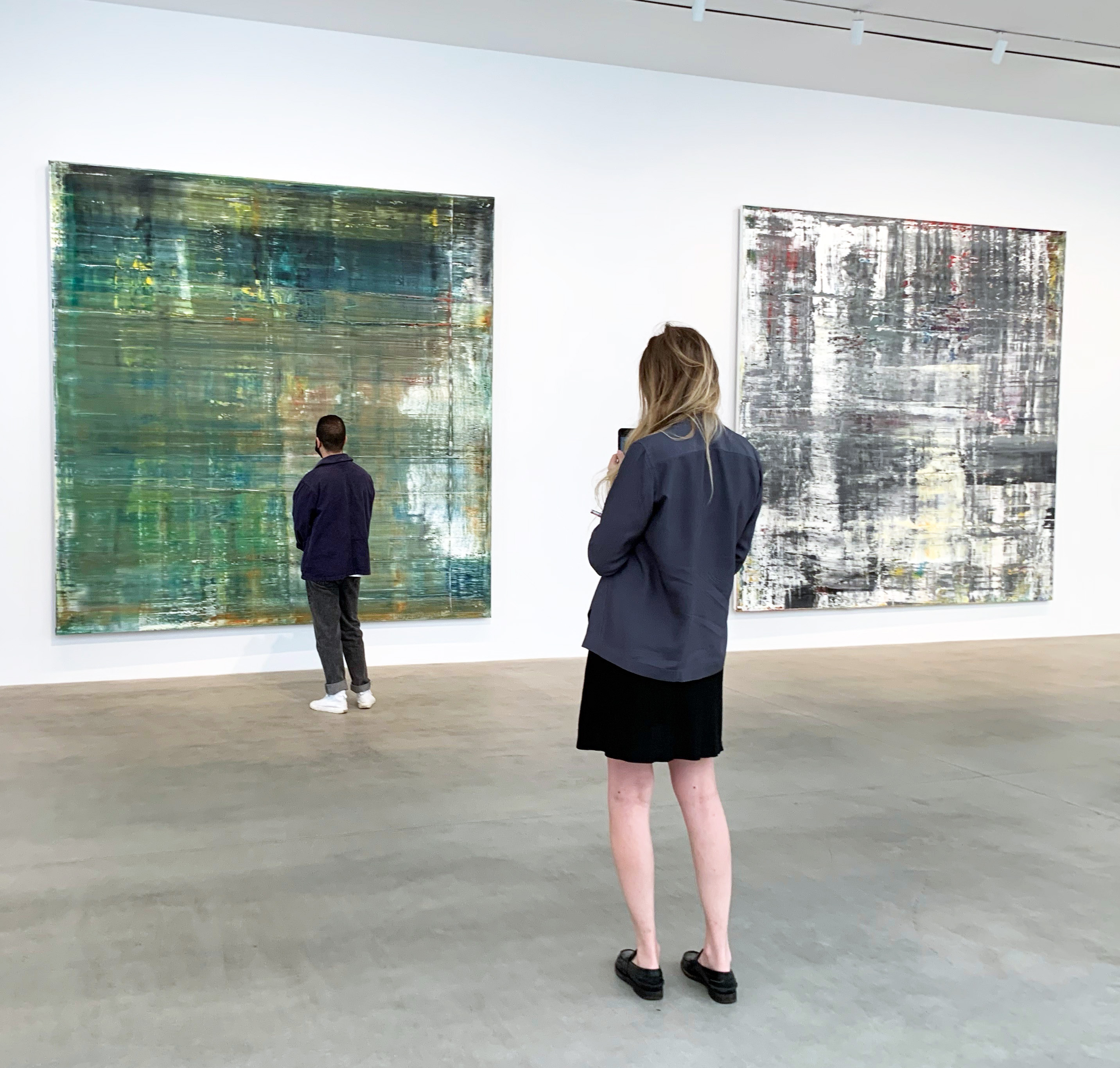
Six towering oil on canvas abstractions by Gerhard Richter, currently on view at Gagosian Gallery, are a second chance to take in a highlight of the Met’s short-lived Richter retrospective last spring.  Collectively titled ‘Cage Paintings,’ they pay homage to composer John Cage, whose chance-based music Richter listened to as he created the series in 2006.  Made by pulling a squeegee across painted canvas, the paintings juxtapose the artist’s carefully developed technique with the inevitable unforeseen results of his painting method.  (On view in Chelsea through June 26th).

Gerhard Richter, installation view of ‘Cage Paintings’ at Gagosian Gallery, April 2021

Arghavan Khosravi at Rachel Uffner Gallery

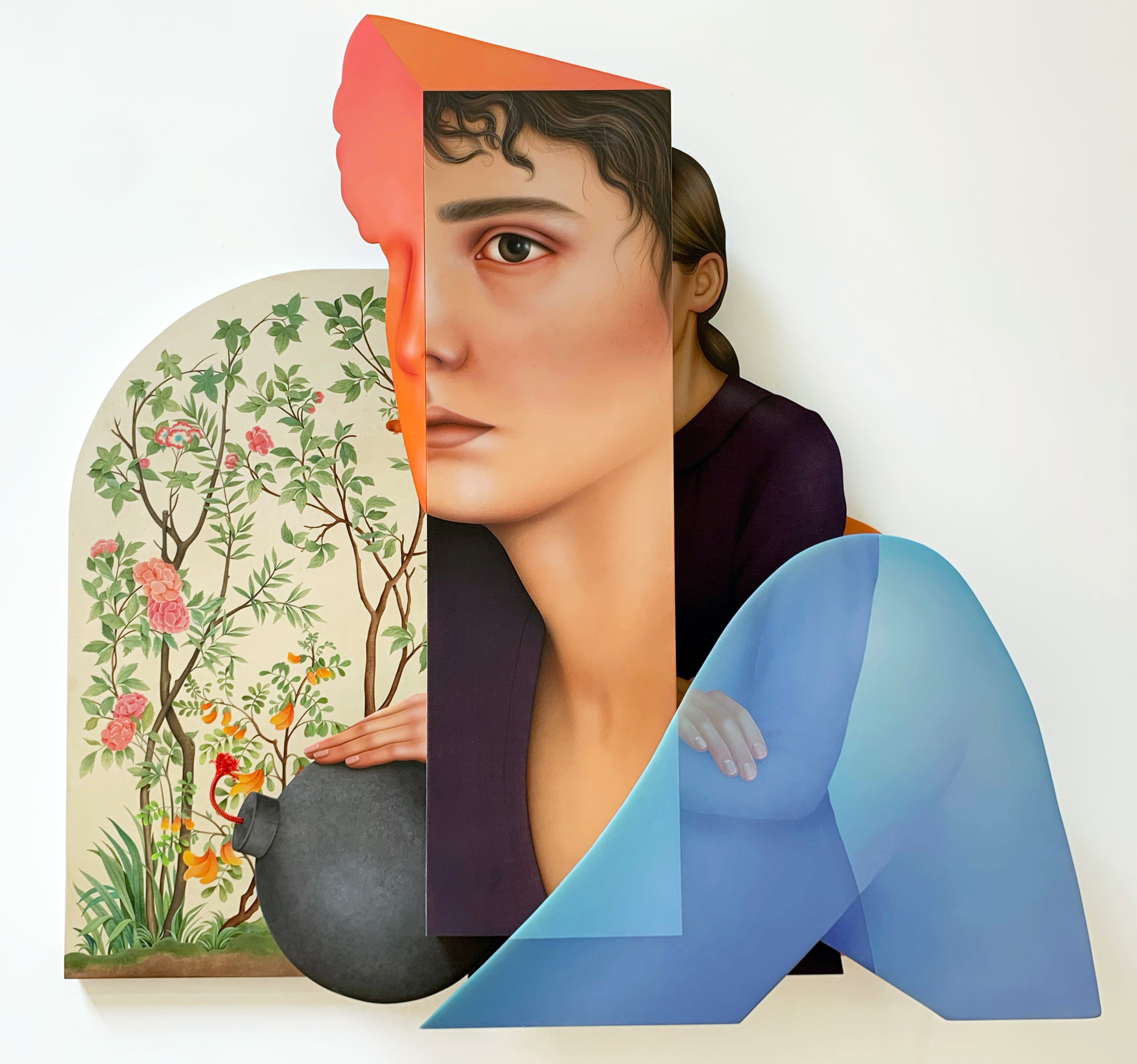
Beautiful women and lush gardens contrast oppressive symbols like balls and chains or large metal keys in Arghavan Khosravi’s latest paintings at Rachel Uffner Gallery.  Here, ‘Patiently Waiting,’ features an explosive device with ambiguous consequences if used – will freedom or destruction result?  Similarly, Khosravi’s gardens can be read in contradictory terms as commentary on life in her home country, Iran.  The gallery explains, they “…represent the possibilities for respite afforded by private life or the image of utopian paradise promised by religious fundamentalism.”  (On view on the Lower East Side through June 5th).

Arghavan Khosravi, Patiently Waiting, 2021, signed and dated verso, acrylic and cement on cotton canvas wrapped over shaped wood panel, wood cutout, polyester rope, 53 1/2 x 58 1/8 x 12 inches.