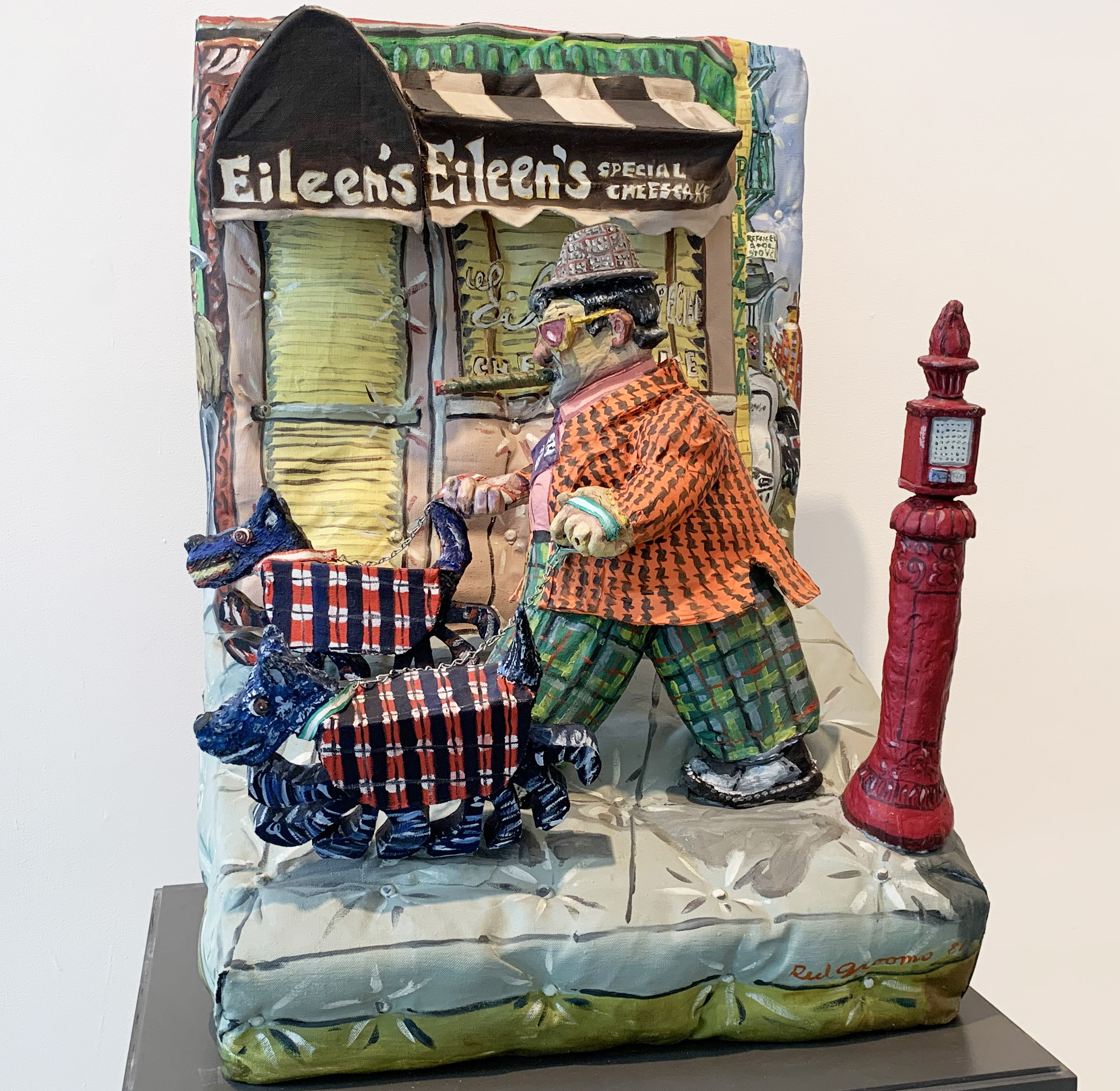
Is Red Grooms a ‘zany genius’ or ‘so much kitsch?’ The New York Times pondered the question in a 2018 profile of the New York-based creator of ‘sculpto-picto-ramas’ – sculptures of New Yorkers and their habitats. Now, visitors to Marlborough Gallery’s exhibition of Grooms’ work from ’74 to the present have the opportunity to consider anew Grooms’ affectionately eccentric characters, such as this dog-walker from 1981. (On view in Chelsea through May 8th).
Red Grooms, Walking the Dogs, painted canvas, papier-mache and metal chain on wood support, 36 ¾ x 20 x 22 ½ inches, 1981.
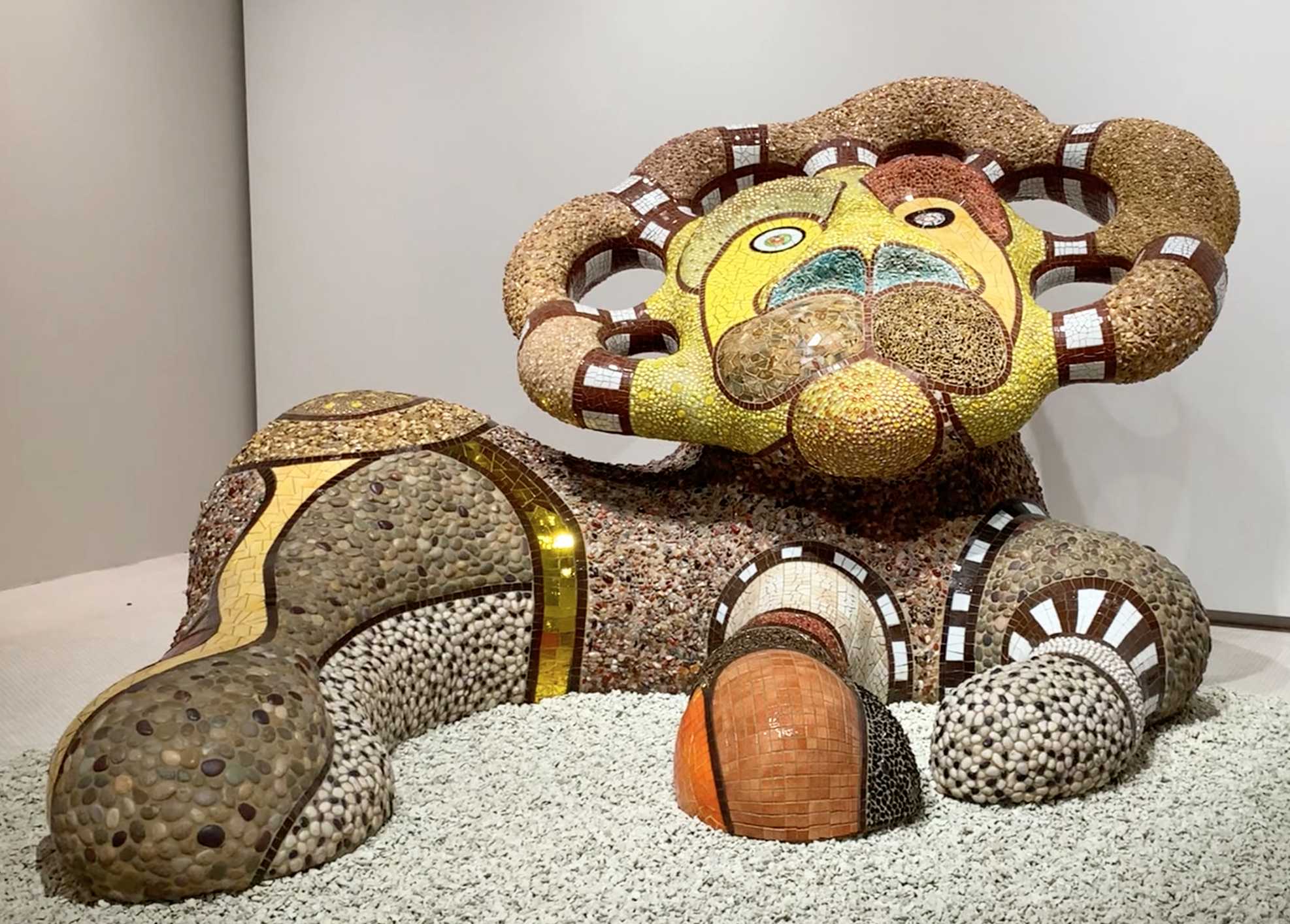
Titled ‘Joy Revolution,’ Salon94’s exhibition of late French-American artist Niki de Saint Phalle’s painting, sculpture and work on paper celebrates color, pleasure and play. Just inside Salon94’s stunning new 89th Street location, a 17,500 square foot former mansion built by philanthropist Archer Huntington, two lions originally intended as garden decoration greet visitors. Intended to entice kids to climb them, they serve here as guardians and greeters. (On view through April 24th).
Niki de Saint Phalle, Guardian Lions, polyurethane foam, resin, steel armature, ceramic tiles, glass, tumbled stone, and fused millefiori glass inserts, 88 x 132 x 112 inches, 2000.
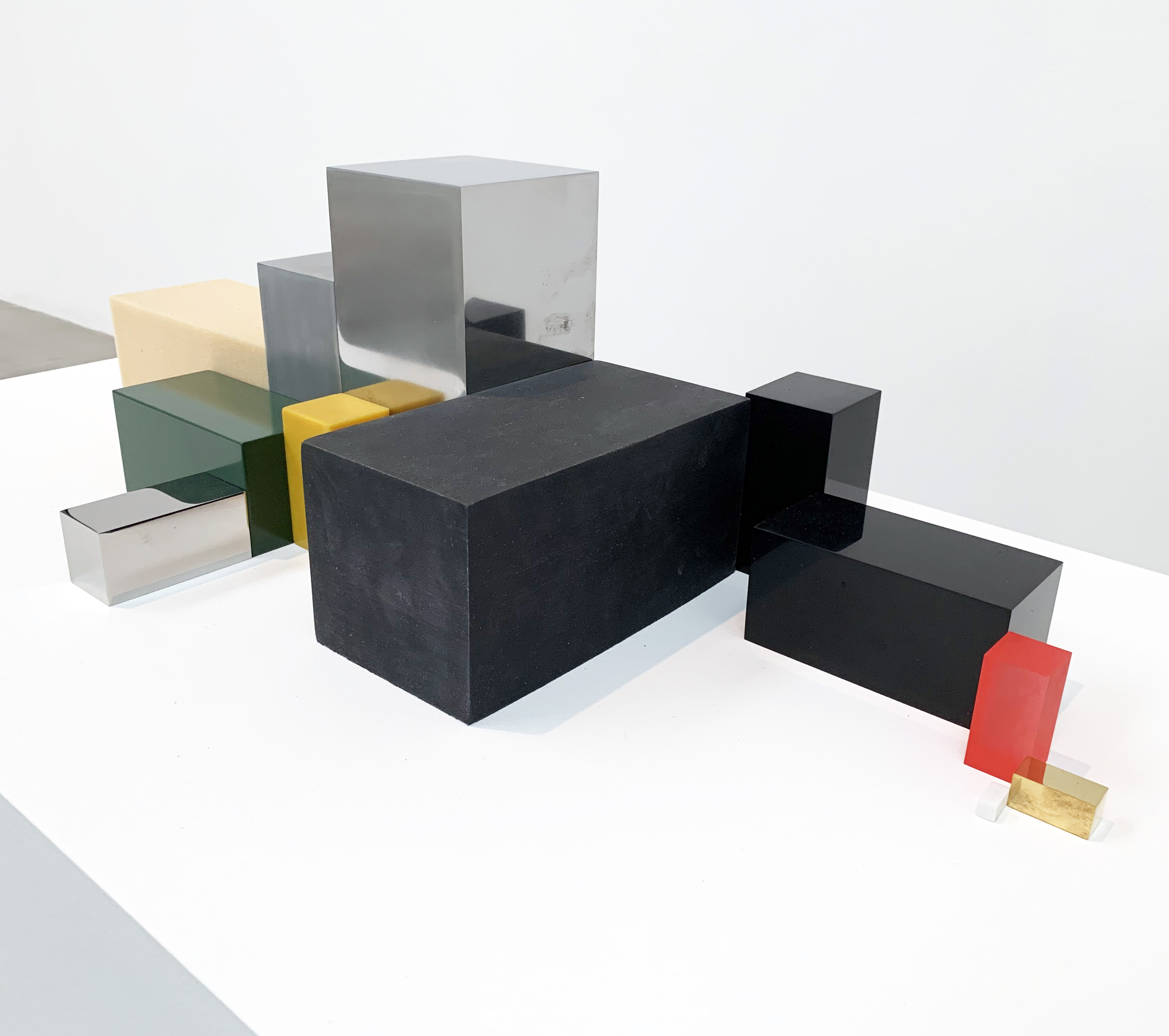
It’s not unusual to consider where and how our everyday consumer goods were manufactured, but Amsterdam-based design team Studio Drift goes deeper. Via their ‘Materialism’ project – samples of which are now on view in Pace Gallery’s current tech-friendly group show – Drift practices a kind of reverse engineering by breaking down light bulbs, cell phones and water bottles, as well as historic weapons and this bicycle, into component parts which are then displayed as pleasingly tidy arrangements of colorful cubes. Guessing what each piece represents is an engaging game that ultimately prompts viewers to question how much we know about the goods we consume. (On view on 25th Street in Chelsea through April 24th).
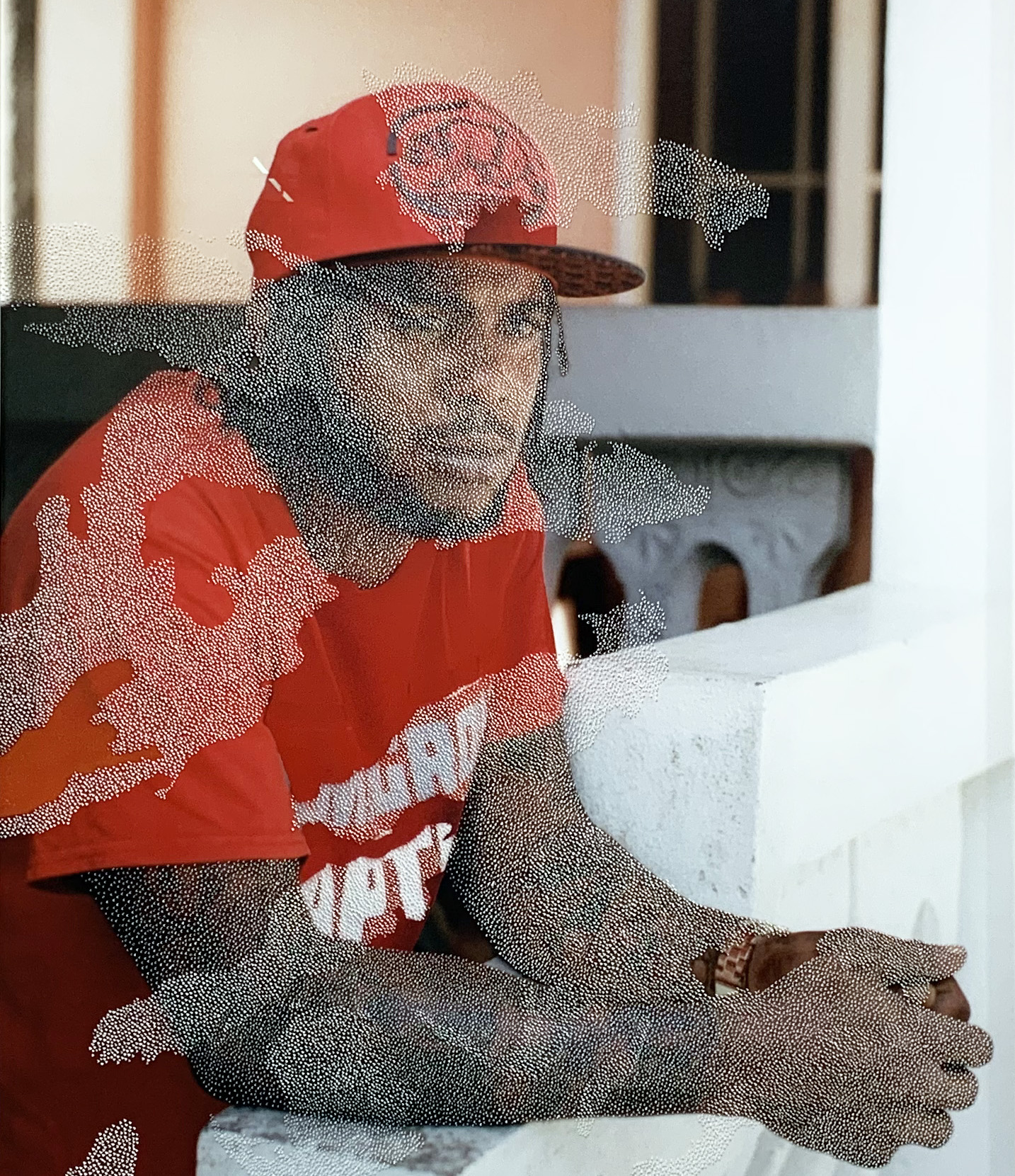
Titled ‘Tradewinds,’ Paul Anthony Smith’s latest show of hand-worked photos at Jack Shainman Gallery celebrates home, memory and the act of celebration itself. More contemplative than some of the artist’s images of parties and get-togethers, this image suggests thoughts as a kind of cloud-cover or camouflage around this young man. Here, Smith’s signature picotage technique – involving a series of tiny rips on the surface of the image – becomes a kind of simultaneous damage and decoration. (On view in Chelsea through April 3rd).
Paul Anthony Smith, detail of Islands #2, unique picotage with spray paint on inkjet print, mounted on museum board and sintra, 60 x 40 inches, 2020-21.
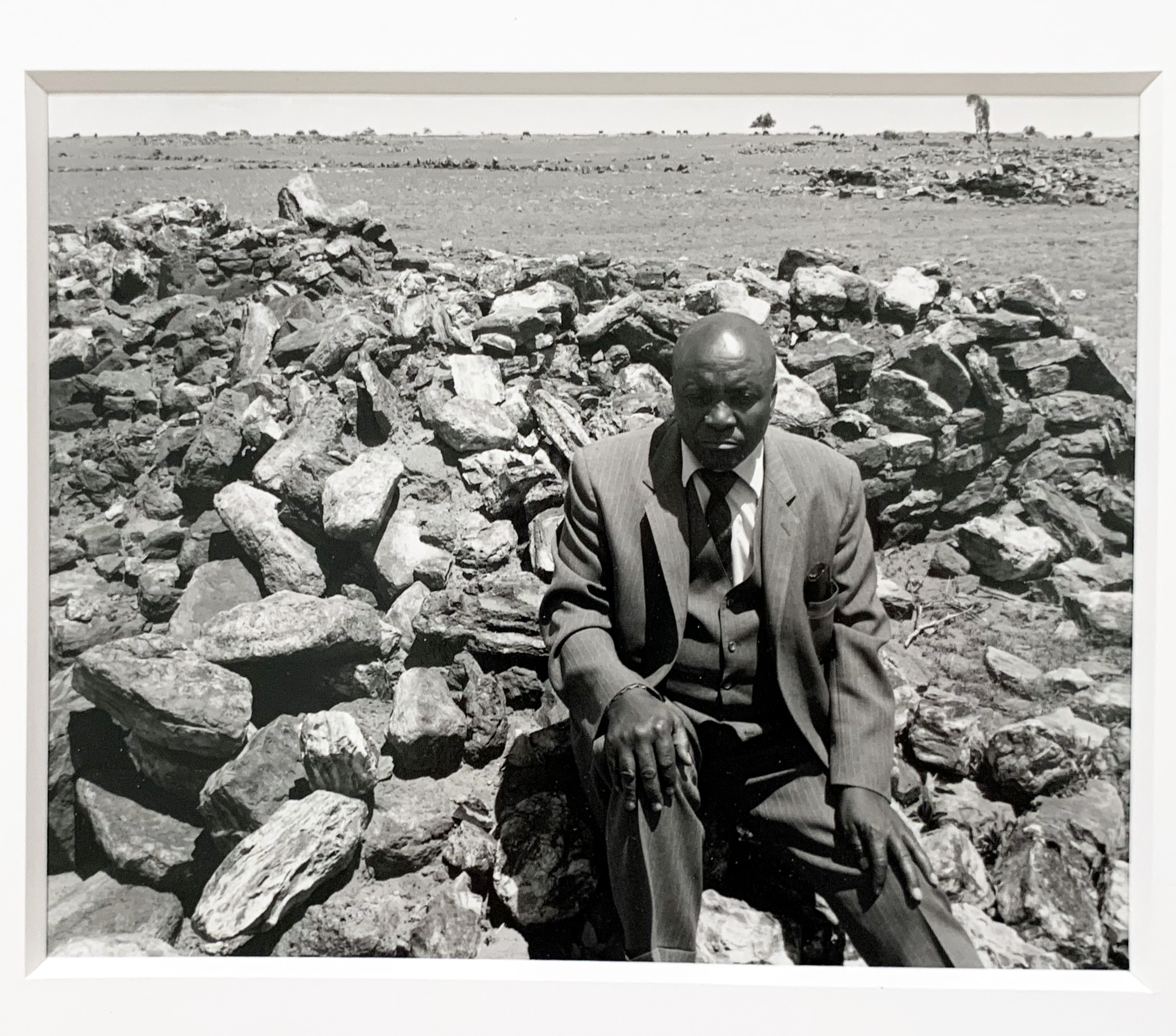
Late South African photographer David Goldblatt didn’t leave it to chance that his photos would be read without context, titling them with notes on their circumstances. Currently on view at Pace Gallery in an exhibition curated by South African photographer Zanele Muholi, who worked and trained in Goldblatt’s studio, the photos consider visibility of women, segregation, privilege, labor conditions and more. Here, Goldblatt records the forced removal of Black families from land designated by the government as ‘white.’ (On view in Chelsea through March 27th).
David Goldblatt, Luke Kgatitsoe at his house, bulldozed in February 1984 by the government after the forced removal of the people of Mapoga, a black-owned farm, which had been declared a “black spot,” Ventersdorp district, Transvaal, 21 October 1986, gelatin silver hand print, 6 ¼ x 7 7/8 inches.
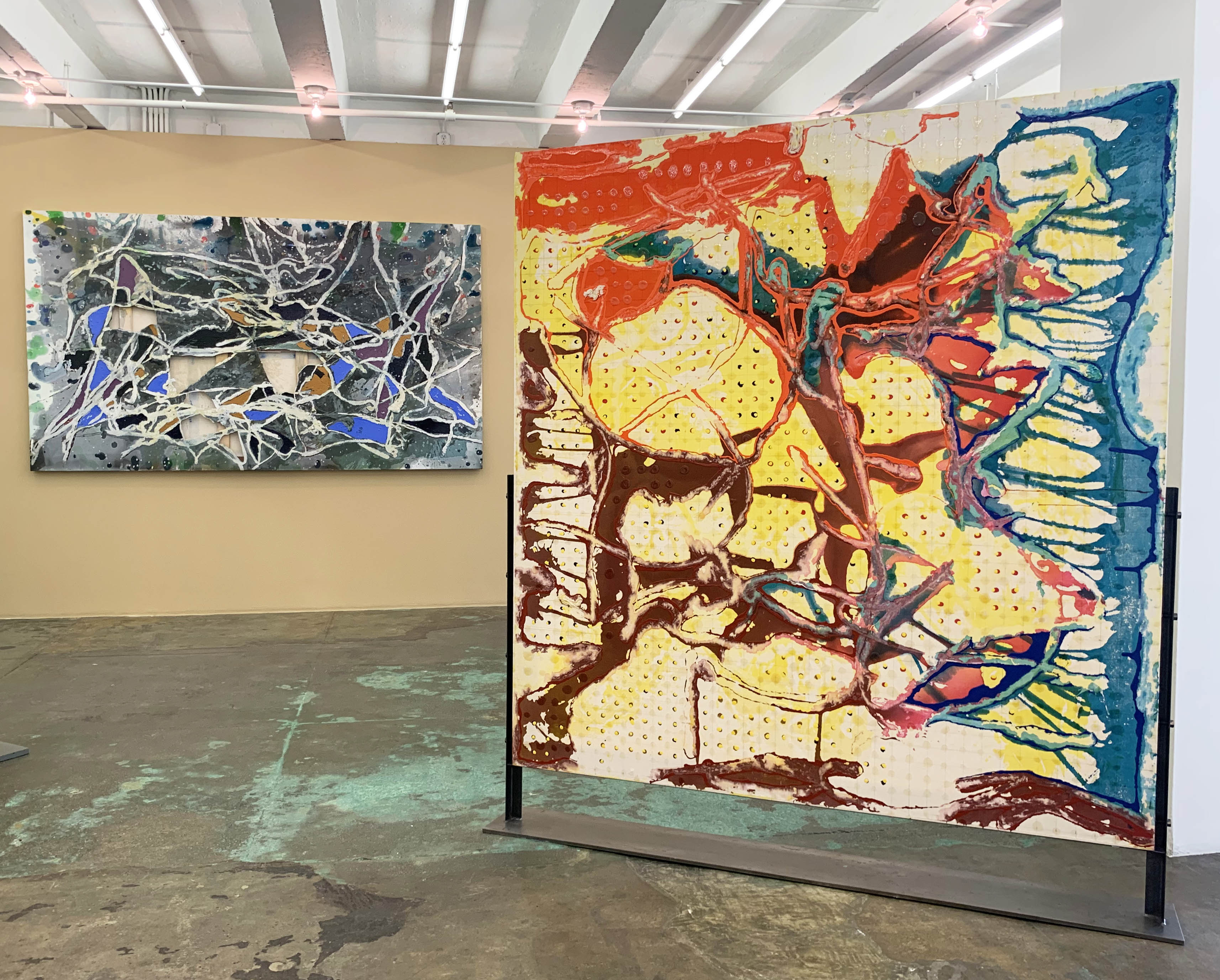
“The hierarchy of the word ‘front’ is so strong…” explained painter Dona Nelson in a recent interview, concisely conveying how rule-breaking it still feels to exhibit paintings in an upright freestanding frame vs wall mounting them. Her current show at Chelsea’s Thomas Erben Gallery includes two-sided paintings like ‘Early September,’ a canvas that combines a grid system and patterns of dripped lines to play order and chaos against each other. (On view through April 3rd).
Dona Nelson, Early September, acrylic and acrylic mediums on canvas, 83 x 78 inches, 2020.
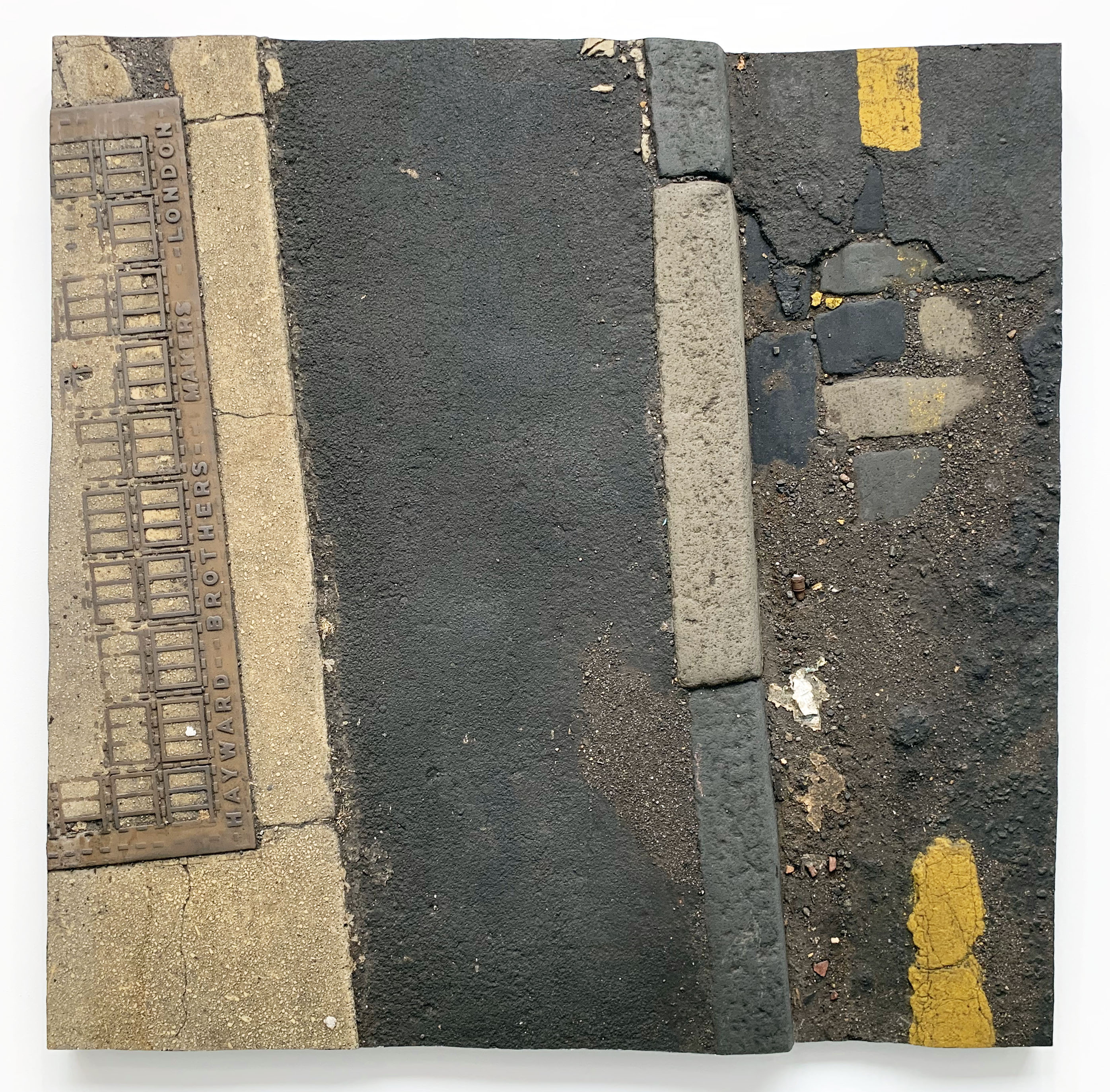
In their first New York solo show in 40 years, the Boyle Family (father Robert Boyle, mother Joan Hills and their adult children Sebastian and Georgia Boyle) considers relationships between humans and the environment with wall mounted mini-landscapes. Meticulous recreations of sites chosen at random, each ‘earthprobe’ is a recreation of a segment of the earth’s surface in an urban or rural area. How to interpret these slices of mediated reality? The Boyles explain that they want to consider whether it’s possible to look at the earth and not think of ‘myths and legends, art of the past or present, art and myths of other cultures.’ Thankfully, it seems it is not, as each will prompt historical connections and personal memories. (On view at Luhring Augustine in Chelsea through April 24th).
The Boyle Family, Kerb Study with Filled in Basement Lights and Cobbles, Westminster Series, mixed media, resin, fiberglass, C 66 x 66 inches, 1987
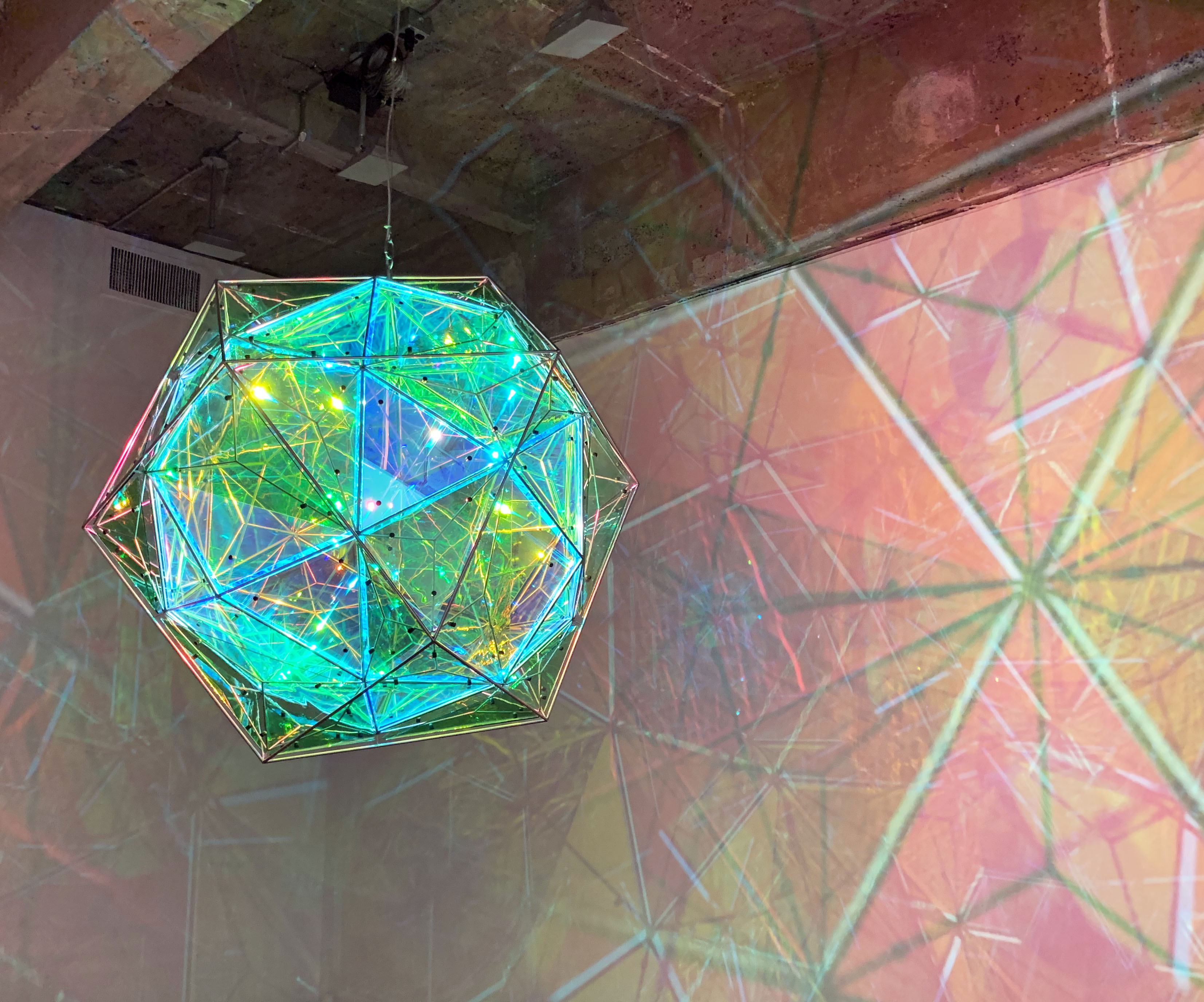
Glass balls in a rainbow of color and a beautifully ephemeral light projection greet visitors to Olafur Eliasson’s gorgeous new solo show at Tanya Bonakdar Gallery, an exhibition designed to give visitors ‘a moment to exhale.’ ‘We need a moment of relief, of beauty, of letting go,’ explains Eliasson, an ambition fulfilled by every piece in the exhibition, including this spherical light installation. Created from green tinted glass and pink iridescent color-effect-filter glass, the piece reflects light of a single color while allowing its complementary color to pass through. (On view through April 24th. Appointments, masks and social distancing required.)
Edgy but perfect kinship sphere, color-effect filter glass (pink), color glass (green), stainless steel, LED system, diameter: 43 1/4 inches, 2020.
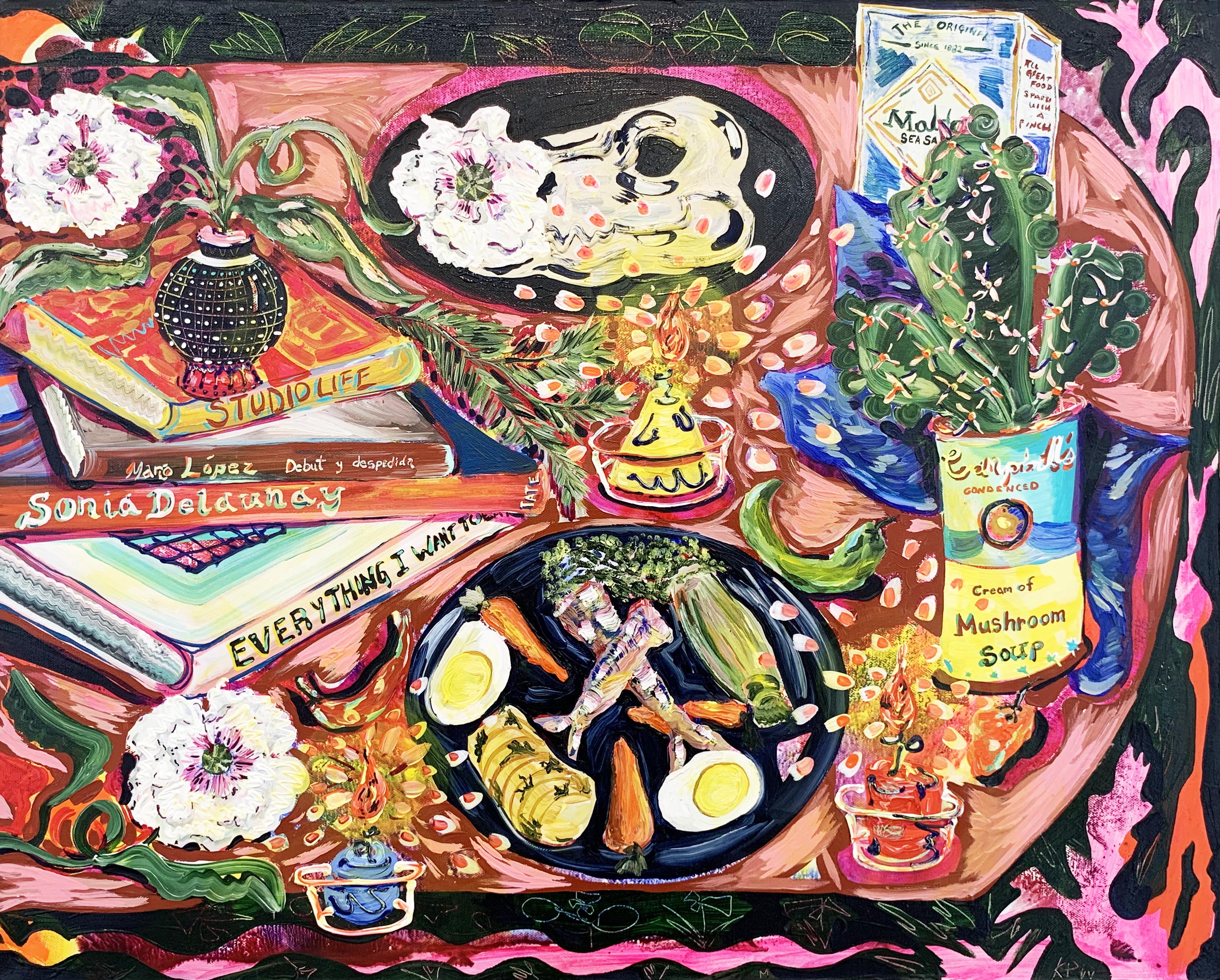
Tilted upwards to better show off a wealth of books, foods and household objects, young LA artist Kate Pincus-Whitney’s tablescapes at Fredericks & Freiser Gallery are a way of processing the world and even portraying people in it. Both personal (Pincus Whitney cites her upbringing in the kitchen by her mother and grandmother as influential) and linked to wider cultural histories (this painting’s soup can nods to Warhol), the artist’s energetic canvases revel in the color and abundance of food and ideas. (On view in Chelsea through March 20th).
Kate Pincus-Whitney, Feast in the Neon Jungle: Rose of Jericho, Acrylic and Polycolor on Canvas, 24 x 30 inches, 2020
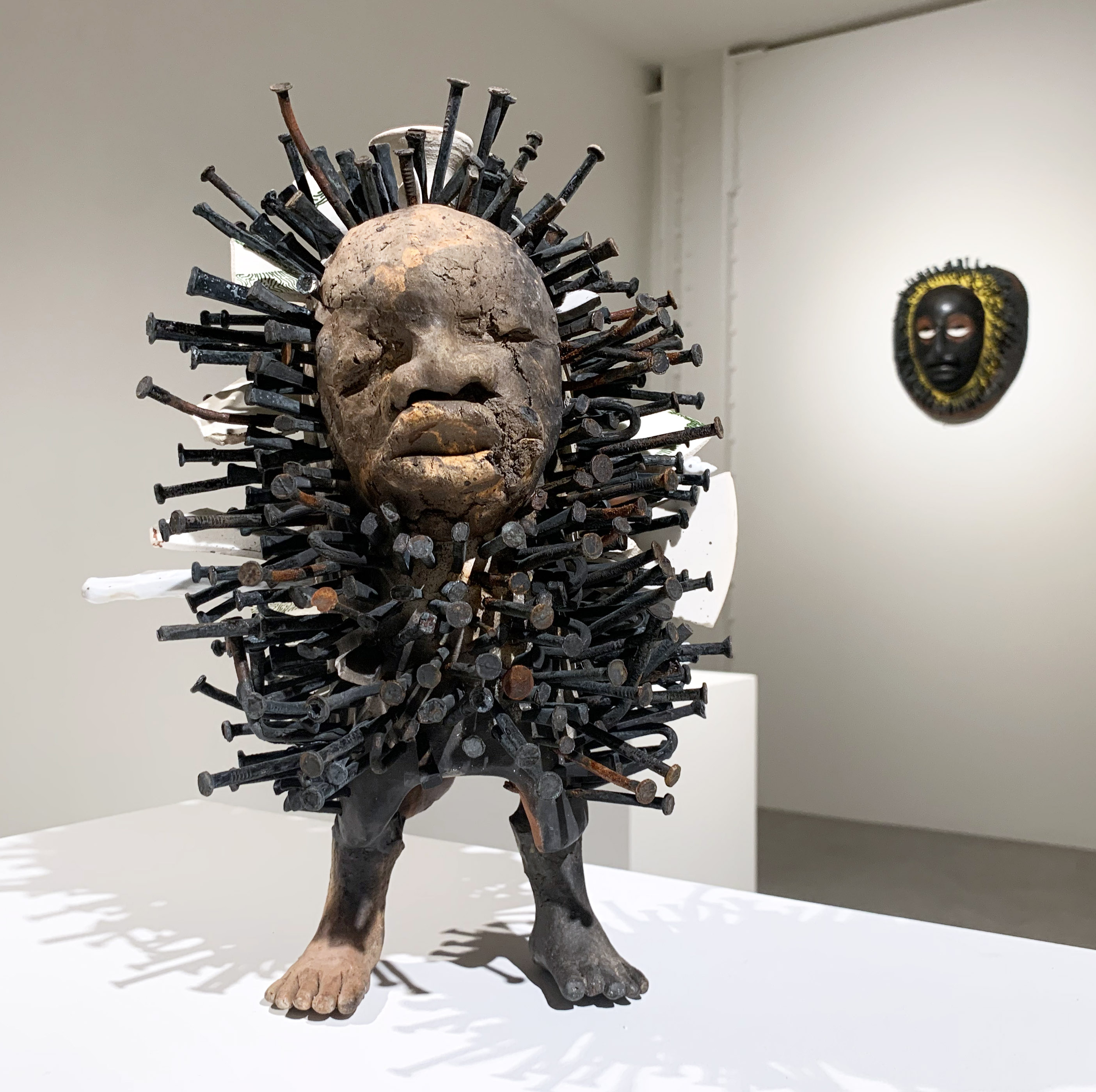
Created during quarantine but using faces and feet crafted 20 years ago, Sharif Bey’s small but forceful Boilermaker sculptures layer references to the artist’s personal history as a maker and art history. Formed from a vessel fired with nails and shards to resemble a nkisi nkondi power figure, ‘Boilermaker: Fidel’ references a working-class beer cocktail and Bey’s father’s job as a Pittsburgh boilermaker. The artist identifies the central focus of his work as an investigation of how power manifests; his hybrid sculptures encourage complex understandings of power and influence. (On view at Albertz Benda Gallery in Chelsea through March 27th. Masks and social distancing required).
Sharif Bey, Boilermaker: Fidel, earthenware and mixed media, 15 x 10 x 9 inches, 2021.
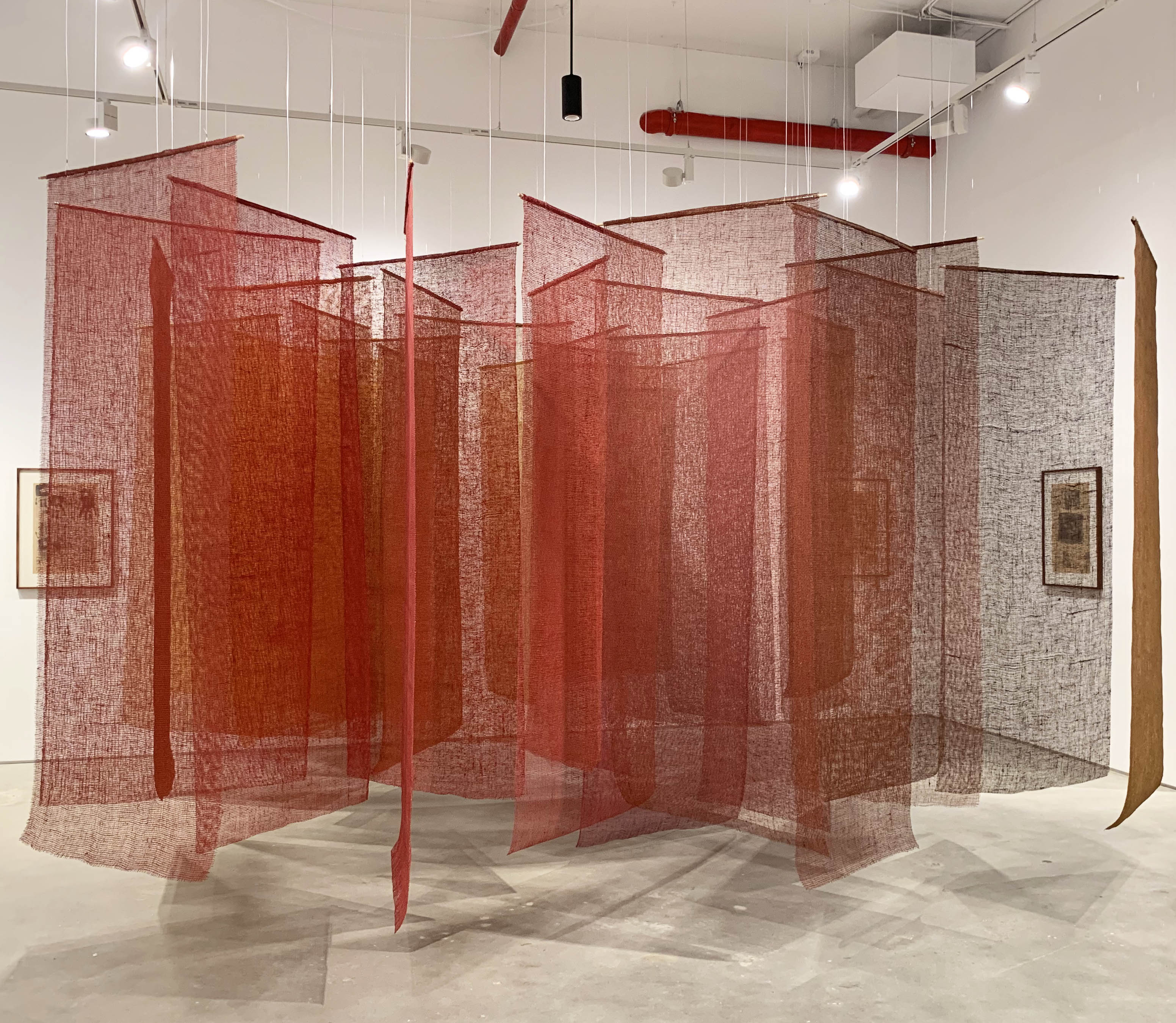
After debuting its new Chelsea gallery space with a tantalizing series of two-week long exhibitions, Brazilian gallery Nara Roesler continues to impress with a career-survey exhibition of gorgeous work by the late Amelia Toledo. Inspired by the participatory nature of Neo-Concrete art and a devotion to nature and the possibilities of color, Toledo’s multifarious career included installations consisting of hanging jute panels like this ‘Path of color.’ (On view through April 17th. Masks and social distancing required).
Amelia Toledo, Paths of color, 38 pieces of painted jute, c. 100 x 177 x 177 inches, 1999-2000.
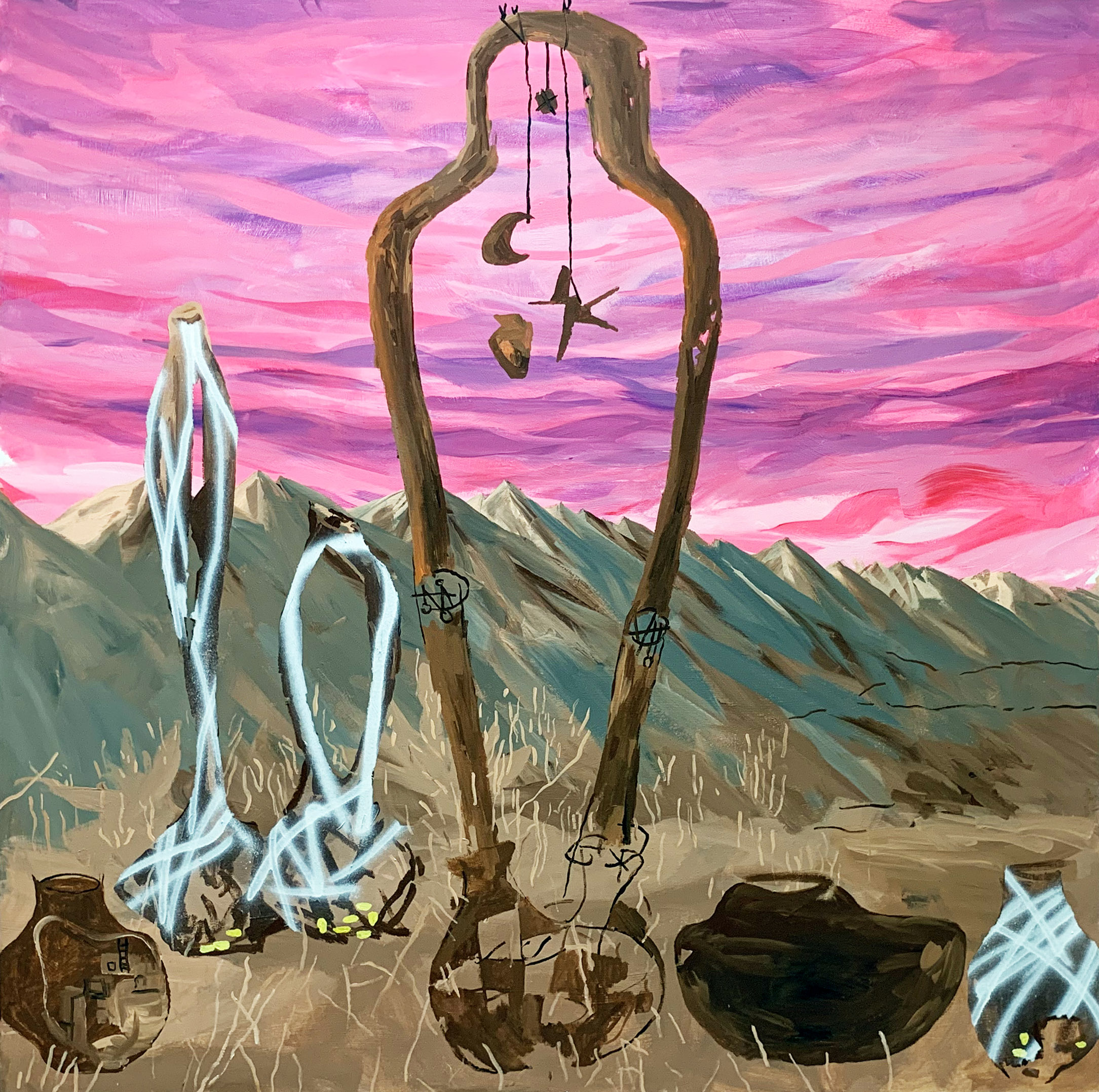
Drawing on inspiration from his Spanish, Mexican, Apache and Zuni ancestry and the landscape of the American Southwest, Esteban Cabeza de Baca manifests spiritual and political concepts in paintings and sculpture now on view at Garth Greenan Gallery. The clay outline of a human form set before a mountainous landscape in this painting ‘Vessels’ also exists as a sculpture in gallery. Painted or in three dimensions, it signals an in-between state of existence, for Cabeza de Baca, a freedom in pursuing decolonized thought. (On view through March 13th. Masks and social distancing required).
Esteban Cabeza de Baca, Vessels, acrylic on canvas, 60 x 60 inches, 2020.
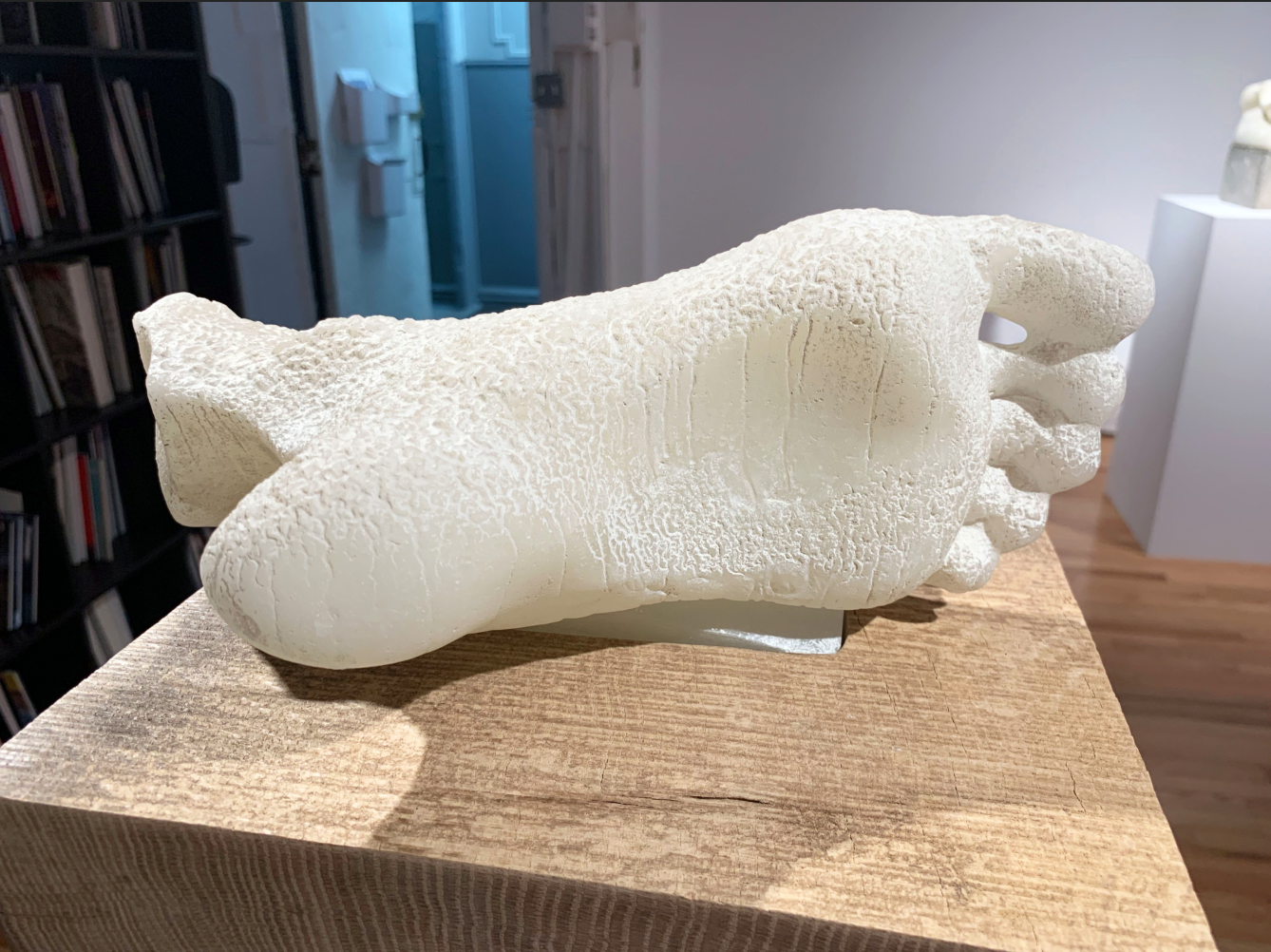
Malia Jensen explores the idea of getting closer to nature in a literal way by placing sculpture resembling body parts into remote Oregon landscapes. In 2019, the artist carved a hand, foot, head, breast and a stack of donuts (representing the stomach) from livestock salt licks and positioned them and several motion-triggered cameras in places where they’d be altered over time by animals and weather. A year later, she collected the sculptures and cast them in glass, creating artworks now on view at Cristin Tierney Gallery that demonstrate ‘beauty in our vulnerability.’ (On view on the Lower East Side through April 3rd. Masks and social distancing are required.)
Malia Jensen, Foot, kiln-cast glass, etching ink, white oak, reclaimed fir, 8 x 13 ½ x 11 ½ inches, 2020.
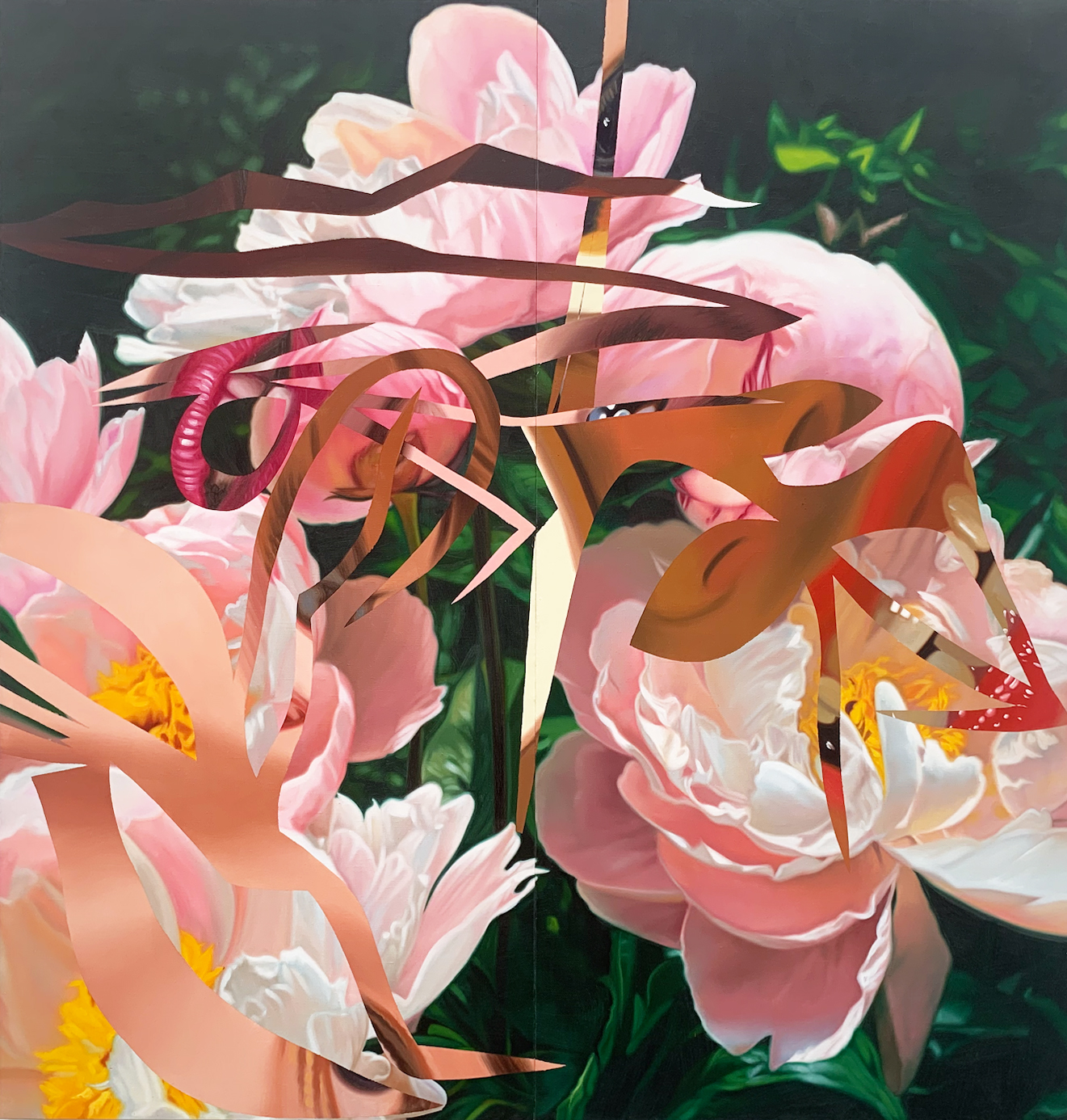
Inspired by the palm fronds in his Florida garden and other plant life, James Rosenquist juxtaposed lips and flesh (visible in glimpses as abstract, cut out forms) with blossoming pink peonies in this ‘Flower’ series painting at Ross and Kramer. The connection between women and nature is age-old, but the discomfort conveyed by fragmentary views of female faces is fresh and stops viewers from an easy consumption of beauty. (On view in Chelsea through March 27th. Masks and social distancing are required).
James Rosenquist, Incarnation Incantations, oil on canvas mounted on board, 81 x 62 inches, 1989.
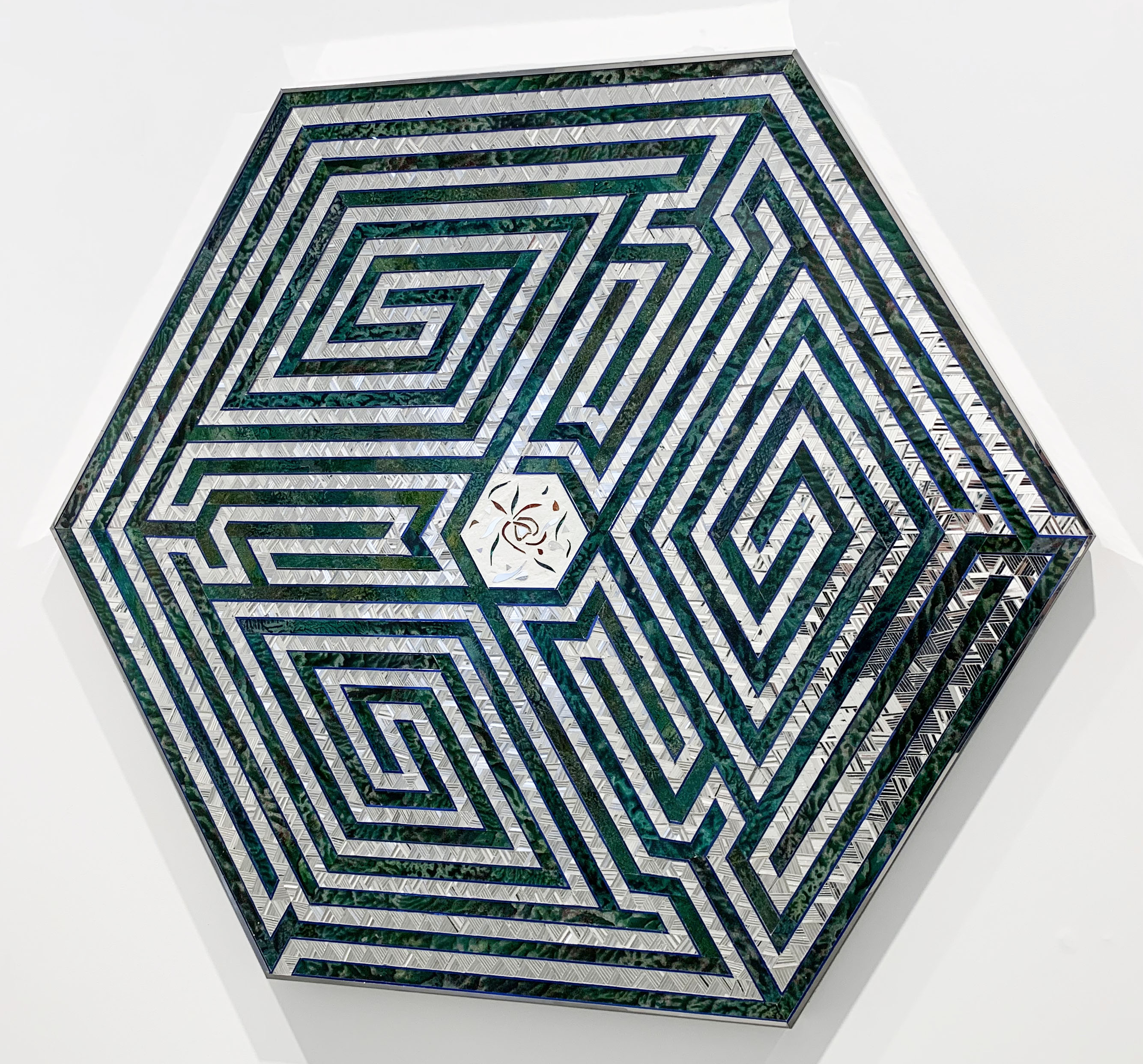
Geometric forms offered endless opportunity for experimentation in late artist Monir Shahroudy Farmanfarmaian’s painted glass and mirror sculptures, meticulously created with craftspeople in Iran. Now on view at James Cohan Gallery’s Tribeca location, pieces such as ‘Hexagon Maze’ were inspired by geometric principles in Islamic art and design, the ways in which a maze can alter everyday reality, and the possibilities of creating artwork within a framework of rules. (On view through March 6th. Masks and social distancing are required).
Monir Shahroudy Farmanfarmaian, Hexagon Maze, Mirror and reverse glass painting on plaster and wood, 47 1/4 x 47 1/4 in, 2014.