Guido van der Werve at Luhring Augustine, Monitor & GRIMM Galleries

One of Dutch artist Guido van der Werve’s best known performances involved walking just 16 yards in front of an ice breaking ship in the Baltic sea, an example of the physical punishment and risk he’s willing to endure for his art.  Now for a new on-line exhibition, Luhring Augustine Gallery, GRIMM Gallery and Monitor Gallery are teaming up to present still photographs from the artist’s mind-bending 2012 performance ‘Nummer Veertien, home,’ for which he swam, biked and ran 1,200 miles across Europe.  Van der Werve’s journey began at the location of Chopin’s interred heart (Warsaw) and ended at the Pere Lachaise cemetery in Paris where the rest of the composer’s body is buried.  In Paris, the artist delivered a small container of soil from outside Chopin’s childhood home, connecting the two places and creating a profound link between his own history and that of his favorite composer.  (On view through June 19th).
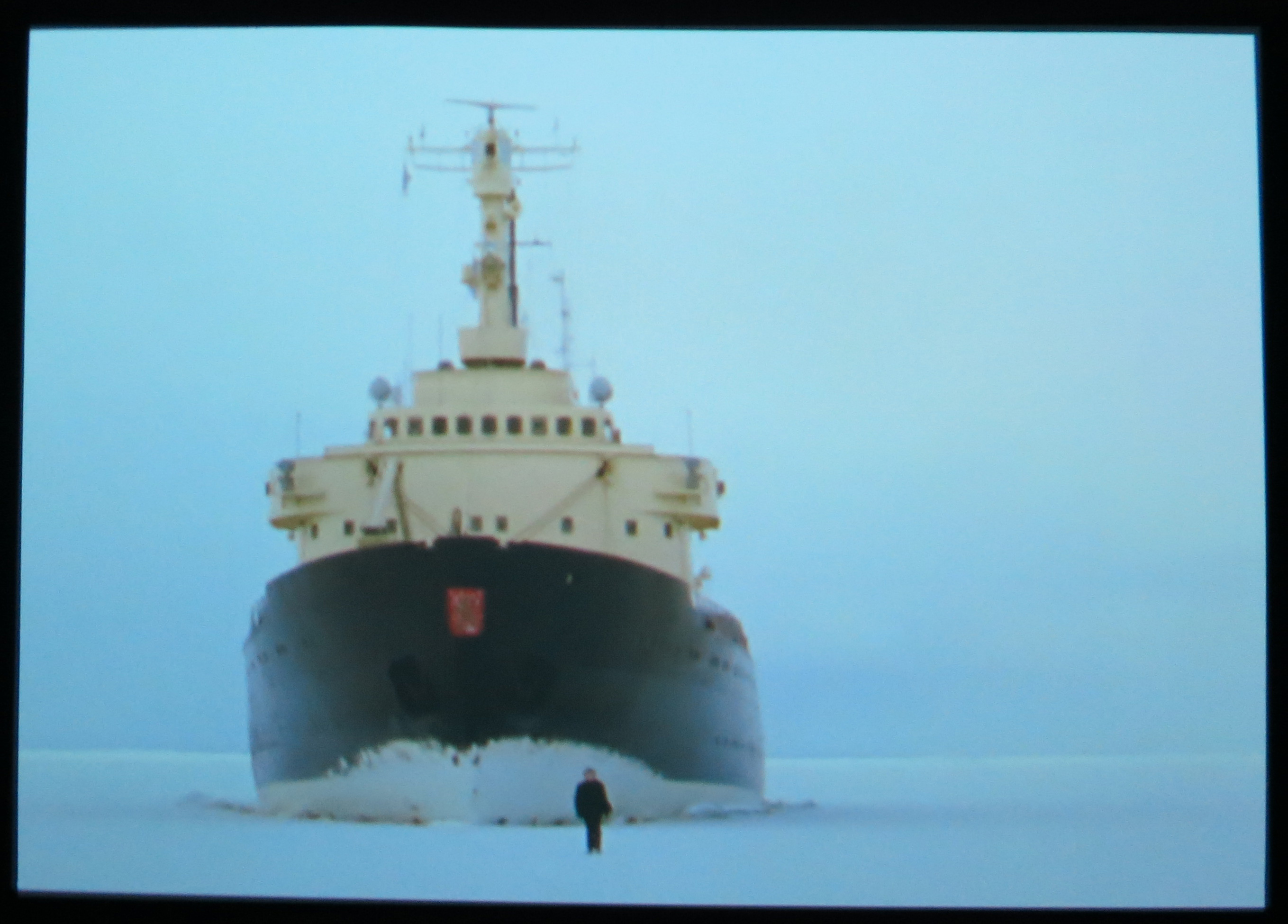
Guido Van Der Werve, Nummer acht, Everything is going to be alright, 16mm to HD, 10 minutes, 10 seconds, 2007.

Ajay Kurian in ‘Inventory’

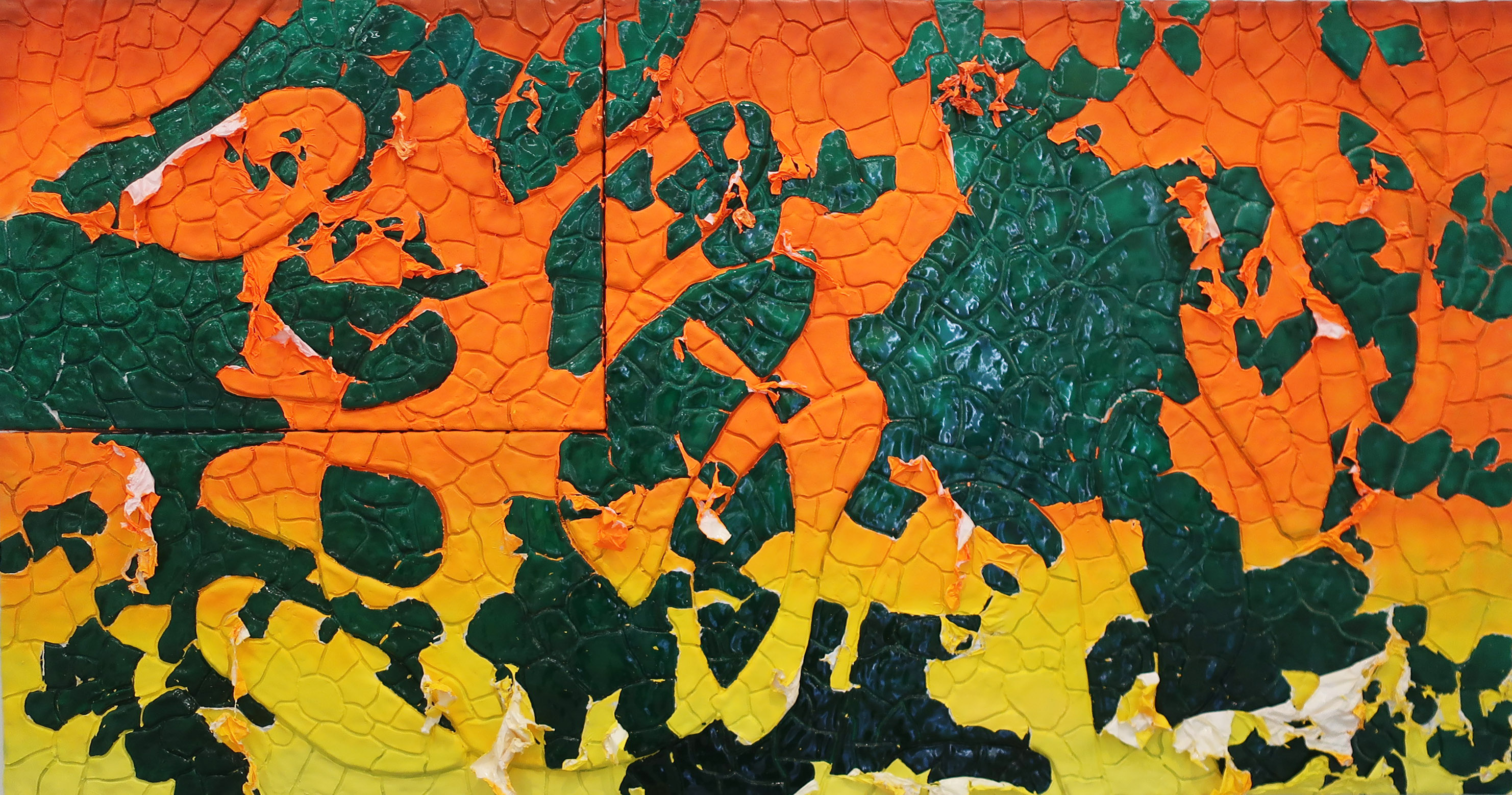
The U.S. flag becomes a symbol not just of the nation, but of the country’s continuous transformation in Ajay Kurian’s abstracted, epoxy rendition.  Peeling, scale-like segments suggest old skin giving way to new in brilliant color.  A similar piece from Kurian’s 2018 exhibition at 47 Canal is now showcased on Inventory,’ a new platform organized by artist Darren Bader to present artwork that might otherwise languish in gallery storage while galleries are closed.

Ajay Kurian, Flag (foot print), epoxy clay, spray paint, wood, plasti-dip spray, 34 ¼ x 65 inches, 2018.

Njideka Akunyili Crosby in ‘Side by Side’

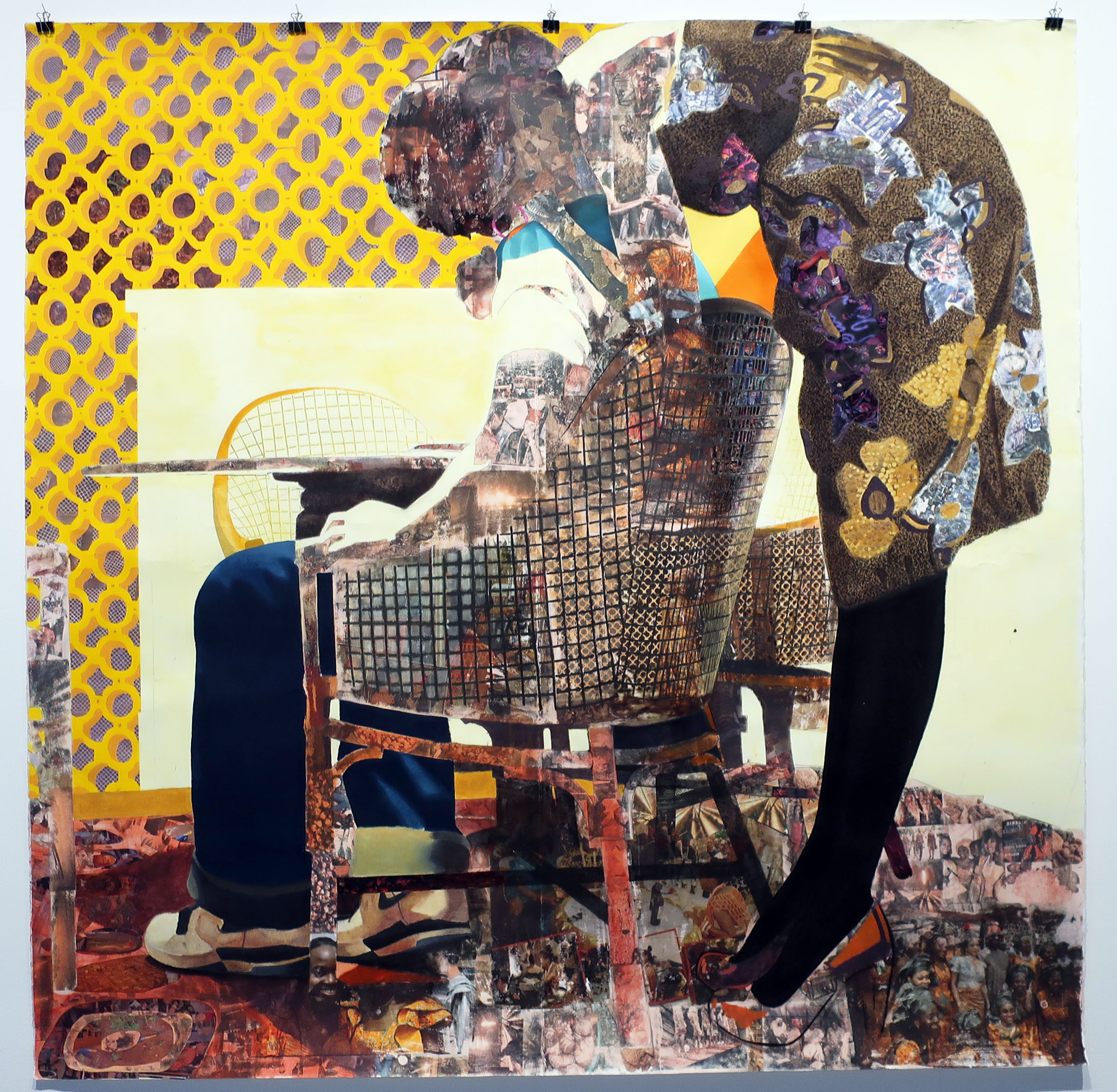
Known for portrait-like works created with a range of materials and techniques from paint to photo transfer (like the image pictured here from a ’19 exhibition at David Zwirner Gallery), Njideka Akunyili Crosby recently simplified her procedure in paintings presented at last summer’s Venice Biennial.  Two of these are highlights of ‘Side By Side,’ a new on-line collaboration between David Zwirner Gallery and Victoria Miro Gallery for which the two galleries are presenting works via 3-D renderings by VortecXR.  Specifically addressing how to see artwork without being present in front of it, Side By Side showcases technology as much as the art, both of which are worth a look.

Njideka Akunyili Crosby, Nyado: The Thing Around Her Neck, acrylic, photographic transfers, color pencil, charcoal and collage on paper, 81 ½ x 81 ¾ inches, 2011.

Liz Luisada in ‘Klaus on Paper’ at klausgallery.cloud

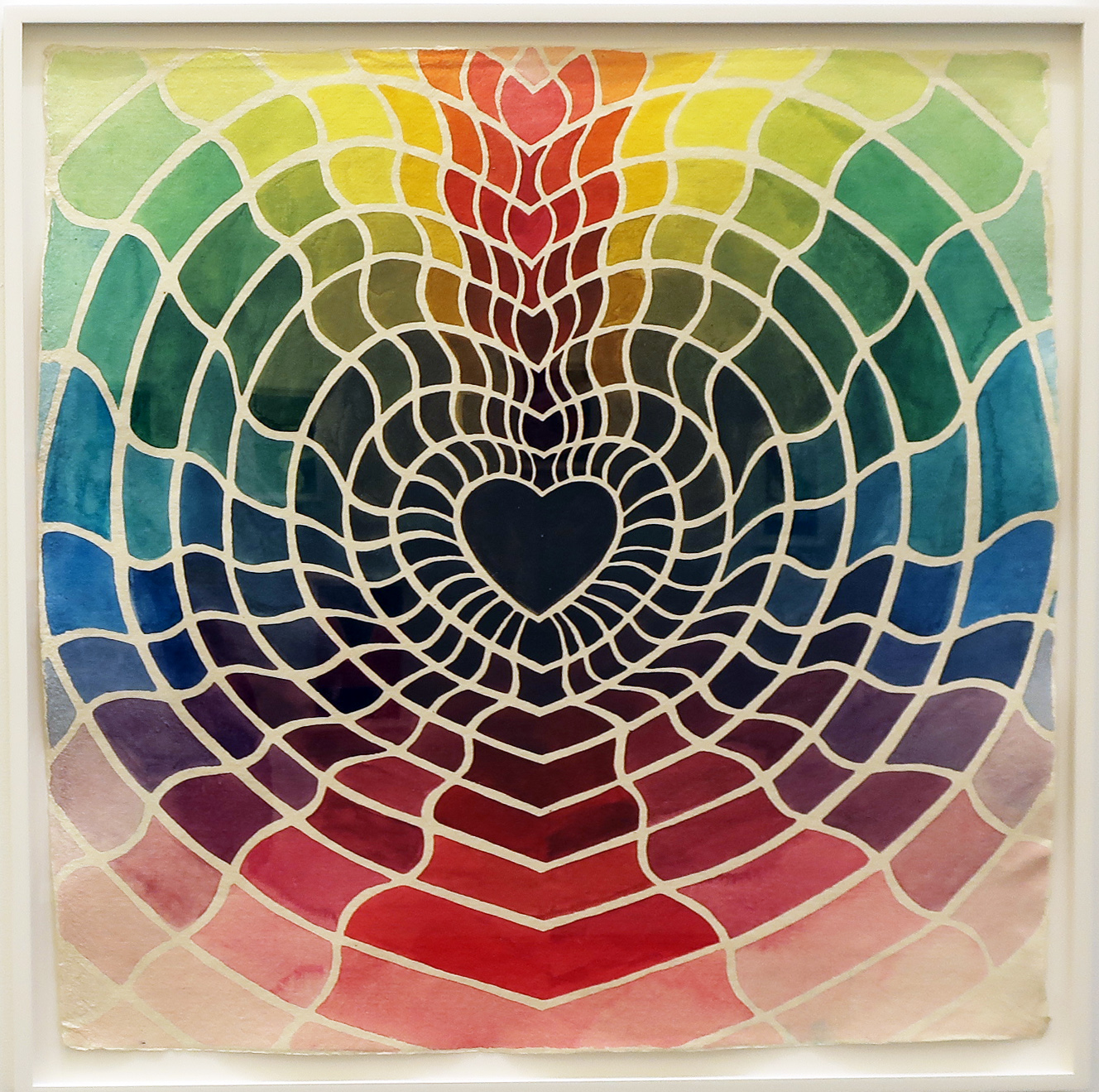
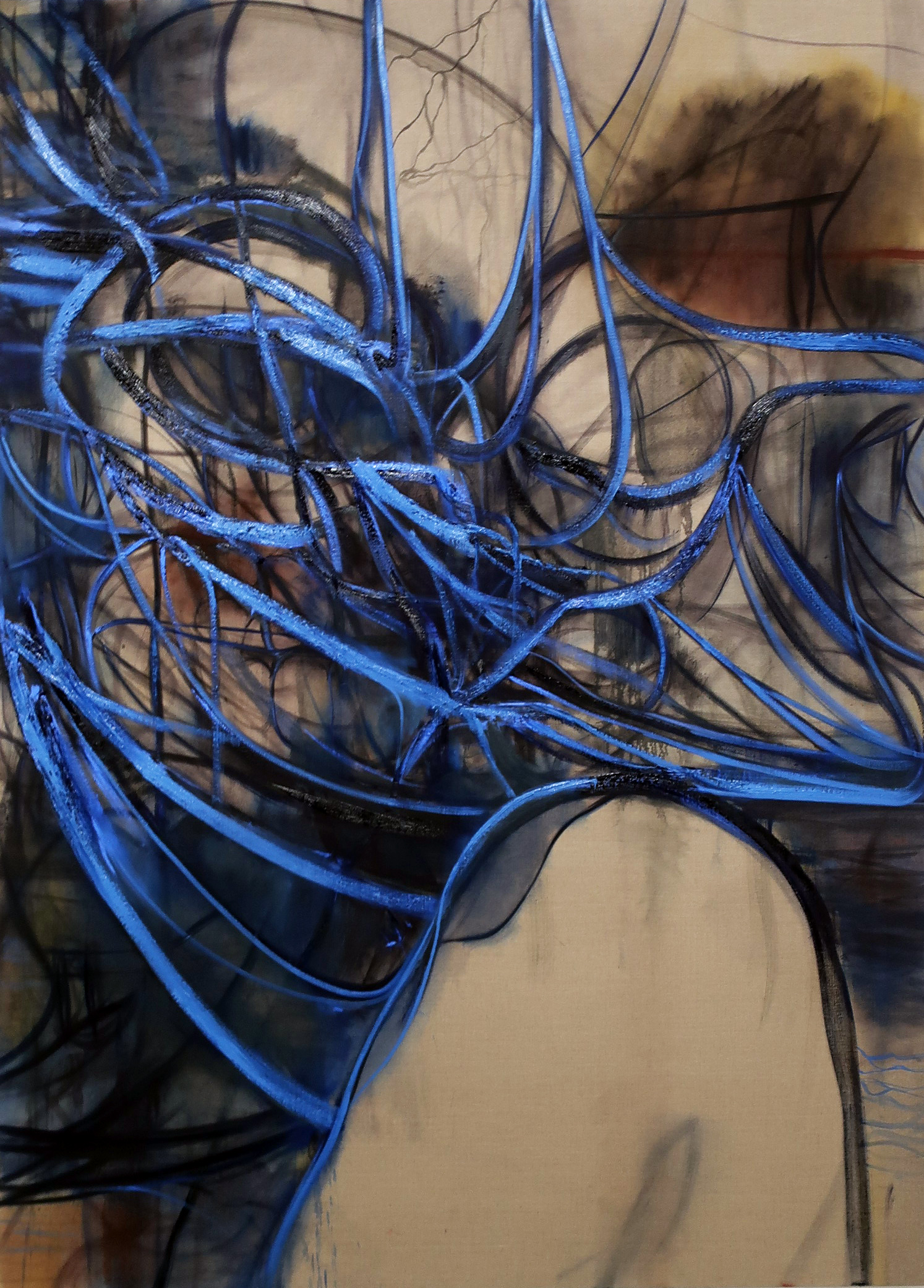
‘Klaus on Paper,’ a concisely curated, attractively presented five-artist exhibition of paintings and drawings on paper by Klaus von Nichtssagend Gallery stands out among the   many new on-line outlets for art.  Liz Luisada’s contributions continue to consider the importance of grids and webs; in this painting from her summer ’18 solo show at the gallery, Luisada suggests that human activity creates and causes movement in each system.

Liz Luisada, communing, watercolor on paper, 27 ¾ x 27 ¾ inches, 2018.

Olafur Eliasson with Acute Art

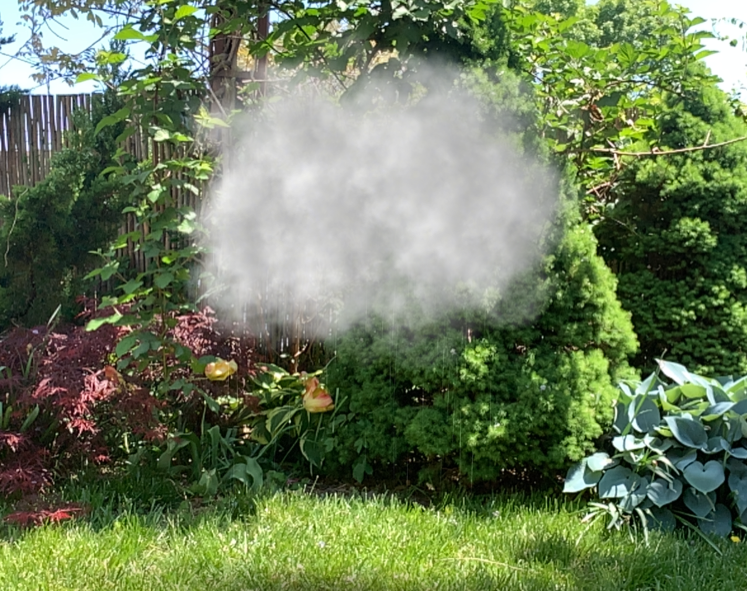
Is your garden too dry or your day too sunny?  Olafur Eliasson offers a solution in ‘Wunderkammer,’ a selection of augmented reality artwork available for download that includes a placeable raincloud complete with the sound of pattering raindrops.  A puffin, a rainbow, a ladybug and more join the cloud as part a recent project launched by the newly high profile AR Art platform Acute Art to allow participants to create their own ‘cabinet of curiosities.’

Olafur Eliasson’s cloud in ‘Wunderkammer’ with Acute Art.

Nigel Cooke at pacegallery.com

After presenting paintings of lone figures at Pace Gallery’s new 25th Street headquarters in February of this year (a highlight of which is pictured here), British painter Nigel Cooke is back at pacegallery.com with new characters made while working in isolation.  Working at night has created an even more solitary environment for the artist from which he’s tried to capture how ‘perceptions are always changing when things are uncertain.’  Collectively titled ‘Midnights,’ each new work carries titles like ‘Shore,’ ‘Waiting’ or ‘Islands,’ that speak to the idea of a figure looking out to sea. (On view at pacegallery.com through June 2nd).

Nigel Cooke, Actaeon, oil and acrylic on linen, 88 9/16 x 64 9/16 inches, 2019.

Sara Ludy with Bitforms at Future Fair

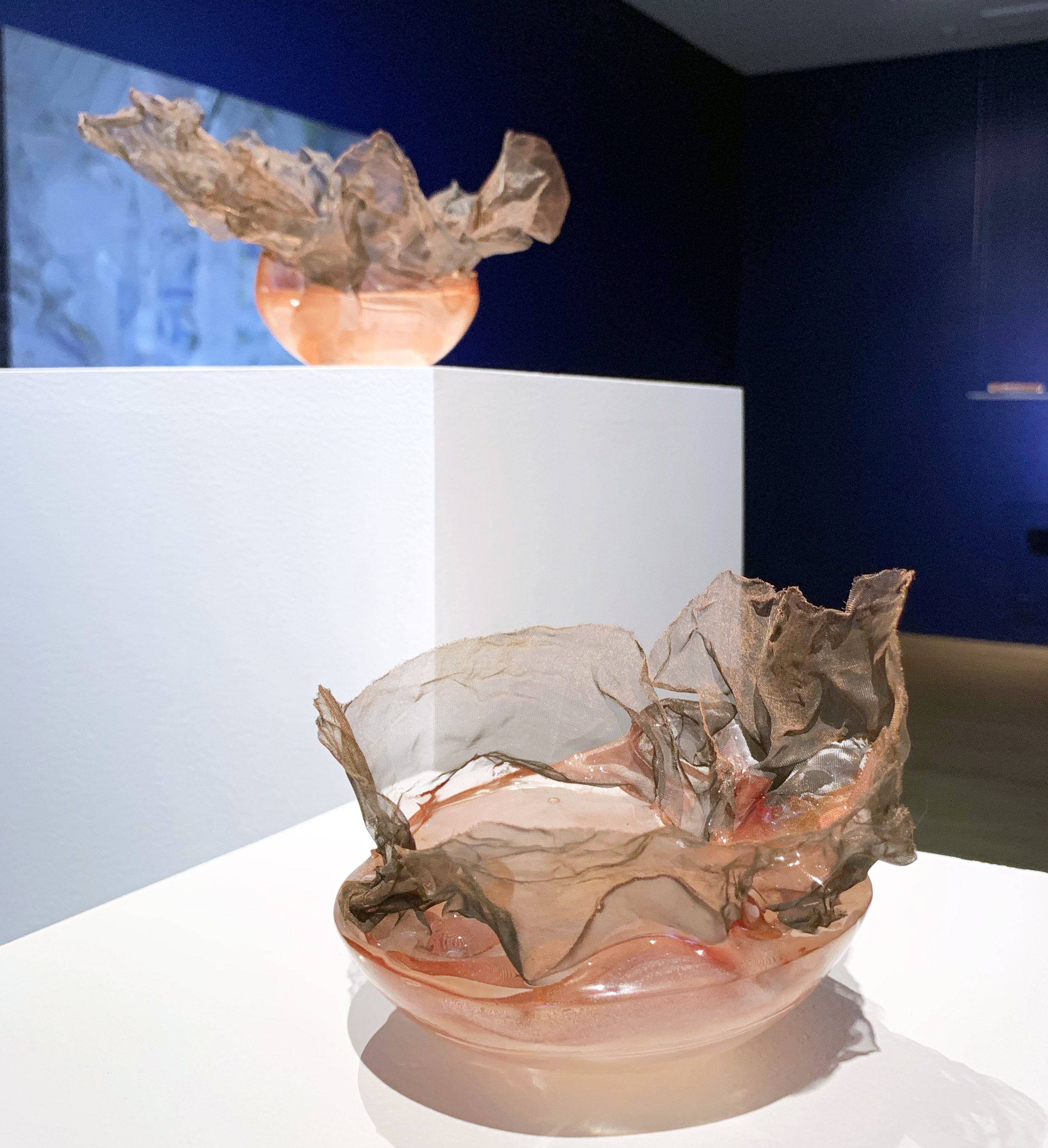
Sara Ludy’s artwork connects to both virtual and physical worlds manifesting as actual objects inspired by a VR dream house; here, in pieces from 2018, the artist combined glass and copper to create sculptural environments for imagined birds.  Ludy’s ability to create compelling work in digital and physical media makes her an ideal artist for her gallery, Bitforms, to showcase in the inaugural Future Fair, currently operating on-line due to the pandemic.  Check out her latest images, attractive abstractions which appear simultaneously organic and highly manipulated, intimate yet without reference to scale. (On view in the Future Fair through June 6th).

Sara Ludy, Nest 1 and Nest 2, both Waken Glass; copper mesh and glass, 4 x 8 x 7 inches & 2.5 x 5 x 4.75 inches, both 2018.

Emily Mae Smith in ‘Second Smile’ at theholenyc.com

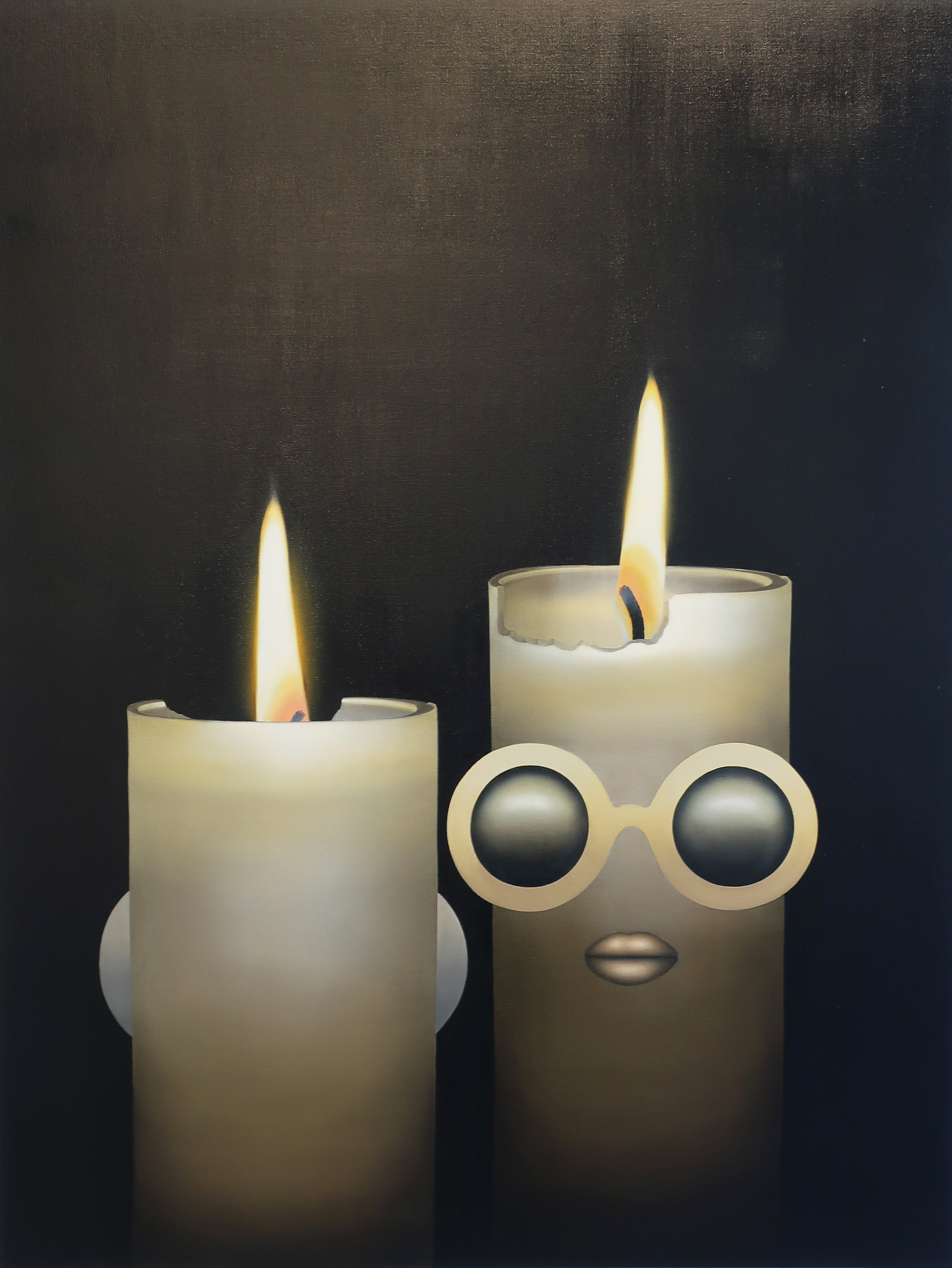
Installed in late April though the show will likely never be seen in person by the public, The Hole NYC’s exhibition ‘Second Smile’ asks how Surrealism continues to surface in contemporary painting.  The show includes work by Emily Mae Smith, whose painting of two candles in a clandestine nighttime meeting was a memorable part of her show at Simone Subal Gallery in 2017.  (On view at The Hole NYC through May 24th).

Emily Mae Smith, The Caress, oil on linen, 48 x 38 inches, 2017.

Titus Kaphar at gagosian.com

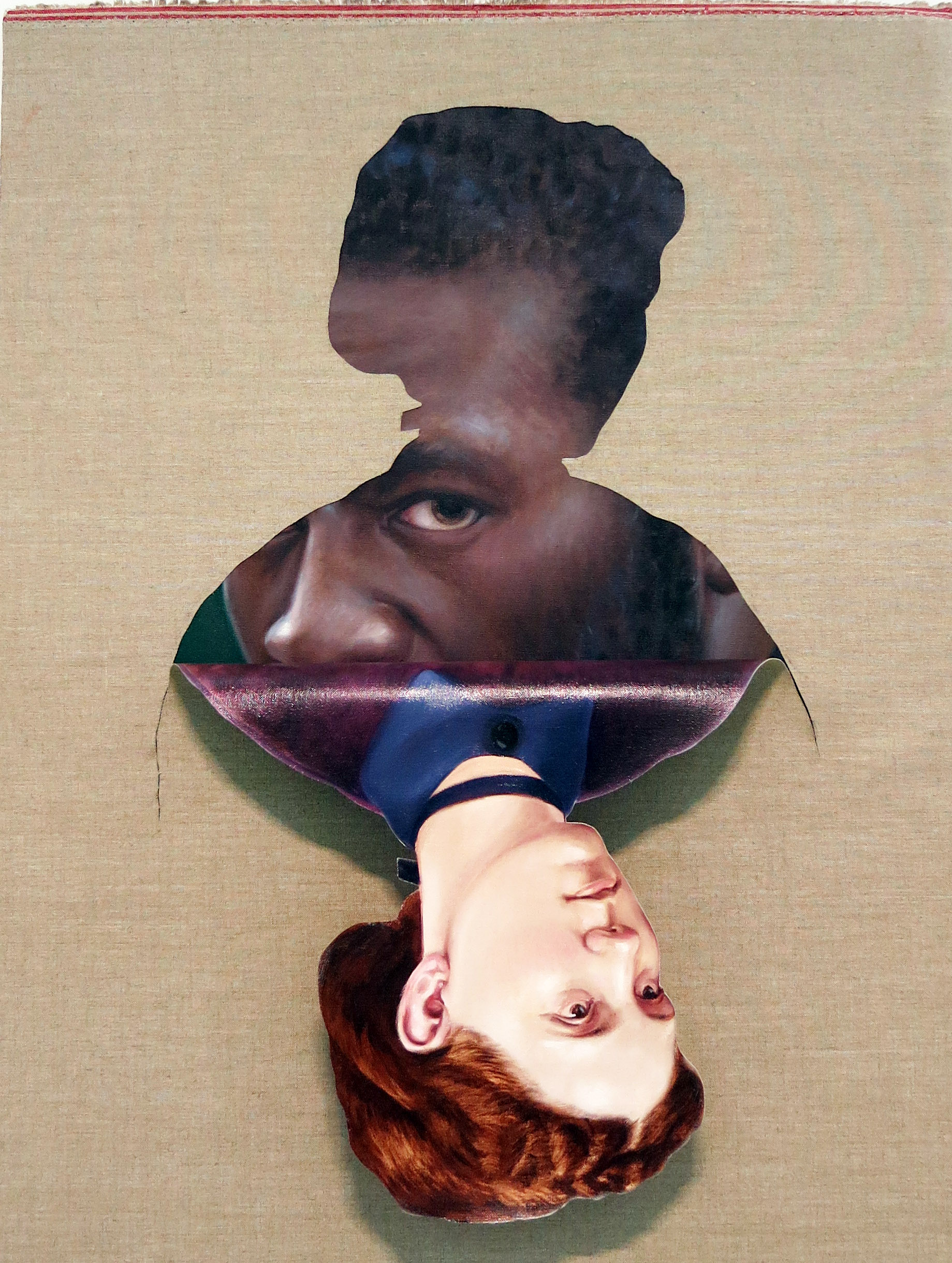
Titus Kaphar’s latest paintings, the subject of a special Artist Spotlight at Gagosian Gallery, take a dramatic turn for the colorful as they continue to explore historical representations of people of African descent.  This standout from Kaphar’s 2015 show at Jack Shainman Gallery takes art historical representation as its subject by exposing two figures whose relationship would remain hidden without a revealing cut.  Kaphar’s new subjects – women in charge of children who have been cut out of the canvas – exist in charged landscapes that are “…a reflection of an emotional and psychological space.”

Titus Kaphar, Falling from the Gaze, oil on canvas, 48 ¼ x 37 ¾ x 1 ½ in, 2014.

Sam Falls at 303gallery.com

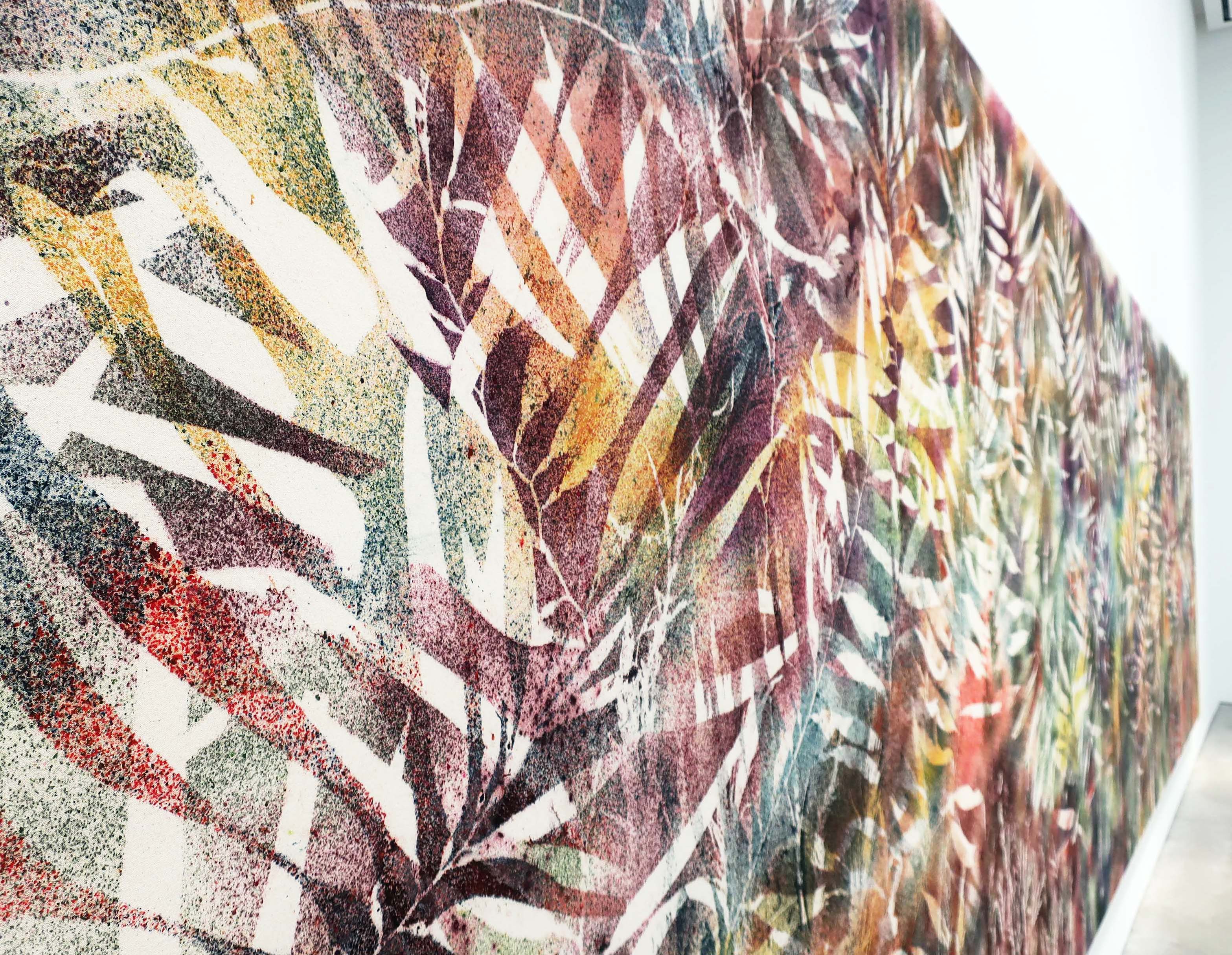
Sam Falls records a direct experience of nature by allowing the elements to interact with the plant material and pigment he places on canvas and leaves outdoors.   His beautifully presented on-line exhibition at 303gallery.com includes photos that elaborate on his process and his ceramic practice, which includes a series of intricate ceramic tile archways on the High Line featuring designs every bit as enticing as the lush foliage surrounding them.  (On view in 303 Gallery’s on-line viewing room through May 15th).

Sam Falls, detail of Untitled (Conception), pigment on canvas, 7ft, 6 in x 41ft, 2018.

Carol Bove at davidzwirner.com

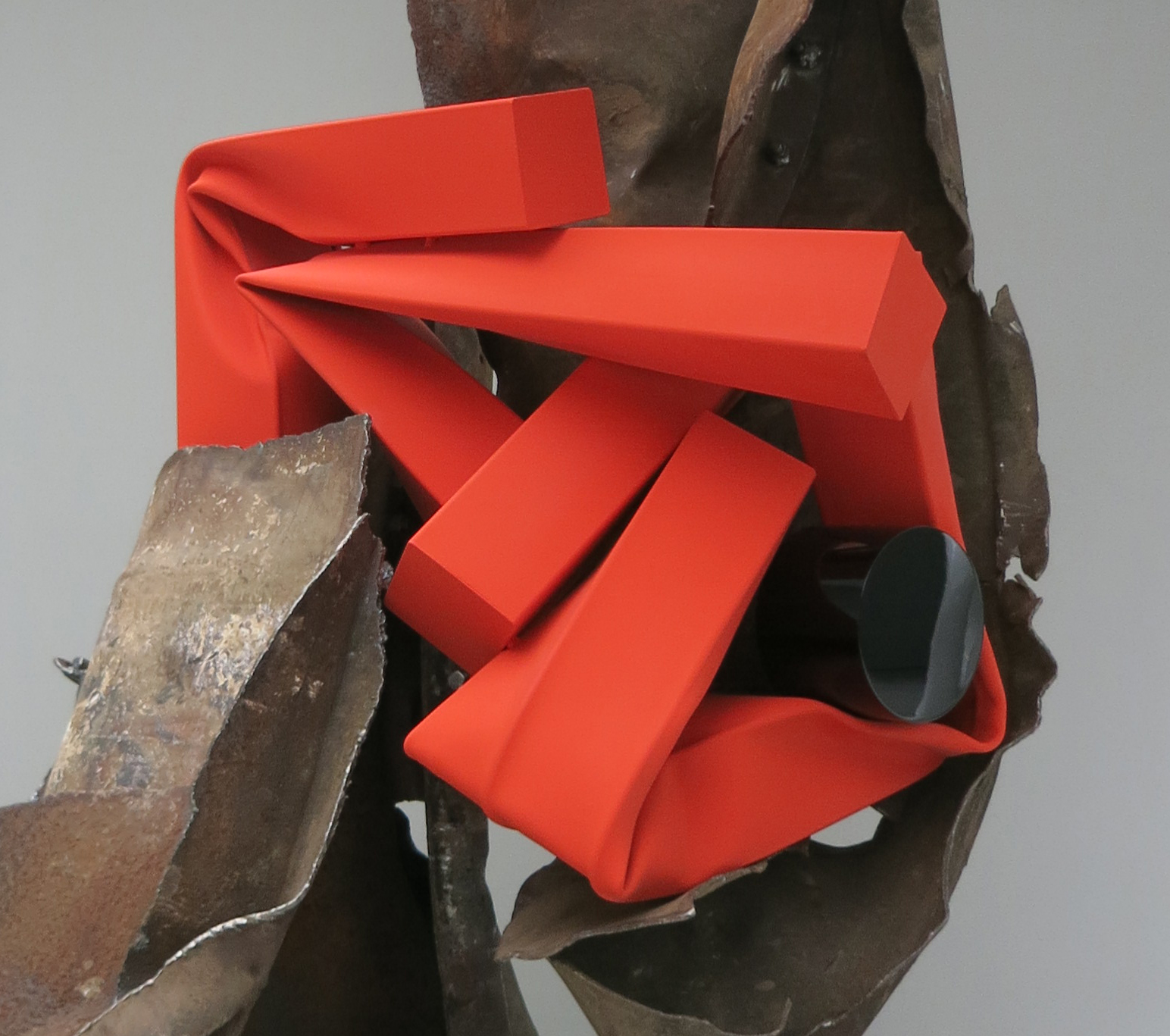
Fashion, art history and the relationship between works in an exhibition drive the color choices that make Carol Bove’s hybrid sculptures stand out.  Sharp contrasts between aged, found steel and the smooth geometries of urethane-covered forms give pause to consider the relationships between two familiar yet seemingly mismatched materials.  This piece (seen in detail) from the artist’s last major Chelsea solo show at David Zwirner Gallery in ‘16 juxtaposes found steel with urethane-covered steel to create a wonderfully misleading suggestion of pliability.  When a sculpture’s color can make it appear to have a digital effect, Bove’s at her happiest.  She explains this and more on davidzwirner.com where a new on-line exhibition showcases select new works.

Carol Bove, (detail of) Daphne and Apollo, found steel, stainless steel, and urethane paint, 98 x 72 x 61 inches, 2016.

Broomberg & Chanarin at signsandsymbols.art

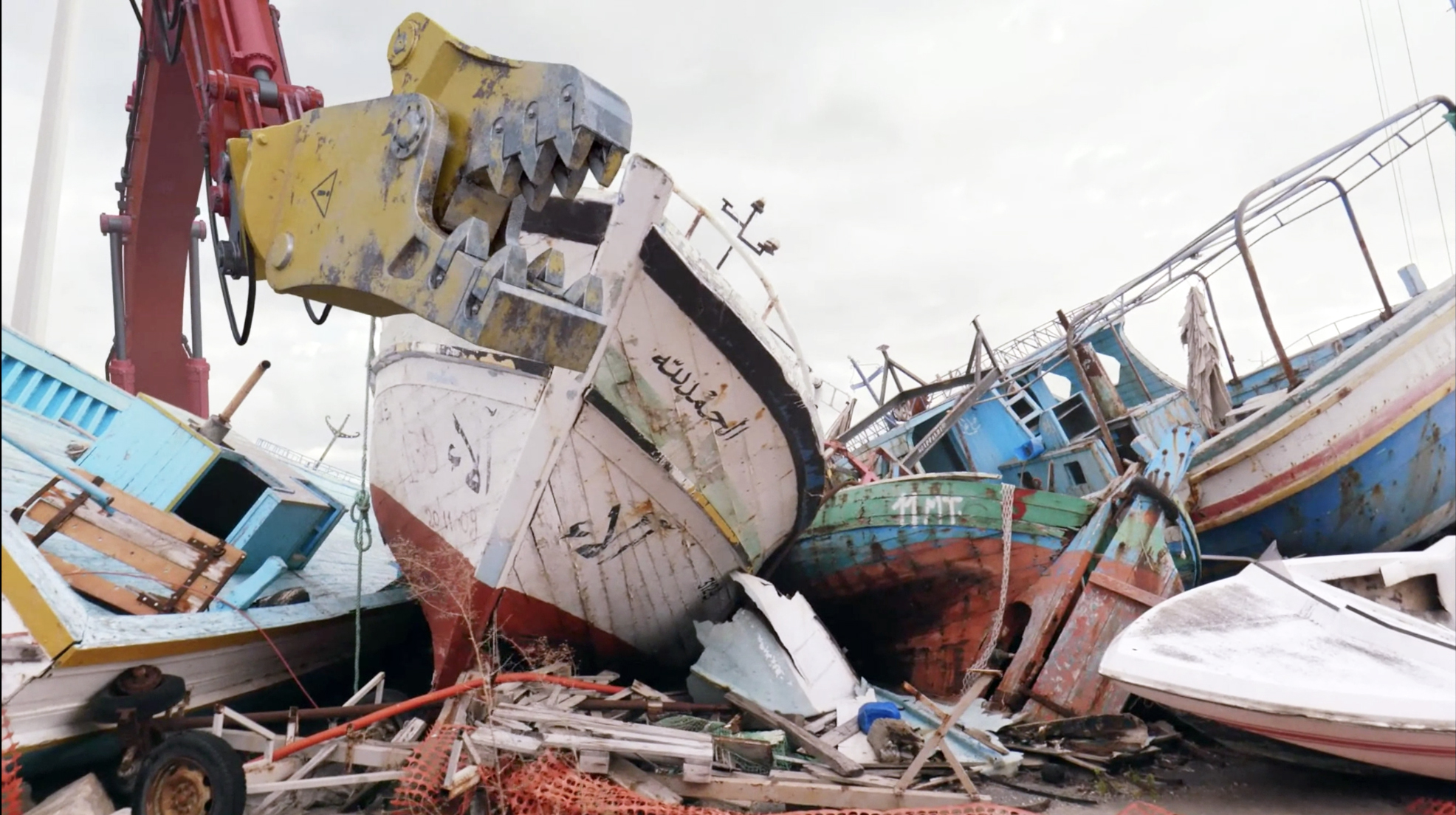
London and Berlin-based artists and photography professors Adam Broomberg & Oliver Chanarin’s short film, ‘The Bureaucracy of Angels’ grabs the imagination immediately with an unlikely casting choice; the star of the show – a mechanical wrecking arm – makes a riveting appearance as a soulful ballad singer lamenting the pain of migration.  Currently available to watch via the Lower East Side gallery Signs & Symbols’ website, the piece’s premise is absurd but the effect is first mesmerizing, then moving.  Part destroyer, part guardian, the machine keeps watch over migrants being intercepted by rescue agencies before eventually wrecking boats abandoned by travelers who made it to Sicily.  (Available online at signsandsymbols.art through May 13th).

Broomberg & Chanarin, still from ‘The Bureaucracy of Angels,’ 2017.

Rebecca Morgan in ‘Amuse-Bouche’ at asyageisberg.com

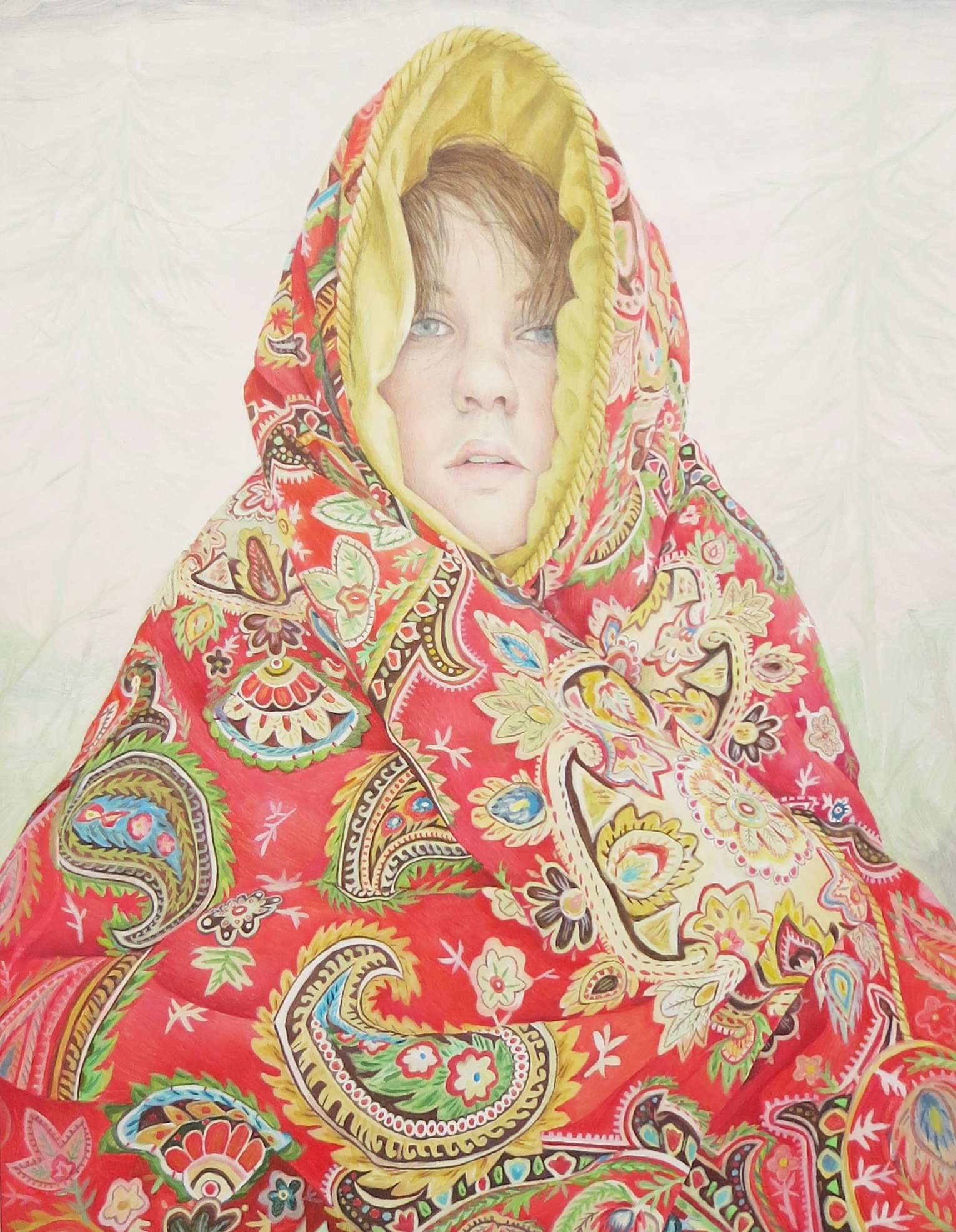
Rebecca Morgan’s skewering of elitist urban attitudes towards rural Americans has shifted towards the grotesque in recent years.  You wouldn’t guess this to judge by this highlight of Morgan’s 2014 show from New York Art Tours archive, a sensitive portrayal of the artist wrapped in her ‘depression blanket.’  Audacious and merciless as ever, Morgan’s latest work at Asya Geisberg Gallery is part of a group exhibition of work priced under $3k; her young woman in a face mask is a highlight of the presentation.

Rebecca Morgan, Depression Blanket, oil and graphite on panel, 28” x 22,” 2014.

Hilary Pecis in ‘Dwelling is the Light’ at timothytaylor.com

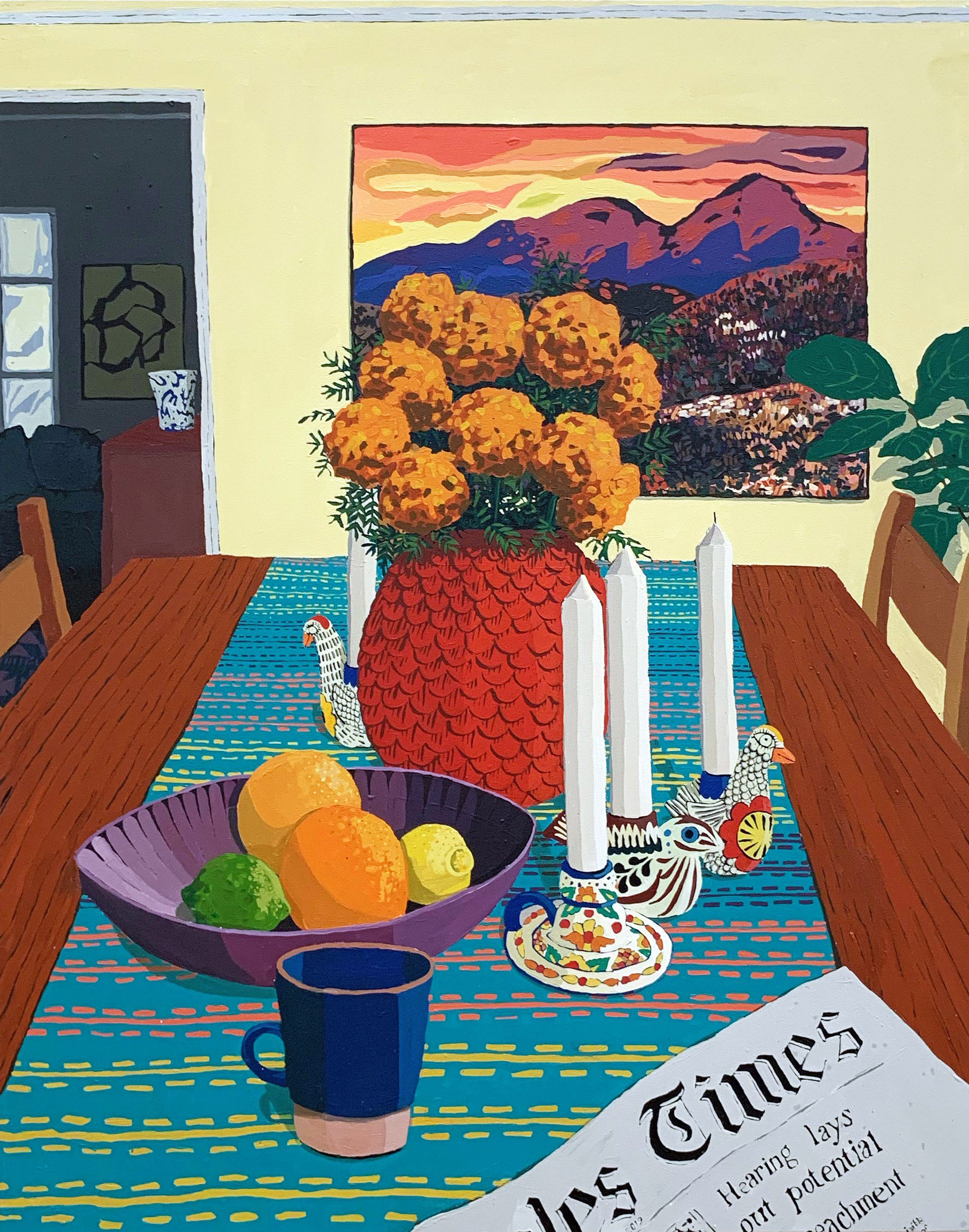
West coast light and the pleasures of color define Hilary Pecis’ recent work at Rachel Uffner Gallery and Timothy Taylor Gallery’s current on-line show ‘Dwelling is the Light.’  Working from a photo archive that includes the homes of friends and family, Pecis creates vibrant portraits that leave out actual individuals but make you wish you could meet the characters who’ve created such sunny environments.  (On view at timothytaylor.com through May 15th).

Hilary Pecis, Morning, acrylic on canvas, 50 x 40 inches, 2019.