Krzysztof Wodiczko at Galerie Lelong

Abraham Lincoln morphs into a teenager, a senior, a woman in glasses and other characters in Krzysztof Wodiczko’s ‘A House Divided…’, as interviews shot with a variety of Staten Island citizens with varying political views are projected onto two replica of the Lincoln Memorial at Chelsea’s Galerie Lelong.  In some exchanges, friends acknowledge their differences while respecting each other; in other conversations, barriers remain high.  Wodiczko’s goal is to encourage the exchange regardless, making dialogue the goal of his art production.  (On view through March 7th).
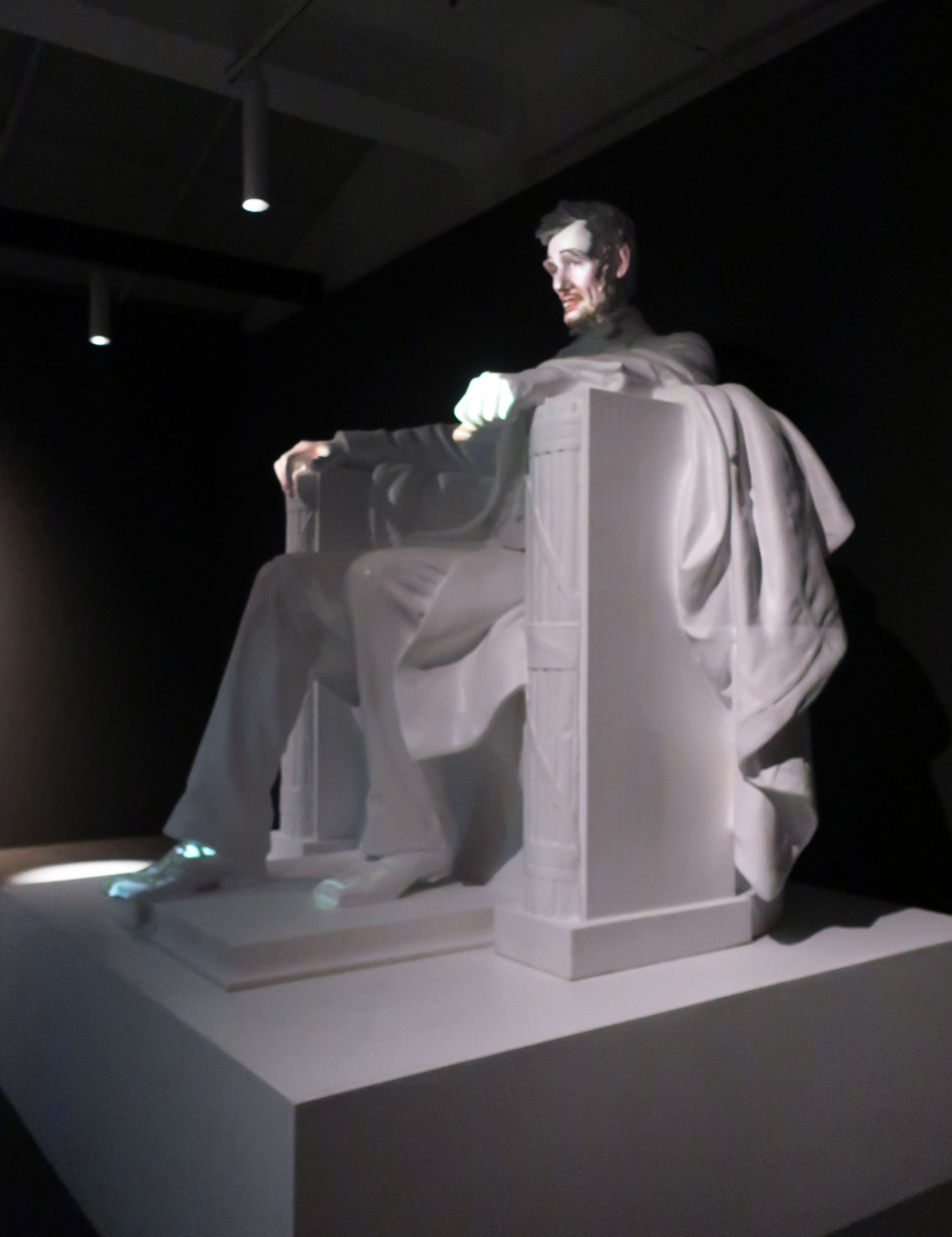
Krzysztof Wodiczko, A House Divided…, 4K video projection on sculpture, figure height: 98.4 inches, 2019.

Fumika Koda at Sato Sakura Gallery

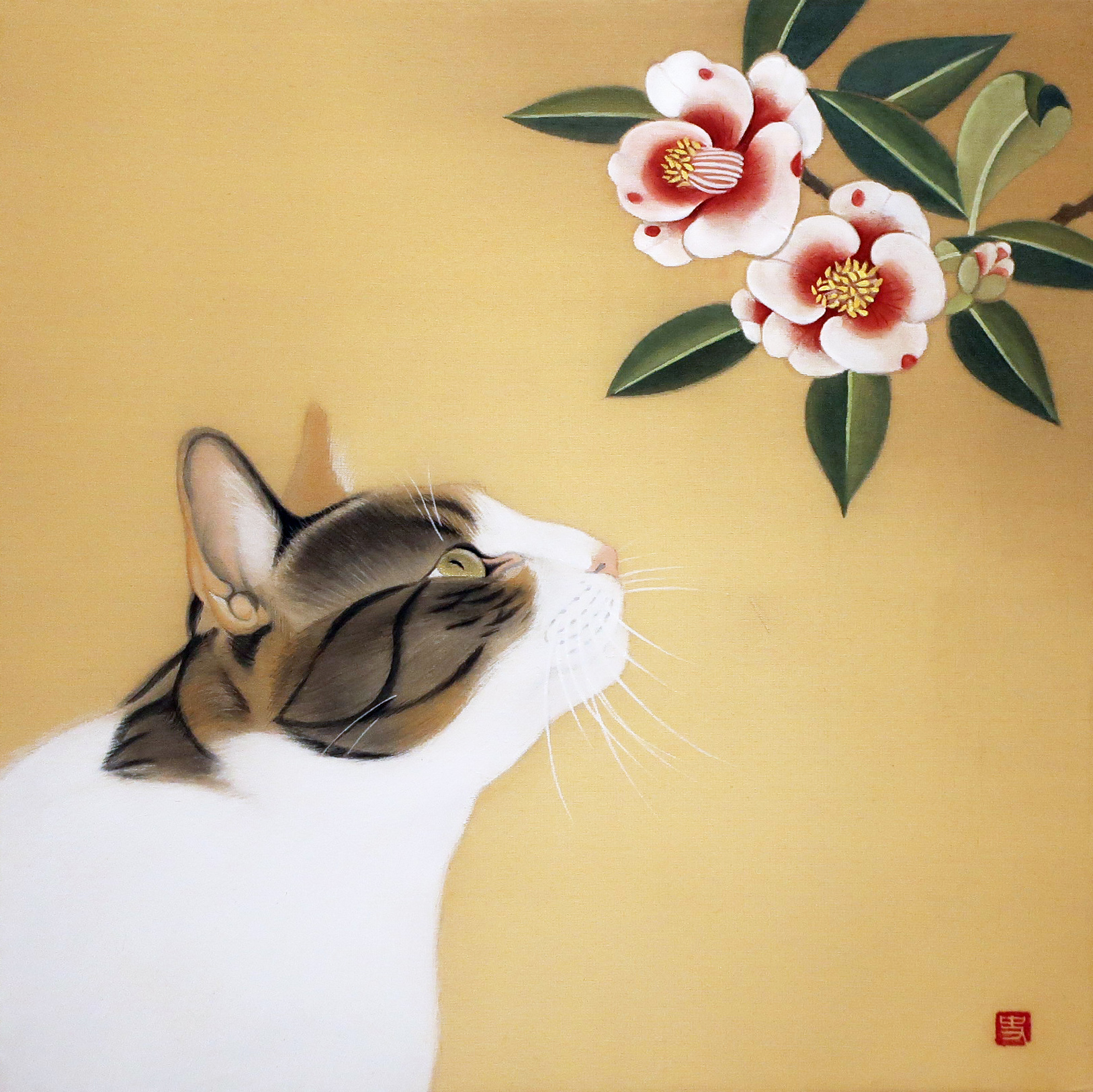
Taking in stray cats changed young artist Fumika Koda’s painting career, focusing her practice on the feline subjects and driving her to find intimate ways to portray their habits and personalities, often in connection to the seasons.  Koda even aims to empower the cats, as she puts it, “…giving them their power back over the people who left them,” but it’s her evident respect for the cats’ beauty and intelligence that stands out.  (On view at Sato Sakura Gallery through March 28th).

Fumika Koda, Dreaming, mineral pigments, gelatin, silk, 10.7 x 10.7 inches, 2019.

Nigel Cooke, Gazing at Pace Gallery

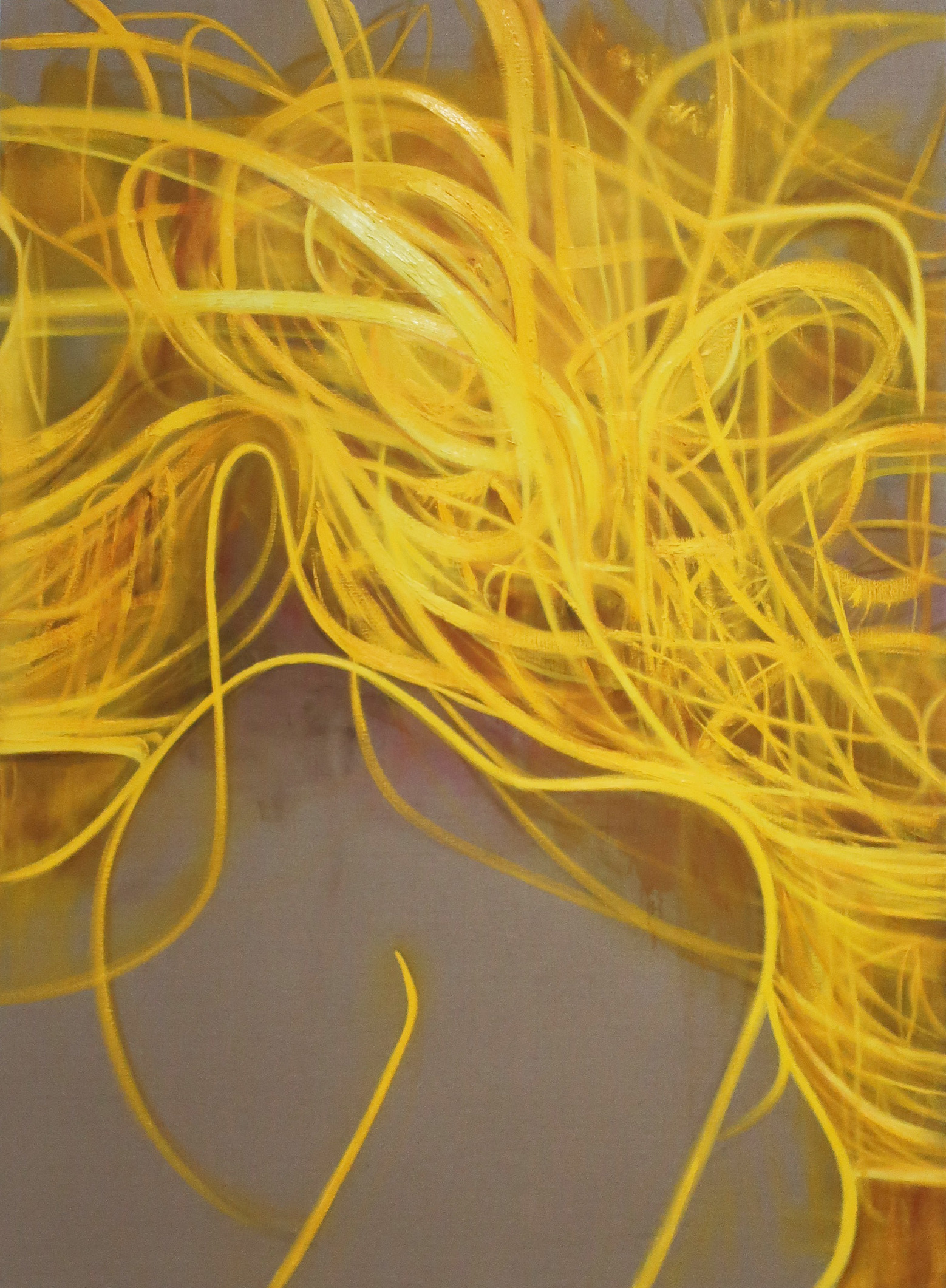
British artist Nigel Cooke has long blurred the line between abstraction and figuration, but recent monochromatic paintings on raw canvas at Pace Gallery convey new urgency and dynamism.  By contrasting surface areas of relative calm with intersecting webs of paint receding into the distance, Cooke suggests that focus can be achieved and released, instantly altering our perspective on the environments surrounding us.  (On view through Feb 29th).

Nigel Cooke, Gazing, oil and acrylic on linen, 88 9/16 x 64 9/16 inches, 2019.

Ja’Tovia Gary at Paula Cooper Gallery

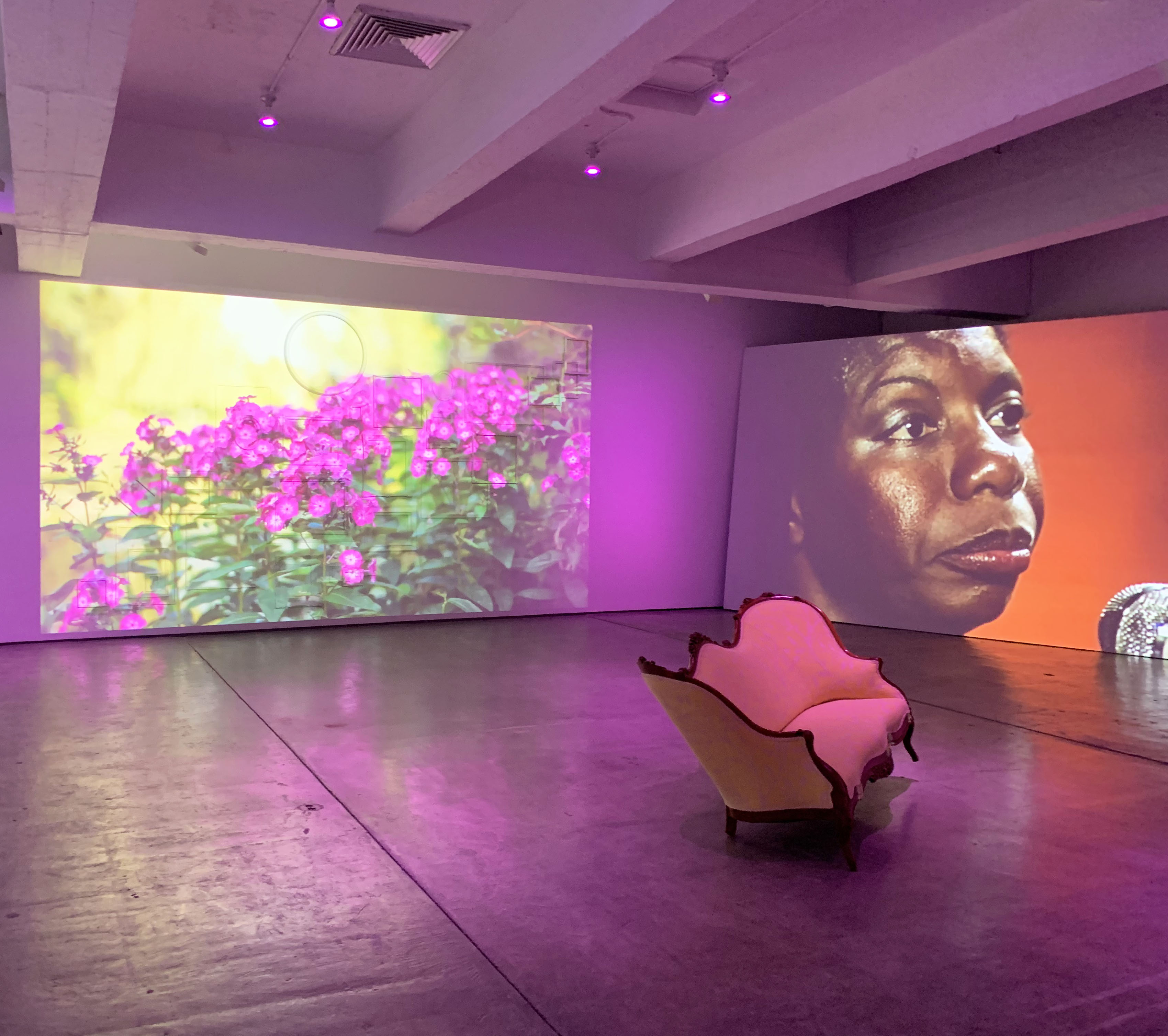
Ja’Tovia Gary pictures the variety in Black womanhood in her new three-channel video installation at Paula Cooper Gallery with footage shot of the artist in Monet’s garden at Giverny intercut with video of Nina Simone’s 1976 performance at the Montreux Festival and street corner interviews with women of African descent in Harlem.  Through direct animation on archival film, internet footage and her own images as well as montage, Gary employs a variety of techniques to present a complex view of Black interiority. (On view in Chelsea through March 21st).

Ja’ Tovia Gary, installation view from THE GIVERNY SUITE, three-channel film installation, 2019.

Josep Grau-Garriga Tapestry at Salon94

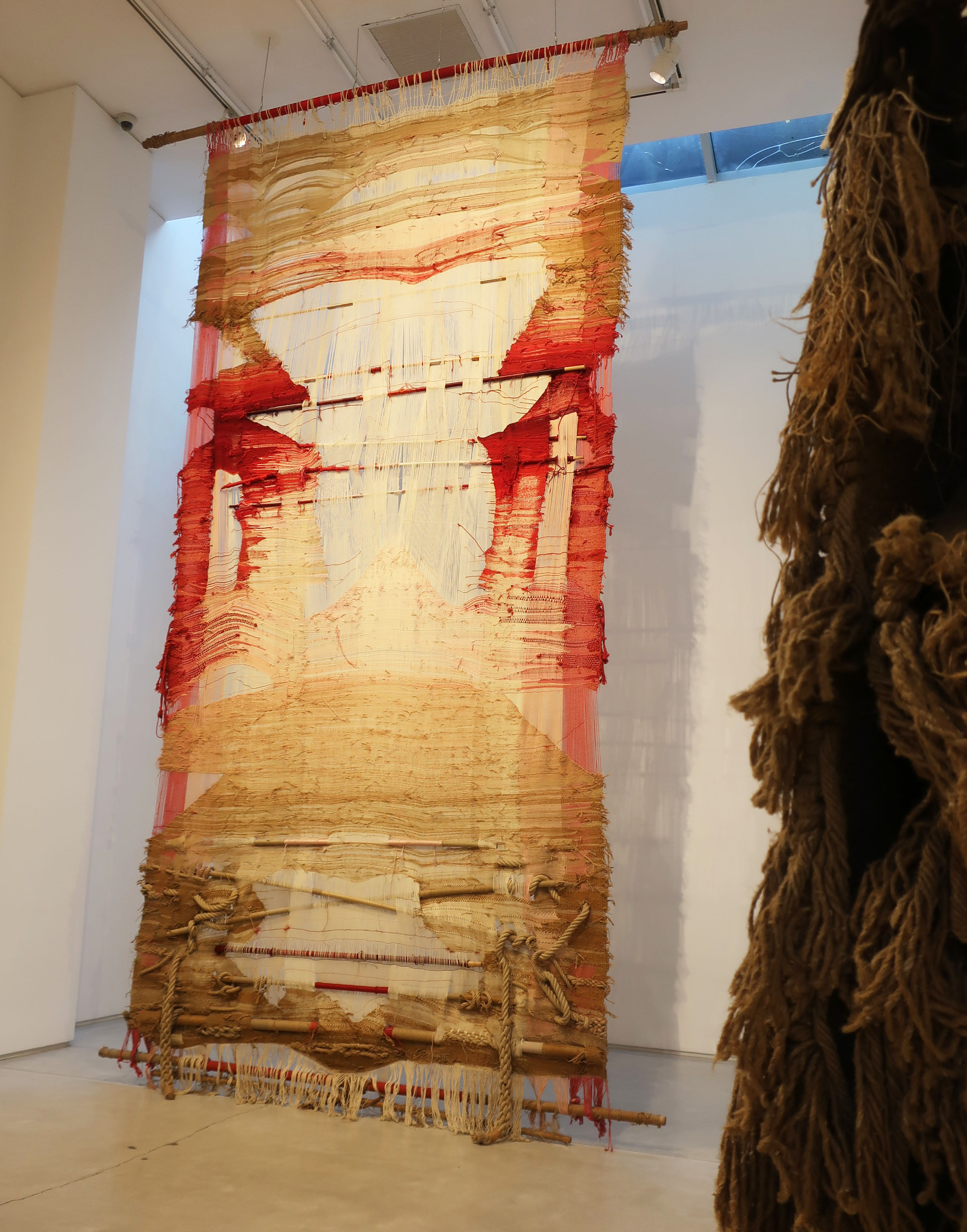
At over twenty feet tall, late Catalan fiber artist Josep Grau-Garriga’s monumental tapestry ‘February Light’ dominates visitors to Salon94 Bowery.  Made in the 70s after Grau-Garriga had pioneered a move away from realist tapestries crafted with expensive materials into expressionist compositions fashioned from fibers including string, hemp and even old sacks, February Light’s wooden rods and ropes give the piece a remarkable boldness.  Created in the years just after the death of dictator Francisco Franco, the many openings in the blood-red areas of the artwork seem to continue Grau-Garriga’s frequent political allusions.  (On view on the Lower East Side through Feb 29th).

Josep Grau-Garriga, Llum de Febrer, tapestry, 255 7/8 x 118 1/8 inches, 1978-81.

Janet Sobel at Andrew Edlin Gallery

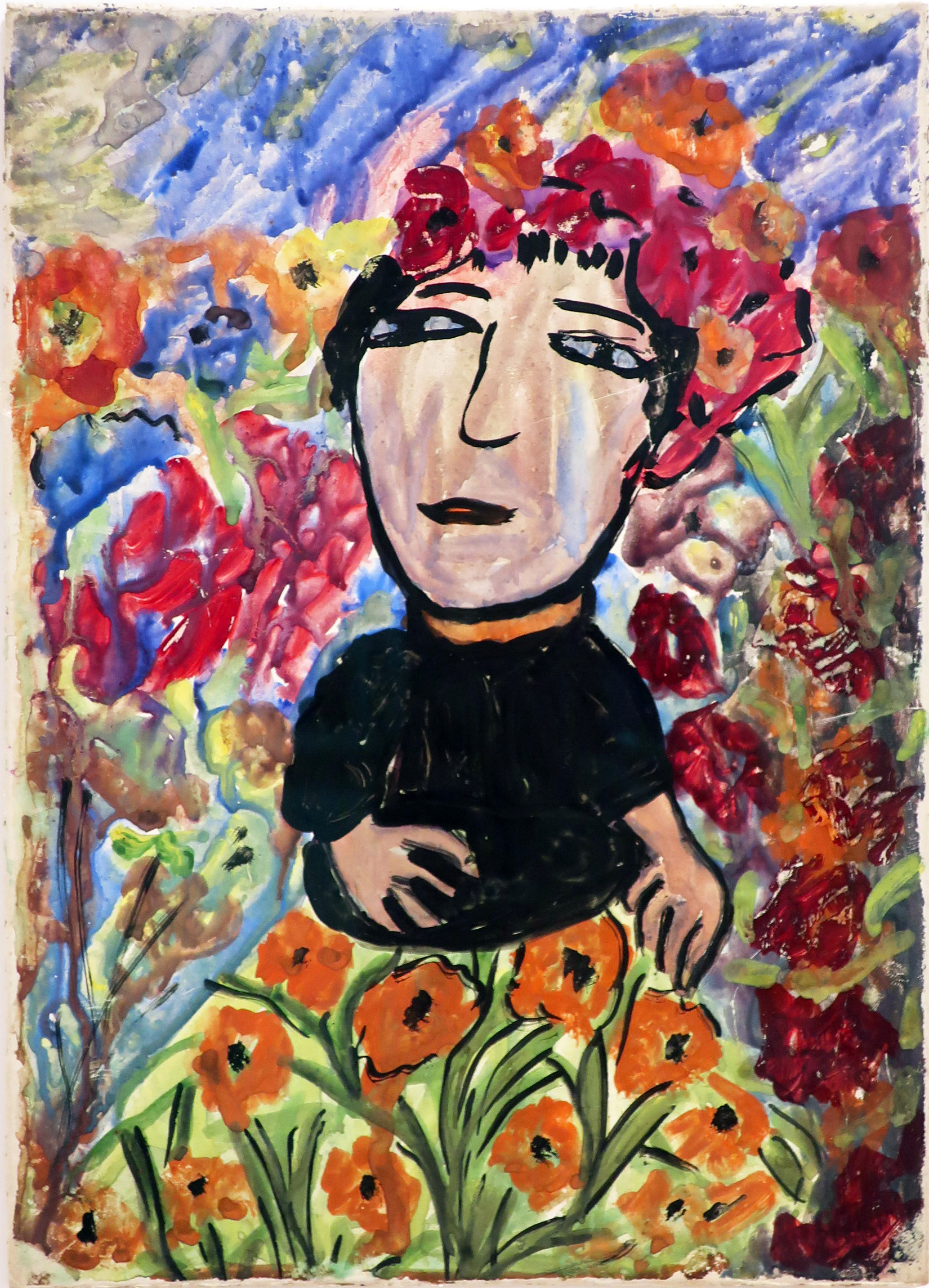
On her way to developing an abstract, dripped-paint style that influenced Jackson Pollock in the 1940s, New York artist Janet Sobel painted scenes inspired by the shtetls of her native Ukraine.  Now on view at Andrew Edlin Gallery, a selection of Sobel’s work shows her flattening of space and merger of a flowery landscape, patterned skirt and floral headdress in a way that flirts with all-over abstraction.  (On view on the Lower East Side through Feb 22nd).

Janet Sobel, Untitled, gouache on board, 10.5 x 7.5 inches, c. 1943-48.

Michael Rakowitz at Jane Lombard Gallery

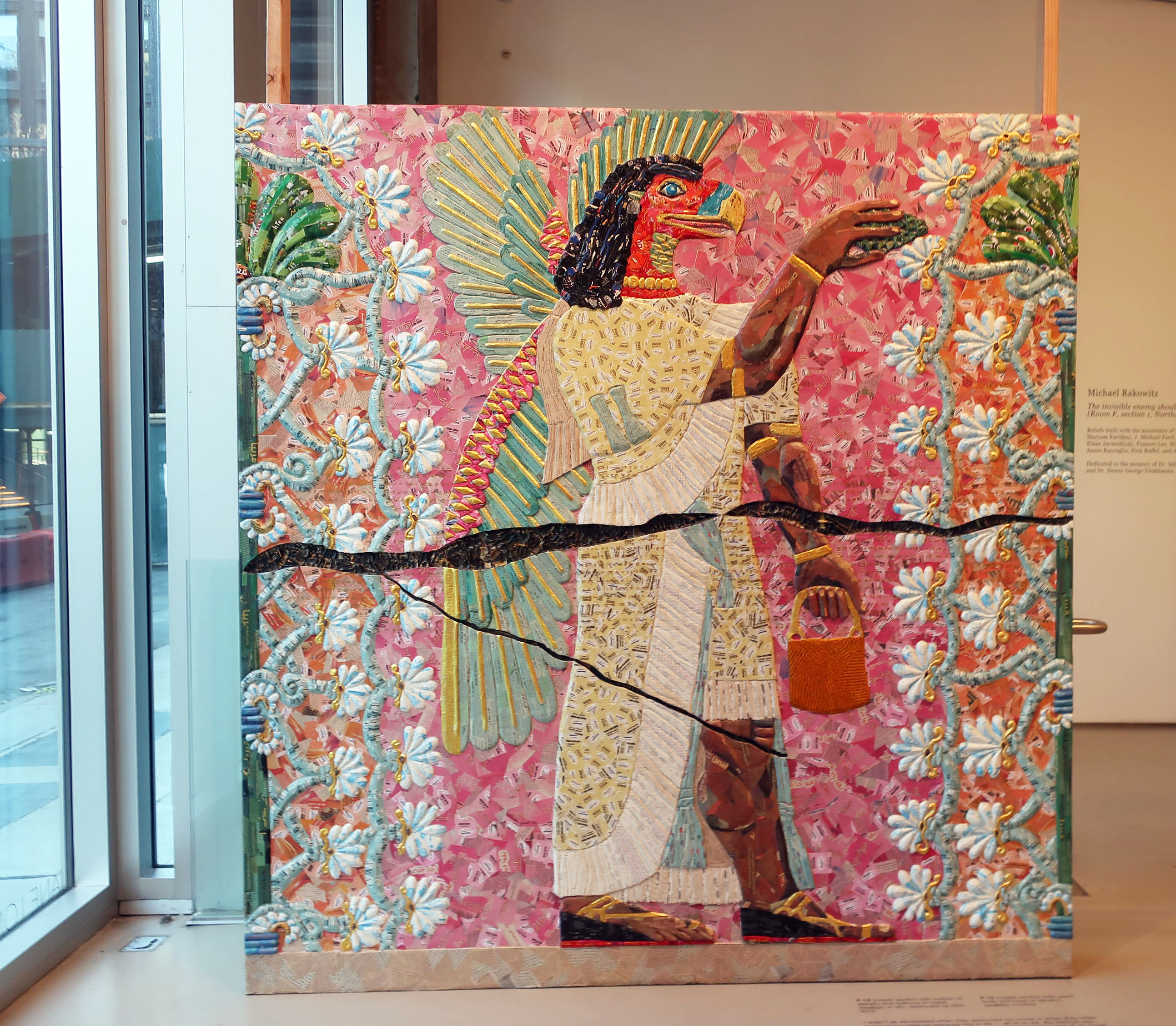
Iraqi-American artist Michael Rakowitz brings the destruction and theft of ancient artworks to public attention at Jane Lombard Gallery with a beautiful but barren reconstruction of the banqueting hall of 9th century BC Assyrian king Ashurnasirpal II at the Palace of Nimrud.  Though destroyed by the Islamic State in 2015, panels from the Palace of Nimrud are housed in many museums, a point Rakowitz highlights by crafting ‘empty’ walls as meticulously as the patterned ones.  (On view in Chelsea through Feb 22nd).

Michael Rakowitz, The invisible enemy should not exist (Room F, section 1, panel 15, Northwest Palace of Nimrud), Middle Eastern food packaging and newspapers, glue, cardboard on wooden structures, 2019.

Dana Lixenberg at Grimm Gallery

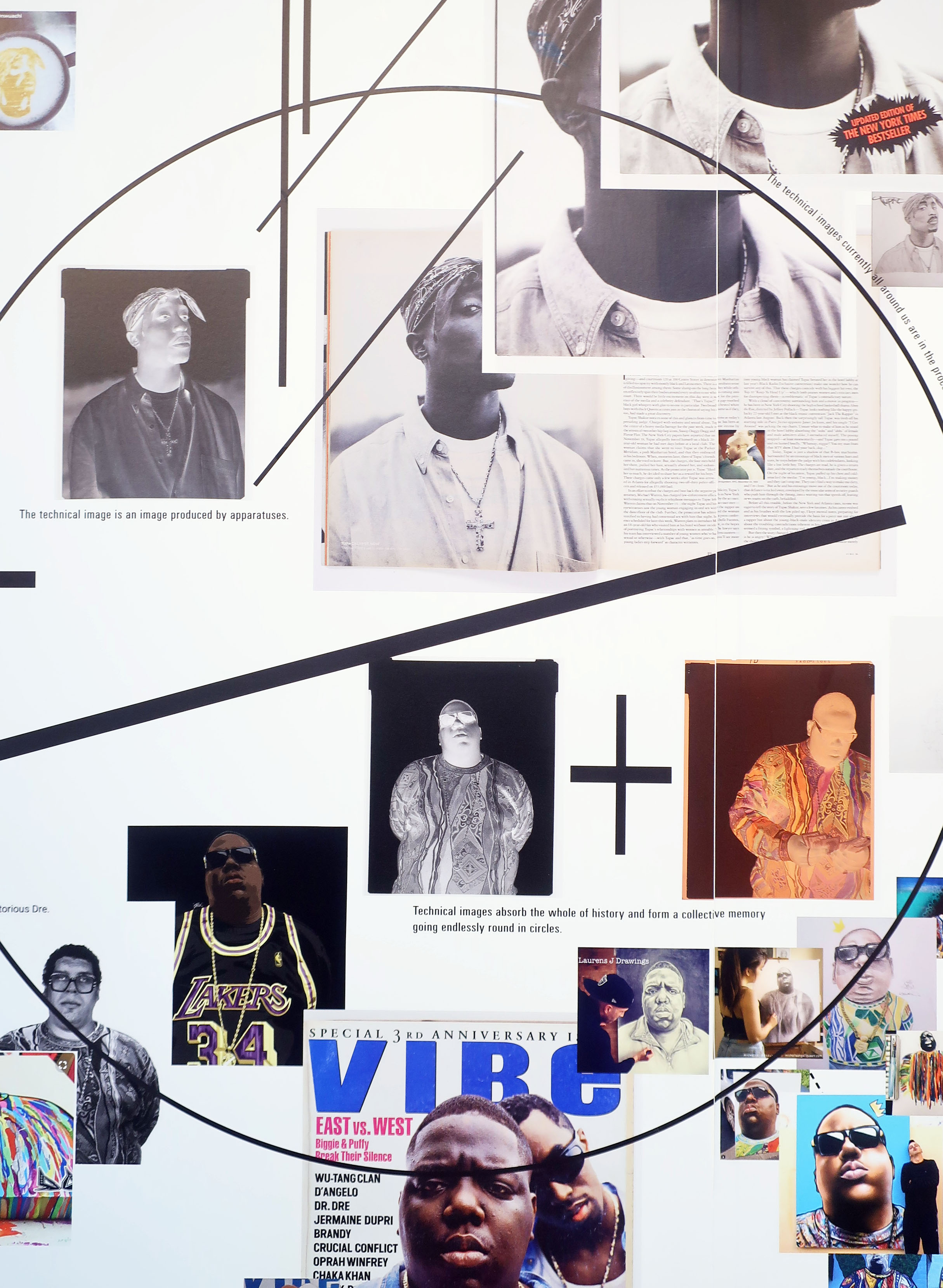
Dutch photographer Dana Lixenberg’s iconic photos for Vibe magazine in the 90s of Tupac Shakur & Biggie appear at the center of schematic mural at Grimm Gallery that demonstrates the incredible currency that photos can have.  Radiating from the center, remakes of Lixenberg’s photos of the two music legends appear in the foam of a latte, on tattoos and via The Simpsons characters among other iterations.  (On view on the Lower East Side through Feb 29th).

Dana Lixenberg’s photos featured in a centerfold from Lixenberg’s Tupac Biggie, design by Linda van Dursen (Roma Publications, 2018).

Noah Davis at David Zwirner Gallery

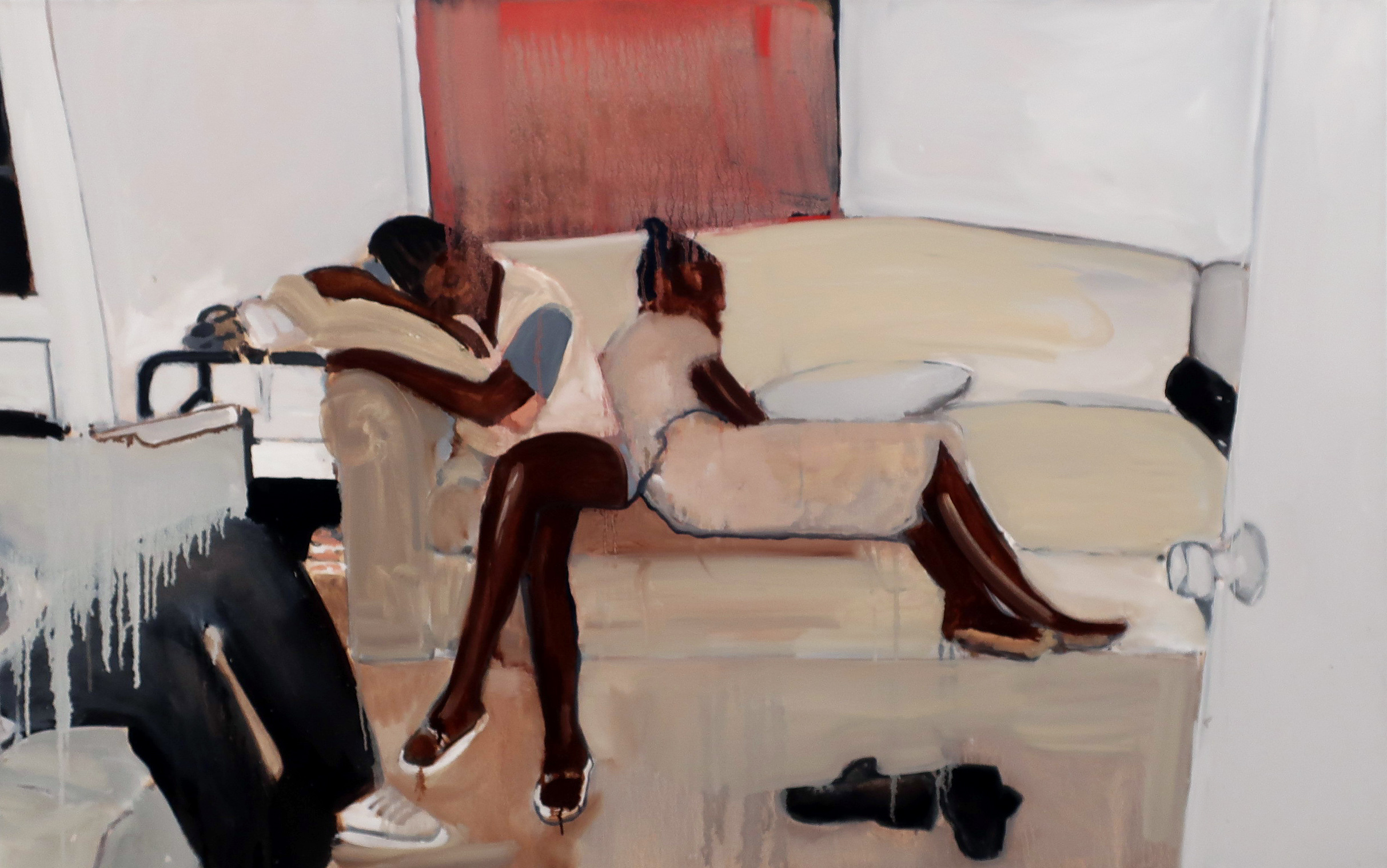
Young LA painter Noah Davis died from cancer in 2015, but the hundreds of artworks he left behind are currently impacting the New York art scene thanks to a double-gallery exhibition at David Zwirner Gallery.  Davis’ style can shift from washy to realistic in the same canvas, creating surprising effects as representation dissolves into uncertainty.  Here, two napping figures on a couch evoke a languorous afternoon, made intriguing by the almost melting space above the lap of a third figure.  (On view in Chelsea through Feb 22nd).

Noah Davis, Untitled, oil on canvas, 32 x 50 inches, 2015.

Orkedeh Torabi in ‘Auguries of Innocence’ at Fredericks Freiser Gallery

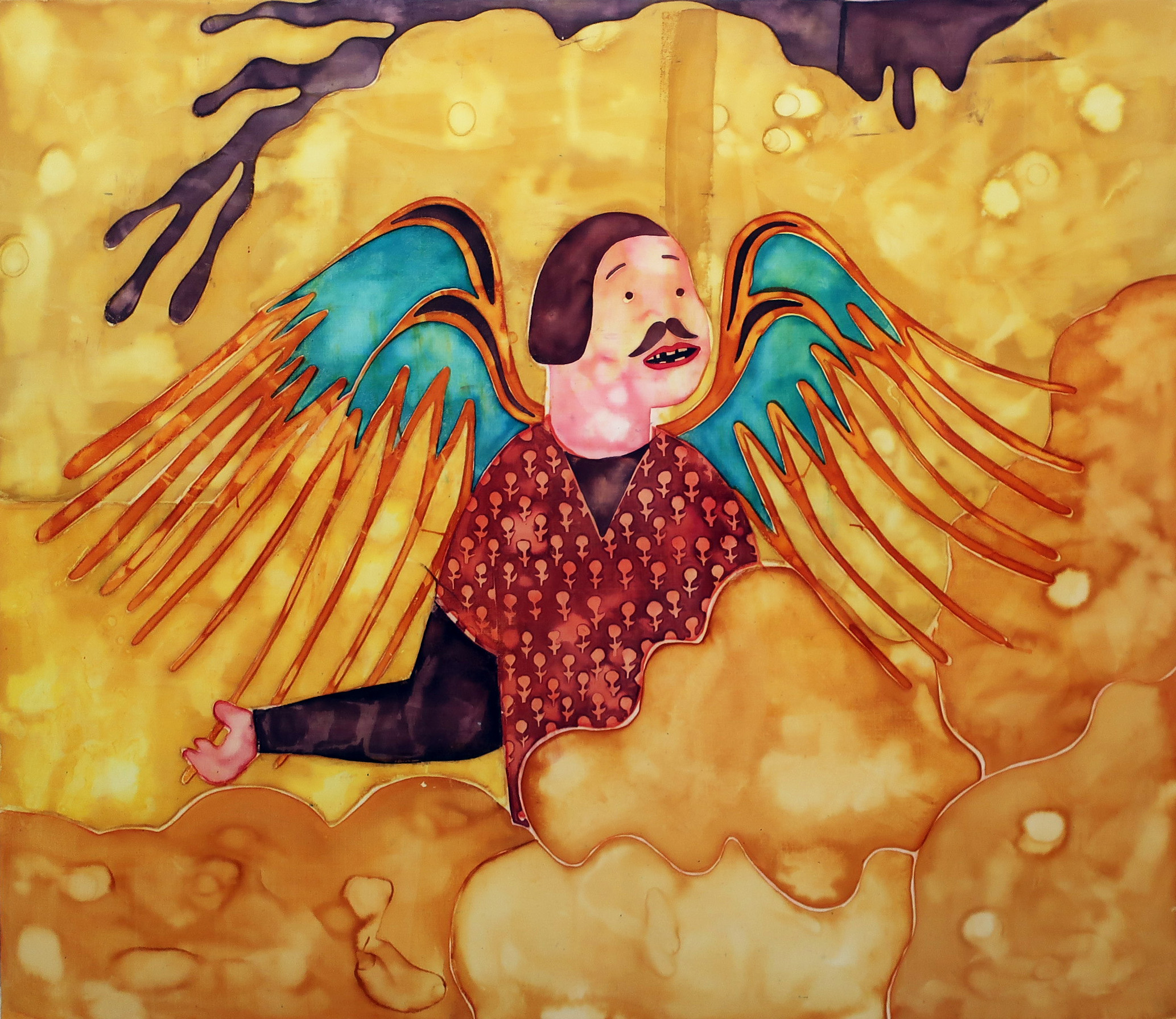
Finding that her female figures were often misinterpreted, Iranian-born, Chicago-based artist Orkedeh Torabi decided to depict only men as she continued to make work commenting on patriarchal societies.  The title of this painting, ‘Where are all the houries?,’ a standout in a group show at Fredericks Freiser Gallery, imagines the arrival in heaven of a martyr who is looking for his virginal beauties.  (On view through Feb 22nd).

Orkideh Torabi, Where are all the houries?, fabric dye on stretched cotton, 37 h x 43 w, 2018.

Jan Tichy at Fridman Gallery

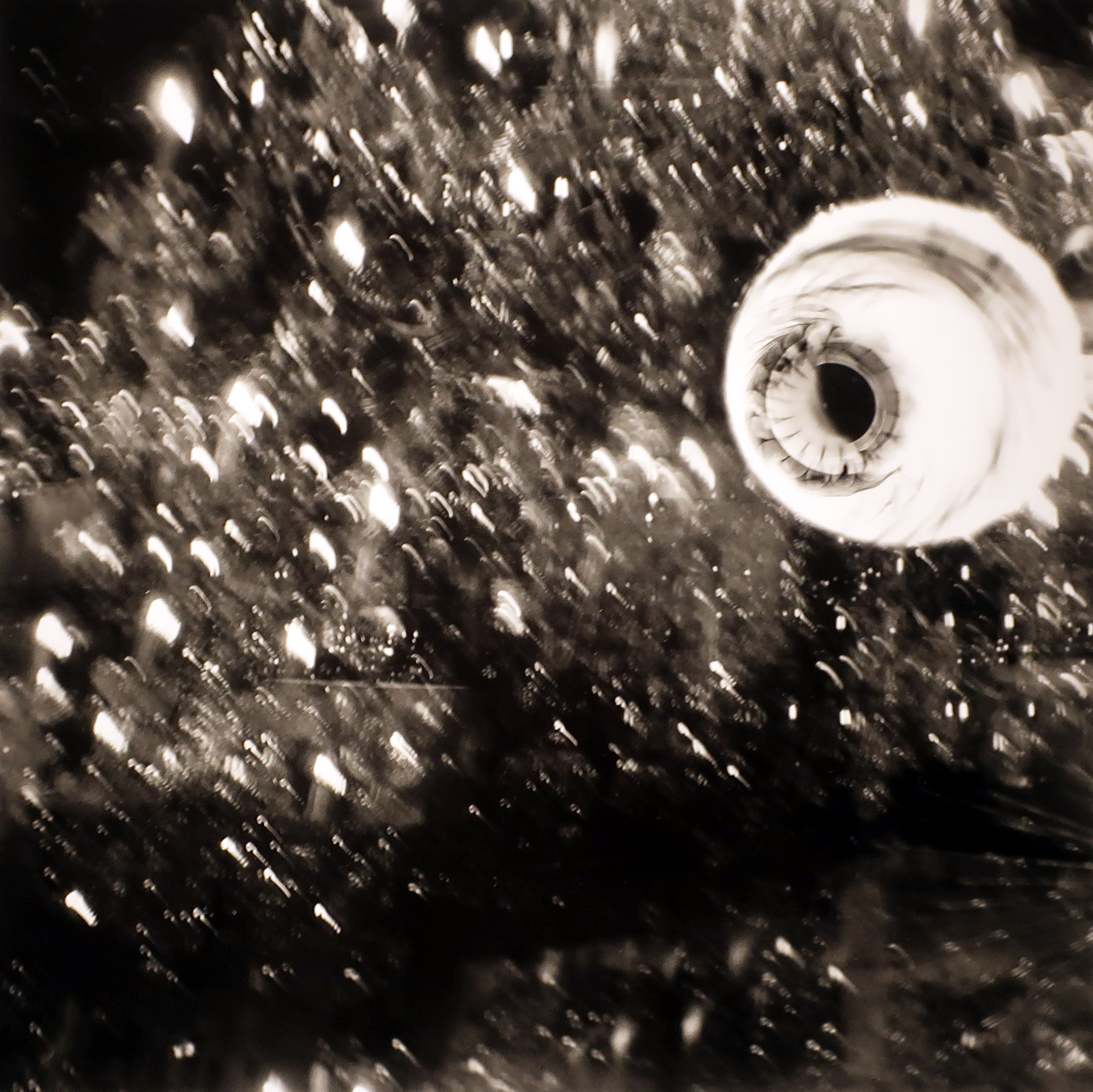
Chicago-based artist and professor Jan Tichy found an outlet for his ‘socially conscious formalism’ in the context of the Lower East Side’s lighting district, where he made work in and in response to the neighborhood’s dwindling number of lighting fixture stores.  Layering images shot in the lighting stores, their bright wares hung enticingly from the ceiling, with exposures of actual fixtures on light sensitive paper in the darkroom, Tichy created this frenetic print which mirrors the pace of change in the city.  (On view at Fridman Gallery through Feb 23rd).

Jan Tichy, Bowery Print VI, single-edition silver gelatin print, 16 h x 16 w inches, unique, 2020.

Jeanne Silverthorne Sculpture at Marc Straus Gallery

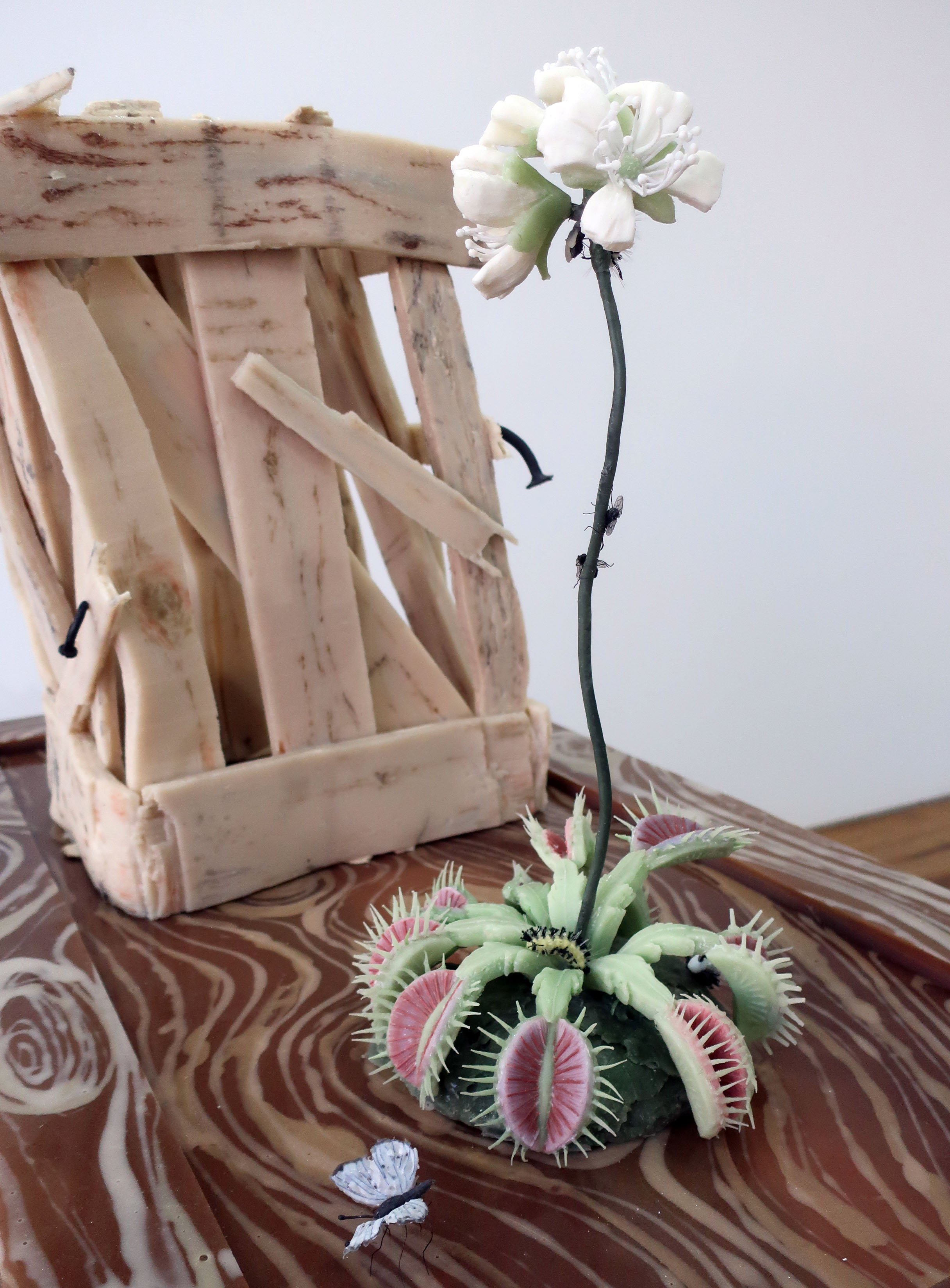
Butterflies are a reminder of the brevity of life, but the Xerces Blue perching on this crate is an extinct species, adding a note of finality even as the nearby Venus Flytrap demonstrates abundant health.  Jeanne Silverthorne’s new sculpture at Marc Straus Gallery also includes silicone rubber crates which symbolize unknown creative possibilities.  Acting as pedestal and art object, they range from sturdy to dilapidated, suggesting the coexistence of ideas that will someday manifest as artworks and those that will not.  (On view on the Lower East Side through Feb 16th).

Jeanne Silverthorne, Venus Flytrap with Xerces Blue (Extinct), Two Crates, platinum silicone rubber, 53 x 25.3 x 48 inches, 2012-19.

Jesper Just at Perrotin Gallery

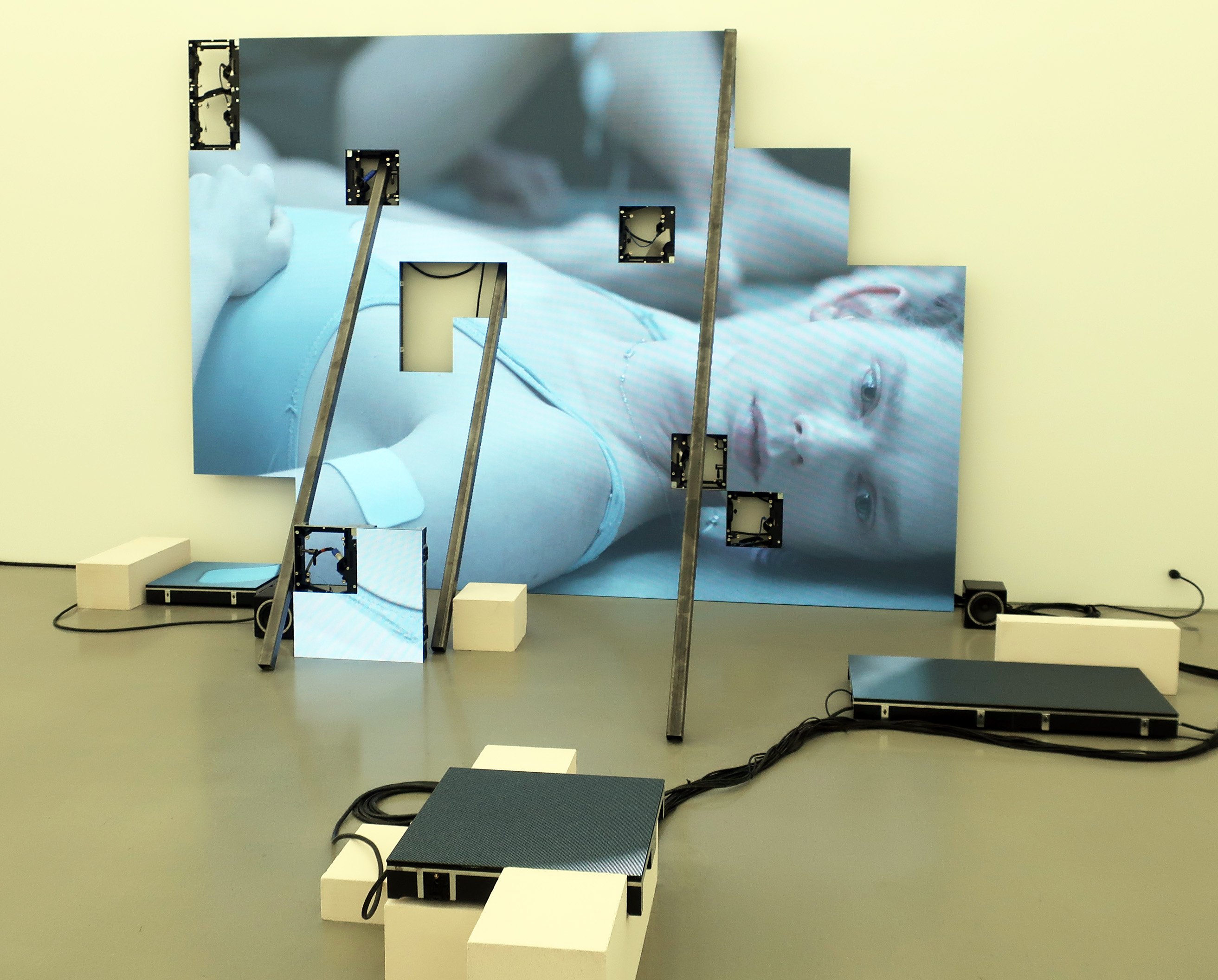
Emotion and vulnerability continue to be strong themes in Jesper Just’s latest body of work at Perrotin Gallery on the Lower East Side.   American Ballet Theater dancers lie and sit on the floor while receiving muscle therapy via patches applied to their skin. Though nearly motionless, this individual’s alert state and a single tear suggest powerful goings on beneath a calm exterior.  Panels separated from the main display join blocks of concrete on the gallery floor in order to engage viewers more personally by forcing us to consider our own bodies in the gallery space and our own efforts at constructing meaning.  (On view through Feb 15th).

Jesper Just, Corporealities – 1, LED panels, multi-channel video, sound, steel, and cement, 98 7/16 x 137 13/16 x 143 inches, 2020.

Melanie Baker at Cristin Tierney

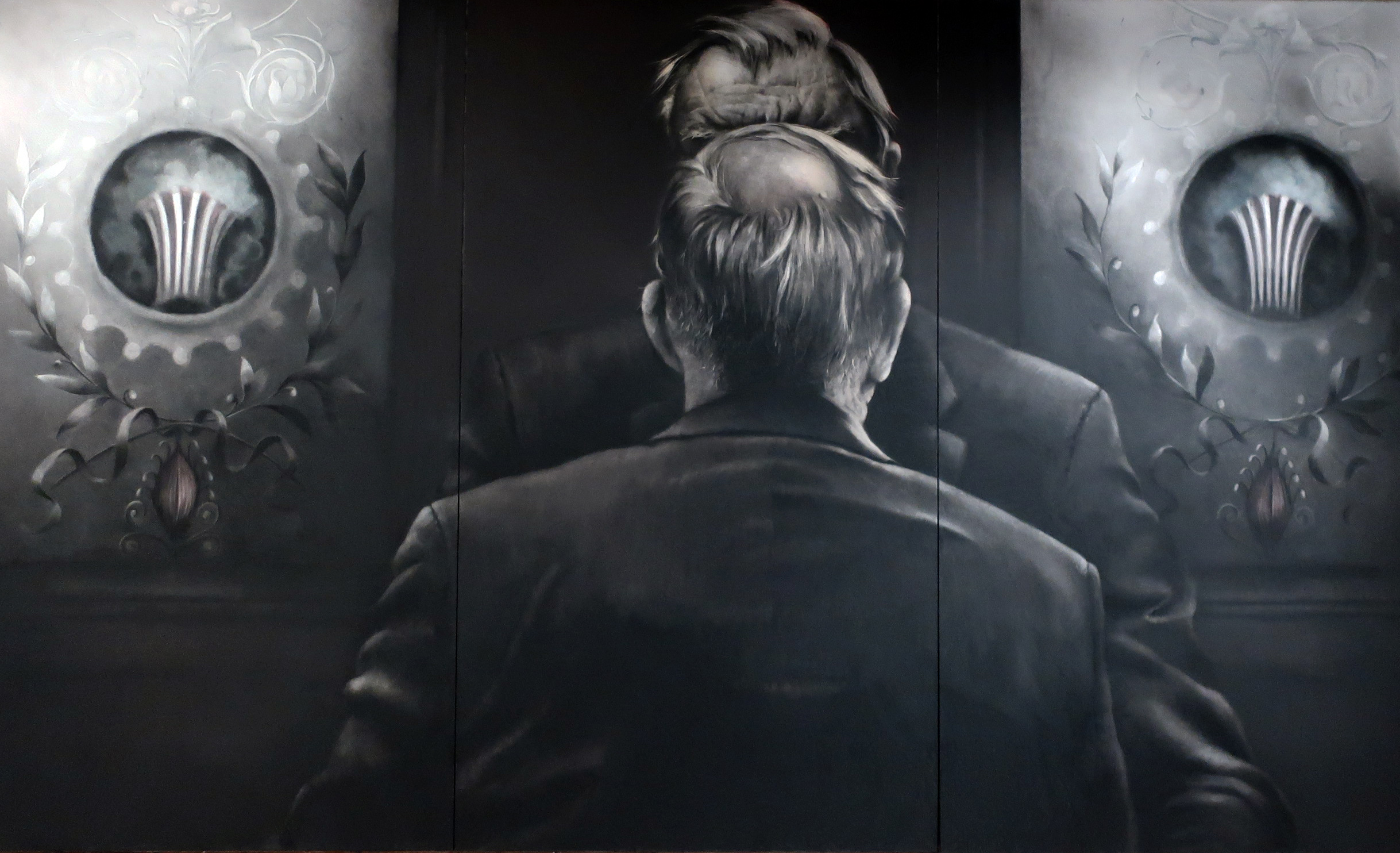
The man in the foreground of this huge charcoal, graphite and pastel drawing by Melanie Baker leans forward conspiratorially, his own identity concealed as he shields the figure before him from view.  Ironically framed on each side by lit sconces, the two shadowy figures seem to have paused in the halls of power to engage in an intense and private discussion that Baker invites us to question.  (On view on the Lower East Side at Cristin Tierney through Feb 22nd).

Melanie Baker, Pomp and Sycophants, charcoal, graphite, and pastel on paper mounted on Dibond, 72 x 120 inches, 2019.