Peter Voulkos at Burning in Water

Peter Voulkos’ influence is a constant presence in New York’s galleries if his actual rule-destroying ceramic sculptures are infrequently seen; Burning In Water’s current show of work from Voulkos’ ‘Stacks’ series manifests the artist’s deliberately imperfect forms.  Patched, split and tilting to the side, ‘Big Ed’ exemplifies the energy and expression Voulkos brought to his art.  Translation from the original ceramic to bronze adds durability to the dynamic.   (On view in Chelsea through Sept 21st).
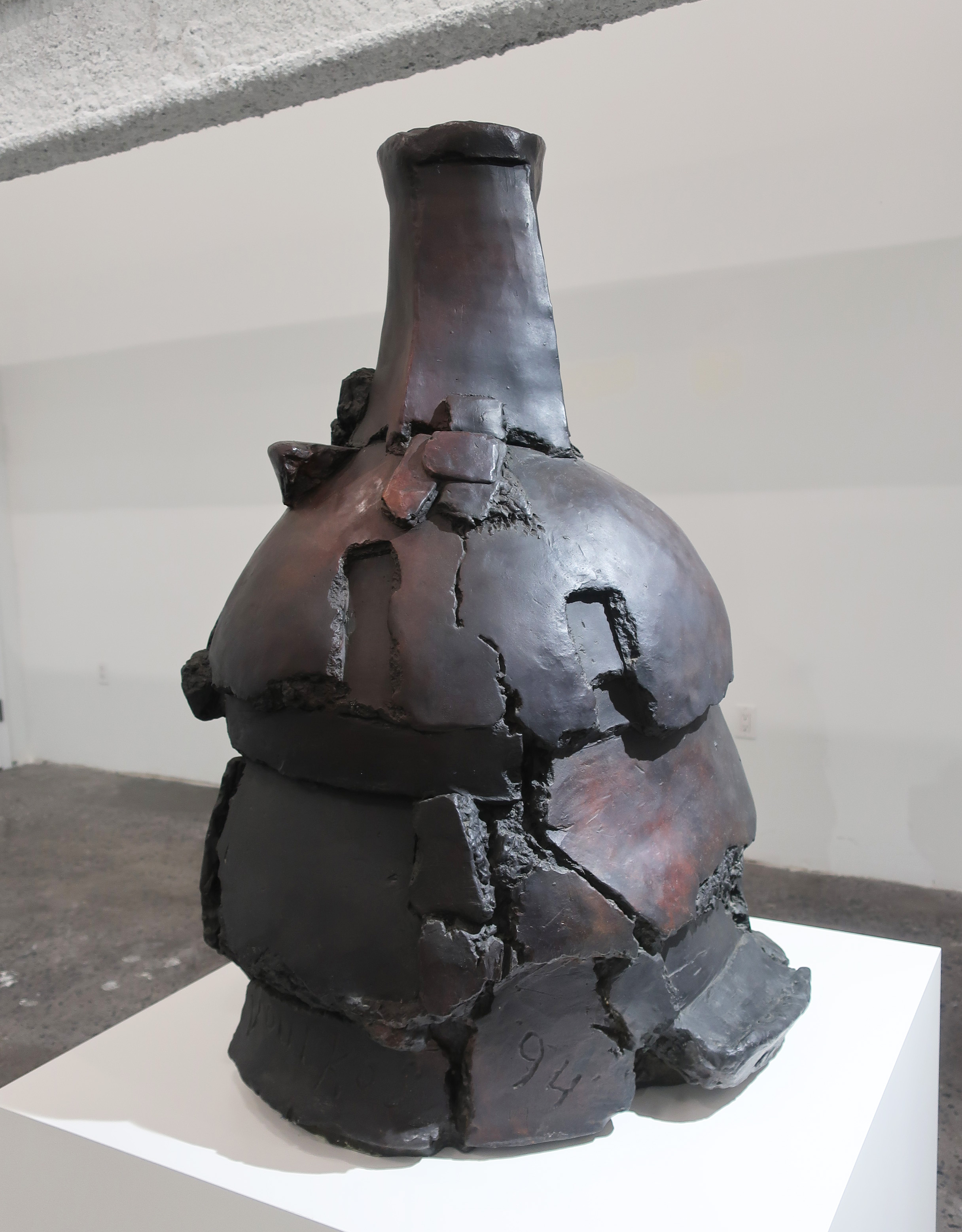
Peter Voulkos, Big Ed (1/9), bronze, 40 x 27 x 28.5 inches, 1994.

Karl Lagerfeld at the Metropolitan Museum of Art

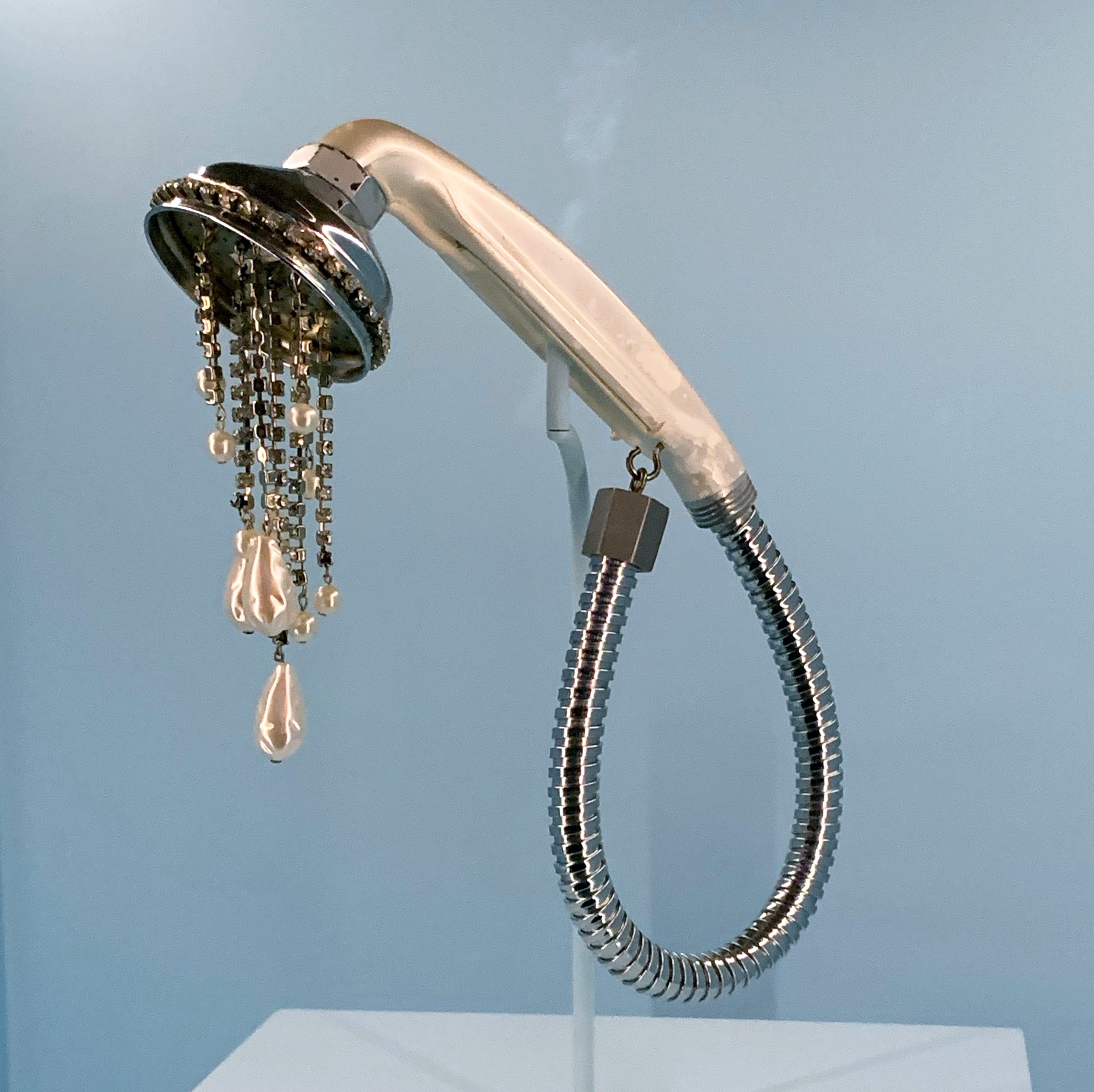
‘Camp:  Notes on Fashion’ at the Metropolitan Museum of Art ends with a bang in a two-tiered gallery showcasing outrageous garments, from a wrapper resembling the contents of a TV dinner to a tiered ball gown of ruffled pink fabric that juts out from the shoulders and continues expanding as it descends to the ground.  Here, alongside earrings shaped like old-fashioned faucet handles, Karl Lagerfeld’s shower head necklace makes a clean break from tradition.  (On view on the Upper East Side through Sept 8th).

Karl Lagerfeld for Chloe, Necklace, autumn/winter, 1983-84, silver metal, pink, blue and clear crystals and pearl beads.

Carmen Herrera in City Hall Park

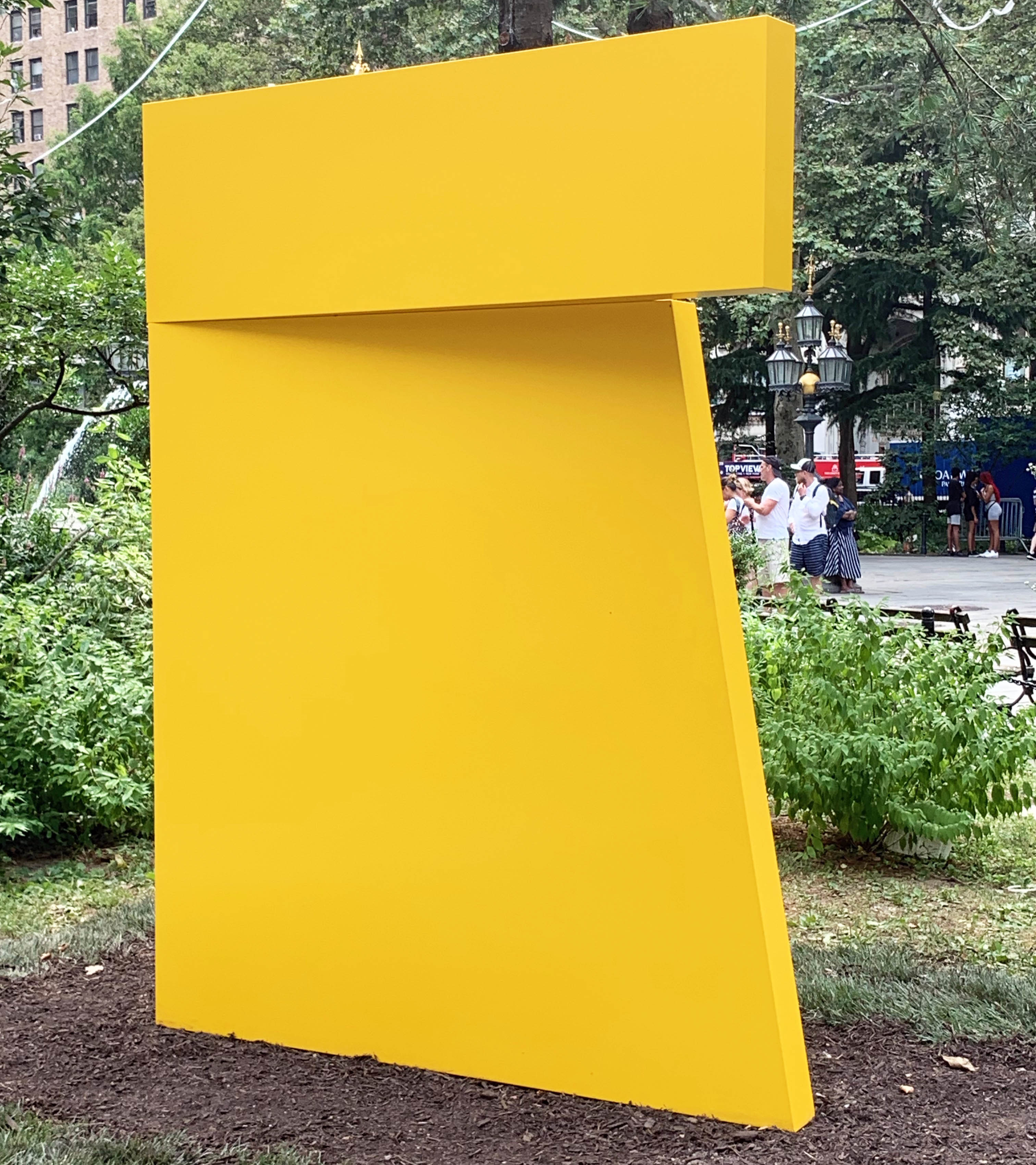
Carmen Herrera’s longevity as an artist continues to amaze; the informational texts for her installation of boldly colored abstract sculptures at City Hall Park declare her age (104) in the first line before going on to comment on the artwork.  In the 50s and beyond, Herrera was in the center of New York’s art world and at its margins, making artwork in conversation with the developing language of abstraction but underappreciated because of her gender and lacking funding to realize her plans for boldly colored sculpture.  Installed in the park, her architectural forms are in the company of landmarks including City Hall and the Woolworth Building.  Here, they speak to Herrera’s personal and political concerns, from a piece memorializing her late brother to a sculpture constructed of two interlocking forms that nod to Cuban/American relations.  (On view downtown at City Hall Park via the Public Art Fund through Nov 8th).

Carmen Herrera, Amarillo Tres, 1971/2018.

Alicja Kwade at the Metropolitan Museum of Art

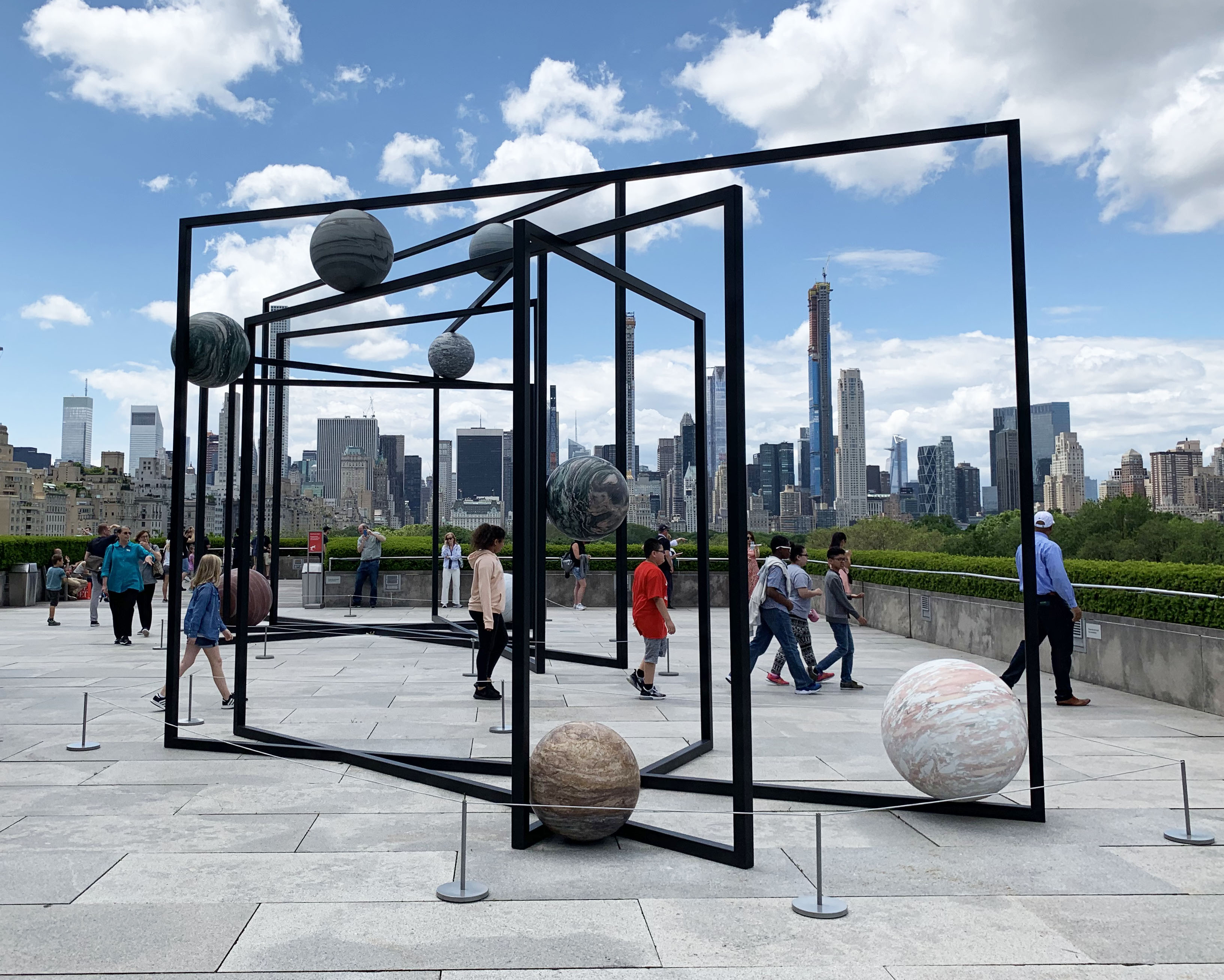
Berlin-based Polish artist Alicja Kwade explains that the invitation to install a piece on the roof of the Metropolitan Museum of Art was like being asked to crown the summarized history of humanity in the galleries below.  In response, she created a steel framed structure that symbolizes human systems and which incorporates stones sourced from India, Finland, Italy, China and beyond.  From the roof, viewing the New York’s rising skyline is unavoidable; Kwade draws in the surroundings as part of her artwork, inviting visitors to consider neighboring buildings as symbols of capitalism, a structure that can be examined as readily as the ones she erects. (On view through Oct 27th).

Installation view of Alicja Kwade’s ‘Parapivot’ at the Metropolitan Museum of Art, summer 2019.

Hong Hao at Chambers Fine Art

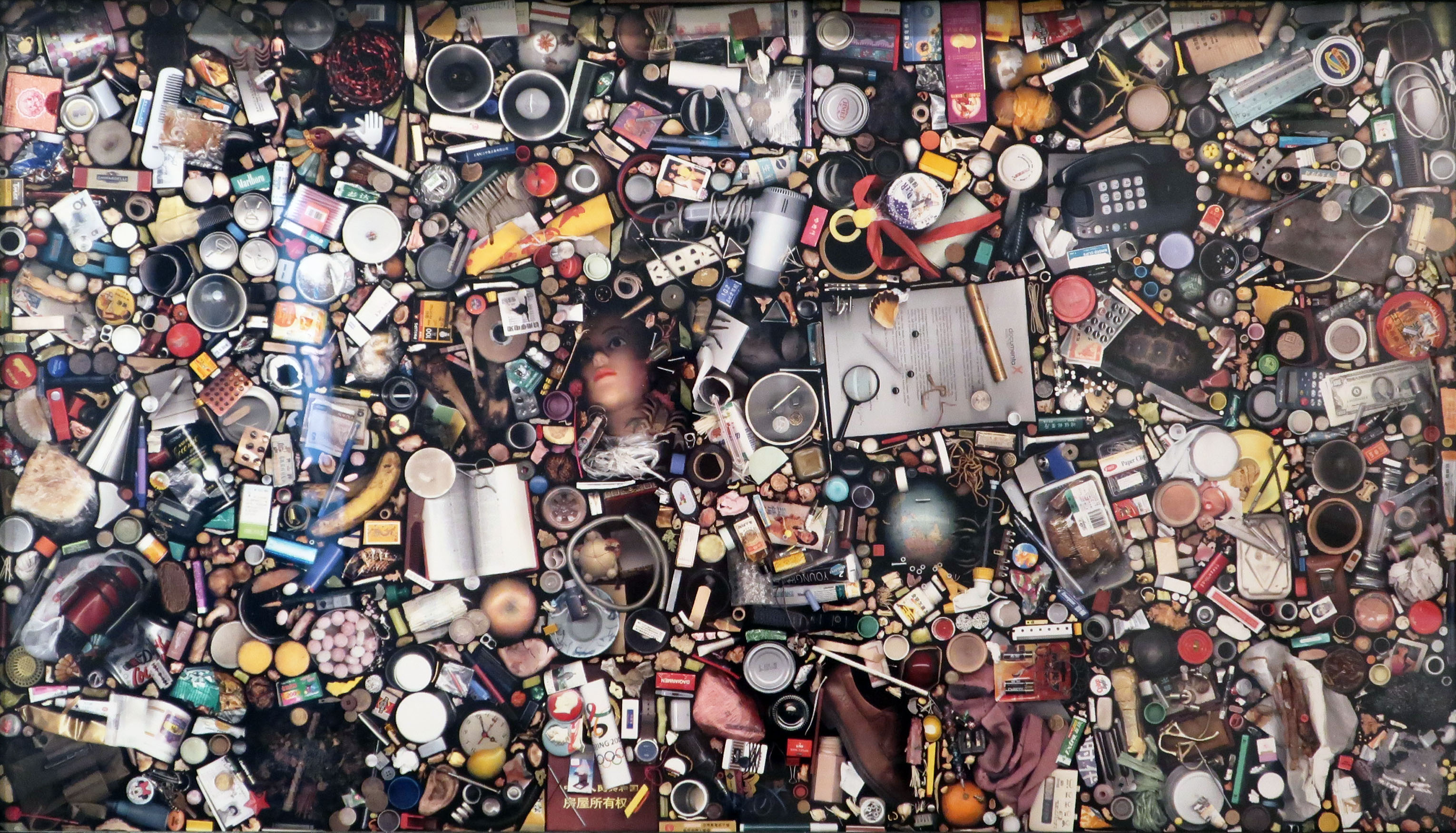
For over a decade, item by item, Beijing-based artist Hong Hao scanned his belongings for ‘My Things,’ a series of digitally constructed collages detailing his possessions, from the orderly spines of hundreds of books to more chaotic-seeming arrangements like this one that combine elements from different aspects of life.  The abundant objects in each image of the series speak to consumption, but Hong Hao explains that the act of scanning is meaningful as well as it ‘embodies a calm observation without any pre-judgement, a plain testimony, a relevant context for aesthetic exploration.’ (On view in ‘Turn of the Century:  Photography in China’ at Chambers Fine Art in Chelsea through August 31st.)

Hong Hao, My Things No. 3, scanned color photograph, edition 9/15, 2001-2002.

Zanele Muholi and Morgan Mahape in ‘African Spirits’ at Yossi Milo Gallery

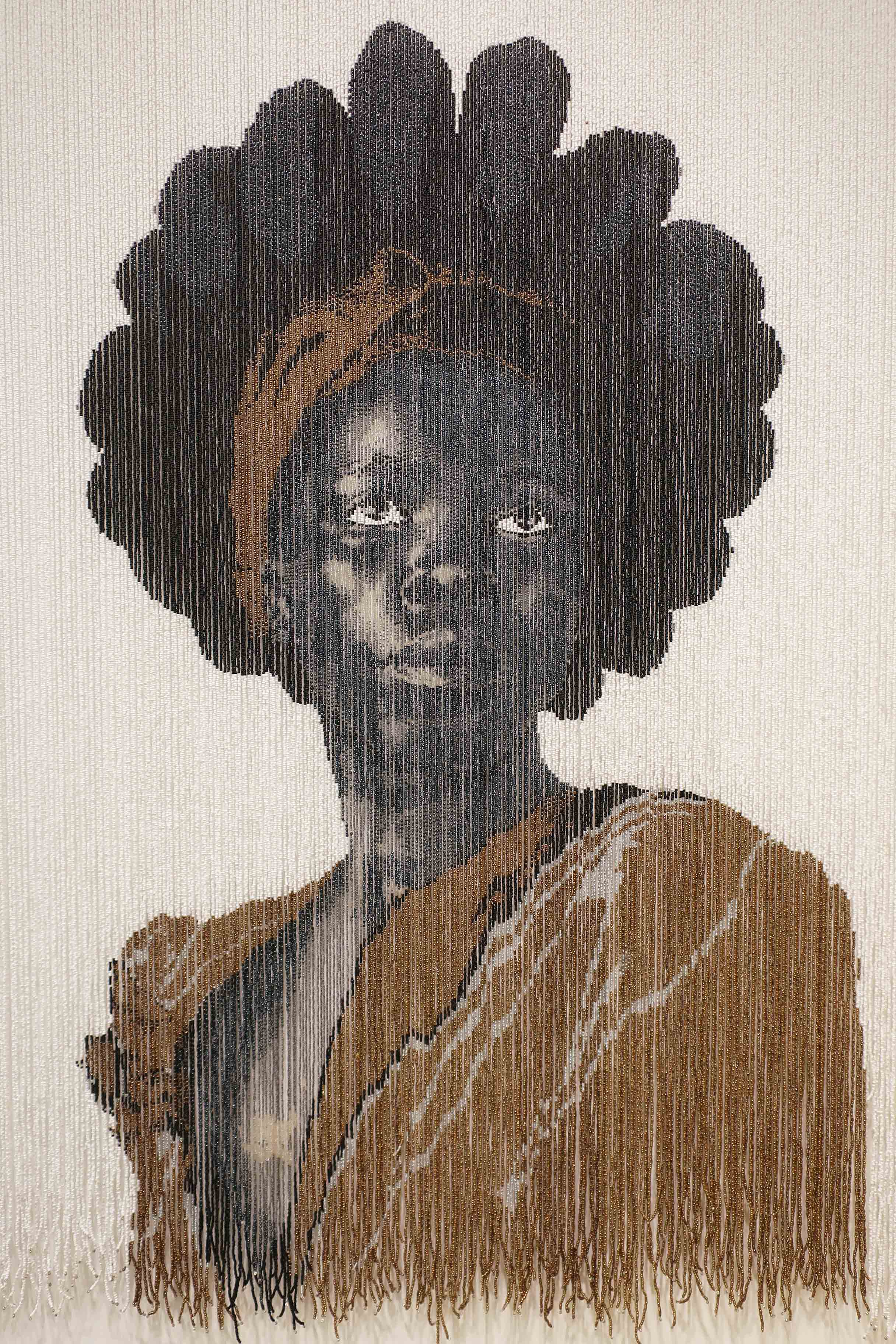
Zanele Muholi’s ‘Somnyama Ngonyama’ (Hail the Dark Lioness) photo series features the South African activist and artist modeling dramatic outfits that on closer inspection turn out to be composed of everyday household items.  Muholi’s source image for this beaded panel created with fellow South African artist Morgan Mahape involved a headdress crafted from donut-shaped scouring pads, an important detail that’s less apparent here.  Muholi’s softer look and averted gaze are less confrontational than the series’ other powerful images but the piece reads as a tribute to an artist who uses her own body to challenge perceptions and prompt reflection.  (On view in ‘African Spirits’ at Yossi Milo Gallery through August 23rd).

Zanele Muholi and Morgan Mahape, Somnyama Ngonyama, beads on string, wooden panel, approximately 84 x 60 inches, 2019.

Sara Abbaspour in ‘Transcript’ at Yancey Richardson Gallery

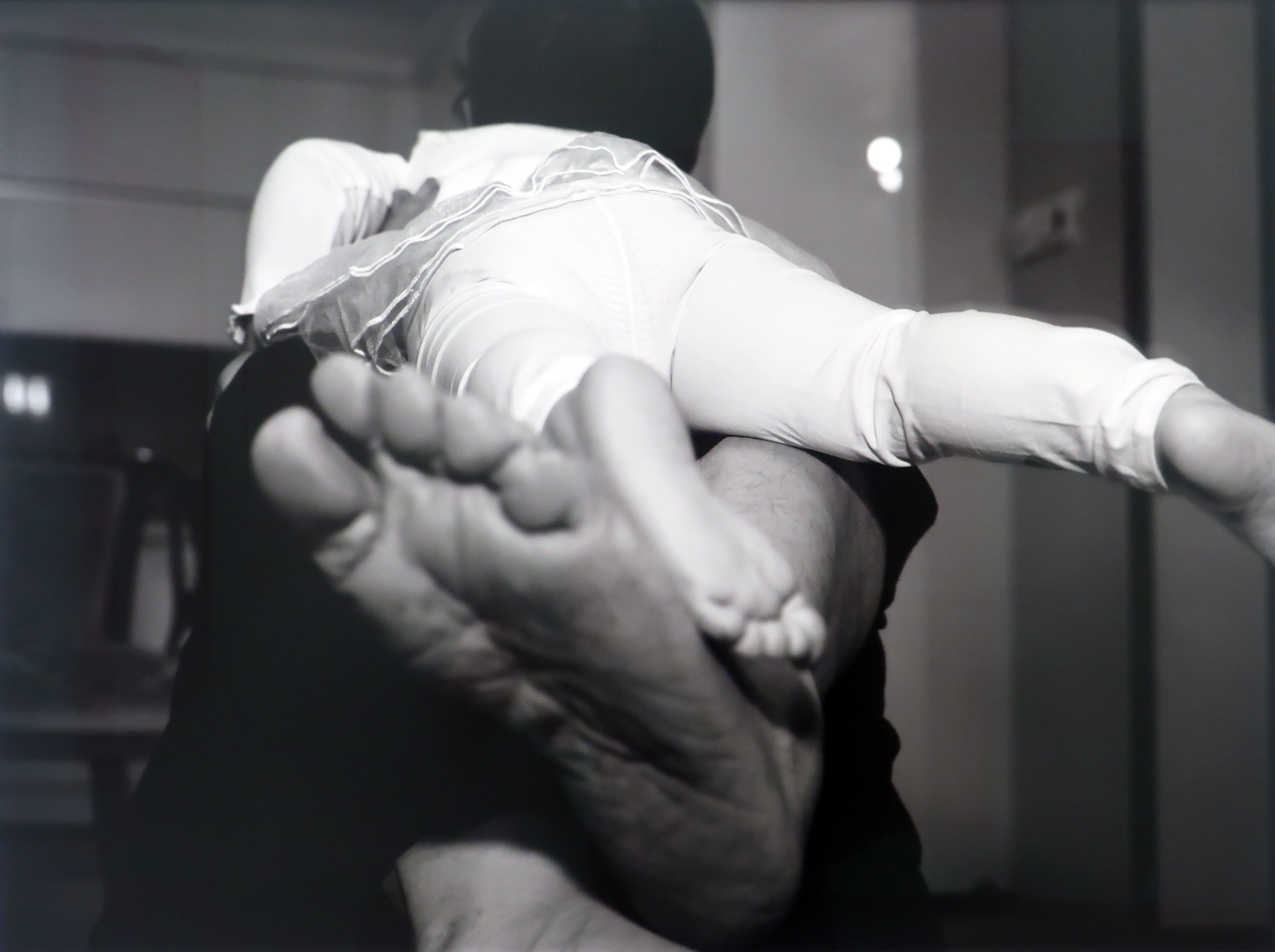
Intimacy between people, whether between figures seen in quiet moments in public or this energetic engagement between a toddler and adult in a domestic setting, drives Sara Abbaspour’s probing, black and white photos.  A standout in Yancey Richardson Gallery’s show of 2019 Yale MFA Photography grads, curated by James Welling, Abbaspour explains that her aim is to treat physical locations as ‘mental space.’  (On view in Chelsea through August 23rd).

Sara Abbaspour, Untitled, archival pigment print, 26 5/8 x 35 1/8 inches, 2019.

Meg Webster in ‘Non-Vicious Circle’ at Paula Cooper Gallery

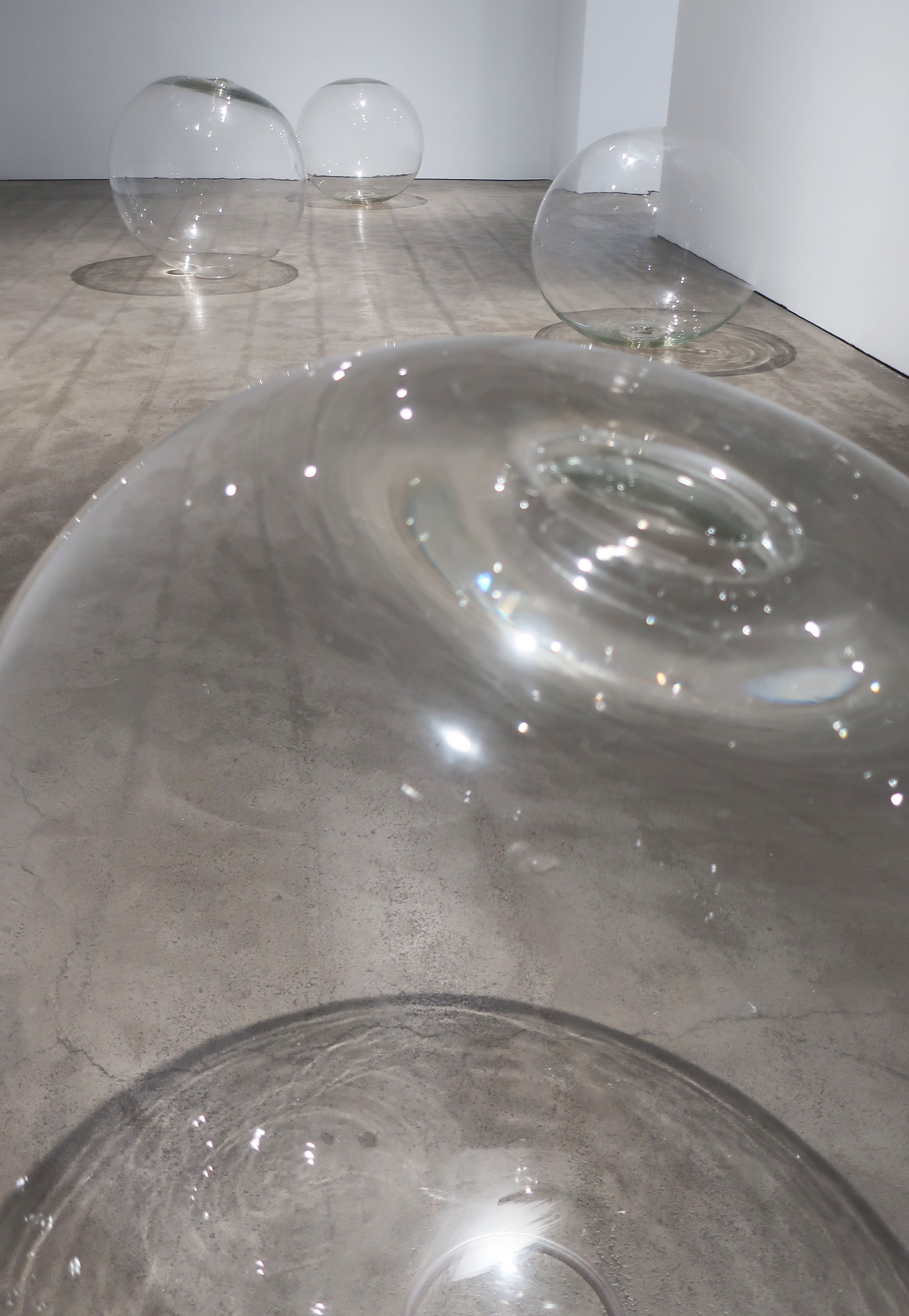
Unlike her mid-20th century counterparts who also employed minimalist forms, repetition, and awareness of the immediate environment in their sculpture, Meg Webster’s interest in the natural world connects her installation of five glass spheres from 1987 at Paula Cooper Gallery to the wonder of naturally occurring phenomena.  The imperfectly formed shapes are scaled up to the size of those made by huge bubble wands at a kids’ science museums yet they evoke the briefly lived magic of a floating pocket of air.  (On view in Chelsea through August 16th).

Meg Webster, Largest Blown Sphere, five glass spheres, each 36 x 36 x 36 inches, 1987.

Marti Cormand in ‘Flora/Fauna’ at Josee Bienvenu Gallery

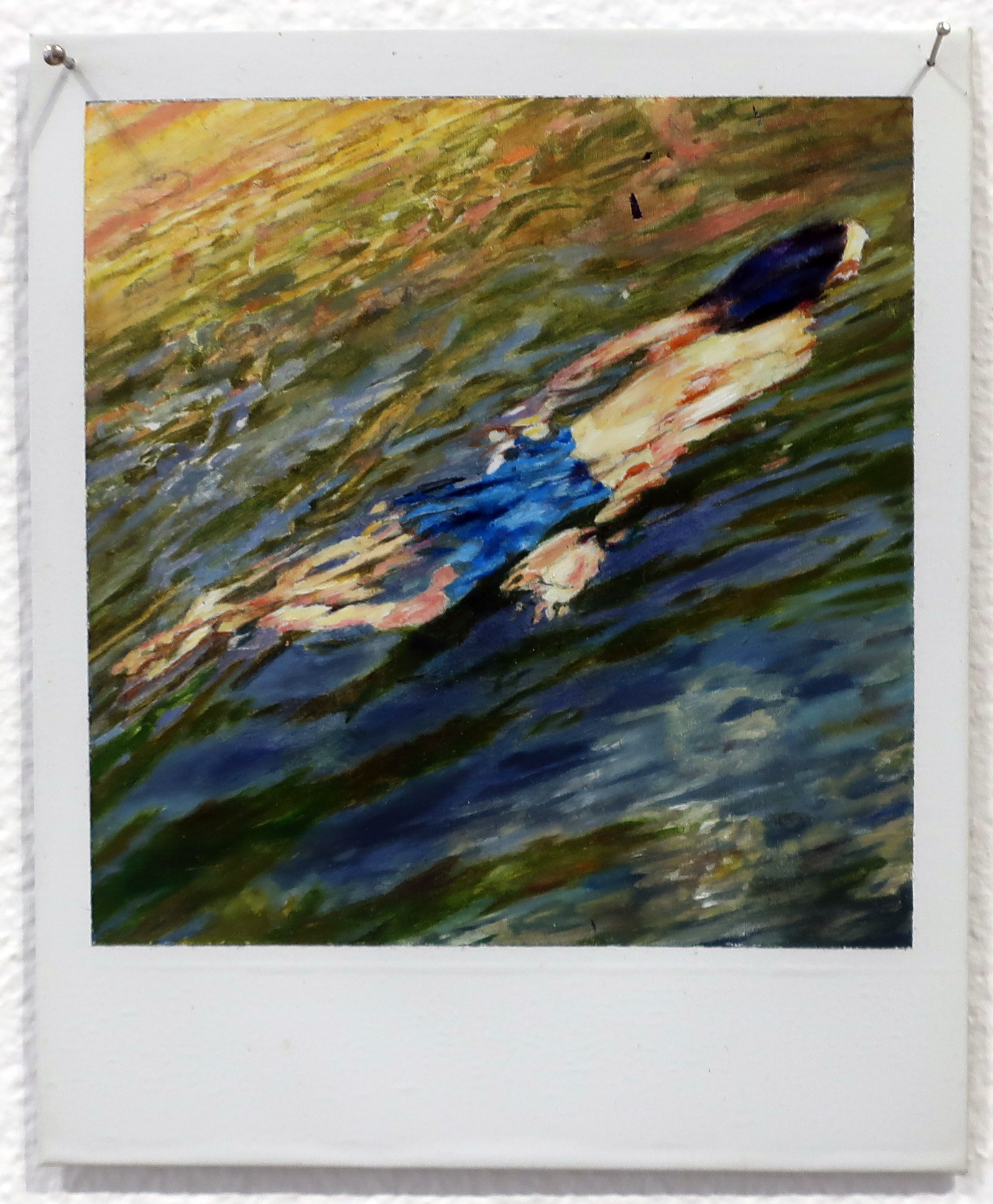
Marti Cormand’s last solo show at Chelsea’s Josee Bienvenu Gallery involved meticulously painting replicas of rediscovered artworks that had been considered ‘degenerate’ in the Nazi era.  His current series of oil on Polaroid paintings at the gallery involves painterly additions to photos found in his childhood house in Spain, continuing an engagement with recovered imagery from the past.  A hazy view inside a refrigerator, and a parrot in an arctic landscape suggest that Cormand is focusing on the strange or magical in the everyday; his swimmer similarly transports us, triggering memories of nature at its most inviting.  (On view through August 15th).

Marti Cormand, Swimmer (nedador), oil on polaroid, 4.20 h x 3.5 x inches, 2019.

Jenna Krypell in ‘Impossible Objects’ at Davidson Gallery

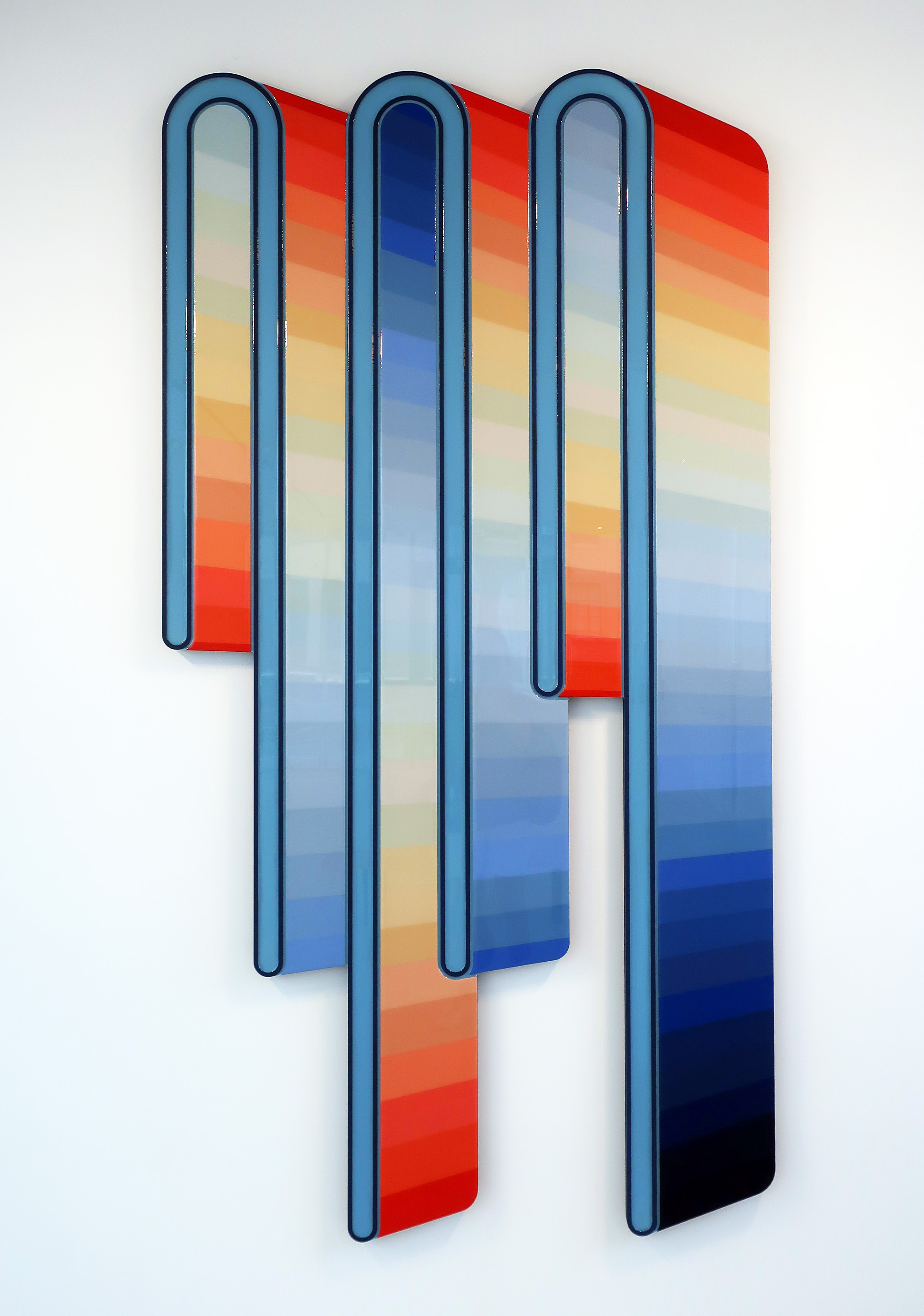
Brooklyn-based artist Jenna Krypell’s abstract shapes suggest three dimensions in two, effecting momentary disruptions in our perception.  Resembling mazes, stylized calligraphy, or here, sections of a sunset-colored sky cut into strips and hung out, each arrangement of form offers engaging spatial complexity.  (On view in Chelsea at Davidson Gallery through August 16th.)

Jenna Krypell, DUSK, MDF, resin, enamel, 87 x 45 x 2 inches, 2019.

ektor garcia in ‘garcia, Raina, Shore, Tossin’ at Luhring Augustine

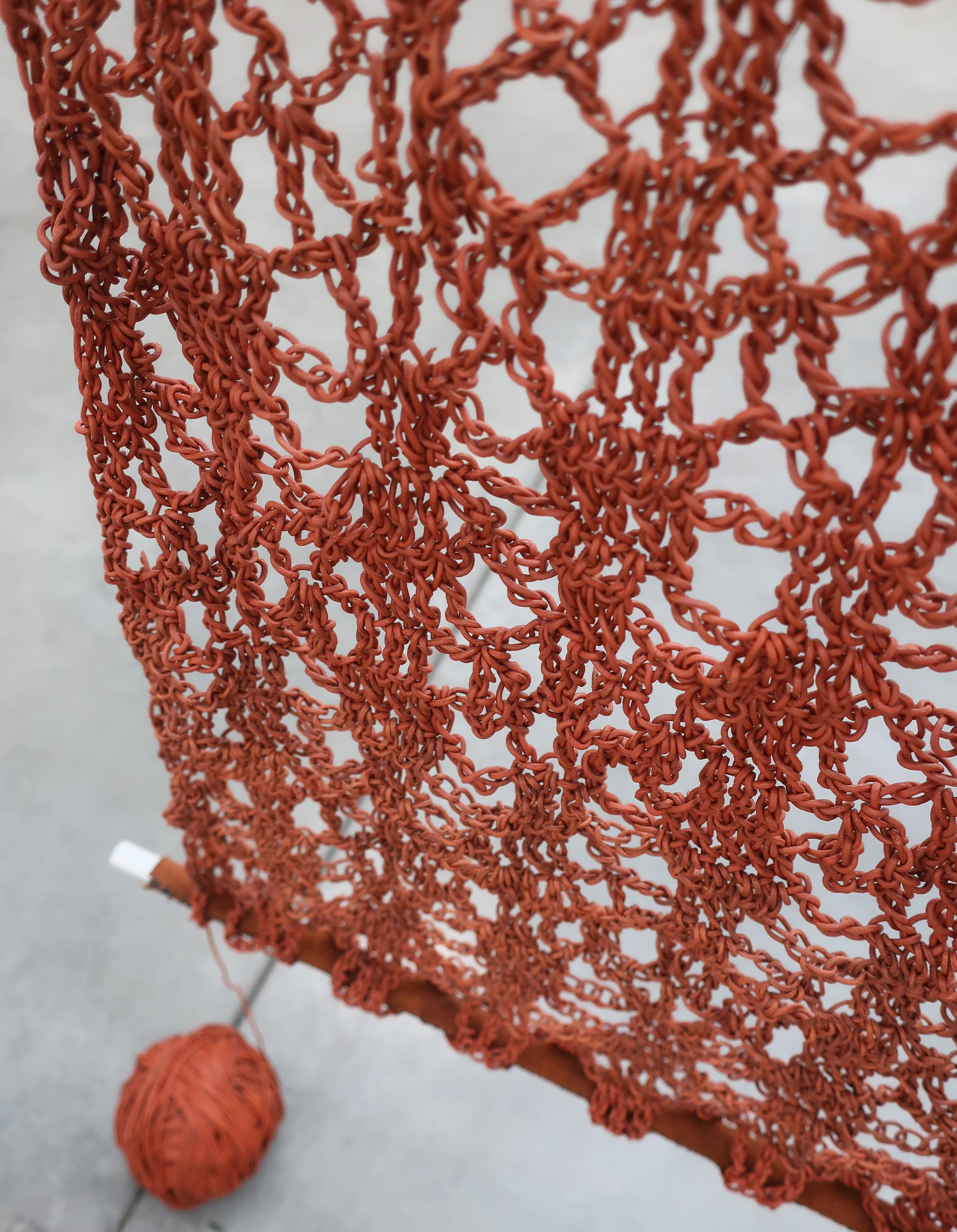
ektor garcia’s ‘portal (guadalajara)’ connects not only to his upbringing by female relatives who supported the family in Mexico and the U.S. with their skill at crochet but also to the earth in its warm, terracotta color.  In another piece, a long slim panel of oxidized copper lined with crochet artificial sinew speaks to the building value of minerals derived from the land and its feminized embellishment while his ‘chainmale’ glazed ceramics resemble metal links but are crafted from a more fragile material.  (On view in ‘garcia, Raina, Shore, Tossin’ at Luhring Augustine Gallery in Chelsea through August 16th).

ektor garcia, portal (Guadalajara), crochet leather cord, copper tubing, suede, dimensions variable, 2018.

Joani Tremblay in ‘Plastic Garden’ at Asya Geisberg Gallery

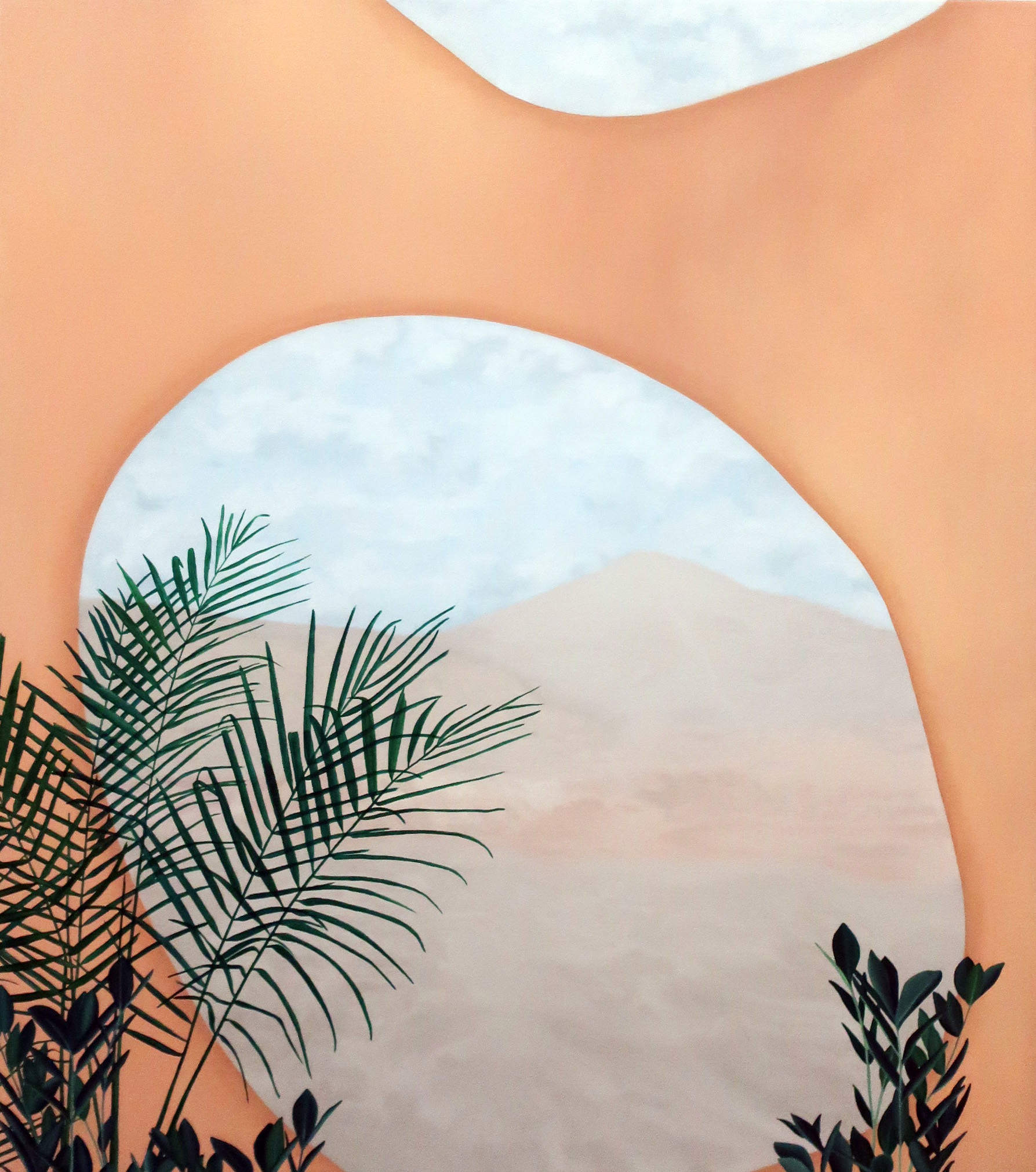
The peachy tones of the rock formation in this painting by Canadian artist Joani Tremblay resemble spray-tanned flesh as much as sedimentary stone, questioning Mother Nature’s ‘natural’ qualities.  Included in Asya Geisberg Gallery’s ‘Plastic Garden’ summer group show, this painting’s houseplants further signal that the view is seen through an ‘arranged’ human lens.  (On view in Chelsea through August 16th).

Joani Tremblay, A Room of One’s Own, oil on linen, 36 h x 32 x inches, 2018.

Mel Ziegler at Galerie Perrotin

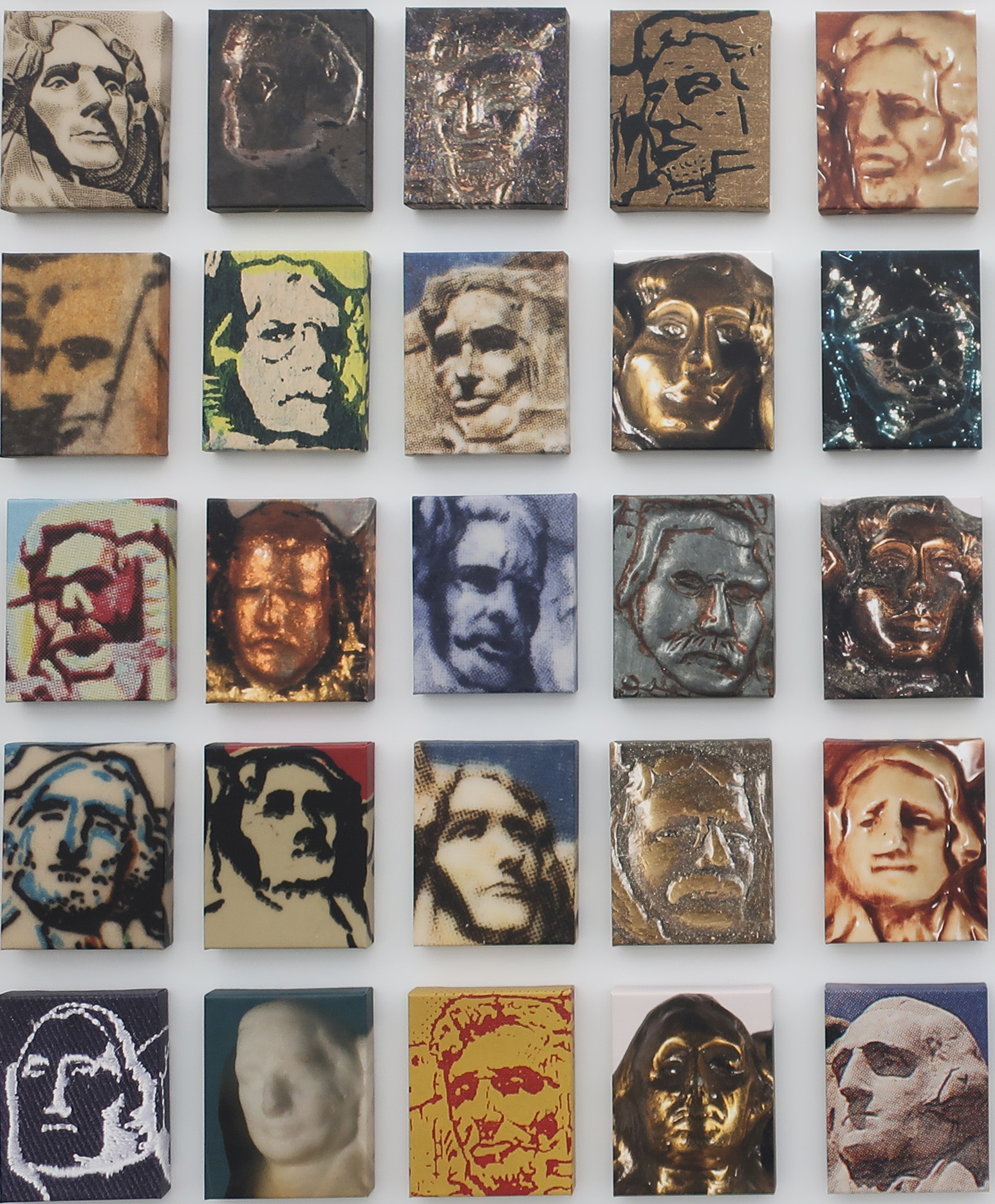
Fifteen years of collected memorabilia from Mt Rushmore yielded the material for artist Mel Ziegler’s one thousand digitally printed portraits of the monument’s four presidents, currently filling the ground floor of Galerie Perrotin on the Lower East Side.  Though repetition and systemization are key, the degradation of each image – suggesting they were lifted from cheaply made or tiny reproductions – leaves the most lasting impression.  Despite the scale of the effort in the original Rushmore or Ziegler’s redo, there’s no guarantee that a burnished image will be handed down to posterity.  (On view through Aug 16th).

Mel Ziegler, detail installation view of ‘1000 Portraits,’ inkjet on canvas, dimensions variable, each canvas 8 x 10 inches, 2018.

Gladys Nilsson in ’36 Works on Paper’ at Garth Greenan Gallery

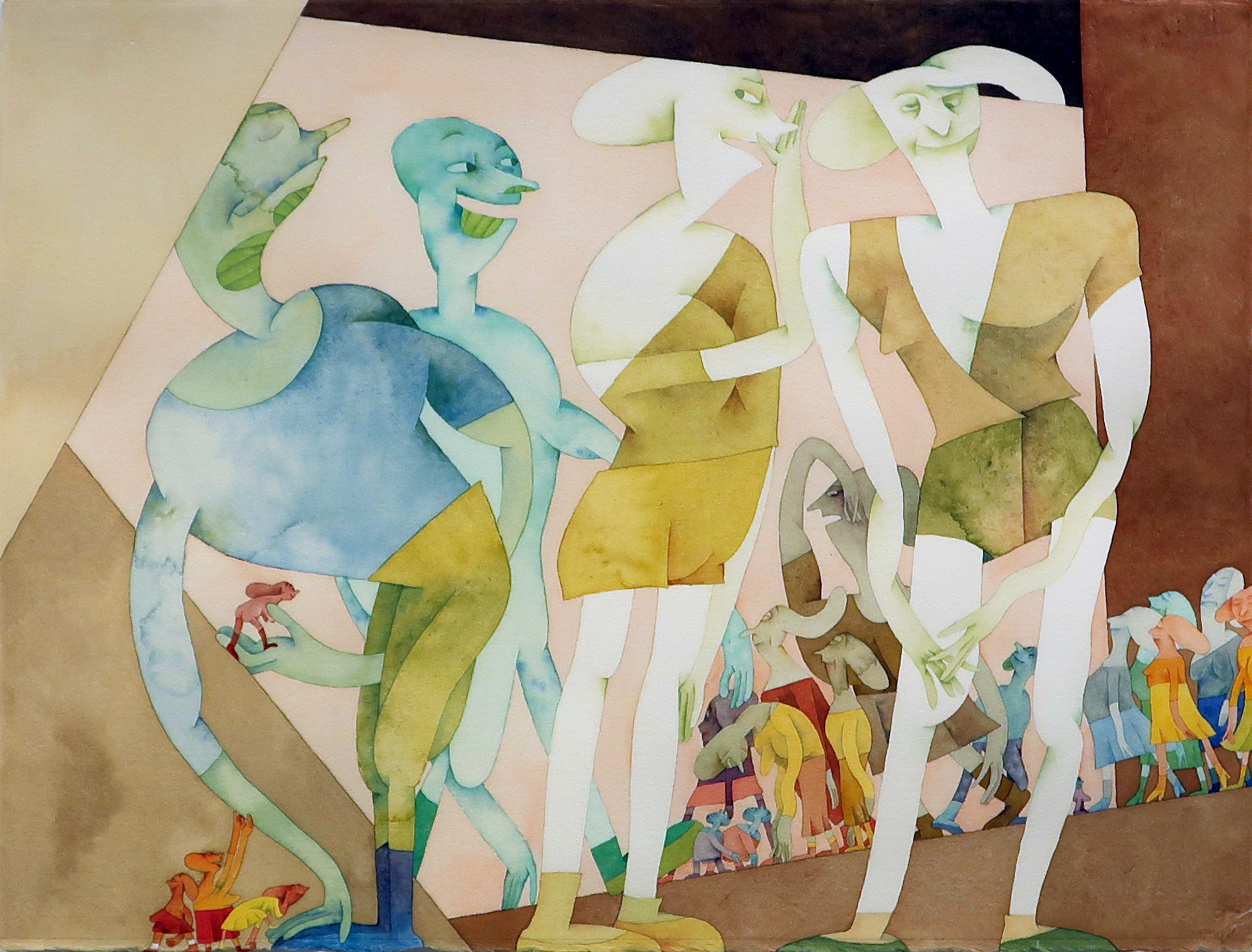
Critic John Yau hits the nail on head when he describes Gladys Nilsson’s ability to ‘keep the viewer looking in ways that are both pleasurable and challenging.’  In her 1984 watercolor ‘Lightly There,’ Nilsson sets up a seemingly flirtatious engagement between two masculine and feminine characters against a backdrop of folks high-mindedly going about their business, noses to the air.  Extra-long limbs – oddly allowing the man on the left to reach between his legs to pick up a tiny passenger – are just the beginning of the eccentric proportions and asymmetries of bodies, hair and facial features that lend Nilsson’s characters their intrigue and bait us to question what’s going on.  (On view in ’36 Works on Paper’ at Garth Greenan Gallery in Chelsea through August 9th).

Gladys Nilsson, Lightly There, watercolor on paper, 23 x 30 inches, 1984.

Y. G. Srimati at Jack Shainman Gallery

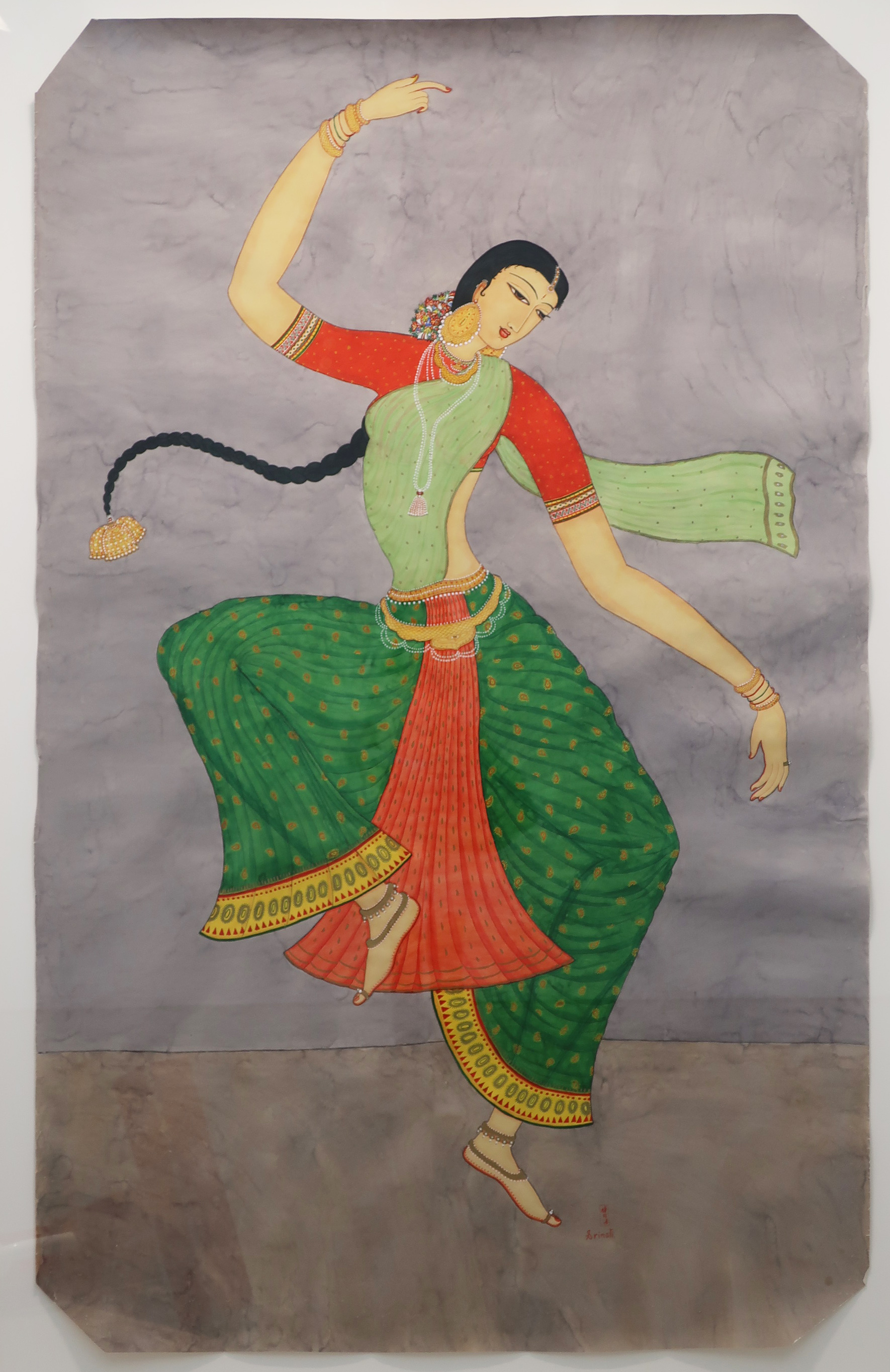
Late Indian artist Y. G. Srimati’s traditional Bharatanatyam dancer captivatingly demonstrates control and dynamism in this large-scale watercolor from 1963.  Trained in dance and other arts, Srimati once led devotional singing for Mahatma Gandhi and participated in India’s struggle for independence.  Adapting British-led art instruction to Indian painting tradition, Srimati pictured rural life and spiritual figures, developing her own uniquely Indian idiom.  (On view through August 9th at Jack Shainman Gallery in Chelsea).

Y. G. Srimati, Bartha Natyam Dancer, watercolor, 76 x 47 inches, 1963.