Anish Kapoor, ‘Untitled,’ at the Metropolitan Museum of Art

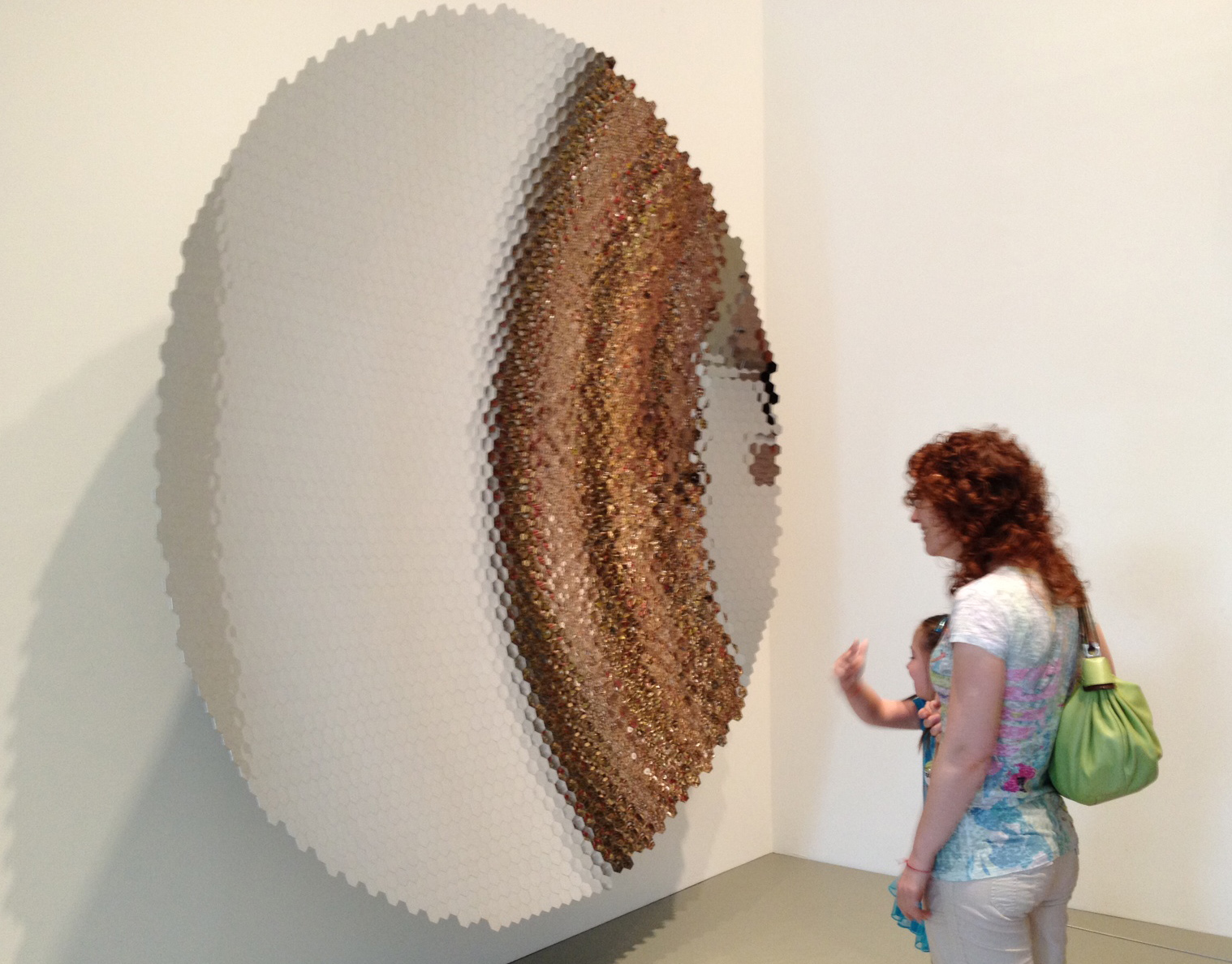
Anish Kapoor, 'Untitled,' stainless steel, 2007, installation view.
Anish Kapoor, ‘Untitled,’ stainless steel, 2007, installation view.

There aren’t many artworks at the Metropolitan Museum of Art that could be described primarily as ‘fun.’  Anish Kapoor’s ‘Untitled’ from 2007 falls into that category by creating a surprising visual experience as tiny, polished stainless steel tiles on a concave form reflect viewers’ images as a blurry multitude of shapes.  London-based Kapoor’s best known works in the US (Chicago’s Cloud Gate, for example) make viewers aware of their surroundings.  At the Met, Kapoor’s piece is surprisingly intimate and thoroughly amusing.  (On view in the 2nd floor Modern and Contemporary Art Galleries).
Alighiero Boetti at the Museum of Modern Art

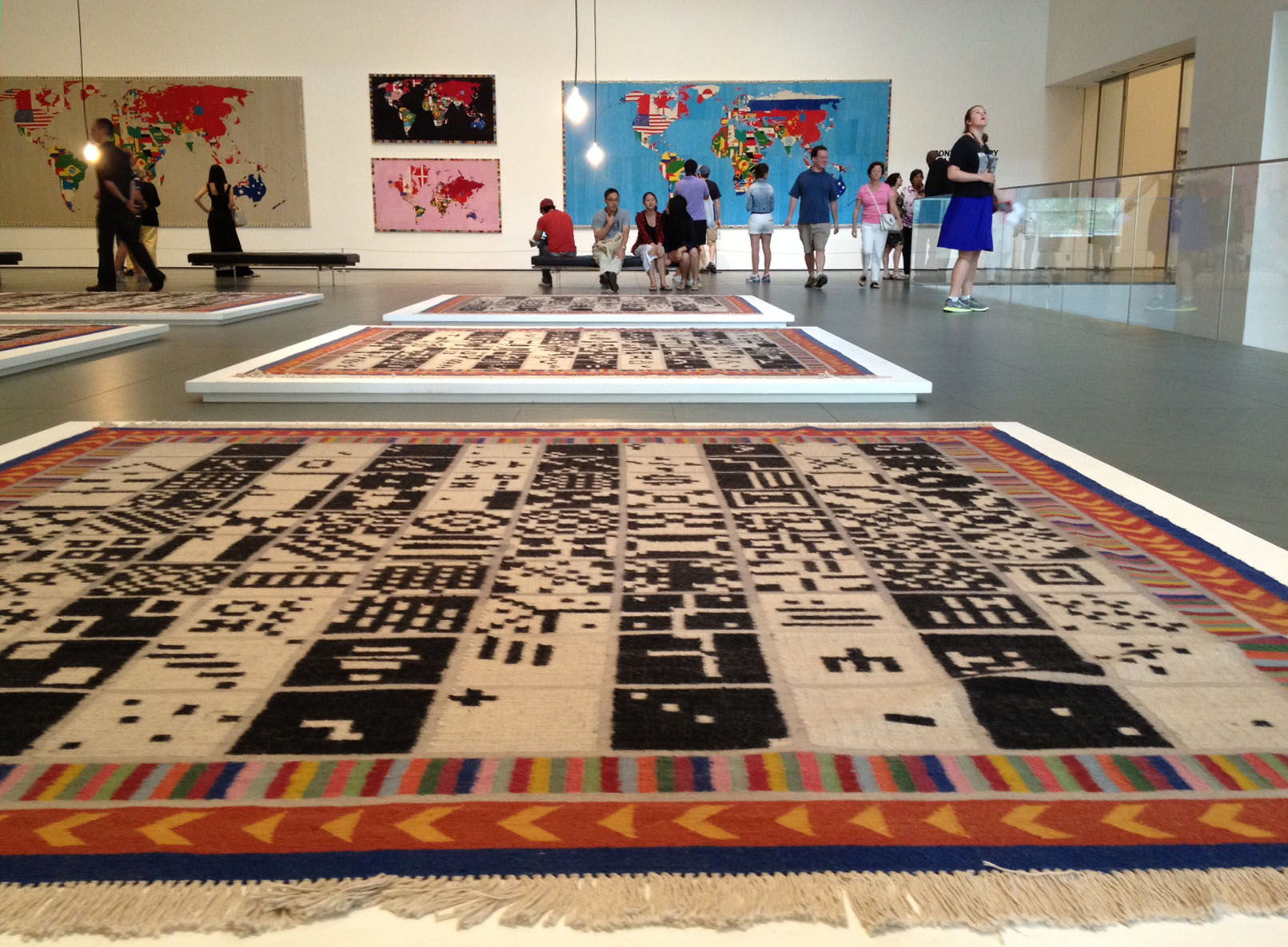
Alighiero Boetti, installation view at the Museum of Modern Art, Aug, 2012.

Alighiero Boetti’s gorgeous installation in the MoMA’s atrium defies Sol LeWitt’s oft-quoted 1967 remark about conceptual art that ‘all of the planning and decisions [for a work of art] are made beforehand and the execution is a perfunctory affair.’ In ‘Mappa’ from the 70s and 80s (on the back wall) and kilims from 1993 (in the foreground) Boetti commissioned his artwork from Afghan craftswomen, ensuring that execution shares the spotlight with conceptual content while recalling Minimalist seriality and Jasper Johns’ proto-Pop.

Xaviera Simmons, tête-à-tête at Yancey Richardson Gallery

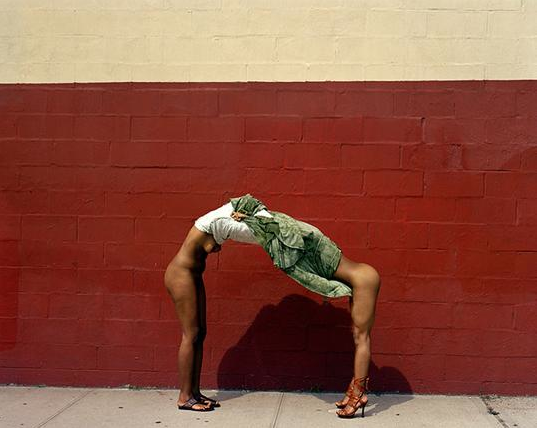
Xaviera Simmons, Landscape (2 Women), color photograph, 2007.

Xaviera Simmons is known for her portraits in America landscapes, but in ‘Landscape (2 Women)’ from 2007, her models contend with an urban environment consisting of a dramatic red wall that sends out conflicting associations that include love, anger, danger and a sense of urgency.  Simmons past series have sometimes featured subjects with skirts pulled over heads and assortments of objects hung around the waist like visual essays on identity; here, however, the womens’ differently aged bodies and their relationship are left to speak for themselves. (Included in tête-à-tête, curated by Mickalene Thomas at Yancey Richardson Gallery through Aug 24th.)

Bruce Nauman, ‘One Hundred Fish Fountain’ at Gagosian Gallery

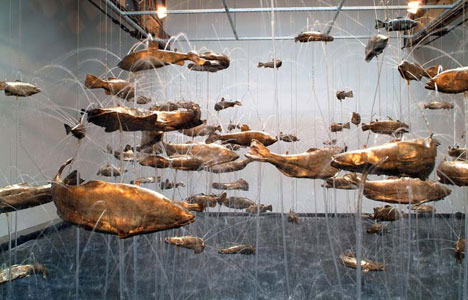
Bruce Nauman, One Hundred Fish Fountain, bronze fish suspended with stainless steel wire from a metal grid, 2005.

Stepping out of the elevator at Gagosian Gallery’s uptown, Madison Ave location, the roar of rushing water is immediate and surprisingly loud.  Around the corner, squeezed into the main 6th floor exhibition space, is iconic conceptual artist Bruce Nauman’s sculpture of 97 cast bronze fish spouting water from their bodies as if they’d been hunted by rifle as well as hook and line.  Elegant in photos, the mechanics of the piece – trailing tubes, a leaky basin, wires – dominate the in-person experience, creating typically Nauman-esque disconcertion.  (‘One Hundred Fish Fountain’ is at Gagosian Gallery through Aug 31st).

Guy Ben-Ner, ‘Stealing Beauty’ in ‘Idea is the Object’ at D’Amelio Gallery

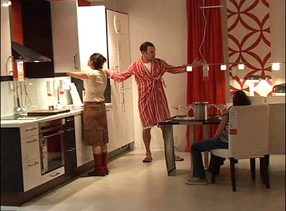
Guy Ben-Ner, 'Stealing Beauty,' video, 2007.
Guy Ben-Ner, ‘Stealing Beauty,’ video, 2007.

Imagine perusing bedroom sets in IKEA and finding a quarrelling married couple bedding down for the night.  Israeli artist Guy Ben-Ner is half of the couple starring in his own hilarious 18 minute 2007 video ‘Stealing Beauty’ that he shot without permission with a small camcorder in IKEA stores in New York, Berlin and Tel Aviv.  As he, his wife and two kids discuss the ramifications of capitalism on their family life, they pretend to read from the store’s libraries, shower in the bathroom and sip drinks in the kitchen, creating a provocative dissonance between public and private life and questioning the personal impact of political ideology. (‘Stealing Beauty is in ‘Idea is the Object’ at D’Amelio Gallery, Chelsea, through Aug 24th).

Lizzie Fitch, ‘Title TBD’ at Andrea Rosen Gallery

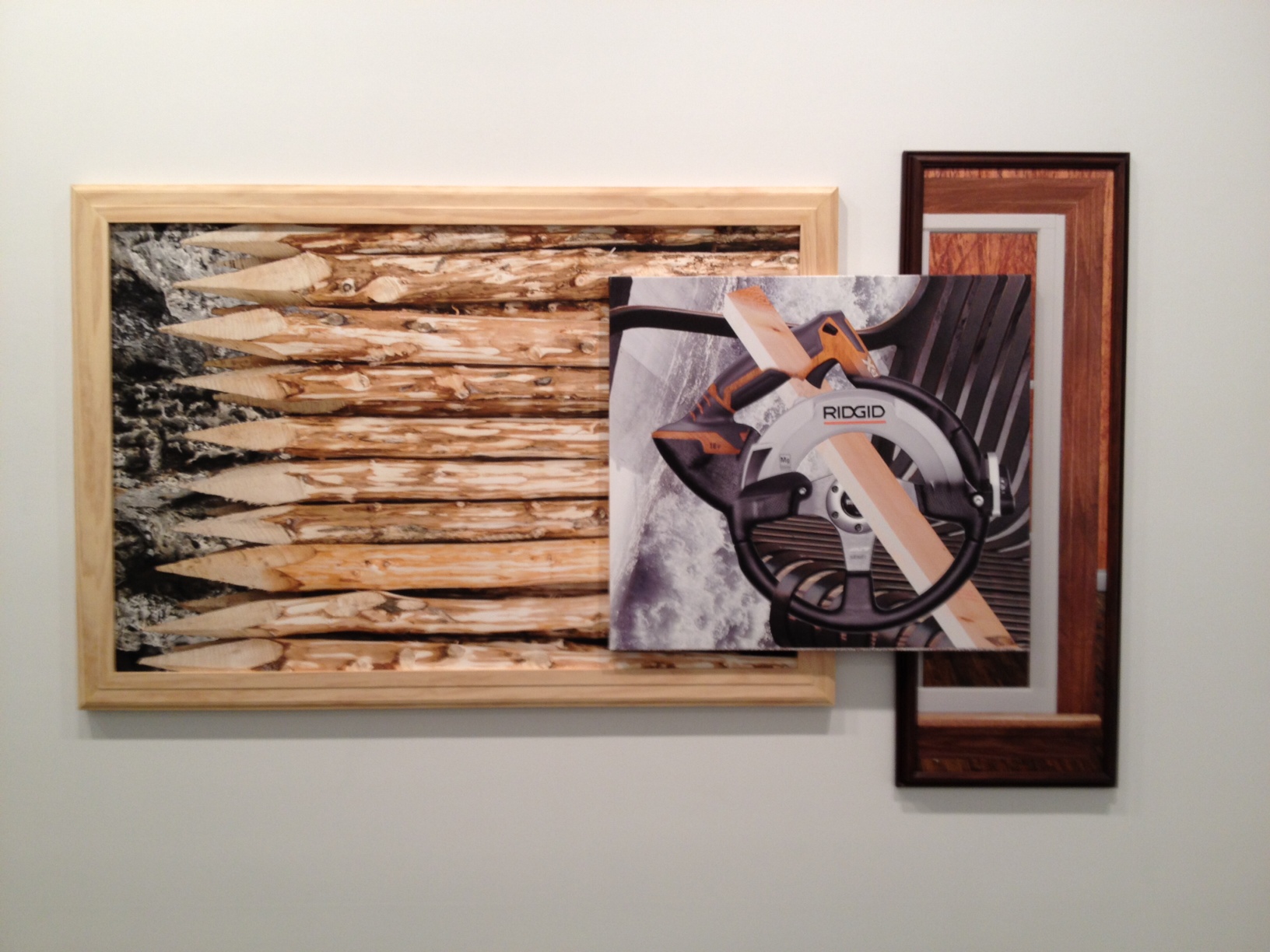
Lizzie Fitch, Title TBD, wood, wood stain, ink on canvas, ink on paper, 2012.

Lizzie Fitch’s ‘Title TBD’ begs a few suggestions.  ‘Man power?’  ‘Guy stuff?’ The central panel’s car/power tool/DIY theme and a pile of spike-ended lumber that looks like its destined for fencing tries hard to conjure masculinity.  The piece tries so hard to look manly, it looks nothing like usual gallery fare (though it recalls Josephine Meckseper’s hot rod imagery).  ‘Feminine’ artwork abounds in New York galleries, so why so little that’s blatantly male? (At Andrea Rosen Gallery, Chelsea, through August 21st).

Erica Love & Joao Enxuto, The Skin We’re In at Yossi Milo

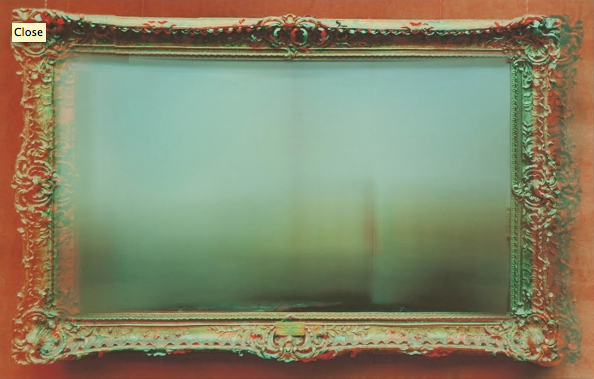
Erica Love & Joao Enxuto, from the series Anonymous Paintings, inkjet print on cotton canvas, 2012.

Can abstract art be used as a tool to resist Google’s efforts to map the world’s every nook and cranny?  Using screen grabs from Google Art Project’s museum walk-throughs, Brooklyn-based artists Erica Love and João Enxuto have launched a ‘counter archive’ of blurred images that have been obscured for copyright reasons. As large inkjet prints on cotton panels instead of tiny rectangles on a computer screen, they have a shimmering depth that recalls the 60s ‘Light & Space’ movement while pioneering a new medium somewhere between photography, installation and virtual art. (Love and Enxuto’s ‘Anonymous Paintings’ are included in ‘The Skin We’re In’ at Yossi Milo Gallery through August 31st.)

Oscar Tuazon, ‘People’ at Brooklyn Bridge Park

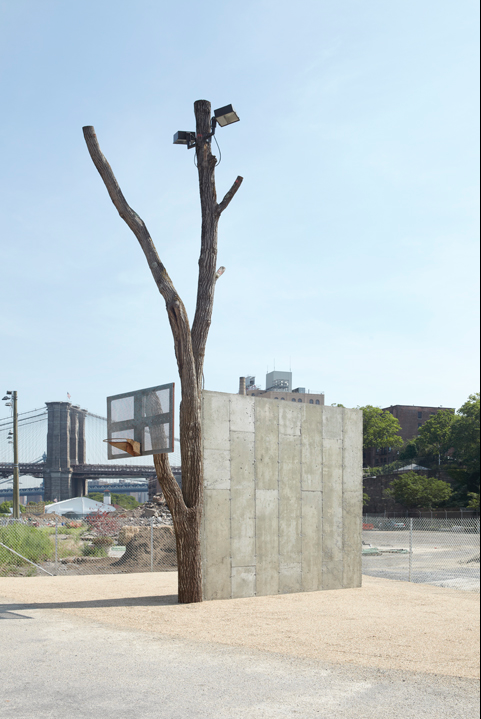
Oscar Tuazon, 'People,' sugar maple tree, concrete, metal basketball backboard and hoop, 2012.  Photo by Jason Wyche.
Oscar Tuazon, ‘People,’ sugar maple tree, concrete, metal basketball backboard and hoop, 2012. Photo by Jason Wyche.

Known for overtaking galleries with his wood and concrete constructions, Oscar Tuazon’s new site-specific sculptures on the Brooklyn waterfront have space to breath.  Here, a sugar maple, concrete, backboard and hoop come together to form ‘People,’ a sculpture inviting folks to play a role in cleaning up the Brooklyn waterfront by having a little fun.  (Organized by the Public Art Fund, Tuazon’s sculptures are on view at Brooklyn Bridge Park.)

Alyson Shotz, ‘Wavelength #2’ in ‘Sculpted Matter’ at Paul Kasmin Gallery

Alyson Shotz, Wavelength #2, dichoric acrylic on aluminum tube and steel, 2008.  Image courtesy of Alyson Shotz Studio.
Alyson Shotz, Wavelength #2, dichoric acrylic on aluminum tube and steel, 2008. Image courtesy of Alyson Shotz Studio.

‘Dazzling’ is a good way to describe Alyson Shotz’s optically enticing sculpture whether it’s the shimmering curtain of Fresnel lenses she memorably installed in the Guggenheim’s atrium in ‘07 or a mirrored fence hidden in plain view in the fields at the Storm King Art Center.  ‘Wavelength #2’ from 2008 continues Shotz’s interest in waveforms and uses dichroic acrylic to both transmit and reflect different wavelengths of light, creating a range of colors from a clear material. (‘Wavelength #2’ is at Paul Kasmin Gallery as part of ‘Sculpted Matter’ through August 17th.)

Ashley Bickerton Self Portrait at Lehmann Maupin

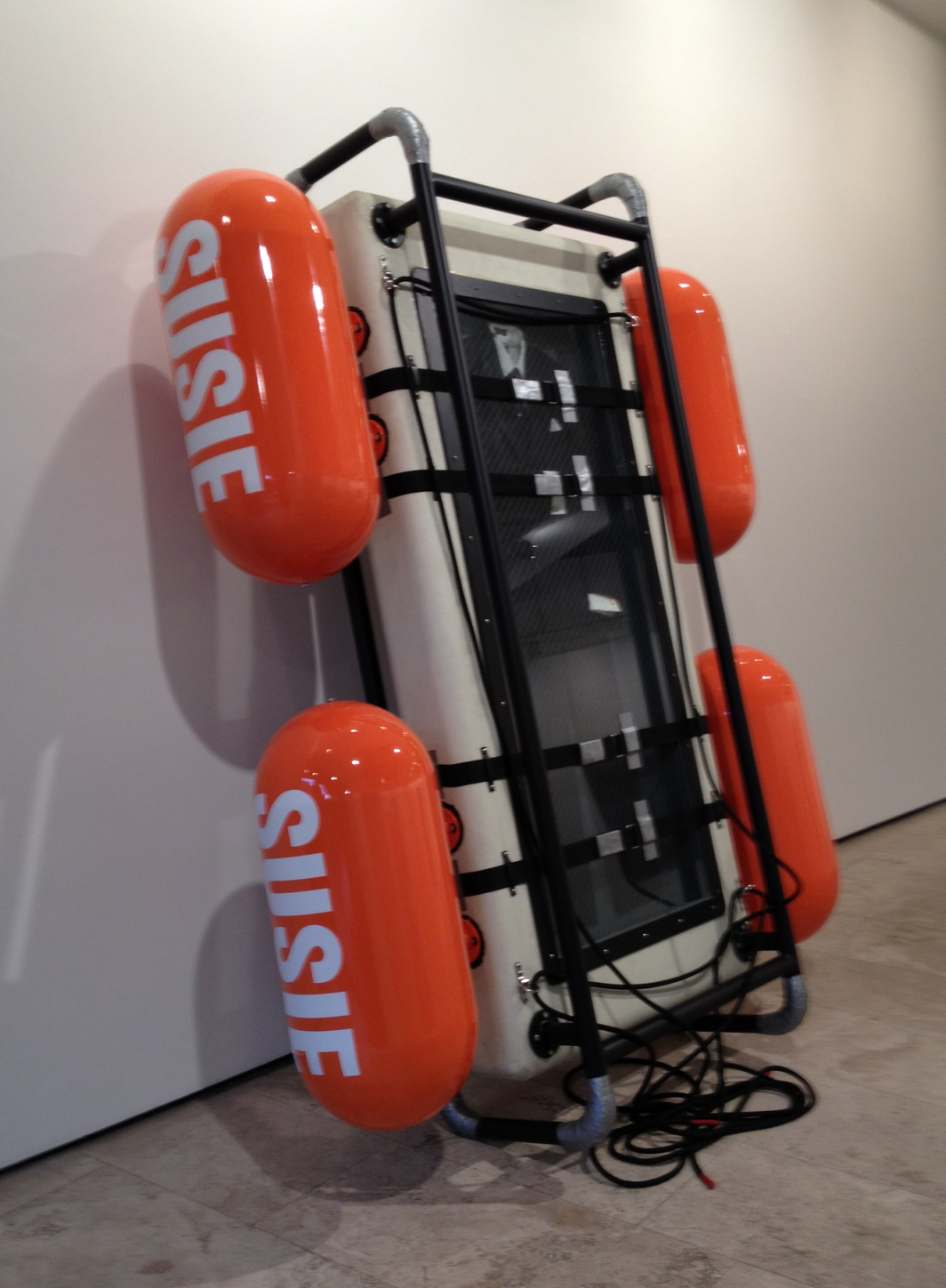
Ashley Bickerton, 'Seascape:  Floating Costume to Drift for Eternity I (Armani Suit), suit, glass, aluminum, wood, caulk, fiberglass, enamel, canvas and webbing, 1991.
Ashley Bickerton, ‘Seascape: Floating Costume to Drift for Eternity I (Armani Suit), suit, glass, aluminum, wood, caulk, fiberglass, enamel, canvas and webbing, 1991.

As far as self-portraits go, ‘Seascape:  Floating Costume to Drift for Eternity I (Armani Suit)’ by Ashley Bickerton is a little on the dark side, despite its bright orange buoys.  Made in 1991, just two years before this regular on the downtown New York art scene relocated permanently to Bali, it seems to foretell his departure.  Quixotic, a little lonesome, and stylishly branded by Armani and his signature ‘Susie’ logo – a semi-corporate brand of his own invention – Bickerton’s craft signals a dignified leave-taking, a memorial to a past life and an adventure about to begin. (Through August 17th at Lehmann Maupin Gallery, Chelsea.)

Tyler Rowland in ‘HiJack’ at Jack Shainman Gallery

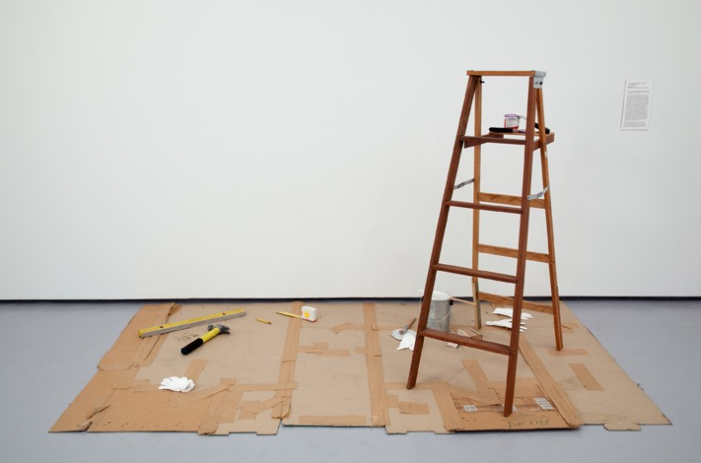
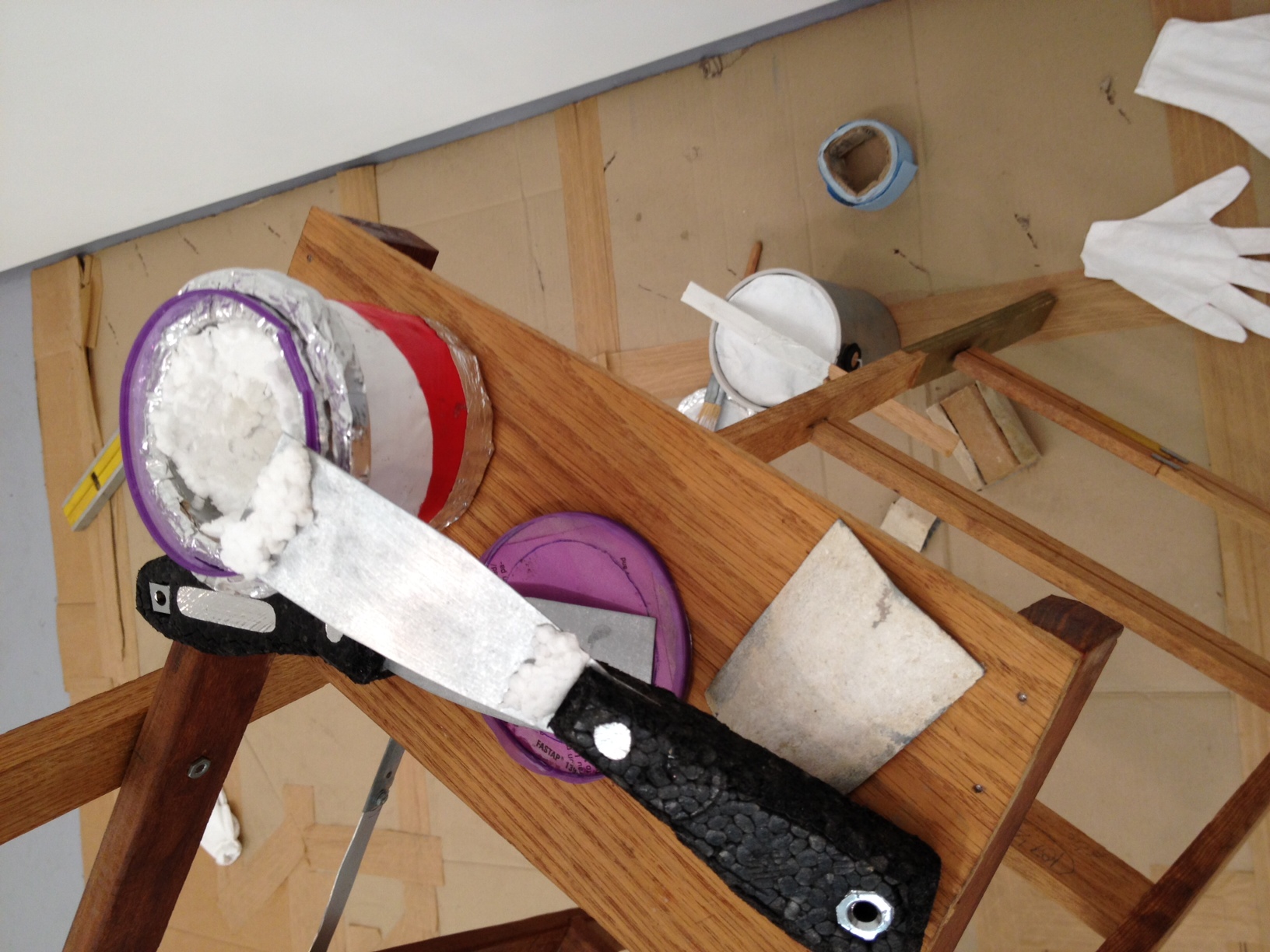
Tyler Rowland, The Stonebreakers (All the Objects Needed to Install a Work of Art), trash from jobsite, 2004-06

Artist Tyler Rowland was so taken by 19th century Realist painter Gustave Courbet that he spent a year impersonating (in appearance anyways) his forebear.  In ‘HiJack!’ a show of work organized by the art handlers at Chelsea’s Jack Shainman Gallery, Rowland’s contribution is a missing Courbet painting (presumed destroyed in the WWII bombing of Dresden), along with the tools necessary to install it (all carefully manufactured by the artist from materials recycled from construction jobs).  The layers of reference are complex but readable, making this piece a testament to the continuing influence of art history on contemporary painting while challenging preconceptions of what an artwork should look like. (‘The Stonebreakers (All the Objects Needed to Install a Work of Art), 2004-06’ is on view through Sept 1st. )

Tyler Rowland, The Stonebreakers (All the Objects Needed to Install a Work of Art), trash from jobsite, 2004-06

Andrew Kuo in ‘In Plain Sight’ at Mitchell-Innes & Nash

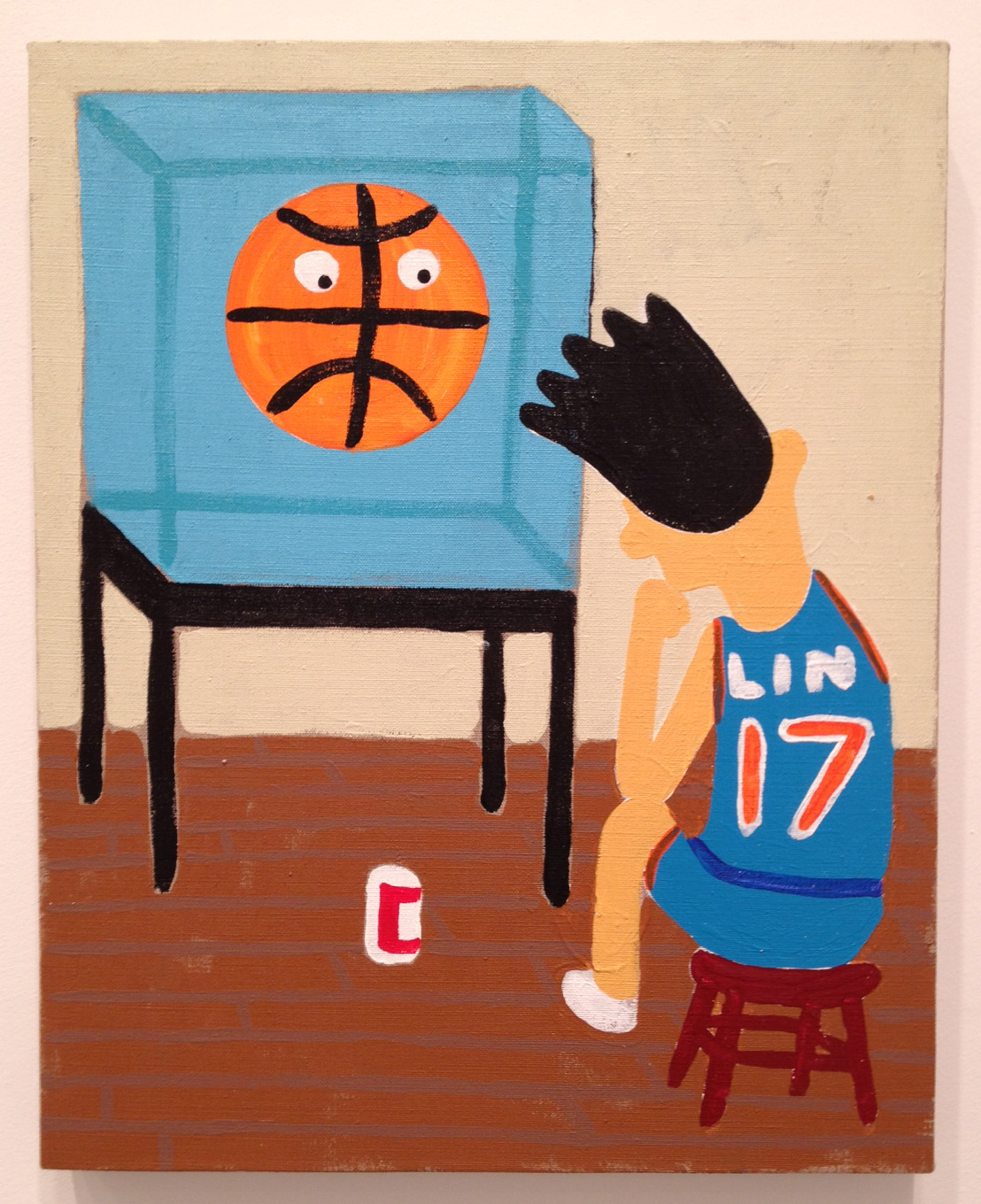
Andrew Kuo, 'Tallboy,' acrylic on linen, 2012.
Andrew Kuo, ‘Tallboy,’ acrylic on linen, 2012.

Linsanity goes on hiatus in Andrew Kuo’s tiny painting of Houston Rockets star Jeremy Lin as he is chastised by an angry basketball.  Floating in a tank a la Jeff Koon’s basketballs in his 1985 ‘Equilibrium’ series, the ball becomes the object of our attention, forcing a downcast Lin into the backseat.  The vicissitudes of stardom never looked so cute. (‘Tallboy’ is in the group exhibition ‘In Plain Sight’ at Chelsea’s Mitchell-Innes & Nash through August 17th).

Jennifer Zackin & Sandford Biggers, ‘a small world’ at The Jewish Museum

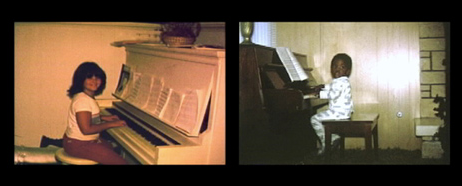
Jennifer Zackin & Sandford Biggers, 'a small world,' video still, 2012.
Jennifer Zackin & Sandford Biggers, ‘a small world,’ video still, 2012.

If you’re at The Jewish Museum to visit the Vuillard show, don’t miss the chance to see a side exhibition of a single work – Sanford Biggers and Jennifer Zackin’s memorable video ‘a small world’ from ’99 – ’01.  Zackin grew up in a New York Jewish American family and Biggers an African American family in LA; the video piece pairs home movies from each artist’s family side by side.  Similarities between their experiences beg the question of how viewers might expect race and geography to influence a middle class upbringing. (Extended through October 14th).

Matthew Brandt at Yossi Milo Gallery

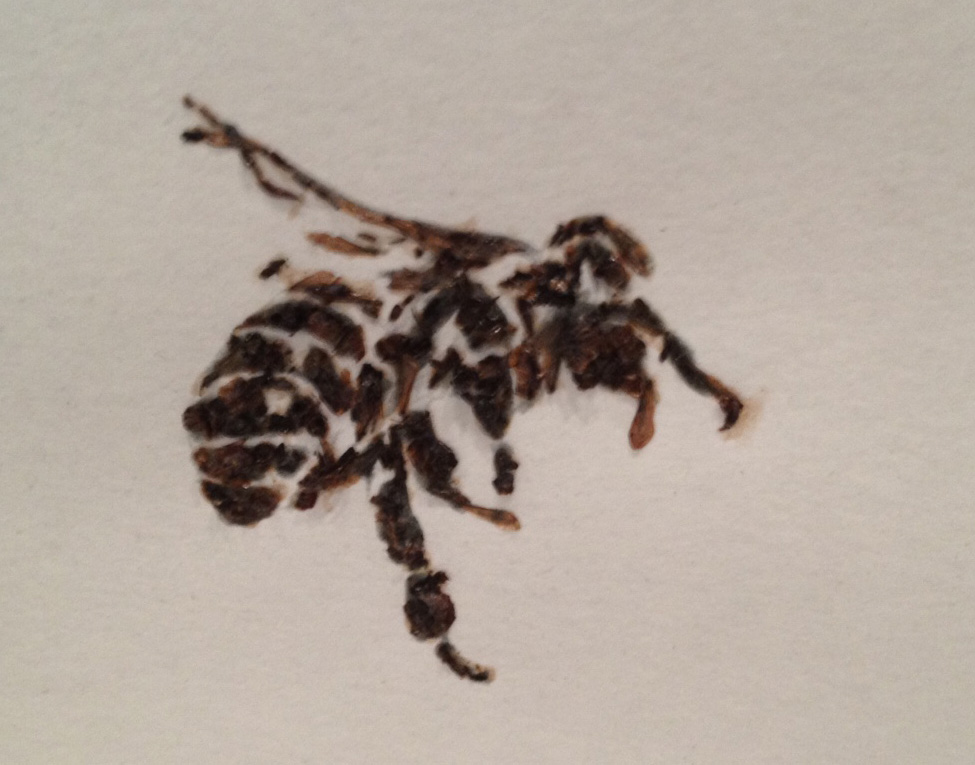
Matthew Brandt, Bees of Bees 5 (detail), gum bichromate print with honeybees on paper, 2012.

Whether he’s burning trees to make charcoal or soaking a photograph of a lake in lake water to get an abstracted effect, Matthew Brandt uses his subject matter to create an image of that subject.  When bee colony collapse led to his discovery of hundreds of dead or dying bees on the California coast, he collected the bees and photographed them in his studio, printing them with an emulsion made of the bees.   The resulting prints are huge and swarming with bees (like the one in this detail), but chilling when a closer look reveals that they are in various states of decomposition. (At Yossi Milo Gallery through August 31, 2012).

Joan Brown in ‘Viva la Raspberries’ at Harris Lieberman

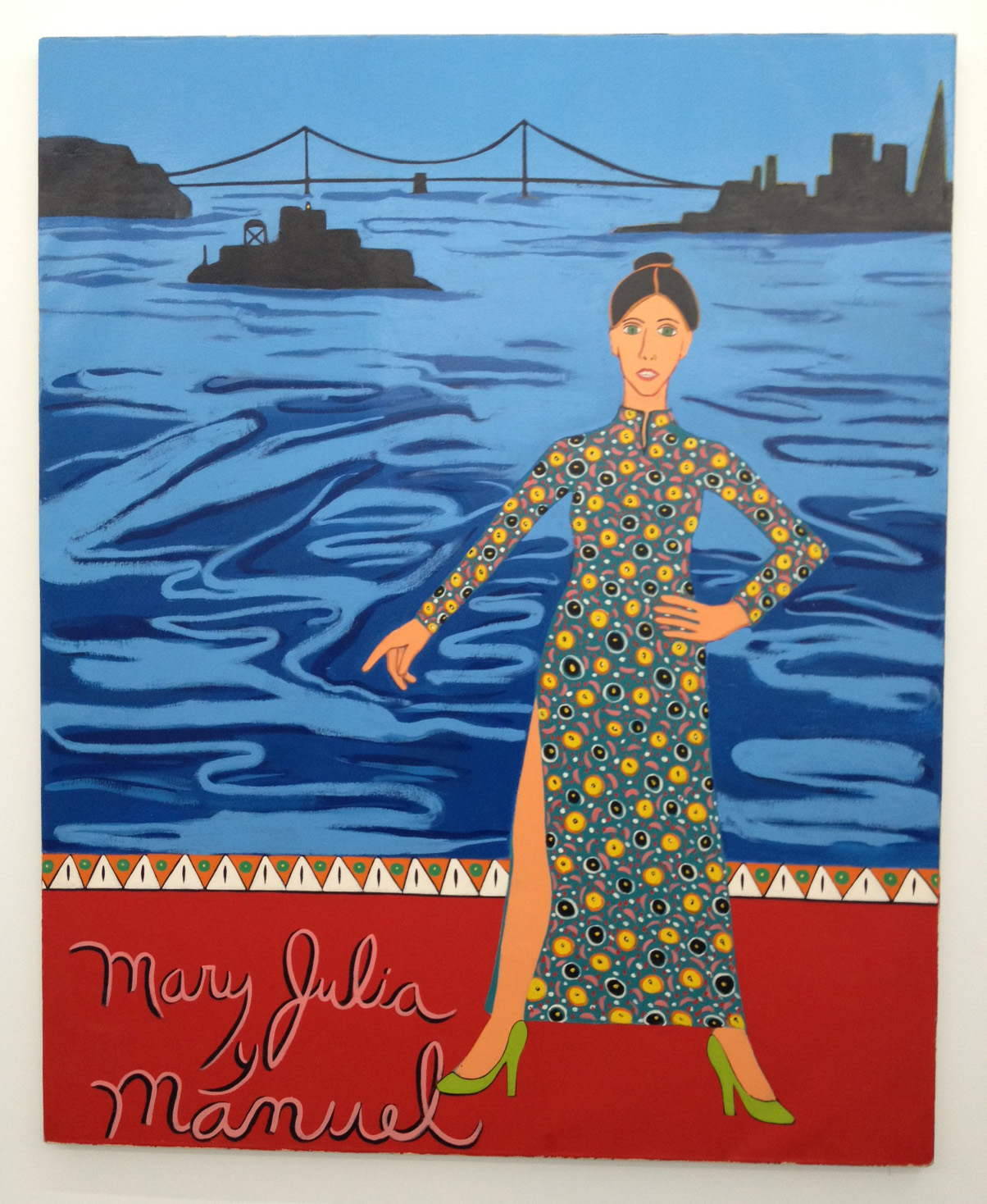
Joan Brown, Mary Julia y Manuel, enamel on canvas, 1976.

Apart from its large size and bold color, Joan Brown’s ‘Mary Julia Y Manuel,’ from 1976 stands out for its romantic drama, played out on a bright red stage before a swirling San Francisco Bay.  Mary Julia, model and poet, holds a similar pose to Goya’s supposed lover, the Dutchess of Alba and her name is paired with Brown’s ex-husband Manuel, making this nighttime scene ring with tension. (‘Viva la Raspberries’ is at Harris Lieberman, Chelsea, through August 17th).

Davina Semo in ‘Sweet Distemper’ at Derek Eller Gallery

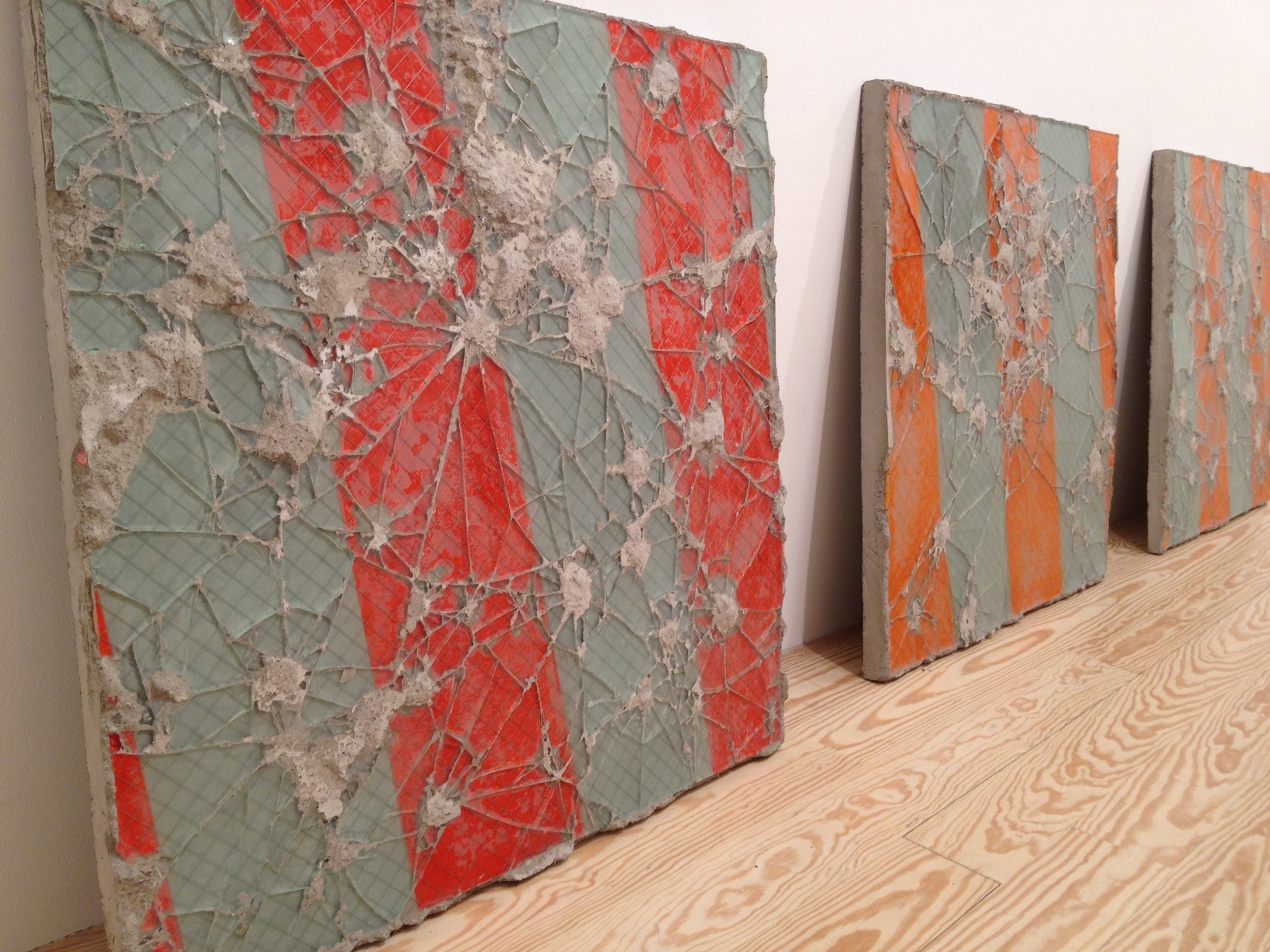
Davina Semo, You Said We're Skipping the Prelude; Start the Insults, reinforced concrete, safety glass, enamel paint, 2011
Davina Semo, You Said We’re Skipping the Prelude; Start the Insults, reinforced concrete, safety glass, enamel paint, 2011

Three panels of painted concrete covered in shattered safety glass by Davina Semo at Chelsea’s Derek Eller Gallery rest on the floor like they were just brought in from a war-zone.  Minimalist stripes in safety orange appear to have suffered heavy attack but survive to bear witness.  Together they’re titled, ‘You said we’re skipping the prelude: start the insults.” (Though August 16th).

Walter Robinson in ‘Claxons,’ at Haunch of Venison

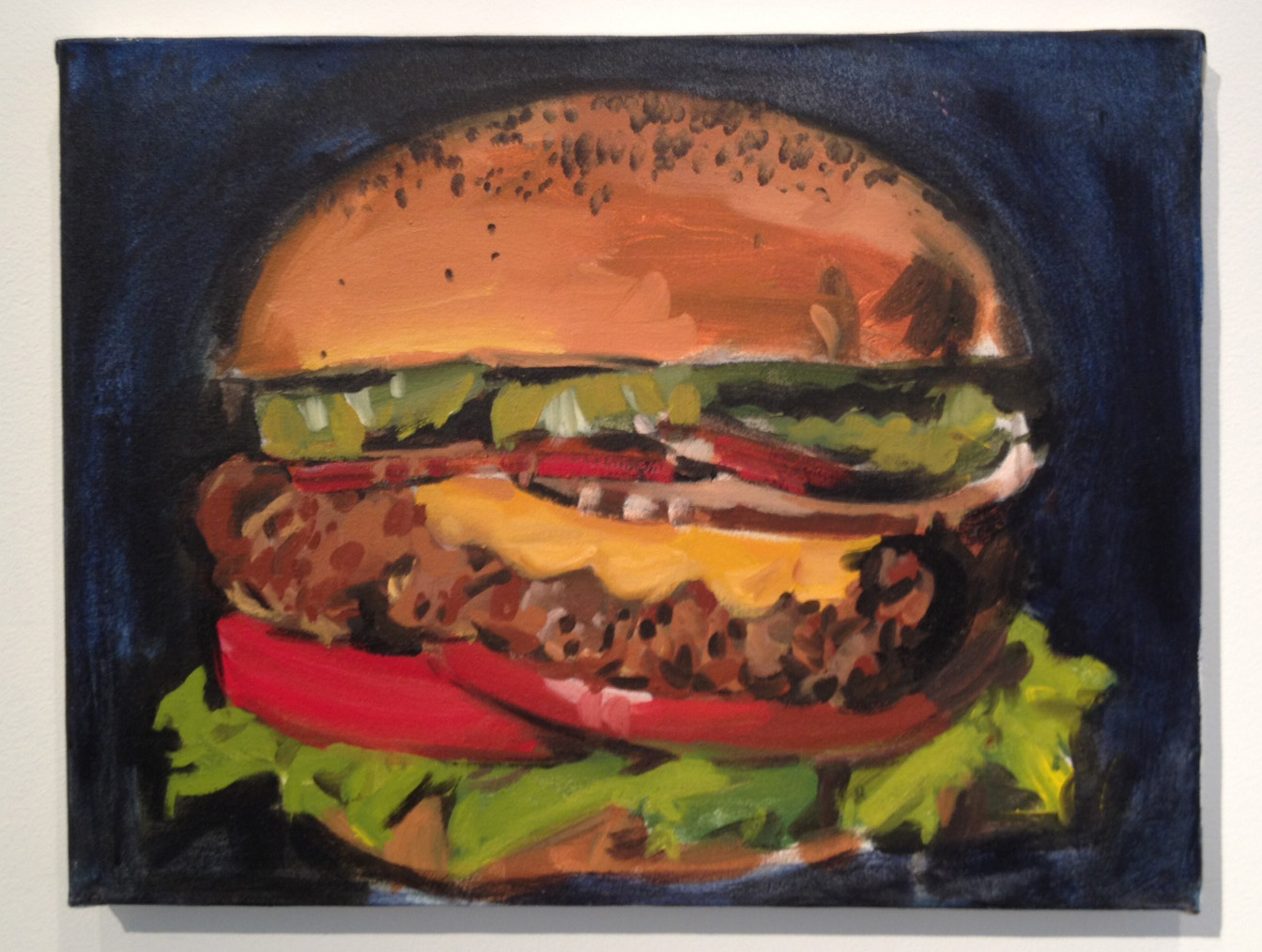
Walter Robinson, 'Dallas BBQ,' acrylic on canvas, 2001.
Walter Robinson, ‘Dallas BBQ,’ acrylic on canvas, 2001.

Walter Robinson’s ‘Dallas BBQ’ arouses a different kind of desire than his erotically charged paintings (resembling romance novel covers from the 60s) at Chelsea’s Haunch of Venison.  ‘Here’s the beef’ this small but powerful canvas shouts as it evokes the danger of a cholesterol bomb and the pleasures of one of America’s favorite indulgences. (Through August 17th).

Alessandro Pessoli in ‘Lilliput’ on The High Line

Alessandro Pessoli, Old Singer with Blossoms, bronze, steel, wool, 2012.

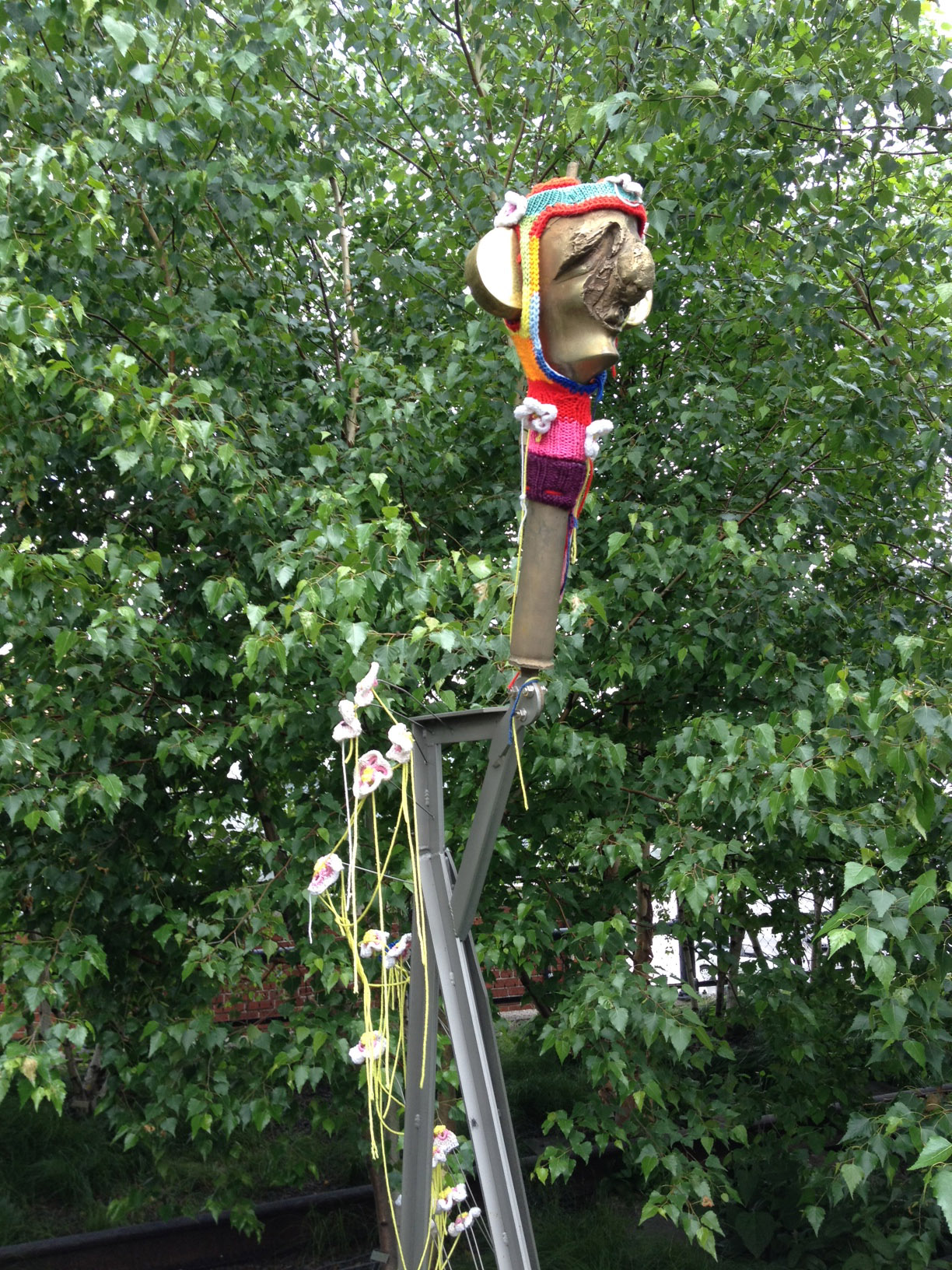
Alessandro Pessoli’s ‘Old Singer with Blossoms’ on the High Line is half hidden amongst short trees and lush plantings, making this odd character all the more strange once you become aware of his presence.  A balaclava in pretty, rainbow colors gives him a childlike or hippy appearance completely at odds with his cold steel body and bronze head.  As a mechanical creature subject to ridicule (for that silly hat), he could be one of Marcel Duchamp’s bachelors grown old.  (On the High Line as part of the group show ‘Lilliput’ through April 2013.)

Ellsworth Kelly, Plant Drawings at the Metropolitan Museum of Art

Ellsworth Kelly, Briar, 1961.

Ellsworth Kelly’s approximately eighty plant drawings at the Metropolitan Museum of Art could be some of the most insubstantial artwork on view in the city at the moment and some of the most enjoyable.  In graphite on paper renderings from 1948 to the present of poppy flowers, beanstalks, ginkgo leaves and more, Kelly distills each plant into an easily identifiable outline that offers insights into the renowned abstract artist’s iconography.

Carol Bove in ‘Painting in Space’ at Luhring Augustine

Carol Bove, Aurora, concrete, bronze, steel and seashells, 2012.

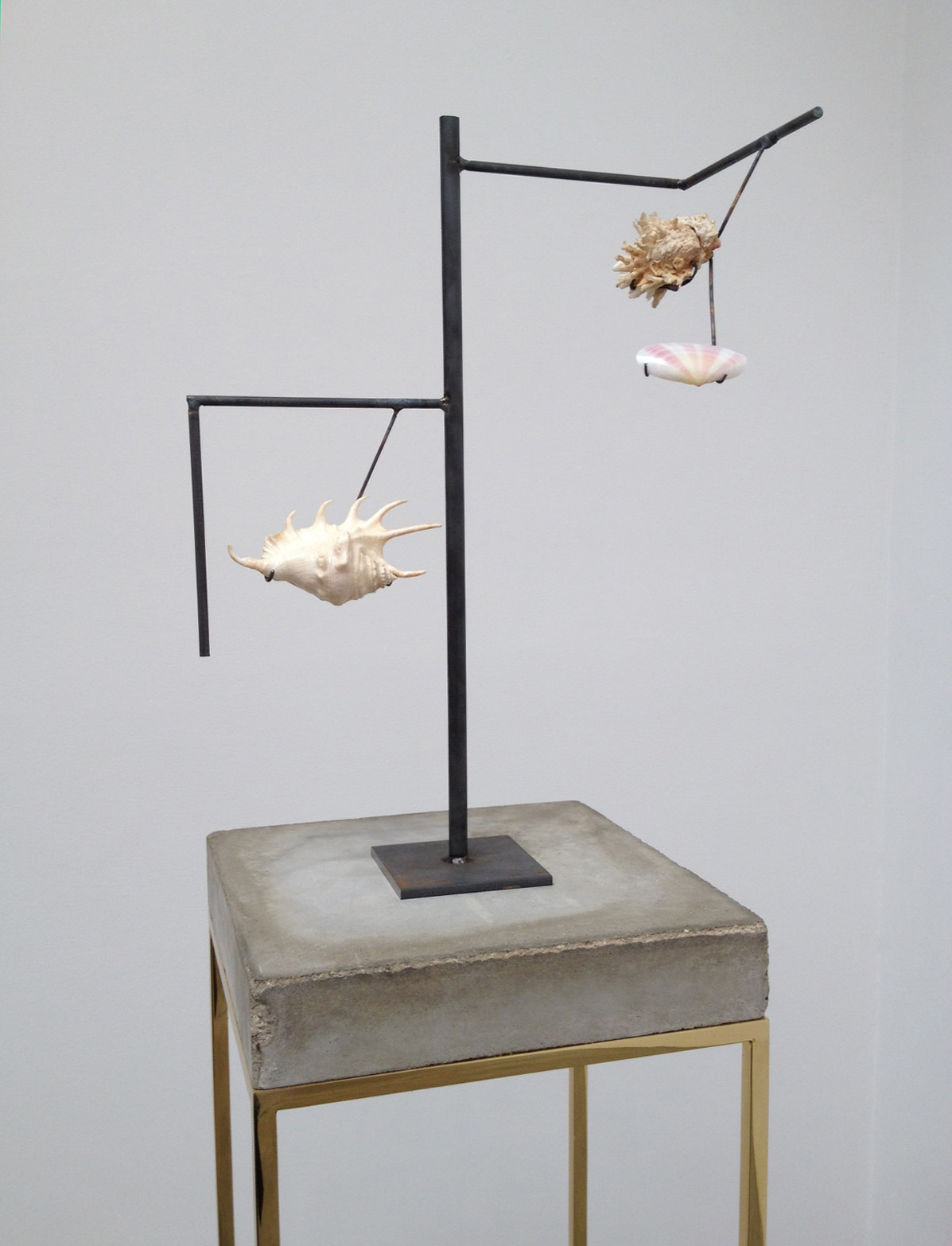
After appearing on the cover of May’s Art in America magazine, Carol Bove’s sculpture ‘Aurora’ is on view in Chelsea at Luhring Augustine’s ‘Painting in Space’ summer group show.  Bove is known for accumulating and displaying books, objects and ephemera that relate to 60s culture.  More recently, she’s been scavenging natural materials to continue her investigation of what a readymade object (or collection of them) might convey when put on display as art.  With their spikes, undulating surfaces and bands of color, these shells are exquisite examples of nature’s creativity and a contrast to the manmade, geometric rods that cradle them.  (Through August 17th).

Olympic games at the Metropolitan Museum of Art

Terracotta Panathenaic prize amphora, Greek, Attic, black-figure, ca. 560 - 550 B.C.
Terracotta Panathenaic prize amphora, Greek, Attic, black-figure, ca. 560 – 550 B.C.

In a private moment of Olympics-mania today, I visited the Metropolitan Museum of Art’s installation of Panathenaic prize amphora to reconnect with ancient Olympians.  One of the earliest of such vessels (560-550 B.C.) in the Met’s collection, it was filled with olive oil and awarded to winners of events like the 200 yard race depicted here.  If you were an Olympic winner, would you rather have a gold metal or 42 liters of olive oil?

Robert Overby & Lizzi Bougatsos at Andrea Rosen Gallery

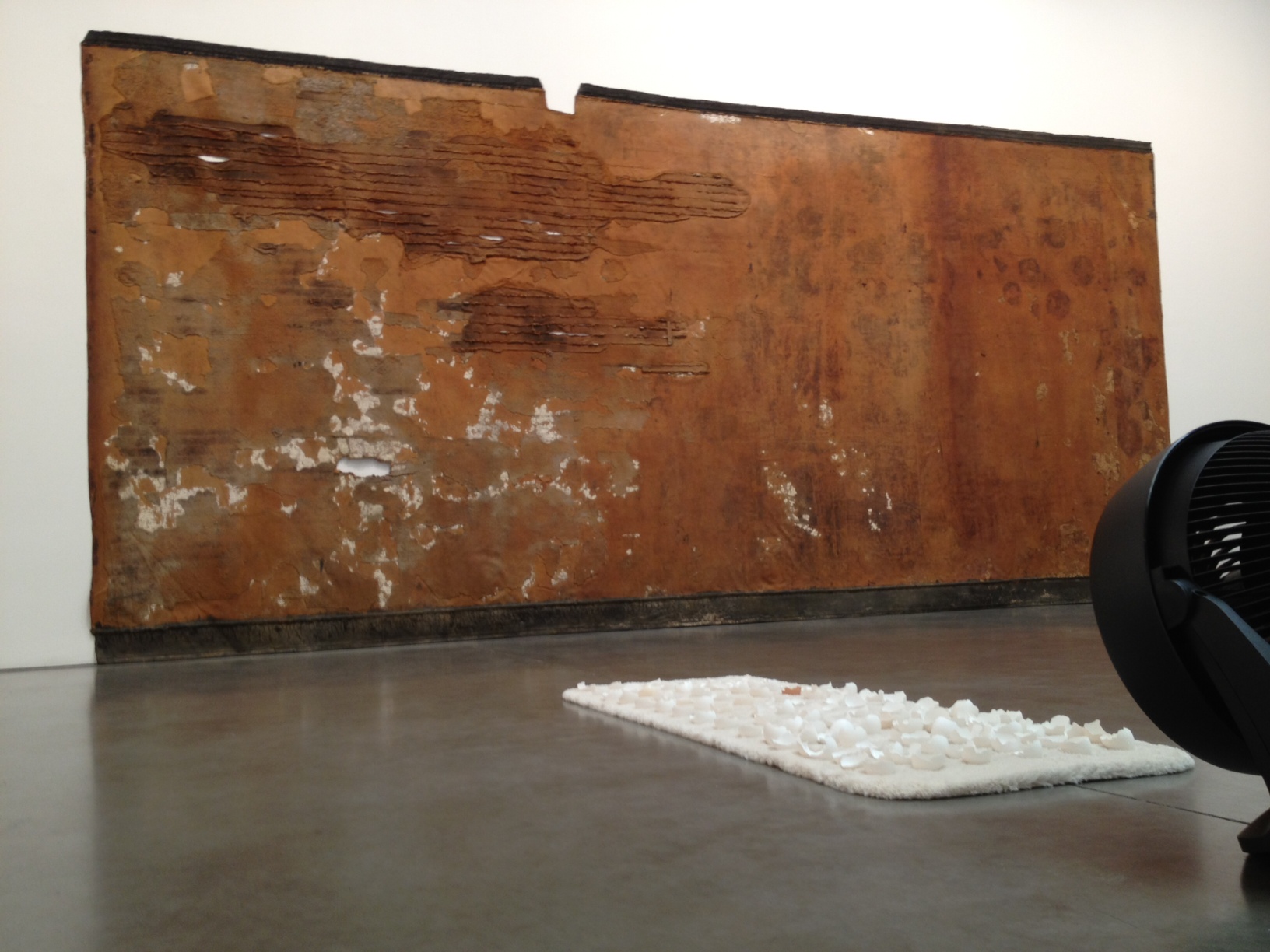
Robert Overby & Lizzi Bougatsos installation view at Andrea Rosen Gallery.

41 years ago today, LA-based artist and graphic designer Robert Overby created ‘Long wall, third floor (From the Barclay House Series), 4 August, 1971,’ a nineteen foot long cast of an abandoned building made of latex and cheesecloth.  Its dirt, holes and grubby material make it a powerful symbol of entropy and decay.  It’s both kin and contrast to Lizzi Bougatsos’ more delicate cracked eggshells on white bathmat – discards arranged into a fragile and pristine grid.  (At Andrea Rosen Gallery, Chelsea, through August 21st.)

Kiki Smith in ‘It’s Always Summer on the Inside’ at Anton Kern Gallery

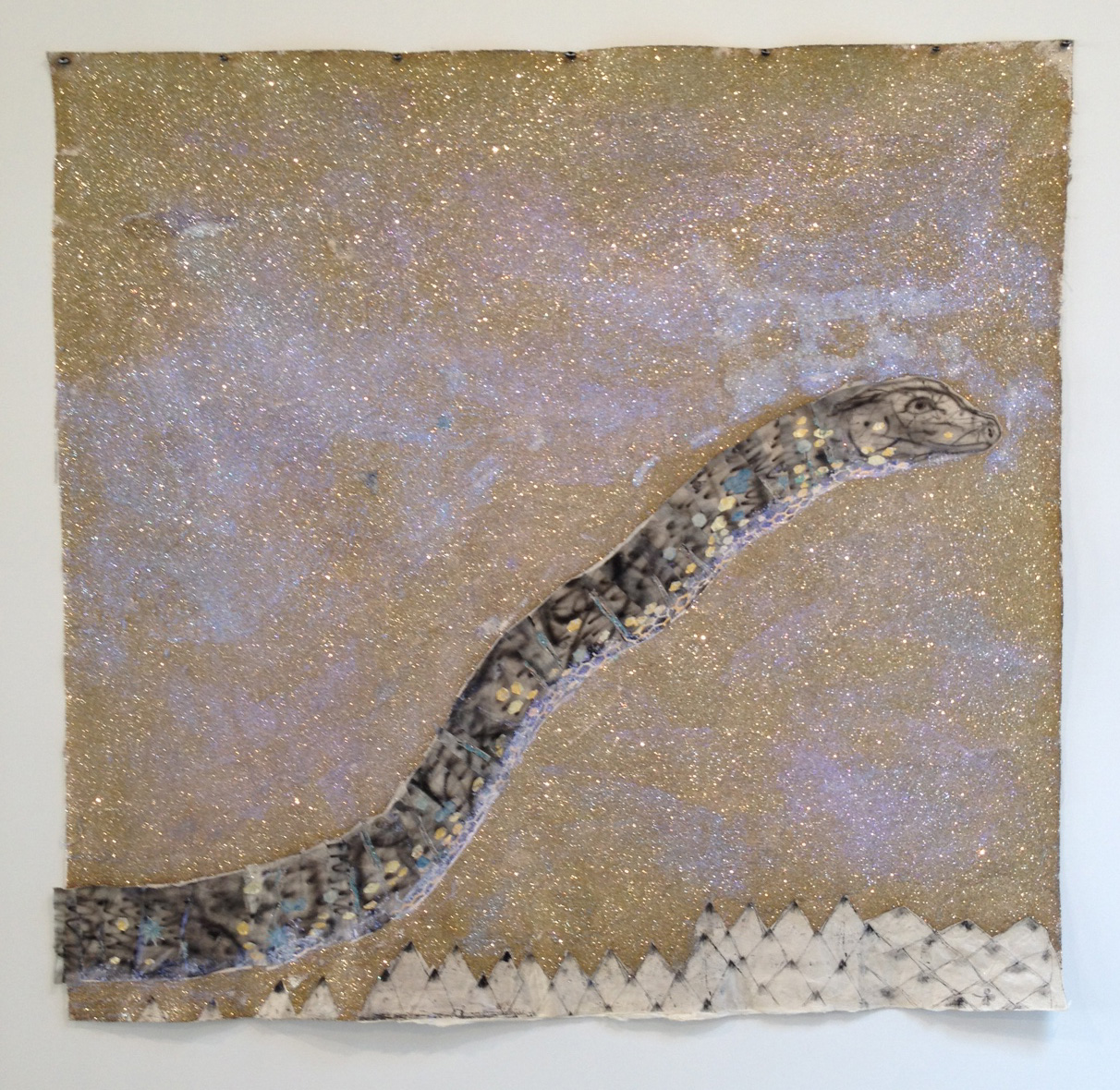
Kiki Smith, Milky Way, murrini with push pin, glass and plastic glitter, gold leaf and ink on Nepalese paper mounted on canvas, 2011.

Kiki Smith’s ‘Milky Way’ brings to mind a more benevolent Edenic serpent hovering over a field of pointed breasts (a fertile Eve? multi-breasted Greek goddess Artemis?). Murrini glass, plastic glitter, and gold leaf amongst other materials create a dazzling backdrop and light up the snake from beneath.  The piece could read as an exhuberant celebration of fertility or its opposite, as sharp breasts threaten.  (In ‘It’s Always Summer on the Inside’ at Anton Kern Gallery, Chelsea, through August 24th).

Sandro Rodorigo in ‘Artists Guarding Artists’ at Family Business

Sandro Rodorigo, Sandro at Work:  The Great Self-Portrait, oil on masonite, 2009.
Sandro Rodorigo, Sandro at Work: The Great Self-Portrait, oil on masonite, 2009.

Over years of avid art viewing, particular museum security guards have become as familiar to me as the art they guard though we’ve never exchanged words.  ‘Artists Guarding Artists’ a group show at Family Business breaks the silence with work by artists who work as guards at the city’s major museums, from the Met to the New Museum.  Next time I go to the Guggenheim, I’ll be looking for Sandro Rodorigo to congratulate him on his tongue-in-cheek, self-aggrandizing ‘Sandro at Work: The Great Self-Portrait.’  Though it’s a small painting, it perfectly pillories art world hierarchies of importance that don’t favor guards.  (Through August 17th).

Despina Stokou in ‘Sweet Distemper’ at Derek Eller Gallery

Despina Stokou, 'Conversations on the Dirty Dozen series,' mixed media on wall, 2012.
Despina Stokou, ‘Conversations on the Dirty Dozen series,’ mixed media on wall, 2012.

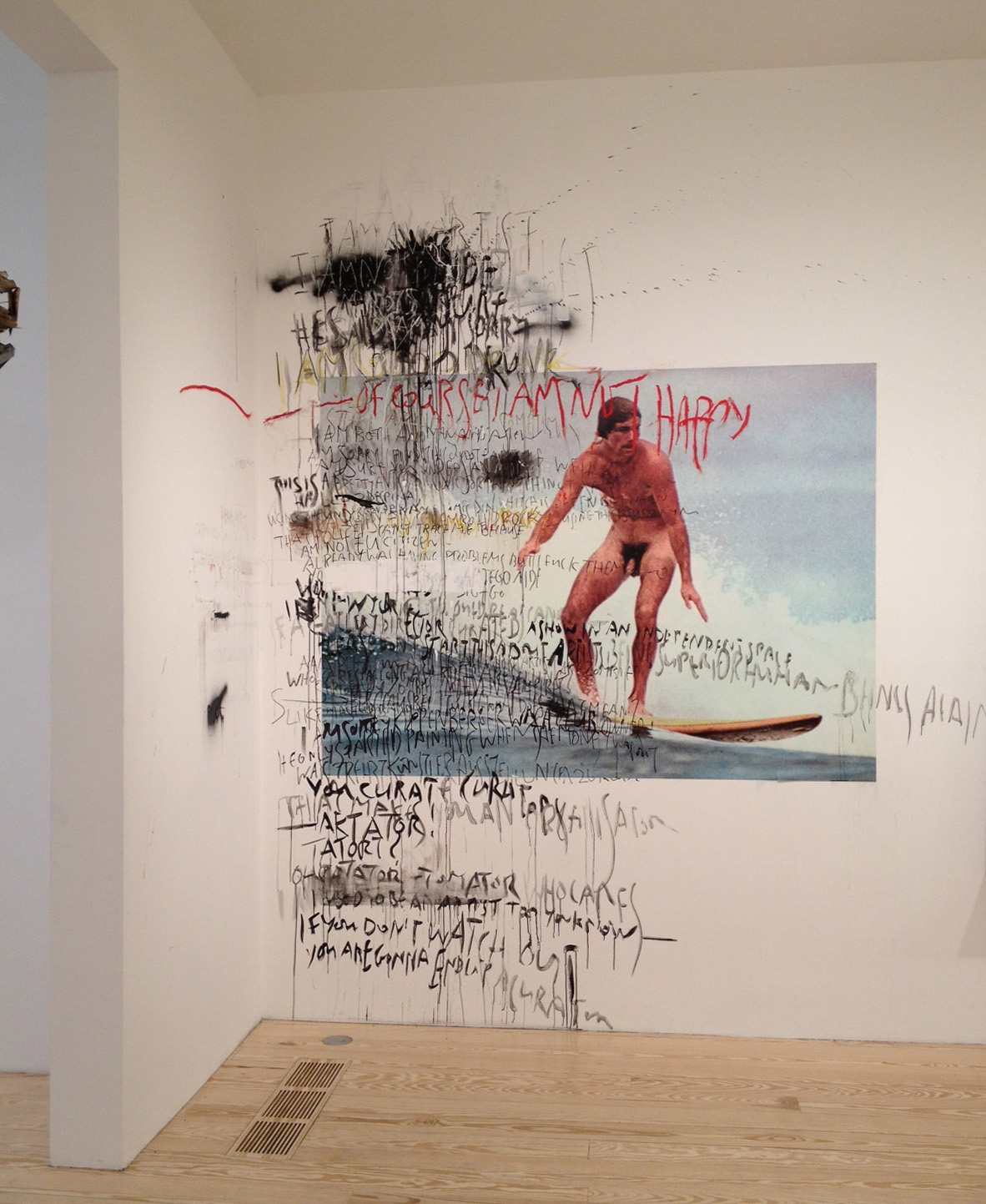
Berlin-based Greek artist Despina Stokou makes her New York debut with ‘Conversations on the Dirty Dozen,’ an unmissable mixed media wall installation featuring a nude surfer and scrawled text.  The haphazard look of Stokou’s writing channels Cy Twombly’s energetically repeated words and marks and Matt Mullican’s automatism, and looks as if it would involve insane ramblings.  In fact, the words trail off with a piece of tongue-in-cheek art world advice (from an artist who is also a curator) reading “I used to be an artist too, you know.  If you don’t watch out you’re going to end up a curator.” (Stokou is part of ‘Sweet Distemper,’ organized by Isaac Lyles at Derek Eller Gallery through August 16th).

Dieter Roth in ‘The Nature of Disappearance’ at Marianne Boesky Gallery

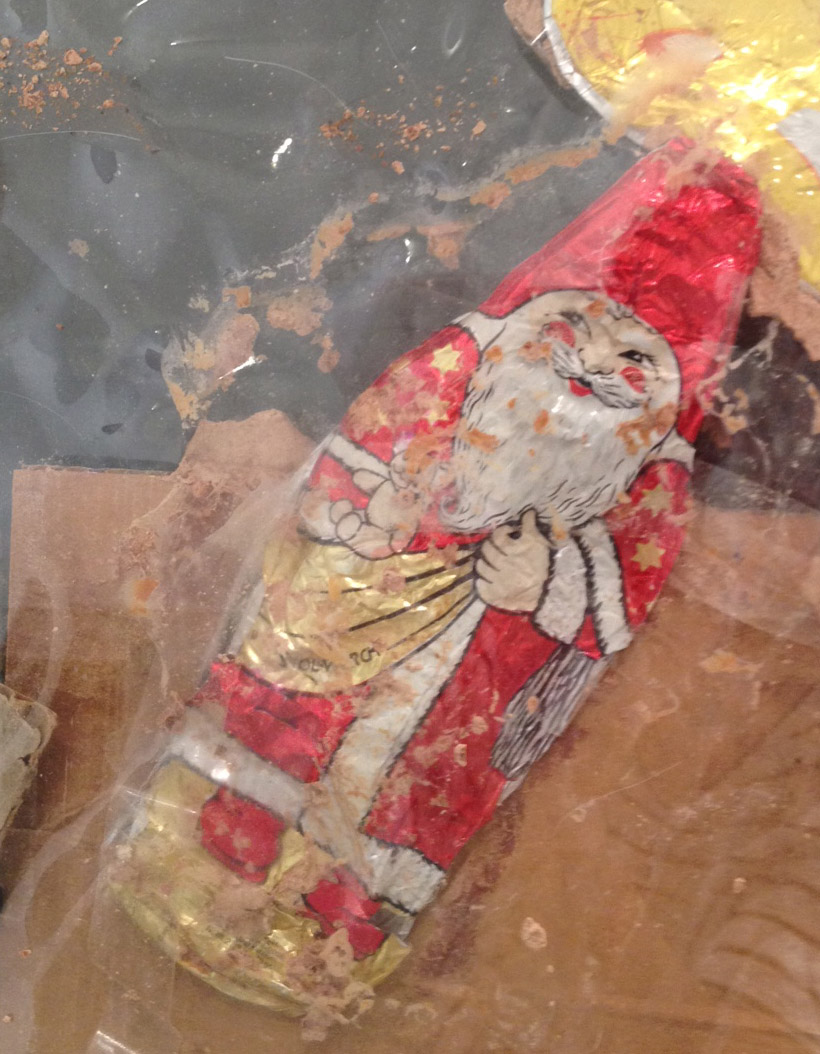
Dieter Roth, Lauf der Welt (The Way the World Runs), 1970, chocolate, aluminum foil, folding carton board in plastic bag.

Nobody outdoes iconic German artist Dieter Roth for the aesthetic possibilities he derived from rotting food, from oil-extruding sausage to pressed bananas.  It makes his work a shoe-in for ‘The Nature of Disappearance’ at both of Marianne Boesky’s galleries, a group show focusing on “…the intentionally initiated process of decay.” ‘Lauf der Welt’ (The Way the World Runs), 1970 (seen here in detail) is one of three Roth pieces included and features a smashed chocolate Santa and Easter Bunny.  Though he does it by crushing the gaiety from children’s treats, Roth easily lays low the commercialism of the holidays by displaying a graphic version of their aftermath.