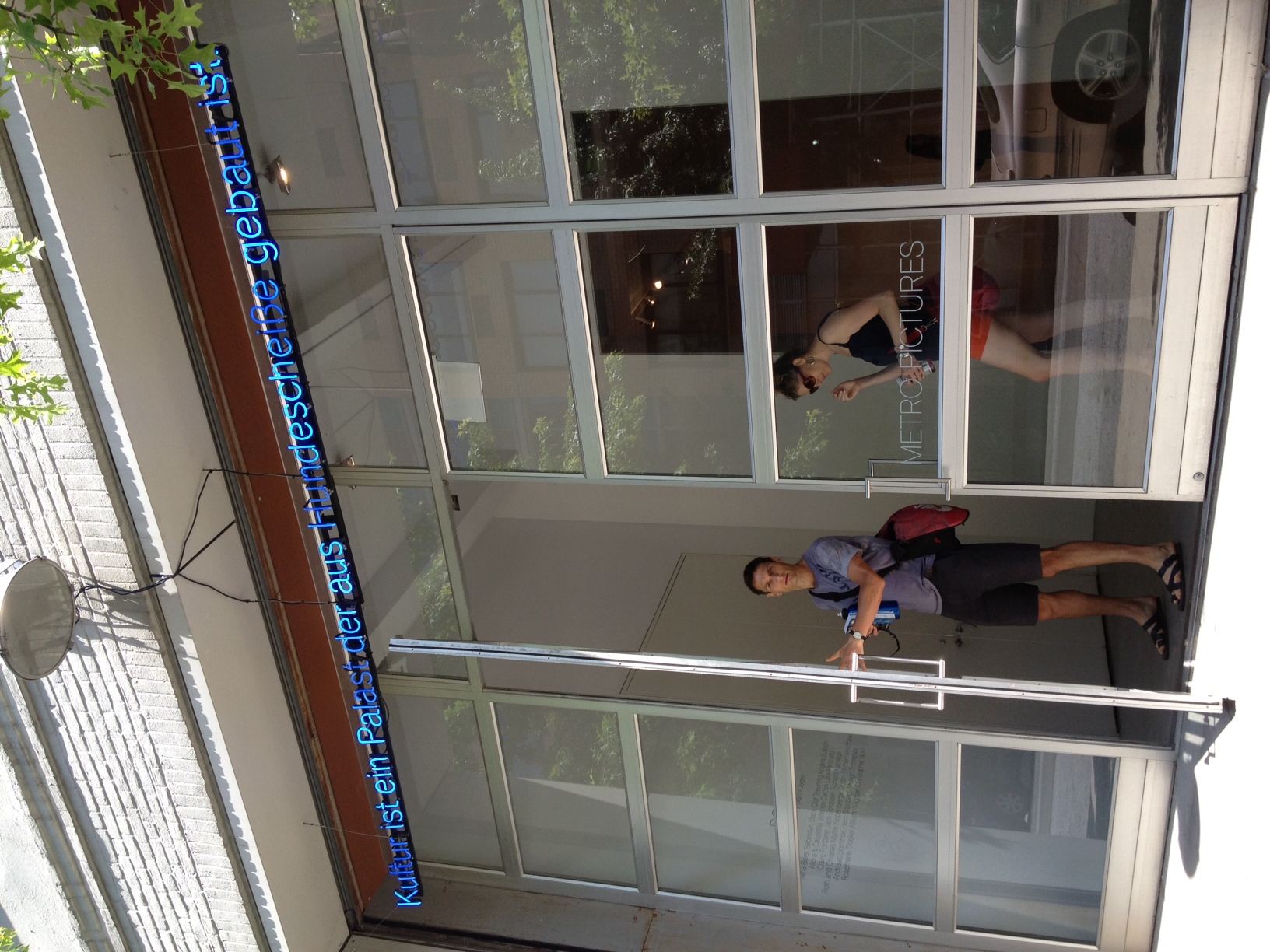
Claire Fontaine in ‘Dogma’ at Metro Pictures

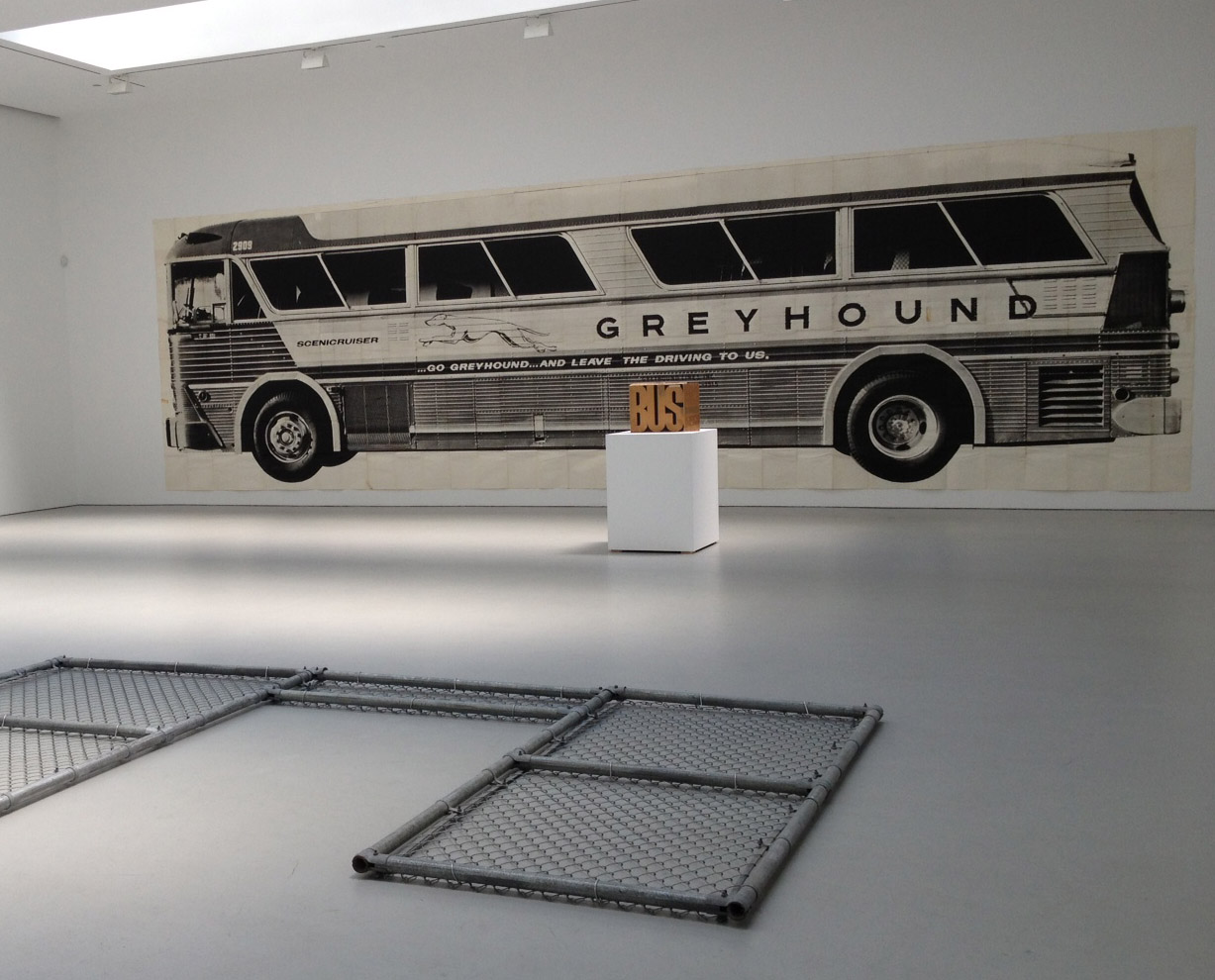
Claire Fontaine, installation view, 'Dogma' at Metro Pictures.
Claire Fontaine, installation view, ‘Dogma’ at Metro Pictures.

‘Kultur ist ein Palast der aus Hundescheisse gebaut ist.’  Spelling out the phrase ‘Culture is a palace built from dog shit,’ in German gives the idea more gravitas.  Putting it in blue neon, more consumer appeal.  Both are relevant to artist collective Claire Fontaine’s use of this quote by Bertold Brecht via Theodore Adorno criticizing mass culture’s commercialization.  How the art world’s own extreme commercialization in recent years changes the equation is the question begged by this piece.  (‘Dogma,’ a show more or less about dogs and people runs at Metro Pictures through Aug 10th).
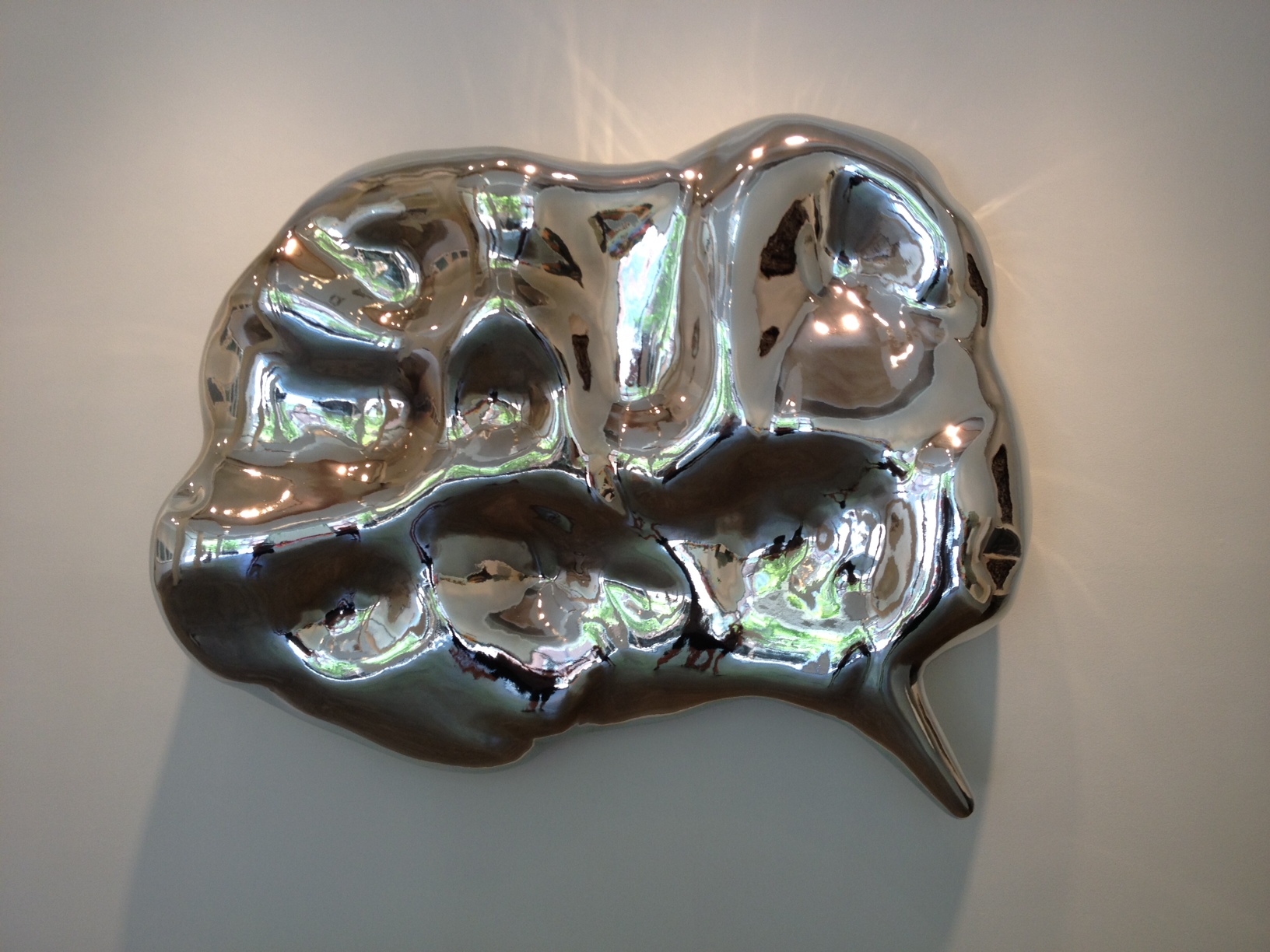
Juergen Drescher in ‘Systemic’ at Carolina Nitsch

Juergen Drescher, Speech Bubble XII, 2011.

It’s not clever words or phrasing but a pretty, undulating shimmer that make German artist Juergen Drescher’s six-foot wide speech bubble attractive.  Silver-plated laminated polystyrene reflects the gallery’s light and the viewer, drawing us into conversation that must surely be intended to charm or impress. (The group show ‘Systemic’ is at Carolina Nitsch through August 11th.)

Allen Ruppersberg in ‘Context Message’ at Zach Feuer Gallery

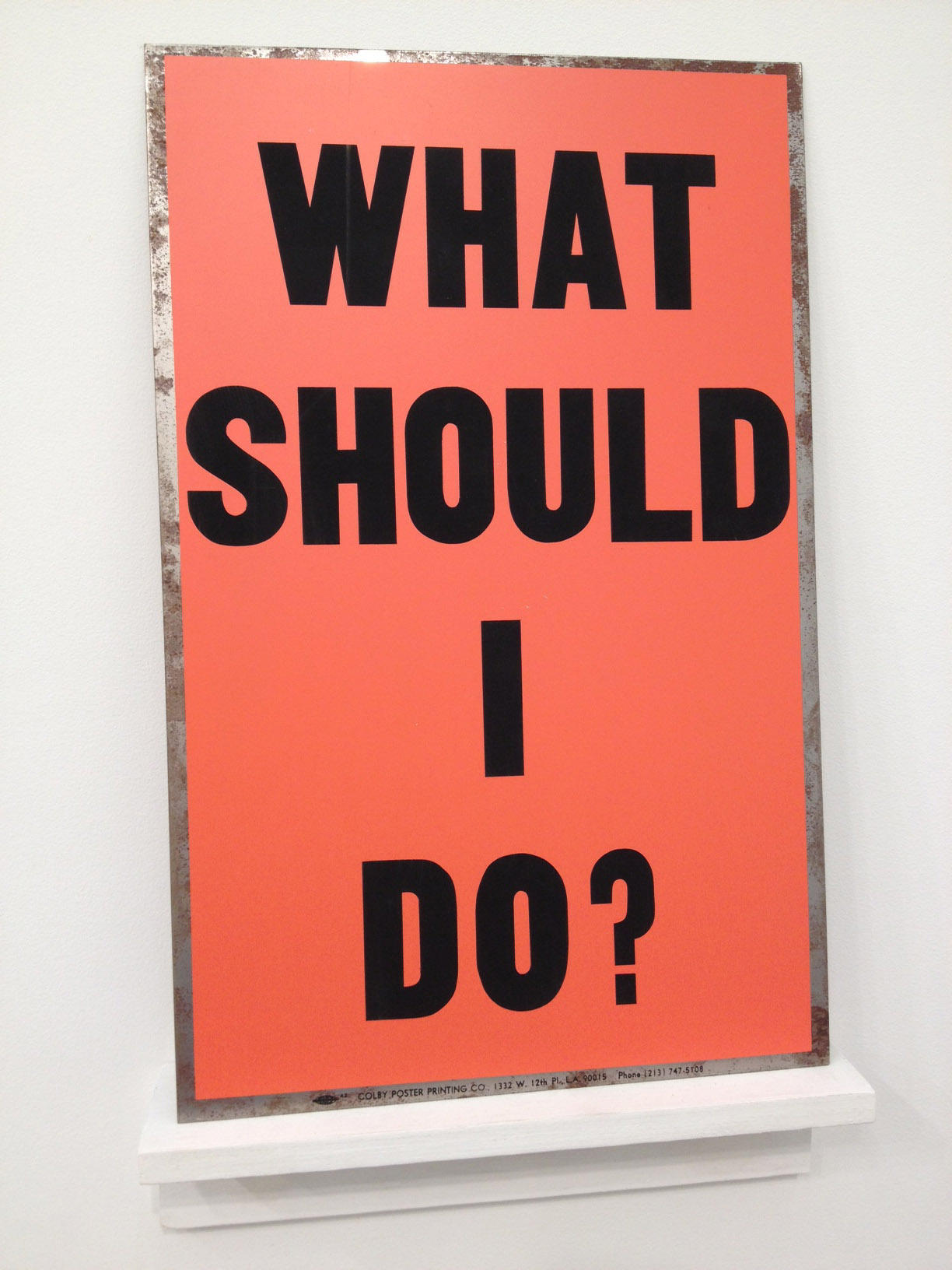
Allen Ruppersberg, 'What Should I Do?,' 1988, silkscreen on steel.
Allen Ruppersberg, ‘What Should I Do?,’ 1988, silkscreen on steel.

Allen Ruppersberg’s ‘What Should I Do?’ from 1988 poses a simple but often relevant question.  It relates to his ‘70s autobiographical project ‘The Novel that Writes Itself’ for which he sold the parts of individual characters to people he knew.  By the 80s, he hadn’t resolved the novel and in its place, began accumulating a series of short, unrelated texts like this one.   Though only a few words, it assumes a lot: that the speaker has an audience, agency and options.  With almost no means, this silkscreen on steel portrays a life in flux. (At Zach Feuer through August 3rd).

Hiroshi Sunairi at The Queens Museum of Art

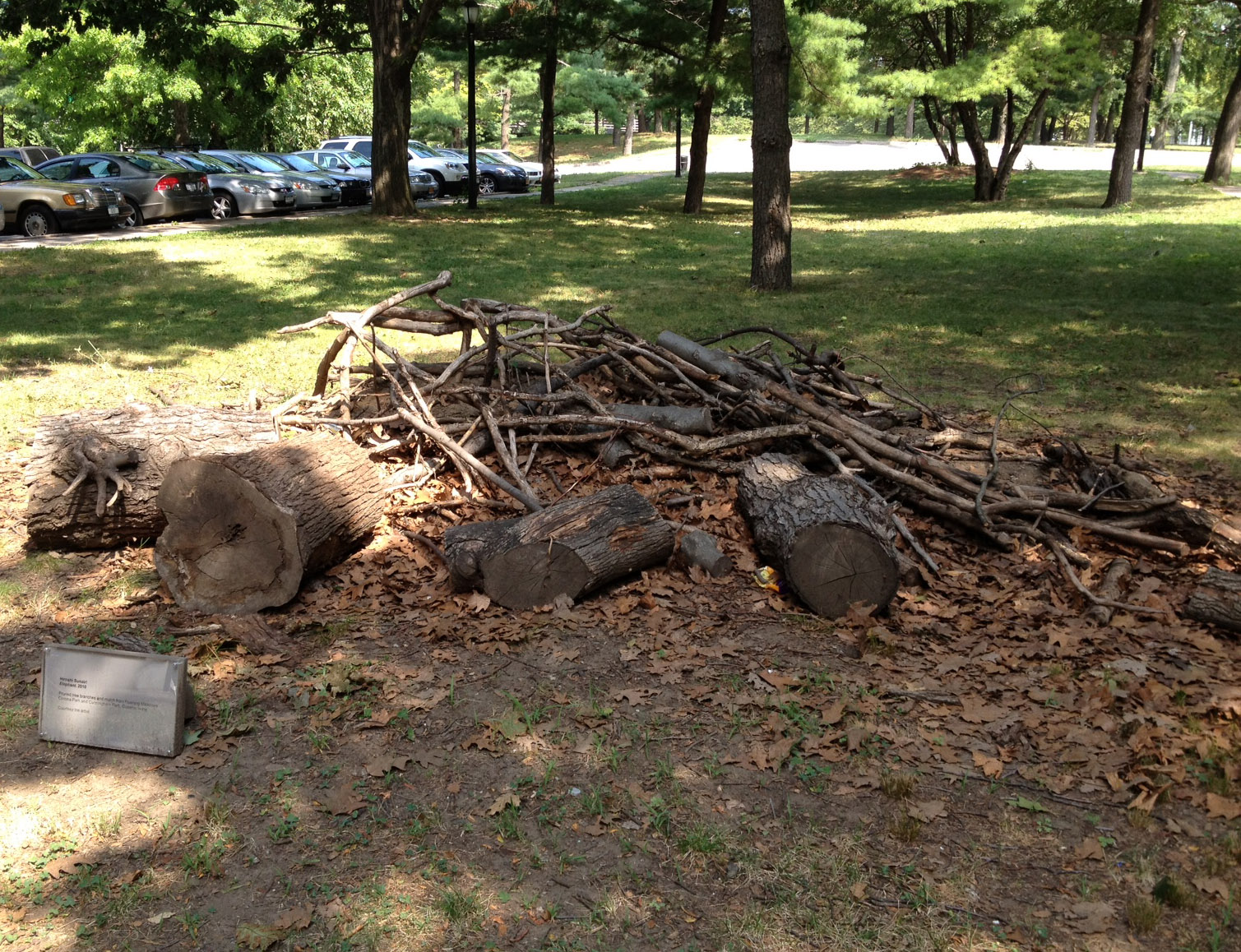
Hiroshi Sunairi, Elephant, 2010, pruned tree branches and mulch from Flushing Meadows Corona Park and Cunningham Park, Queens, twine.

“Only Queens Museum would have a pile of decomposing tree trunks and branches out front instead of a piece of contemporary sculpture,” I thought outside the QMA the other day.  Signage quickly proved, however, that the pile is a sculpture titled ‘Elephant’ by NYU professor Hiroshi Sunairi, one of whose major projects has been worldwide distribution of seeds from trees that survived the Hiroshima bombing.  These trimmings come from Flushing Meadows/Corona Park trees, however, and take the rough shape of a reclining elephant (the trunks are its legs).  They not only take on the form of an animal known for its good memory, they create a new, mini ecosystem which, it’s hoped, will house new trees of its own.

Barbara Kasten at Bortolami Gallery

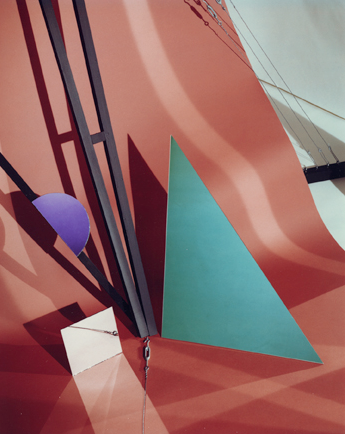
Barbara Kasten, Construct XIII, 1982, Polaroid, 10 x 8 inches.

Barbara Kasten’s photographed constructions from the mid ‘70s to the present at Bortolami add some welcome historical background to the recent vogue for abstract, set-up photography (think Sara VanDerBeek and Eileen Quinlan).  Mirrors and light create enticing spatial ambiguity in some constructs, but not this one from ’82, in which awkwardness enlivens the image.  A disappearing backdrop, hovering shapes, twisting light beams and tense wires lead the eye around an aesthetic obstacle course.

Mary Heilmann in ‘It’s Always Summer on the Inside,’ at Anton Kern Gallery

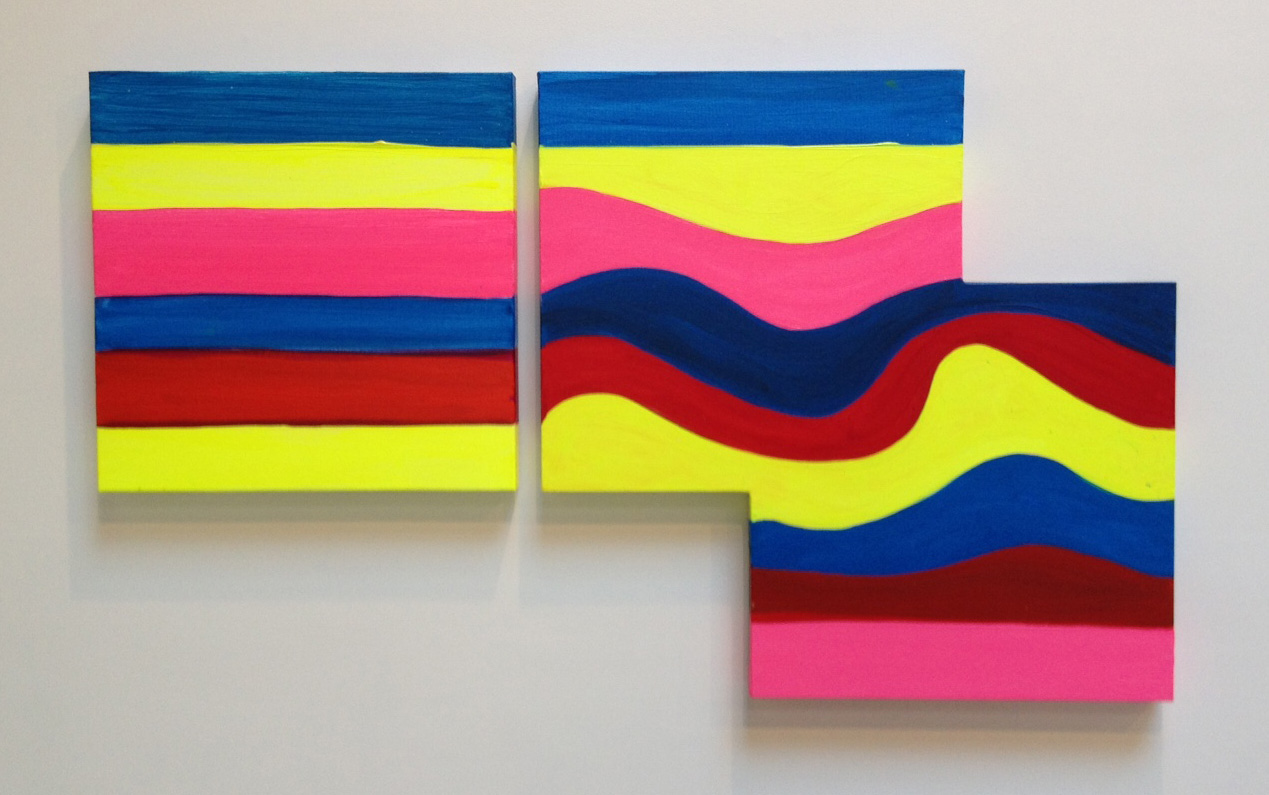
Mary Heilmann, Mojave Mirage, oil on canvas, 2012.

‘It’s Always Summer on the Inside’ at Anton Kern Gallery features some pretty dark fare, from the Coke logo emblazoned with the word ‘blood’ to one of Joyce Pensato’s sinister Batman paintings, making Mary Heilmann’s ‘Mojave Mirage,’ a blessed burst of candy-colored happiness.  Her signature technique of adding extra canvas to the conventional rectangular shape works a treat as the sands of a flat desertscape suddenly swoop and swirl. (Through Aug 17th.)

John Dilg in ‘The Big Picture’ at Sikkema Jenkins & Co

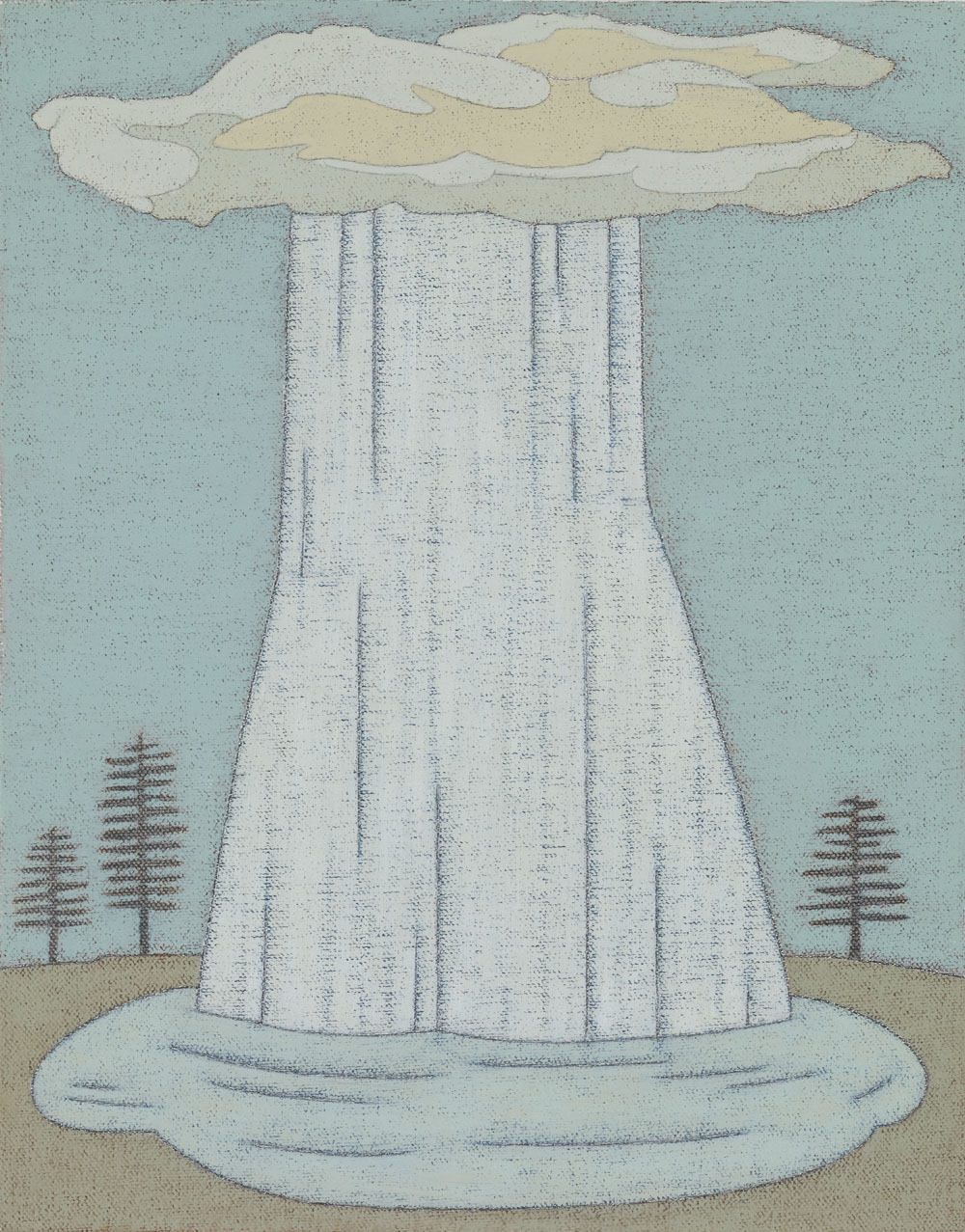
John Dilg, 'A Religious Experience,' 2009 - 10, oil on canvas, 14 x 11 in.
John Dilg, ‘A Religious Experience,’ 2009 – 10, oil on canvas, 14 x 11 in.

John Dilg is no outsider artist (he’s an art professor at the University of Iowa) – though his pared down painting style may look unskilled it purges unnecessary details from his eerie, uninhabited landscapes.  Muted colors and hazy lines add to the ambiguity of this scene titled, ‘A Religious Experience.’   Monumental in theme but not size (at 11 x 14 inches, it’s a little larger than book size), Dilg invites personal interpretations as he evokes a cascade of water or mountain capped by cloud a la Moses on Mt Sinai. (‘The Big Picture,’ a group show of small-scale painting, is on view at Sikkema Jenkins & Co through July 27th.)

Adi Nes at Jack Shainman Gallery

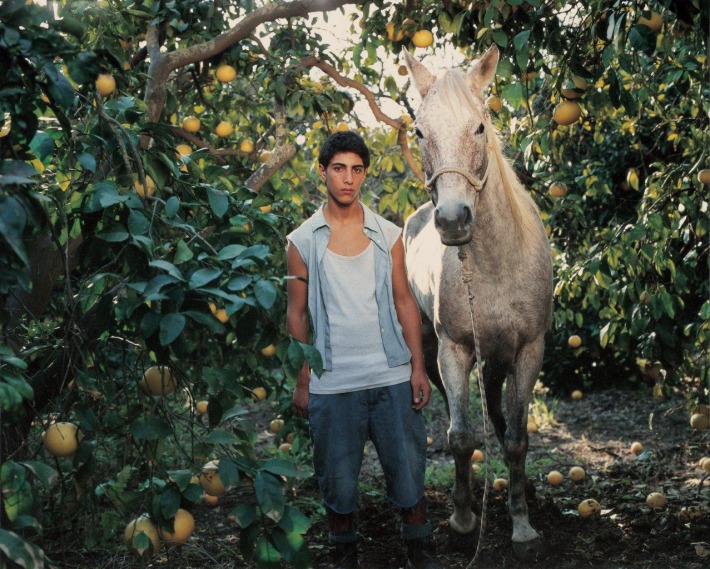
Adi Nes, Untitled, chromogenic print, 2008.

Israeli artist Adi Nes created this startlingly beautiful image as part of a series of staged photographs picturing a fictional kibbutz in Israel’s historically embattled Jezreel Valley.  Dense orchard foliage creates a sense of intimacy with this sun-lit boy and his horse but brings with it a sense of our intrusion. (Adi Nes’ ‘The Village’ is at Jack Shainman Gallery through July 28th.)

Thomas Houseago’s ‘Lying Figure’ on the High Line

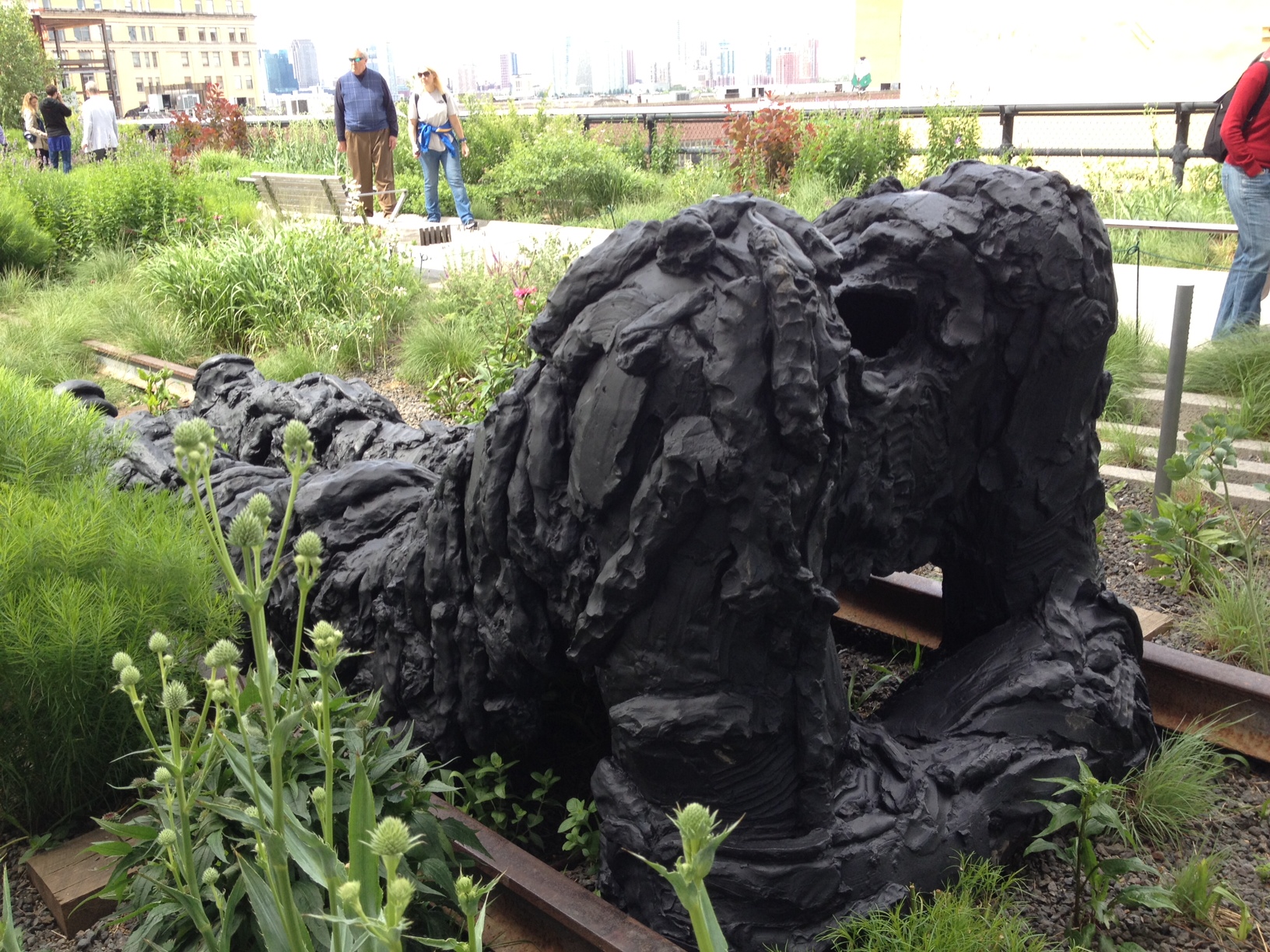
Thomas Houseago, Lying Figure, bronze, 2012.

Thomas Houseago’s ‘Lying Figure’ lurks in shadow on the High Line under the Standard, like a voyeur lying in wait for the hotel’s notorious exhibitionist guests.  Composed of repulsive, fecal-looking coils cast in bronze, the character is nonetheless a commanding presence despite being laid low and missing his head. (On the High Line through March 2013).

Patrick Jacobs at Hasted Kraeutler in ‘Great Photographs: Scapes’

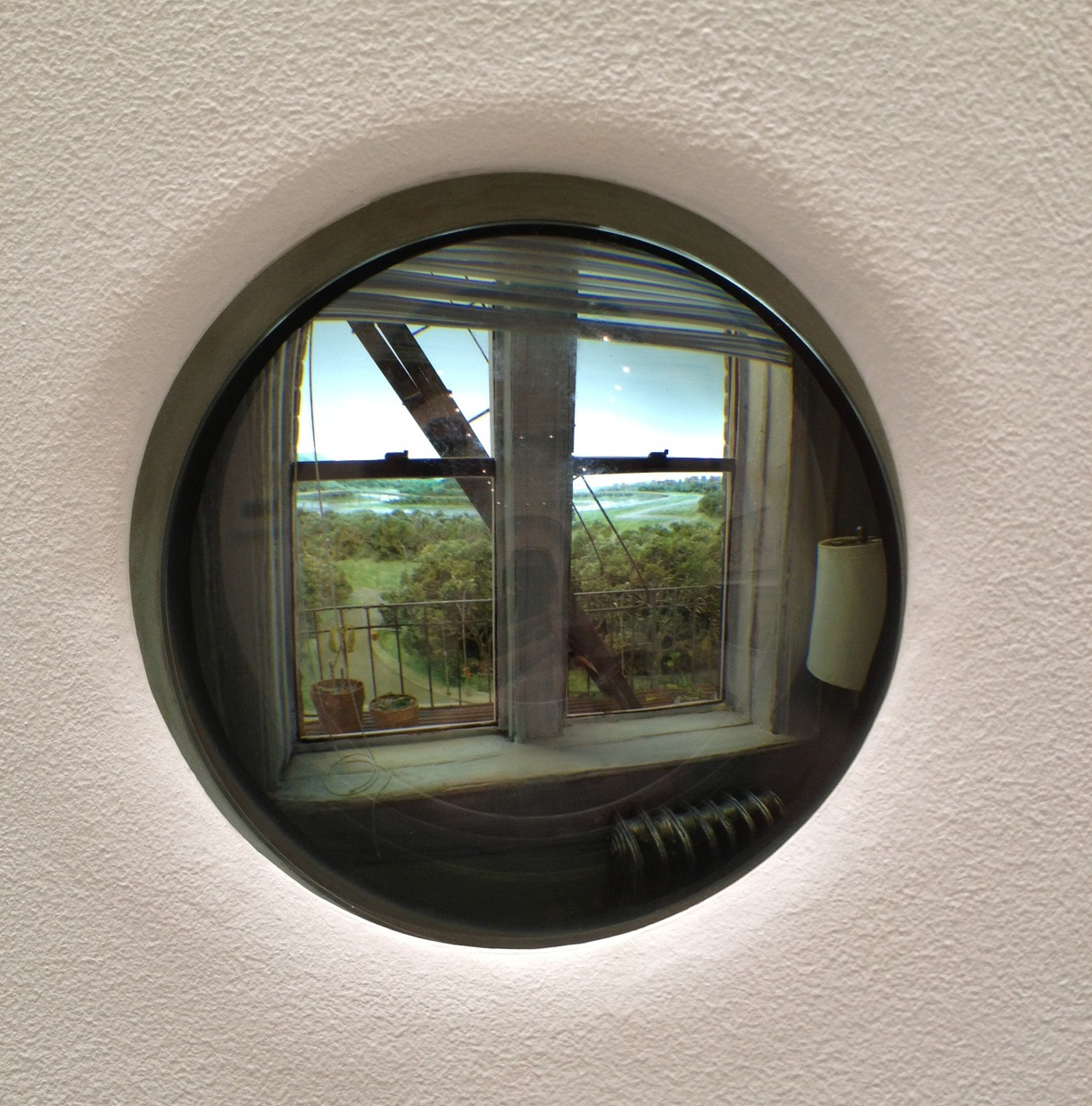
Patrick Jacobs, 'Window with View of the Gowanus Heights,' diorama composed of various materials, 2012.
Patrick Jacobs, ‘Window with View of the Gowanus Heights,’ diorama composed of various materials, 2012.

‘Window with View of the Gowanus Heights,’ a tiny, meticulous diorama by Patrick Jacobs set into the gallery wall, imagines what paradise would look like if it suddenly materialized beyond the fire escape.  It is part of the group exhibition, ‘Great Photographs: Scapes’ at Hasted Kraeutler, which includes huge photos of lush forests and burning woods, magnificent aerial views and vintage prints of the 19th century Colorado railroad.  But it’s Jacobs’ humble ‘what if’ that really dares to dream big by turning a superfund site into a verdant Eden. (Though July 20th.)

Mateo Tannatt at D’Amelio Gallery in ‘Idea is the Object’

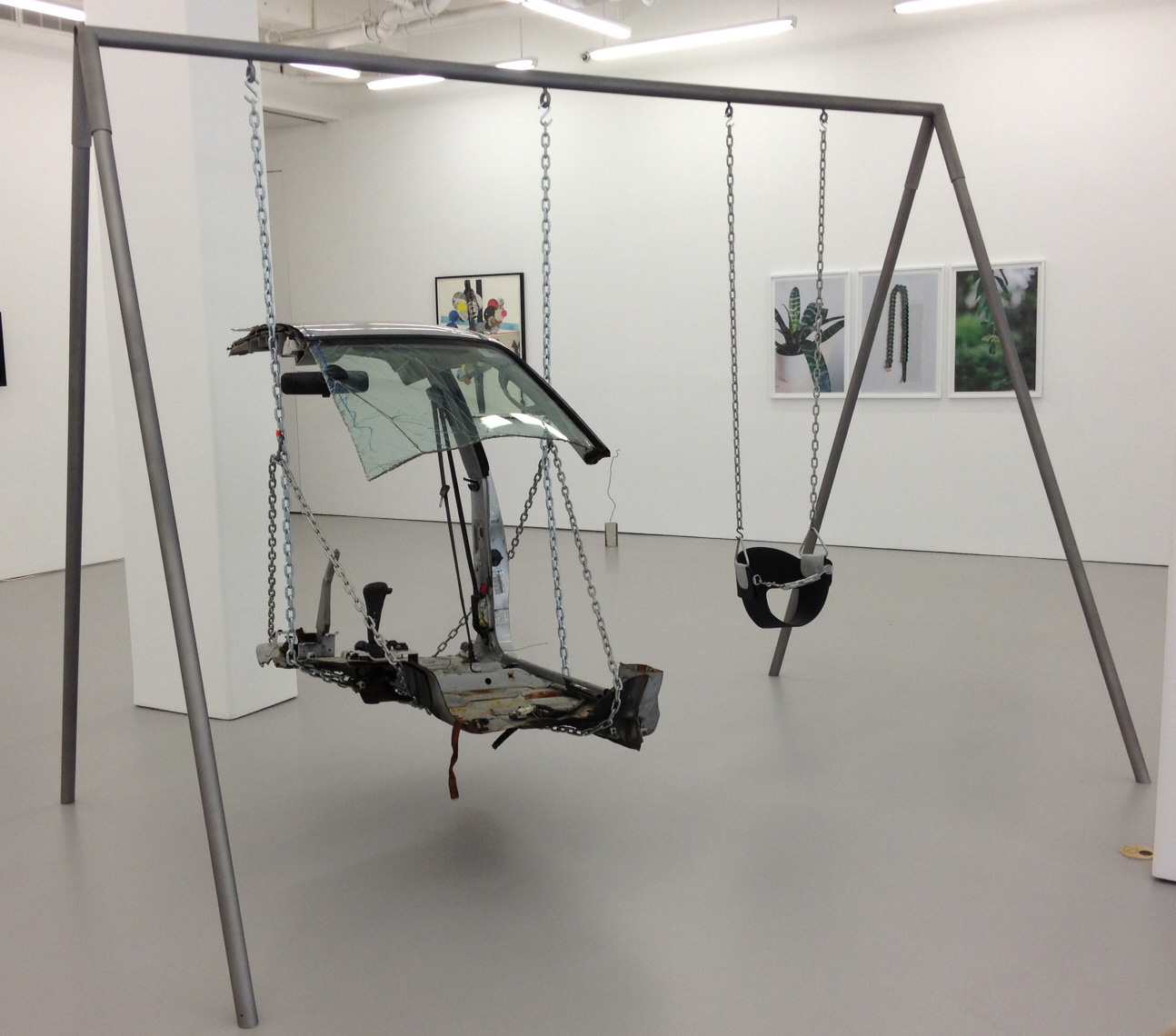
Mateo Tannatt, New Line, Mitsubishi Pajero/Montero/Shogun 1982 - Present, 2012.
Mateo Tannatt, New Line, Mitsubishi Pajero/Montero/Shogun 1982 – Present, 2012.

With his swing set turned sculpture at D’Amelio Gallery, LA-based artist Mateo Tannatt exploits the shock value of mixing themes of car crashes and children, though after a moment, it seems just as likely that this auto fragment has been junked like so many old toys.   Swinging can be relaxing or thrilling, and Tannatt deftly suggests both the insulating attraction of a car-like pod and the consequences of pushing it too far. (Though August 24th.)

‘Caribbean: Crossroads of the World’ at the Queens Museum (and beyond)

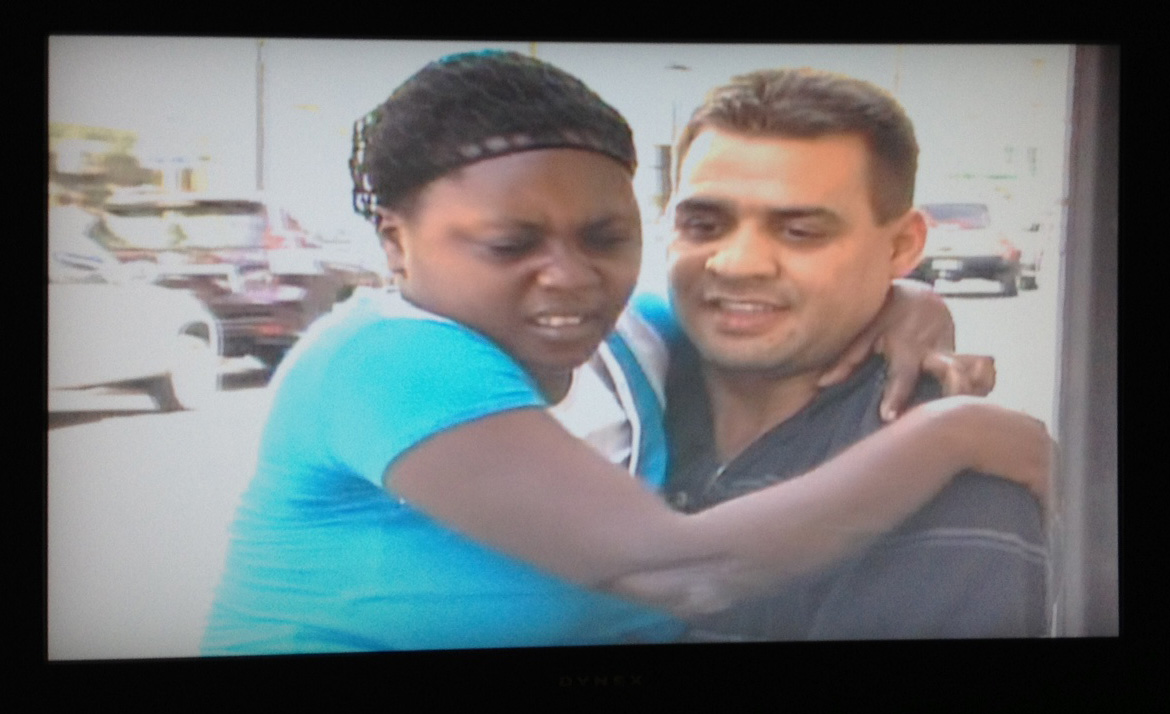
David Perez Karmadavis, Estructura Completa (Complete Structure), 2012, video.

Rather be in the Caribbean?  The next best thing might be seeing ‘Caribbean:  Crossroads of the World,’ a 200 year survey of visual culture from the islands at three NYC museums.  At the Queens Museum, highlights include videos like ‘Complete Structure,’ by David Perez Karmadavis.  Here, a blind Dominican man carries a handicapped Haitian woman through busy streets to allude to the relationship between their neighboring countries. Though reminiscent of Francis Alys on Mexico City streets, Karmadavis’s video captivates by concentrating on the dynamic between this unlikely duo.  Watch the video on Vimeo.  (Also at the Studio Museum in Harlem through Oct 21st and El Museo del Barrio through Jan 6th.)

People Who Work Here at David Zwirner Gallery


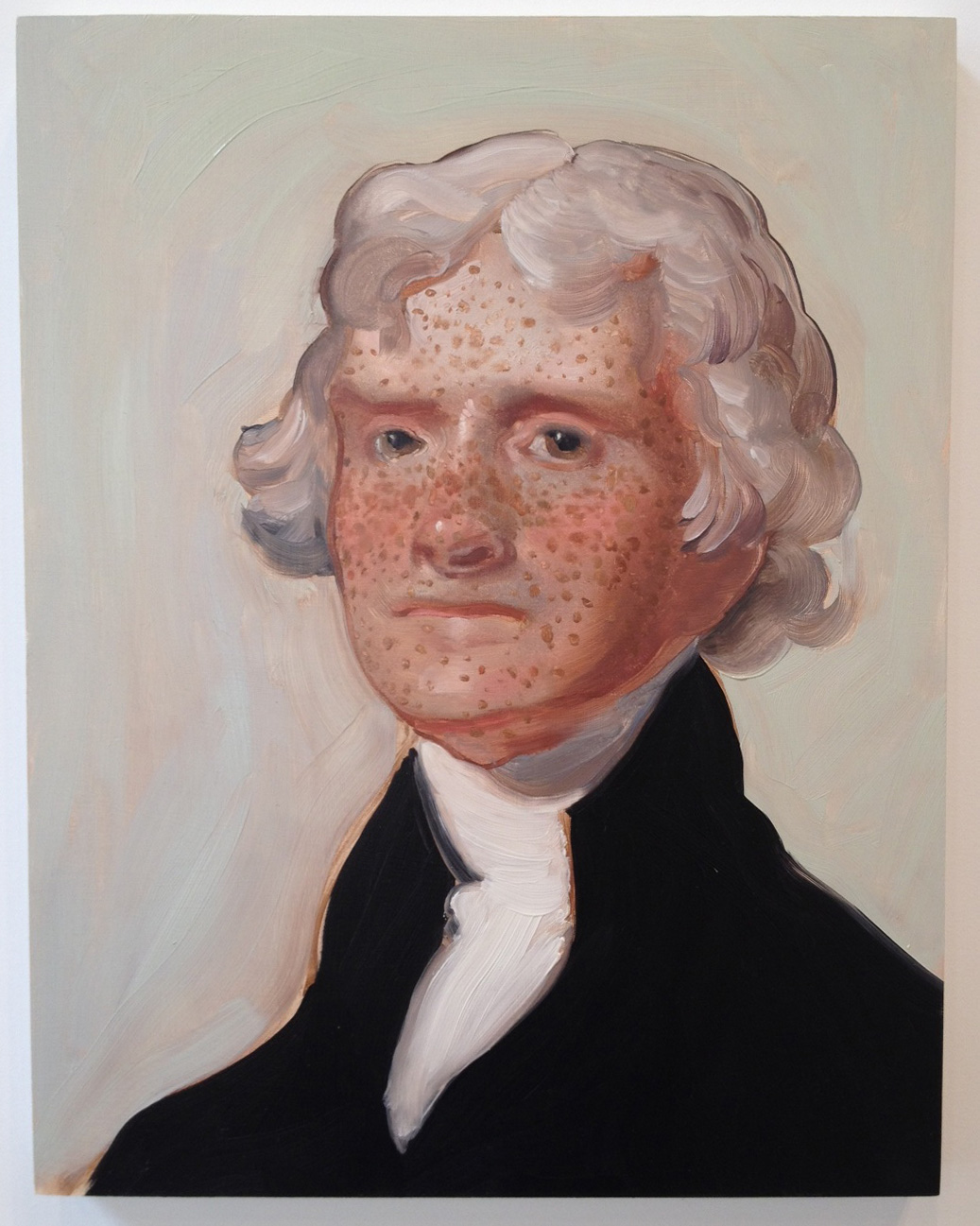
David Ording, Melanin, 2012, oil on wood.

In January, David Zwirner’s 519 W. 19th St location housed one of the most expensive to install and popular site-specific artworks ever shown there.  Just seven months later, this prime real estate has been turned over to gallery employees (who happen to also be artists) for the group show, ‘People Who Work Here.’  A few participants might want to keep their day jobs, but among the standouts is this oil on wood portrait of Thomas Jefferson by David Ording titled, ‘Melanin.’ Based on a freckle-free 1805 original, the painting repatriates Jefferson’s pigmentation…perhaps at the expense of his dignity? (Through Aug 10th).

Christian Jankowski at Friedrich Petzel Gallery

Christian Jankowski, 'Discourse News,' video on plasma screen, 2012.
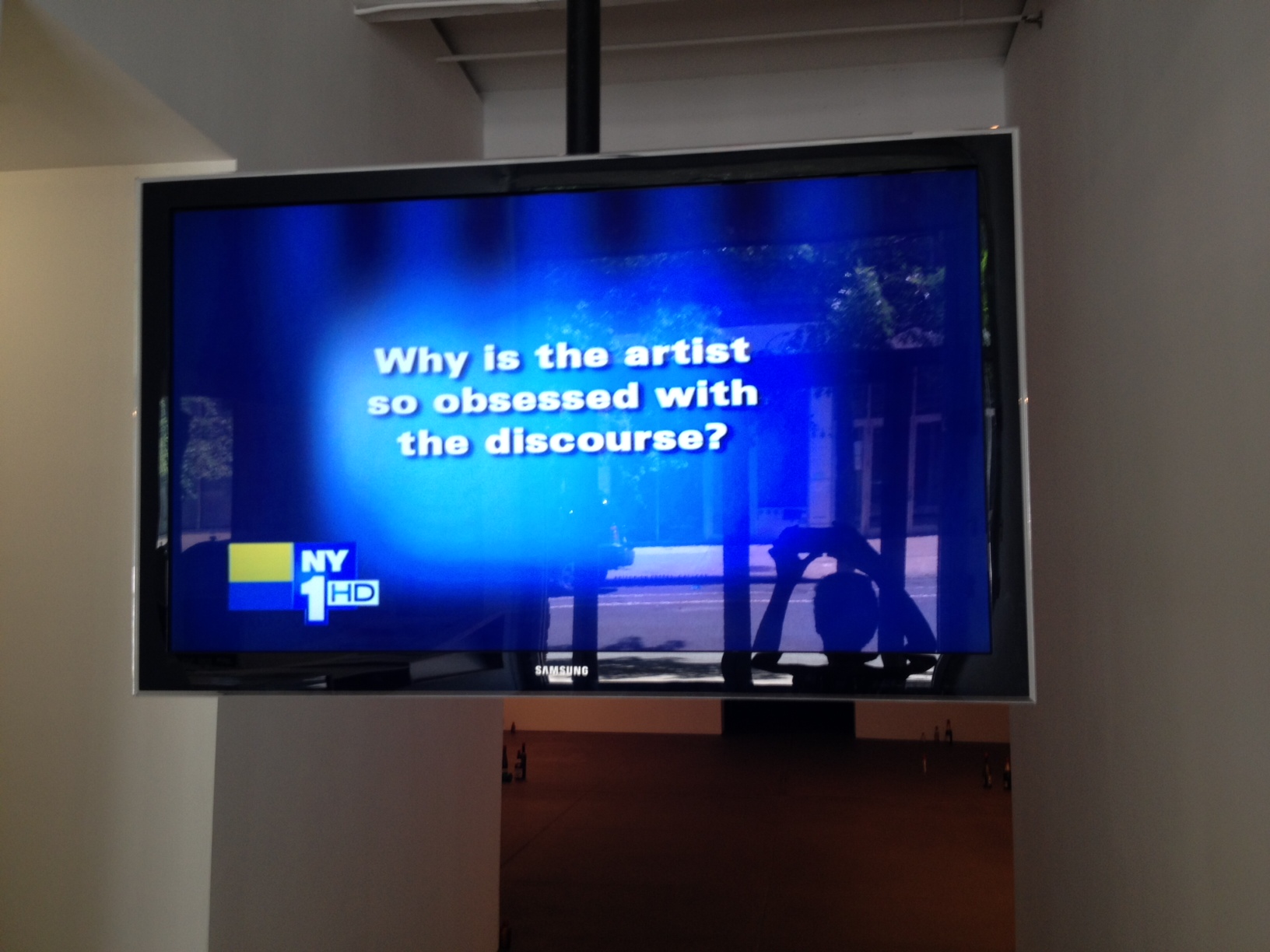
Christian Jankowski, ‘Discourse News,’ video on plasma screen, 2012.

It isn’t news that art jargon can obscure more than it illuminates.  But in Christian Jankowski’s video ‘Discourse News,’ the spectacle of a popular New York news anchor delivering the artist’s wordy definition of art from her usual desk in the NY1 studio makes visual art verbosity seem particularly absurd while also reminding viewers of how over-simplified normal news programs can be. (Jankowski’s latest solo show runs through July 28th at Friedrich Petzel Gallery.)

Aurie Ramirez in ‘Creative Growth’ at Rachel Uffner Gallery


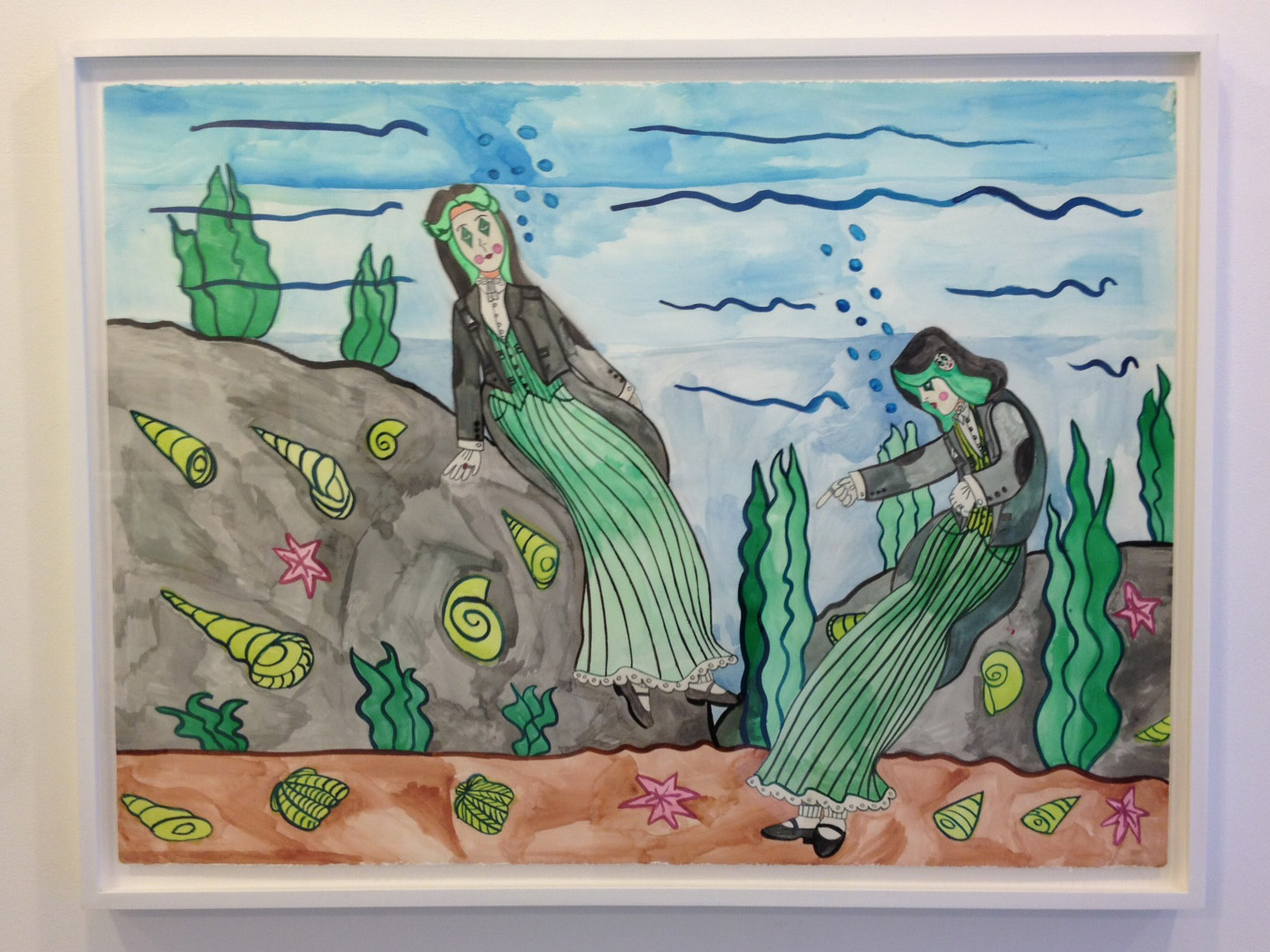
Aurie Ramirez, Untitled, watercolor on paper, no date.

One detached, one accusatory, doll-like and dark, masculine and feminine at the same time, these have to be among the stranger mermaids out there.  Conceived of by Aurie Ramirez, an artist working at Oakland’s Creative Growth Art Center, a studio program for mentally, physically and developmentally disabled adult artists, these girlish ladies stick in the mind for their sheer weirdness. (‘Creative Growth’ is at Rachel Uffner Gallery through August 10th.)

Alex Van Gelder at Cheim & Read

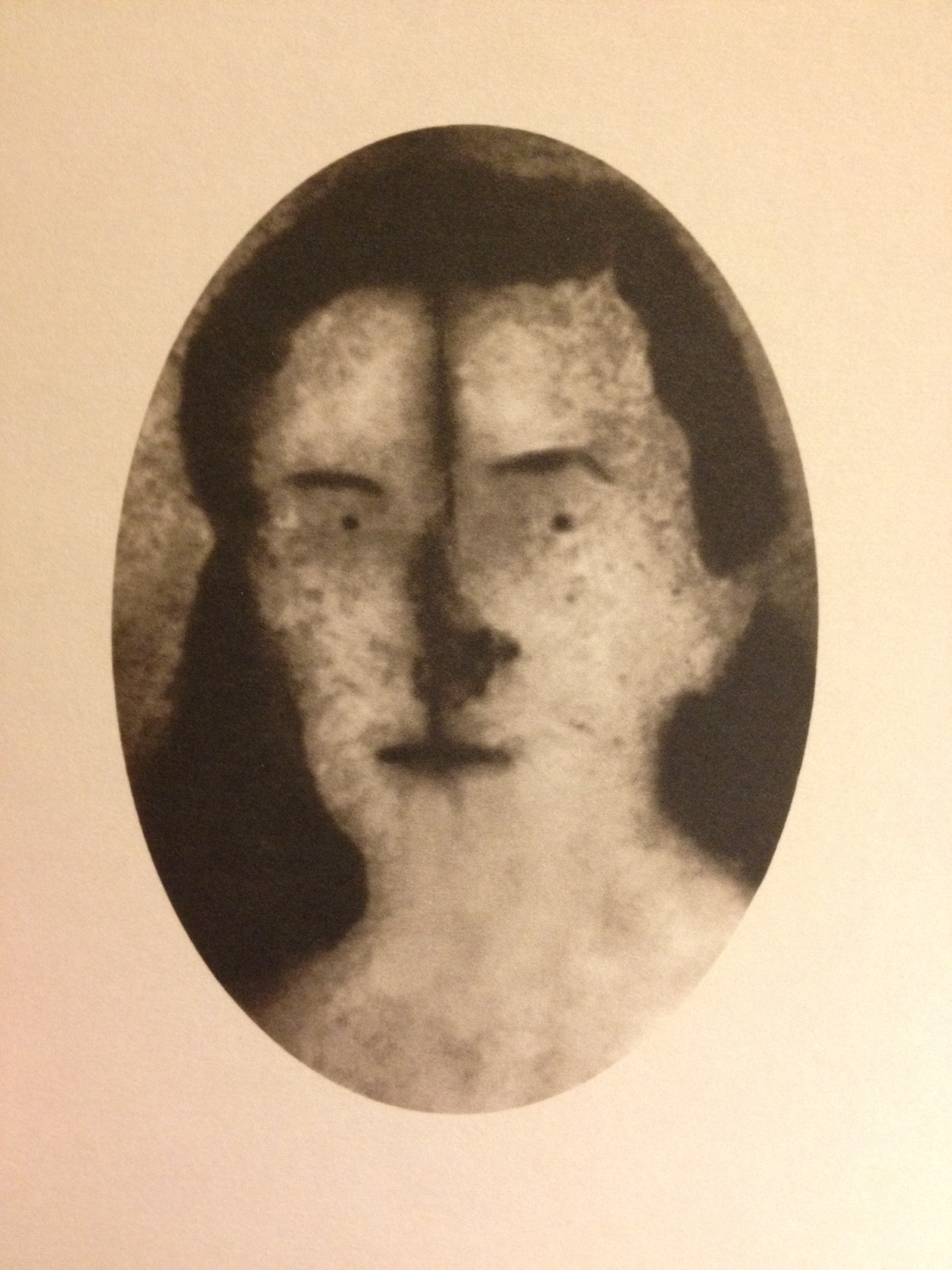
Alex Van Gelder, Untitled, 2012, Platinum Palladium hand coated print on Van Gelder 100% cotton paper.

They’re not exactly light summer fare, but Alex Van Gelder’s photos of gravestone, mausoleum and family tomb portraits are a visually stunning showcase of the effects of aging on pictures.  Cracked and deteriorated, images like this untitled portrait are no longer about solemn memorials; now they demonstrate the aesthetic effects of disintegration, as if the hand of time wielded Photoshop for its own pleasure.  (On view at Cheim & Read through Sept 8th.)

Christian Marclay’s ‘The Clock’ opens at Lincoln Center Today

Christian Marclay, 'The Clock,' still from single channel video, 2010.
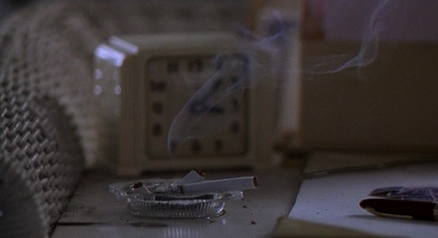
Christian Marclay, ‘The Clock,’ still from single channel video, 2010.

Christian Marclay’s 24 hour video installation ‘The Clock’ – praised as one of the standout artworks of the past decade – opened today at Lincoln Center as part of the Lincoln Center Festival. Composed of thousands of film clips featuring timepieces, and synched with real time, it entertains while making viewers eerily aware of the time they’re spending watching it.  Arrive early – lines snaked down the block to view it in Feb ’11, so check out the Festival’s twitter ‘line update.’ (Runs through Aug 1st).