Paul Sietsema at Matthew Marks Gallery

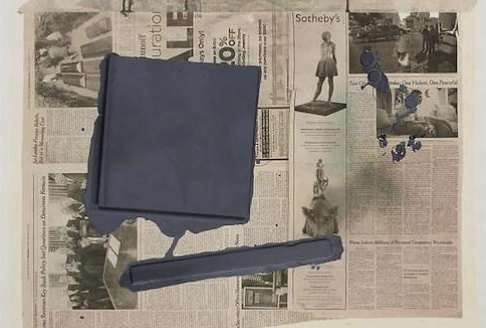
Paul Sietsema, "Untitled figure/ground study (Degas/Obama)," 2011. Photograph courtesy of Matthew Marks Gallery, New York.

If it weren’t for the schooner by the doorway at Paul Sietsema’s first New York gallery solo, I’d have missed the boat.  Not-quite-right details reveal that what looks like an aged old photograph of a sailboat is in fact a meticulous drawing that demonstrates in a flash how painterly skill adds value and interest to an artwork.  In this otherwise aesthetically restrained but intellectually stimulating show, Sietsema allows trace evidence of his hand in pieces that look digitally produced or printed, questioning his own role as a craftsman in the digital age and floating an inconclusive but engaging argument that artistic survival means cleverly thwarting expectations.

In the past, Sietsema has exhibited films of sculptural objects; the drawings here allow us the intimacy to appreciate his handiwork.  Two untitled pieces resembling expressive abstractions in black ink also include depictions of bottles of Krylon ‘Short Cuts’ paint, humorously highlighting how Sietsema doesn’t take shortcuts in his labor intensive, cerebral, and non-emotive project.  At the bottom of one, the phrase “broken down and experimental…broken down beauty,” bespeaks the pleasure of piecing together Sietsema’s deconstructions.

Two pieces titled, ‘Painter’s Mussel’ refer to shells used to hold paint but show Sietsema flexing his intellectual muscle in complicated pictures of disassembled framed photographs drawn to resemble photographic negatives which appear to have been printed.  From the aged photograph of the boat and images that pit old technology (the brush) with new, to two pieces replicating the dated medium of newspaper pages (including an article on Obama reversing a Bush policy) Sietsema suggests that with passage of time ascendency fades – the smart artist adapts by working outside of traditional expectations.

Condensed version of this review published in Time Out New York, issue 815, June 2-8, 2011.

Laurel Nakadate at Leslie Tonkonow Artworks and Projects

Laurel Nakadate, August 2, 2010. Photograph courtesy of Leslie Tonkonow Artworks and Projects, New York.

Laurel Nakadate cried every day of 2010. And whether she was in her apartment, in an airplane lavatory or on a beach, she captured the result in 365 photographs, meant to document her effort, as she put it, to “deliberately take part in sadness.” Contrary to this suggestion of shared unhappiness, however, the images portray her in isolation. Often nude or semiclothed, she plays the role of a vulnerable woman needing rescue, appearing to offer her body in a compromised sexual exchange for attention. Sensational, narcissistic, yet incisively illuminating in some respects, Nakadate’s project is an uncomfortable portrait of alienation.

It also tests our willingness to indulge in so much self-inflicted pain. The seasons and the artist’s travels introduce a minor narrative arc, but there’s no resolution to her misery. Unlike Tehching Hsieh’s yearlong performances tracking the effects of self-imprisonment, or Eleanor Antin’s photo diary of being on a diet, Nakadate undergoes no transformation and promotes no politics, personal or otherwise. And unlike the lovelorn Sophie Calle’s exhaustive investigation of a Dear John letter, there is no catharsis.

Instead, the act of repetition dominates, and the mind wanders to questions about Nakadate and her motives: How does she make herself cry? Is she merely acting? What goes on off-camera: Does she happily go about her day until the requisite moment to shed tears? Part of “365 Days” is on view at MoMA PS1, where the photographs are huge, implying an unwarranted monumentality to the artist’s questionably authentic emotion. Even in this more modest installation of smaller-size prints in a tight grid arrangement, Nakadate is still center stage, limiting any possible commentary on collective grief or widespread disaffection.

Originally published in Time Out New York, issue 815, June 2-8, 2011.