For ‘Flash Art’ Magazine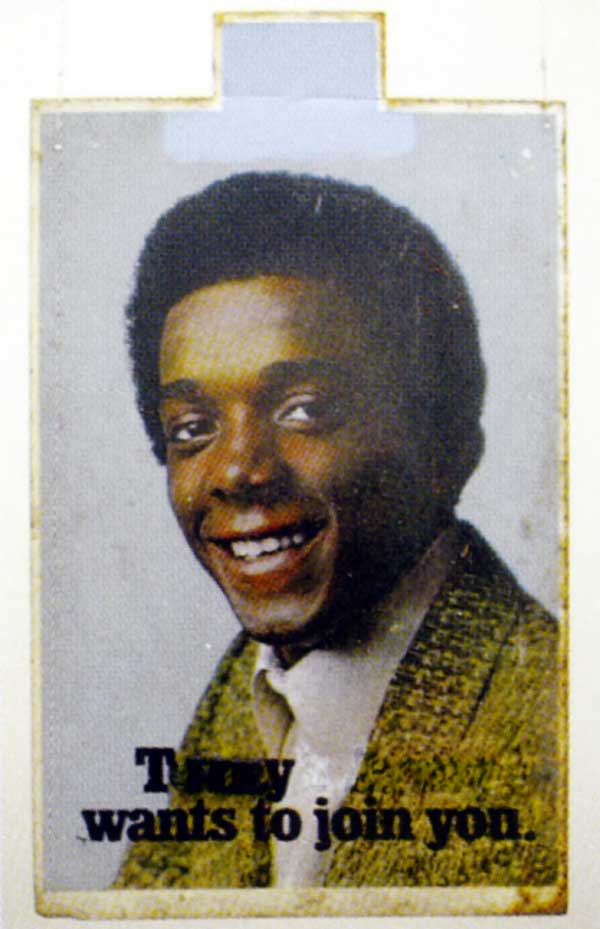
‘New Wave,’ a group show curated by Franklin Sirmans, inaugurated Kravets/Wehby’s new gallery space last December. Still located on the same block of 21st Street in Chelsea, the formerly closet-like space has given way to a gallery big enough to accommodate large paintings by emerging artist Kehinde Wiley and expansive work on paper by William Cordova. Five other young artists with an urban sensibility rounded off what seemed like a mini-spin off of Sirman’s popular ‘One Planet Under a Groove’ exhibition at the Bronx Museum last year. Paying homage to an influential exhibition at PS1 in 1981, the show presented artwork indebted to hip hop music and culture with a focus on portraits. Iona Brown’s painting on a Japanese screen of a half Asian, half African woman with Louis Vuitton logos stamped across her skin complimented Kehinde Wiley’s painting of young man nearly swallowed up by his over inflated puffer jacket. Jeff Sonhouse painted two sharply dressed men whose faces, clothing and hair were created out of burnt matchsticks. Sanford Biggers altered an old army recruitment sign, one of the first to feature an African-American man, to read as a statement of inclusion and exclusion, while pieces by William Cordova and Luis Gispert speak to a fascination with boomboxes and turntables, the instruments of DJ culture. Set to the beat of a sound installation by DL Language/Josh Taylor, the exhibition smartly mixed admiration of and critique of hip hop culture.
Jay Davis, at Mary Boone
For ‘Flash Art’ Magazine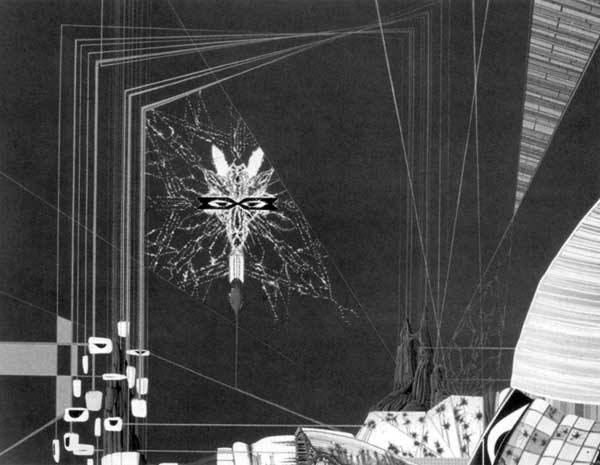
Photons blast into a menacing blob, a rock monster stalks his terrain, and two otherworldly demigods, only their faces visible, square off in a bloody battle. Turmoil has engulfed the Galactic Republic in six new paintings with Davis’ signature blend of hard edge abstraction and sci-fi menace. Davis’ abstract patterns are so dynamic that they lend themselves to a narrative, aided by the painting’s suggestive titles and the recognizable, figurative elements.
In ‘I Think It’s Time to Leave,’ a goofy looking figure of a goat’s head with blindfolded, gem shaped eyes and a flame coming out from under his chin seems to blast off from a ground composed of various geometric patterns. Splatterings of blood red paint dot the patterns, suggesting violence even if it’s not obvious what might have happened. This painting, with its clear differentiation between ground and sky, is one of the few that connects these paintings to Davis’ early work. ‘Who’s Asking Questions,’ on the other hand, enters a whole new dimension of space, with a mirrored ‘v’ shape dividing the canvas between top and bottom. A mask-like face dominates each sphere. Above, an indistinct, oval shaped face, outlined in wavy blue and red lines and framed by what looks like bloody gashes, peers down at a second visage, this one with distinct features composed of clear lines.
It’s unclear why these Janus faces are locked in confrontation, but this feeling of conflict comes across in nearly all of the new work. It’s a fight that seems to extend to the composition of the paintings themselves. As if from the tightly controlled blocks of seemingly random patterning, the creatures have managed to wrench themselves free, allowing abstraction and representation to go to war against each other. Under the spidery trace of a psychedelic, tie-died snowflake pattern that appears in some variation at least once in every painting, Davis expands to a cosmic stage where the fundamental oppositions of painting can battle it out alongside other masters of the universe.