For ‘Flash Art’ magazine
Since its supposed rebirth in the past decade, painting has been the subject of international exhibitions, books and magazine articles. Last fall, ‘Painting as Paradox’ at Artists Space took its own look at the genre in an exhibition of work, hung salon style, by over sixty emerging artists. Hanging on the wall at the entrance to the show, ‘Minotaur 1.1,’ a labyrinth constructed of gilded picture frame by Jan Baracz, alluded to the multiple paths available to the artist without employing an ounce of paint. It also introduced the ‘paradox’ of the artist who still manages to work in what has been called a ‘dead’ or underrated medium. The show’s main proposition was that painters are avoiding dead ends and make the medium relevant to contemporary art and life by embracing the influence of photography, architectural images and computer ‘painting’ software.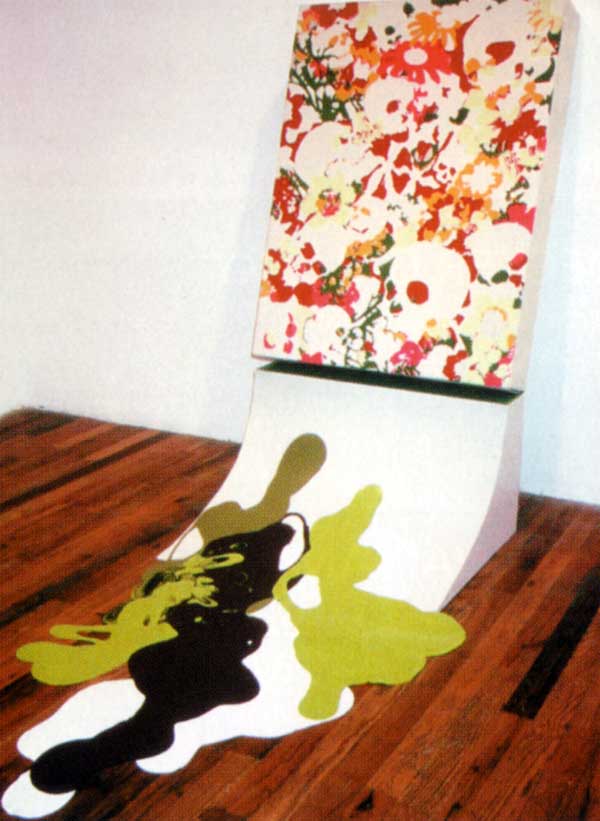
One long wall devoted almost exclusively to photographically influenced realist portraiture included Octavius Neveaux’s black and white self-portrait that mimicked the act of looking into the camera, and Isca Greenfield-Sanders’ sunbather, painted from composite photos. A wall of landscapes favored abstract compositions like Millree Hughes’ light infused lenticular prints and Odili Donald Odita’s angled horizontal planes painted on canvas. In a separate room devoted to architecture as subject matter, Carla Klein and Marc Handelman each presented foreboding futuristic interior spaces, that contrasted with the kitschy Miami Vice vibe of Australian painter Kieren Kinney’s hand painted island cityscape at night that resembled a computer generated image. Several paintings adopted a mechanical look, and several digital prints affected the look of painting, like Claire Corey’s complex skeins of looping color. Artists even used video to ponder the concerns of abstraction, like Robert Bermejo’s software program generating patterns on a flat screen monitor and Perry Hall’s DVD of paint, bubbling like lava.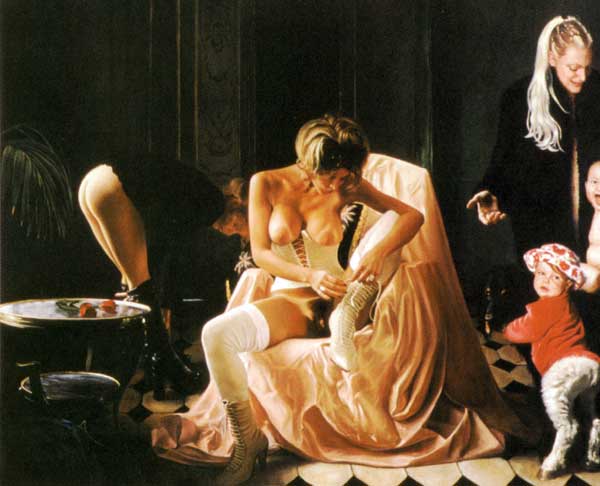
The conceptual framework of “Painting as Paradox” was built on the understanding that painting is still not entire out of trouble. By focusing so heavily on paintings that adopt elements of digital technique, the show implied that the genre needs to ‘do something’ to make itself more relevant to those who would dismiss it in favor of new media. This point of view isn’t surprising given curator Lauri Firstenberg’s own tastes and respectable track record, both of which tend toward exhibitions of photography and architecturally inspired artwork. But this organizational principle doesn’t do justice to the wide range of painting being made today. A more concise exhibition that clearly stated its biases could have avoided a true paradox, which is that the tired discussion of painting’s health continues to occupy center stage in art discourse.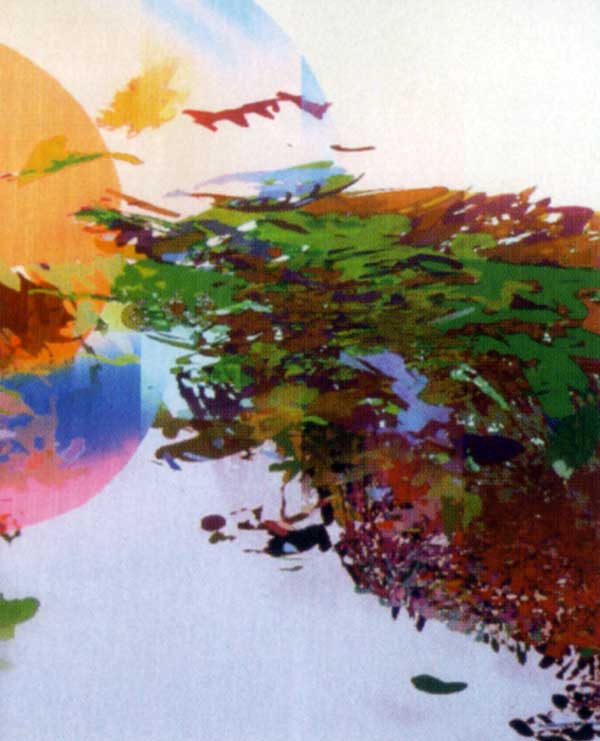
Regarding Gloria, at White Columns
For ‘Flash Art’ Magazine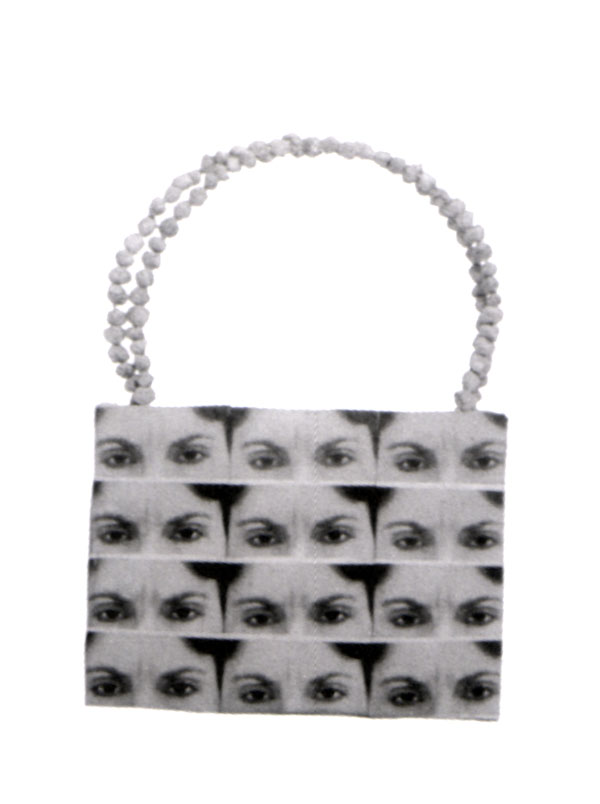
A mini wave of exhibitions focusing on feminist art and its present day legacy hit New York last fall. White Columns led the way with two shows: ‘Gloria,’ which featured feminist art from the 70s, followed by a modern day sequel, ‘Regarding Gloria’, that tried to gauge the impact of feminist art on contemporary women artists. From over 1000 responses received in an open call for submissions, the curators chose work by ten young women artists who reinterpreted the old slogan ‘the personal is political.’ For example, MK Guth’s DVD, in which she plays a caped superhero was reminiscent of Dara Birnbaum’s 1978 images of Wonder Woman. But in her humorous narrative, Guth’s valiant deeds not only critique the usually male superhero persona, but also act out a fantasy of empowerment. Likewise, Jenny Holzer’s statements to the general public contrast Kathleen Kranack’s highly personal list of the comments and insults she has received from men. Shocks like Carolee Schneeman’s 1975 performance, during which she pulled a scroll from her vagina, weren’t replicated in ‘Regarding Gloria.’ Instead, several artists crafted slick displays or featured the bodies of other women, to comment on the ways in which women can be complacent in their own oppression. For instance, one of Cheryl Yun’s fashionable handbags featured tiled images of a woman’s Botoxed face, Melissa Potter’s ‘Price Per Fuck’ series paired photos of luxury items with a calculation of the price for the sexual favors which secured these gifts, and Edythe Wright’s deconstructed Wonderbra was pinned in a glass case like an exhibit at a natural history museum. Thirty years after feminism’s heyday, women still challenge sexism and assumptions about the ‘ideal’ woman, but ‘Regarding Gloria’ suggests that they now do so with less urgency and more humor.