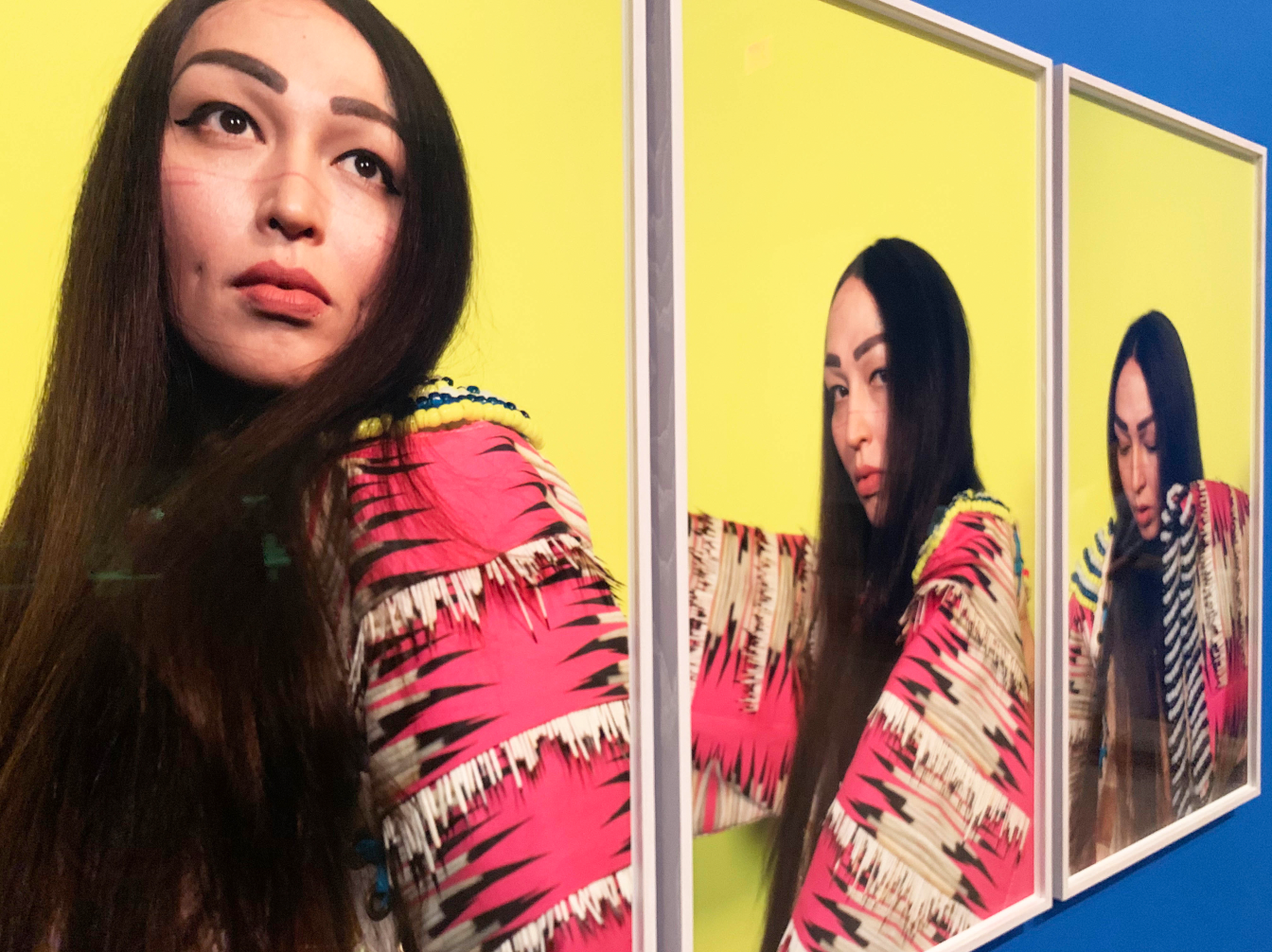
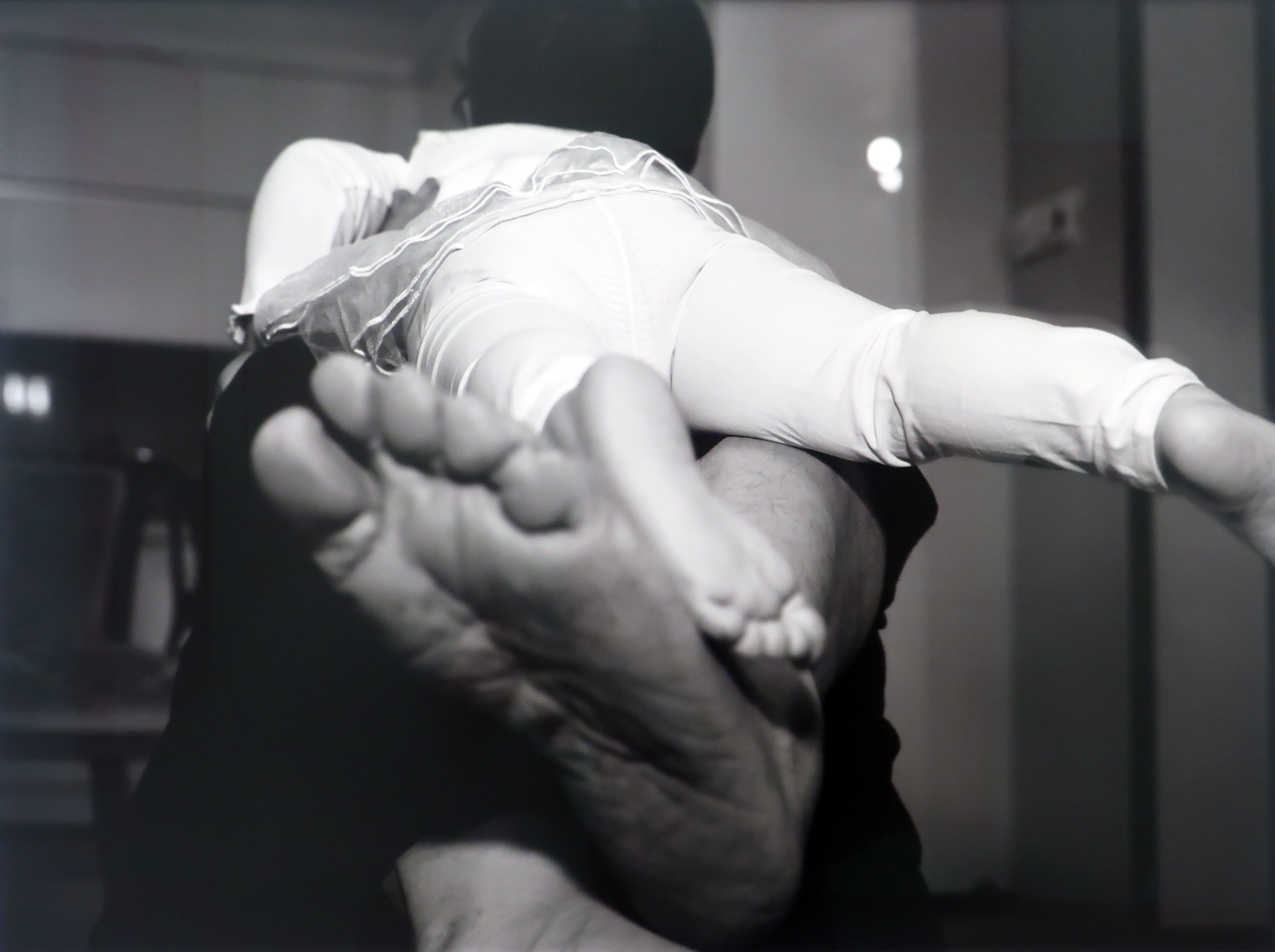
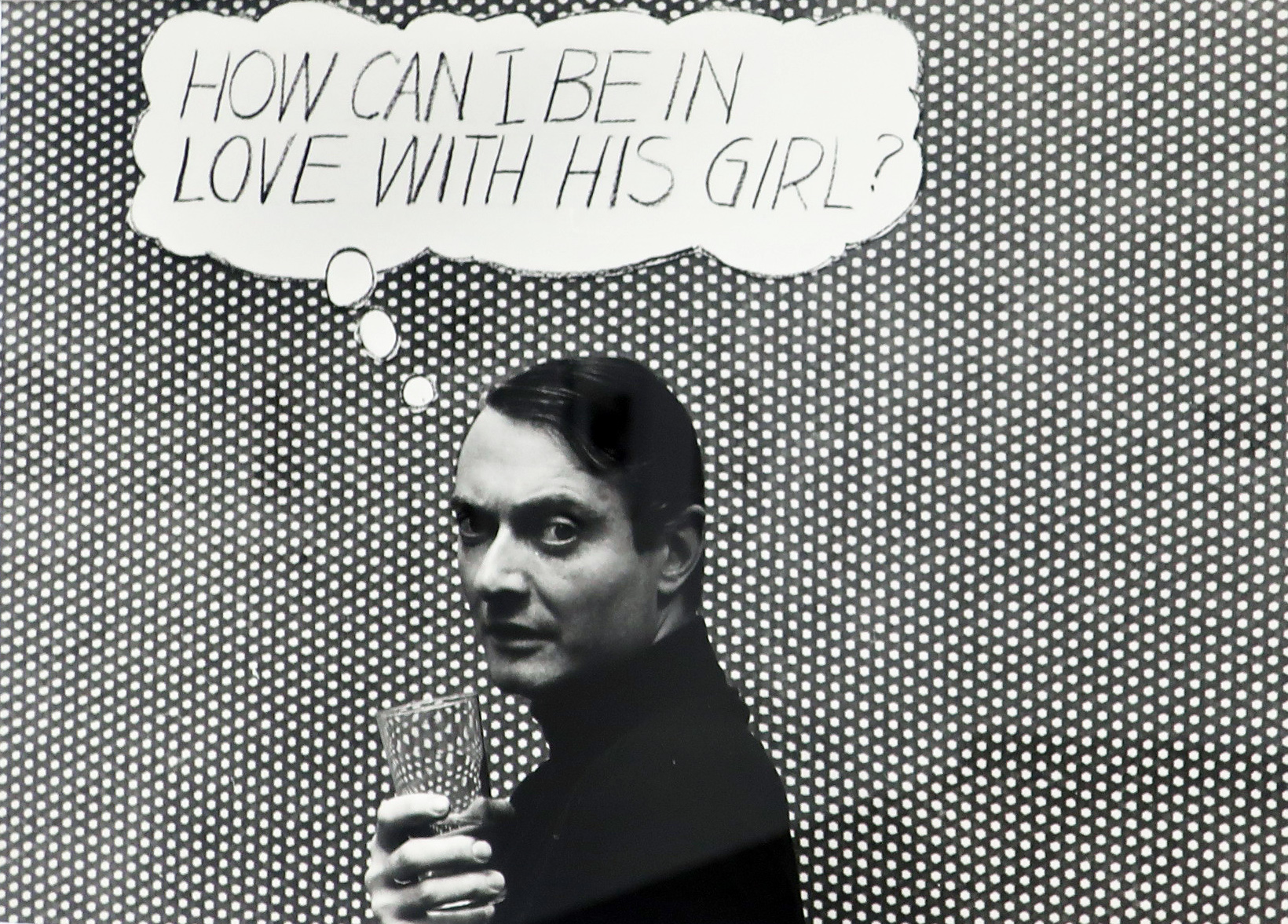
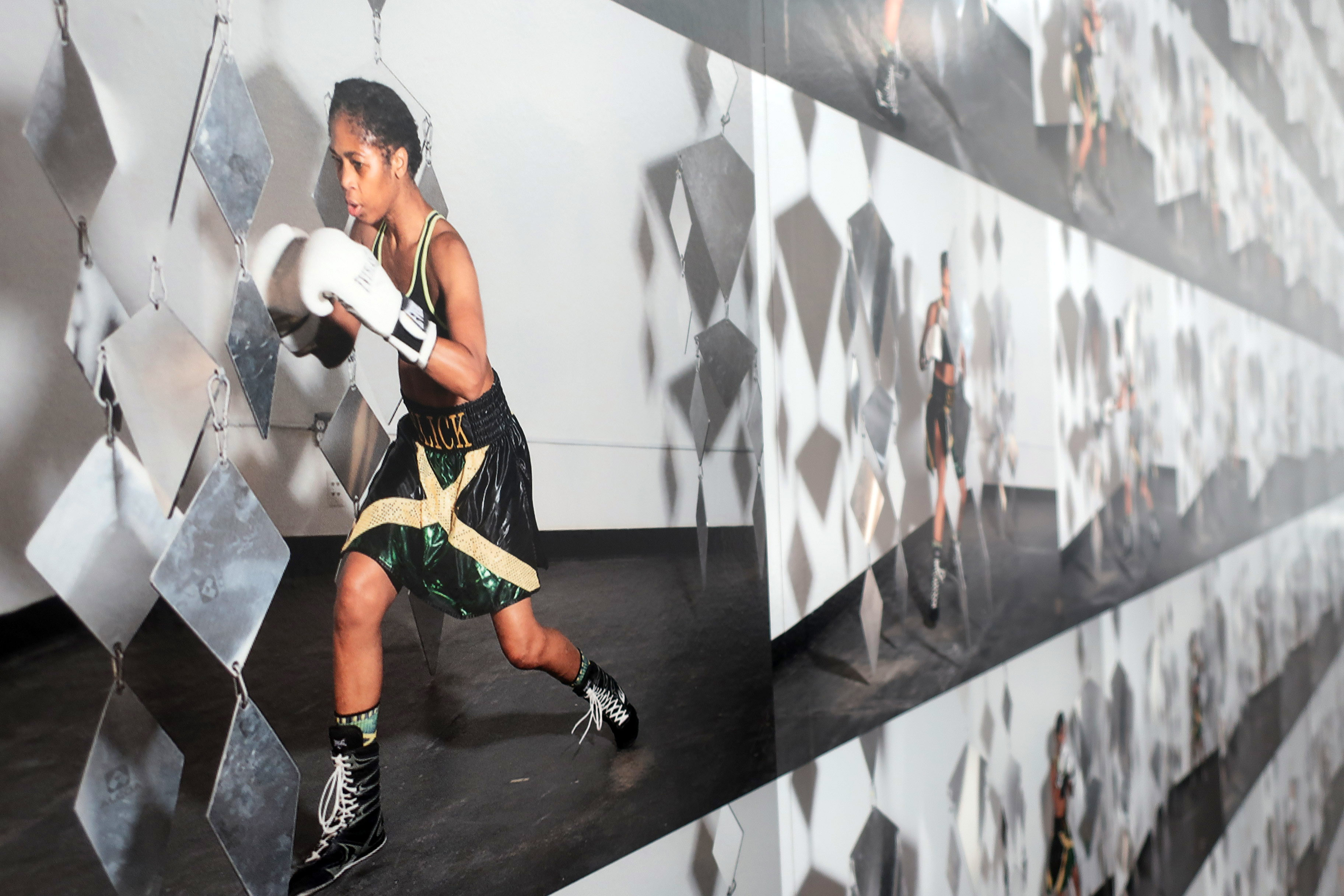
Chester Higgins, ‘Shared Memories’ at Bruce Silverstein Gallery

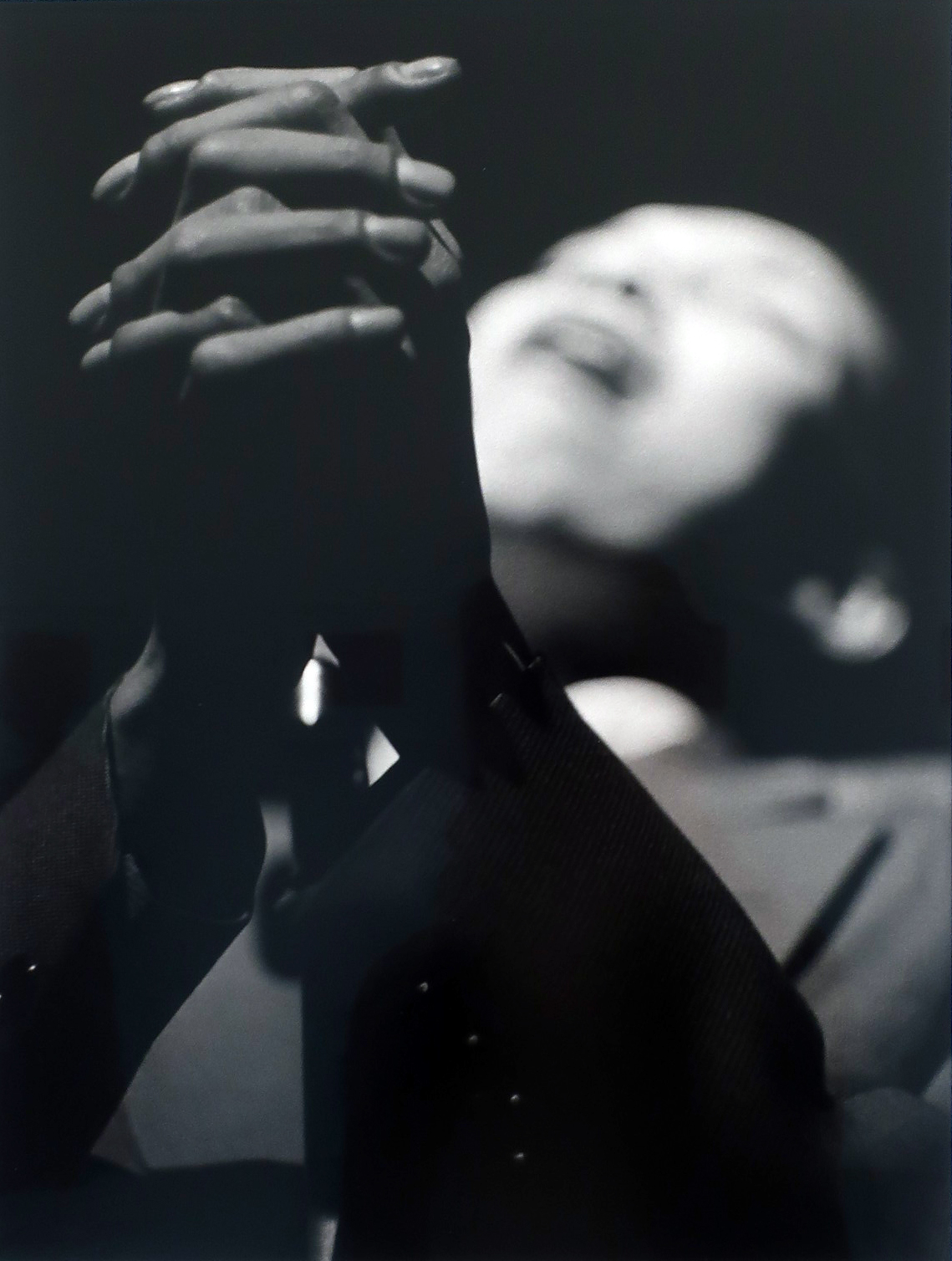
Is this hand smothered by the US flag?  Supporting it?  Chester Higgins’ striking 2018 photograph, ‘State of Affairs’ continues the photographer’s six-decade photographic essay on the realities, triumphs and hardships of life for Black Americans with an image that is compositionally straightforward yet invites multiple interpretations.  The piece is a standout in the 80-year-old Brooklyn-based photographer’s current exhibition at Chelsea’s Bruce Silverstein Gallery, which includes work from his two dozen plus trips to the African continent alongside images from Harlem to Alabama, all of which richly demonstrate his love and respect for people of African descent. (On view in Chelsea through June 20th).

A closeup image of the American flag with an open hand in silhouette behind it.
Chester Higgins, State of Affairs, digital pigment print, 2018.

Markus Brunetti, ‘Facades IV’ at Yossi Milo Gallery

Digitally knit together from hundreds if not thousands of photographs of famous and lesser-known European church facades, Markus Brunetti’s images at Yossi Milo Gallery elicit wonder at the beauty and detailed decoration of the continent’s architectural treasures.  Every inch of each photograph offers crisp detail captured by Brunetti as he stands before each structure with a camera and variety of lenses, gathering more information than any single photo or even the naked eye.  Here, a striking, multi-colored marble exterior on the mid-15th century Oratory of San Bernardino in Perugia, Italy is smaller than the extensive, larger church building to the right, but isolated in the photograph and free from its surroundings, the oratory takes on a grandeur of its own. (On view in Chelsea through June 20th).

The front of a Renaissance church, decorated in pink and green marble.
Markus Brunetti, Perugia, Oratorio di San Bernardino, archival pigment print, 70 13/16” x 59”, 2014 – 2023.

Letha Wilson, ‘Stone’s Throw’ at GRIMM Gallery

Photographs not only picture something but also exist in the world as physical objects.  Letha Wilson takes each role seriously in her current solo show at GRIMM Gallery, presenting landscape images shot in California, New Mexico and Washington State mounted to steel or embedded in concrete and exhibited as sculpture.  In this piece, Wilson’s photo of Yosemite National Park is affixed to the wall but loops behind a cast-iron column normally hidden by gallery architecture.  By excavating the column, painting it and installing the photo, Wilson integrates urban and natural terrains while also alluding to iron’s origins as ore in rocky landscapes. (On view in Tribeca through May 2nd.)

A photograph of Yosemite National Park, wrapped behind a white, fluted column supporting the gallery ceiling with a view behind (to the right) into another room of the gallery.
Letha Wilson, Yosemite Wall Column Push, archival digital prints, cast iron column, hole in wall, ’26.

Lynn Geesaman at Yancey Richardson Gallery

An almost eerie stillness pervades Lynn Geesaman’s 1999 photograph at Parc de Jeurre, an estate with gardens southwest of Paris, in a show of the late photographer’s strikingly beautiful photos from the 90s and early ‘00s at Yancey Richardson Gallery.  Here, no breeze sways the orderly rows of trees broken by the trunk of an older tree in the foreground.  The contrast between the strict planning of the planting and a sense of unpredictability represented by the soft, almost abstracting focus is typical of the show’s selection of Geesaman’s work and lends the photographs a surprising, dreamlike quality.  (On view in Chelsea through Feb 28th).

A landscape planted with rows of trees and one lone tree in the foreground.
Lynn Geesaman, Parc de Jeurre, France, lifetime chromogenic print, image: 28 x 27 7/8 inches, 1999.

Guanyu Xu, ‘Resident Aliens’ at Yancey Richardson Gallery

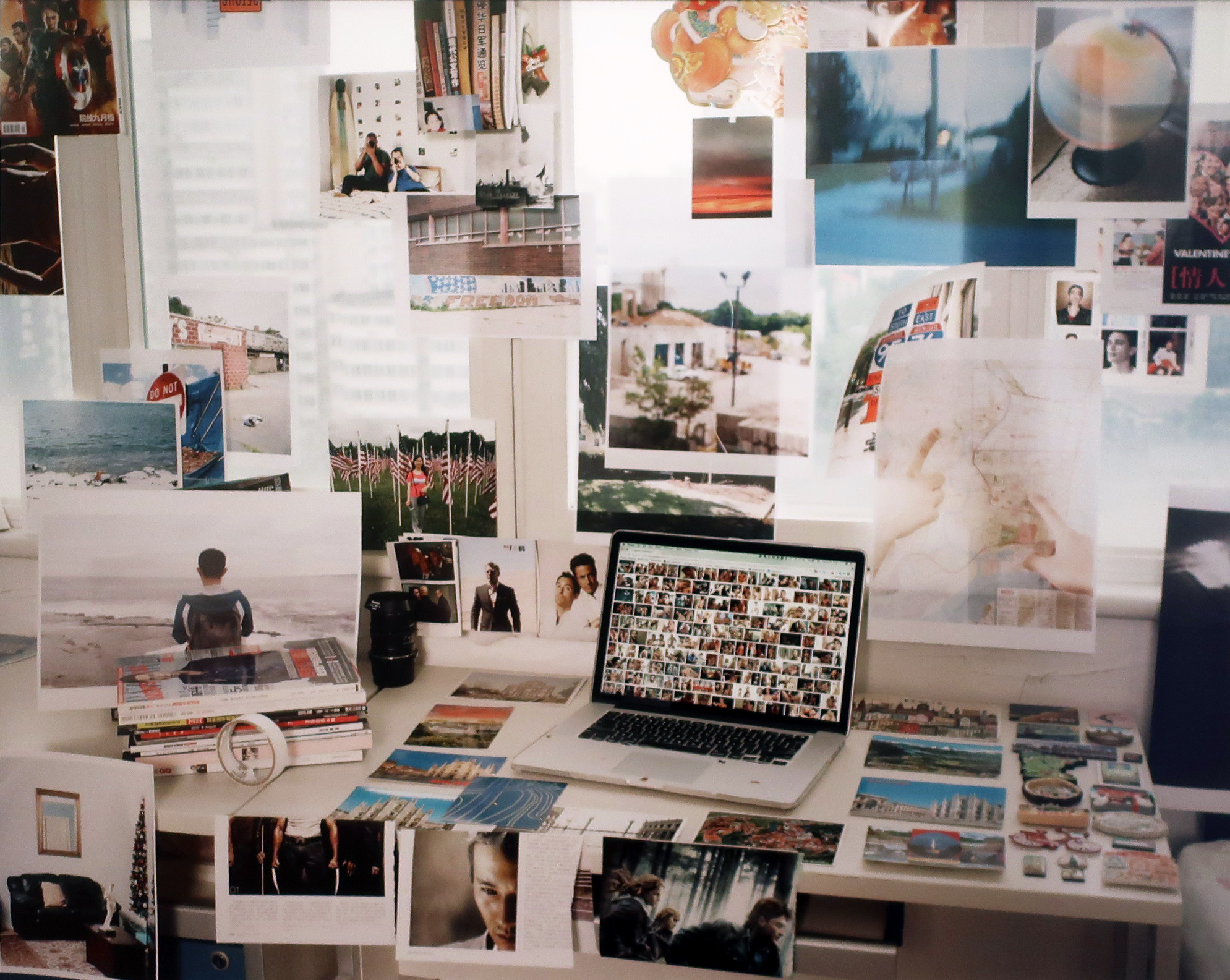
Though they’re hard to read at first glance, it’s illegibility that draws viewers into Guanyu Xu’s photographs of apartment interiors at Yancey Richardson Gallery. At first appearing to be a digital collage, the images are of actual physical spaces temporarily hung with photographs and shot by Xu.  Here, the floor and curving wall anchor the scene, which is hung with a photo of a window (partially covering a doorway), a photo of a bookshelf affixed to a radiator along with larger and smaller images that make space strange.  The details draw us in – travel photos, personal snapshots and more express the particular character and interests of the apartment owner, each of whom lives in the US or China with varying immigration statuses.  Titled ‘Resident Alien,’ the focus on intimate personal details in each photographed interior challenges the exhibition title’s cold terminology. (On view in Chelsea through Dec 20th).

A photograph of an apartment with printed photos of different sizes and subjects hung on the wall.
Guanyu Xu, DJ-08182018-01172022, archival pigment print, 2022.
Photograph of an apartment interior with many photographs of various sizes hung from the wall.
Guanyu Xu, (detail of) DJ-08182018-01172022, archival pigment print, 2022.

Samuel Fosso, ‘Autoportrait’ at Yossi Milo Gallery

Shortly after leaving post-war Nigeria in the early 70s to join his uncle in Central Africa Republic, Samuel Fosso opened his own photo studio at the age of 13 and began making the photos that would rank him among the most important 20th century African photographers.  Now on view at Yossi Milo Gallery, a selection of work from ‘75 to ‘78 demonstrates the teen’s inventiveness and records Fosso’s experience of contemporary pop culture through self-styling.  In the gallery’s back room is work from the photographer’s 2008 ‘African Spirit’ series (also currently on view at the Metropolitan Museum of Art) for which Fosso dressed himself as important leaders in the African diaspora from Dr Martin Luther King to Angela Davis by way of tribute.  (On view in Chelsea through Nov 8.)

A grid of 4 photos of a man dressed in different ways.
Samuel Fosso, work from the series ‘Autoportrait,’ installed at Yossi Milo Gallery, Sept 2025.

Elger Esser in ‘In Sequence’ at Bruce Silverstein Gallery

Elger Esser’s serene, light-infused photographs often juxtapose nature’s vastness with humankind’s comparatively limited efforts to create the built environment.  In two images from 2019, now in Bruce Silverstein Gallery’s summer group show ‘In Sequence,’ Esser restricts his view to a relatively small, yet deeply tranquil scene of water and trees.  Printed on silver-coated copper plate, the photographs’ glow recalls 19th century landscape photography and earlier northern European painting but surpasses precedents in the intense communication of mood via light.  (On view in Chelsea through Aug 29th. Note summer hours.)

Elger Esser, Belle Ile sur le Risle I, direct print on silver-coated copper plate, ed of 3 + 1 AP (2/3), 13 x 16 7/8 in, 2019.
Elger Esser, Belle Ile sur le Risle II, direct print on silver-coated copper plate, ed of 3 + 1 AP (2/3), 10 3/8 x 13 inches, 2019.

Trevor Paglen, ‘Cardinals’ at Pace Gallery

Secret satellites, cloud formations as analyzed by AI, and known but unidentified objects orbiting in space have been subject matter in artist and geographer Trevor Paglen’s always-illuminating photographic practice.  The images on view in Paglen’s current small exhibition at Pace Gallery emerged from hours in the field but are less geared toward educating the public about classified government activity than foregrounding the believability of images he’s taken over the past 20+ years that include ‘novel aerial phenomena.’ Here, a gorgeous sky near a weapons testing facility in Utah plays host to a strange orb that, we are told, Paglen may or may not know the origin of.  (On view in Chelsea through Aug 15th).

Trevor Paglen, Near Dugway Proving Grounds (undated), dye sublimation on aluminum print, 32 x 40 inches, 2024.
Trevor Paglen, (detail) Near Dugway Proving Grounds (undated), dye sublimation on aluminum print, 32 x 40 inches, 2024.

Sally Gall, ‘Vertical World’ at Winston Wachter Gallery

Inspired by a Grand Canyon rafting trip in 2021, New York photographer Sally Gall focused on the rugged landscapes of the Colorado Plateau to make ‘Vertical World’ a series of striking photos now on view at Winston Wachter Gallery in Chelsea.  While Gall’s more recent photo series have featured man-made objects seen from surprising angles – laundry-lines from underneath that look like flowers, distant kites in the sky which appear to be flat, abstract designs – her new work gives attention to the natural colors and patterns of rock surfaces.  The title of this piece, ‘Visitor,’ draws our attention to a small cactus in the foreground of the photo, a curvy interloper in the geometric barrenness of a vast wall of rock.  (On view through July 18th in Chelsea.  Note summer hours.)

Sally Gall, Visitor, archival pigment print, 33 x 50 inches, 2022.

Thomas Demand, ‘Memorial’ from new work at Matthew Marks Gallery

Thomas Demand’s photographs at Matthew Marks Gallery are a litmus test for how carefully we look at images, requiring viewers to take more than a quick glance.  Despite the allure of their large size (this one measures over six feet across) many appear to represent relatively mundane scenes, at least until the feeling that something is ‘off’ leads to the realization that each artwork is a photo of a carefully constructed, life-sized paper and cardboard sculpture replicating an image from the media.  Demand’s new work pictures an intercepted shipment of methamphetamines hidden amongst watermelons at the US/Mexico border and a closeup of a melting ice shelf that alludes to climate change.  Here, an image recreating a memorial at the site of the 2022 racially motivated shooting at a Buffalo supermarket turns Demand’s time-consuming practice of meticulously replicating the various flowers, signs and candles into an additional act of homage to those lost. (On view in Chelsea through June 28th).

Thomas Demand, Memorial, Framed UV print, 47 ½ x 82 inches, 2025.
Thomas Demand, (detail) Memorial, Framed UV print, 47 ½ x 82 inches, 2025.

Malick Sidibe, ‘Regardez-moi’ at Jack Shainman Gallery

Known for picturing the people of Mali as the country emerged from the colonial era into independence in the mid-20th century, Malick Sidibe’s black and white portraits at Jack Shainman Gallery record the leisure activities and self-styling of his photo studio customers.  In a collaboration with local Malian artists, Sidibe selected painted glass frames that enhanced his portraiture.  Here, Mali’s tricolor flag and similarly colored flowers adds a lively, decorative note to a handsome portrait. (On view in Chelsea through May 31st.)

Malick Sidibe, Untitled, signed and dated on verso, vintage silver gelatin print, glass, paint, cardboard, string, wood frame, 14 x 10 ¾ inches (image), 1984.

Peter Moore, ‘New York Streets and Signs’ at Paula Cooper Gallery

Late photographer Peter Moore captured images of iconic performance art in NYC from the early ‘60s on, documenting events by Yayoi Kusama, Trisha Brown, Nam June Paik and others that are now the stuff of legend.  Not only did he record artists, musicians and dancers, Moore also turned his camera on amusing signage and scenarios that presented themselves on the city streets.  Now on view at Paula Cooper Gallery, accompanied by Claes Oldenburg’s drawings of his own performative take on street life, Moore’s photos from the ‘60s to the ‘80s demonstrate his attentiveness and an appreciation for the lighter side of life.  (On view in Chelsea through June 14th).

Peter Moore, untitled (Dash Exterminating), gelatin silver print, 10 ¼ x 7 inches, 1977.

Richard Learoyd, ‘A Loathing of Clocks and Mirrors’ at Pace Gallery

Strikingly intimate in their clarity, British photographer Richard Learoyd’s new portrait and still life photographs at Pace Gallery arrest with their beauty and rich color.  Here, however, Learoyd eliminates saturated tones to allow the focus to rest on the texture and minute details of two subjects.  Viewers standing in the gallery corner before these two photos are brought into an unexpected relationship with the thoughtfulness, possibly inflected by melancholy or ire, of the sitters.  Created with his signature room-sized camera obscura, Learoyd himself is not immediately in front of the subjects as he takes the photo, adding to the sense of interiority in the images.  (On view in Chelsea through April 26th).

Richard Learoyd, (left) Untitled Head, multi-layered pigment print and hand-applied gesso on canvas, 59 ½ x 59 ½ inches, 2024; (right) Head 2, multi-layered pigment print and hand-applied gesso on canvas, 59 7/8 x 59 7/8 inches, 2024.

Sharon Core, ‘Facsimile’ at Yancey Richardson Gallery

Irving Penn’s flower photographs, featured in Vogue’s annual Christmas issues from 1967 – 1973 and published in a volume titled ‘Flowers’ in 1980, are the launching point and raison d’etre of Sharon Core’s new body of work at Yancey Richardson Gallery, ‘Facsimile.’  Meticulously shot and printed, the crisp clarity and stunning color of Penn’s images give way to freer renderings in Core’s renditions of Penn’s photos, which she painted using cyan, yellow and magenta Epson UltraChrome inks on Canson Photo Rag paper and then printed as an editioned book.  In her past work, Core has grown flowers that she’s then shot for still-life photos.  Other projects involved photographing her own recreations of food that has been depicted in famous artworks.  Here, she also considers the life of a subject prior to being captured in an image, but now the precursor is the medium of painting itself.  Since the invention of photography, its function in relation to painting has been debated; here, Core reveals in the complexities, ultimately forcing viewers to confront our own expectations.  (On view in Chelsea through April 12th).

Sharon Core, installation view of ‘Facsimile’ at Yancey Richardson Gallery, March 2025.

Tyler Mitchell, ‘Ghost Images’ at Gagosian Gallery

Tyler Mitchell’s striking new photos in his show ‘Ghost Images’ at Gagosian Gallery aim to picture ‘unseen presences that are deeply felt.’  A young man seems to fade into a wooden wall in a nod to a self-portrait by mid-century photographer Frederick Sommer, while a young woman in ‘Gwendolyn’s Apparition’ appears multiple times in the same image striding or standing on a dusty road.  Here, Mitchell prints his image on fabric, hanging it loosely from a frame in contrast to the tautness of the kite, both hiding and revealing the young man holding it. (On view in Chelsea on 24th Street through April 5th).

Tyler Mitchell, The sky is cold but the wing blood hot, dye-sublimation print on fabric, walnut artist’s frame, 62 x 44 ¼ x 4 inches, 2024.

Todd Gray, ‘While Angels Gaze’ at Lehmann Maupin Gallery

As a winner of the ’22-’23 Rome Prize, photographer Todd Gray spent six months in Rome absorbing the city’s contrasting ancient and contemporary architecture and translating those time shifts into complex images.  Already known for sculptural, photo-based artwork juxtaposing African landscapes with European architecture built with wealth extracted from its colonies, Gray’s new work at Lehmann Maupin Gallery showcases the extravagant beauty of Rome’s built environment, troubled by symbols of exploitative practice.  Here, a ceiling from an early 19th century Neoclassical villa decorated with cavorting nude figures is punctuated by the mast of a slave ship model in the Maison des Esclaves (House of Slaves) museum on Goree Island in Senegal.  An image from the Hubble Scape Telescope acts as portal between the two places, allowing a kind of passage between locations and back in time. (On view through March 22nd).

Todd Gray, Blues Ship (makes me wanna holla), 3 pigment ink prints on Dibond in artist’s frames, 41 x 61 1/8 x 2 ¾ inches, 2024.

Nathalia Edenmont, ‘Out of Body’ at Nancy Hoffman Gallery

Told many years ago that her eggs would never allow her to bear a child, Nathalia Edenmont pursued the theme of reproduction with a plan to transform discarded goose eggs into art. After performing the difficult task of cleaning the eggs, however, Edenmont found the associations too painful and shelved the project. Meticulously staged photographs of models wearing dresses composed of flowers or fruit followed, along with collages composed of butterfly wings, each alluding to fertility and beauty. More recently, however, Edenmont returned to the goose eggs, cracking them gently with her hands in patterns and here, setting a smaller hen’s egg in a larger goose egg. Not stopping at photography, for which she is known, the artist’s current show at Nancy Hoffman Gallery includes her recent sculpture, which substitutes strong materials for fragile. (On view in Chelsea through March 22nd).

Nathalia Edenmont, [sculpture, foreground] Out of a Fertile Summer Sun (Vincenzo), pure white Statuario marble (Carrara) on labradorite base (Madagascar), 23 ¾ x 27 ½ x 17 ¾ inches, 2024. [background] Out of Golden Rays of a Fertile Summer Sun, Photograph on Canson Platine Fibre Rag, 55 x 46 inches, 2024.

Roe Ethridge, Hand with Dramm at Andrew Kreps Gallery

Photographer Roe Ethridge takes us to the beach in his latest solo show at Andrew Kreps Gallery, a destination not quite in synch with a New York winter but nevertheless refreshing with its vivid colors and enjoyable in its inclusion of deliberately imperfect subject matter.  ‘Rainbow over Shore Front Parkway’ captures a rainbow in a stunning, multi-hued sky over beachfront dunes that have recently been constructed as a massive barricade in an ongoing coastal resiliency project.  Nearby, model Irina Shayk in a captain’s hat grins with extra exuberance in an outtake from one of the photographer’s commercial fashion shoots.  The aquatic theme continues with this intense image of a candy-colored spray nozzle, caught as it releases a jet of water into a distinctly unnatural, green environment.  (On view in Tribeca through March 1st).

Roe Ethridge, Hand with Dramm, UV cured pigment print, 34 x 44 inches, 2023.

An-My Le at Marian Goodman Gallery

Recalling a circular full-room installation in her MoMA retrospective last year, An-My Le’s ‘Grey Wolf’ series in her current show at Marian Goodman Gallery continues to explore immersive environments.  While the earlier presentation juxtaposed diverse landscapes and histories, the current exhibition features color views of the stark Montana countryside where large-scale agricultural production and nuclear missile launch sites mark the land.  Hung tightly in a small, curved enclosure, the photos situate viewers in a landscape seen from above, a cockpit-like, Gods-eye perspective that points to human impact on the landscape. (On view in Tribeca through Feb 22nd).

An My Le, installation view of Grey Wolf, installation comprised of 7 vinyl prints (each 48 x 64 ½ inches), 2024 at Marian Goodman Gallery.

Pete Turner at Bruce Silverstein Gallery

A giraffe silhouetted against a red sky, white adobe buildings suffused with deep blue light and the brilliant orange of canned peaches stand out amongst the grid of album covers on Bruce Silverstein Gallery’s foyer wall, a testament to late photographer Pete Turner’s renowned and striking use of color.  In an exhibition that focuses on jazz album covers selected from over seventy covers Turner created over fifty years, the gallery positions the photographer at the forefront of the mid-20th century move toward artistic covers that express the identity of the music vs the brand of the record label.  Here, Turner’s interpretation of Joe Ferrell’s 1975 jazz album ‘Canned Funk’ suggests (literally) eye-popping surprise amid sweet, curving forms.  (On view through Jan 18th).

Pete Turner, Eye to Eye, archival pigment print, printed c. 2000s, 13 x 19 inches, 1968.

Jeff Wall at Gagosian Gallery

Cinematic and uncanny, Jeff Wall’s photos at Gagosian Gallery may present banal or fantastical scenarios (or a combination of both) but each arrests our attention with their careful staging and suggestion of hidden messages.  Often referred to as ‘near documentary’ and inspired by specific works from art history or events Wall has experienced, his photographs encourage viewers to consider how details cue meaning.  The artist has explained that he witnessed the scene in ‘Event,’ pictured here, but he changed the setting and people while still conveying his feelings about what he observed, considering age, class, masculinity, and situational behavior manifest in a single power negotiation. (On view at Gagosian Gallery on 24th Street in Chelsea through Jan 25th).

Jeff Wall, Event, inkjet print, 87 7/8 x 66 5/16 x 2 11/16 inches, 2021.

Lorna Simpson at Hauser & Wirth Gallery

With almost no warning save for a humming sound and a sudden gust of air, Mississippi tenant farmer Ed Bush witnessed a meteorite plough into the earth one day in 1922, a terrifying and sudden event which Lorna Simpson recounts in 3-D lettering on the wall of her solo show at Hauser & Wirth Gallery.  Nearby, painted and silkscreened fiberglass panels picture a surface pockmarked with bullet holes, another allusion to violence that can descend unexpectedly and without reason.  In the main gallery, a series of 12-foot-tall canvases feature huge, meteor-like rocks that appear to hover in space, perhaps arrested in their descent but still exuding destructive potential that has, at least momentarily, been averted.  (On view in Chelsea through Jan 11th. Note that gallery hours change during the holiday period).

Lorna Simpson, Time Lapse, acrylic and screenprint on gessoed fiberglass, 144 x 102 x 1 ¾ inches, 2024.

Irving Penn, ‘Kinship’ at Pace Gallery

Pace Gallery’s current exhibition of Irving Penn’s photographs from the ‘40s to 2000, curated by supremely image-savvy artist Hank Willis Thomas, is compact but impactful, featuring juxtapositions of photos with often radically different subject matter that nevertheless have some affinity. A 1947 studio portrait of New Yorker cartoonists poised on a scaffold hangs near a photo of a careful arrangement of blocks, immediately conveying careful arrangement and balance rather than humor or play.  Around the corner, two models in Issey Miyake echo the form of a neighboring image of two weathered cigarette butts, a parallel that crashes together the fashionable and the discarded.  Hung on gallery walls constructed to recall the temporary structures Penn used as sets, photos are positioned near each other but on different walls, similar yet different.  Here, tangled members of a wrestling family appear opposite an arrangement of seafood, both shot in 1948, demonstrating the ‘visual muscle memory’ that Willis Thomas argues ties together Penn’s 70-year career.  (On view in Chelsea through Dec 21st).

(left) Irving Penn, Dusek Brothers (1 of 3), vintage gelatin silver print, 7 11/16 x 9 5/8, image, ed of 41, New York, 1948. (right) Irving Penn, Bouillabaisse, chromogenic print, 24 x 20 inches, images, ed of 7, Barcelona, 1948.
Installation view. Irving Penn, ‘Kinship’ at Pace Gallery, Dec ’24.

Annie Leibovitz at Hauser and Wirth

A photograph of the top hat and gloves that Abraham Lincoln wore when he was assassinated and a shot of Elvis Presley’s TV pierced by a bullet hole are two images with intriguing backstories in iconic photographer Annie Leibovitz’s mini-survey at Hauser and Wirth Gallery in Chelsea.  Less dramatic but more insightful are the many portraits of artists that include Simone Leigh’s hands shaping a piece of clay near a landscape that inspired Georgia O’Keefe, or an Icelandic glacier that vaguely resembles a neighboring shot of Cindy Sherman’s head.  Here, Leibovitz’s image of David Hockney, from a period in which he’d returned to the north of England, allows us an enjoyably intimate view of the artist at work. (On view through Jan 11th).

Annie Leibovitz, David Hockney, Bridlington, East Yorkshire, England, archival pigment print, 2024.

Erin O’Keefe at Sargent’s Daughters

Being tricked is fun when it’s New York-based artist and architect Erin O’Keefe doing the fooling.  O’Keefe’s new photographs at Sargent’s Daughters in Tribeca look like paintings made with thick strokes of a brush, but what appears to be textured paint marks are actually the edges of wooden blocks that the artist paints and arranges to read like an abstract composition.  Some pieces come partly into focus as photos of 3-D arrangements but continue to be ambiguous; others only make sense after some puzzling.  With their bright colors and clever composition, the photographs offer an optical workout that is pure pleasure.  (On view in Tribeca through Dec 21st).

Erin O’Keefe, Snake Eyes, unique archival pigment print on Hahnemuhle Photo Rag paper mounted to Dibond aluminum, 42 x 30 inches, 2024.

Paul Anthony Smith Multi Media at Jack Shainman

It’s carnival season in Jamaica-born, Brooklyn based multi-media artist Paul Anthony Smith’s latest body of work now on view at Jack Shainman Gallery in Chelsea.  Starting with photos he took during celebrations in Trinidad and Tobago, Smith manipulates the images, prints them, adds paint and employs his signature picotage technique by which he creates patterns of tiny tears in the surface of the painted photographs.  Here, as in many pieces, the tear patterns take the form of fences or walls constructed of patterned concrete blocks.  Placed between viewers and the celebrants, the barriers allow looking but give viewers pause to question what kind of access we have to the places and cultures pictured.  (On view through Oct 26th).

Paul Anthony Smith, To be titled, unique picotage and spray paint on inkjet, print mounted on Dibond, acrylic paint, 51 ¼ x 81 x 2 ¼ inches, 2024.

Karen Knorr at Sundaram Tagore Gallery

Inspired by sources from European folk tales to fables from India’s Panchatantra, Karen Knorr’s extravagantly beautiful mini-retrospective of photographs at Sundaram Tagore Gallery taps into the complex relations between humans and animals.  In her most recent body of work, Scavi, the artist pictures excavated sites in southern Italy that were covered by the 79 CE eruption of Mount Vesuvius.  To these she adds images shot elsewhere of animals, creating surprising connections.  Titled ‘Bacchus in Attendance, House of Neptune and Amphitrite,’ this image from a garden courtyard in Herculaneum features a leopard seated before a glass paste mosaic of Neptune and his wife, Amphitrite.   Associated with the god of wine, Bacchus, the leopard becomes a stand-in for the deity in a regal portrait of three divinities.  (On view through Oct 19th).

Karen Knorr, Bacchus in Attendance, House of Neptune and Amphitrite, Herculaneum, 58 x 72.5 inches, 2024.

Mitch Epstein at Yancey Richardson Gallery

Over the past several decades, photographer Mitch Epstein’s series have memorably pictured conflict over land, energy consumption in the US, and landmarked trees in NYC; his latest body of work at Chelsea’s Yancey Richardson Gallery, ‘Old Growth’ continues to picture the land in a stunning homage to ancient trees across the country.  A redwood emerges from fog, a striated bristlecone pine stands at attention and this enormous sequoia towers over a tiny human in images that aim to inspire the protection of forests in light of their beauty and essential function in the environment.  (On view through Oct 19th).

Mitch Epstein, Congress Trail, Sequoia National Park, California, from the series Old Growth, 45 ¾ x 36 ¾ inches, 2021.

Annette Messager at the Metropolitan Museum of Art

‘Don’t Forget to Call Your Mother,’ a compact show of photography from the 70s onward from the Met Museum’s collection, showcases complex portraits built from pieces of information rather than a traditional physical likeness.  Snippets from Larry Sultan’s family’s home movies and an image of a solitary bathrobe by Sophie Calle point to specific memories that shaped an individual’s identity, while Darrell Ellis worked with his late father’s photo archive and Sadie Barnette creates a neon-edged photo collage memorial to San Francisco’s first Black-owned gay bar, owned by her father.  Annette Messager’s collection of small, framed photos of eyes, mouths, torsos and other body parts arranged against the wall in a dense, circular cluster by twine and nails creates a collective portrait of an unknown group.  Titled ‘My Vows,’ the images suggestively connect belief and the body.  (On view on the Upper East Side through Sept 15th).

Annette Messager, My Vows (Mes Voeux), 106 gelatin silver prints, bound between glass and cardboard, black tape, twine and acrylic push pins, dimensions variable, 1990.

Hellen van Meene in ‘Immersion’ at Yancey Richardson Gallery

A father and child floating in a lake, a swimming snake in still water and surfers in the waves are pictured from above, while a baby, a shark and swimmers in a pool are pictured from below in six different, strikingly intimiate photographs in Yancey Richardson Gallery’s arrestingly beautiful summer group show ‘Immersion.’  Here, Dutch photographer Hellen van Meene recreates John Everett Millais’ 1851 painting ‘Ophelia’ from Shakespeare’s ‘Hamlet.’  Looking slightly more composed and decidedly more alive than the 19th century version, this retelling of the story seems to offer hope that Ophelia will soon rise up magically or of her own will. (On view through Aug 16th).

Hellen van Meene, Untitled #544, chromogenic print, 27 ½ x 27 ½ inches, 2022.

Hiroshi Sugimoto at Lisson Gallery

Art and science converge in Hiroshi Sugimoto’s new body of work at Chelsea’s Lisson Gallery, where the renowned photographer has photographed light, refracted through a prism into separate colors.  Helpfully demonstrating Sugimoto’s working process in making images of pure color or zones between colors, a huge prism positioned under a gallery skylight fractures light into a rainbow on the floor. (On view through Aug 2nd).

Installation view of ‘Optical Allusion,’ at Lisson Gallery, June 2024.

Stephen Shore Photos at 303 Gallery

Known for banal yet memorable photos like his 1973 image of a diner table set with pancakes, a glass of milk and a half cantaloupe, Stephen Shore’s images of rural and small-town America are now iconic documents of life in the later 20th century.  Shore’s latest body of work from his ‘Topographies’ series at 303 Gallery has been shot by drone, allowing him to pull away from his subjects and picture interactions between the built environment and nature.  In one image, a pipeline crosses a road in upstate New York creating an artful X on the landscape while in other scenes, crossroads dominate sparsely populated communities and single-lane roads stretch on into eternity in developments that represent the imposition of human will on the landscape.  Here, Shore juxtaposes majestic mountain views in Montana with a gleaming trailer in the foreground to consider contemporary fantasies of living on the land.  (On view in Chelsea through July 3rd).

Stephen Shore, Brisbin, Montana, July 30, 2020 45 30.659555N, 110 36.520175W, UV curable ink on Dibond aluminum, 24 x 32 inches, 2020 (printed 2024).

Francesca Woodman at Gagosian Gallery

Known for small-scale black and white photographs that focus on her own body in rooms that look uninhabited and neglected, Francesca Woodman has influenced generations of photographers attracted by the ethereal and enigmatic quality of her work and its psychological charge.  In a show of the artist’s photographs from 1975 – 1980 at Gagosian Gallery’s 24th Street Chelsea location, the gallery walls are lined with intimate images, interrupted by the monumental ‘Blueprint for a Temple (II),’ featuring contemporary women as caryatids on an ancient Greek temple.  Notes and additional shots of the Greek key pattern in New York rental apartment bathrooms are positioned around the edge of the partial temple, connecting an ancient sacred space with the modern bathroom, two places Woodman identified as, ‘offering a note of calm and peacefulness.’  (On view through April 27th).

Francesca Woodman, installation view including Blueprint for a Temple (II), 1980. March 2024.

James Welling Photographs at David Zwirner Gallery

Double-takes are the norm at James Welling’s show of recent photographs at David Zwirner Gallery as the iconic West coast artist continues to make images that take time to understand.  In this photograph of rocks and the sea in Prouts Neck, Maine, printed in UV curable ink that adds to the images’ rich color, Welling recalls Winslow Homer’s and subsequently, John Marin’s paintings in this historic spot.  The ocean is placid in Welling’s rendering but the overlaid patches of color that he adds create a visual disturbance that mimics the crashing waves and stormy surf that Homer captured.  Interested in the patterning created as he cleaned off paint rollers on newspaper for another project, Welling started adding these ‘prints’ to his photos, altering areas of color to create complex images that emphasize the malleability of photography (On view in Chelsea through Feb 10th).

James Welling, Prouts Neck near Winslow Homer’s Studio, UV-curable ink on Dibond aluminum, 42 x 63 inches, 2015/2023.

Paulette Tavormina at Winston Wachter

Immediately arresting for their beauty and dramatic lighting, Paulette Tavormina’s still life photos from the past several years are a standout at Winston Wachter Fine Art in Chelsea. Formerly a Hollywood food and prop stylist and contributor to National Geographic and the New York Times, Tavormina marshals her skills to create contemporary reinterpretations of still lifes by 17th century painters, including one of the first female still life artists, Giovanna Garzoni; Spanish painter of dramatically-lit scenes Frances de Zurbarán; and Dutch Golden Age still life painter Adriaen Coorte.  Tavormina – who comes from a line of avid gardeners – makes the work her own by growing most of the fruits and flowers that she uses and adding surprise elements like the pair of goldfish in the vase pictured here. (On view through Jan 6th.)

Paulette Tavormina, Dutch Tulips & Goldfish, archival pigment print, ed of 5, 36 x 36 inches, 2021.

Jay DeFeo at Paula Cooper Gallery

After completing her iconic 2,000+ lb painting ‘The Rose,’ in 1966, Bay Area artist Jay DeFeo delved into photography, creating the 70 photographs, collages and photocopies now on view at Paula Cooper Gallery in Chelsea.  Like ‘The Rose,’ DeFeo’s photographs feature complex textures, moody tonal contrasts and nature-related imagery in straight shots of mushrooms on a fallen tree or chemigrams – abstract images created in the darkroom.  Among the representational works, a single resting hand seen from the side or a section of an illuminated lampshade pictured from below against a black background convey stillness while this powerful shot of rushing water embodies nature’s dynamism and power.  (On view in Chelsea through Oct 28th).

Jay DeFeo, Untitled, gelatin silver print, 6 x 8 7/8 inches, 1973.

Yasumasa Morimura at Luring Augustine Gallery

From Marilyn Monroe to Marlene Dietrich, Yasumasa Morimura mimics the iconic looks of famous figures in the series ‘100 M’s Self-Portraits,’ now on view at Luhring Augustine’s Tribeca gallery space.  Having made a name for himself in the ‘80s through to the present day via vividly colored photos that depict his reenactments of famous artworks with himself dressed as the main character (he started as Van Gogh with a bandaged ear), the now 72-year-old photographer opted for smaller format black and white images to create his 100 piece portrait series from the 1993-2000.  Here, he takes his version of Audrey Hepburn in Breakfast at Tiffany’s into the subway, having his audience watch a passerby react as we also consider the implications of his race and gender transgressing role play. (On view in Tribeca through Oct 21st).

Yasumasa Morimura, one image from ‘Once Hundred M’s self-portraits, 100 gelatin silver photographs, each 13 ¾ x 11 inches, 1993-2000.

Kathrin Linkersdorff at Yossi Milo Gallery

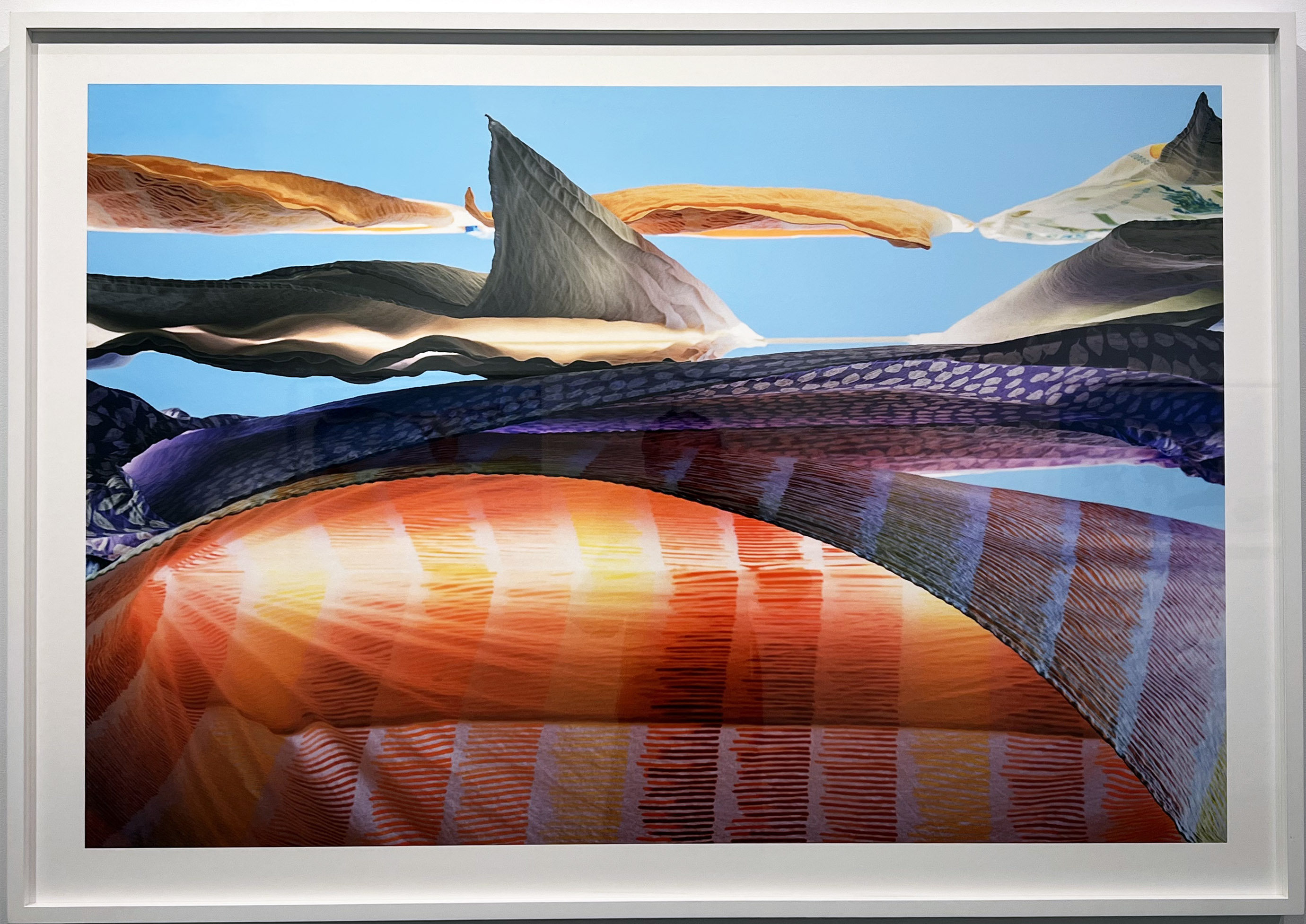
German artist Kathrin Linkersdorff’s ‘Fairies,’ a series of vividly colored yet ethereal photographs of flowers now on view at Chelsea’s Yossi Milo Gallery, takes up the age-old concept of memento mori – a reminder of life’s brevity – with contemporary imagery of flowers.  While spending time working in Japan as an architect, Linkersdorff embraced her host country’s reverence for nature as well as the concept of wabi-sabi, or acceptance of imperfection and impermanence.  With both philosophies in mind, Linkersdorff dries flowers over long periods of time, extracting their pigment and reintroducing it into a liquid medium in which the flowers are suspended.  Resulting images like this one emphasize the delicacy and structure of the plants.  Pictured as if the pigments had suddenly dropped away from the petals, the artist suggests a magical deviation from expectation.  (On view through Oct 21st).

Kathrin Linkersdorff, Fairies, VI/3, archival pigment print on Hahnemuehle photo rag ultra smooth, 2021.

Heji Shin at 52 Walker

Fashion and art photographer Heji Shin’s self-portrait at 52 Walker gives and withholds information, depicting a holographic image of her brain made with a special MRI technique that pictures neural networks in brilliant color.  Though the scans allow us to literally see her brain, more telling about Shin’s thoughts are her studio photos of pigs – their faces full of character – that appear on the surrounding walls. Titled ‘Big Nudes’ after Helmut Newton’s boldly-posed 1981 images of nude women, the images question how both photos and their subjects are consumed. (On view in Tribeca through Oct 7th).

Heji Shin, Untitled, holographic installation; glass, pedestal, and four flat screen TVs, 66 x 68 1/8 x 58 ¼ in, 2023.

Lee Friedlander at Luhring Augustine Gallery

From Boston to San Diego, Lee Friedlander’s black and white photos of urban landscapes turn mundane street scenes into extraordinary coincidences of arranged forms.  In Friedlander’s hands, any vertical object in the environment can bisect a scene into separate vignettes – people standing on the sidewalk as seen through car windows seem to occupy their own separate worlds while on this highway overpass in Dallas, a guardrail divides one location into two radically different places.  45 photos from Friedlander’s 60+ year career selected by filmmaker Joel Coen, now on view at Luhring Augustine Gallery, demonstrate Friedlander’s impressive ability to reframe our view of the world.  (On view through July 28th).

Lee Friedlander, Dallas, gelatin silver print, image 8 ½ x 12 ¾ inches, 1977, printed 2023.

Ruby Rumie Installation at Nohra Haime

Inspired by a mid-19th century geographical survey that attempted to catalogue the inhabitants, economies and landscapes of Colombia, Cartagena-based artist Ruby Rumie’s latest photography series at Nohra Haime Gallery in Chelsea celebrates the diversity and beauty of her fellow citizens.  Crowned by peppers or wreathed in abundant clusters of fruit, project participants pose with their favorite foods, suggesting that our personal likes and preferences are an aspect of both individual and shared identity.  (On view through July 16th).

Ruby Rumie, installation view of ‘Us, 172 Years Later’ at Nohra Haime Gallery, Chelsea, June ’23.

‘Avedon 100’ at Gagosian Gallery

Enter Gagosian Gallery and you’ll immediately see Marilyn Monroe striking flirtatious poses in 1957, to the right is a joyous full-length portrait of Tina Turner and further back, a cast of characters from Andy Warhol’s Factory exudes downtown chic, even in the nude.  The gallery’s museum-quality celebration of iconic photographer Richard Avedon’s 100 birthday includes some of the most recognized subjects and photographs of the 2nd half of the 20th century, a time when Avedon shot for Harper’s Bazaar, Vogue and the New Yorker while also completing his own projects. The beautifully staged exhibition offers sightlines that take visitors from oil field workers in Oklahoma to a fashion shoot narrative (right and left in this image) to Dovima, posing with elephants in a Paris circus in 1955. (On view through July 7th).

Richard Avedon, installation view of ‘Avedon 100’ at Gagosian Gallery, May 2022.

Daniel Gordon at Kasmin Gallery

Unlike classic Dutch still life, Daniel Gordon’s ‘Philodendron with Sardines and Lobster’ at Kasmin Gallery lacks the typical superabundance of a table piled high with fruit, meats and other delicacies, allowing for a more focused appreciation of the artist’s detailed, hands-on production of each item on display. After finding or taking a photograph of each object he intends to depict, Gordon prints images of the object, cutting and gluing them over forms that are placed into an arrangement of similarly crafted objects and then photographed to produce the final image.   Because they’ve originated in photographic images, lobster, fish, plant and vase on the one hand look believable as a flat image and yet are obviously 3-D renderings.  The space of the image is temporarily unclear, the medium blurred, creating pleasurable moments of uncertainty. (On view through June 3rd).

Daniel Gordon, Philodendron with Sardines and Lobster, pigment print with UV lamination, 49 7/8 x 40 inches, 2023.

David Gilbert at Klaus von Nichtssagend Gallery

Patterns of sunlight and shadow falling over arrangements of cut paper and painted canvas give LA artist David Gilbert’s new work at Klaus Gallery an ephemerality that speaks to art as a process of making.  Calling him a ‘discerning scavenger of poignant and beautiful things,’ the gallery points out how Gilbert captures moments in which something special arises from arrangements of everyday objects.  In this image, a single pink bead and isolated dots of red color at top right add balance and interest to the predicament of the dove at center, which may or may not be captured by both painted and actual netting as it attempts to fly upward into the blue.  (On view in Tribeca through May 6th).

David Gilbert, Dove, archival inkjet print, 13 x 8.6 inches, 2023

Edward Burtynsky at Sundaram Tagore Gallery

Renowned Canadian photographer Edward Burtynsky has spent a lifetime documenting mankind’s impact on the planet, picturing German coal mines, vast industrial landscapes in China and more recently, salt pans, gold tailings, oil bunkering and more in sub-Saharan Africa.  His current exhibition of photos shot in Kenya, Nigeria, South Africa and beyond at Chelsea’s Sundaram Tagore Gallery includes otherworldly landscapes created by the harvesting of salt, including these Salt Ponds near Naglou Sam Sam in Senegal. In shallow, man-made ponds, microorganisms change color as evaporation causes salinity to increase, resulting in a spectacular, painterly display. (On view in Chelsea through April 1st).

Edward Burtynsky, Salt Ponds #4, Near Naglou Sam Sam, Senegal, pigment inkjet print on Kodak Professional Photo Paper, 48 x 64 inches, 2019.

Berenice Abbott at the Metropolitan Museum of Art

Right on the heels of a show of photographer Berenice Abbott’s Greenwich Village portraits and urban landscapes at Chelsea’s Marlborough Gallery, fans of the iconic early 20th century New York City chronicler can enjoy the Metropolitan Museum of Art’s new exhibition of images from Abbott’s 1929 album shot around town.  Freshly back from an eight year-long stay in Paris where she pivoted to photography and established her own successful studio, Abbott arrived in New York and enthusiastically fell to documenting the thriving city as she found it.  Also included in the Met’s show are works by Abbott’s contemporaries and her ‘Changing New York’ series from ’35-’39, including this view of a 9th Ave Automat. (On view on the Upper East Side through Sept 4th).

Berenice Abbott, Automat, 877 Ninth Avenue, gelatin silver print, 1936.

Carrie Schneider at Chart Gallery

Mariah Carey’s head dominates Carrie Schneider’s solo show at Chart Gallery in Tribeca; smiling and nodding, it is featured in a large 16mm color film projection, a still image and two impressively huge photos printed on paper rolls that total 400 feet in length.  Sampled from an interview in which Carey says in response to a question about Jennifer Lopez, ‘I don’t know her,’ Schneider’s work explores how a few seconds of footage can become a meme with an unending digital lifespan and how an evasion on Carey’s part resulted in a cascade of attention.  Schneider’s super-abundance of abstract imagery created via multiple exposures in a specially built camera generates its own kind of optical noise, a visual art parallel to celebrity culture.

Carrie Schneider, Voice’s Owner (I don’t know her), two unique chromogenic photographs made in camera, 20 x 4800 inches, installation dimensions vary, 2023.

RaMell Ross & William Christenberry at Pace Gallery

After moving to Hale County, Alabama several years ago, writer, filmmaker, photographer and professor RaMell Ross has become known for creating contemplative portraits of the area’s Black residents in film and photography.  A selection of these images are a highlight of Pace Gallery’s dual show (curated by Ross) of Ross’s own work alongside artwork by the late photographer William Christenberry.  In this show, Ross’ focus is on place as much as people; inspired by Christenberry’s use of red-toned Alabama earth, Ross employs the material in flag boxes and picture frames and photographs dirt manipulated by man and machine.  Titled ‘Typeface,’ this piece suggests that earth can be used as a language or means of communication as it is developed to tell a new story.  (On view in Chelsea through Feb 25th).

RaMell Ross, Typeface, pigment print mounted to Dibond, 59 x 73 ¾, 2021.

Victoria Sambunaris Photographs at Yancey Richardson

Two tiny backpackers could almost go unnoticed in the bottom center of this photograph by Victoria Sambunaris, on view at Yancey Richardson Gallery, if Sambunaris had not framed them so carefully on the curving pathway of Death Valley National Park from her vantage point above.  Though dwarfed by natural surrounds, human presence is unmissable in the artist’s new work focusing on the California desert.  Expecting to encounter these landscapes as wastelands, Sambunaris instead witnessed all manner of human activity from camping caravans to dune buggy riding, made all the more attractive during the pandemic, when she traveled to make this body of work. (On view in Chelsea through Feb 18th).

Victoria Sambunaris, Untitled, (Zabriskie Point), Death Valley National Park, California, 2021. Chromogenic print, 39 x 55 inches.

Mary Ellen Bartley at Yancey Richardson Gallery

Mary Ellen Bartley’s photographs are not about the objects she pictures; blue-toned hardcover books are shot in ways that challenge spatial perception, for example, while a stack of paperbacks with multi-colored edges becomes a geometric abstraction.  These transformations of ordinary objects into unique and thought-provoking arrangements of color and form connect Bartley with work by 20th century Italian artist Giorgio Morandi, who famously spent decades painting images of vessels as he explored the possibilities of representation.  Begun during a residency at the Casa Morandi in Bologna and interrupted by the onset of the pandemic, Bartley’s new work at Yancey Richardson Gallery features books from Morandi’s library.  Like Morandi, Bartley delays our reading of each picture’s components, sometimes by obscuring its components in a way that excites interest in the contents of the volumes and the possibilities of perception.

Mary Ellen Bartley, Large White Bottle and Shadow, archival pigment print, ed of 7, 28 x 37 inches, 2022.

Zinaida at Sapar Contemporary

Centered on female experience and knowledge, Ukrainian artist Zinaida’s art practice has delved into traditional crafts and customs of remote rural communities in Western Ukraine.  Over years of research trips, the artist has come to know traditional craftswomen, such as a maker of goose feather bridal crowns who before passing away left the artist a partial crown and instructions to finish it. In this piece at Sapar Contemporary, the customary red necklace worn by a bride is enlarged into an ungainly adornment, turned dark as if blackened by fire representing ‘arid land, charred wood.’ (On view through August 26th).

Zinaida, Black Bride, 23 5/8 x 35 3/8 inches, 2022.

Andreas Gursky at Gagosian Gallery

Look at photos of the Streif ski slope in Kitzbuhel, Austria and it’s clear why it’s considered to be one of the most dangerous in the world.  Still, its steep downward angles are nothing compared to Andreas Gursky’s version of the run, now on view in his current solo show of new photography at Gagosian Gallery.  Monitors mounted along the run show skiers wiping out, but all is calm on the course.  The new work is alert to dangers of another sort as well, addressing climate change and the deleterious effect of making fake snow. (On view in Chelsea through June 18th).

Andreas Gursky, Streif, Inkjet print and Diasec, 120 7/8 x 94 1/8 x 2 7/16 inches, 2021.

Sally Gall at Winston Wachter Gallery

At first glance, photos from Sally Gall’s Aerial series at Chelsea’s Winston Wachter Gallery create happy confusion; abstract shapes and vibrant colors lure us into trying to understand what’s being represented.  After a longer look, what appeared to be sea life or flowers resolves into items seen from below on a clothes-line.  Even after the ‘ah-ha’ moment of identification, Gall’s images continue to entice as colorful and complex abstractions.  (On view in Chelsea through March 5th).

Sally Gall, Composition #1, archival pigment print, various image and edition sizes available, 2015.

Mary Lum at Yancey Richardson Gallery

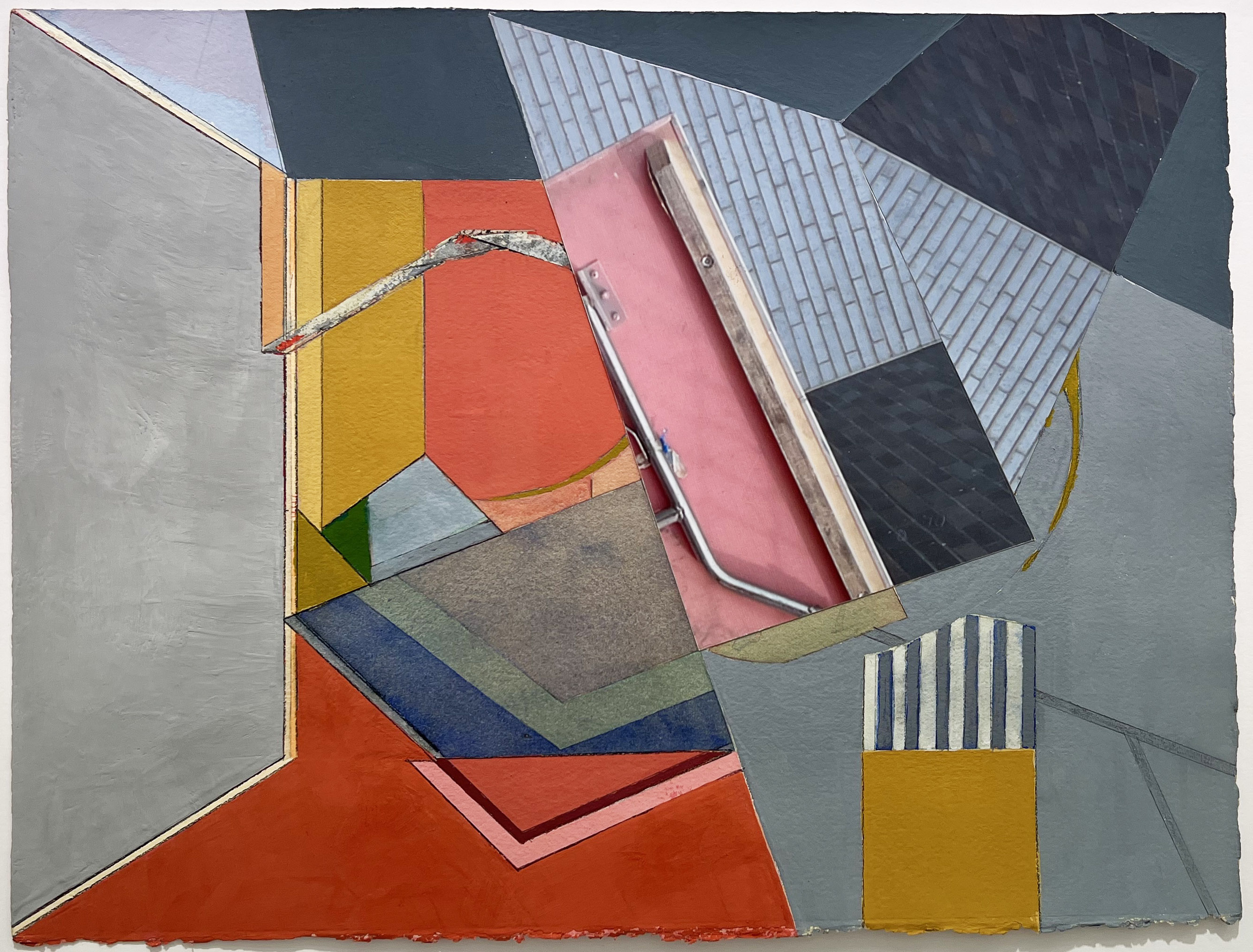
Long walks through New York, Paris and London yield source material for Mary Lum’s complex photo and paint collages, now on view at Yancey Richardson Gallery in Chelsea.  Titled 11th Avenue, this piece features slices of urban architecture and facades that dynamically multiply the grid.  At center, Lum seamlessly turns a photo of metal piping into a flattened piece of paper that in turn guides our eye up and over a grey wall – all moves that keep our sense of space shifting in an engaging way.  (On view through Feb 26th).

Mary Lum, 11th Avenue, gouache, watercolor, acrylic, colored pencil, and photo collage on paper, 11 ¼ x 14 7/8 inches, 2021.

Lucy Puls at Nicelle Beauchene Gallery

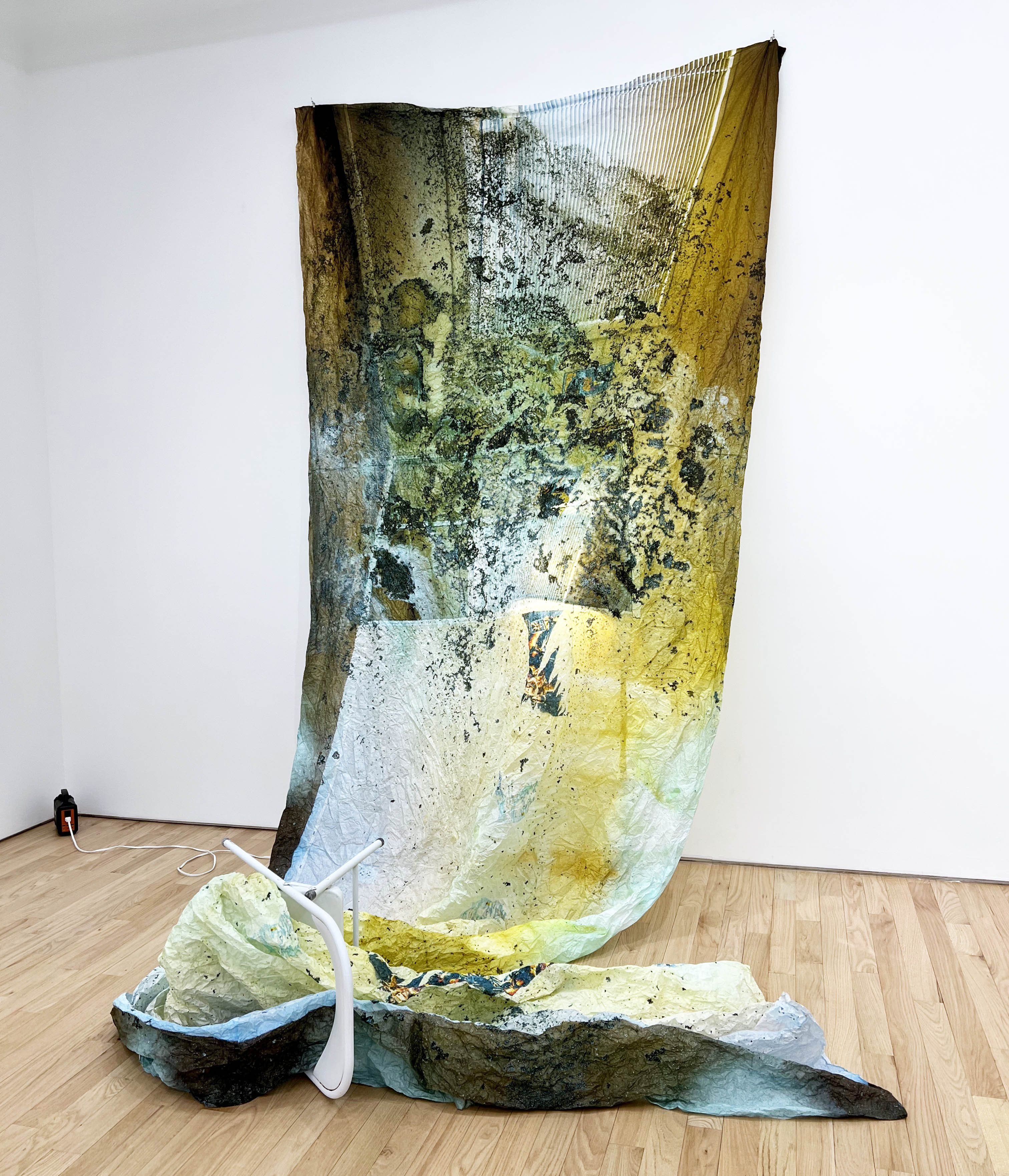
Bay Area artist Lucy Puls has returned over the course of her decades-long career to the question of what society values and what it discards.  Her photos of bank-owned homes, printed on huge sheets of fabric-like paper and hung high on the walls of Nicelle Beauchene Gallery feature images of places once personally meaningful and now neglected. Weighed down by discarded household items, in this case a metal folding chair, images and objects speak to the passing of time, to change and moving on.  (On view in Tribeca through Jan 22nd).

Lucy Puls, Delapsus (Bedroom, Mirrored Closet Door, Mini Blinds, Movie Poster), pigment ink on paper, floor standing lamp, metal folding chair, DVD movie, stickers, reflective glass beads, binder, steel hardware, 130 h x 85 w x 84 d inches, 2021.

Paulina Olowska at Metro Pictures Gallery

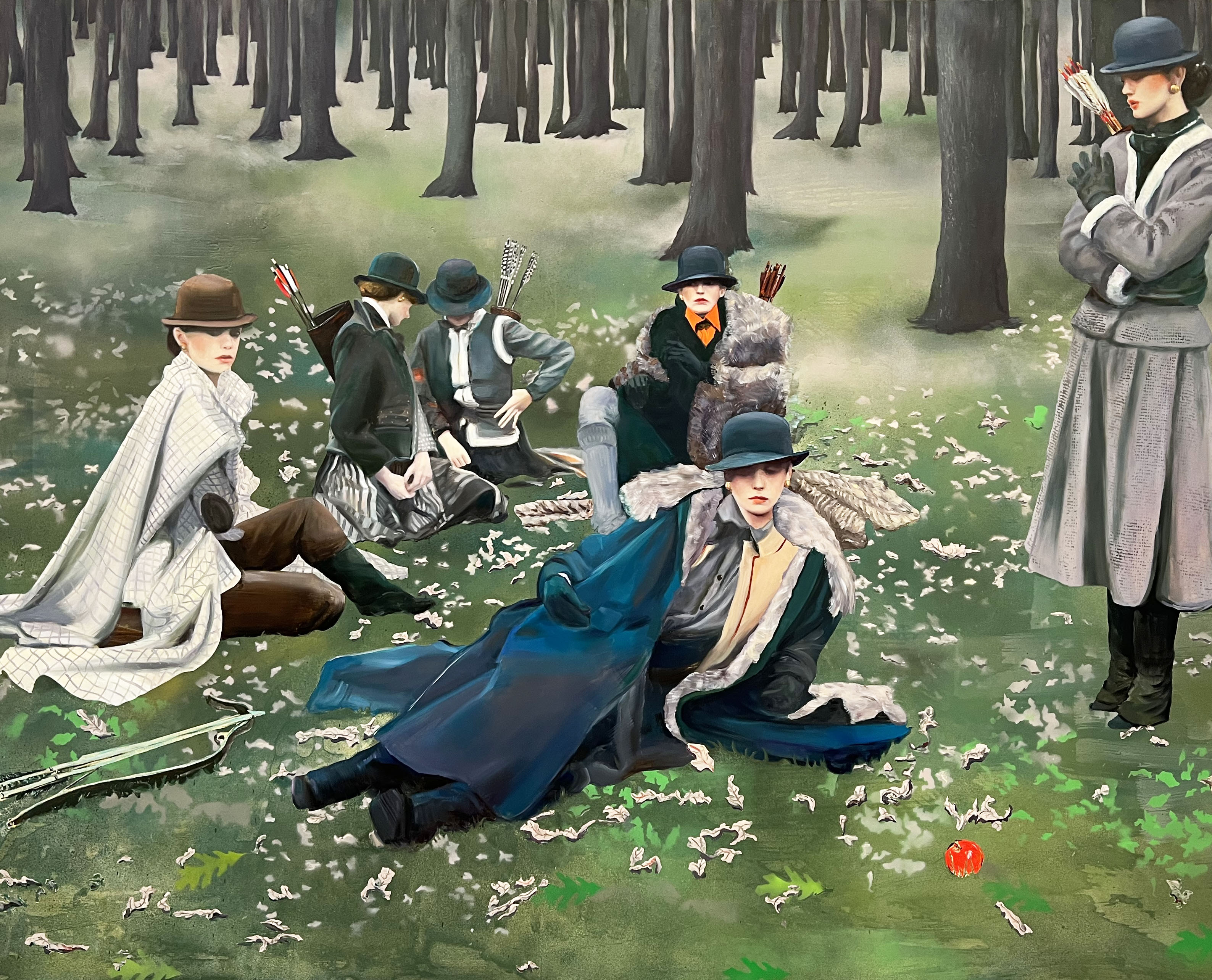
For the last exhibition of its forty-year history, Helene Winer’s and Janelle Reiring’s legendary Metro Pictures Gallery is showcasing new work by Polish artist Paulia Olowska that celebrates exhibition and educational spaces run by women.  This large painting checks in with Seurat’s 1880s scene of Paris leisure, La Grande Jatte, while having been directly inspired by a photo by fashion photographer Deborah Tuberville.  Harnessing imagery meant to encourage consumption, Olowska sells the idea of new creative communities while aiming to increase representation of women in art history.  (On view through Dec 11th in Chelsea.  Masks required).

Paulina Olowska, The School of Archery (after Deborah Tuberville), oil on canvas, 102 3/8 x 82 11/16 inches, 2021.

Matthew Brandt, Rooms at Yossi Milo Gallery

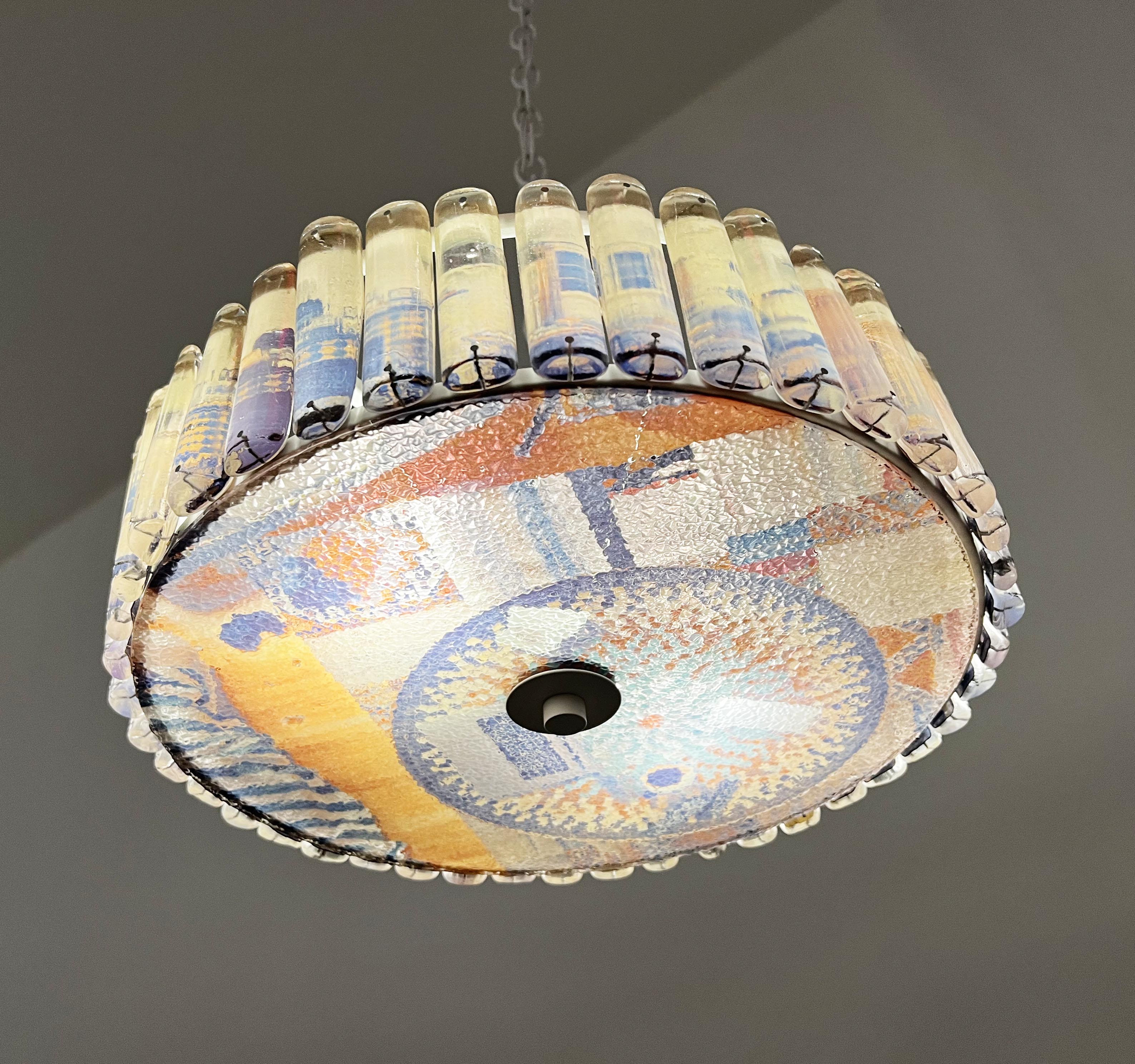
Selling off unwanted furniture and household decoration takes a new twist in one of Matthew Brandt’s latest series, ‘Rooms,’ at Yossi Milo Gallery, for which he acquired chandeliers, then hot-fused photos of the room in which the chandelier hung to the individual pieces of the chandelier.  Literally bearing witness to their past, the lights feature windows (as seen here), furnishings and other signs of life from the past owner.  In this piece, ‘May’s Living Room,’ pictures of the past environment recall a pointillist painting crossed with a geometric abstraction.  (On view in Chelsea through Dec 11th).

Matthew Brandt, from the series Rooms, May’s Living Room, photographic glass chandelier pieces with painted metal armature, 9 x 16 x 16 inches, 2021.

Gauri Gill at James Cohan Gallery

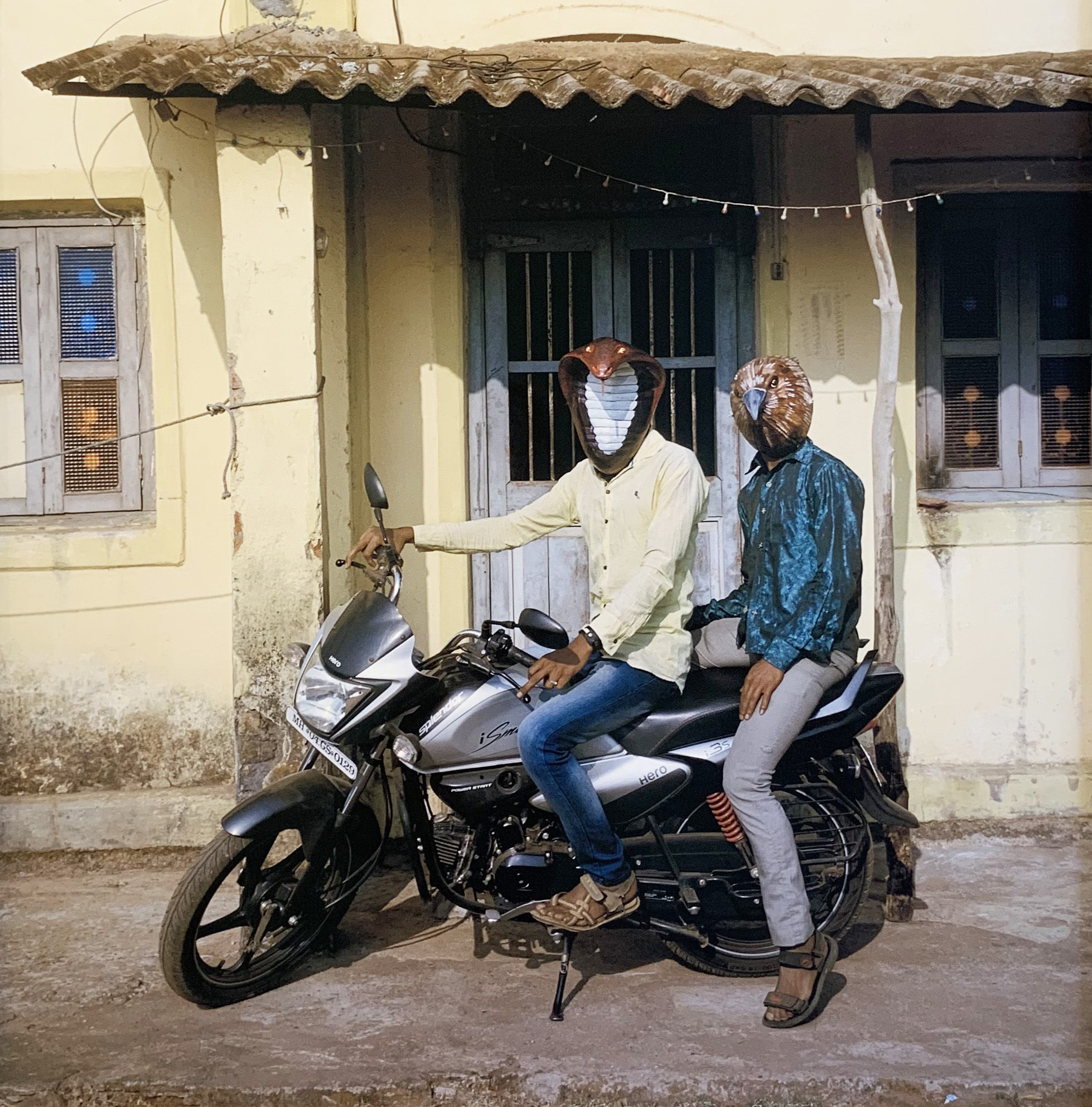
Since 2015, New Delhi-based artist Gauri Gill has worked with indigenous communities and craftsmen in the Indian state of Maharashtra to create arresting photographs of masked people in everyday situations.  In recent work at James Cohan Gallery’s new Tribeca location, Gill continues to be inspired by the masks worn in annual, entire-community performances of religious rituals but has commissioned secular versions that deviate from the normal look and use of such masks.  Collaborating with the individuals in the photos, Gill devises uncanny scenarios that momentarily bridge fictional and real worlds.   (On view at 52 Walker, 2nd floor through Nov 13th.  Masks required.)

Gauri Gill, detail of Untitled (64) from Acts of Appearance, archival pigment print, 60 x 40 inches, 2015 – ongoing.

Tyler Mitchell at Jack Shainman Gallery

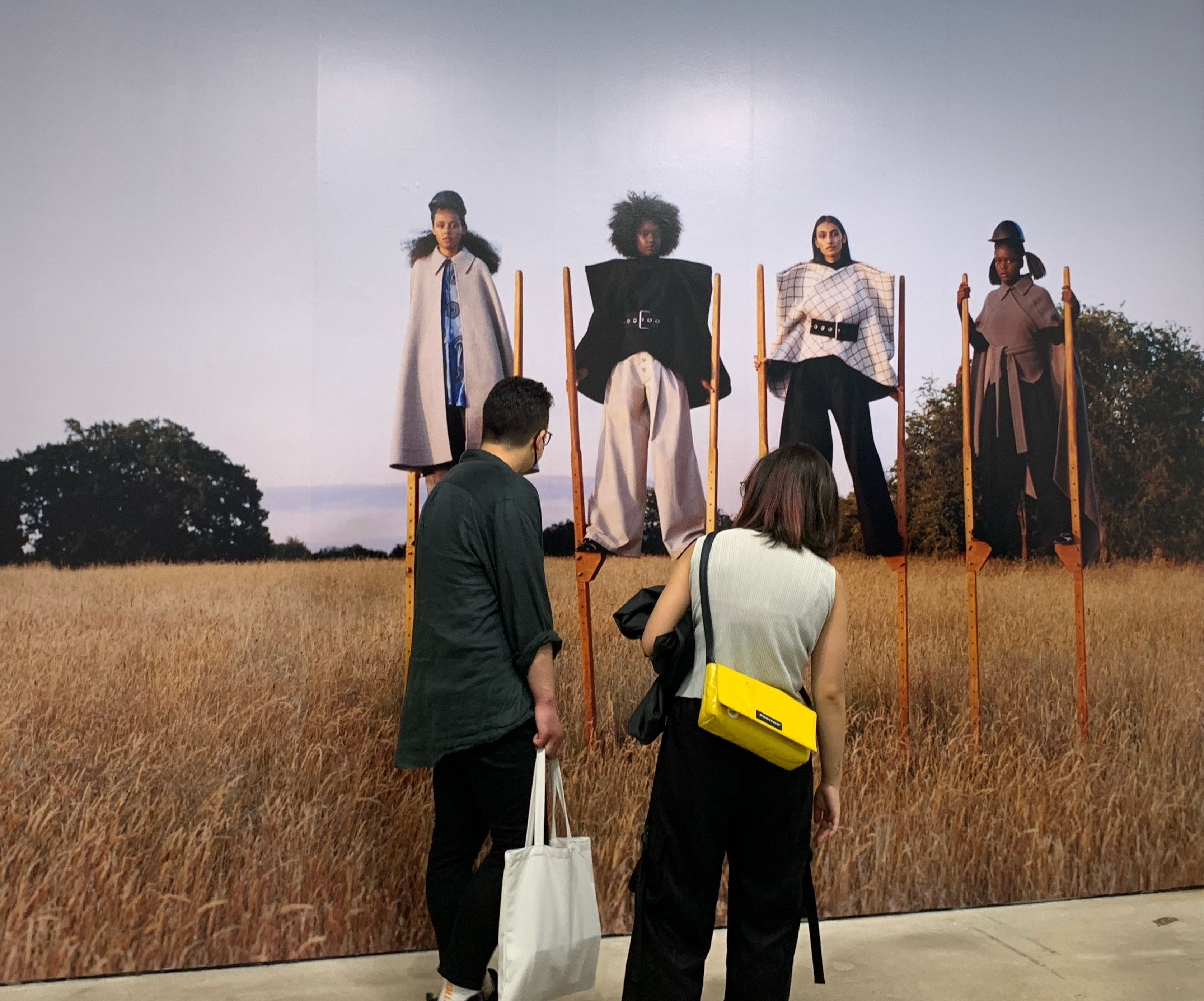
Towering over visitors to Jack Shainman Gallery, four young women in clothes from JW Anderson’s autumn/winter 2019 campaign, shot by Tyler Mitchell, look otherworldly as they almost hover above the ground in commanding fashion statements.  Referred to by the gallery as an ‘Edenic exploration of…a Black utopia in the everyday,’ Mitchell’s work complicates his subjects as he literally elevates them.  “I’m caught between wanting to let the mind imagine what that idea meant and spelling it out,” the photographer told i-D.  “I think I’ll do the former.”

Tyler Mitchell, 2021 installation view at Jack Shainman Gallery of ‘Untitled (Stilts II),’ 2,134 ¾ x 166 7/8 inches, wall vinyl, 2019.

Brea Souders, Vistas at Bruce Silverstein Gallery

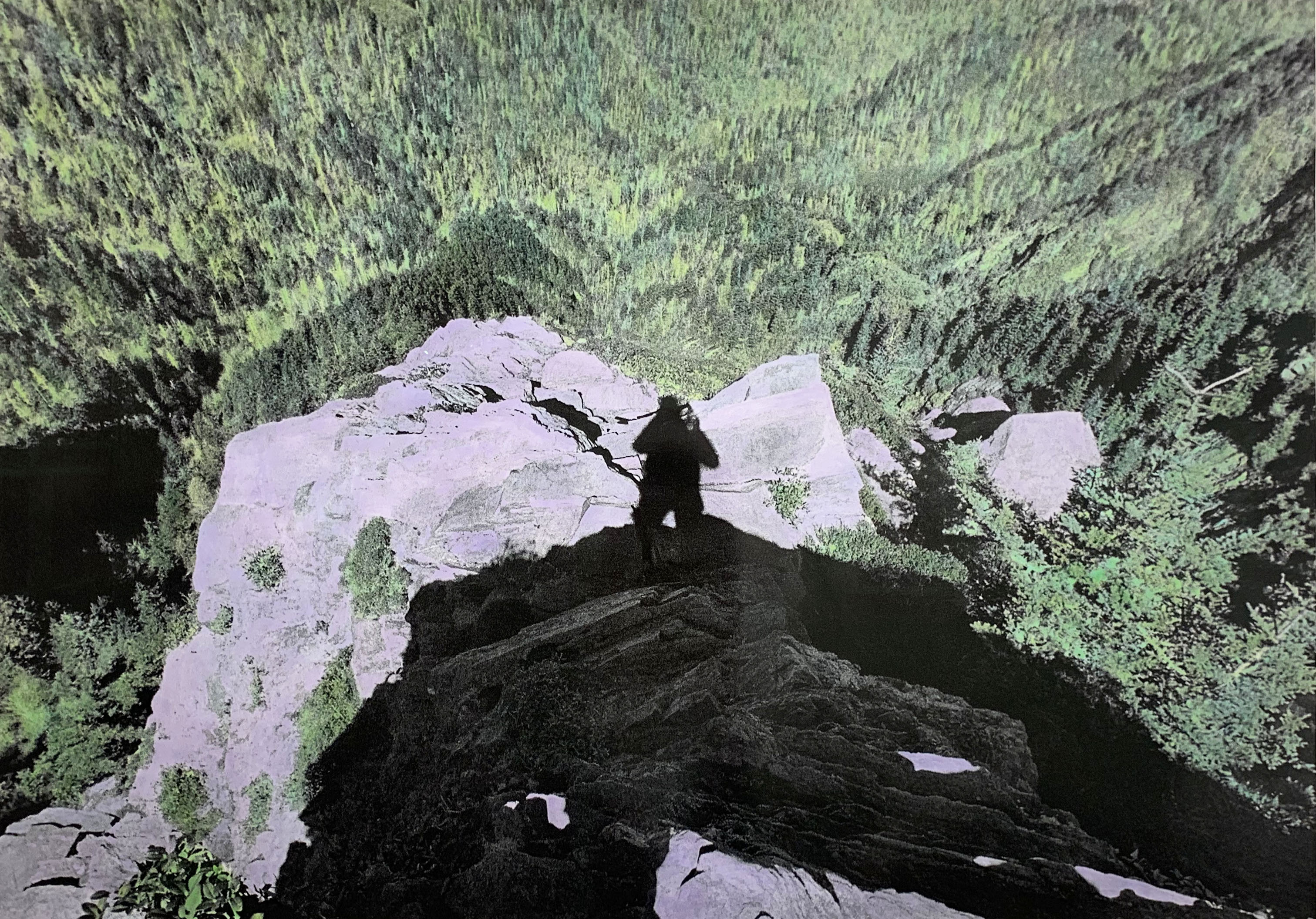
Photography came of age in the 19th century western landscape and, more recently, the western U.S. has been transformed by the effects of climate change says artist Brea Souders, whose new series ‘Vistas’ at Bruce Silverstein Gallery explores representations of the region created using Google Photo Sphere.  Each found photo features a distorted shadow, Google’s algorithm having removed images of people.  As individual agency meets global dissemination of images taken in remote locations, the scale and experience of nature shifts dramatically.  (On view in Chelsea through Aug 20th).

Brea Souders, Untitled #22 (from Vistas), unique archival pigment print with watercolor, 40 x 56 inches, 2020.

JoAnn Verburg at Pace Gallery

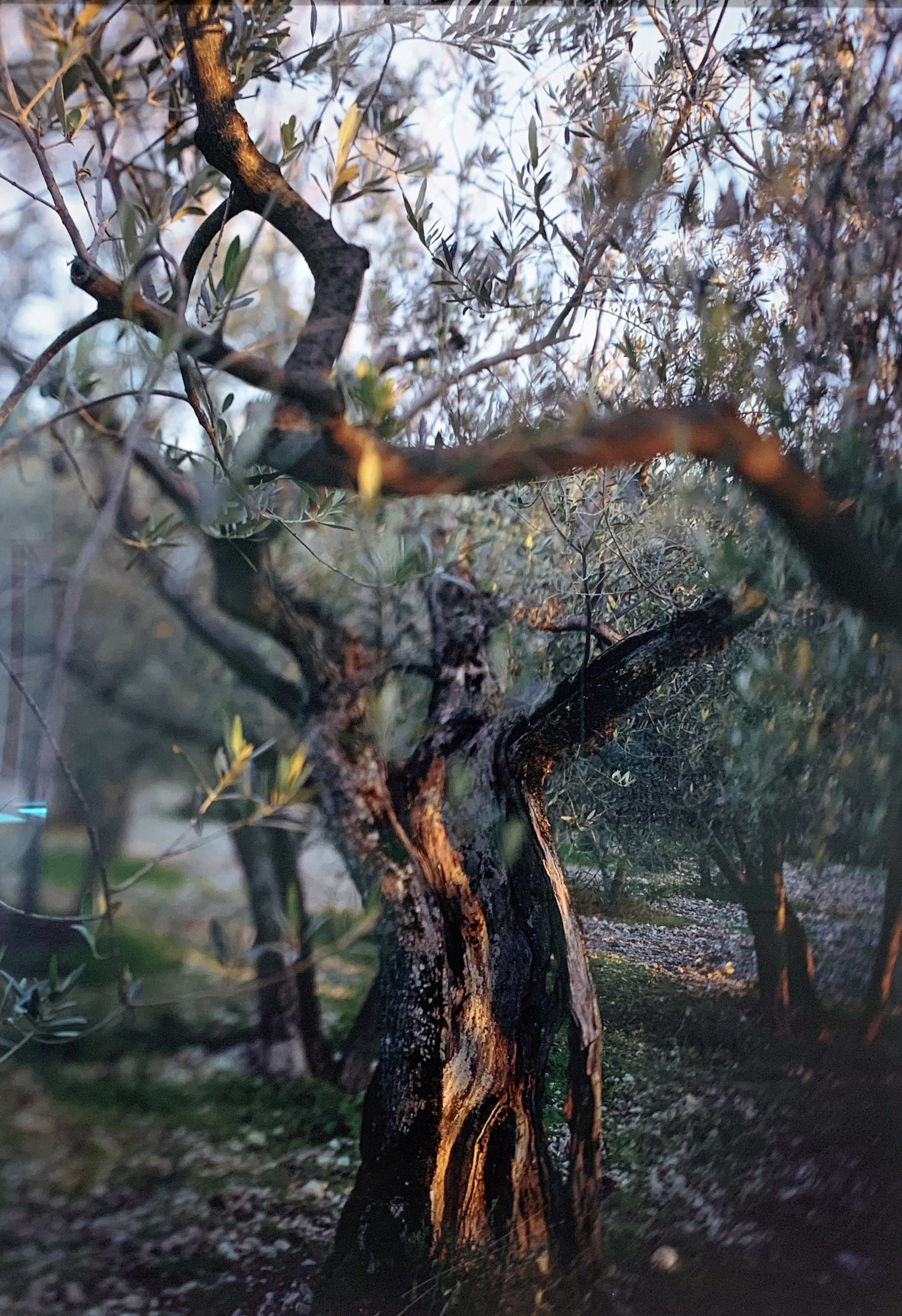
JoAnn Verburg’s recent photos at Pace Gallery of olive groves were taken in California, Israel and Italy, but it’s not always easy to guess which location is which.  Calling the images a ‘contemplative respite’ from the demands of everyday city life, Verburg steps outside of the specifics of place and time to present a meditation on time and beauty in nature.  (On view in Chelsea through Aug 20th).

JoAnn Verburg, BETWEEN, pigment print mounted to Dibond, 57 1/8 x 40 1/8,” 2021.

Hassan Hajjaj at Yossi Milo Gallery

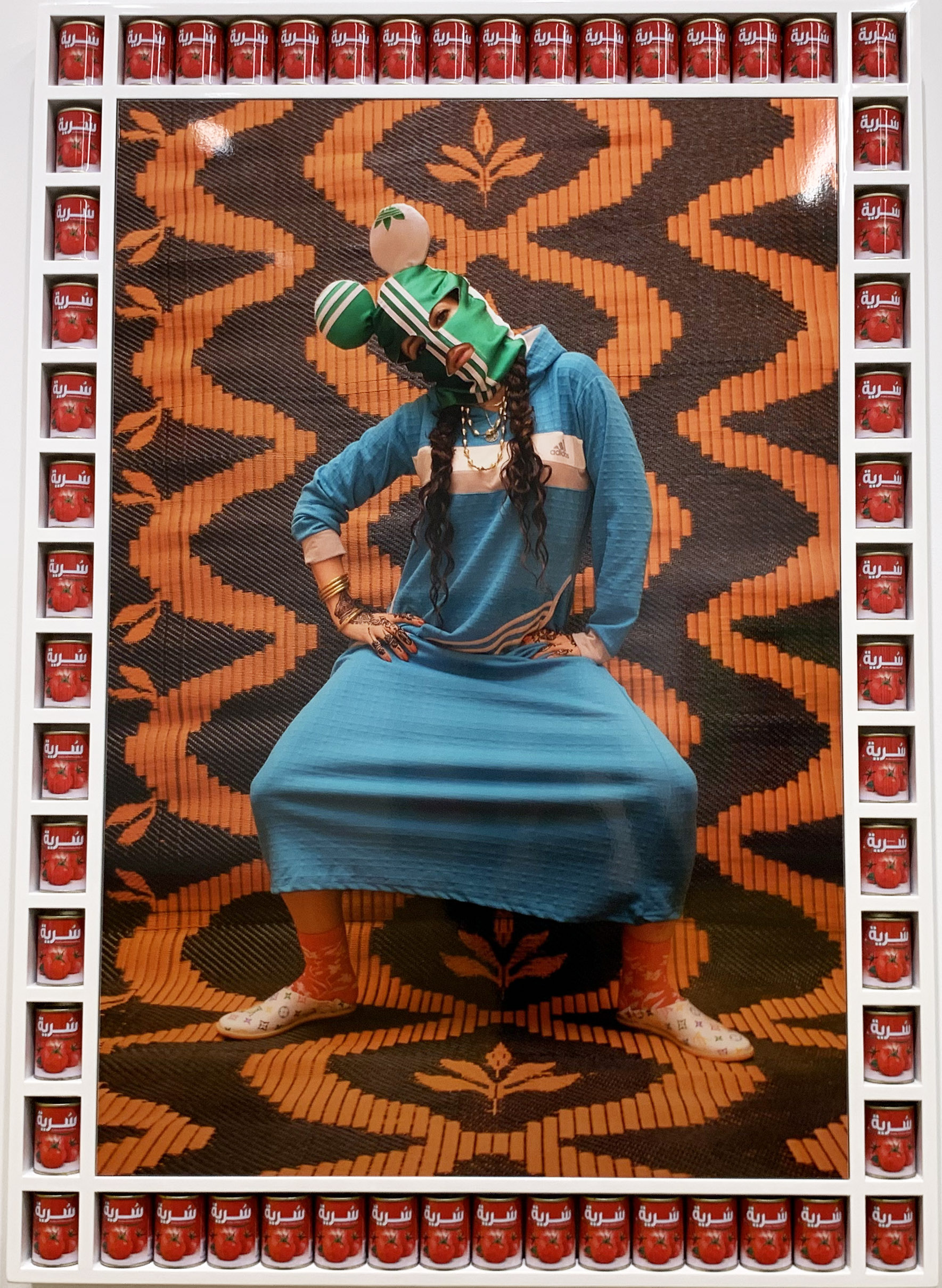
Outstanding for its color and energy, Hassan Hajjaj’s ‘My Rockstars’ installation at Yossi Milo Gallery features photos of performers, musicians and friends that have inspired the London & Marrakech-based photographer/designer.  Shot in pop-up studios around the world with patterned textiles and mats for background, Hajjaj creates or styles each outfit.  Borders composed of small-scale commercial products, like the canned tomatoes surrounding Canadian artist MissMe, blend creativity and commerce.  (On view through May 29th.  Masks and social distancing are required).

MissMe, Metallic Lambda on 3mm Dibond in a Wood Spray white Frame with Tomato Cans, 52 inches x 37 inches x 2 ¼ inches, 2018/1440.

Paul Anthony Smith Photos at Jack Shainman

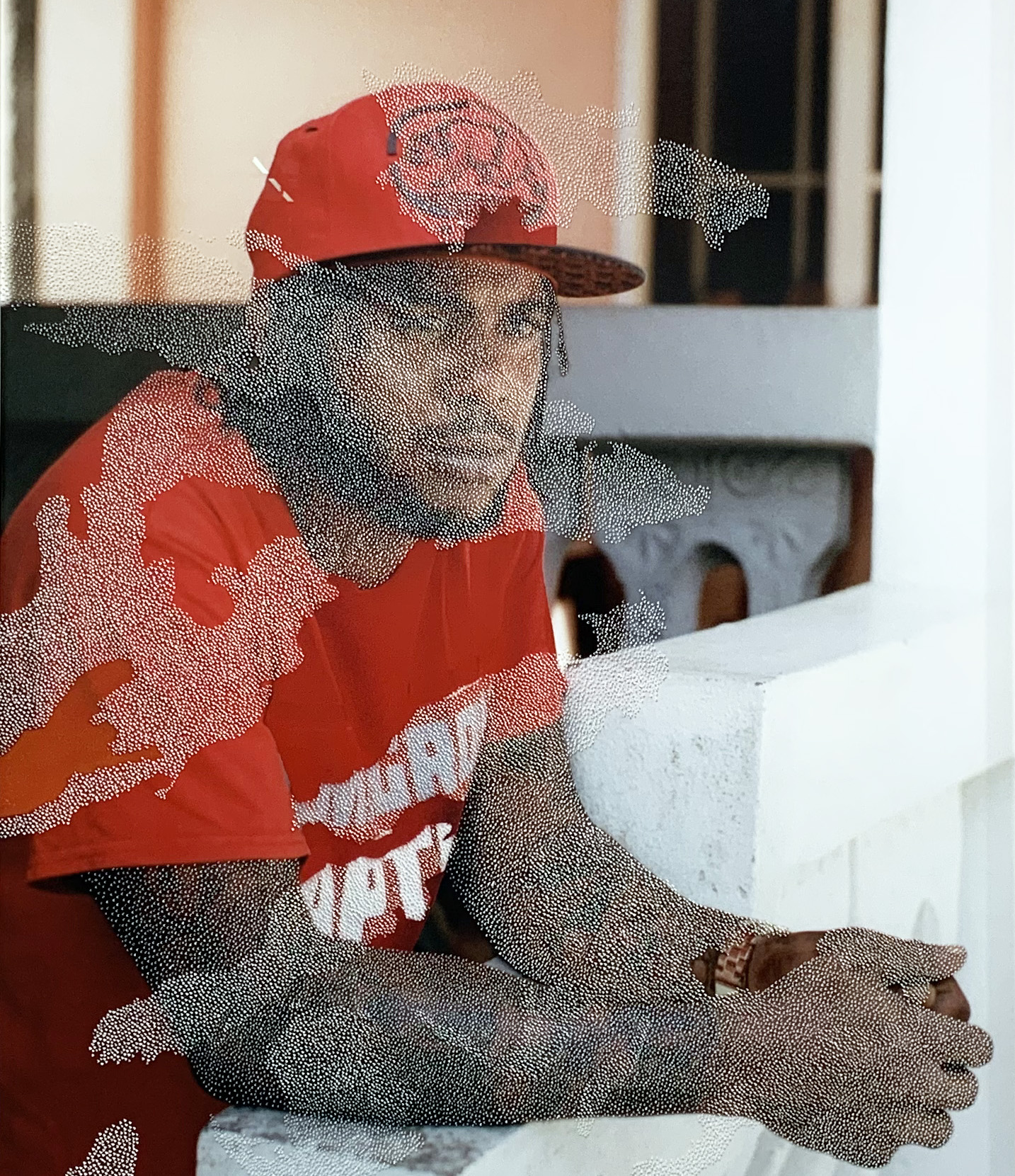
Titled ‘Tradewinds,’ Paul Anthony Smith’s latest show of hand-worked photos at Jack Shainman Gallery celebrates home, memory and the act of celebration itself.  More contemplative than some of the artist’s images of parties and get-togethers, this image suggests thoughts as a kind of cloud-cover or camouflage around this young man.  Here, Smith’s signature picotage technique – involving a series of tiny rips on the surface of the image – becomes a kind of simultaneous damage and decoration.  (On view in Chelsea through April 3rd).

Paul Anthony Smith, detail of Islands #2, unique picotage with spray paint on inkjet print, mounted on museum board and sintra, 60 x 40 inches, 2020-21.

David Goldblatt at Pace Gallery

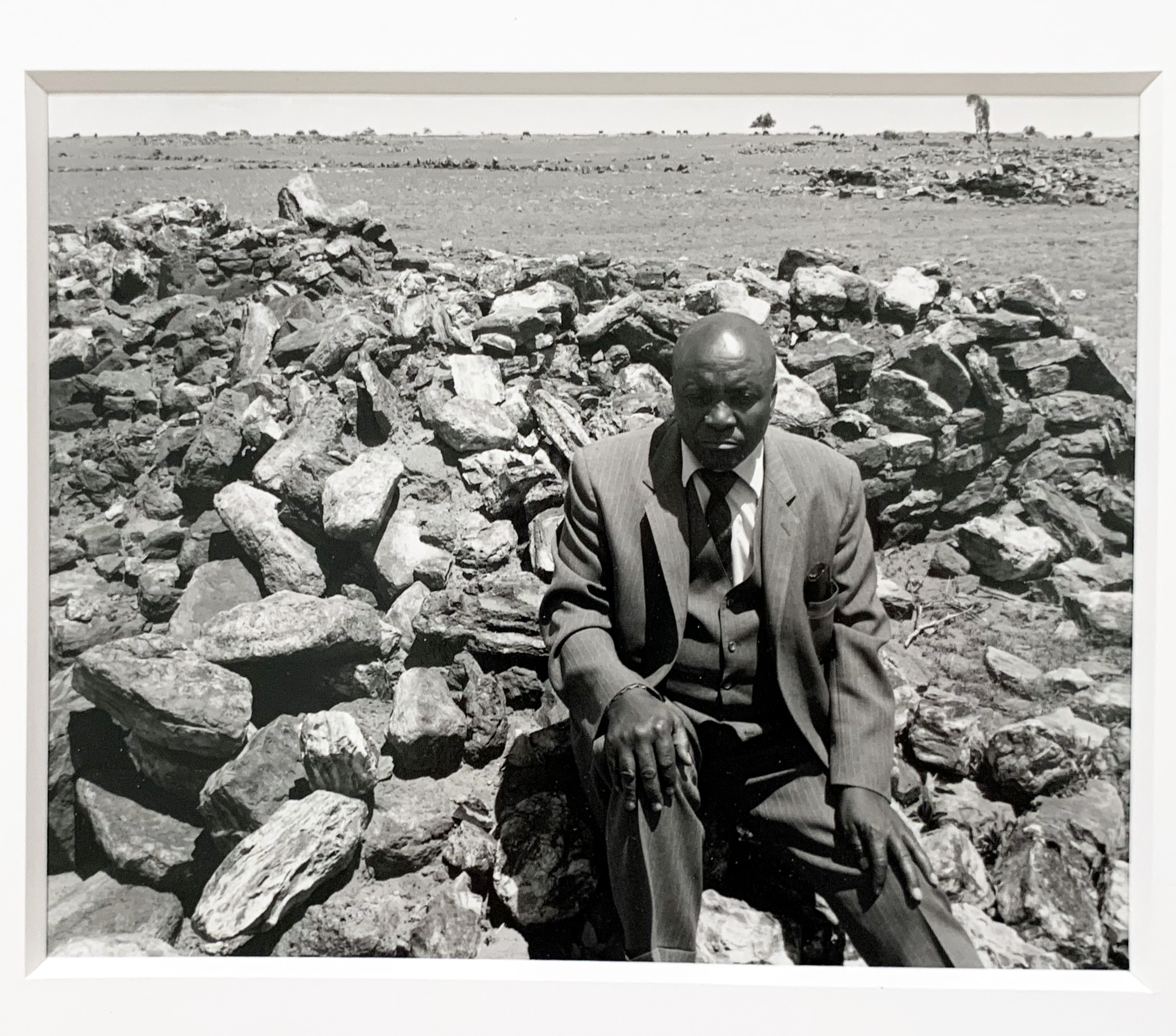
Late South African photographer David Goldblatt didn’t leave it to chance that his photos would be read without context, titling them with notes on their circumstances.  Currently on view at Pace Gallery in an exhibition curated by South African photographer Zanele Muholi, who worked and trained in Goldblatt’s studio, the photos consider visibility of women, segregation, privilege, labor conditions and more.  Here, Goldblatt records the forced removal of Black families from land designated by the government as ‘white.’  (On view in Chelsea through March 27th).

David Goldblatt, Luke Kgatitsoe at his house, bulldozed in February 1984 by the government after the forced removal of the people of Mapoga, a black-owned farm, which had been declared a “black spot,” Ventersdorp district, Transvaal, 21 October 1986, gelatin silver hand print, 6 ¼ x 7 7/8 inches.

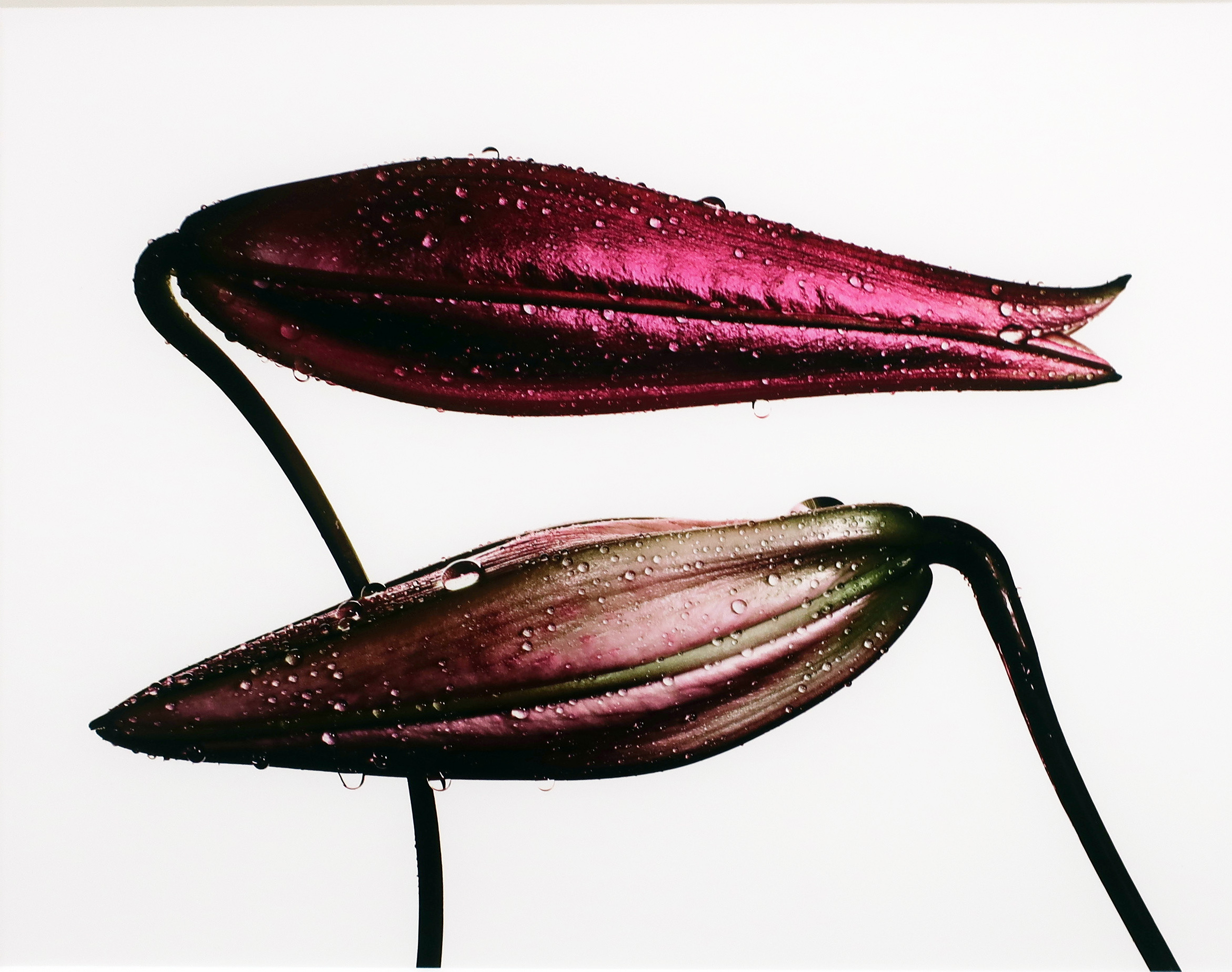
Irving Penn, Imperial Pink Bud at Pace

Irving Penn coined the term ‘Photographism’ to describe his style, a synthesis of graphic design and fine art, but the impact of his images goes beyond words.  Isolated against a white background that emphasizes strong tonal contrast and boldly outlined form, this 1971 photograph at Pace Gallery lends these two buds a hyperreality and heightened beauty.  (On view in Chelsea through Feb 13th).


Irving Penn, Imperial Pink Bud (top), Imperial Gold Bud (bottom), New York, pigment print mounted to board, 16 7/8 x 21 ¾ inches (image, paper and mount), 1971.

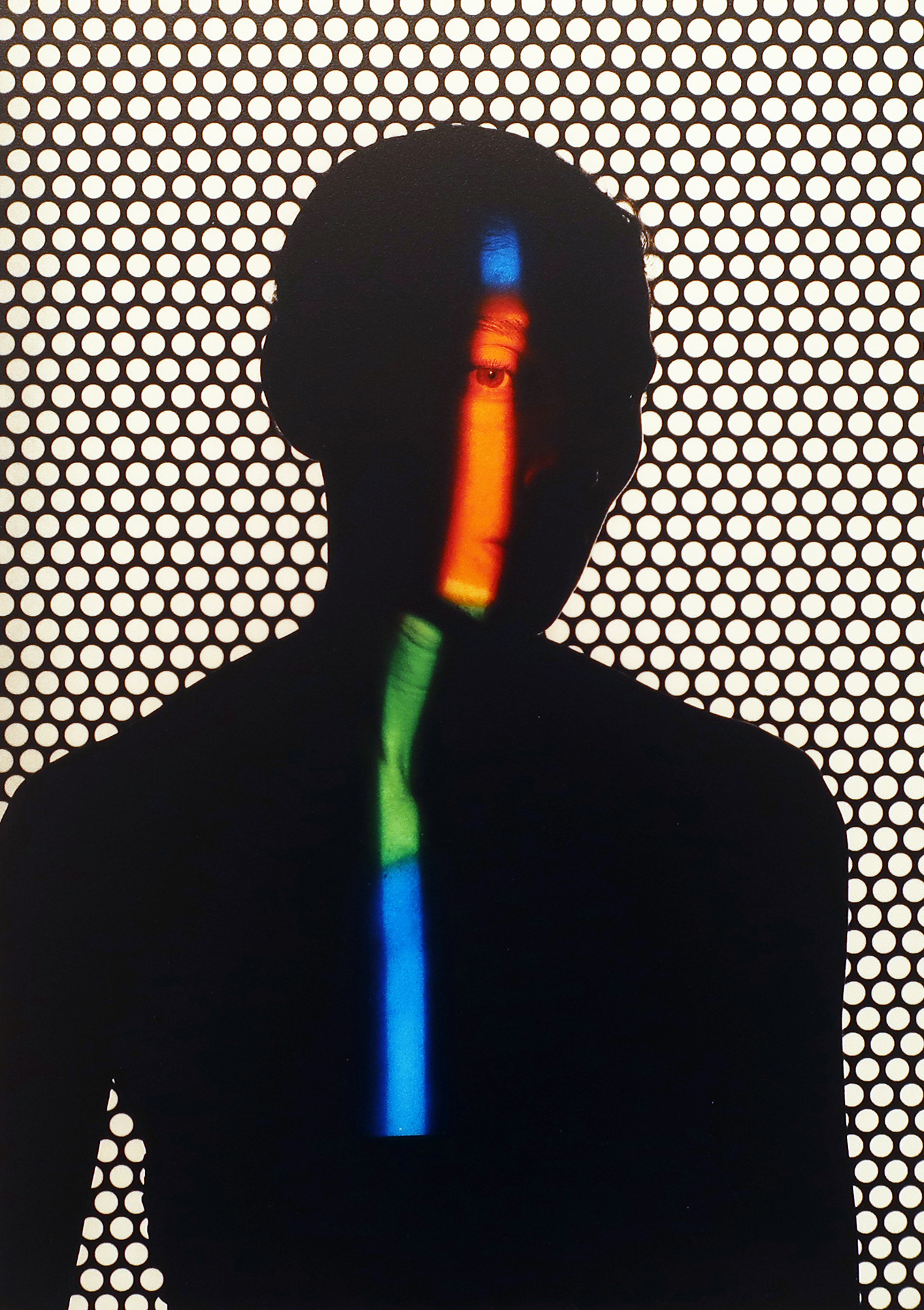
Hannah Whitaker at Marinaro

New York photographer Hannah Whitaker departs from her usual complex, multiple exposure images in recent straight photographs at Marinaro that employ grids and gradients to create what looks like a digital environment for a lone female character.  Here, a shaft of light illuminates a sliver of her model’s otherwise dark body, suggesting that we’re seeing a fragment of what’s before us.  Imagined as a sister to digital avatars like Siri or Alexa, Whitaker’s new figure questions who our AI characters are and why they’re designed as they are.  (On view in Manhattan’s Two Bridges neighborhood through Jan 24th.  Masks and social distancing are required.)

Hannah Whitaker, Orange Eye, Slit, UV printed onto MDF with hand painted edges, 21 x 15 inches, 2019.

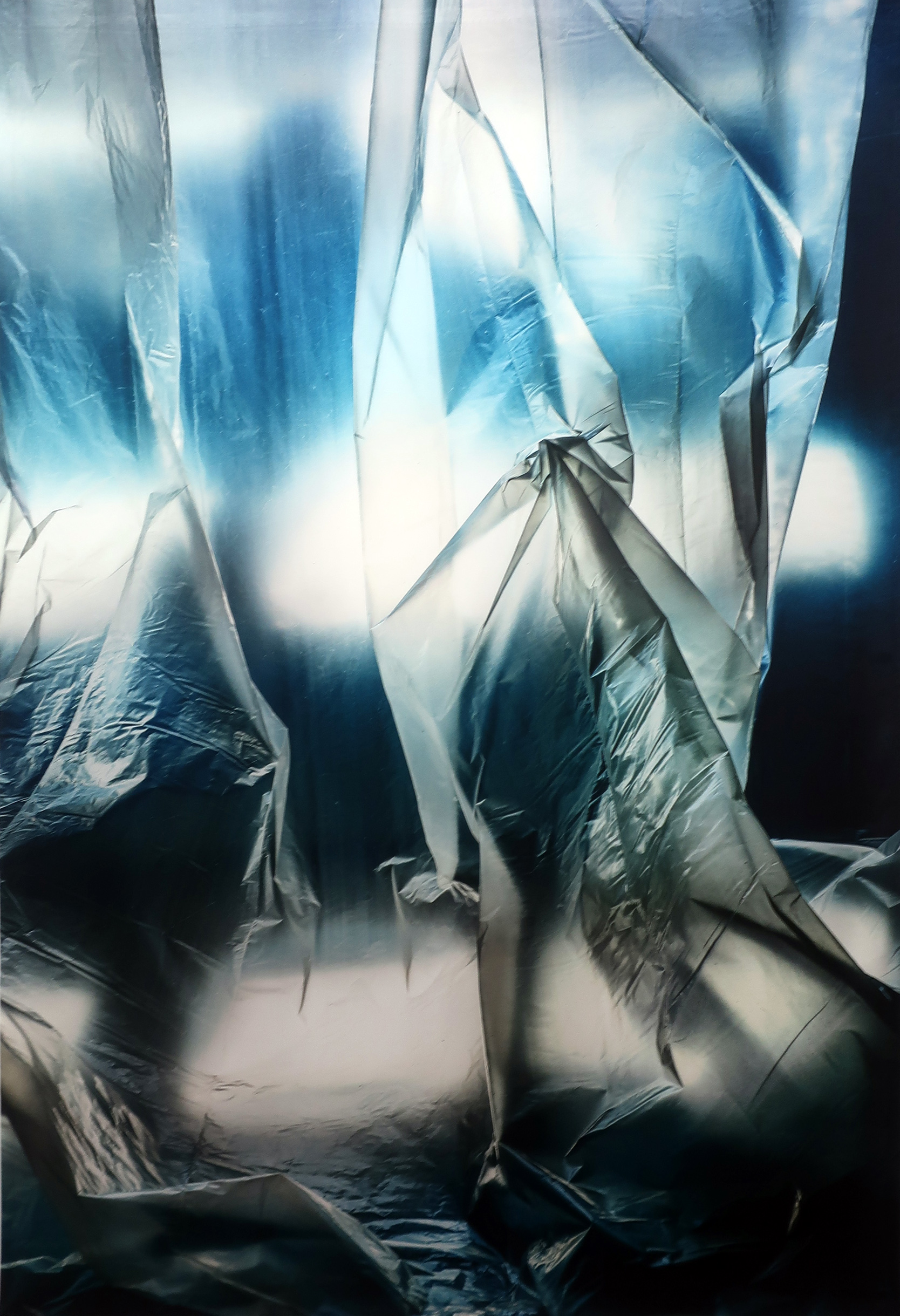
Elisa Sighicelli at Kaufmann Repetto

Ethereal forms appear to rise up in this photograph printed on satin by Turin-based artist Elisa Sighicelli, currently part of her two-artist show at Tribeca’s 55 Walker/Kaufmann Repetto.  Created by hanging sheets of plastic in front of her window and photographing them, Sighicelli’s images are clearly representational yet appear abstract as they invite shifting perceptions of space.  Printed on sheets of synthetic satin and hung in the gallery, they ripple slightly – just enough to create additional, 3D spatial depth.  (On view through Jan 23rd).

Elisa Sighicelli, untitled (3288), photograph printed on satin, 78.3 x 53.9 inches, 2020.

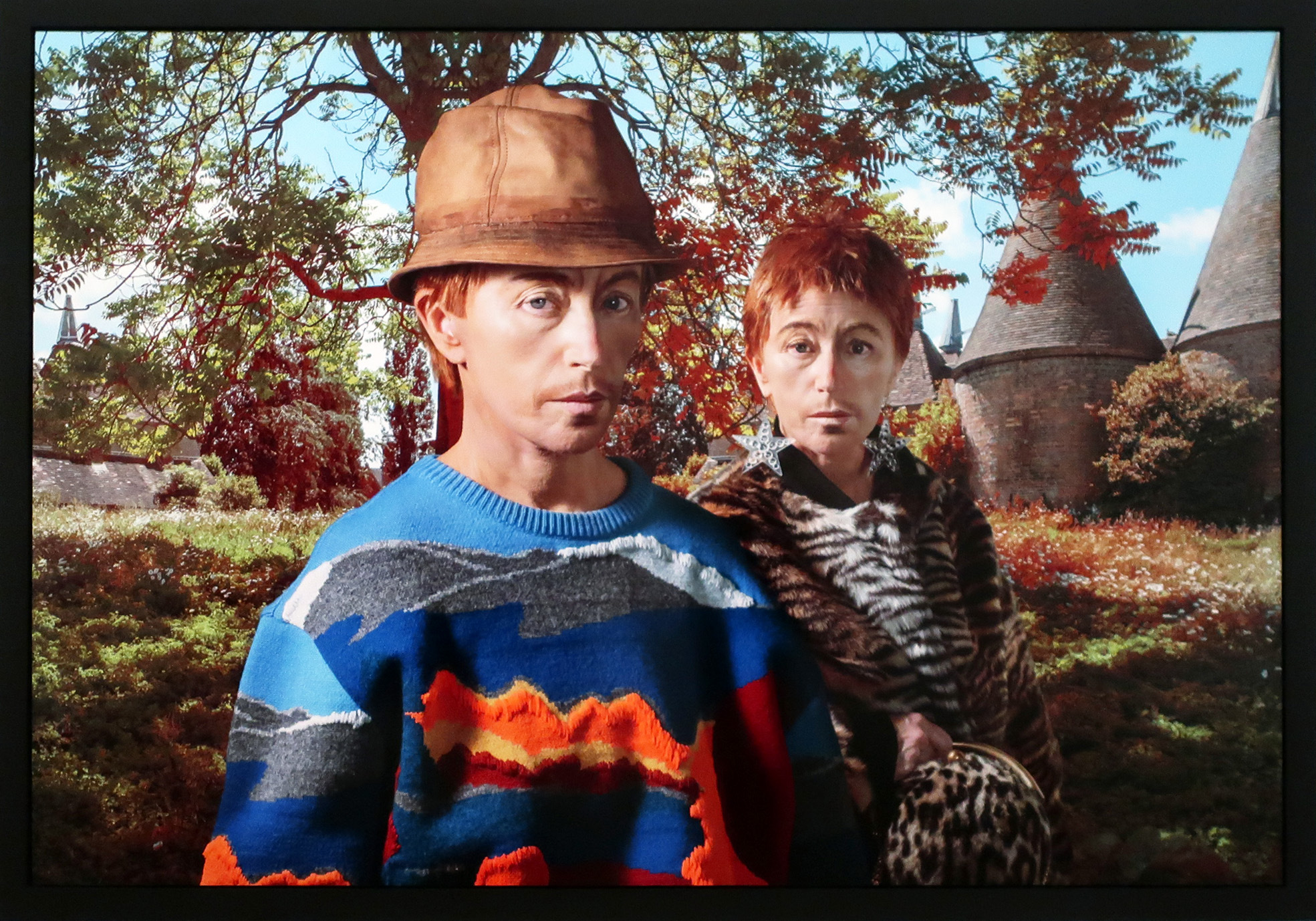
Cindy Sherman Photos at Metro Pictures

It’s not hard to slip from male to female in Cindy Sherman’s reckoning.  A bit of makeup and a change of clothing, and the iconic photographer became both halves of jet-set couples who are the subjects of her latest body of work at Metro Pictures Gallery in Chelsea.  With exceptions, Sherman has shied away from portraying male figures in the past; her current characters embrace gender fluidity in colorful or opulent clothing from Stella McCartney’s archive.  Placing them against backgrounds that Sherman shot in Bavaria, Shanghai and, here, Sissinghurst Castle Garden in England, the artist tempts viewers to read the identities of these eccentric characters.  (On view through Oct 31st.  Masks and social distancing are required.)

Cindy Sherman, Untitled, dye sublimation print, 62 ½ x 91 ¼ inches (image, no frame), ed of 6, 1 AP, 2019.

Jeffrey Gibson at the Brooklyn Museum

Native people are seen as creative agents, rejecting the colonial gaze in a powerful presentation at the Brooklyn Museum organized by artist Jeffrey Gibson and curator and professor Christian Crouch.  Photos, text, ceramics and more from the institution’s Native American study collection and archives join Gibson’s own joyously colored paintings, sculpture and here, photography.  Dance emerges in the show as a healing act while Gibson’s costumes, inspired by 19th century Ghost Dance, offer protection.  (On view at the Brooklyn Museum of Art through Jan 10th).
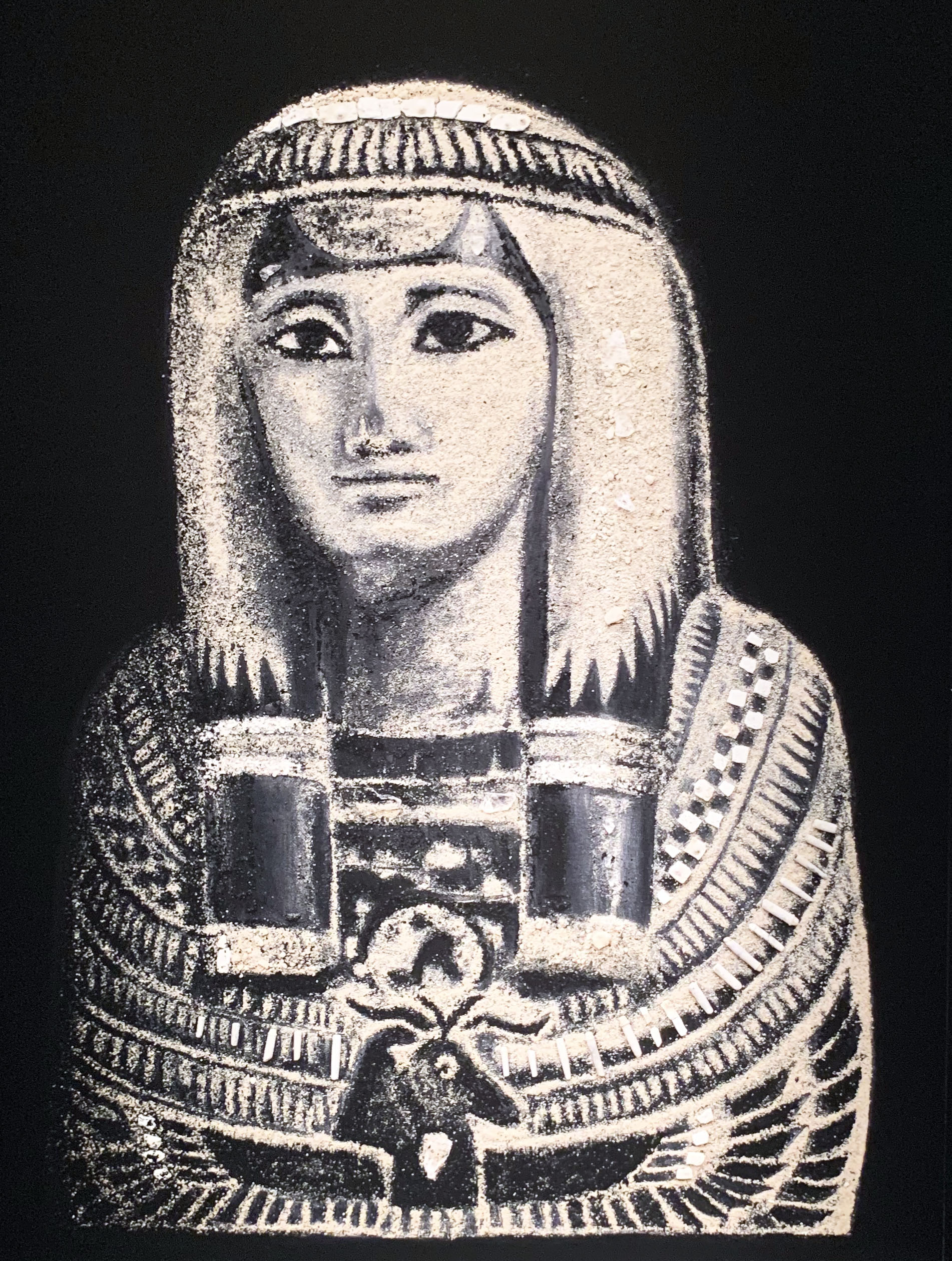
Jeffrey Gibson, Roxy (Stand Your Ground), photographic prints, triptych, 2019.


Michele Abeles, 1/1/19, 2:20PM at 47 Canal

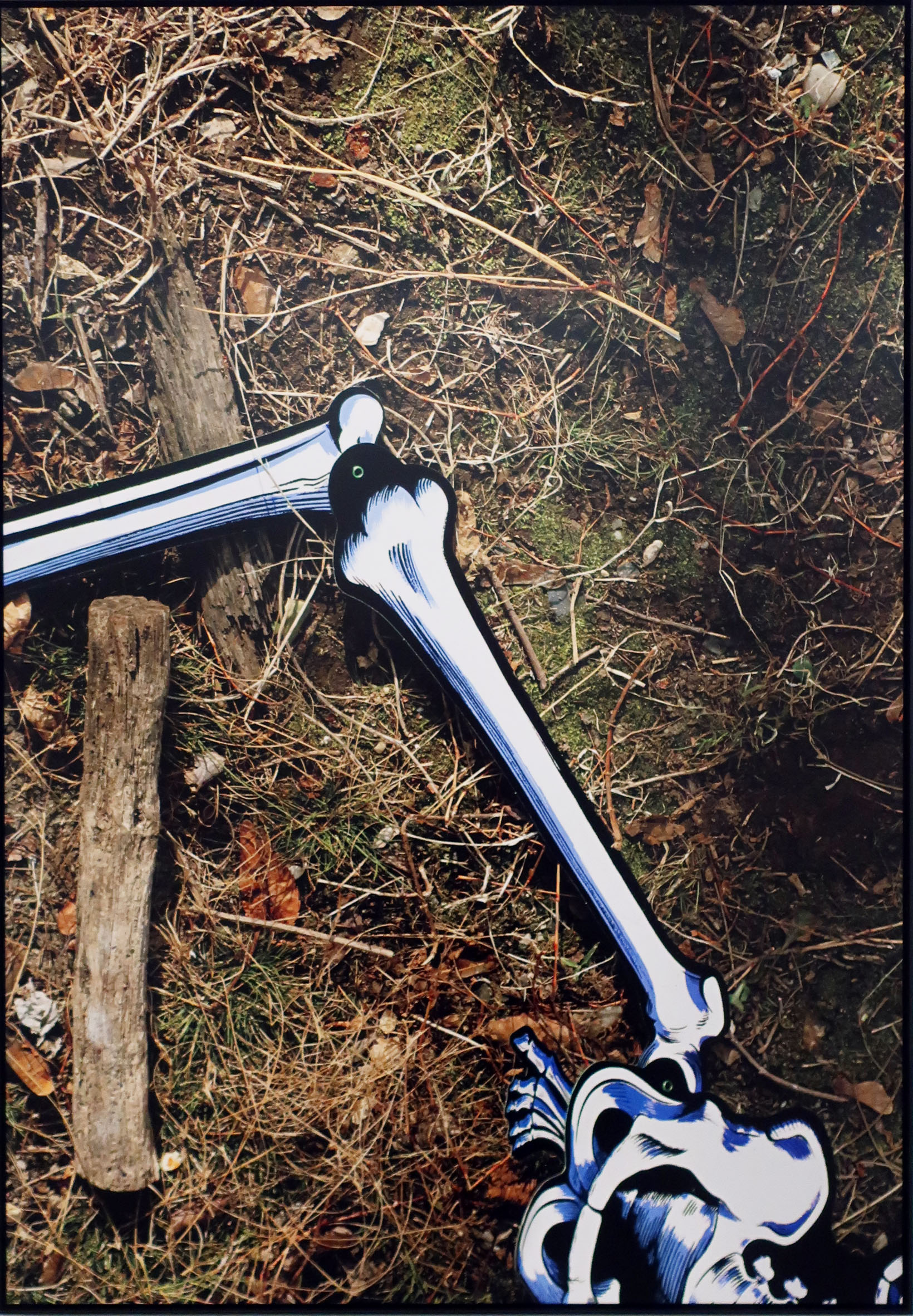
Known for adding paint, tile or other materials to the surface of her photographs, Michele Abeles shifts gears in her current show at 47 Canal, offering a surprisingly unmanipulated selection of images reflecting on macabre Halloween traditions.  Most of the show’s pictures of ghoulish lawn decorations come across as straightforward documentation of bizarre but unsurprising phenomenon.  A few images break through to another level, however, making an inflatable demon or a casually placed, dismembered body part freshly strange.  Here, natural materials on the ground contrast sharply with the glowing white paper skeleton, creating a jarring contrast that illuminates the artificiality of the bones.  (On view on the Lower East Side through Oct 3rd.  Appointments are encouraged and masks and social distancing are required.)

Michele Abeles, 11/1/19, 2:20PM, dye sublimation on aluminum, 31 x 21 ½ inches, 2020.

Erin O’Keefe in Group Show at Paul Kasmin Gallery

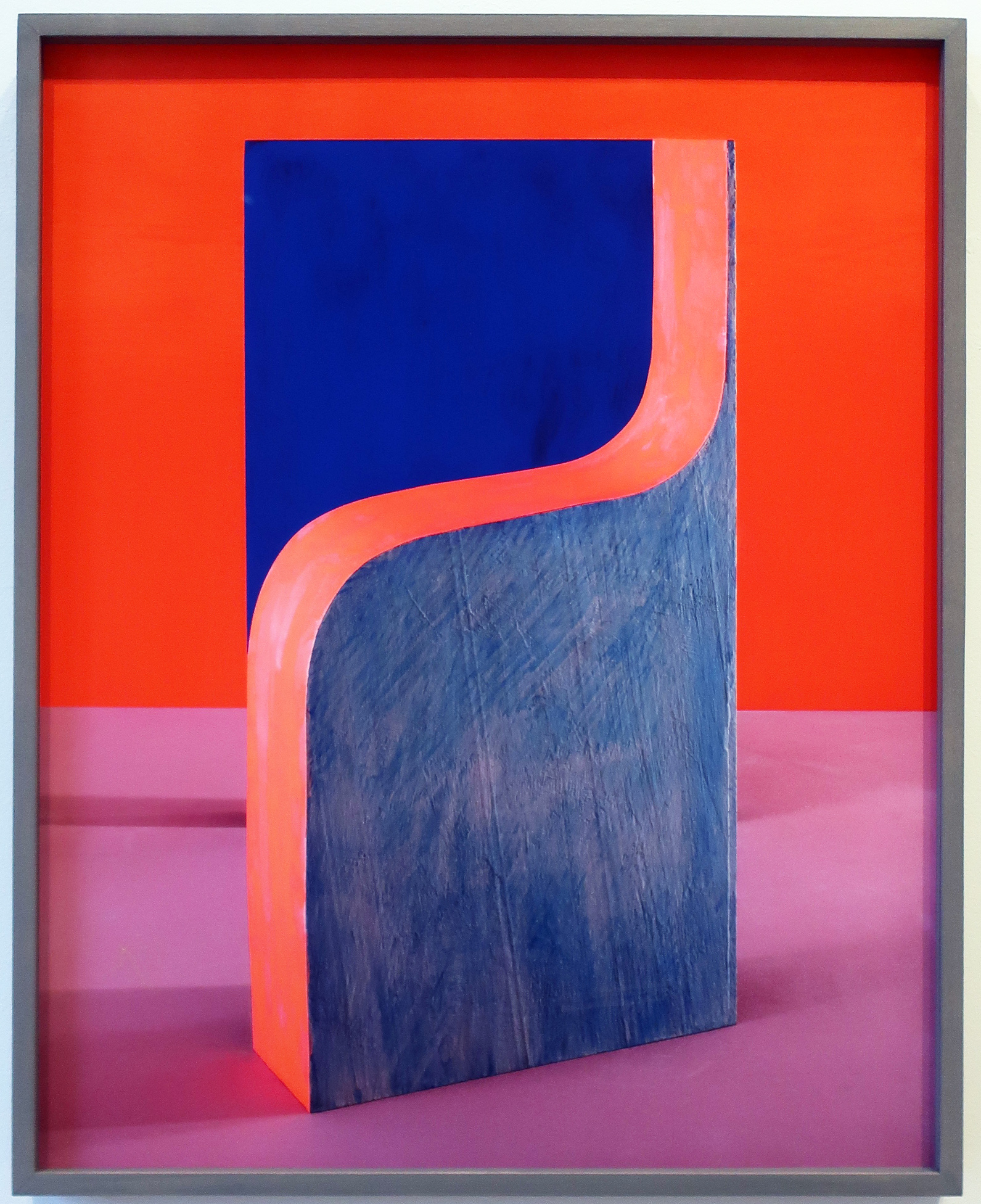
New York photographer Erin O’Keefe’s beguiling photographs in Paul Kasmin Gallery’s summer group show are an immediate knockout for their bold color contrasts and rich, saturated hues.  They get more complex on close viewing – when viewers look at the top portion of this image, it’s unclear if we’re looking at a painting or a photo.  Lower down, where the sculpted wooden block meets the surface on which it’s resting, the dimensions of this photographed space become clear.  That this is a photo and not a painting or sculpture allows a delayed legibility that creates a provocative open-endedness to this image. (On view by appointment, Tues – Fri, through August 21st.  Masks and social distancing required.)

Erin O’Keefe, Red Twist, archival pigment print, 25 x 20 inches, 2020.

Catherine Opie at Lehmann Maupin Gallery

The Okefenokee National Wildlife Refuge is the largest national wildlife refuge east of the Mississippi River, a draw for hundreds of thousands of visitors a year and an area of interest for mining companies.  The wetland recently drew iconic photographer Catherine Opie to shoot images now on view at Lehmann Maupin Gallery that expand her career-long exploration of US places and communities of people.  Threatened not just by limited environmental protections but also by climate change, the Swamp is counterpoint to the oft repeated notion of ‘draining the swamp’ from Opie’s perspective.  (On view in Chelsea through Sept 26th.  No appointment is necessary but social distancing and masks are required.)

Catherine Opie, detail of Untitled #1 (Swamps), pigment print, 40 x 60 inches, 2019.

James Welling in David Zwirner Gallery’s On-Line Viewing Room

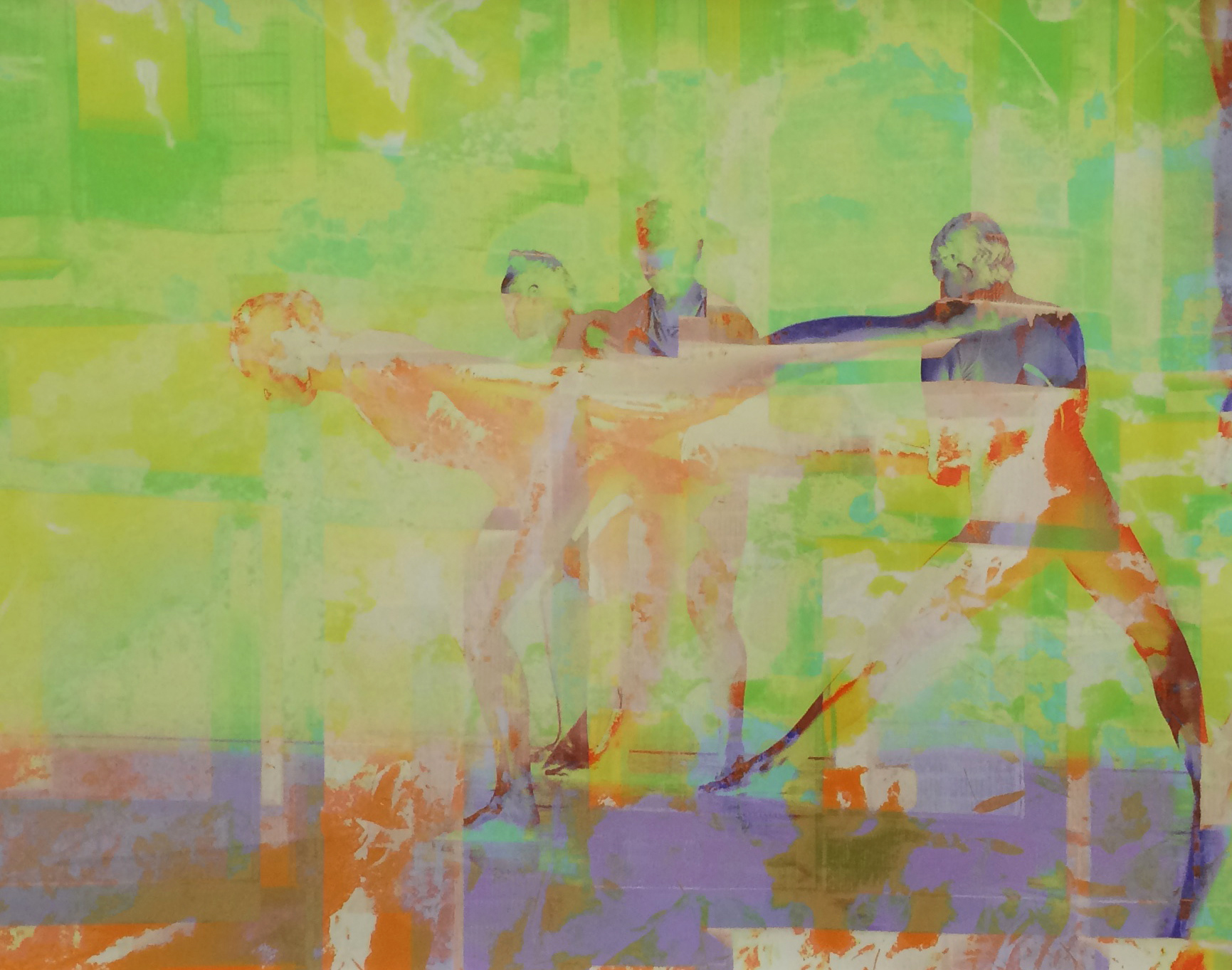
Titled ‘Pathological Color,’ James Welling’s on-line exhibition of photography at David Zwirner Gallery assaults the senses with intense color contrasts generated by the artist’s experimental practice in Photoshop.  This detail of a photo by Welling from New York Art Tours’ archives features images of dancers layered with modernist buildings and landscapes, each suggesting performance on a different kind of stage.   Aiming to explore our perception of color, Welling draws on ‘pathologies’ described by Goethe, who considered the impact of particular colors on the senses.  For more images, including early examples of his technique, visit David Zwirner Gallery’s on-line Viewing Room.

James Welling, detail of 7809, inkjet print, 42 x 63 inches, 2015.

Kathrin Sonntag in ‘First Responders’ at Thomas Erben Gallery

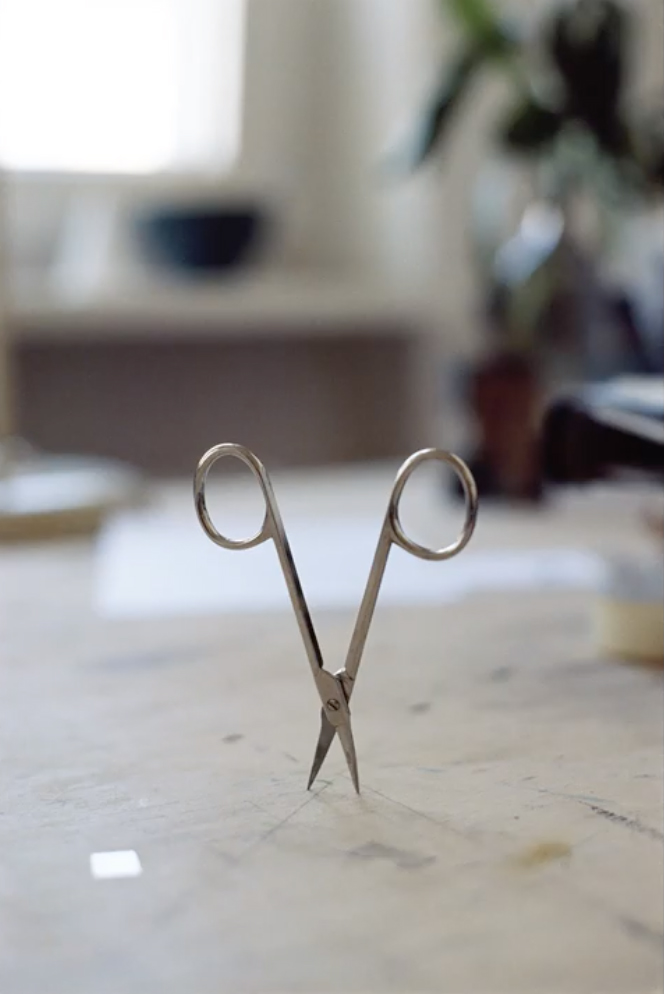
Berlin-based artist Kathrin Sonntag is no stranger to quiet moments in the studio; past photos of seemingly banal environments allude to the paranormal or time travel.  As part of Thomas Erben Gallery’s ‘First Responders’ series – an ongoing response to the COVID-19 pandemic by gallery artists – Sonntag presents a series of images made in the solitude of her workspace in 2004.  The photos turn the everyday moment into magic; here, nail scissors come to life and mince across the floor.  To see more from Sonntag’s unique POV, visit the gallery’s Instagram or Facebook page.

Kathrin Sonntag, from Thomas Erben Gallery’s Instagram @thomaserbengallery, posted April 6th, 2020.

Farah Al Qasimi with Public Art Fund

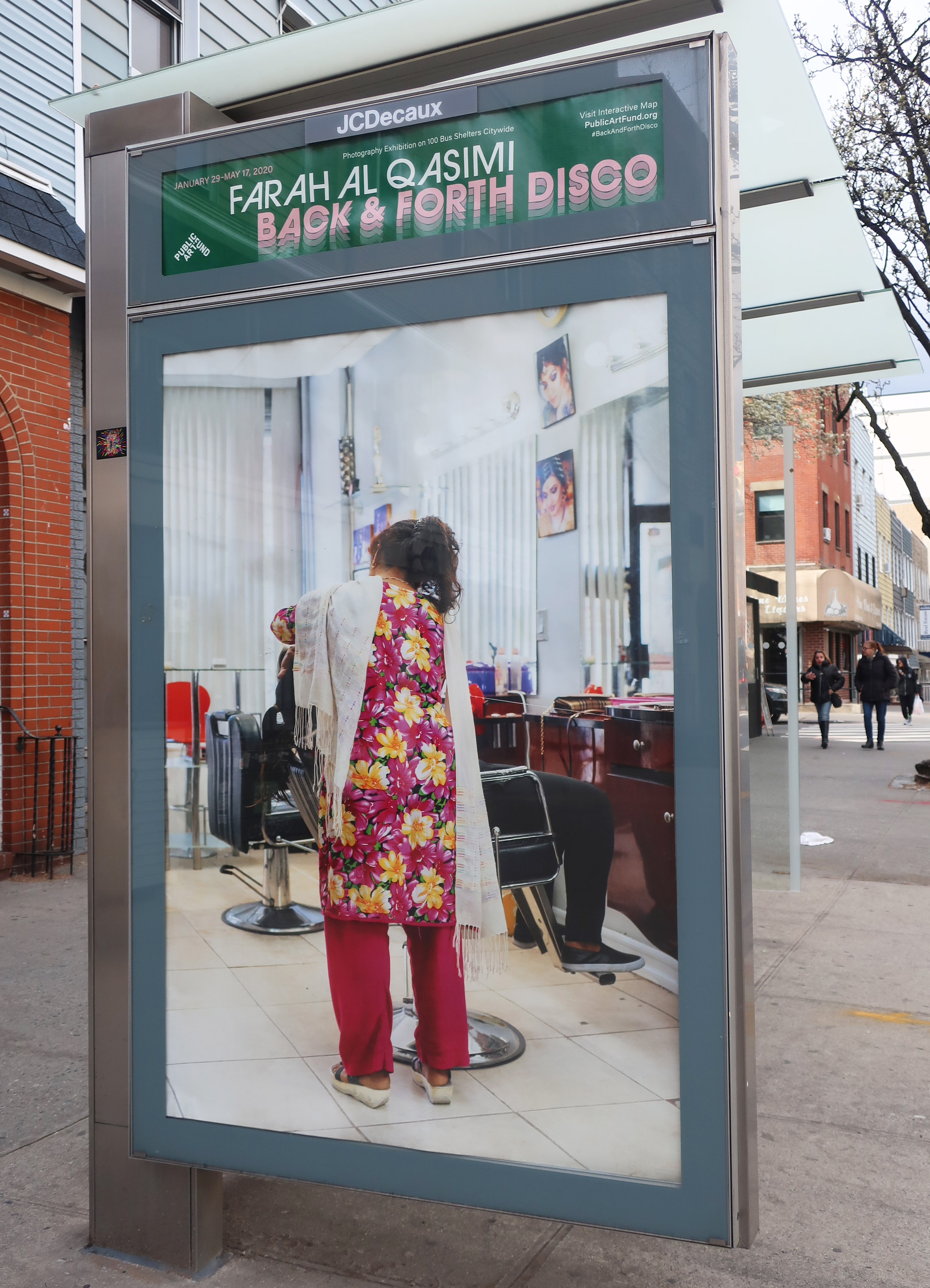
Waiting for the bus (or just walking past the bus stop) isn’t quite so mundane if you’re fortunate enough to encounter one of 100 bus shelters in all five boroughs currently hosting Farah Al Qasimi’s photographs.  Brooklyn-based Al Qasimi cites her upbringing in the Emirates for her attraction to an abundance of color and pattern and explains that in her series ‘Back and Forth Disco,’ presented by the Public Art Fund, personal style choices combat anonymity in the city.  In this image, spotted on Graham Avenue in Brooklyn, a woman performs a beauty treatment, blocking the procedure but enlivening the salon’s subtle décor with her own vibrant outfit.  (On view through May 17th.)

Farah Al Qasimi, from the series Back and Forth Disco, presented by Public Art Fund, 2020.

Vanessa German at Rockefeller Center

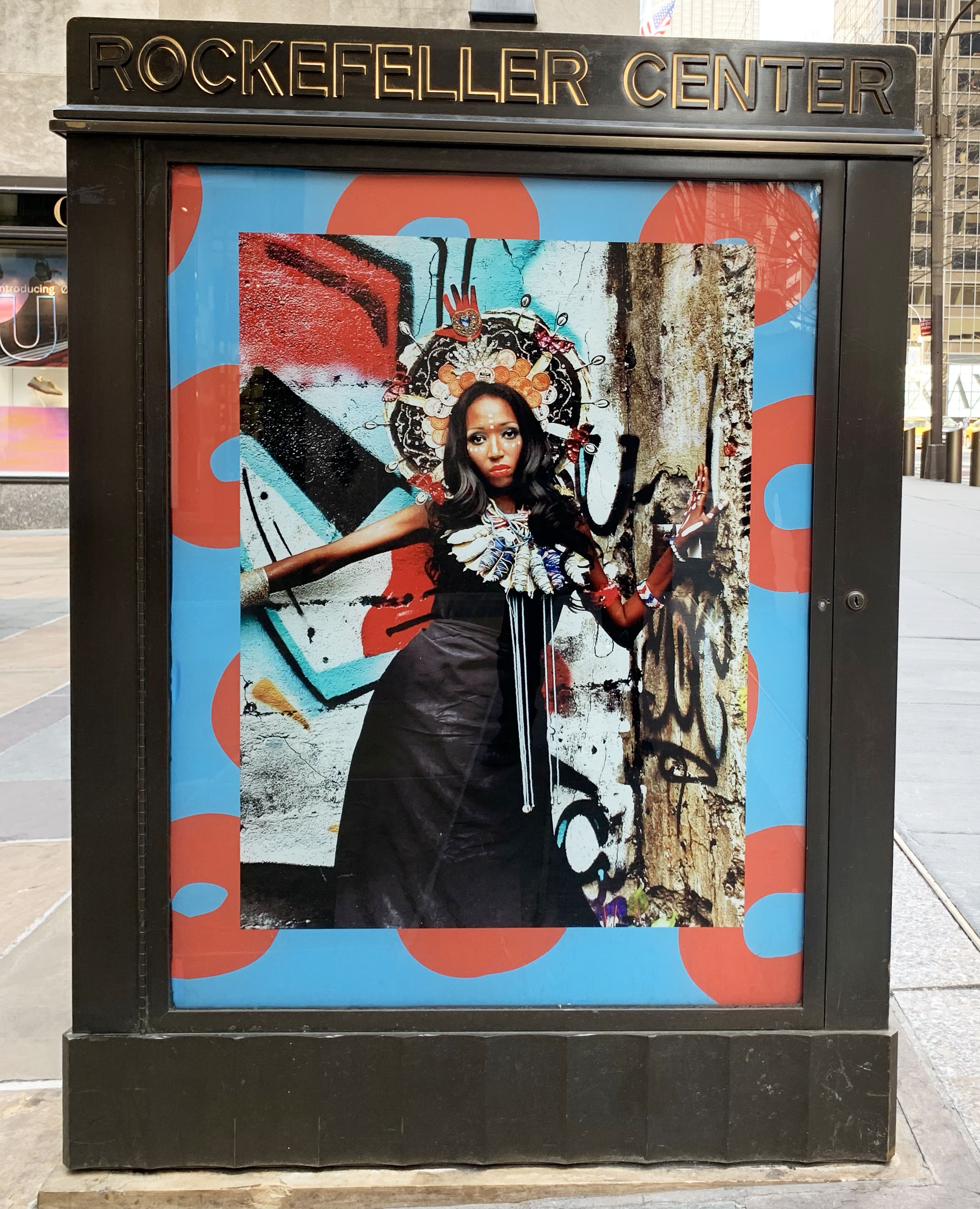
Pittsburgh-based artist, poet and performer Vanessa German’s vibrant installations of photo and sculpture stand out around Rockefeller Center, luring viewers with their dramatic color and abundant detail.  Initially puzzling for their lack of commercial message in an environment designed to sell, photos of fabulously dressed women and sculptures of German’s signature power figures convey feminine power.  The Center’s shows and attractions have ground to a halt due to COVID-19, but German’s semi-divine, haloed figure remains.  (On view in Midtown through April 5th.  Organized by Art Production Fund).

Vanessa German, view of the installation ‘The Holiest Wilderness is Freedom,’ March 2020.

Guanyu Xu at Yancey Richardson Gallery

Born and raised in Beijing, Chicago-based artist Guanyu Xu was unable as a youth to openly express his queer identity.  Returning from the US to Beijing to visit, he transformed his parent’s apartment with photo installations that tell the story of his identity in some of its complexity.  Captured in photos, the arrangements appear to be digitally collaged but are in fact staged in real time and space, temporarily occupying an environment in a fleeting moment of openness that took place while his parents were away from their home. (Originally planned to be on view to the public in Chelsea at Yancey Richardson Gallery through April 4th, Xu’s work can be see on the gallery’s website and his own website.)

Guanyu Xu, My Desktop, archival pigment print, 26 ½ x 32 1/2, 2019.

Dana Lixenberg at Grimm Gallery

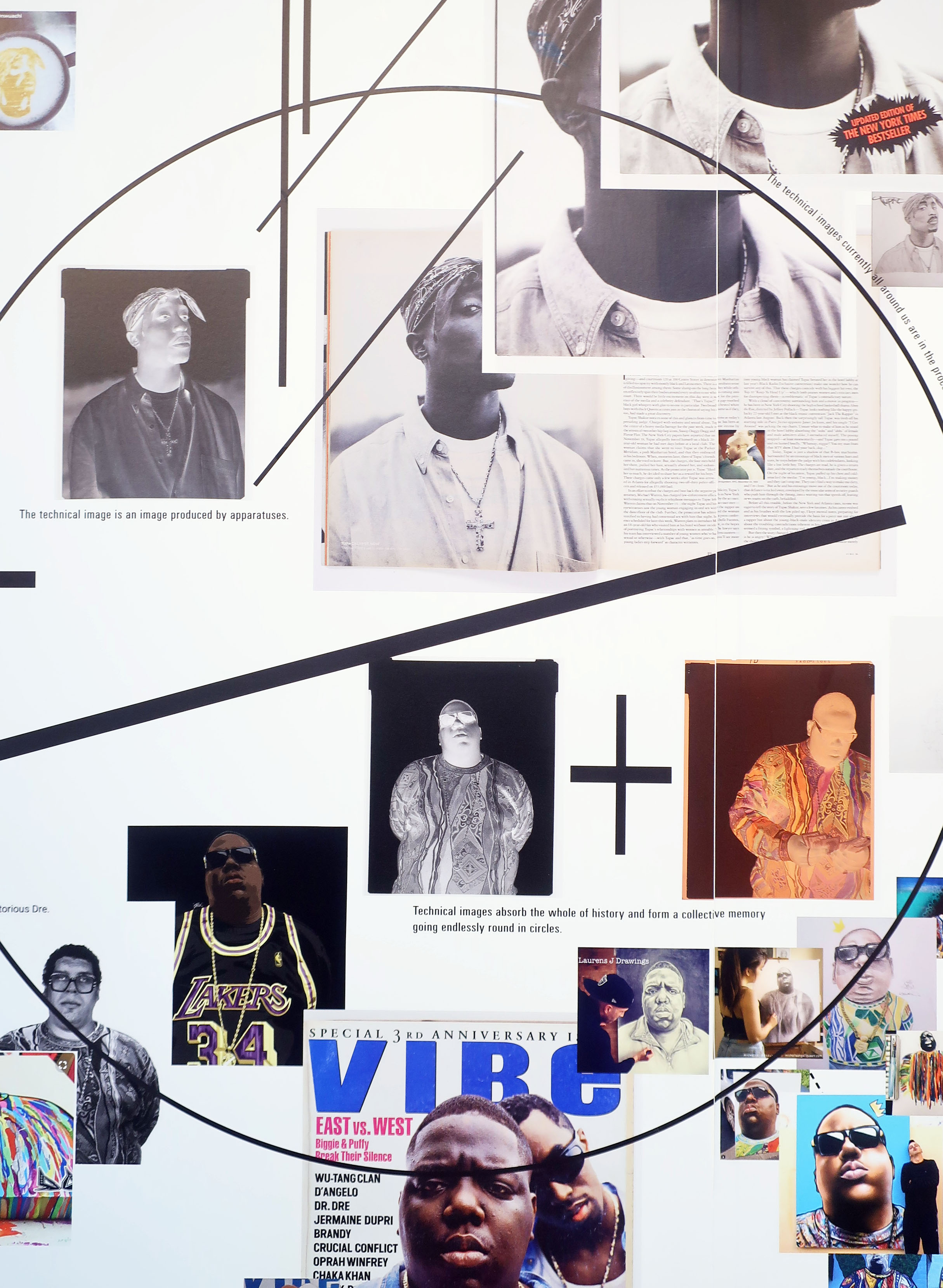
Dutch photographer Dana Lixenberg’s iconic photos for Vibe magazine in the 90s of Tupac Shakur & Biggie appear at the center of schematic mural at Grimm Gallery that demonstrates the incredible currency that photos can have.  Radiating from the center, remakes of Lixenberg’s photos of the two music legends appear in the foam of a latte, on tattoos and via The Simpsons characters among other iterations.  (On view on the Lower East Side through Feb 29th).
Dana Lixenberg’s photos featured in a centerfold from Lixenberg’s Tupac Biggie, design by Linda van Dursen (Roma Publications, 2018).

Jan Tichy at Fridman Gallery

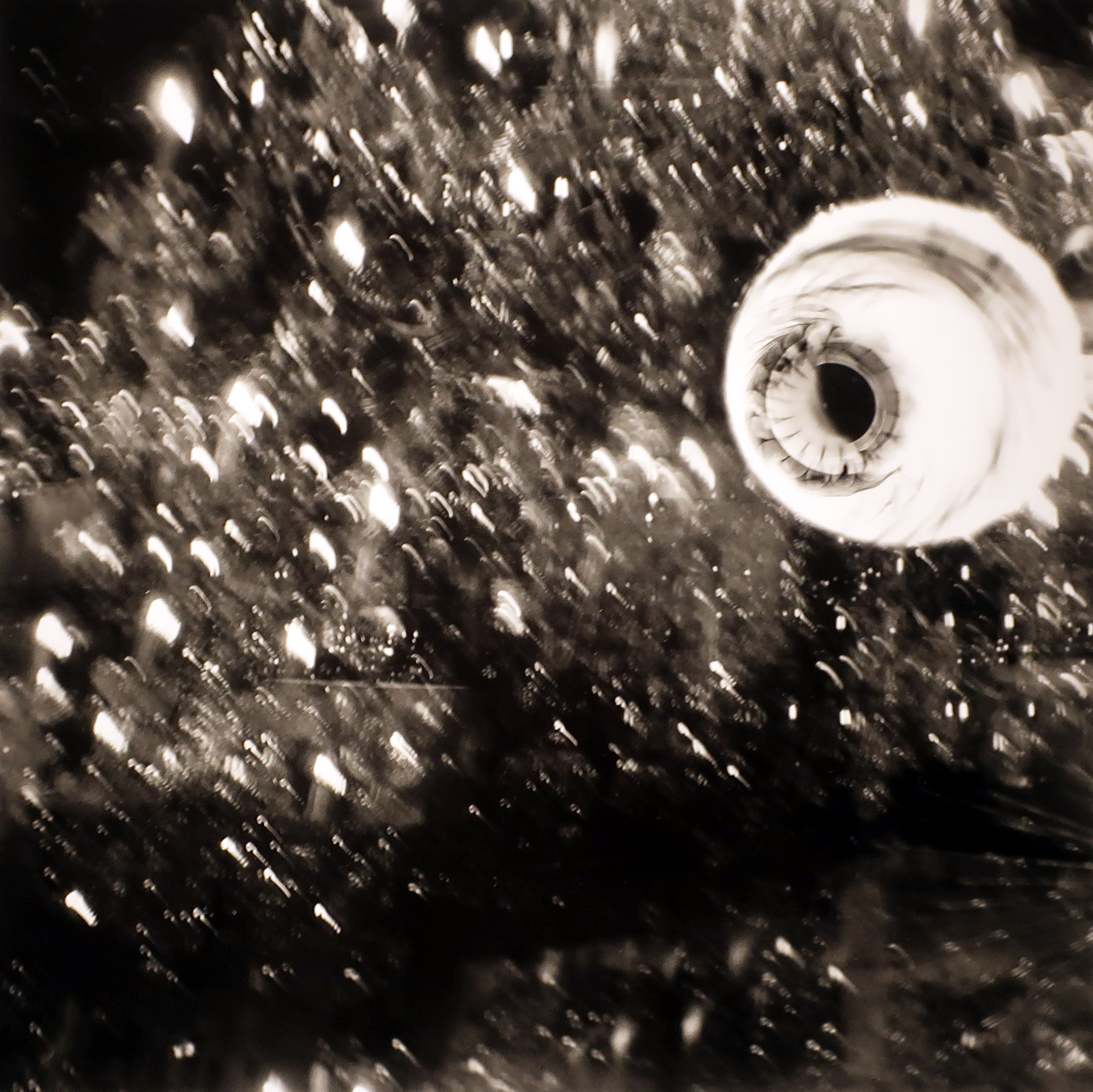
Chicago-based artist and professor Jan Tichy found an outlet for his ‘socially conscious formalism’ in the context of the Lower East Side’s lighting district, where he made work in and in response to the neighborhood’s dwindling number of lighting fixture stores.  Layering images shot in the lighting stores, their bright wares hung enticingly from the ceiling, with exposures of actual fixtures on light sensitive paper in the darkroom, Tichy created this frenetic print which mirrors the pace of change in the city.  (On view at Fridman Gallery through Feb 23rd).

Jan Tichy, Bowery Print VI, single-edition silver gelatin print, 16 h x 16 w inches, unique, 2020.

Pieter Hugo Photographs at Yossi Milo Gallery

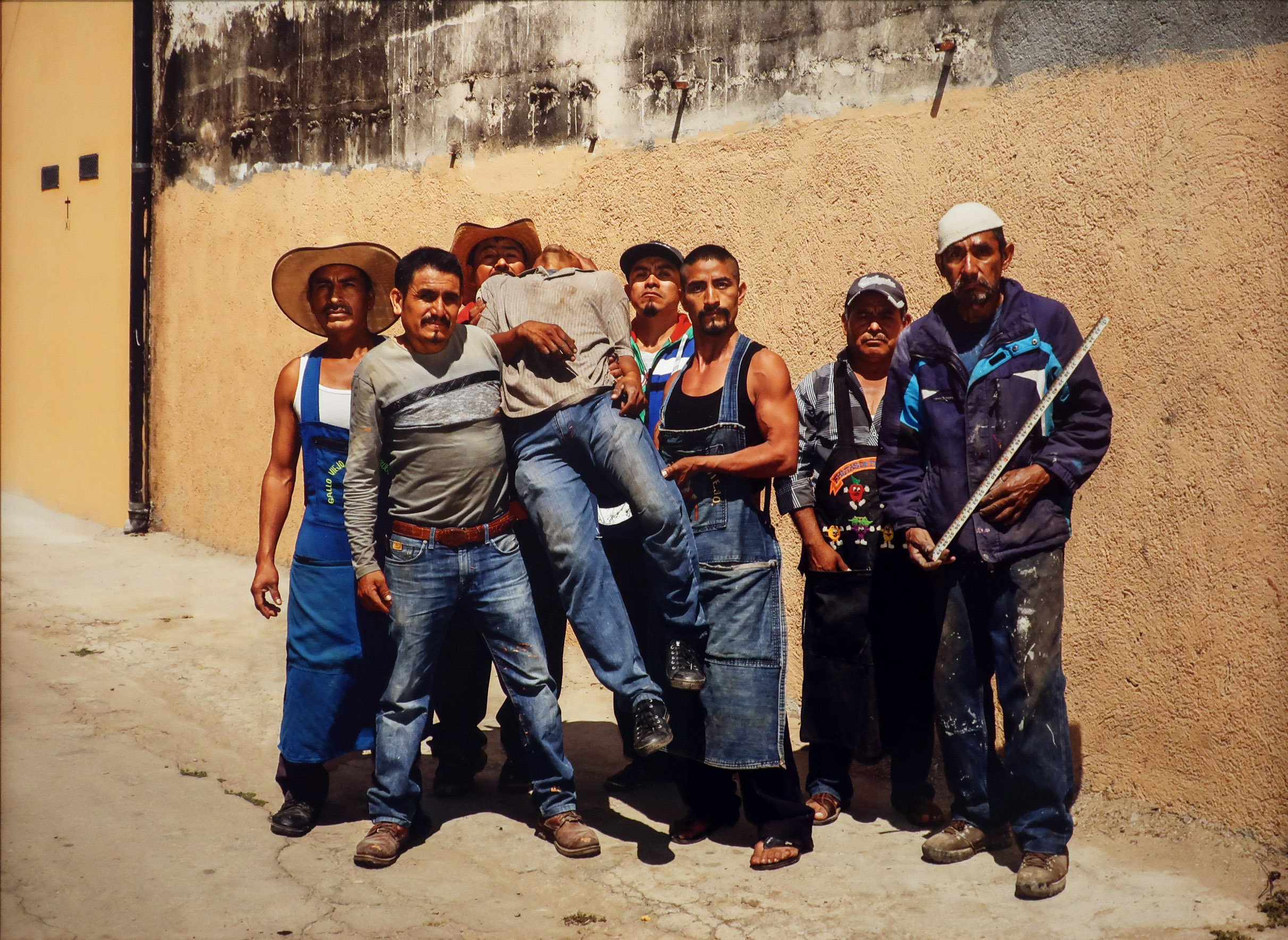
Invited by curator Francisco Berzunza to make new work to show in Mexico on the themes of sex and death, South African photographer Pieter Hugo spent months meeting people from all walks of life including this community theater group formed by sanitation workers in Oaxaca de Juarez.  Here, they reenact a scene from a mural painted in the 50s by David Alfaro Siqueiros at Chapultepec Castle, bringing revolutionary attitudes into the present day.  (On view at Chelsea’s Yossi Milo Gallery through Feb 29th).
Pieter Hugo, After Siqueiros, Oaxaca de Juarez, archival pigment print, 47 1/8 x 63 inches, 2018.

John Dowell at Laurence Miller Gallery

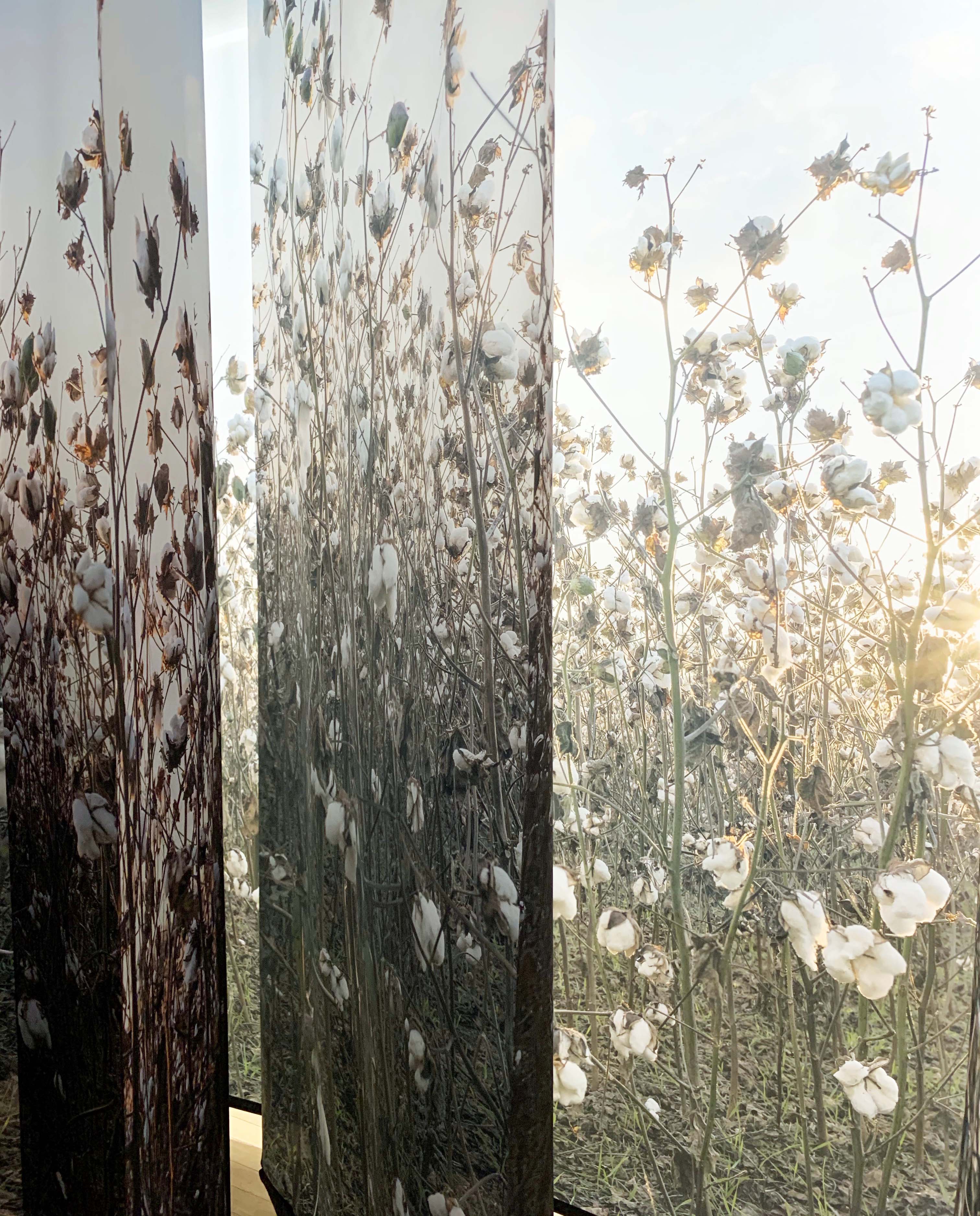
In his photographic images featuring cotton plants now on view at Chelsea’s Laurence Miller Gallery, John Dowell aims to ‘evoke the remembering, feeling and sense of wonder in African American ancestral strategies of survival.’  Dowell inserts cotton fields in photos of Central Park, Wall Street, Trinity Church and other famous New York sites, creating haunting images and recalling injustices inflicted on African American communities at these places and elsewhere.  The show’s centerpiece, ‘Lost in Cotton,’ invites visitors to enter an enclosure of hanging panels that recall the artist’s grandmother’s frightening childhood experience of getting lost among tall cotton plants.  (On view through Jan 25th).
John Dowell, Lost in Cotton, 18 digital prints on taffeta, 10 x 12 x 10 feet, 2017.
Namsa Leuba in ‘The New Black Vanguard’ at Aperture Foundation

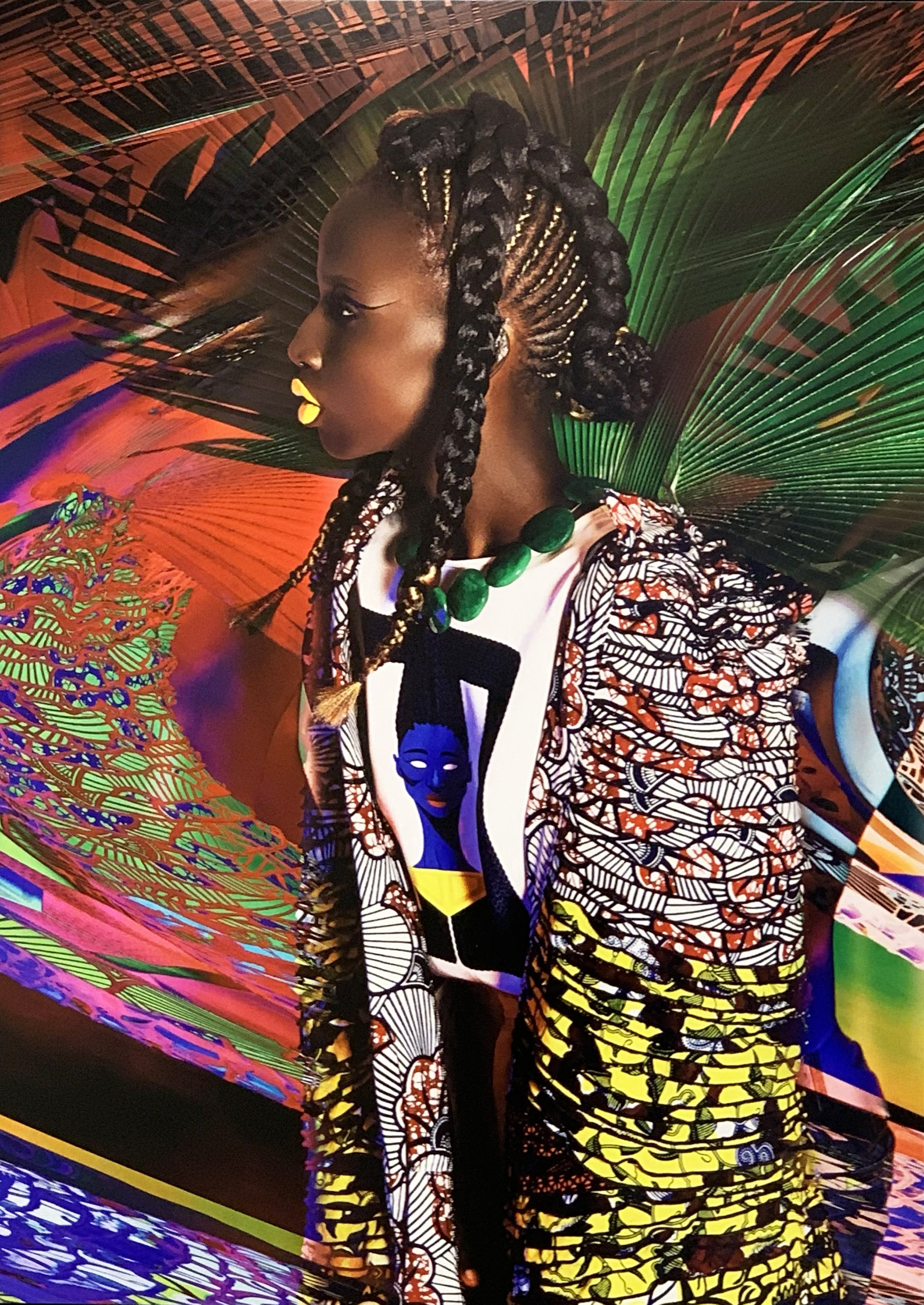
Award-winning photographer Namsa Leuba points to her Swiss Guinean heritage as inspiration for a practice that takes her around the globe making images that she calls ‘documentary fictions.’  A standout in Aperture’s eye-poppingly vibrant show of fashion-related photography, ‘The New Black Vanguard,’ curated by Antwaun Sargent, Leuba’s work illustrates the show’s desire to show off ‘new perspectives…on race and beauty, gender and power.’  (On view in Chelsea through Jan 18th).

Namsa Leuba, Sarah, Lagos, Nigeria, 2015. Designers : Torlowei, Ituen Basi. Series : NGL.

Walead Beshty Installation at Petzel Gallery

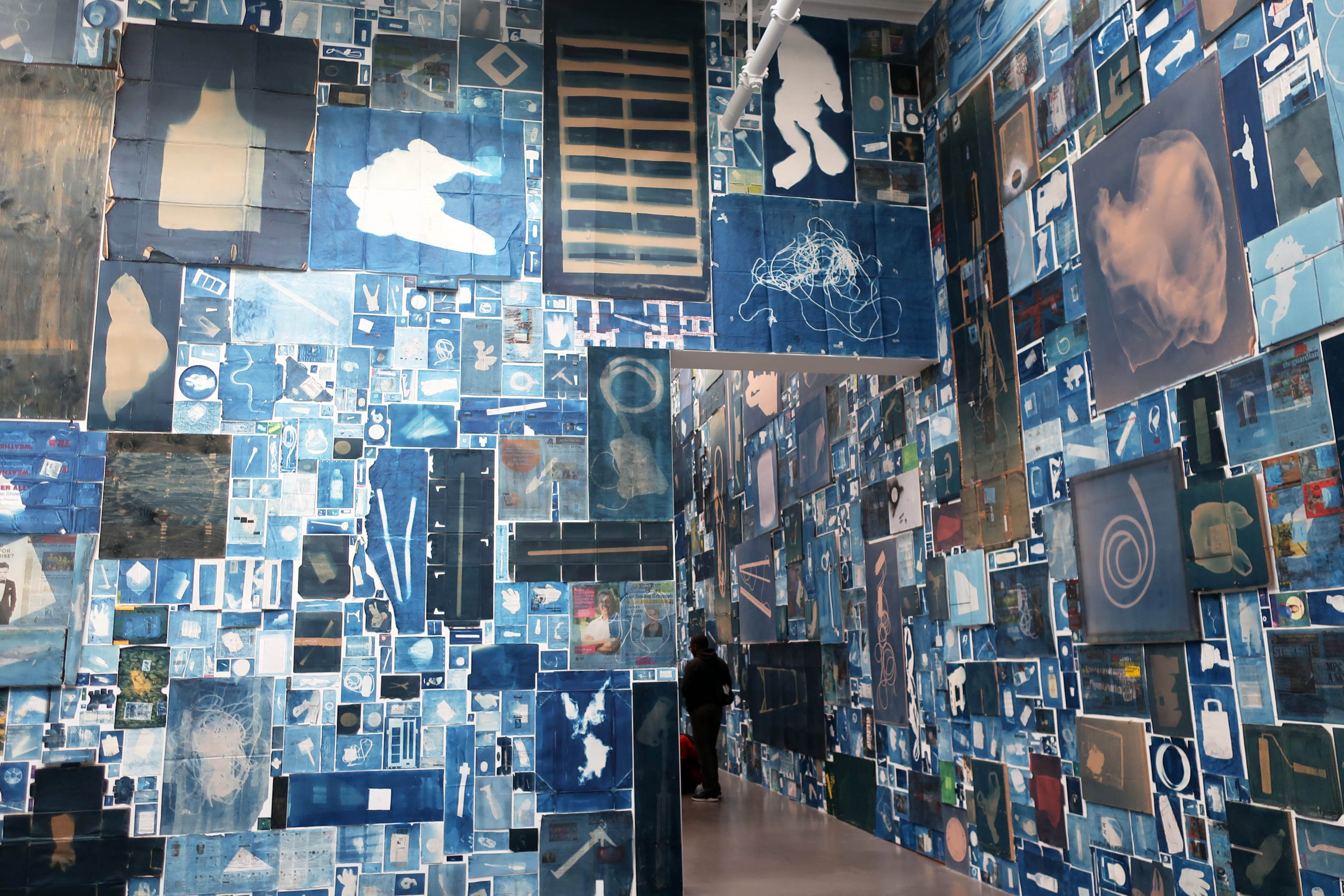
Many artists work with fascinating methods on which they, unfortunately, don’t elaborate.  Walead Beshty’s latest installation at Petzel Gallery swings to an almost opposite extreme, detailing the contents of his studio in over five thousand images picturing tools and objects that have contributed in some way to his production as an artist.  Each cyanotype is the product of a simple photographic process that renders objects in white against a treated blue background of newspapers, boxes, personal correspondence and more.  Originally commissioned by London’s Barbican Art Center in 2013, the installation (seen only in part at Petzel Gallery) still speaks powerfully to the incredible amount of unseen labor behind today’s art production.  (On view in Chelsea through Dec 14th).

Walead Beshty, installation view of “A Partial Disassembling of an Invention Without a Future: Helter-Skelter and Random Notes in Which the Pulleys and Cogwheels Are Lying Around at Random All Over the Workbench” at Petzel Gallery, Nov, 2019.

Maroesjka Lavigne at Robert Mann Gallery – Rust

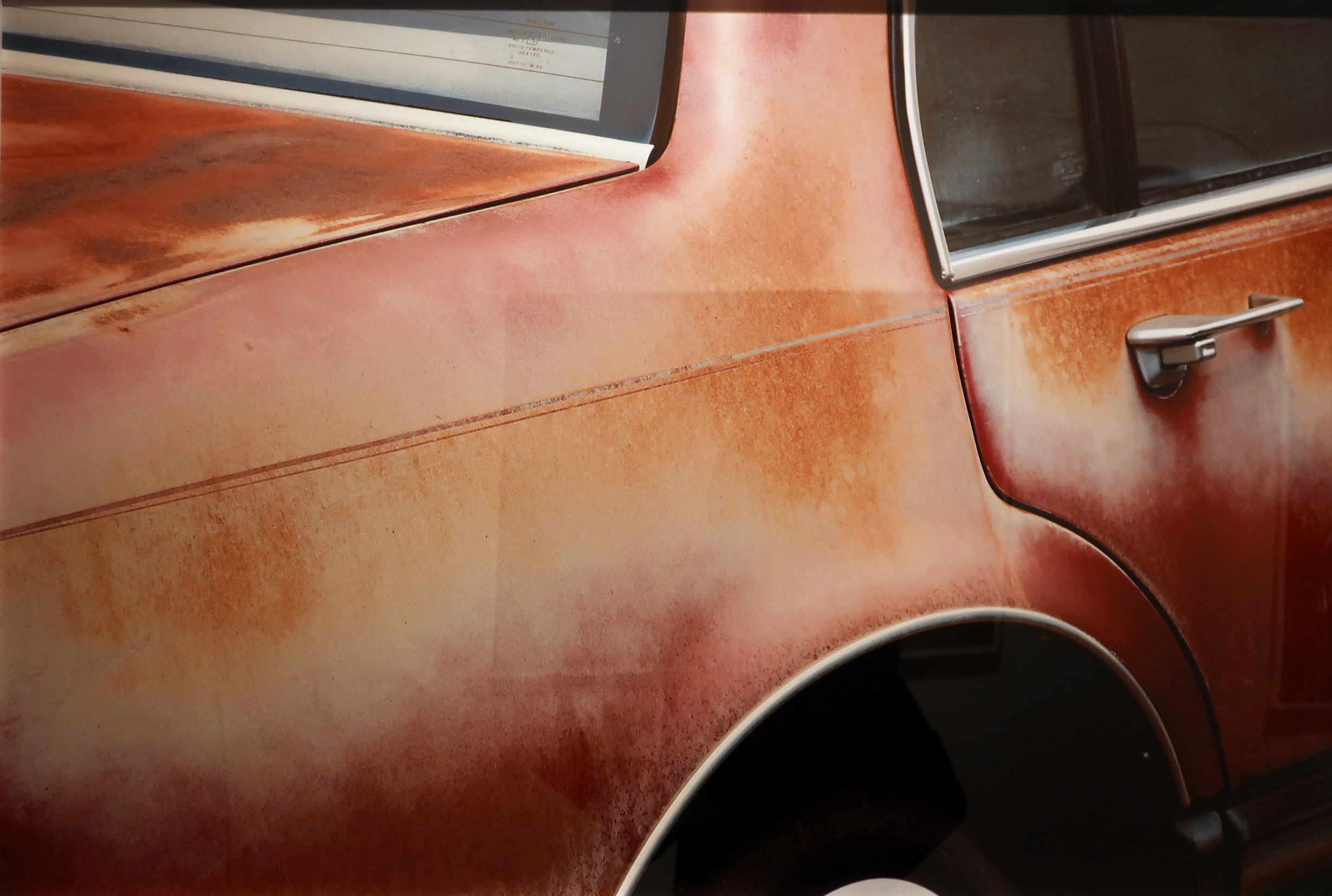
Belgian photographer Maroesjka Lavigne has traveled from Namibia to China to the American West photographing animals and landscapes featuring unusual and unexpected color relationships.  ‘Rainbow mountains’ in Xinjiang China and sharp pops of color from yellow plants in Argentina are standouts in her solo show at Robert Mann Gallery, but it’s the unexpectedly beautiful soft pastel blooms of rust on the car in this photo that steal the show.  (On view in Chelsea through Dec 21st).

Maroesjka Lavigne, Rust, US, archival pigment print, sizes vary, 2016.

Simen Johan Photographs at Yossi Milo

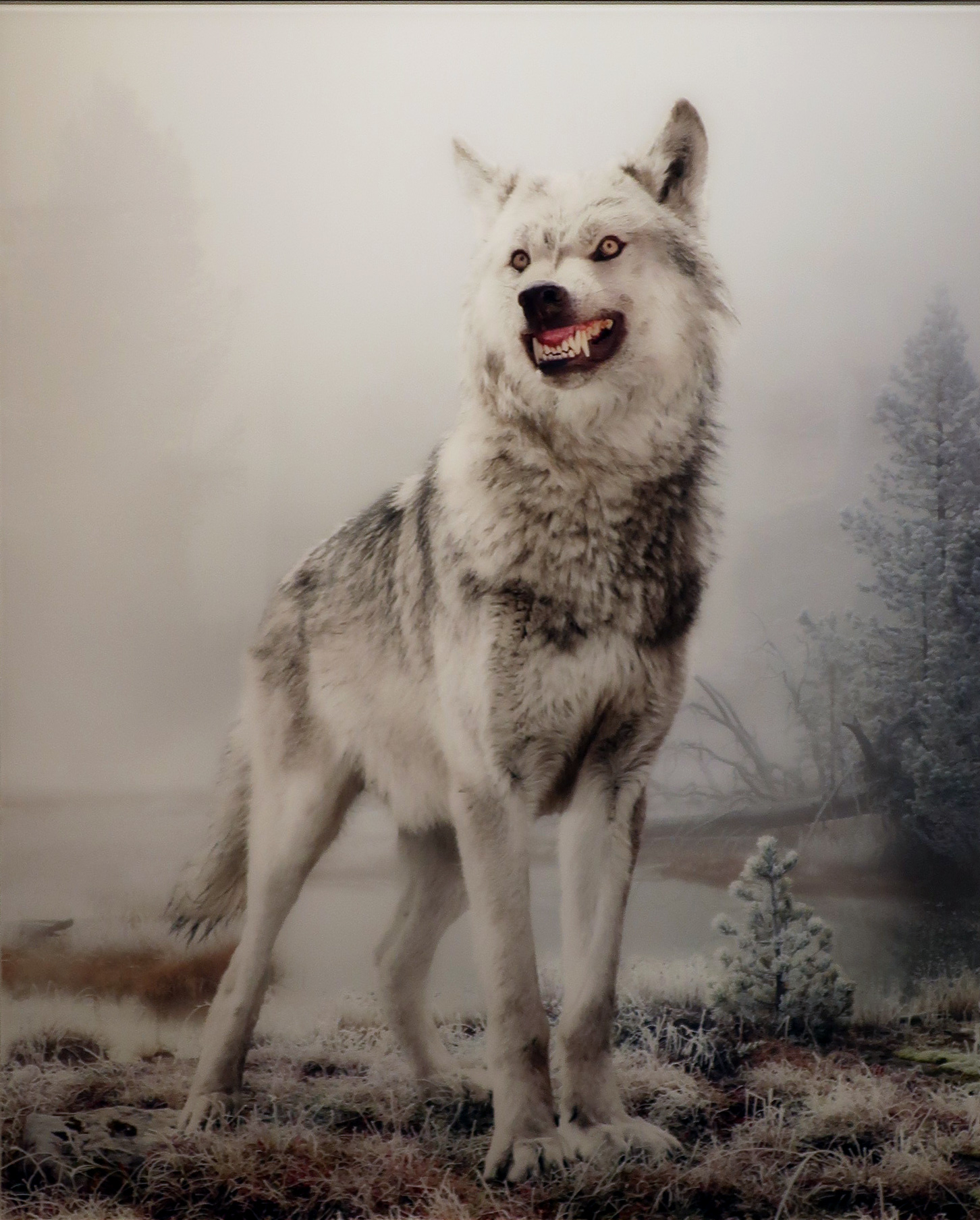
Simen Johan’s dramatic photographs of animals are convincing at first glance, then give viewers pause to consider.  Johan’s skillful digital manipulations allow a panda to appear ready to nurse furry little black and white creatures which turn out to be skunks, while in another image, a longhorn bull poses comfortably in an Alpine scene, though the animal may be more at home in Texas.   In its original setting, this wolf was having its belly rubbed; in the gallery, its blank look and menacing teeth capitalize on preconceived ideas about the animal’s ferocity.  (On view in Chelsea at Yossi Milo Gallery through Dec 7th).

Simen Johan, Untitled #195, digital c-print, image: 49 ½ x 40 inches, 2018.

Luca Missoni at Benrubi Gallery

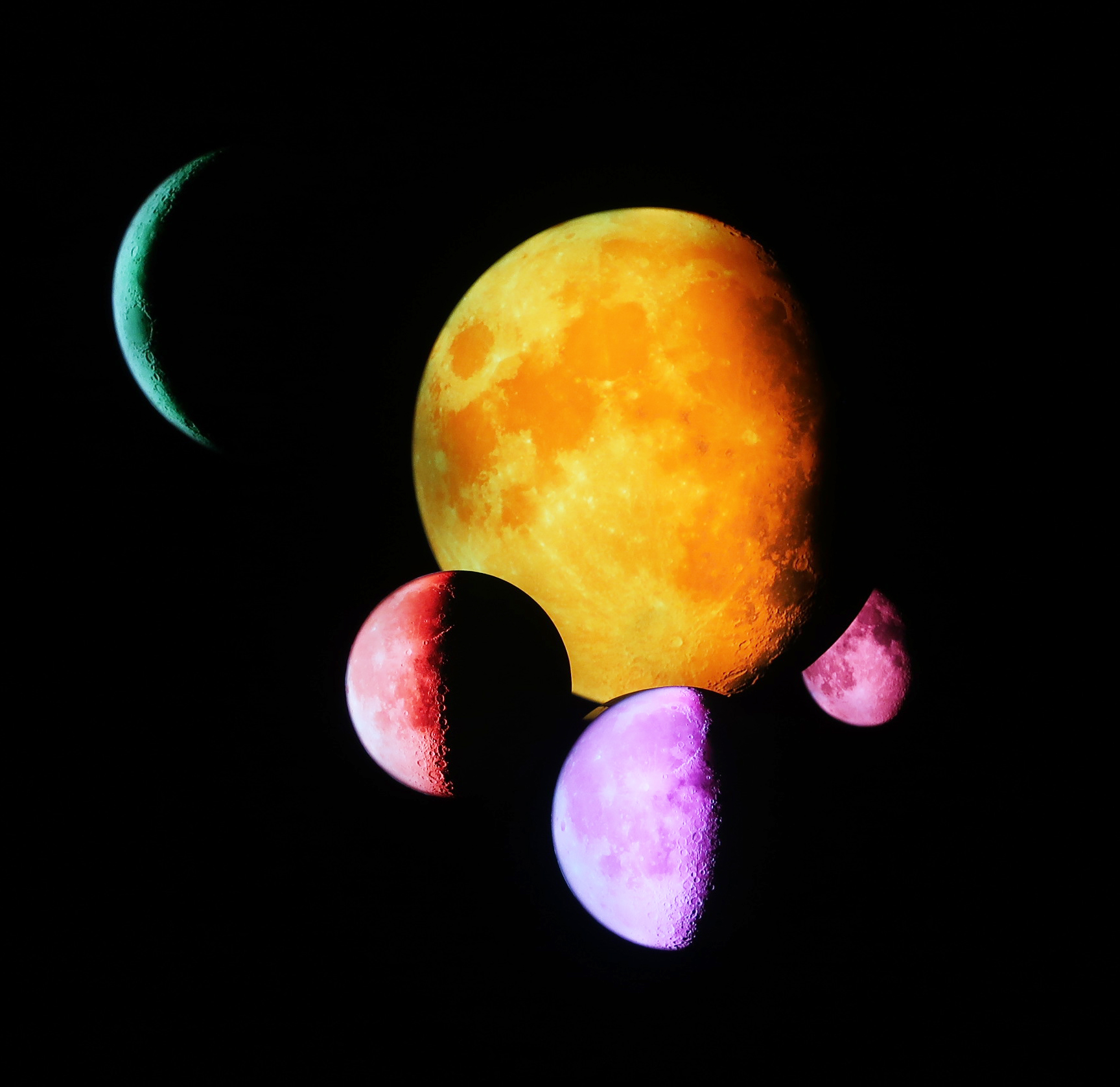
What color is the moon?  Astronauts disagreed on the answer, and their conversations sparked artist and son of the founders of the Italian fashion company Missoni to reorient his long-term photographic study of the moon to portray the celestial body in brilliant color.  In an installation in Benrubi Gallery’s dark side gallery, Missoni presents an installation of back-lit transparencies that give the orb a stunning presence.  (On view in Chelsea through Dec 21st).

Luca Missoni, Il Connocchiale, archival pigment prints, transparencies, LED back-lit, unique installation, 2019.

Ruby Rumie and Justine Graham at Nohra Haime Gallery

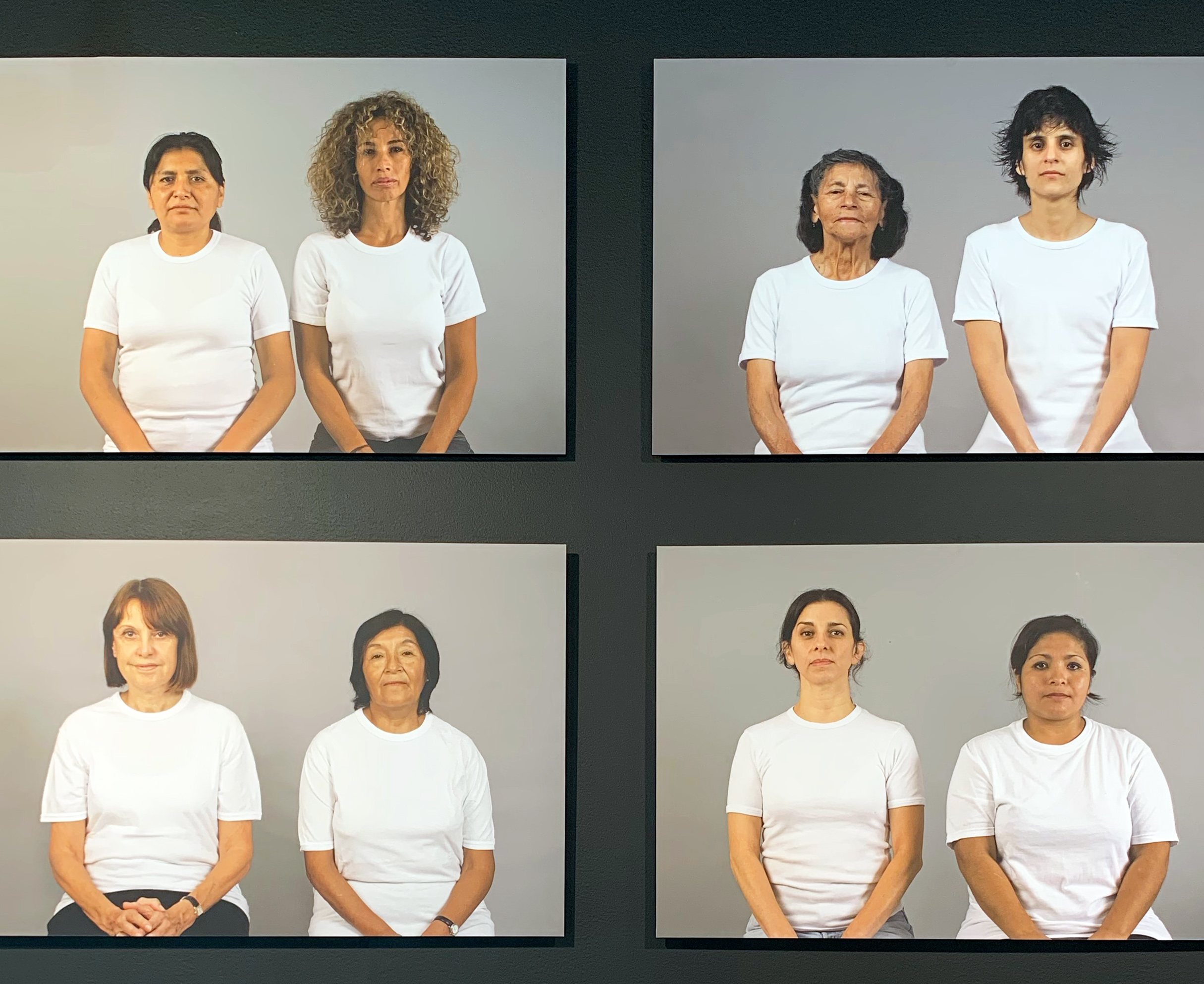
Can you guess who is the housekeeper in each of these photos and who is the employer?  Columbian artist Ruby Rumie and French-American photographer Justine Graham teamed up to question the perceived and real differences between one hundred women in photographs and accompanying interviews at Nohra Haime Gallery.  As the uniform white shirts worn by the women suggest, Rumie and Graham emphasize the women’s shared hopes, fears and more in questionnaires and videos that foreground their similarities.   (On view in Chelsea through Nov 16th).

Ruby Rumie, installation view of ‘Common Place’ at Nohra Haime Gallery, Oct 2019.

Vik Muniz, Museum of Ashes at Sikkema Jenkins

After the National Museum in Rio de Janeiro was ravaged by fire in Sept 2018, renowned Rio and NY based artist Vik Muniz reached out to offer help.  The resulting series ‘Museum of Ashes,’ now on view at Sikkema Jenkins & Co in Chelsea, mourns the loss of artifacts that range from dinosaur fossils to Egyptian artifacts by recreating images of the objects created from their own ashes.  (On view through Nov 16th).

Vik Muniz, Sarcophagus of Sha-amun-en-su, 750 BC, Museum of Ashes, archival inkjet print, 40 x 30 inches, 2019.

JR, The Chronicles of New York City at Galerie Perrotin

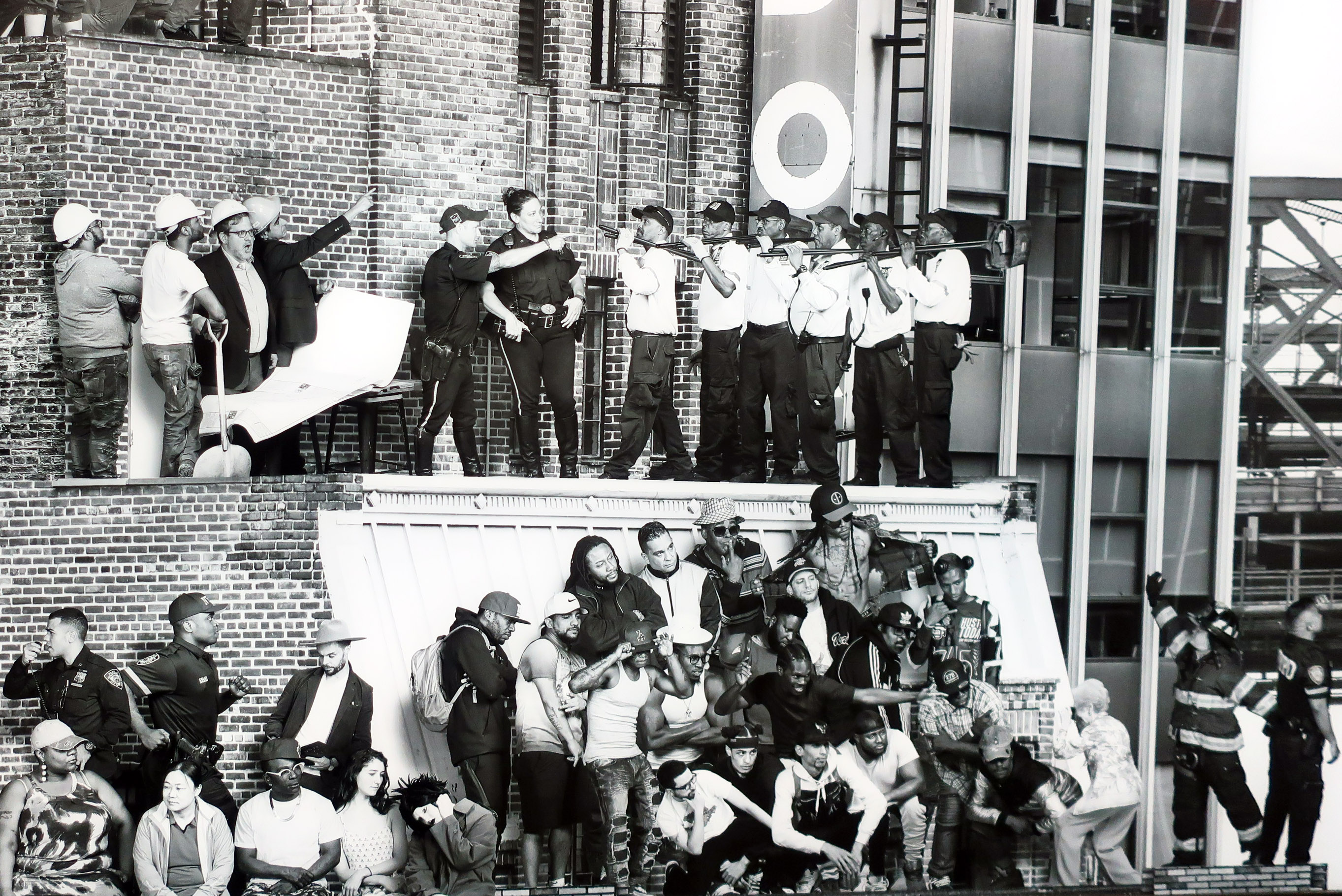
After famously taking his mobile photo studio to Times Square for his ‘Inside Out’ portrait project in 2013, French street artist JR hit New York’s streets again in Spring ’18 to make detailed photo collages championing the everyday New Yorker, now on view at Galerie Perrotin.   Titled ‘Chronicles of New York City,’ the project follows ‘Chronicles’ in Paris and San Francisco and is also currently featured in Brooklyn Museum’s Great Hall.  JR invited over a thousand New Yorkers to step into his truck turned studio to ‘present themselves as they’d like to be seen and remembered.’  The resulting collages bring the city’s citizens together in harmony and common purpose. (On view on the Lower East Side through Oct 26th.)

JR, detail from ‘The Chronicles of New York City, Lightbox, USA, print on duratrans, led backlight, steel frame, 2018.

Michiko Kon at Robert Mann Gallery

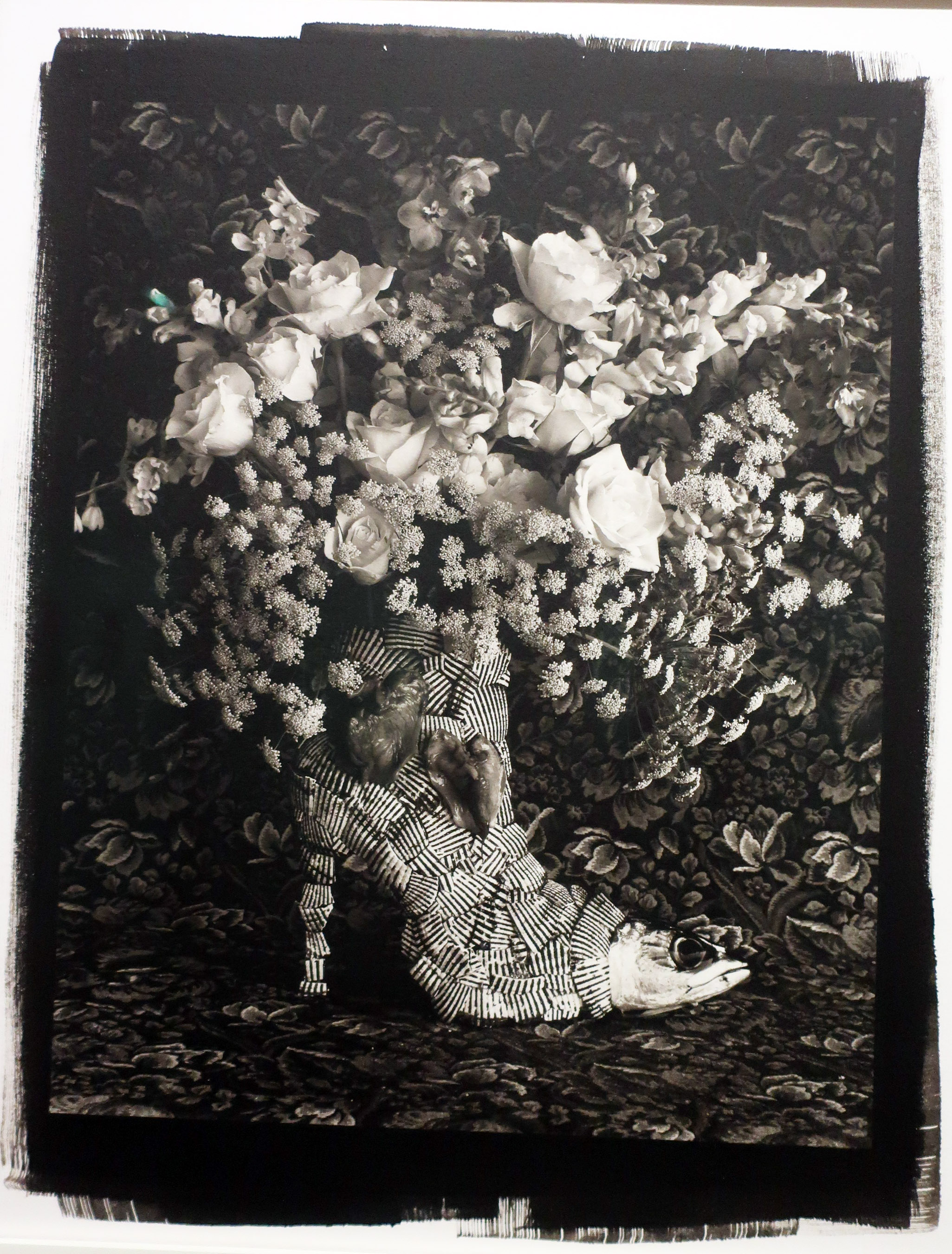
Inspired by Surrealist Meret Oppenheim’s performance ‘Cannibal’s Feast,’ Japanese photographer Michiko Kon’s food-based sculptural creations from the 90s fascinate and disturb in equal measure.  This photo, currently on view at Robert Mann Gallery, showcases a boot crafted from ark clam shells and a real fish head.  By evoking luxury goods popular in pre-crash 90s Japan and creating them in perishable materials, Kon updates the vanitas genre for more recent times.  (On view through Oct 19th).

Michiko Kon, Ark Shells and Boot, platinum palladium print, 20 x 16 inches, 1996.

David Benjamin Sherry at Salon94

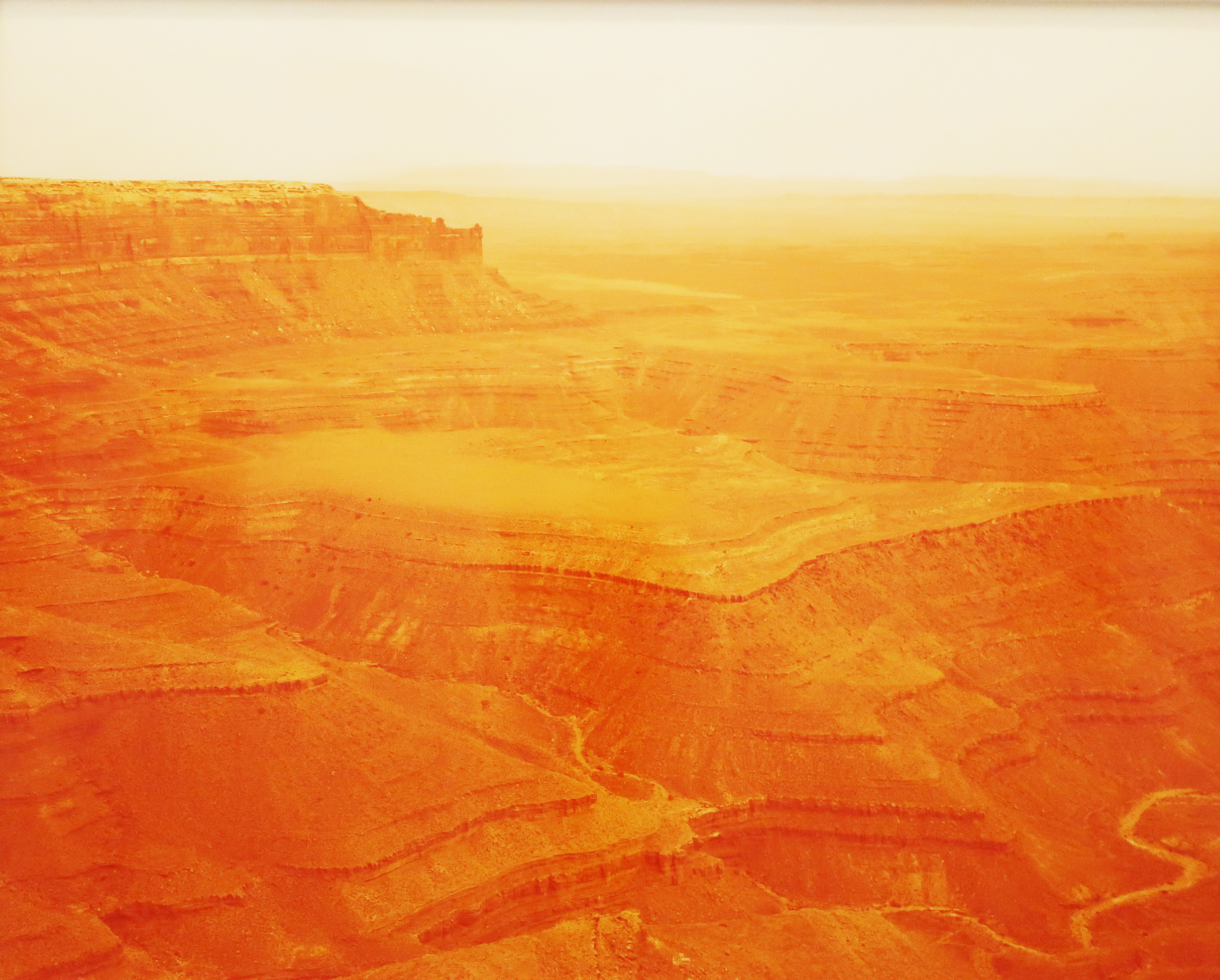
David Benjamin Sherry’s photos depict familiar-seeming western landscapes but in colors that force viewers to ask what they’re seeing.  Man’s impact on the environment comes to mind, as does the emotional value of portraying these spaces in vibrant pink or purple or yellow tones.  In his latest series, ‘American Monuments,’ Sherry shot locations newly threatened by having their protected status removed to allow resource extraction.   (On view at Salon94 on the Lower East Side through Oct 26th).

David Benjamin Sherry, View from Muley Point, Bears Ears National Monument, Utah, chromogenic print, 2018.

Mitch Epstein at Sikkema Jenkins & Co.

‘Property Rights,’ Mitch Epstein’s latest photography series focuses on contested land in the U.S., from protests against the Dakota Access Pipeline at Standing Rock to the conflict between immigration activists and self-organized patrols along the southern border.  Though each location is defined by its tensions, Epstein’s photos are marked by their calmness and sensitivity to the experience of everyday people navigating the impact of larger forces on their lives.  (On view at Sikkema Jenkins & Co. in Chelsea through Oct 5th).

Mitch Epstein, Border Wall, Nogales, Arizona 2017, chromogenic print, 25.125 x 33.5 inches, 2017.

Alex Prager, Big West at Lehmann Maupin

“Driving through Los Angeles, you see all kinds of things out your window, and they go by so quickly,” Alex Prager told the New Yorker as she explained the bizarre scenarios and eccentric characters in her latest photos and video at Lehmann Maupin Gallery.  This towering, nine-foot-tall sculpture dominates the gallery and appears in an even larger version in Prager’s short film ‘Play the Wind,’ an homage to the unexpected and strange on the streets of Prager’s hometown.  (On view in Chelsea through Oct 26th).

Alex Prager, Big West, foam, plastic, fabric and aluminum on metal base, 112 x 50 x 23 inches, 2019.

Sarah Sze at Tanya Bonakdar Gallery

Ever aware of the evolving role of images as stand-ins for real objects in the digital era, Sarah Sze creates a wave in the form of photos, video and rotating projections at Tanya Bonakdar Gallery.  Titled ‘Crescent (Timekeeper),’ the installation displays fragmentary glimpses of the natural world on a rickety but orderly wooden frame.  Visitors who step close to explore a coyote crossing a road, a raging flame or a bird in flight experience a dynamic and evolving sculpture that offers an immersive experience in real time.  (On view in Chelsea through Oct 19th).

Sarah Sze, Crescent (Timekeeper), mixed media, wood, stainless steel, acrylic, video projectors, archival pigment prints, ceramic and tape, dimensions variable, 2019.

Roy DeCarava at David Zwirner Gallery

Roy DeCarava’s velvety toned black and white photographs aimed for expression, not documentation, seeking to capture scenes of African-American life in Harlem and beyond with ‘penetrating insight and understanding’.  Over one hundred silver gelatin photos now on view at David Zwirner Gallery in Chelsea celebrate the centennial of DeCarava’s birth while showcasing the artist’s ability to sensitively portray a variety of subjects, from the everyday life of families to thrilling portraits of jazz musicians like Jimmy Scott.  (On view through Oct 26th).

Roy DeCarava, Jimmy Scott singing, silver gelatin print, 14 x 11 inches, 1956.

Hong Hao at Chambers Fine Art

For over a decade, item by item, Beijing-based artist Hong Hao scanned his belongings for ‘My Things,’ a series of digitally constructed collages detailing his possessions, from the orderly spines of hundreds of books to more chaotic-seeming arrangements like this one that combine elements from different aspects of life.  The abundant objects in each image of the series speak to consumption, but Hong Hao explains that the act of scanning is meaningful as well as it ‘embodies a calm observation without any pre-judgement, a plain testimony, a relevant context for aesthetic exploration.’ (On view in ‘Turn of the Century:  Photography in China’ at Chambers Fine Art in Chelsea through August 31st.)

Hong Hao, My Things No. 3, scanned color photograph, edition 9/15, 2001-2002.

Zanele Muholi and Morgan Mahape in ‘African Spirits’ at Yossi Milo Gallery

Zanele Muholi’s ‘Somnyama Ngonyama’ (Hail the Dark Lioness) photo series features the South African activist and artist modeling dramatic outfits that on closer inspection turn out to be composed of everyday household items.  Muholi’s source image for this beaded panel created with fellow South African artist Morgan Mahape involved a headdress crafted from donut-shaped scouring pads, an important detail that’s less apparent here.  Muholi’s softer look and averted gaze are less confrontational than the series’ other powerful images but the piece reads as a tribute to an artist who uses her own body to challenge perceptions and prompt reflection.  (On view in ‘African Spirits’ at Yossi Milo Gallery through August 23rd).

Zanele Muholi and Morgan Mahape, Somnyama Ngonyama, beads on string, wooden panel, approximately 84 x 60 inches, 2019.

Sara Abbaspour in ‘Transcript’ at Yancey Richardson Gallery

Intimacy between people, whether between figures seen in quiet moments in public or this energetic engagement between a toddler and adult in a domestic setting, drives Sara Abbaspour’s probing, black and white photos.  A standout in Yancey Richardson Gallery’s show of 2019 Yale MFA Photography grads, curated by James Welling, Abbaspour explains that her aim is to treat physical locations as ‘mental space.’  (On view in Chelsea through August 23rd).

Sara Abbaspour, Untitled, archival pigment print, 26 5/8 x 35 1/8 inches, 2019.

Ugo Mulas at Matthew Marks Gallery

Late Italian photographer Ugo Mulas made his name documenting the Venice Biennials from 1954 – 1972 and establishing relationships with Italy’s major post-war artists.  In the ‘60s, his purview expanded to New York where he met and photographed now iconic avant-garde artists from Barnett Newman to Marcel Duchamp.  These photos and more at Matthew Marks Gallery in Chelsea offer a peek at yesteryear’s art scene, from the police closing a Warhol loft party to intimate shots of Jasper Johns at work.  Here, Roy Lichtenstein inhabits one of his cartoon scenarios with good humor.  (On view through August 16th).

Ugo Mulas, Roy Lichtenstein, vintage gelatin silver print, 10 ½ x 17 7/8 inches, 1964.

Dana Hoey at Petzel Gallery

Photographer Dana Hoey describes former world champion boxer Alicia Ashley’s shadowboxing as ‘sublimely beautiful.’  Here, in a 44-foot-long wall mural at Chelsea’s Petzel Gallery, Ashley engages with Hoey’s humanoid, diamond-patterned assemblages in a series of movements that showcases the boxer’s art and her agency.  (On view in Chelsea through August 2nd).

Dana Hoey, Alicia “Slick” Ashley Shadow-boxing, vinyl wall adhesive, 168 x 528 inches, 2019.