Chosen with little effort or a lot, our clothing gives an impression of who we are or at least how we see ourselves. But what would happen if could just send our clothes out into the public realm without us? Austrian sculptor Erwin Wurm’s ‘Substitutes’ series puts this idea to the test with painted aluminum garments that stand or float in Lehman Maupin Gallery as if inhabited by a living force. The potential eeriness of the sculptures is offset by their cheerful tones – a hot pink suit, an electric yellow hoody and pants and a towering powder blue dress with tights are more fun than creepy and geared to entertain. (On view in Chelsea through June 6th).
Erwin Wurm, In the foreground: Waiting Pink Small (Substitutes), aluminum and acrylic paint, 39 3/8 x 5 7/8 x 13 ¾ inches, 2024. In the background: Hoody I (Philosophers), aluminum and paint, 80 ¾ x 24 ¾ x 17 ¾ inches, 2023.
Born in the decade after Algerian independence, Kader Attia grew up in Paris and Algeria, forming a cross-cultural identity that continues to inspire his multi-disciplinary practice. For his latest show at Lehmann Maupin Gallery, Attia presents collages of spliced together African and European cultural objects, suggesting complicated interrelationships. A film featuring a French supporter of the Algerian National Liberation Front, a French political scientist and the artist’s mother tells stories of colonial resistance alongside suitcases full of broken, light-reflecting mirrors that embody the notion of gathering and repair of shattered lives. In the gallery’s main room, the installation ‘Resonance’ allows visitors to gently ring the bells installed in a series of birdcages, communicating with each other without words. (On view in Chelsea through Dec 13th).
Kader Attia, installation view of ‘Resonance’ at Lehmann Maupin Gallery, New York, Nov 2025.
Dante’s famous 14th century epic poem ‘The Divine Comedy’ led him from the inferno to purgatory to the heavens on a spiritual journey that inspired Tammy Nguyen’s trio of exhibitions at Lehman Maupin’s Seoul, London and now New York galleries. Taking Dante’s pathway as a loose framework for her own consideration of the forces that shape our world, she combines abundant and diverse imagery to suggest the complexity of history. Recurring images of Frankenstein recall the global impact of Indonesian volcano Mount Tambora’s massive volcanic eruption in 1815, which created stormy weather patterns that kept Mary Shelly indoors inventing her famous character. Images of President Eisenhower’s head and segments of his 1961 farewell address warning of the rising military industrial complex appear alongside eagles that symbolize soaring American political ambitions while also recalling Dante’s encounter with an eagle who snatches him up to fly onward. Competing notions of progress appear in the show’s densely layered, imagery-rich paintings, their own complexity suggesting an unstoppable progression of myriad events that impacts both present and future. (On view in Chelsea through Aug 15th).
Tammy Nguyen, Beneath the Shadow of its Wing, watercolor, vinyl paint, pastel, silkscreen printing, rubber stamping, hot stamping, and metal leaf on paper stretched over wood and gator board panel, 70 x 48 x 2 inches, 2025.Tammy Nguyen, (detail) Beneath the Shadow of its Wing, watercolor, vinyl paint, pastel, silkscreen printing, rubber stamping, hot stamping, and metal leaf on paper stretched over wood and gator board panel, 70 x 48 x 2 inches, 2025.
As a winner of the ’22-’23 Rome Prize, photographer Todd Gray spent six months in Rome absorbing the city’s contrasting ancient and contemporary architecture and translating those time shifts into complex images. Already known for sculptural, photo-based artwork juxtaposing African landscapes with European architecture built with wealth extracted from its colonies, Gray’s new work at Lehmann Maupin Gallery showcases the extravagant beauty of Rome’s built environment, troubled by symbols of exploitative practice. Here, a ceiling from an early 19th century Neoclassical villa decorated with cavorting nude figures is punctuated by the mast of a slave ship model in the Maison des Esclaves (House of Slaves) museum on Goree Island in Senegal. An image from the Hubble Scape Telescope acts as portal between the two places, allowing a kind of passage between locations and back in time. (On view through March 22nd).
Todd Gray, Blues Ship (makes me wanna holla), 3 pigment ink prints on Dibond in artist’s frames, 41 x 61 1/8 x 2 ¾ inches, 2024.
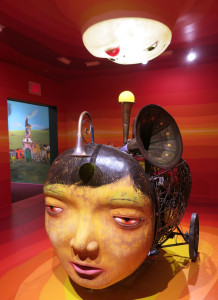
Known for imagining idiosyncratic characters from dreamed up worlds, Brazilian street-artist twins, Osemegos are back at Lehmann Maupin Gallery with paintings and two installations that fill the gallery with vivid color and sound from a built-in DJ booth. Pictured here, the gallery’s west wall houses a mystical architectural construction presided over by a nude man whose body has split in two to reveal a glowing inner self. To either side, a celestial goddess holds a planet in her hand while a man whose head in encircled by flower petals smiles serenely. In the sky, two heads circled by colorful lights – one of which is emerging from a UFO – light up the already bright skies over an installation that delights and entertains. (On view in Chelsea through Aug 16th).
Osgemeos, installation view of ‘Cultivating Dreams,’ at Lehmann Maupin Gallery, June 2024.
From the caves of Cuba’s Vinales Valley to the Aurora Borealis, Teresita Fernandez’s elegant sculpture is inspired by the beauty of nature but questions mankind’s relationship with the land. In ‘Soil Horizon,’ Fernandez’s current solo show at Lehmann Maupin Gallery, the artist titles several works – ‘Bardo,’ ‘Sky/Burial’ – after Buddhist concepts relating to the gap between lives. A 24’ long concrete arch hints at a burial mound while thousands of ceramic cubes installed on the wall speak to a body’s dispersal after death. A third piece in tiny ceramic tile suggests weather systems or other dynamic forces that create larger or small-scale impact on humans and the planet. (On view through June 1st).
Teresita Fernandez, installation view of ‘Soil Horizon’ at Lehmann Maupin Gallery, May 2024.
LA painter Calida Rawles’ realist paintings of women and girls submerged in water both clearly define their subjects and at the same time obscure them through shadow and reflection, suggesting a simultaneous state of knowing and unknowing. Titled ‘A Certain Oblivion,’ Rawles first major solo show at Lehmann Maupin Gallery presents still and clean bodies of water that appear to offer a place of refuge, even therapy to women who float in or glide through the water, faces barely breaking the surface. Yet several paintings come from source photos taken after dark and were even painted in low light in the studio, complicating and making uncertain the watery realms depicted. (On view in Chelsea through Dec 16th).
Calida Rawles, We Knew It Was Coming, acrylic on canvas, 96 x 120 x 2 inches, 2023.
A man with skin composed of overlapping shells arranges his hands on a wall in Lehmann Maupin Gallery’s front room as if to peer into the vibrantly colored picture before him – a mural depicting a block of flats. ‘Die Strandloper – Man’ or ‘The Beachwalker – Man,’ an installation by South African artist Robin Rhode, is titled after a term used to refer to one of South Africa’s oldest people groups, the Khoisan, who have lived along southwest Africa’s coasts and whose lifestyles have been under threat for centuries by European settlement and now climate change. Resembling the streamlined forms of hotels from the game Monopoly, the structures in their non-natural colors are a sharp contrast to the figures’ close physical relationship with the natural world. (On view in Chelsea through Feb 11th).
Robin Rhode, Die Strandloper – Man (The Beachwalker – Man) and Die Strandloper – Boy (The Beachwalker – Boy), both are glass fiber reinforced plastic and shells, ’22 and Block of Flats (Wall Painting), acrylic paint, dimensions variable, ‘23
Though Billy Childish is known for his stunningly prolific production of punk and garage albums, volumes of poetry and thousands of paintings, his latest show of canvases at Lehmann Maupin Gallery exudes tranquility. Here, a lone shore pine dominates the canvas, reaching out to the blue and white strata of sky with its branches. In other paintings, solitary figures navigate canoes or swim in frigid-looking waters, suggesting a journey that must be undertaken alone. (On view in Chelsea through Jan 7th).
Billy Childish, tree – seattle, oil and charcoal on linen, 96 x 72 x 2 inches, 2022.
Historic monuments are a hot topic today, but Do Ho Suh’s engagement with public sculpture goes back decades, questioning what and who we memorialize. Over twenty years ago, he crafted a large pedestal, empty on top but supported by scores of tiny sculptures of people holding up the base, suggesting that it takes the efforts of many to elevate select individuals. Now, the new sculpture ‘Inverted Pedestal,’ the first piece to greet visitors to his exhibition at Lehmann Maupin Gallery, offers a pedestal that appears to have swallowed the figure meant to be honored. Created from extruded plastic material, the piece’s transparent mesh surface allows visitors to see a figure, not displayed in glory but suspended upside down and hidden. (On view in Chelsea through Oct 29th.)
Do Ho Suh, Inverted Monument, PETg, stainless steel, 98.43 x 79.72 x 79.72 inches, 2022.
Growing plants became a refuge of sorts for New York based artist Jeffrey Meris during the early pandemic and the summer of 2020. While caring for his growing collection of greenery, Meris delighted in how easily spider plants regenerate but at the same time compared the plant’s form to a firework. Making a connection to the unrest in 2020, Meris constructed armatures like this one in Lehmann Maupin’s summer group show ‘Eyes of the Skin,’ curated by Teresita Fernandez. Referencing an explosion with the shape of the aluminum frame and bullets in the form of the plants’ ceramic pots, Meris’ message is nevertheless one of self-care and healing through nature. (On view in Chelsea through Aug 12th).
Jeffrey Meris, Catch a Stick of Fire, aluminum, hardware, lightbulbs, sockets, ceramics, spider-leaf plants, water, light, oxygen, dimensions variable, 2021.
Shining copper panels shaped like the squares of a sidewalk, marked with outlines of candles and other items left by mourners on a street memorial are beautiful reminders of the terrible cost of the pandemic and of racially-motivated violence in Nari Ward’s latest solo show at Lehman Maupin Gallery. Downstairs, four text-based works in one of his signature materials – hanging shoelaces – cite songs, poetry and the Emancipation Proclamation. ‘What’s Going On,’ references Marvin Gaye’s 1971 song, inspired by US involvement in Vietnam and the civil unrest in Watts. In the past, Ward has collected shoelaces from museum visitors to make word-based installations, establishing an association with the personal that brings the text closer to home. (On view in Chelsea through June 4th).
Nari Ward, What’s Going On, shoelaces, 78 x 81.5 x 1 inch, 2022.
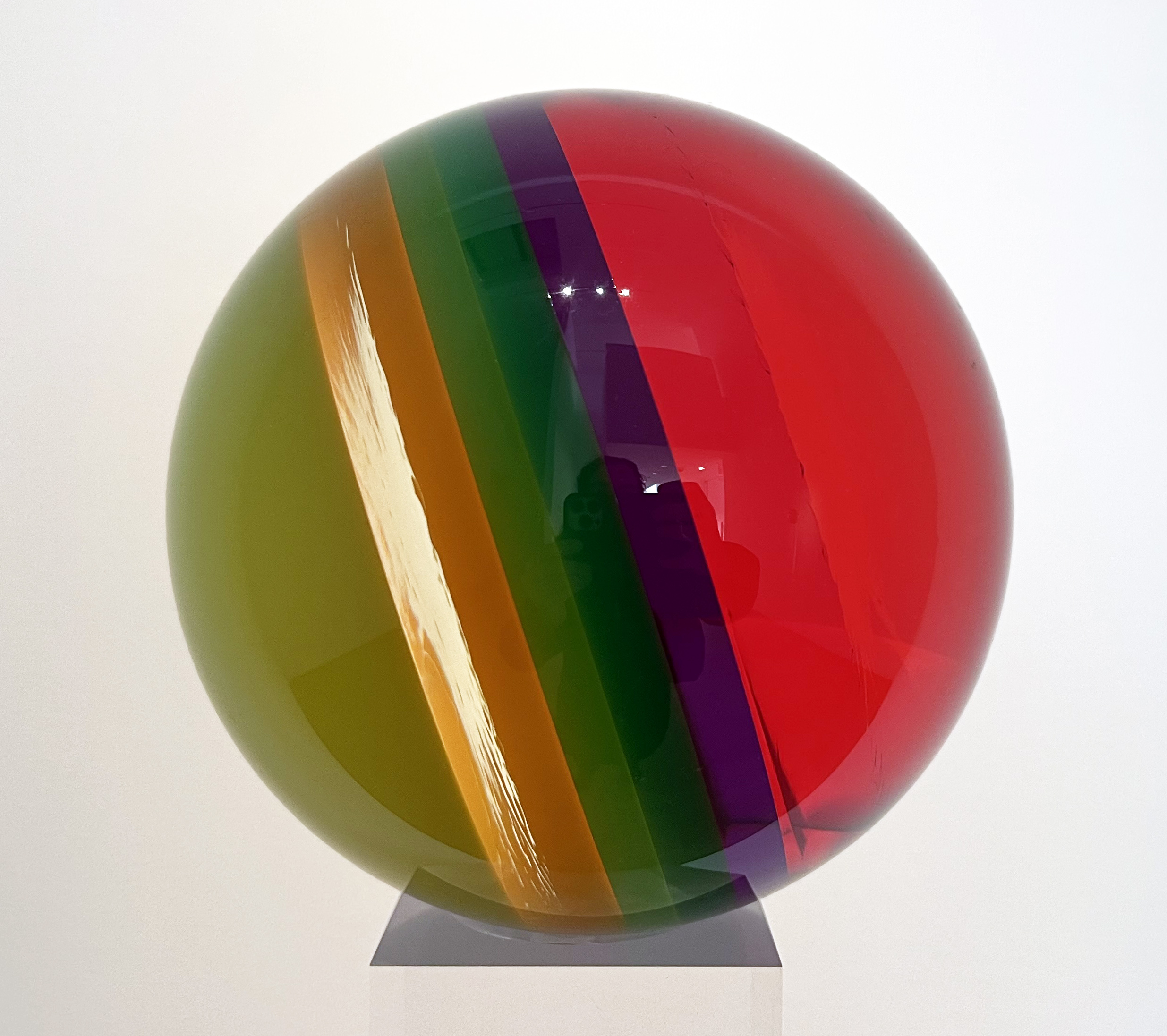
Visitors to Light and Space artist Helen Pashgian’s show of new work at Chelsea’s Lehmann Maupin Gallery are invited to sit on benches to appreciate disk-shaped sculptures that appear to hover over pedestals in the gallery, while other pieces require movement to be appreciated. The second scenario applies with this untitled cast epoxy with formed acrylic sphere, which reveals or conceals bands of color as the visitor moves before it. Designed to reveal how perception of a single object or phenomenon can shift, Pashgian’s invites viewers to delight in the nuances of seeing. (On view through Jan 8th).
Helen Pashgian, Untitled, cast epoxy with formed acrylic elements, 7 inches diameter, 2020.
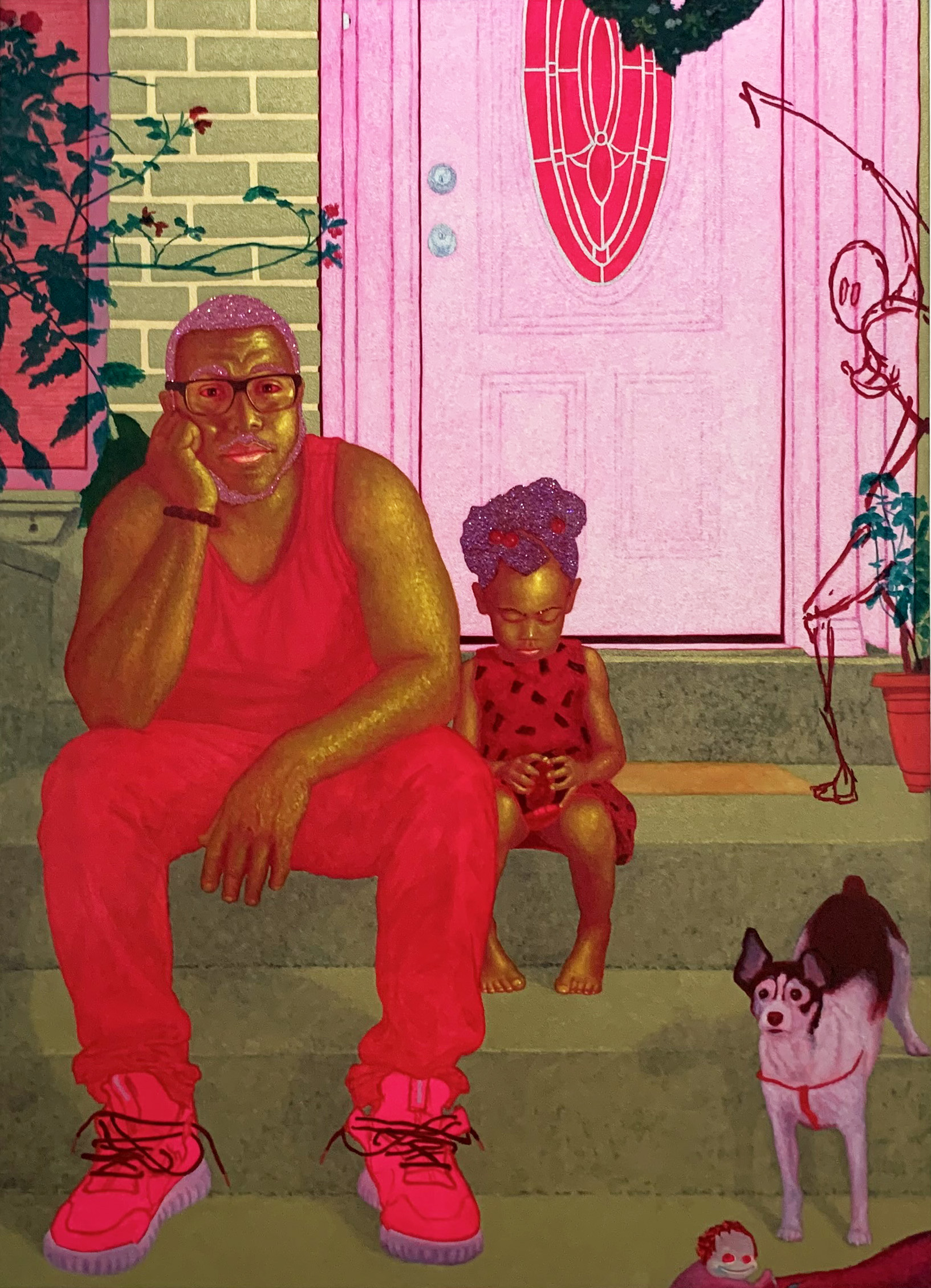
Arcmanoro Niles’ first solo show at Lehmann Maupin Gallery opens with this oil, acrylic and glitter image of a contemplative man, raising his eyebrows at the viewer or maybe at life itself. Titled ‘Hey Tomorrow, Do You Have Some Room For Me: Failure Is A Part Of Being Alive,’ the show looks hopefully to the future while acknowledging the challenges and temptations of life now. With this image, Niles takes a scene from everyday life and turns it electric with red and pink tones and glitter accents; at the bottom and right, he adds sketchily drawn figures that represent the pleasuring seeking id, begging the question of how these interlopers will effect the tranquil domestic life pictured. (On view in Chelsea through Aug 27th.)
Arcmanoro Niles, I Thought Freedom Would Set Me Free (And You Gave Me A Song), oil, acrylic and glitter on canvas, 70 x 50.5 x 2 inches, 2020.
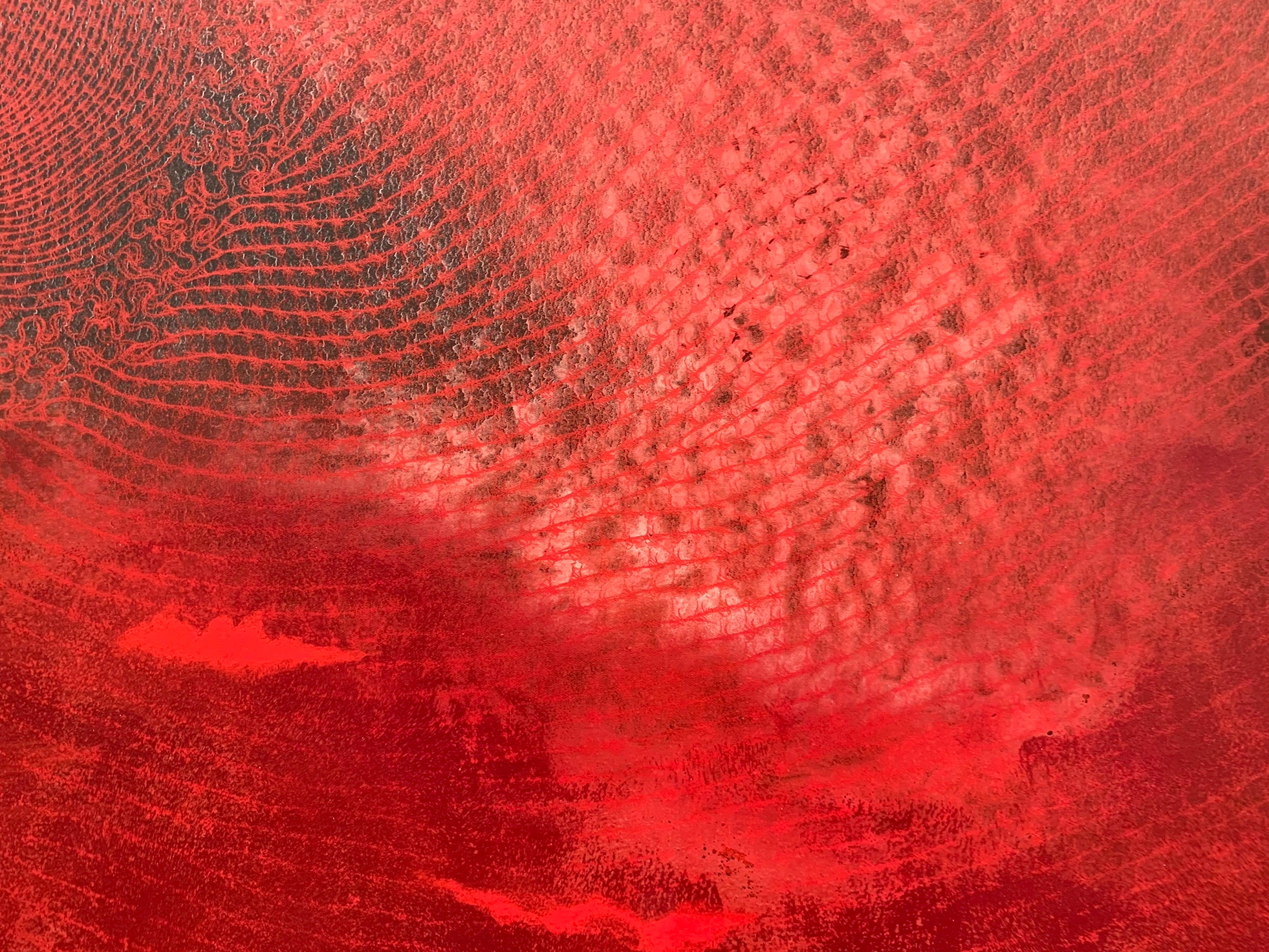
Painting from a self-described ‘birds eye view,’ London-based artist Shirazeh Houshiary applies layers of water and pigment along with colored pencil lines to her canvas in a labor-intensive process that lends a sublime effect to her monumental abstractions. In this detail image from the over 17 feet long ‘Feel,’ now on view at Lehmann Maupin Gallery, vivid contrasts of red and black are a portent for unknown events of obvious consequence. (On view through May 28th. Masks and social distancing are required).
Shirazeh Houshiary, Feel, Pigment, pencil, and black aquacryl on canvas and aluminum, 74.8 x 212.6 inches, 2019.
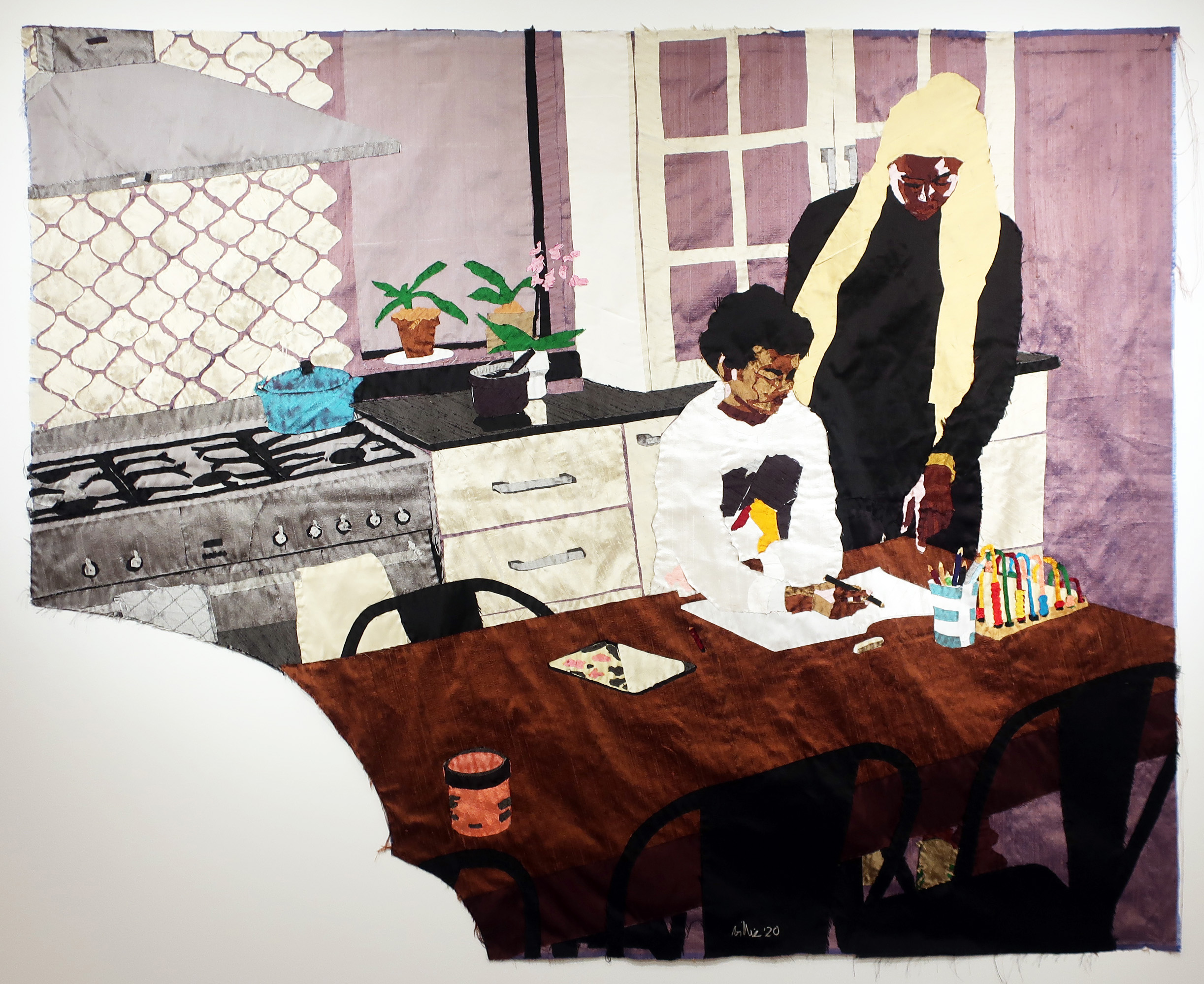
Titled ‘Wings of Change’ rather than ‘winds,’ Billie Zangewa’s new body of work at Lehmann Maupin Gallery speaks to the importance of personal renewal and of hope in the face of difficult times. Created by hand-stitching pieces of silk together on larger, fragmentary surfaces, perfection is not the goal. Rather, each work acknowledges life’s messiness (all were made during the pandemic) and features Zangewa and her son continuing to build their life together at home. (On view in Chelsea through Nov 3rd).
Billie Zangewa, Heart of the Home, hand-stitched silk collage, 53.5 x 43.25 inches, 2020.
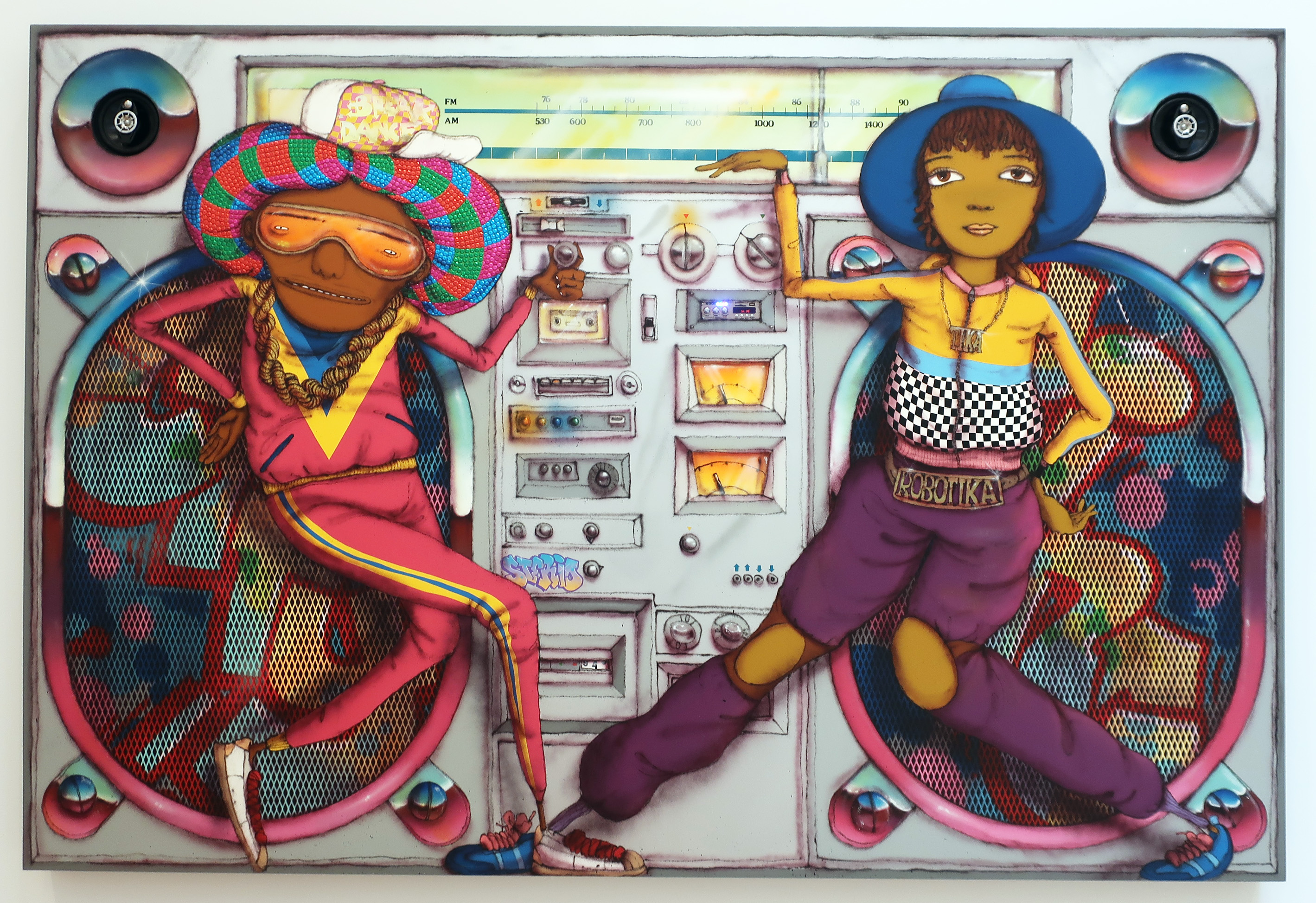
Os Gemeos, the Brazilian brothers who’ve painted giant outdoor murals around the world, are back in town with an exhibition of typically fabulous paintings at Lehman Maupin Gallery. Harkening back to the artists’ initiation into the world of street art, music and dance in the 80s, this painting actually functions as a boombox, streaming music through Bluetooth speakers. (On view in Chelsea through Oct 31st. Masks and social distancing are required and gallery capacity is limited. Visitors must give contact info.)
Os Gemeos, Boombox Walking, mixed media with sequins on MDF with sound system composed of two 6 inhc JBL/Harman Triaxial 60W speakers, DC 12V input bivolt amplifier and source 12V 3A, 74.61 x 110.04 x 4.53 inches (framed), 2020.
The Okefenokee National Wildlife Refuge is the largest national wildlife refuge east of the Mississippi River, a draw for hundreds of thousands of visitors a year and an area of interest for mining companies. The wetland recently drew iconic photographer Catherine Opie to shoot images now on view at Lehmann Maupin Gallery that expand her career-long exploration of US places and communities of people. Threatened not just by limited environmental protections but also by climate change, the Swamp is counterpoint to the oft repeated notion of ‘draining the swamp’ from Opie’s perspective. (On view in Chelsea through Sept 26th. No appointment is necessary but social distancing and masks are required.)
Catherine Opie, detail of Untitled #1 (Swamps), pigment print, 40 x 60 inches, 2019.
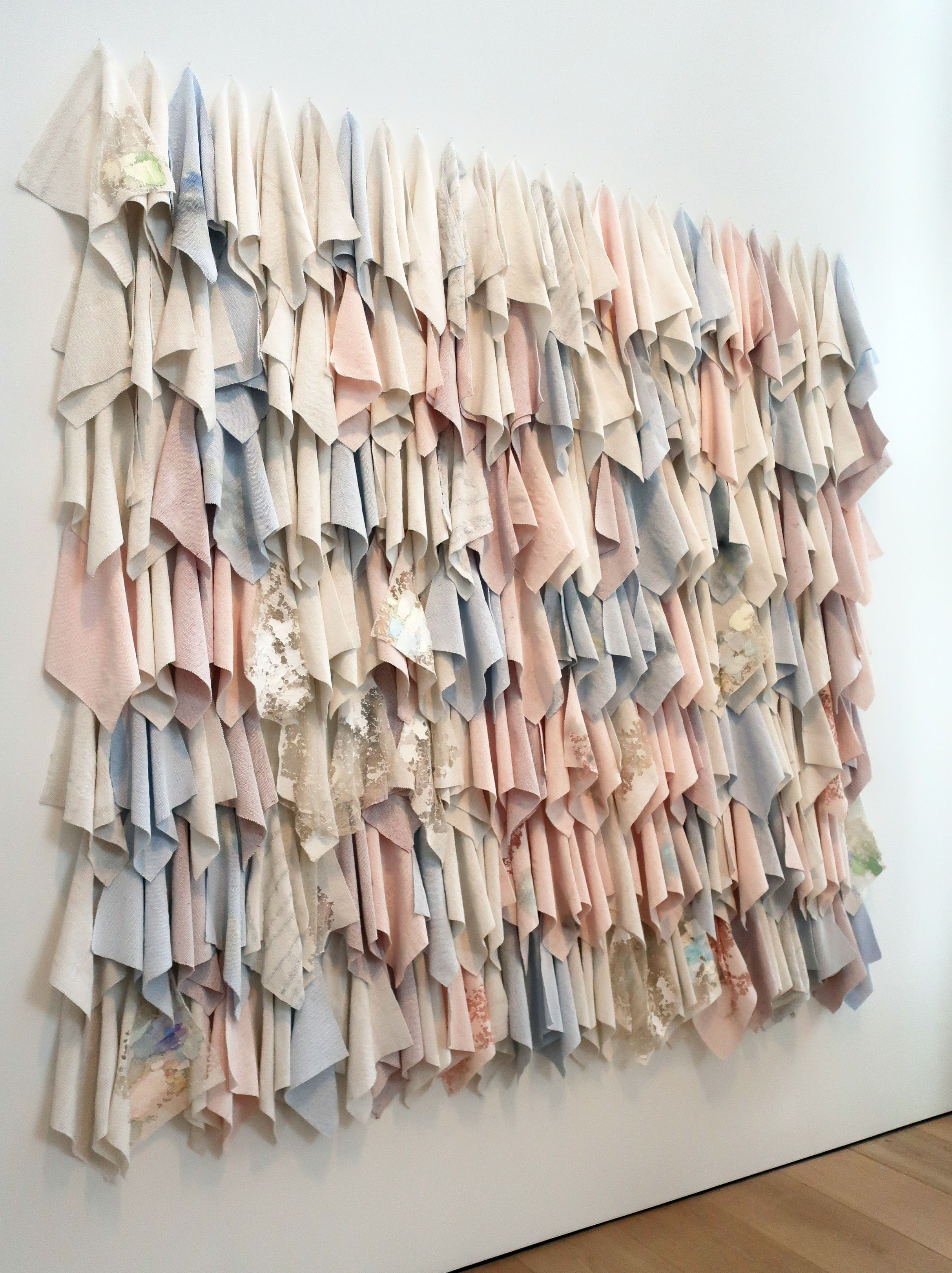
Liza Lou is no stranger to communal art projects, having run studios in California and South Africa employing dozens of craftspeople to hand-make sheets of beads as seen in this textile piece at Lehmann Maupin Gallery from fall ‘18. Now isolated in her studio by the pandemic, she’s launched #apartogether_art, an open invitation to the on-line community to take inspiration from childhood security blankets and make textiles using materials at hand. With hundreds of postings, the project testifies to the ubiquity and diversity of the creative impulse. (Also accessible via apartogether.com).
Pannus, oil paint on woven glass beads and thread, 89 x 95 x 6 inches (approximately overall), 2018.
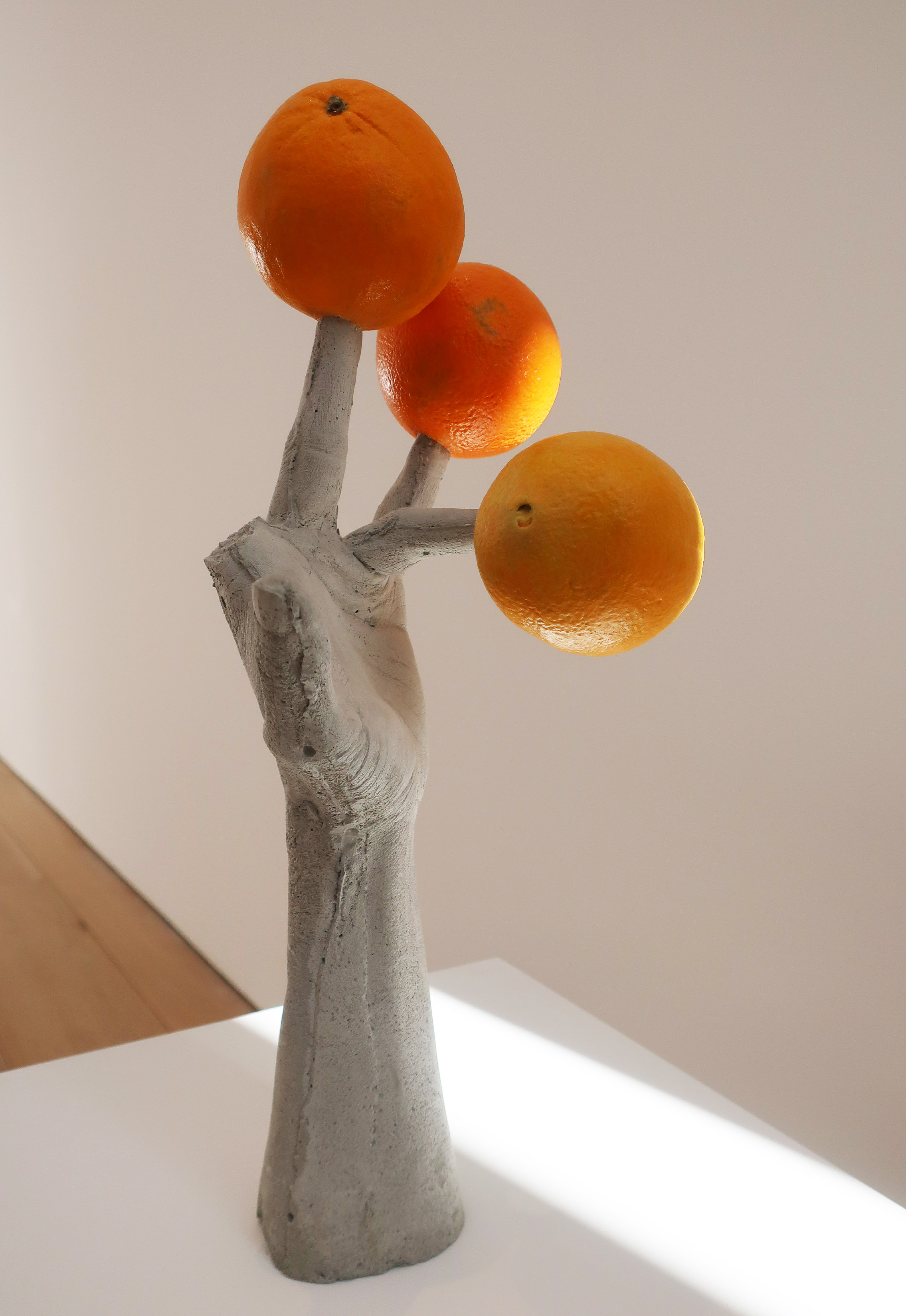
Beijing gallery Tang Contemporary Art recently reopened (after closing in January to prevent the spread of COVID-19) with a showcase of work by artists represented by Konig Galerie in Berlin. The exhibition includes Austrian artist Erwin Wurm’s deliberately absurd ‘abstract sculpture’ (formed from variously sized cast bronze frankfurters) which brings to mind recent work at New York’s Lehmann Maupin Gallery which involved food treated as an object rather than something to eat. Made entirely of concrete, this sculpture is a permanent version of Wurm’s One Minute Sculptures, in which participants interact with everyday objects. (Photo from New York Art Tours’ archive, Jan ’20).
Erwin Wurm, One Minute forever (hands/fruits), concrete, 15.35 x 7.87 x 5.91 inches, 2019.
“Driving through Los Angeles, you see all kinds of things out your window, and they go by so quickly,” Alex Prager told the New Yorker as she explained the bizarre scenarios and eccentric characters in her latest photos and video at Lehmann Maupin Gallery. This towering, nine-foot-tall sculpture dominates the gallery and appears in an even larger version in Prager’s short film ‘Play the Wind,’ an homage to the unexpected and strange on the streets of Prager’s hometown. (On view in Chelsea through Oct 26th).
Alex Prager, Big West, foam, plastic, fabric and aluminum on metal base, 112 x 50 x 23 inches, 2019.
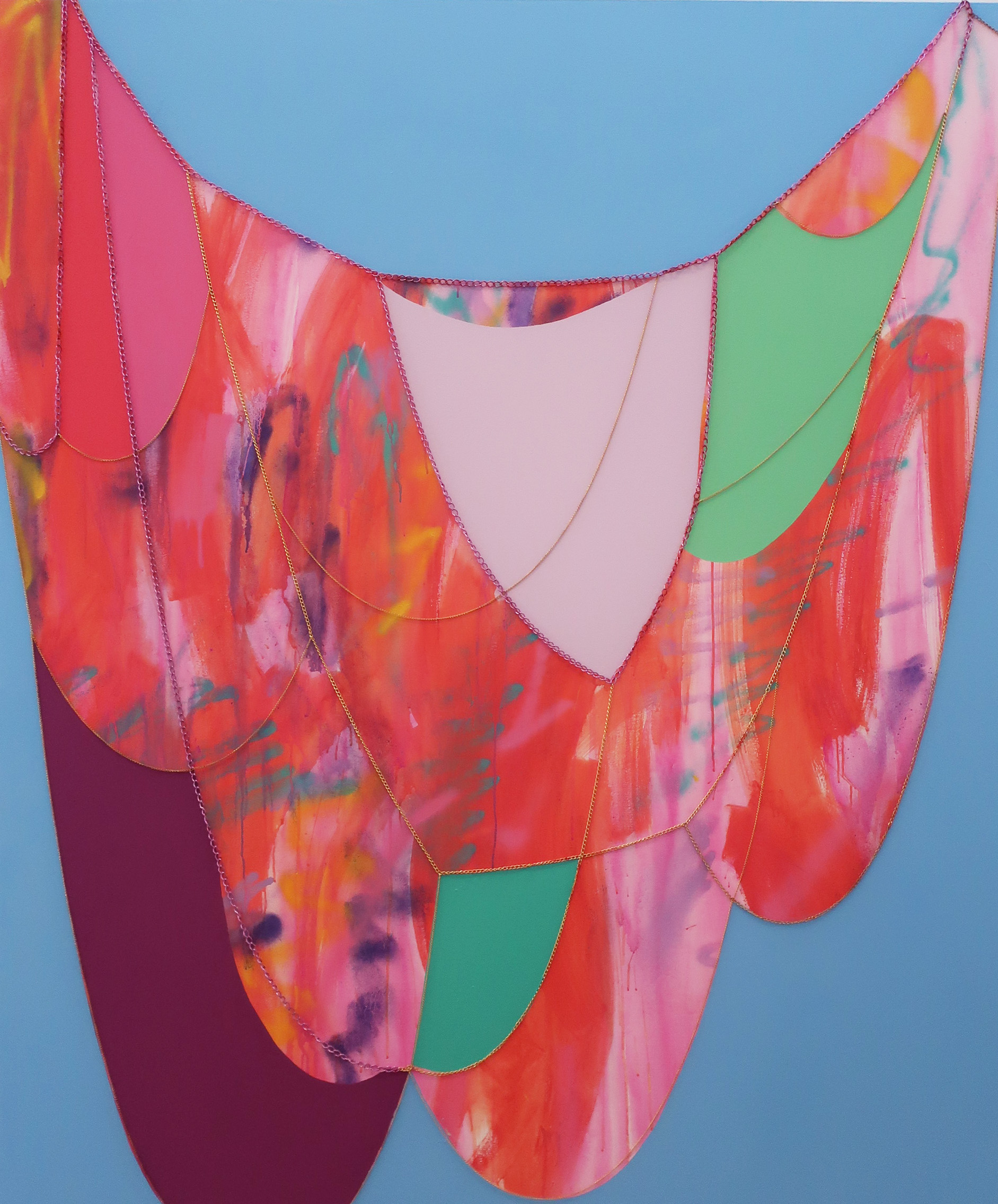
Using unconventional painting materials like the jewelry chains crisscrossing this canvas, LA-based artist Sarah Cain aims to prompt memories and evoke emotions in her viewers. Actually titled ‘Emotions,’ this painting simultaneously suggests a spill of paint, hanging fabric and fairground flags, blurring abstraction and representation and taking the mind several places at once. (On view in Lehmann Maupin Gallery’s summer group show ‘cart, horse, cart’ in Chelsea through August 16th).
Sarah Cain, Emotions, acrylic and chains on canvas, 72 x 60 inches, 2018.
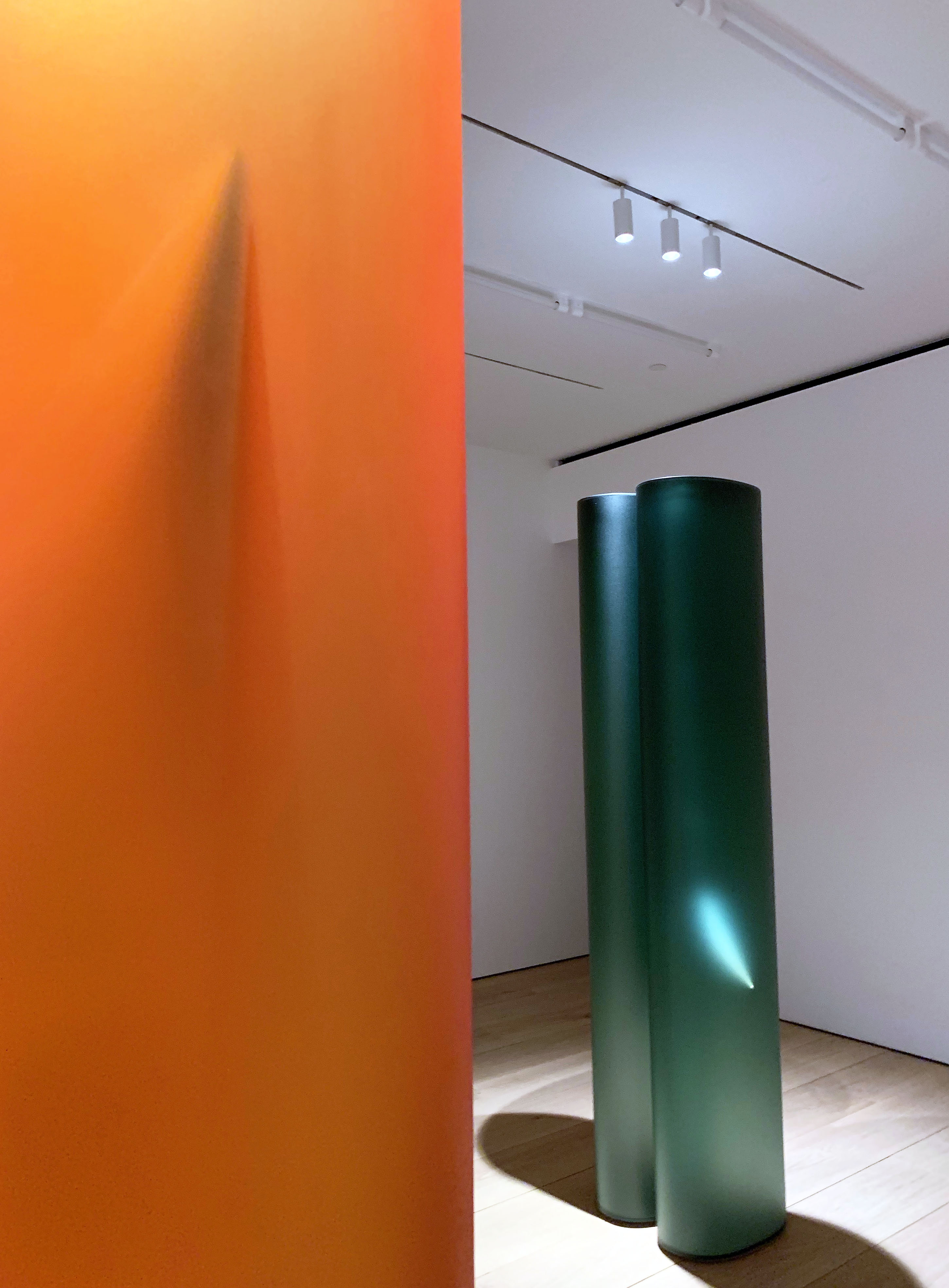
California Light and Space artist Helen Pashgian’s striking acrylic columns are both warm and austere, drawing visitors to Chelsea’s Lehmann Maupin Gallery in closer to see the mysterious, barely visible shapes within. Calling them ‘presences,’ Pashgian acknowledges that each distinct body has a character that can be perceived by alert viewers. (On view through May 24th).
Helen Pashgian, (foreground) Untitled (orange), (background) Untitled (green), formed acrylic with acrylic elements, 2009.
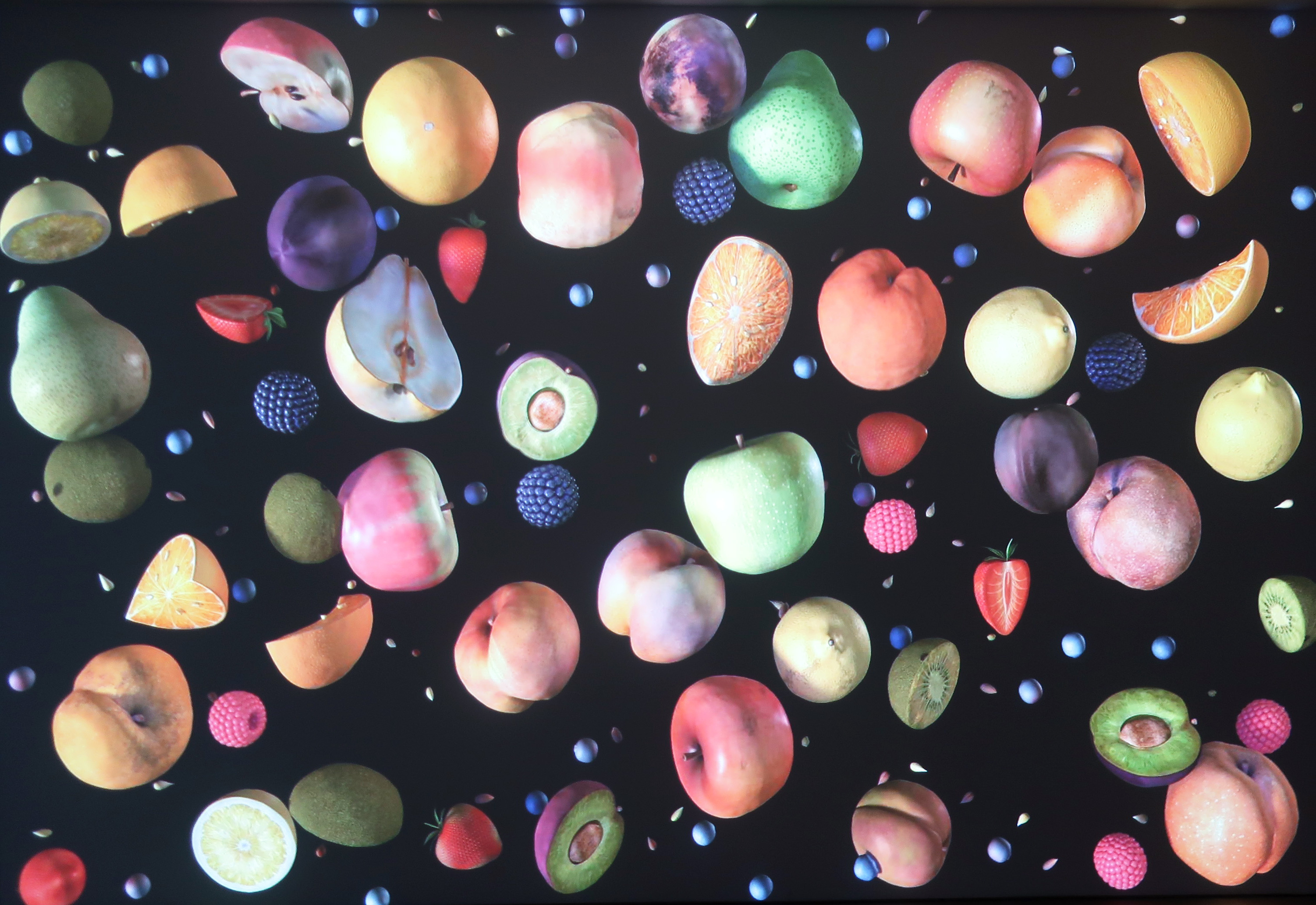
A field of fruit appears perfect until it begins to move and collide, revealing soft surfaces that bespeak rot below a flawless exterior. Titled Impeach I, this animation by Jennifer Steinkamp began life as an LA billboard and now exists as a selection of constantly moving, morphing and reforming fruit. (On view at Lehmann Maupin Gallery’s 22nd Street Chelsea location through April 13th).
Jennifer Steinkamp, Impeach 1, video installation, dimensions variable, 2019.
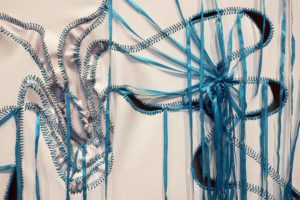
In South African artist Nicholas Hlobo’s cut canvas artworks, ribbons refer to the feminine while leather points to the masculine. In this detail of a larger work, the ribbons and the canvas they hold together defy gender assignment in curves and openings that evoke the body and geography. (On view in Chelsea at Lehmann Maupin Gallery through August 24th).
Nicholas Hlobo, detail of Intlantsana, ribbon on canvas, 47.24 x 70.87 inches, 2017.
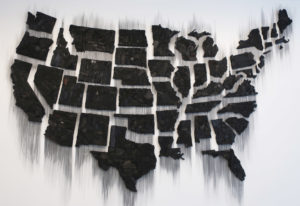
Teresita Fernandez’s show last spring at Lehmann Maupin featured an American landscape constructed of charcoal, maps burned into paper and a ceramic wall panel featuring raging flames. Currently on view on Chelsea, ‘Fire (United States of America),’ forcefully continues Fernandez’s consideration of the US landscape as contentious and combustible. (On view in Chelsea through May 5th).
Teresita Fernandez, Fire (United States of the Americas), charcoal, 57 parts, 158 x 175.75 x 1.25 inches (approx.), 2017.
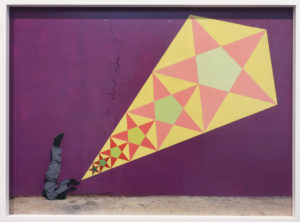
In a sequence of six photos by South African artist Robin Rhode, an acrobatic mathematician contorts his body to project a ‘Lute of Pythagoras,’ a series of pentagrams locked together in pleasing mathematical proportion. At the gallery entrance, Rhode quotes Swiss architect and urban planner Le Corbusier’s assertion that humanity attempts to save itself from chaos through geometry. Rhode’s efforts to better humanity by joining art and geometry feel poignantly quixotic. (On view at Lehmann Maupin Gallery in Chelsea through Feb 24th).
Robin Rhode, one of six panels in Meditation on the Lute of Pythagoras, 6 parts, each 21.5 x 28.58 x 1.5 inches, c-print, 2017.
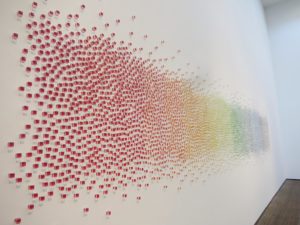
Shortly after Teresita Fernandez made this rainbow made of acrylic cubes, she exhibited it with other sculpture to create a beautiful, stylized garden from man-made materials. With water as a theme, Fernandez also showed a swooping waterfall crafted from curving blue and white plastic alongside this rendering of light refracted in mist. (At Lehmann Maupin Gallery’s Lower East Side location through Sept 1st).
Teresita Fernandez, 3:37pm, acrylic, mixed media, 57.48 x 274.8 x .98 inches, 2001.
The pyramid on the back of the U.S. dollar bill – symbolizing long lasting power – has been rendered in outlines of U.S. currency in this piece by Nari Ward (seen here in detail). The paper money edges are askew, however, suggesting an unsound structure, while cowry shells (once used as currency elsewhere in the world) create straight and sound lines. (At Lehman Maupin Gallery in Chelsea through August 25th).
Nari Ward, detail of ‘Providence Spirits (Gold)’, U.S. currency edges, cowrie shells, wooden rolling ladders, gold powder, gel medium, indelible ink, and overproof white rum on canvas stretched over wood panel, 96 x 96 inches, 2017.
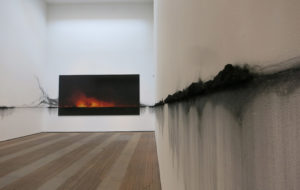
A horizon line made of charcoal surrounds visitors to Teresita Fernandez’s haunting installation of burnt and burning landscape at Lehmann Maupin Gallery on the Lower East Side. Though Fernandez has explained that she wants to question the reality of the ‘virgin’ landscape described by early European settlers in North America by pointing to existing slash and burn farming methods, this handsome installation tantalizingly offers many interpretations. (On view through May 20th).
Teresita Fernandez, Charred Landscape (America), charcoal, dimensions variable, site specific installation for Lehmann Maupin, New York, 2017. Background: Fire (America) 5, glazed ceramic, 96 x 192 x 1.25 inches, 2017.
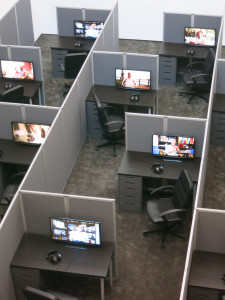
In an eighteen-screen installation set in a warren of cubicles at Lehmann Maupin Gallery, French-Algerian artist Kader Attia explores western vs non-western approaches to mental health in a series of monologues by European and African health professionals. The dehumanizing office environment contrasts the intimacy of each screening space, resulting in an unsettling experience that invites new discoveries. (At Lehmann Maupin’s Lower East Side location through March 4th).
Kader Attia, Reason’s Oxymorons, 18 films and installation of cubicles, duration variable, 13-25 minutes, 2015.
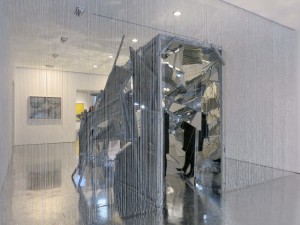
The mirrored, cave-like entrance to Lee Bul’s latest solo show at Lehmann Maupin Gallery dazzles. Once inside, however, the ceiling height diminishes rapidly and visitors emerge into the main gallery at an uncomfortable crouch. Failed promises are a recurring theme in Lee Bul’s oeuvre; here she sends a strong message from the beginning of the exhibition. (Through Feb 11th).
Lee Bul, Souterrain, plywood on wooden frame, acrylic mirror, acrylic paint, LED lighting and electronic wiring, 107.87 x 141.73 x 188.98 inches, 2012/16
Twice a day for ten minutes, gallery staff at Lehmann Maupin Gallery switch on this magical instrument, constructed by Brazilian street art twins OSGEMEOS. The gallery fills with an eerie melody in keeping with the dream-like setting constructed by the duo, transporting visitors far away from the everyday. (In Chelsea through Oct 22nd).
OSGEMEOS, O Beijo (The Kiss), musical instruments, mechanical and electrical equipment, wood, metal, steel and fiberglass resin, 90.55 x 57.09 x 70.87 inches, 2015-16.
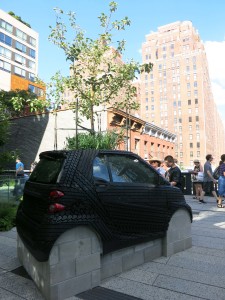
Smart cars snag great parking spaces in New York; this one, created by Harlem-based artist Nari Ward, enjoys a privileged place on the High Line where an admiring audience regularly surrounds it. Inspired by an abandoned car that hosted a lime tree in his father’s yard in Jamaica, Ward planted an apple tree in this car, lining the exterior with rubber tire treads and turning a symbol of nimble urban driving into a stationary support for nature. (On the High Line through March 2017).
Nari Ward, Smart Tree, Smart car, cinder blocks, tire treads, soil, apple tree, 106 x 61 x 120 inches, 2016.
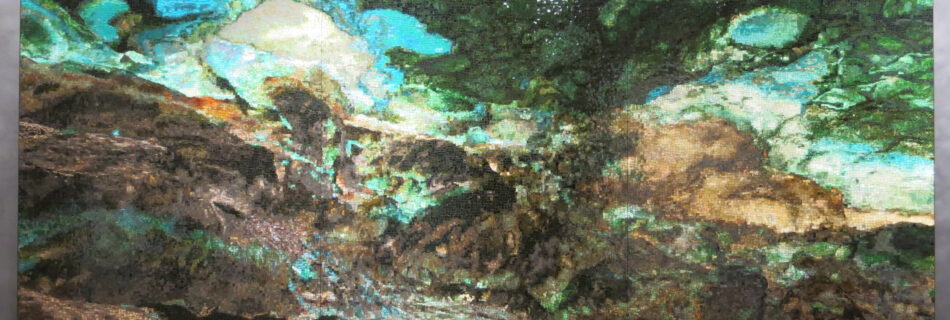
Inspired by the cave systems of Vinales, Cuba, Teresita Fernandez’s glimmering semi-abstract ceramic mosaic pictures a lush cave interior with the suggestion of human figures in elemental interactions with nature. (At Lehmann Maupin through Dec 31st).
Teresita Fernandez, Vinales (Subterranean), glazed ceramic, 72 x 144 x 1.5 inches, 2015.
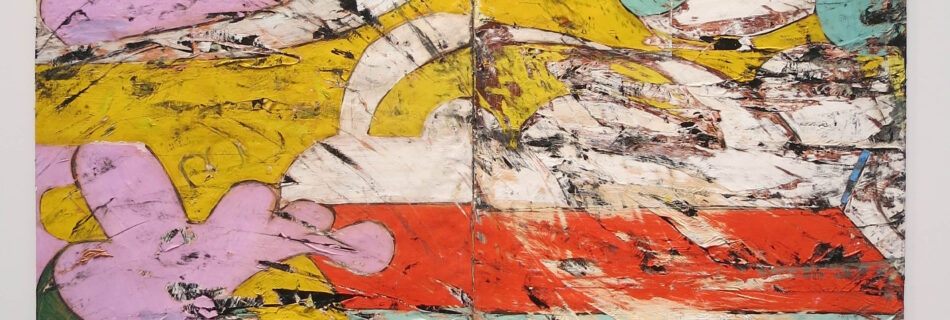
Using skins of dried, peeled paint as a collage material, Angel Otero adheres color to his canvas in fleshy pinks and mustard yellows that recall deKooning’s sensuous Pink Angels tempered by a cooler palette. (At Lehmann Maupin on the Lower East Side through Dec 31st).
Angel Otero, Come Sleep with Me: We Won’t Make Love, Love will Make Us, oil paint and fabric collaged on canvas, 96 x 72 x 2.5 inches, 2015.
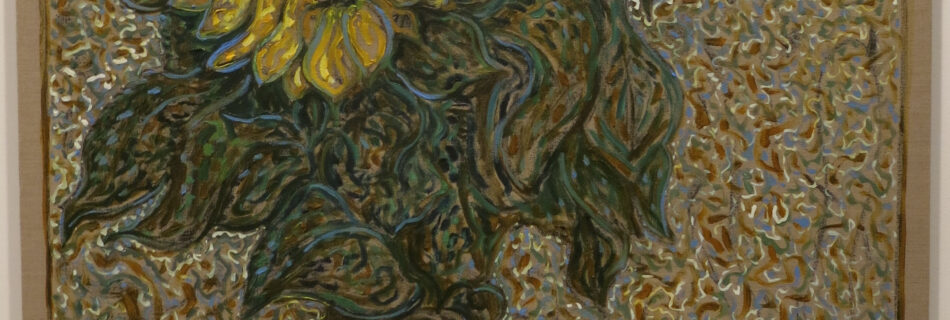
It comes as no surprise that British artist Billy Childish counts Van Gogh as an influence. By putting these sunflowers in a vessel that recalls Gauguin’s ceramics, Childish marries two artists who lived outside of conventional society in an image that pulsates with pattern. (At Lehmann Maupin’s West 22nd Street location through Oct 31st).
Billy Childish, Sunflowers, oil and charcoal on linen, 60.04 x 42.13 inches, 2015.
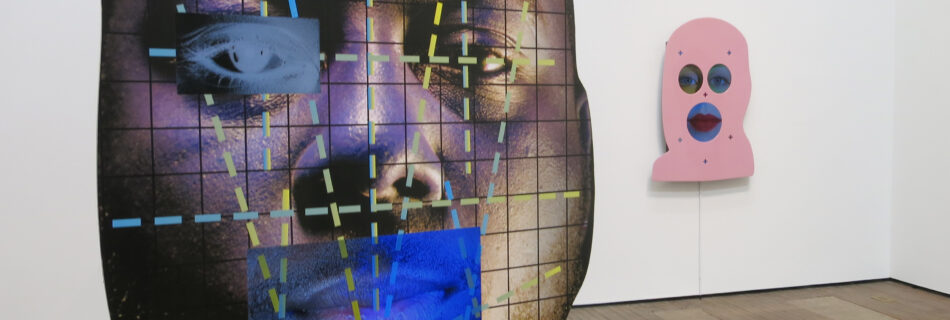
Huge whispering heads with combined features of several people tower over visitors to Tony Oursler’s latest solo show at Lehmann Maupin’s Lower East Side space. Inspired by his wariness of facial recognition technology, Oursler creates hybrid faces composed not of a unified whole but of identifiable parts ready to be stored as info in a database. (Through June 14th).
Tony Oursler, CV (15), wood, LCD screens, inkjet print, sound, performed by Jason Scott Henderson and Joanna Smolenski, 106 x 71.5 x 30.5 inches, 2015.
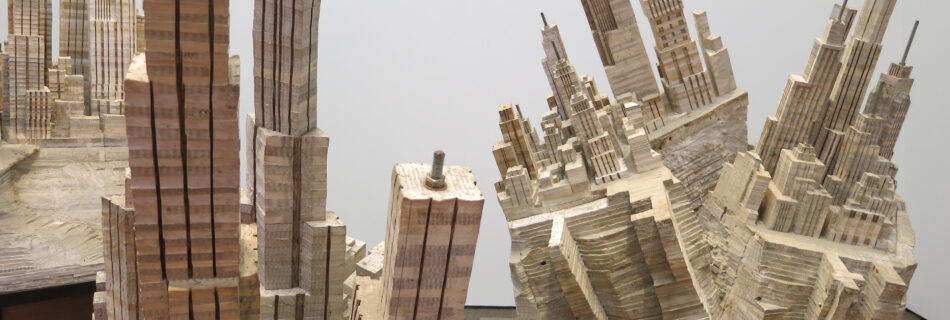
Liu Wei’s three sculptures of fortress-like cities made of carved books, are high on towers of bedrock that appear to be splitting apart, suggesting both destruction and crystalline growth. (At Lehmann Maupin on the Lower East Side through April 18th).
Liu Wei, Library II-II, books, wood, iron, and hardware, 2013.
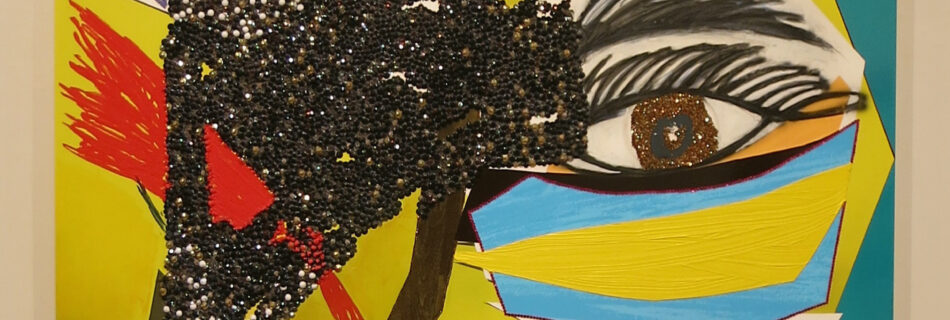
Portraits of Picasso’s women inspired Mickalene Thomas’ latest series at Chelsea’s Lehmann Maupin Gallery, including this rhinestone and acrylic collage. Exuberant eye-brows and lashes suggest exotic bird plumage while garish, fauve colors and many sharp angles hint at the sitter’s strong personality. (Through August 8th).
Mickalene Thomas, Carla, enamel, acrylic, oil paint, glitter, rhinestones, oil pastel, graphite and silk screen on wood panel, 96 x 72 inches, 2014.
Korean artist Lee Bul’s ‘Via Negativa II’ appears to hover mirage-like above the gallery floor, a perfect intro to the disorienting experience of walking through Bul’s mirrored maze to an inner sanctum of lights that appears to extend into infinity. (At Lehmann Maupin Gallery‘s Lower East Side location through June 21st).
Lee Bul, installation view of Via Negativa II, polycarbonate sheet, aluminum frame, acrylic and polycarbonate mirrors, steel, stainless-steel, mirror, two way mirror, LED lighting, silkscreen ink, 275 x 500 x 700cm, 2014.
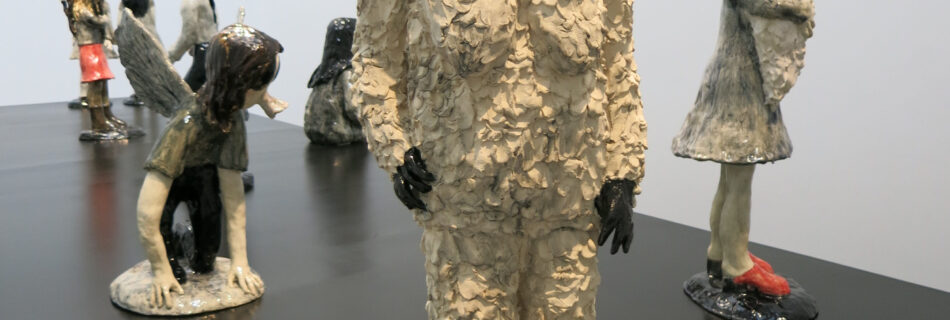
A bird woman, eerie twins and a girl with branches growing out of her body are just some of the odd characters populating Swedish artist Klara Kristalova’s show of evocative new ceramic sculpture at Lehmann Maupin Gallery on the Lower East Side. Inspired by folk tales, daily life, movies and even overheard conversations, the psychologically charged figures hint at intriguing stories. (At Lehmann Maupin Gallery through April 26th. Kristalova is also showing at Galerie Emmanuel Perrotin on Madison Ave through April 12th).
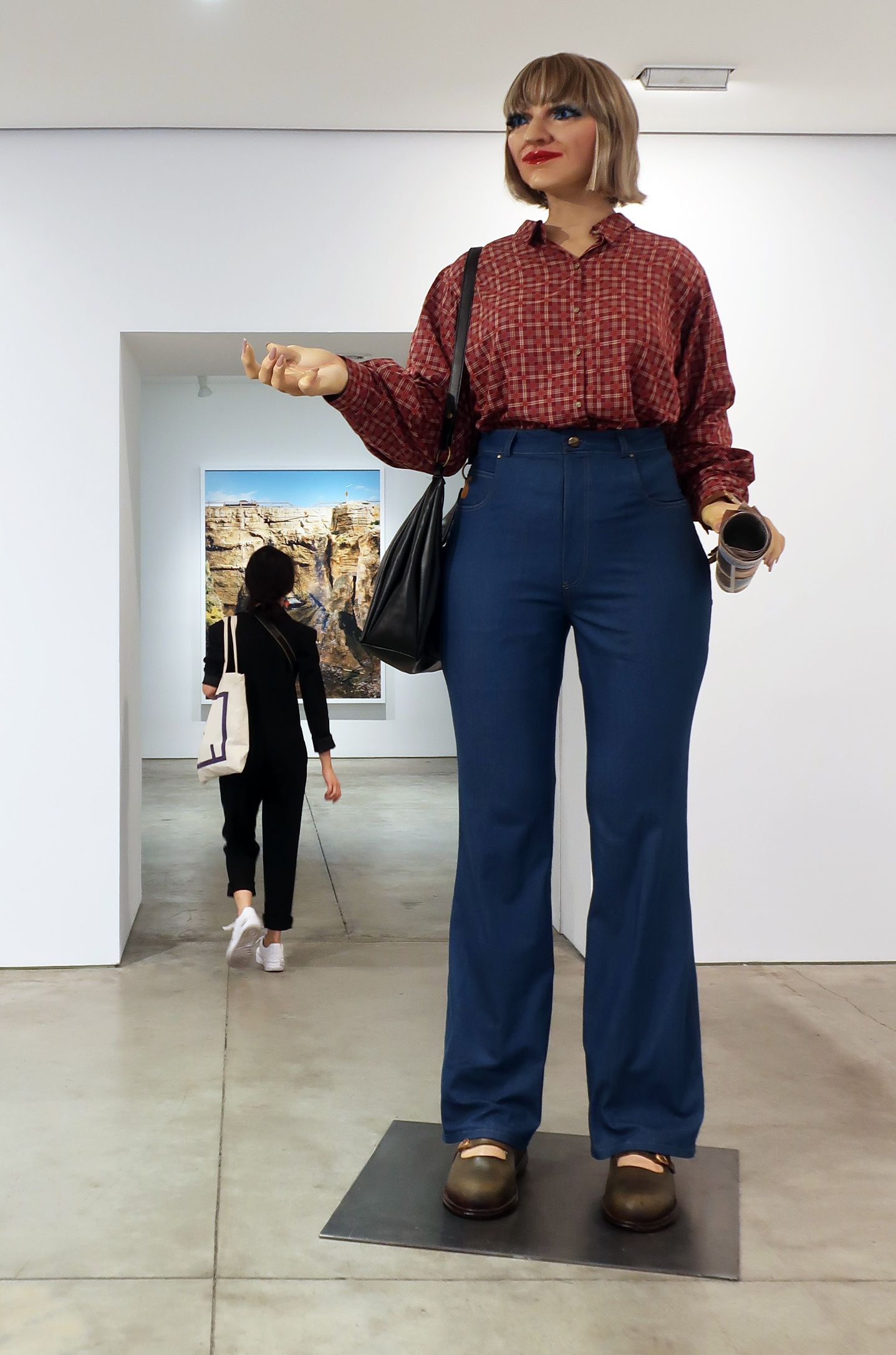
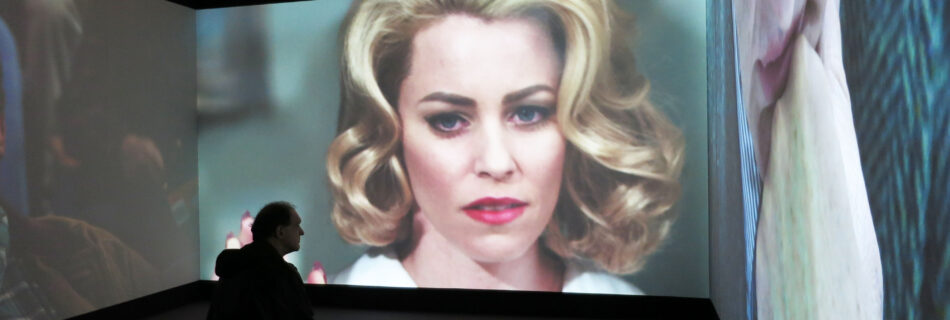
Alex Prager has explained that living in LA, she doesn’t have a lot of experience with crowds. Her latest body of photos and her film ‘Face in the Crowd,’ makes a break with the norm though as Prager directs actor Elizabeth Banks and hundreds of other actors on constructed sets as they play out scenes of crowd dynamics from the thrilling to the terrifying. (At Chelsea’s Lehmann Maupin Gallery through Feb 22nd).
Alex Prager, still from ‘Face in the Crowd’ at Lehmann Maupin Gallery, January, 2013.
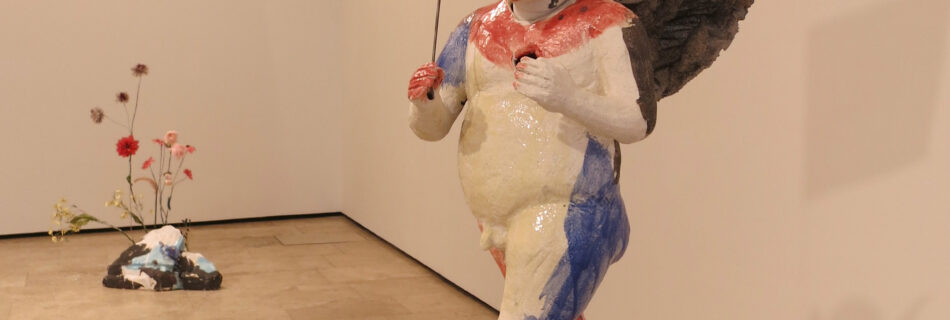
Anne Chu lifts her chubby cherub straight out of 18th century Rococo painting, then gives it a makeover. Decorative splashes of paint and a flag bearing an indistinct face question this putti’s celestial purpose. (At Chelsea’s Lehmann Maupin Gallery through Aug 16th).
Anne Chu, Putti with Flag, ceramic, stone, fabric, metal, 2001.
A couple in a rowboat would seem to be tame subject matter for rebellious rocker and prolific writer Billy Childish, but the man’s missing face and this painting’s line-driven style channels provocative Nordic expressionism a la Munch. (At Lehmann Maupin’s Chelesa location through April 20th).
Billy Childish, Rowers (version y)(Oyster Catchers, Thames Estuary 1932), oil and charcoal on linen, 2012.
This gruesome, one-eyed, blue cigarette bedecked creature with perfect teeth could be the patron deity of Bali-based Ashley Bickerton’s portraits of crazed hedonists. At over seven feet high, the sheer profusion of color and ornament – from her bottle cap necklace to paint-smeared coral – is impressive. (At Lehmann Maupin’s Lower East Side location through April 20th)
Ashley Bickerton, White Head I, acrylic, digital print and plastic laminate on wood, 2012.
Mickalene Thomas, ‘Vertical View of Jardin d’Eau,’ rhinestones, acrylic, oil and enamel on wood panel, 2012.
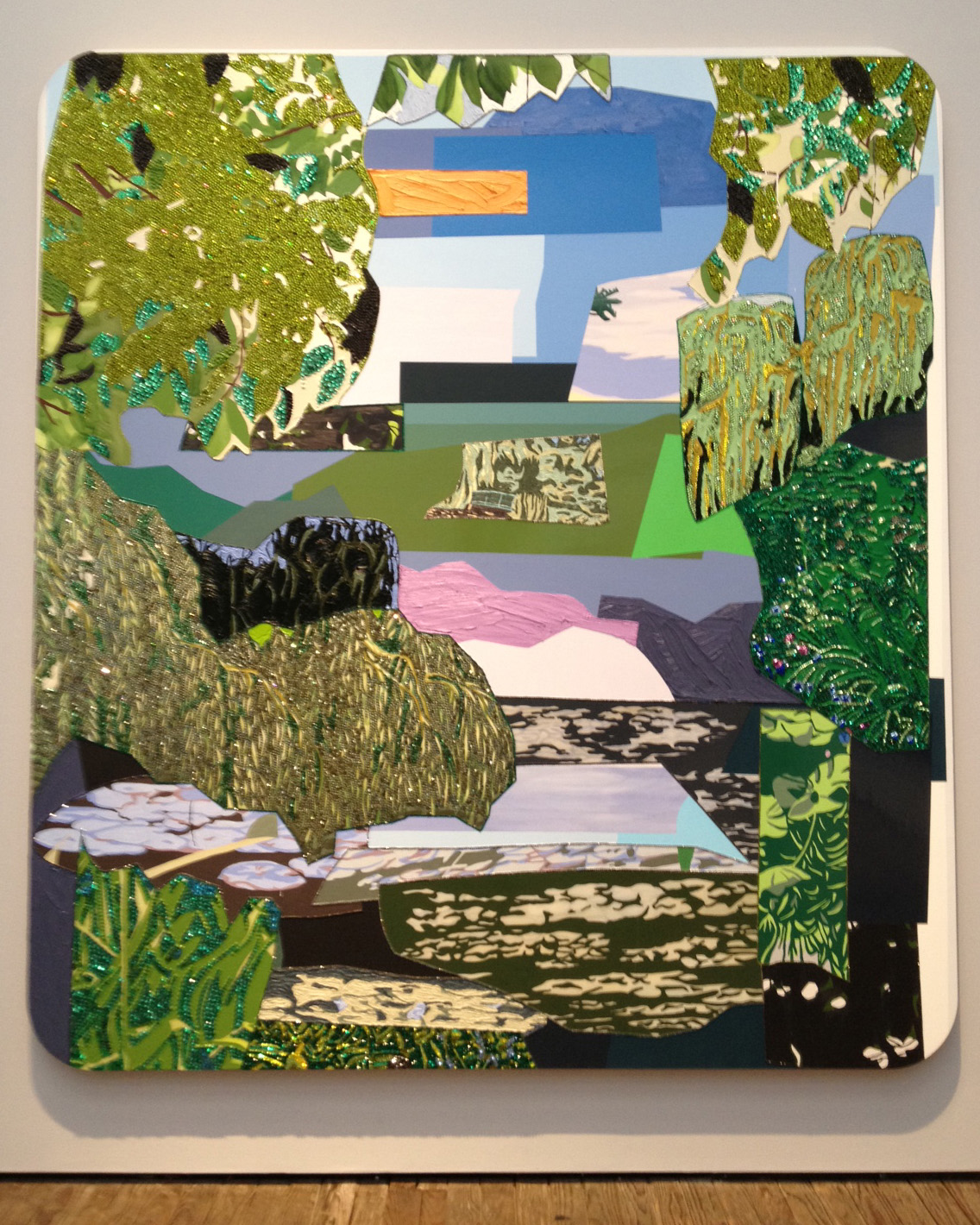
Mickalene Thomas is having her moment in New York, with gallery shows at Lehmann Maupin Gallery in Chelsea and on the Lower East Side while her retrospective at the Brooklyn Museum continues. This landscape, now on view on the Lower East Side and titled ‘Vertical View of Jardin D’Eau’ was inspired by Thomas’ residency at Monet’s residence and garden at Giverny, home of his famous water lilies. (At Lehmann Maupin Gallery through Jan 5th).
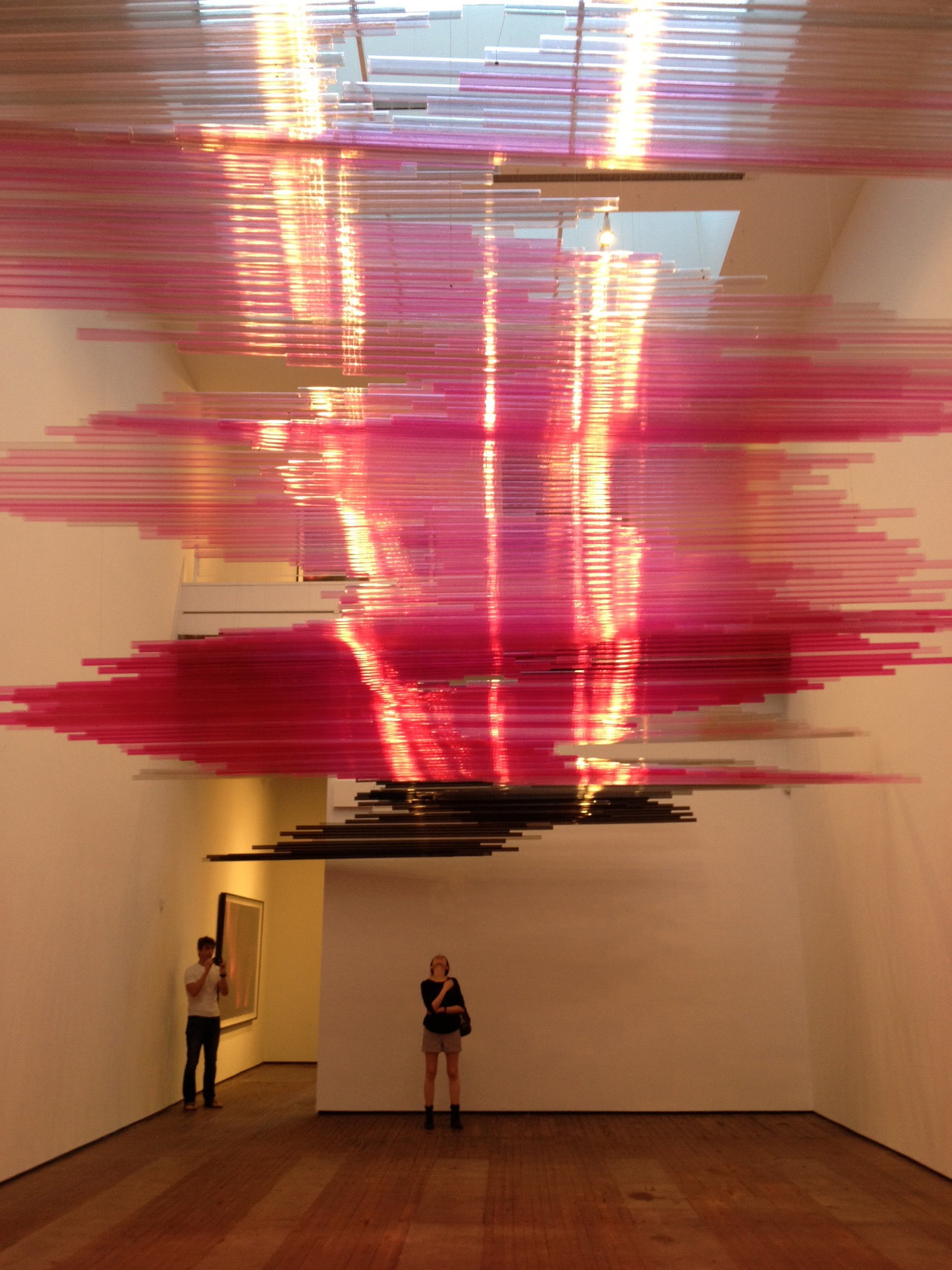
Teresita Fernandez created this sculpture on site at Lehmann Maupin’s Lower East Side location this summer, turning thousands of translucent, colored layers of polycarbonate into an installation evoking the lights of the aurora borealis. (Through October 20th.)
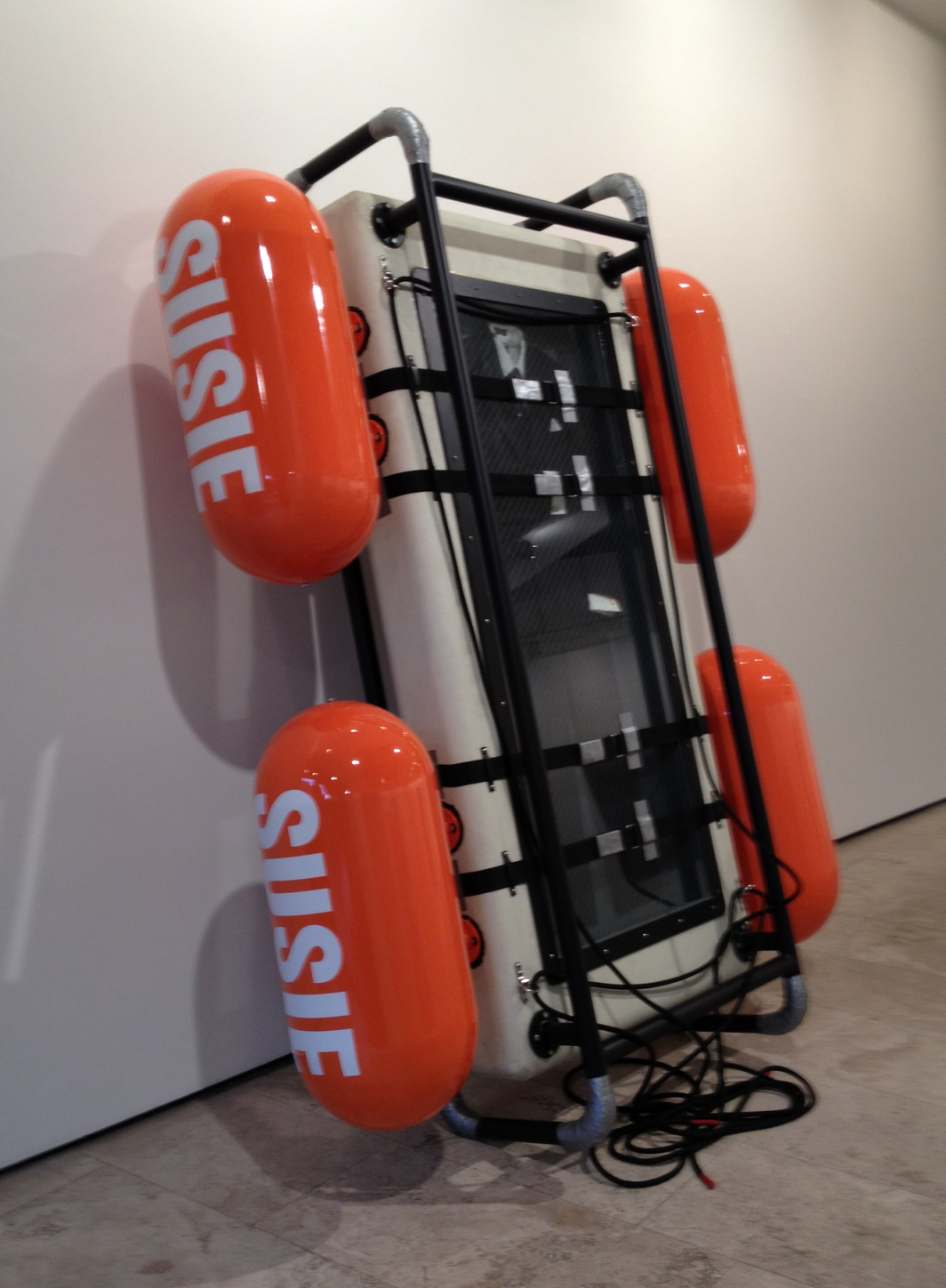
Ashley Bickerton, ‘Seascape: Floating Costume to Drift for Eternity I (Armani Suit), suit, glass, aluminum, wood, caulk, fiberglass, enamel, canvas and webbing, 1991.
As far as self-portraits go, ‘Seascape: Floating Costume to Drift for Eternity I (Armani Suit)’ by Ashley Bickerton is a little on the dark side, despite its bright orange buoys. Made in 1991, just two years before this regular on the downtown New York art scene relocated permanently to Bali, it seems to foretell his departure. Quixotic, a little lonesome, and stylishly branded by Armani and his signature ‘Susie’ logo – a semi-corporate brand of his own invention – Bickerton’s craft signals a dignified leave-taking, a memorial to a past life and an adventure about to begin. (Through August 17th at Lehmann Maupin Gallery, Chelsea.)
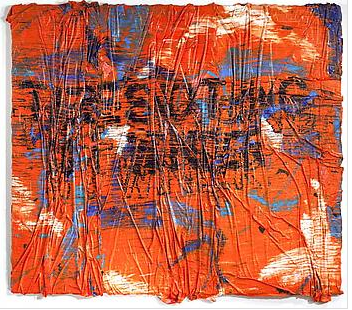
Angel Otero, 'There's nothing so I wonder," 2011. Photograph courtesy of Lehmann Maupin, New York.
Angel Otero’s unconventional process—fashioning assemblages or lively paintings using “skins” of oil paint applied to glass before being peeled off—is the draw in his New York solo debut. An awkward anthropomorphic object perched on a chintzy armchair, messy Expressionist interiors in garish colors and one uninspired composition with text demonstrate the young artist’s competing sensibilities. Far better are Otero’s large-scale abstractions—action paintings in which paint itself seems to have agency, shooting off the edge of the canvas, bunching dramatically or seductively veiling its support.
The show’s smallest and punchiest piece—a black number whose surface is concertinaed like a crushed soda can—has an affinity with Piero Manzoni’s pleated white canvas, but in place of purity there is an excess of paint, piled up in waves as if to hide some (perhaps failed?) experiment beneath. Likewise, a blocky form wrapped in streaks of yellow and black traffics in concealment, channeling Christo’s early wrapped objects—minus, unfortunately, the mystery.
The play between a vibrantly colored surface and an occasionally glimpsed support that is waxy and dead is more alive than, say, Steven Parrino’s twisted and pulled canvases, and aligns Otero with Fabian Marcaccio’s use of paint as a sculpting material. Recurrent blurring also recalls Gerhard Richter’s scraped abstract canvases, but unlike Richter, Otero’s intent is to build, not cancel out. His undulating skins re-create the drama of a hastily drawn curtain, awaking the senses and offering a celebration of paint’s possibilities.
Originally published in Time Out New York, issue 807, March 31 – April 6, 2011.