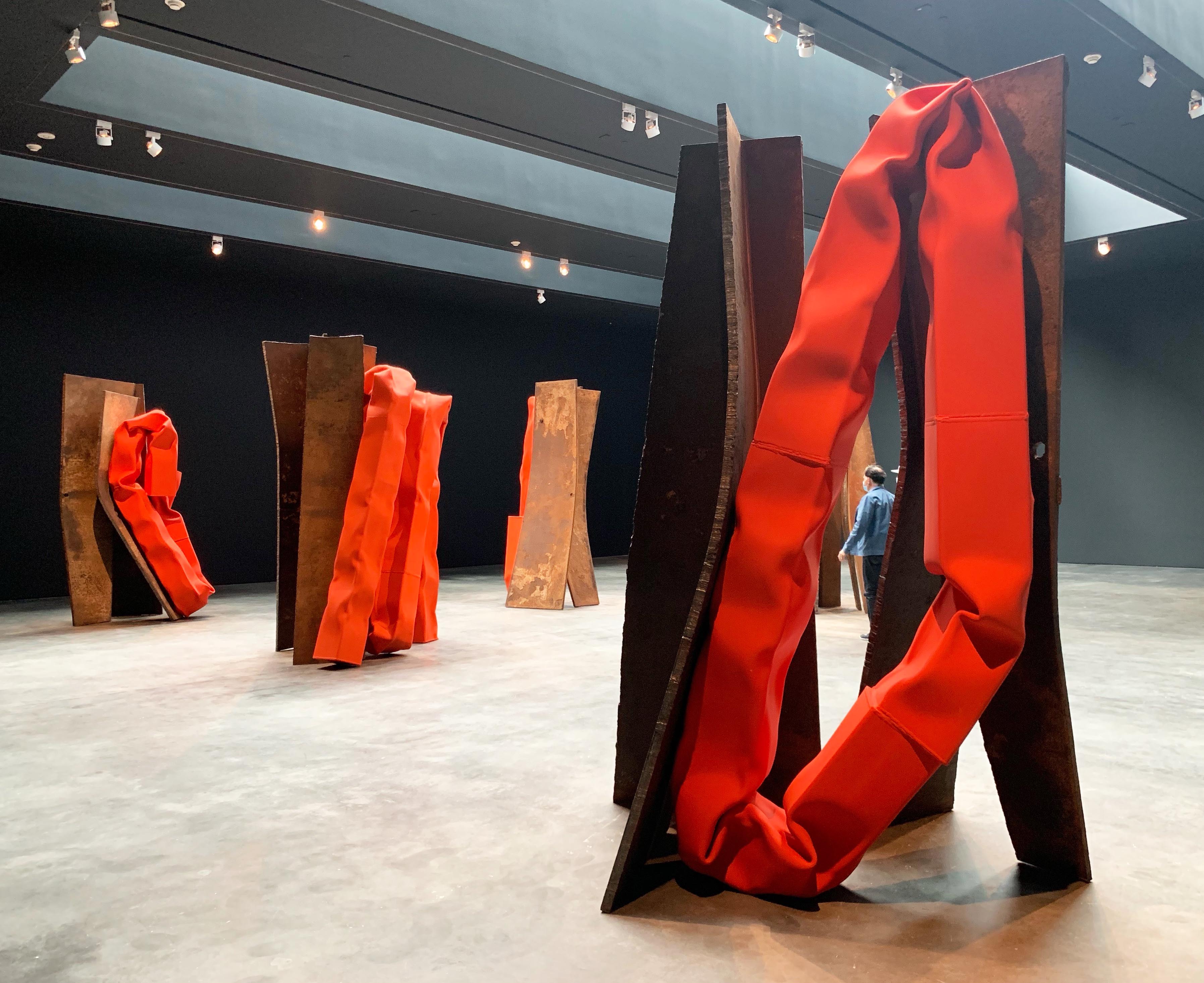
Crushed tubular steel in an electric orange color provocatively juxtaposes and compliments salvaged sheets of rolled steel in Carol Bove’s dramatic sculptural installation at David Zwirner Gallery. Titled ‘Chimes at Midnight’ after a 1965 Orson Wells film in which two characters speak of mortality, the sculptures’ industrial materials summons the past while soft, malleable-looking orange segments speak to a future in formation. In its reckoning between past and present, the sculptures continue Bove’s engagement with history in her current sculptural commission on the façade of the Metropolitan Museum of Art. (On view at David Zwirner Gallery).
Carol Bove, installation view of Chimes at Midnight at David Zwirner Gallery
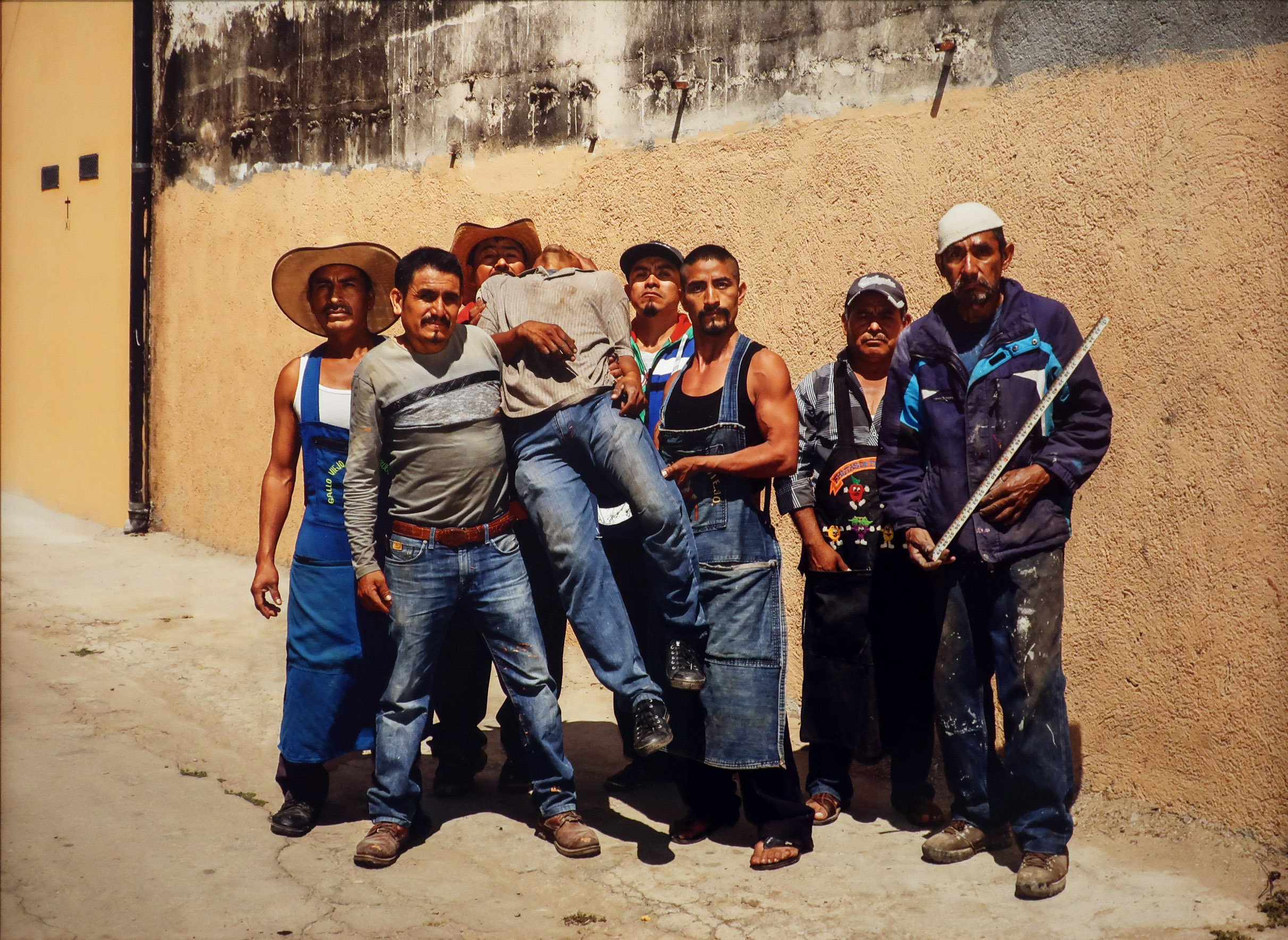
Invited by curator Francisco Berzunza to make new work to show in Mexico on the themes of sex and death, South African photographer Pieter Hugo spent months meeting people from all walks of life including this community theater group formed by sanitation workers in Oaxaca de Juarez. Here, they reenact a scene from a mural painted in the 50s by David Alfaro Siqueiros at Chapultepec Castle, bringing revolutionary attitudes into the present day. (On view at Chelsea’s Yossi Milo Gallery through Feb 29th).
Pieter Hugo, After Siqueiros, Oaxaca de Juarez, archival pigment print, 47 1/8 x 63 inches, 2018.
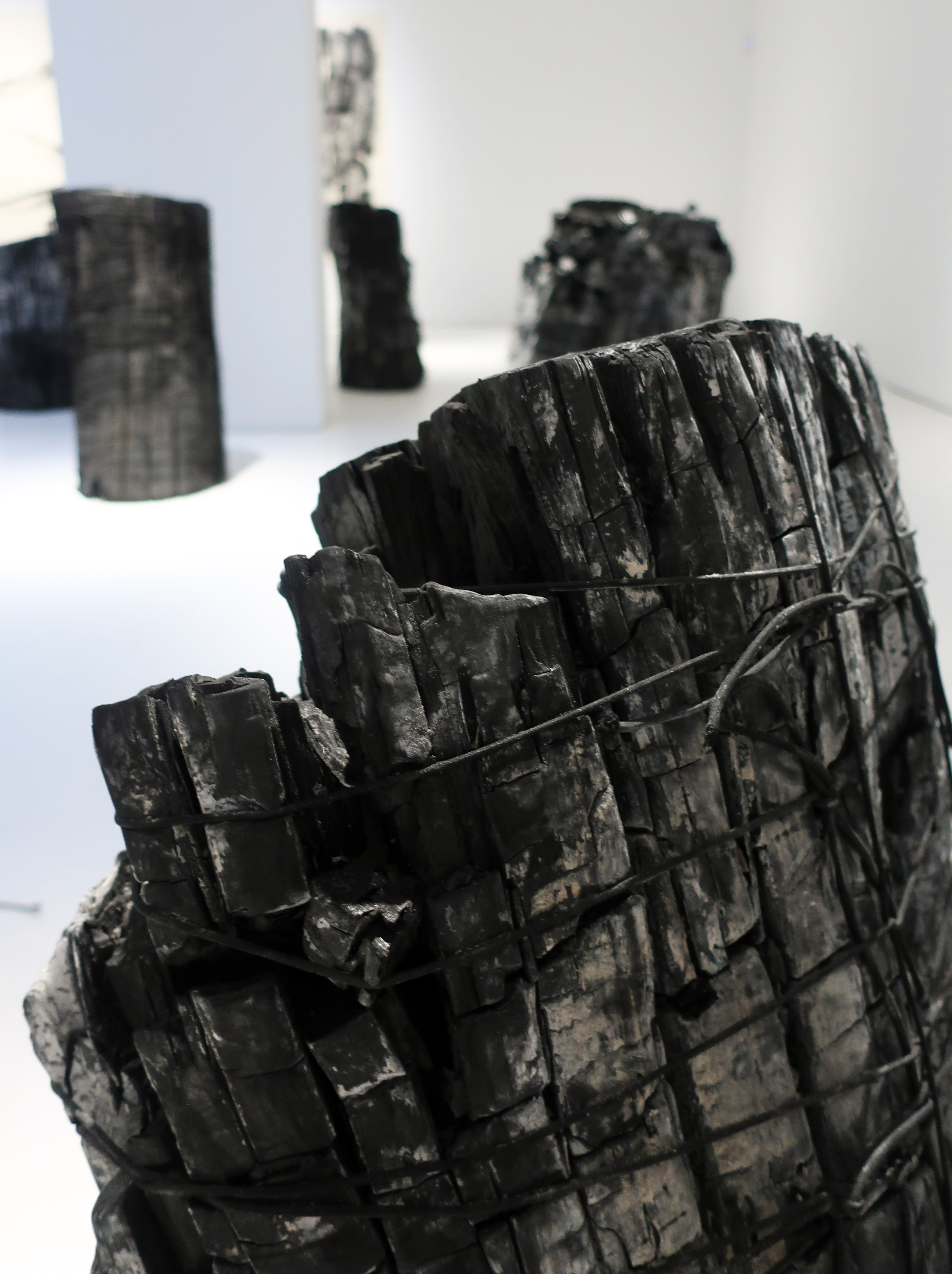
Korean-Parisian artist Lee Bae’s medium is more than a means to an end. Since buying a cheap bag of charcoal as a cash-strapped new arrival to the French art scene in 1990, Lee’s interest in the medium has expanded to drawings, sculpture and 2-D mosaics of polished charcoal. He points to the role of charcoal in Korean culture (from art medium to building material) to connect to age-old tradition to his production today. At Perrotin Gallery’s spacious upstairs space, the artist has installed sculptures of Korean pine turned to charcoal in his own kiln, a month-long process which results in a piece of material with endless possibilities. (On view through Dec 21st.)
Lee Bae, installation view of ‘Promenade’ at Galerie Perrotin, Nov 2019.
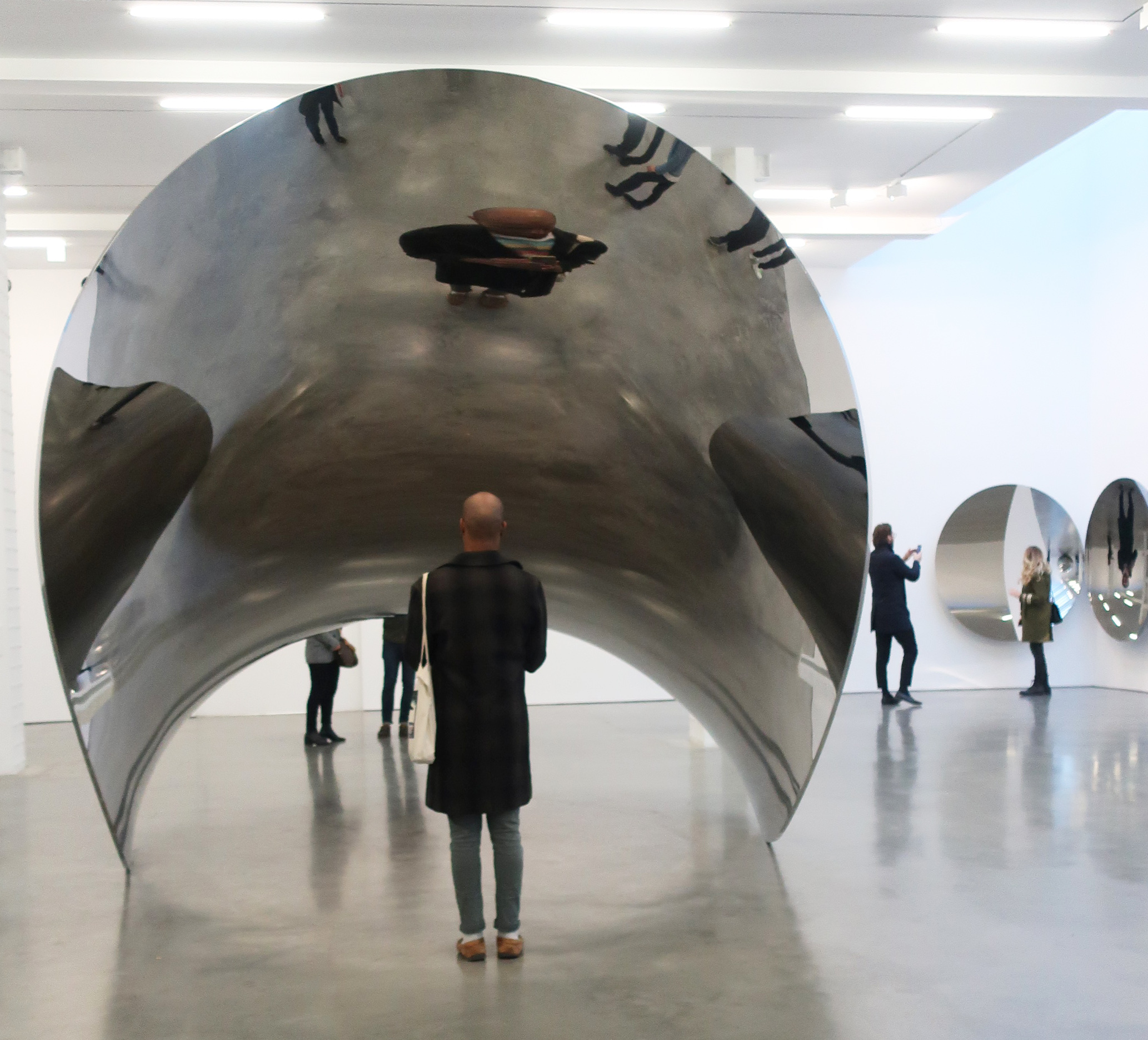
After confronting viewers with visceral, blood-red sculpture in his last New York show, Anish Kapoor is back with a two-venue exhibition bound to seduce his audience. Front and center in Lisson Gallery’s 24th Street space is Tsunami, a towering stainless steel sculpture that lures visitors in to marvel at the spatial distortions created by the curved metal. (On view in Chelsea through Dec 20th).
Anish Kapoor, Tsunami, stainless steel, 143 5/8 x 161 3/8 x 133 ¾ inches, 2018.
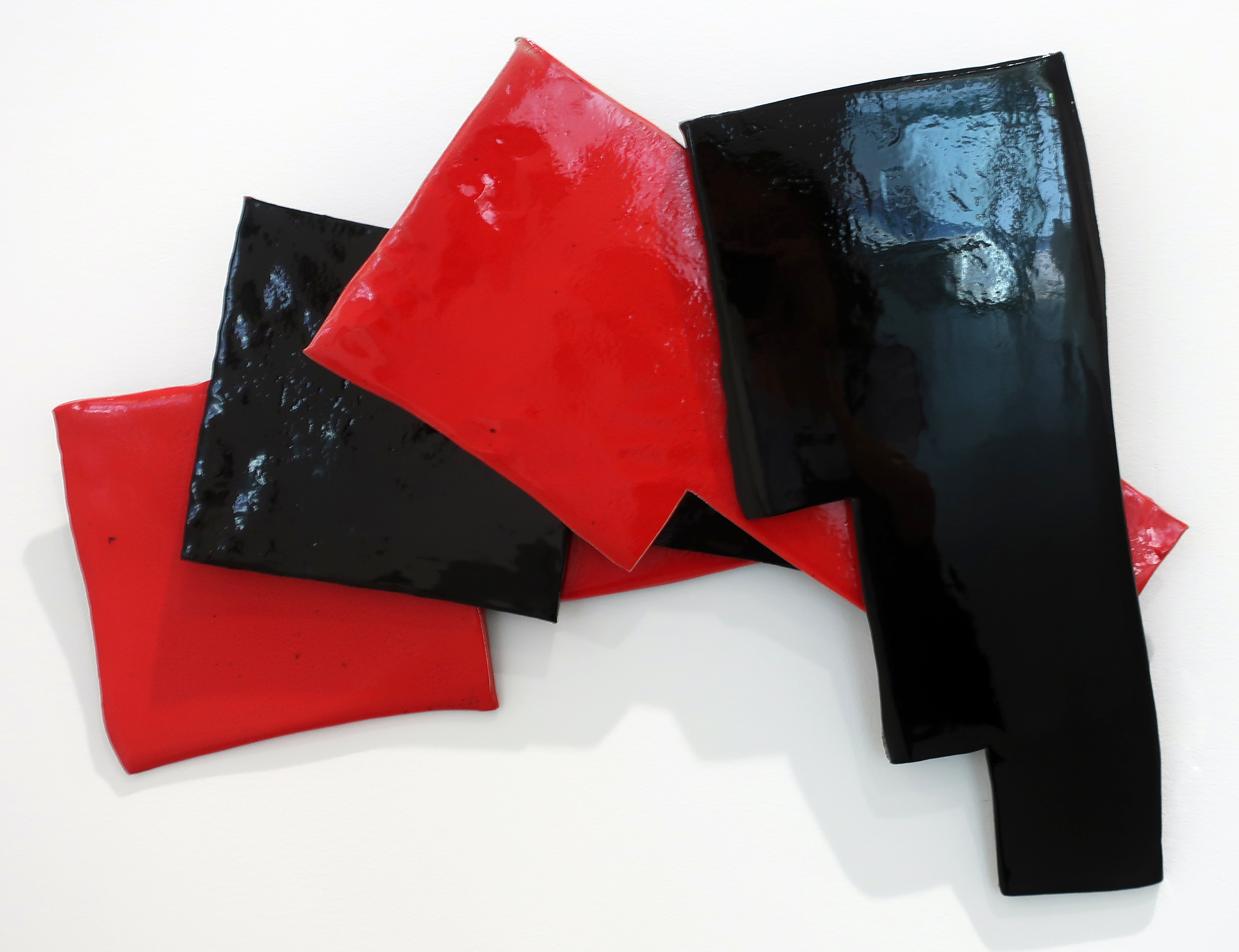
Mary Heilmann’s red and black ceramic sculpture ‘Curl’ seems to defy its title with its angular panels, yet each segment dynamically spins around a central core like a step on a spiral staircase seen from above. Each tile evokes a riser with three treads or a chunky version of the Egyptian deity Isis’ throne in Constructivist colors that make a bold statement. (On view at Gladstone Gallery’s 24th Street Chelsea location through July 26th).
Mary Heilmann, Curl, glazed ceramic, 15 ½ x 20 ½ x 2 ¼ inches, 1984.
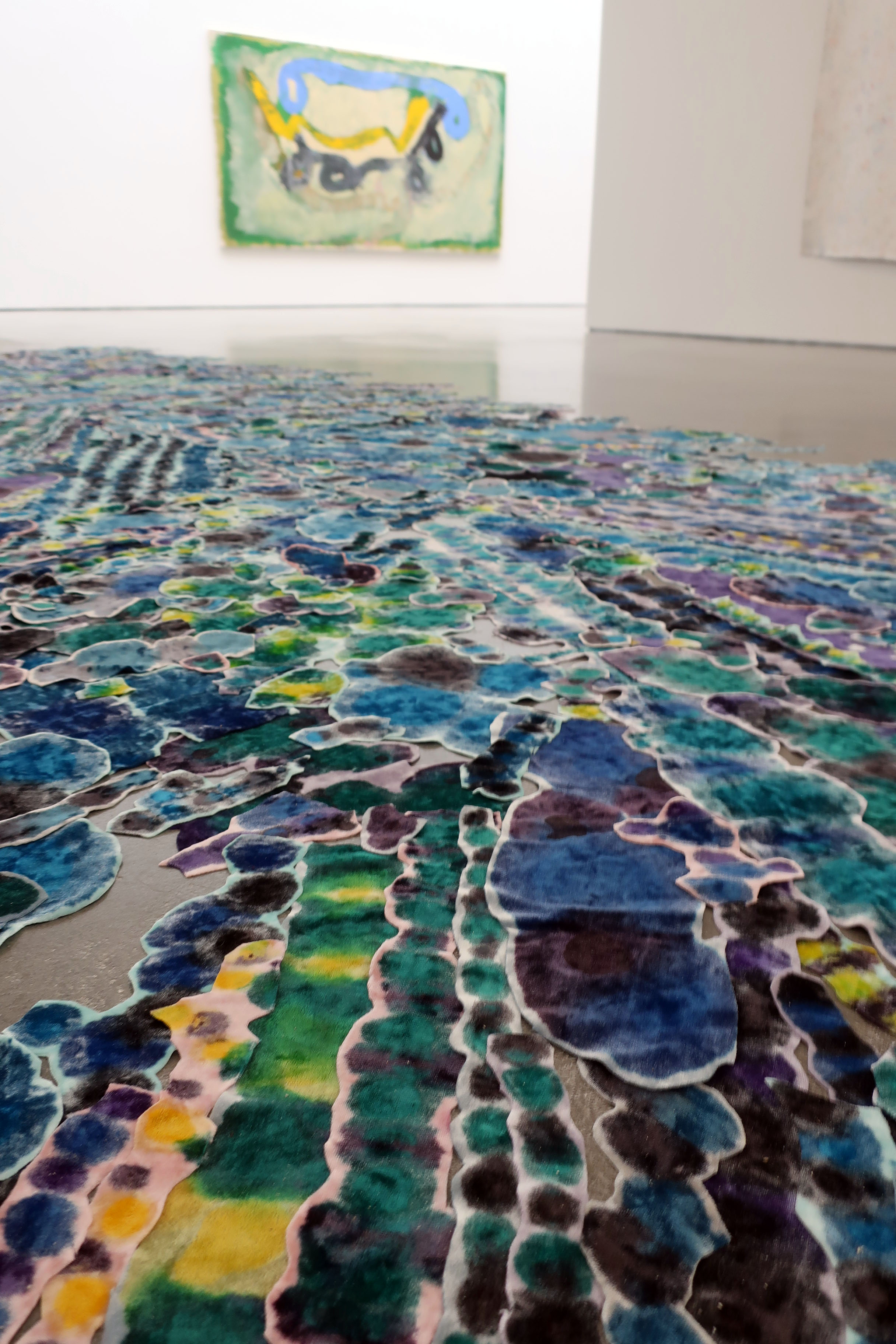
Why paint? In 1975, Artforum magazine posited the question to artists at a moment when enthusiasm for more contemporary approaches – from conceptual art to video – seemed to have pushed painting out of the vanguard. Lisson Gallery’s summer group show visits responses then and now as painters pushed the boundaries of what could be considered painting. Here, Polly Apfelbaum’s synthetic velvet and dye piece ‘Blue Joni’ takes painting off the stretcher and even off of the wall. (On view in Chelsea through August 9th).
Polly Apfelbaum, Blue Joni, crushed four way stretch synthetic velvet and dye, 152.4 x 426.7cm, 2016.
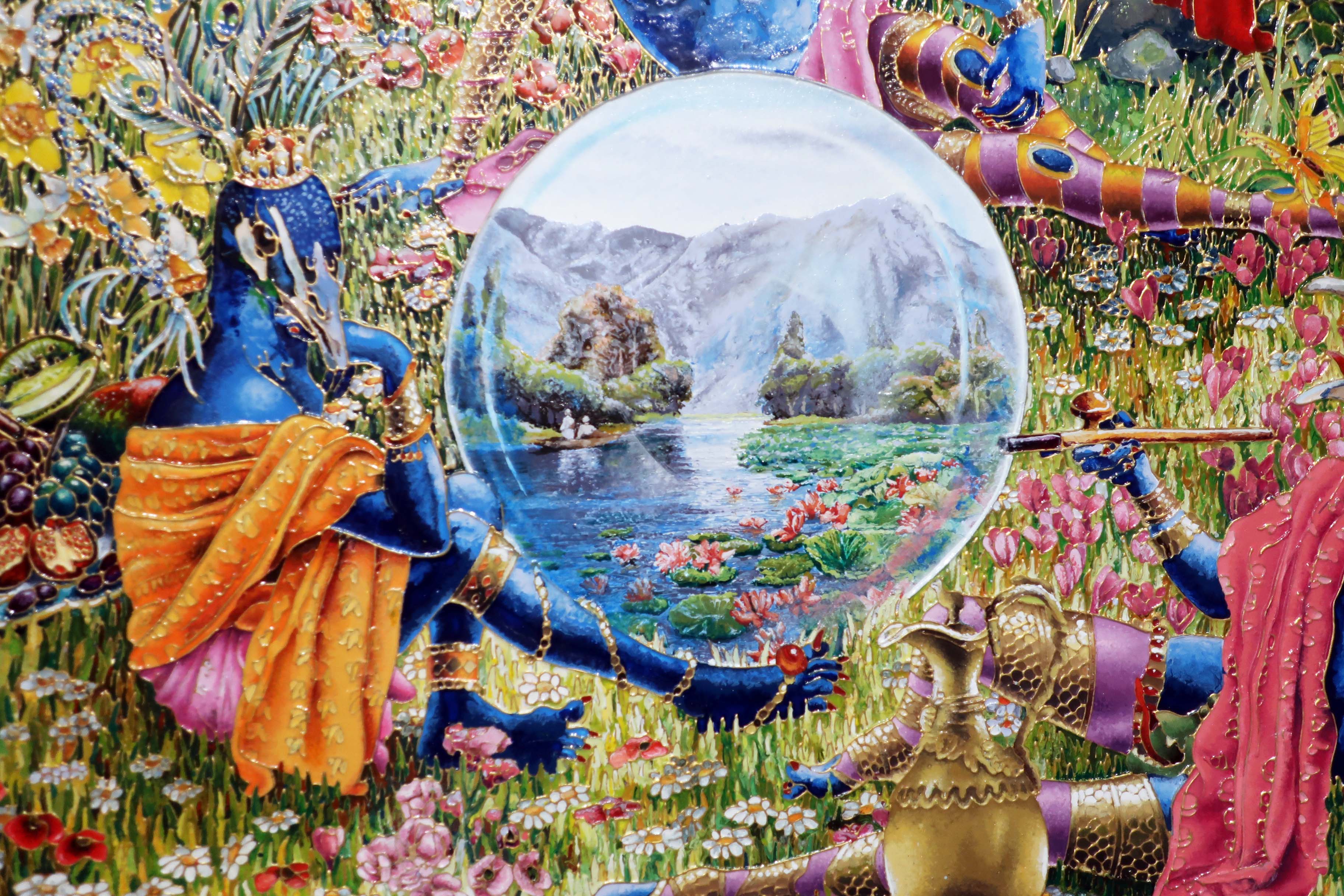
Raqib Shaw’s richly imagined scenes at Pace Gallery are dominated by the verdant Kashmiri landscape and a tribe of cavorting and lounging peacock-headed characters, who echo the poses of picnicking Parisians lounging in a park in Manet’s 1862 painting Le Dejeuner sur l’herbe. Intricately painted in vibrant enamel colors, Shaw’s new paintings are a feast for the eyes. (On view in Chelsea through May 18th).
Raqib Shaw, detail of ‘From Narcissus to Icarus (After Dejeuner sur l’herbe),’ acrylic liner and enamel on birch wood, 60 5/8 x 71 5/8 inches, 2019.
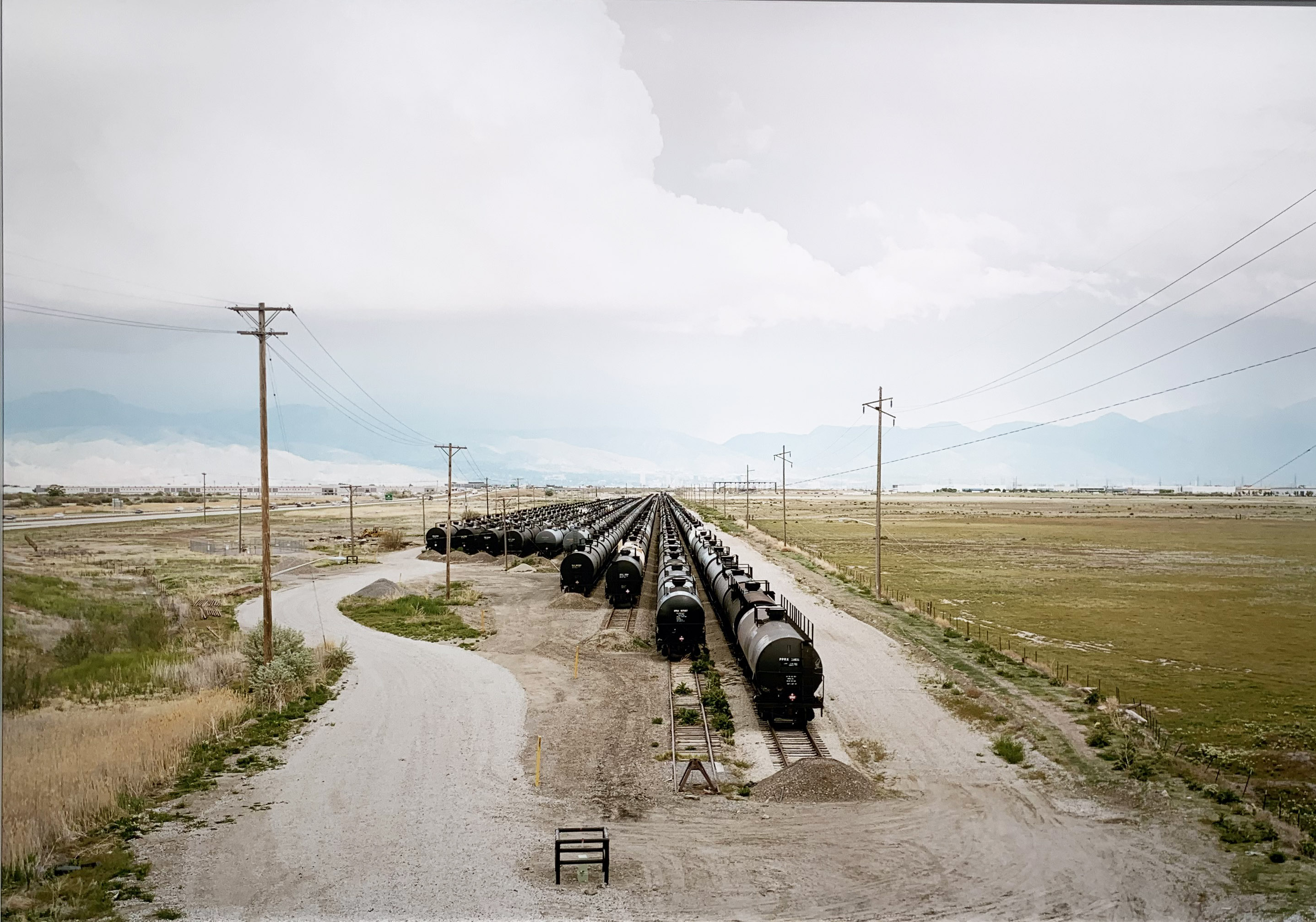
Tankers arrayed like a minimalist piece of land art in this photograph by Victoria Sambunaris turn an otherwise drab landscape near Salt Lake City into study in form and function. Ringed by a barely visible mountains and spread out under voluminous clouds, the trains in their tight formation dominate the natural world in this image. (On view at Yancey Richardson Gallery through May 11th).
Victoria Sambunaris, Untitled (Tankers), Salt Lake City, chromogenic print, 40 x 56 inches, 2018.
Late sculptor Ken Price evoked bodies and nature in a humorous, accessible and endlessly colorful way for decades until his death in 2012. In a show of work from the ‘90s to 2010 at Matthew Marks Gallery, Price’s evocative forms continue to elicit puzzlement and delight in equal measure. (On view on 24th Street in Chelsea through Dec 22nd).
Ken Price, Formerly The Slump, fired and painted clay, 5 ¼ x 18 ½ x 13 ¾ inches, 2001.
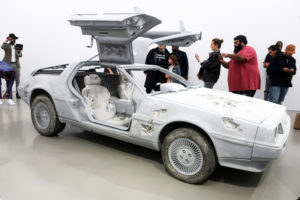
Inspired by the DeLorean in the movie ‘Back to the Future,’ Daniel Arsham imagines the car as a relic from even further back, a remnant of the past now studded with sparkling patches of quartz crystal and pyrite. Alongside a similarly eroded Ferrari and a pile of obsolete consumer electronics, Arsham points out that given time, our castoffs revert to objects of desire. (On view at Perrotin through Oct 21st).
Daniel Arsham, Eroded DeLorean, stainless steel, glass, reinforced plastic, quartz crystal, pyrite, paint, h. 44 7/8 x l. 166 x 73 1/8 inches, 2018.
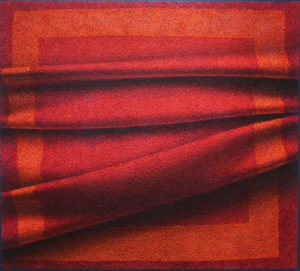
Marc Straus Gallery nods to Mark Rothko’s hovering, painted rectangles of color and Josef Alber’s nests of colored squares on canvas, but the real attraction to Spain-born, New York-based artist Antonio Santin’s paintings is the fact that they’re painted at all. Resembling tapestries, Santin’s amazing abstract paintings are made with oil paint in a variety of patterns that suggest a 3D surface with something hidden beneath. (On view on the Lower East Side through Oct 16th).
Antonio Santin, Apana, oil on canvas, 70.8 x 78.7 inches, 2018.
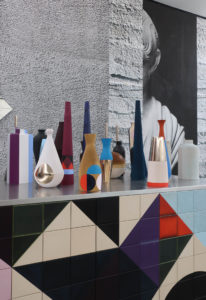
Berlin-based artist Claudia Wieser takes the 1976 BBC drama ‘I, Claudius’ as inspiration for a gorgeous exhibition featuring wallpaper printed with towering busts from antiquity and a series of refined painted vessels atop a large ceramic tiled pedestal. Rather than tell a story or suggest particular meanings, Wieser evokes elegance and opulence using low-brow materials like wood and mirror-polished steel, perhaps a parallel to politically corrupt Roman rulers whose culture non-the-less produced prized artwork. (On view at Marianne Boesky Gallery in Chelsea through April 14th).
Claudia Wieser, installation view of ‘Chapter’ at Marianne Boesky Gallery, March 2018.
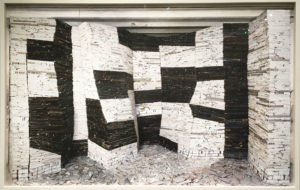
Working with materials salvaged from destroyed buildings, Dutch artist Marjan Teeuwen creates abstract arrangements of forms that suggest paintings. Here, she worked in an abandoned school in Johannesburg, South Africa during a 2015 residency to create an installation that speaks to a key theme – the inevitability of destruction and but also the hope of renewal. (On view through April 14th at Bruce Silverstein Gallery in Chelsea.)
Marjan Teeuwen, Archive Johannesburg, archival pigment print, 38 x 43 inches, 2015.
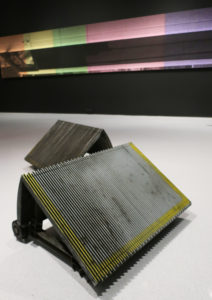
Adam McEwen’s escalator stairs, disassembled and scattered on Gagosian Gallery’s floor are readymades related to movement, though unlike Duchamp’s spinnable bike wheel mounted on a stool, they’re solidly in place. Dedicated to mass transit, their egalitarian nature contrasts an upside down image of a stretch limo, printed on cellulose sponge and hung on the wall behind. (On view at Gagosian Gallery’s 980 Madison Ave 5th floor gallery).
Adam McEwen, Assembly, escalator steps, variable dimensions, 2014.
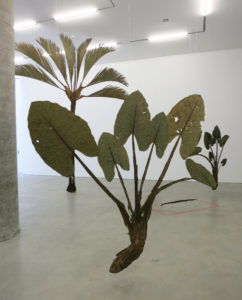
After his recent travels to Central and South America, Berlin-based artist Julius von Bismarck returned with study specimens in the form of dried plants and a snake that have been heated in a huge, custom-built oven and flattened in a 50-ton hydraulic press. Backed on shaped stainless steel, the tongue-in-cheek souvenirs present botanical investigation as art. (On view in Chelsea at Marlborough Contemporary through May 20th).
Julius von Bismarck, installation view of ‘Good Weather’ at Marlborough Contemporary, May, 2017.
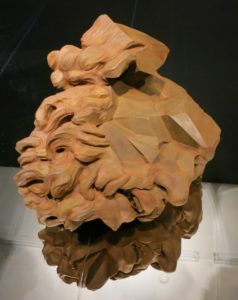
Italian artist Quayola revisits the subject of Laocoon, the ill-fated Trojan priest in ancient Greek mythology, in an arresting sculpture that combines a digital, geometric rendering of the priest’s head with a realistic representation. Coated in oxidized iron powder, the sculpture appears both aged and new. (At Bitforms Gallery on the Lower East Side through April 9th).
Quayola, Laocoon Fragment G_003.V, iron, epoxy, fiberglass, 14.1 x 12.7 x 12 inches, 2016.
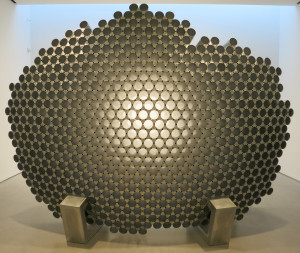
At over eight feet tall, this structure of welded aluminum tubes by Emil Lukas not only dominates Sperone Westwater’s small back gallery, it commandeers our vision. By leading our gaze toward a single point on the wall behind, it melds sculpture with the role of painting and drawing by creating one-point perspective. (On the Lower East Side through Feb 11th).
Emil Lukas, Liquid Lens, aluminum, 107 x 136 x 40 inches, 2016.
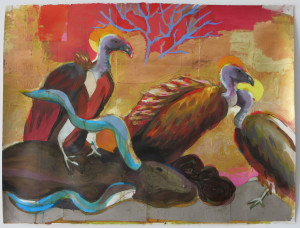
Karen Heagle’s sumptuous, gold leaved paintings of scavengers, predators and fallen prey are irresistible, even at their goriest moments. On a solitary drawing, the text ‘The Unwashed Masses’ hints that Heagle’s interests stray beyond the lifecycle of animals to reflect on humanity’s ‘natural’ inclination to violence. (At On Stellar Rays on the Lower East Side through Feb 19th).
Karen Heagle, Untitled Scene (three vultures and a carcass), acrylic, ink, collage, gold and copper leaf on paper, 22 ½ x 29 ½ inches, 2016.
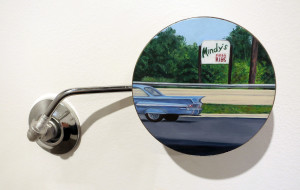
Motorcycle road trips all over the U.S. inspire New Yorker Edie Nadelhaft’s new paintings framed by vintage BMW mirror housings. Nadelhaft opts to travel on local roads for a more characterful portrait of the landscape. Looking back through the bike mirrors reveals what is receding in American culture, as evidenced by this classic car and a non-chain restaurant. (At Lyons Wier Gallery in Chelsea through Jan 28th).
Edie Nadelhaft, Mindy’s (Modena, IL), oil on panel, vintage BMW mirror housing, 4.25 inches diameter, 2017.
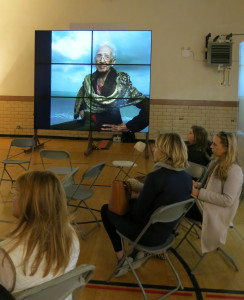
98 year old mathematician, physicist and NASA scientist Katherine Johnson strikes a regal pose in a photograph by Annie Leibovitz, who has relaunched her ‘Women’ series, highlighting the achievements of remarkable women. Images from Leibovitz’s the series are currently on view in the gym at Chelsea’s former women’s prison, offering an uplifting vision of women’s many roles in society. (Sponsored by UBS, hosted by the NoVo Foundation and Lela Goren Group on view through Dec 11th).
Installation view of ‘Women’ at the 550 West 20th Street, the former Bayview Correctional Facility and future home of the NoVo Foundation, Dec 2016.
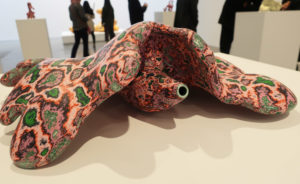
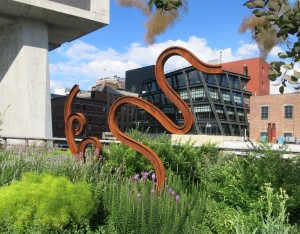
Matt Johnson’s ‘Untitled (Swan)’ marries industrial materials to the natural world by shaping a train track into the shape of an abstract swan set in the High Line’s lush gardens. Known for morphing everyday items – a crumpled Starbucks cup carved from wood and painted, a stack of plastic party cups actually rendered in painted bronze – into objects of wonder, this twisted rail pays homage to the former rail line on which it’s installed. (In ‘Wanderlust’ on the High Line through March 2017).
Matt Johnson, Untitled (Swan), bent train track, 120 x 138 x 34 ¾ inches, 2016.
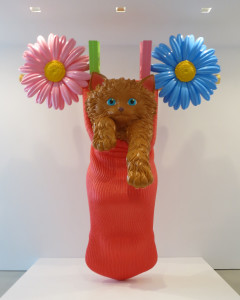
At over ten feet tall, this polyethylene sculpture by Jeff Koons magnifies kitsch to its limits. Whether it’s a contemporary crucifixion, as Koons has said, a phallic symbol, as others have pointed out, or something else entirely, there’s more than meets the eye. (At Chelsea’s Flag Foundation through May 14th).
Jeff Koons, Cat on a Clothesline (Red), polyethylene, 123 x 110 x 50 inches, 1994-2001.
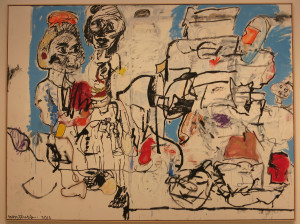
Eddie Martinez continues to mine art history in increasingly abstract paintings now on view in Chelsea at Mitchell-Innes and Nash. Tapping into diverse sources of inspiration – from Basquiat’s jittery line to de Kooning’s boldly outlined bodily forms – Martinez creates strangely familiar paintings to ponder. (Through March 5th).
Eddie Martinez, Park Avenue Peace Out, oil, enamel, silkscreen ink and spray paint on canvas, 108 x 144 inches, 2015.
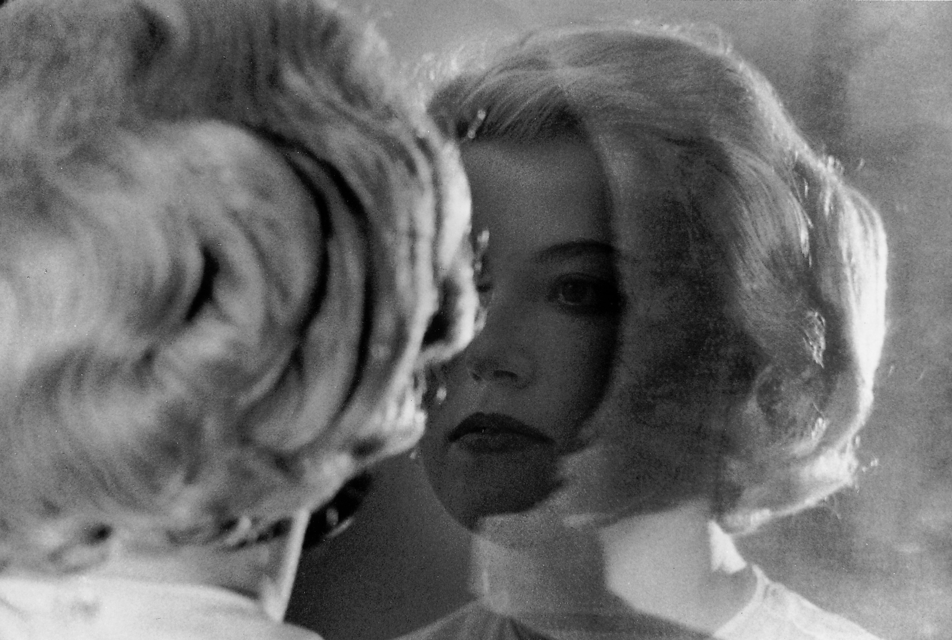
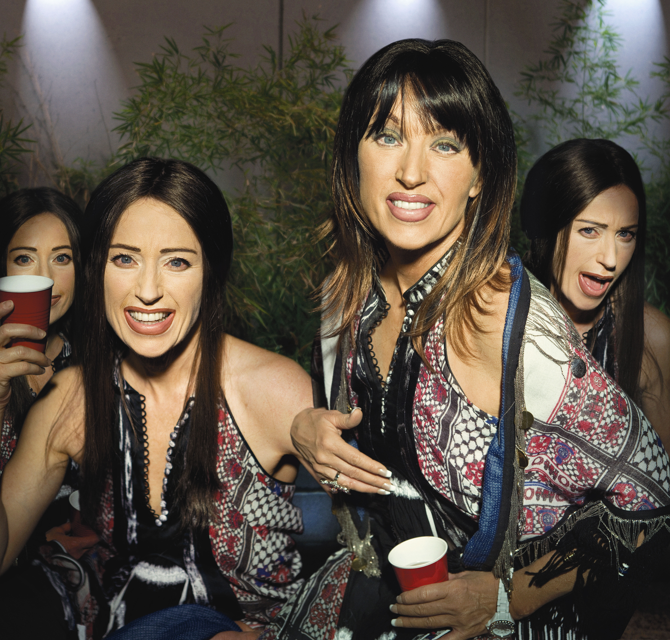
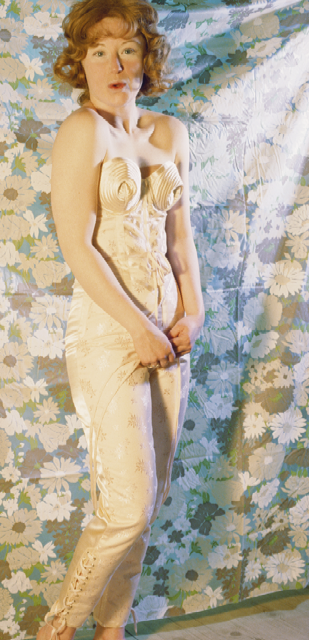
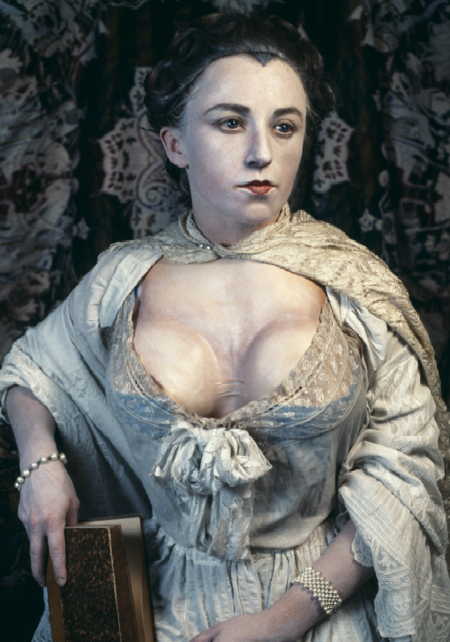
As the reviews come out, Cindy Sherman’s retrospective at MoMA (open Feb 26 – June 11) seems set to break ‘best-loved show’ records. Universal critical adoration usually arouses suspicion of cliquish agreeability. But Sherman takes the very notion of conformity to fashion and self-presentation -negotiated through society’s expectations – as her subject matter. Absurdity and grotesquery appear at every turn in this show, making Sherman an uber-critic whose acuity forces the following homages from New York’s major cultural commentators:
Though Smith takes umbrage with the show’s selection and non-chronological arrangement, calling it “magnificent if somewhat flawed,” Sherman herself is “…an increasingly vehement avenging angel waging a kind of war with the camera, using it to expose what might be called both the tyranny and the inner lives of images, especially the images of women that bombard and shape all of us at every turn.”
Saltz also gives Sherman fighting cred, calling her “…a warrior artist – one who has won her battles so decisively that I can’t imagine anyone ever again embarking on a lifetime of self-portraiture without coming up against her.” He adds, “I think of Cindy Sherman as an artist who only gets better.”
Schjeldahl affords Sherman the highest praise, saying, “The mysteries are irreducible…they qualify Sherman, to my mind, as the strongest and finest American artist of her time.” Pointing out that delusion allows a disconnect between “inner feeling” and “outer attributes” he adds that, “…Sherman makes hard, scary truths sustainable as only great artists can.”
Halle calls the MoMA retrospective “…the best show I’ve seen there since the Gerhard Richter survey [in 2002], and probably the best exhibit I’ve seen anywhere in a while…The way I’d put it is that Sherman uses glamour and horror to send up and celebrate the feminine mystique, including her own. She quantifies and categorizes the notion of one’s appearance, which fashion also does. But unlike Anna Wintour, Sherman isn’t in the business of marketing the cultural; she’s in the business of laying it bare.”
The feeling of silent stillness in this memorial exhibition of Tracey Baran’s self-portraits and photographs of her family and friends is palpable, an affecting parallel to a life suddenly stopped short after a brief illness at age 33. The action of Baran’s past hunting, demolition derby and road-trip photo series has been excluded to show the artist in the context of those she cared about in intimate moments of friendship, restful calm, and longing. Sometimes considered a chronicler of small town life, this show convincingly argues that Baran pursued grander themes, uncovering evidence of the profound mysteries of familial and romantic love in rural America.
Baran’s more wistful pictures now appear prescient; as she kisses a steamy window after a goodbye or gazes out a window with fingers crossed, she’s not just a young woman caught up in her inner world but a harbinger of more profound loss. Other pictures beautifully capture a time of life when major decisions are frighteningly open and the future is yet to be written, as in ‘Today I’m 30’ in which Baran greets a new decade with a spirited scowl as she curls up on the edge of her bed near a solitary cupcake.
Baran’s photographs have the quietude of a stage, not just the country or her thought life. Several of her contemporaries were influenced by Gregory Crewdson’s artificial dramas; Baran shares his fascination with rural life but not its noir mood, the stories told via her portraits are informed by art history and first-hand knowledge of her subjects. Her father morphs from misfit to thinker in a bathtub portrait that recalls David’s Marat, Baran channels Girodet to picture her boyfriend awash in a celestial glow in a mossy glade, ‘In the Garden’ pictures the two in archetypal roles as Adam and Eve, while ‘Ivy’ depicts Baran as an unorthodox odalisque who’s taken a roll in some poison ivy. Such references might help validate her eccentric characters for us, but the tenderness with which they are depicted suggests that for Baran, the ones she loved transcended time and place.
Originally published in Flash Art, November – December 2009.